-
-
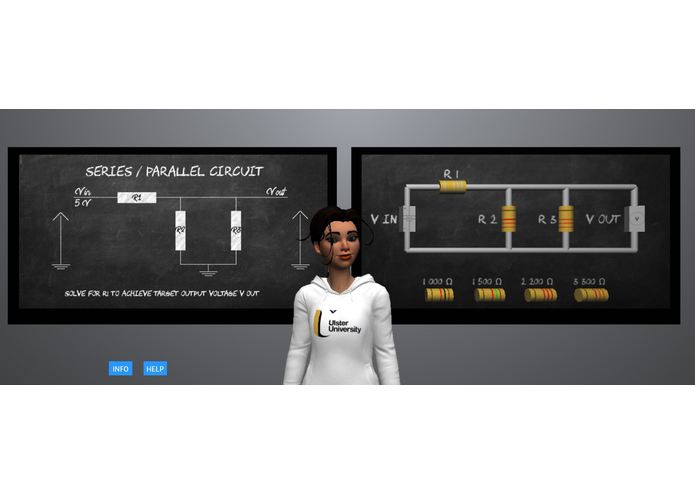
Series Parallel circuit
-
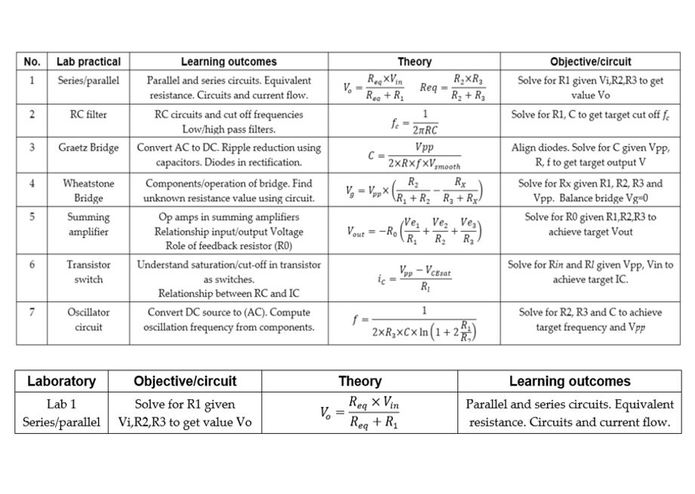
Circuits with learning outcomes
-
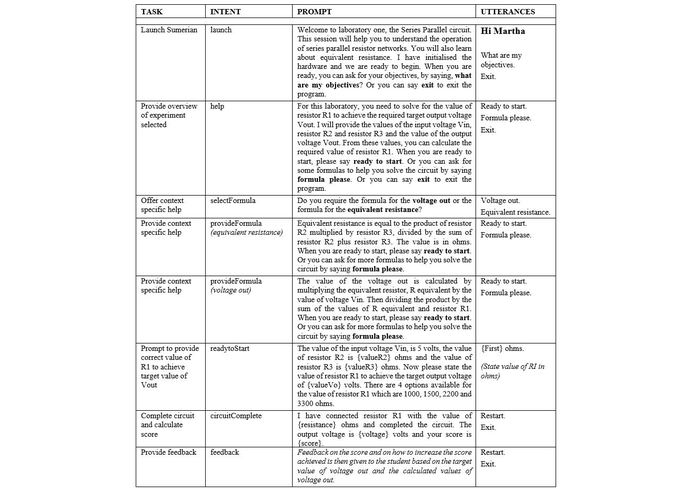
Structured interactions
-
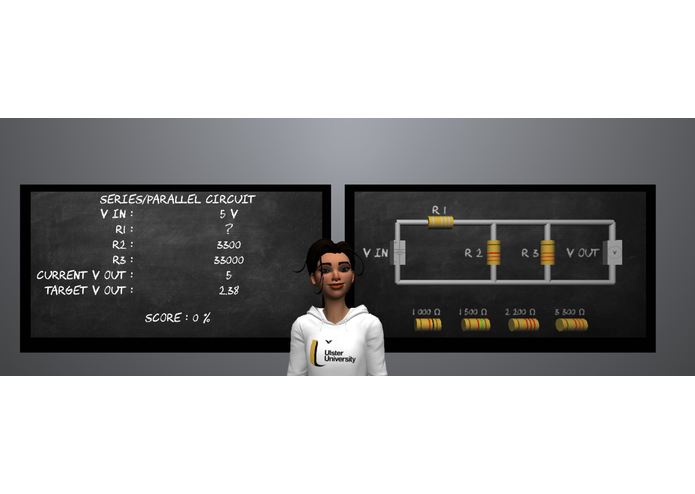
Game based approach
-
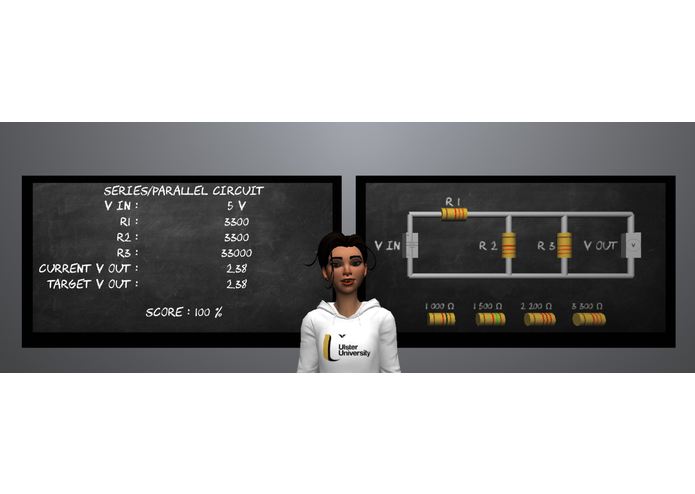
Assessment and feedback
-
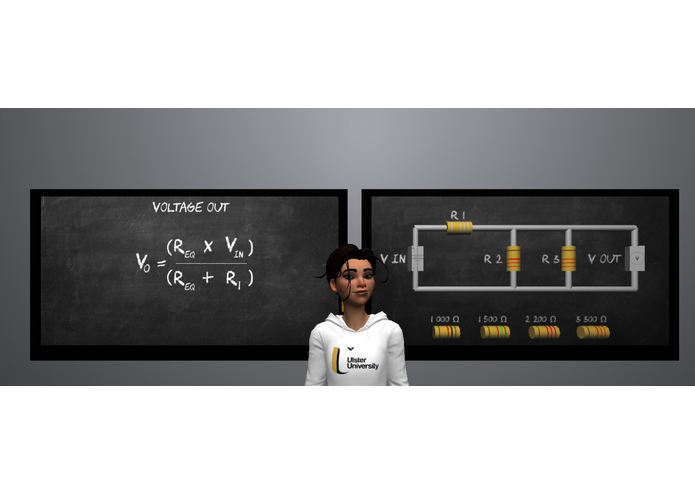
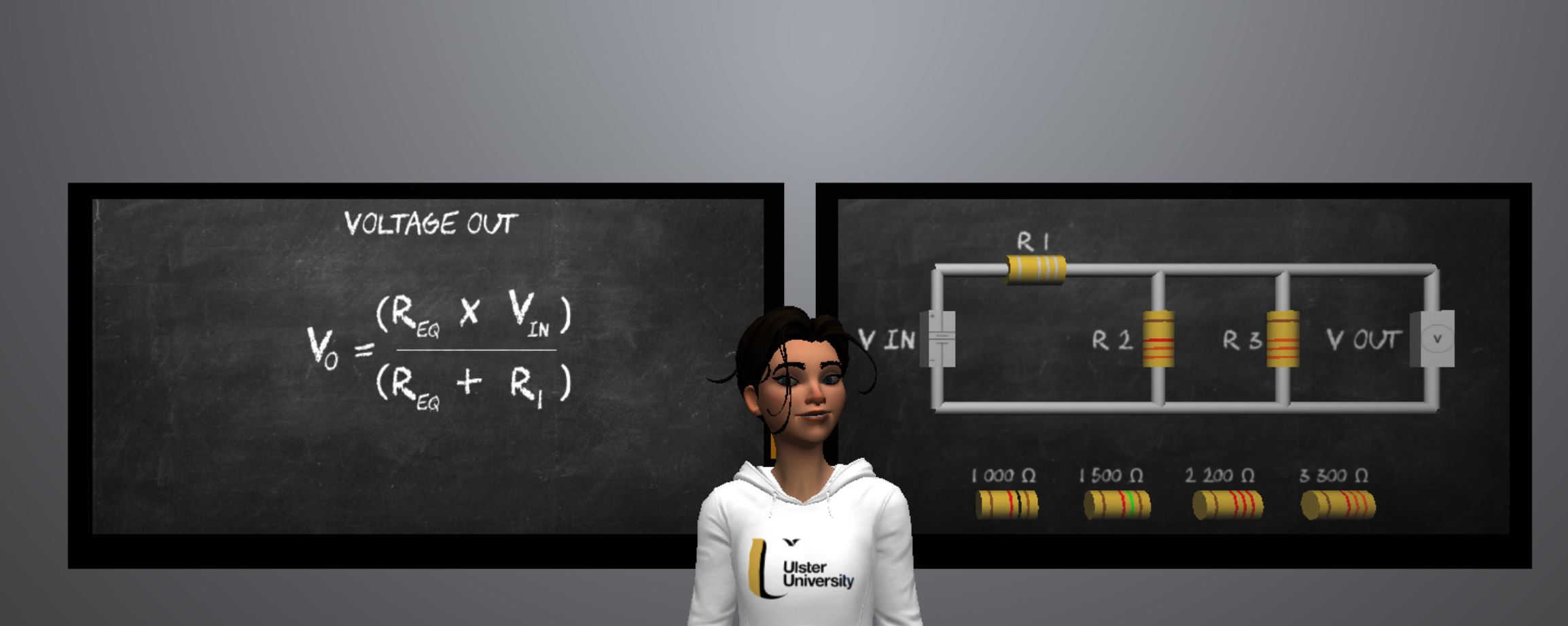
Help with supplementary teaching material
Inspiration
Virtual assistants which use speech-based services are growing in popularity and can be deployed in a range of diverse application areas. Practical laboratory-based experiments in electronic and electrical engineering can be costly to run and maintain. This application explores the practical use of a Sumerian Host as a voice driven assistant in a virtual laboratory to tutor students, guiding them through each stage of an experiment which focuses on fundamental electronic and electrical circuits, presenting supplementary teaching resources when requested and providing feedback with summative and formative assessment as required.
What it does
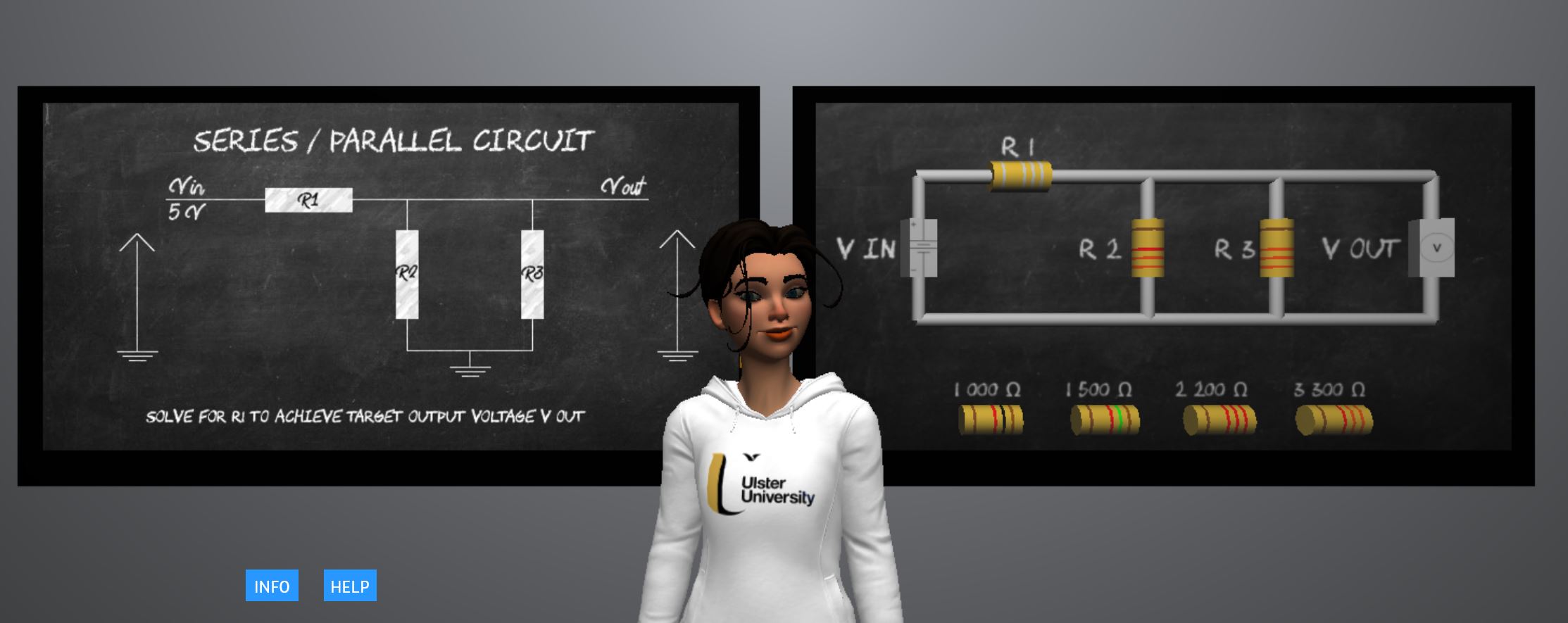
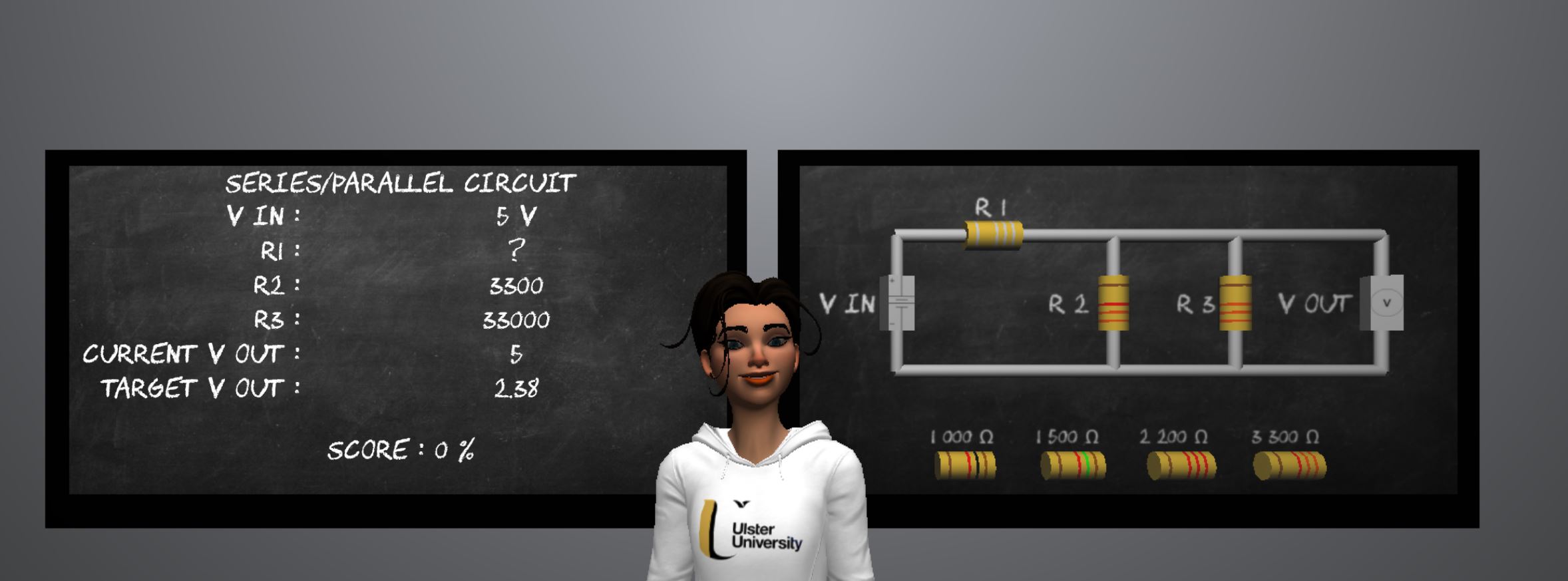
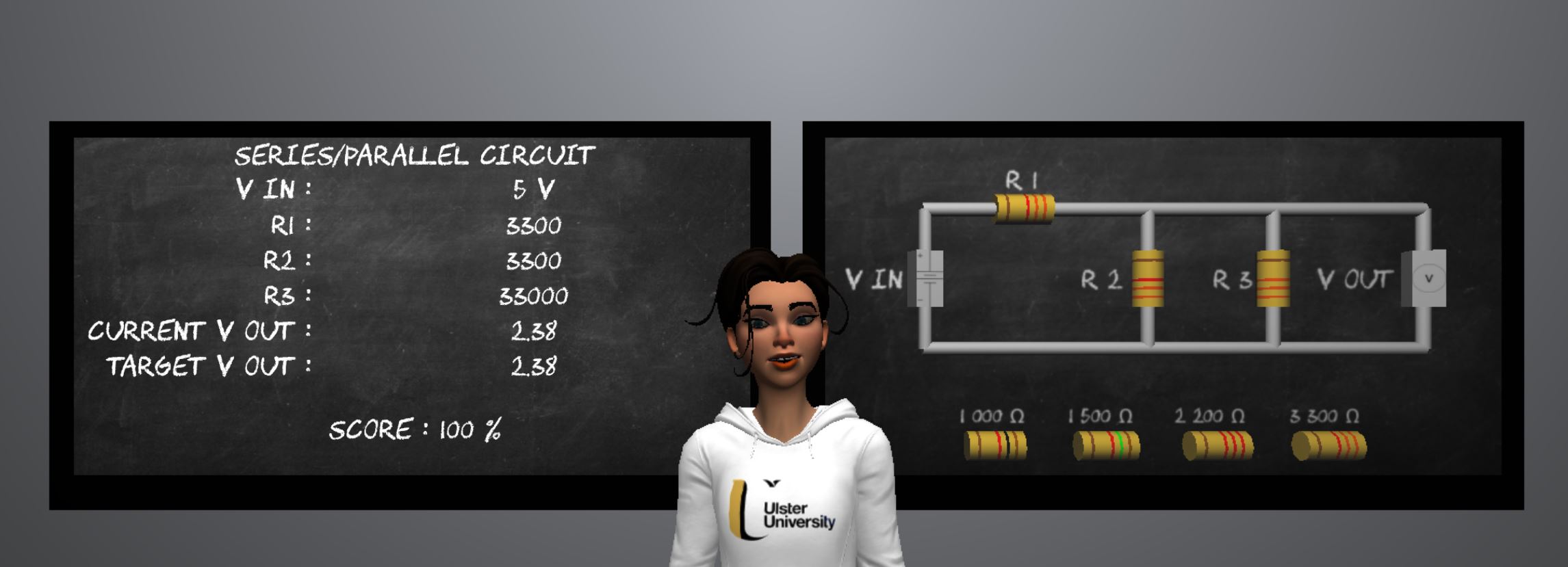
The current application focuses on one experiment, the series/parallel circuit but has the potential to scale up and cover a range of fundamental electrical and electronic circuits e.g. RC and Oscillator circuits. A game-based puzzle approach is used where the student is given the input of a circuit and the values of a number of the individual components in the circuit e.g. resistors or capacitors, and has to calculate the correct values of the unknown components to achieve a given output value. A score and feedback are then given based on how accurate the calculations were. The student is guided through the lab and offered assistance when requested with summative and formative feedback when the lab is complete.
How we built it
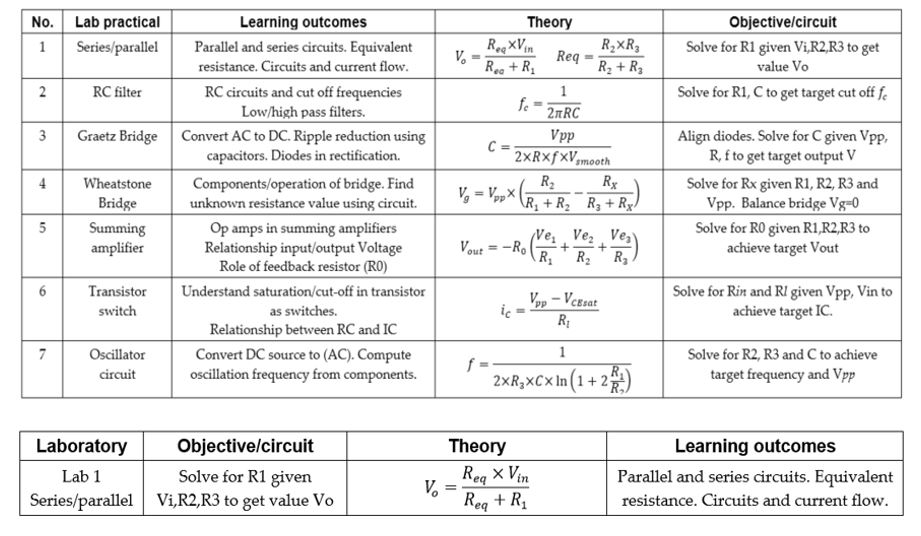
We reviewed the content, structure, presentation and (physical/virtual) delivery of a series of practical laboratories on an undergraduate course teaching the fundamentals of electronic and electrical engineering. We selected a number of basic circuits and we mapped over the learning outcomes for each lab to learning/game mechanics using the LM-GM model for serious game analysis and design to create a game-based approach to learning circuit theory _ italics _(Callaghan, MJ, Savin-Baden, M, McShane, N and Gomez-Equiluz, A. Mapping Learning and Game Mechanics for Serious Games Analysis in Engineering Education. IEEE Transactions on Emerging Topics in Computing, 99 (1). pp. 1-7, 2015). _ italics _ From this we created an initial project specification and researched viable delivery technologies on which to build and deploy the application. We then focused on the conversational element of the application where the Sumerian host guides the student through the lab offering supplementary teaching material, assessment and feedback where required. The application currently uses Amazon Sumerian, Lex and Polly. The application could offer a higher level of personalisation with the use of Amazon Rekognition and Kinesis for facial recognition. This was developed and implemented but is disabled for the publicly available version.
Accomplishments that we're proud of
The project comprised a small team of students led by a member of academic staff. There was no formal budget for the project and we had no previous experience of AWS or Sumerian and related services. From this starting point we created an interactive voice driven lab for teaching circuit theory.
What's next for Martha, your virtual tutor for electronics/electrical engineering labs
The application will be trialed with selected students in the second semester of this academic year. The practicalities of embedding the application into a virtual learning environment will be explored. The application currently uses Amazon Sumerian, Lex and Polly but could be extended to access and control remote hardware and instrumentation using AWS IoT allowing more complex experiments to be carried out. This will be explored in future project evolutions.
Challenges we ran into
The initial challenge was how to create an interesting and engaging game around learning circuit theory with a voice driven element then break down the experiment into a series of steps. The next challenge was how to do this inside the Sumerian and the AWS ecosystem using a voice user interface.
What we learned
We explored how practical electronic and electrical labs are structured, completed and assessed and how to map learning outcomes to game/learning mechanics. In addition, we learnt about AWS and related applications e.g. Lex, Polly, Sumerian and voice services etc and their potential uses in both this application domain and others.
Try the application out
Sumerian compatible browser/PC with microphone enabled required.
Operational instructions
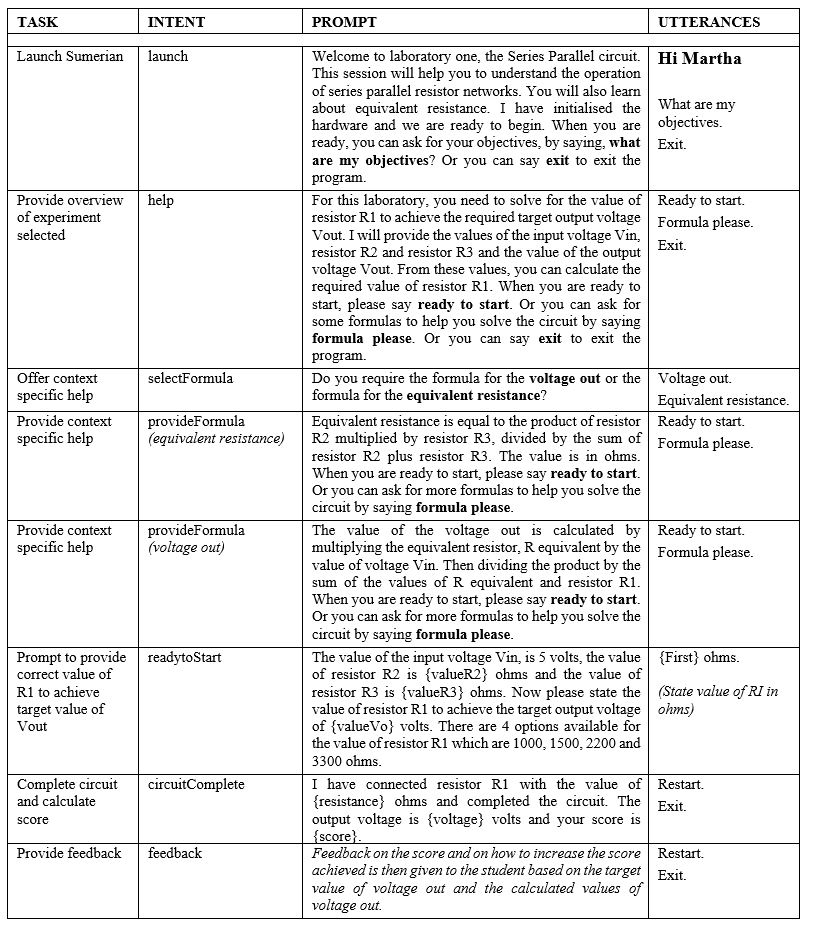
The application can be viewed in any Sumerian compatible browser with a microphone enabled with access permissions. You can start the application by pressing/clicking on the mic button on the screen or pressing the space bar with the correct browser window open and active. Start by saying "Hi Martha", "help" or "info". The host will then guide you through the rest of the laboratory.
YouTube [Overview on YouTube] https://youtu.be/se-IZmfWodA
Built With
- amazon-web-services
- lex
- polly
- sumerian


Log in or sign up for Devpost to join the conversation.