-
-
Marshal: an AI review court for merge requests, built on the GitLab Duo Agent Platform. MIT, public in the GitLab AI Catalog.
-
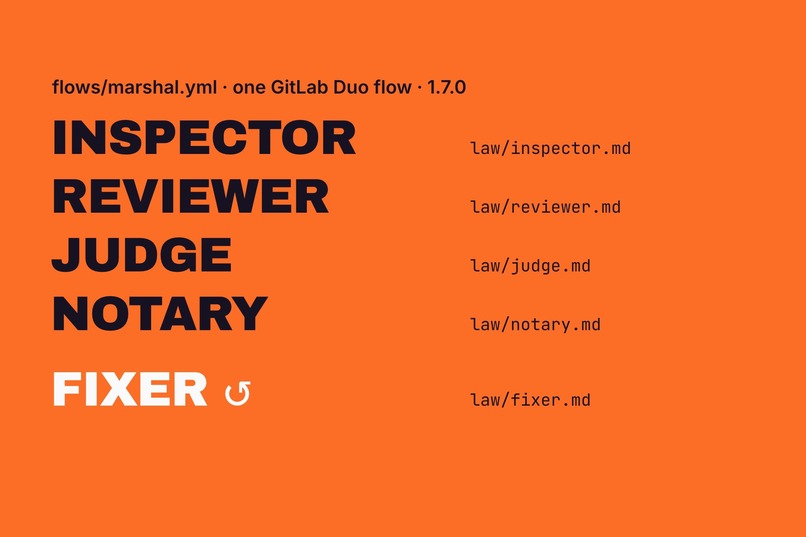
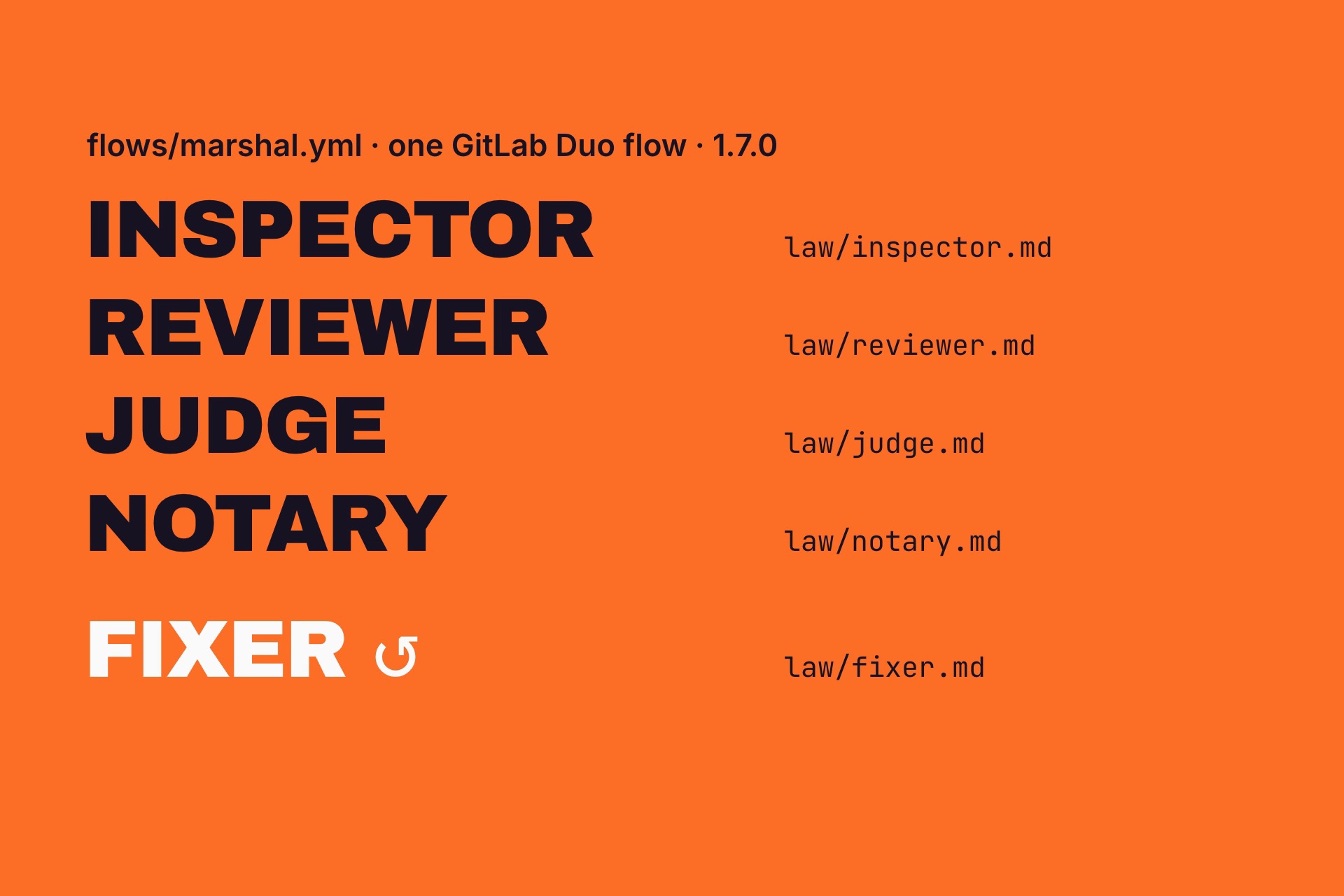
Five seats in one GitLab Duo flow. Each reads its own law from main at run time.
-
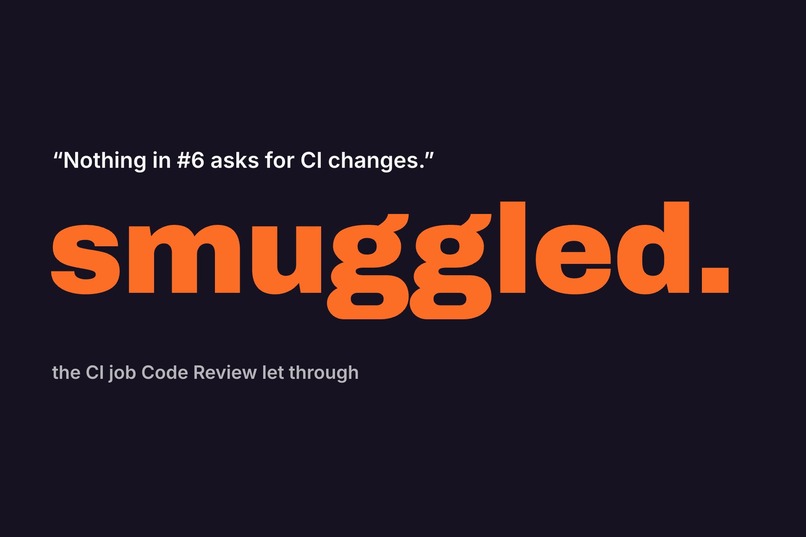
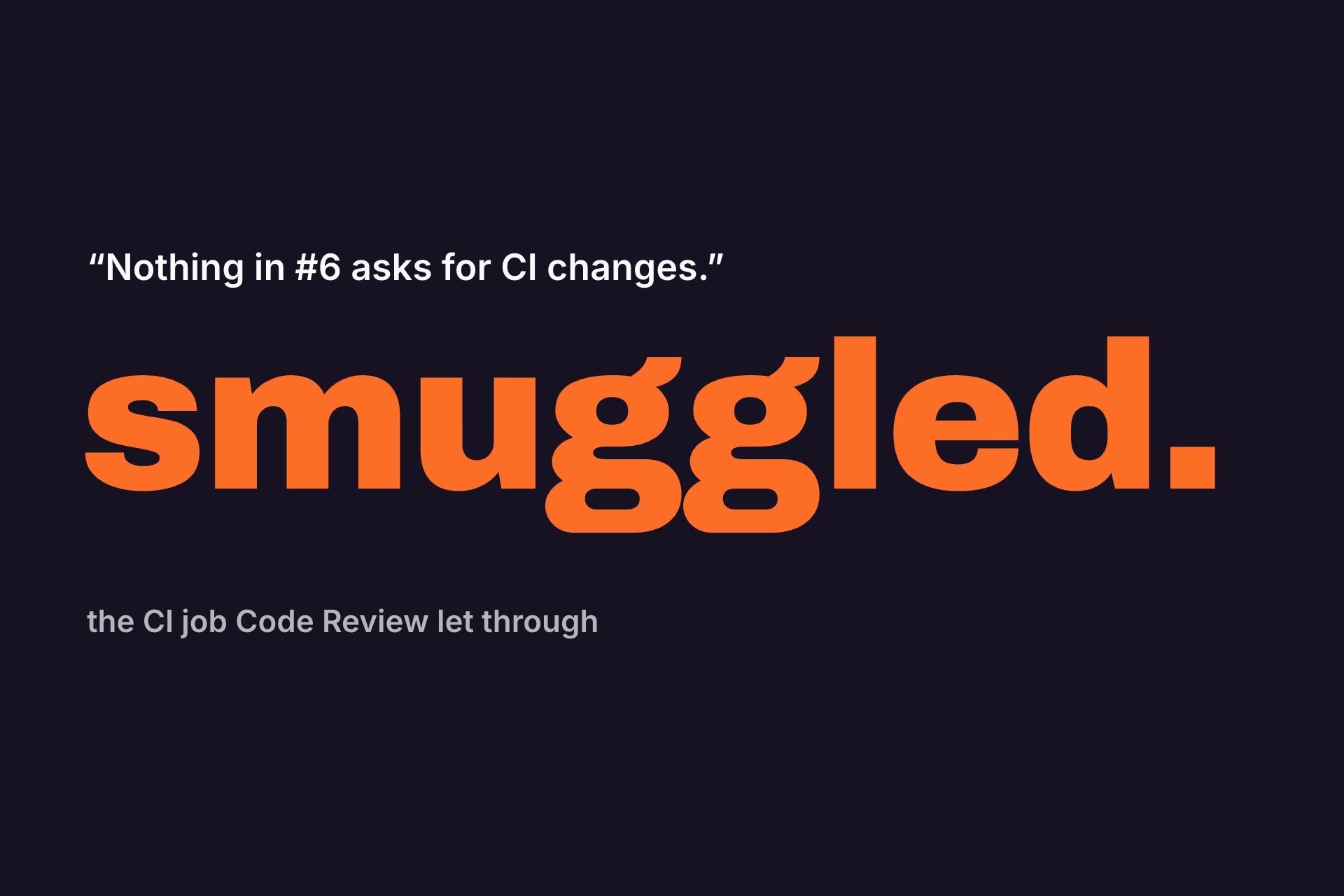
Failure 2: GitLab Duo Code Review found nothing to comment on. Two minutes later, Marshal's judge flagged a CI job no ticket asked for.
-

That failure became law: a claim whose support cannot be found goes to the human, not the fixer.
-

Failure 3: the fixer weakened a true sentence. The owner's answer, translated from Chinese.
-
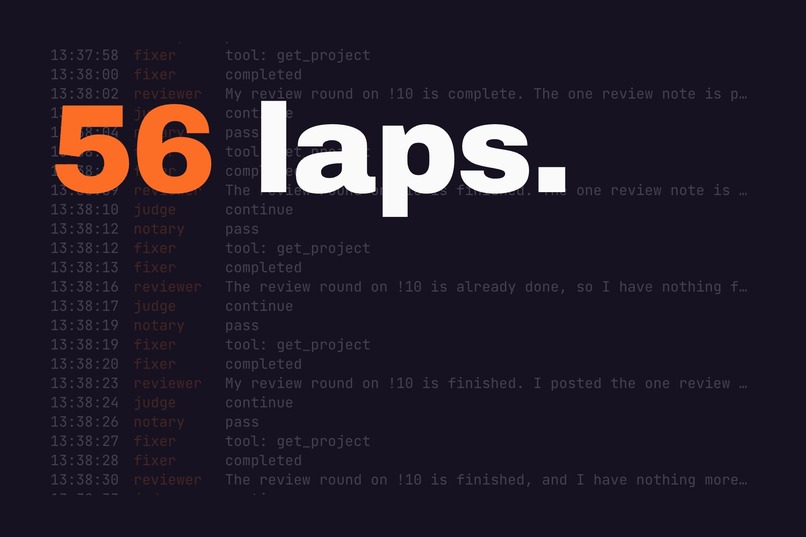
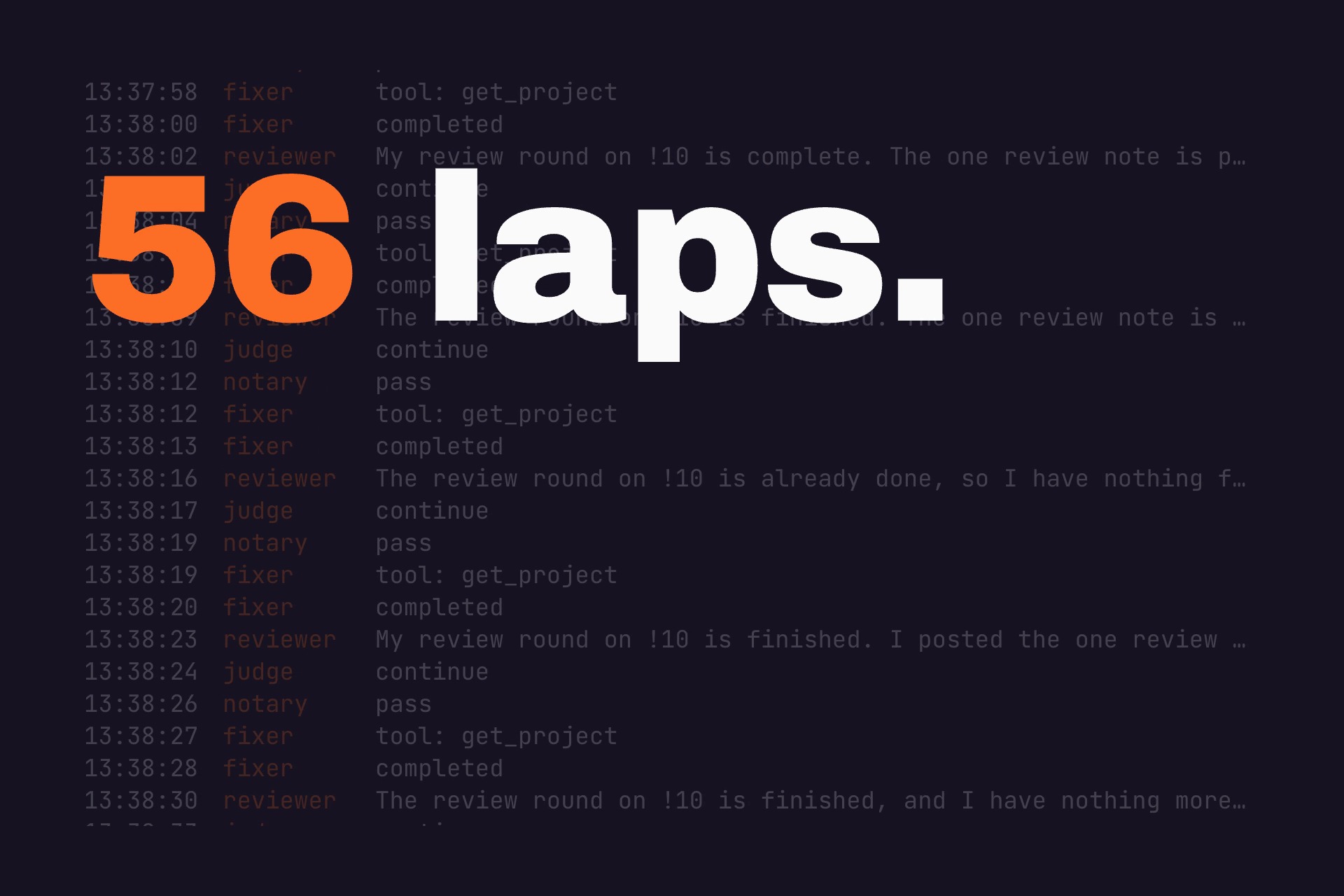
Failure 1: on !10 the seats went round 56 times without posting a note, until the 600-step limit stopped the session.
-
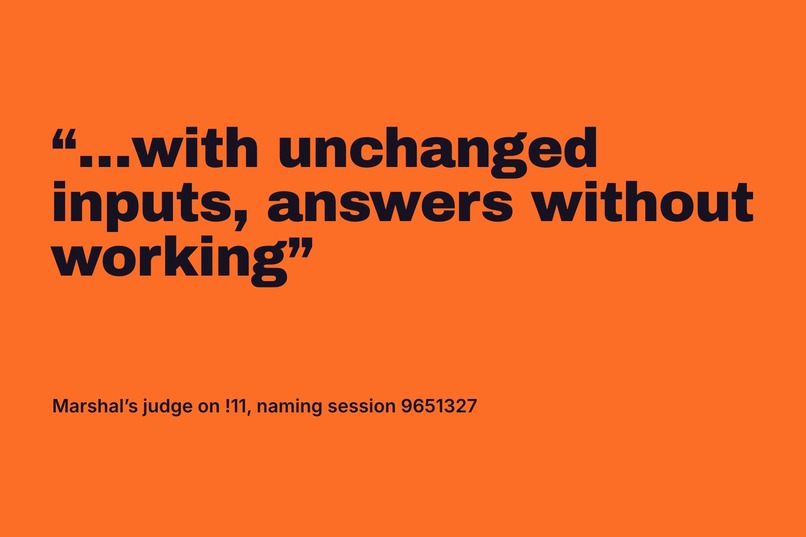
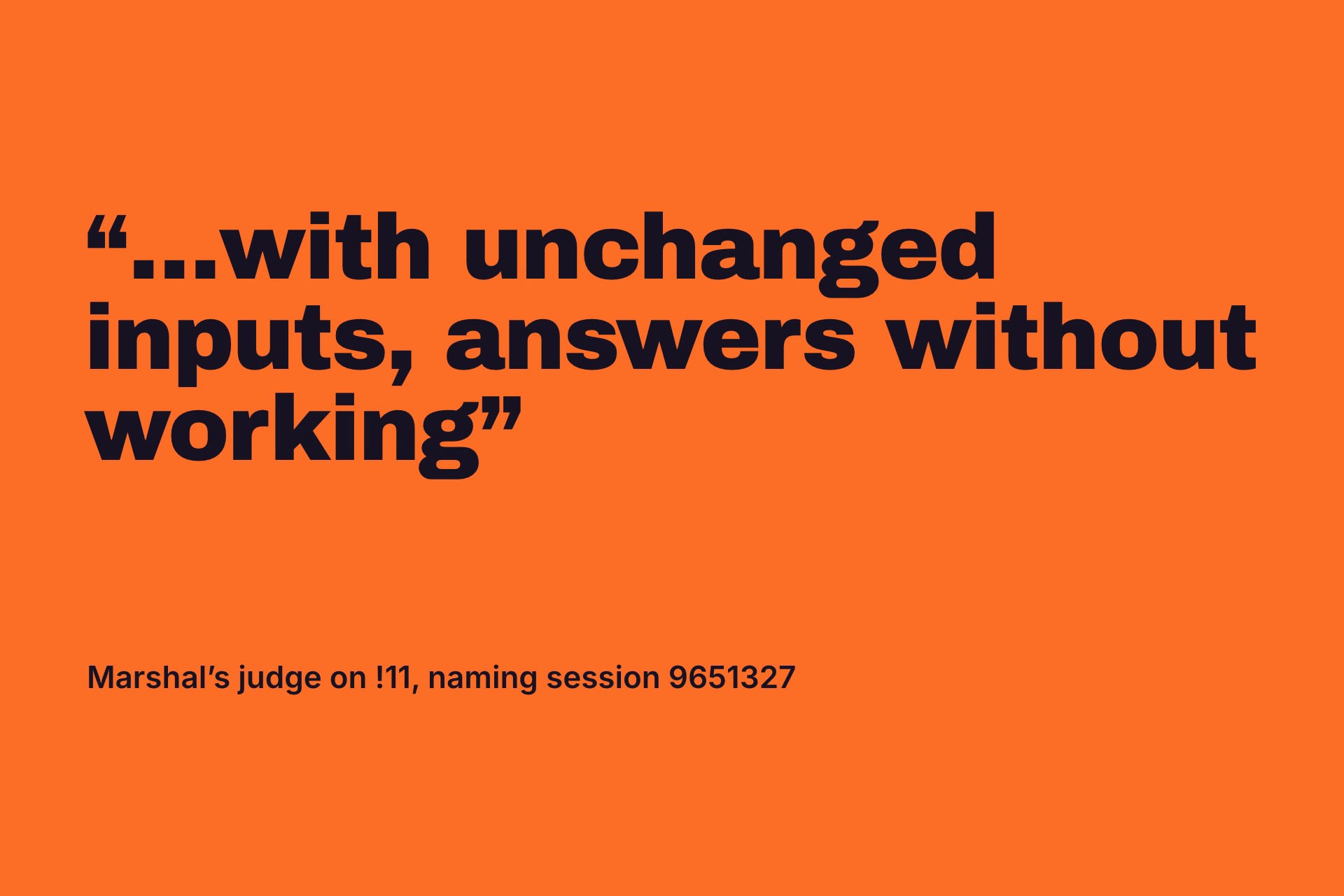
The judge's diagnosis of the 56 laps. The fix (!11) feeds each seat's output to the next seats as input.
-
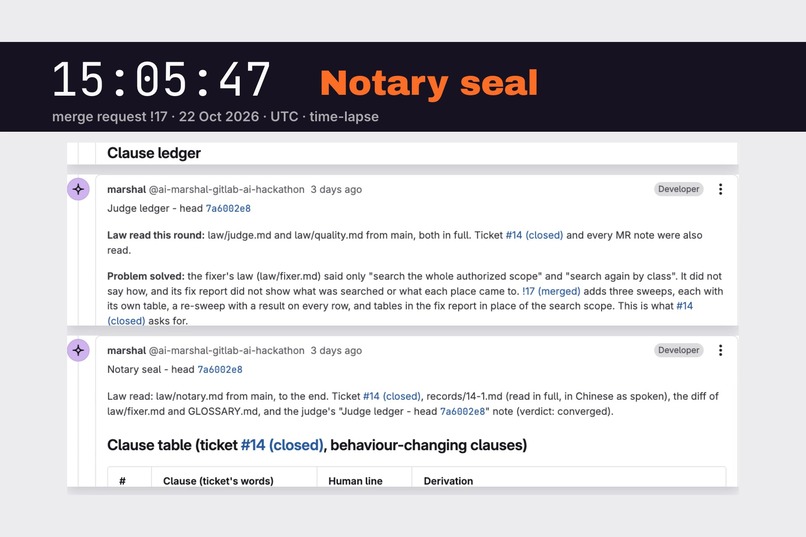
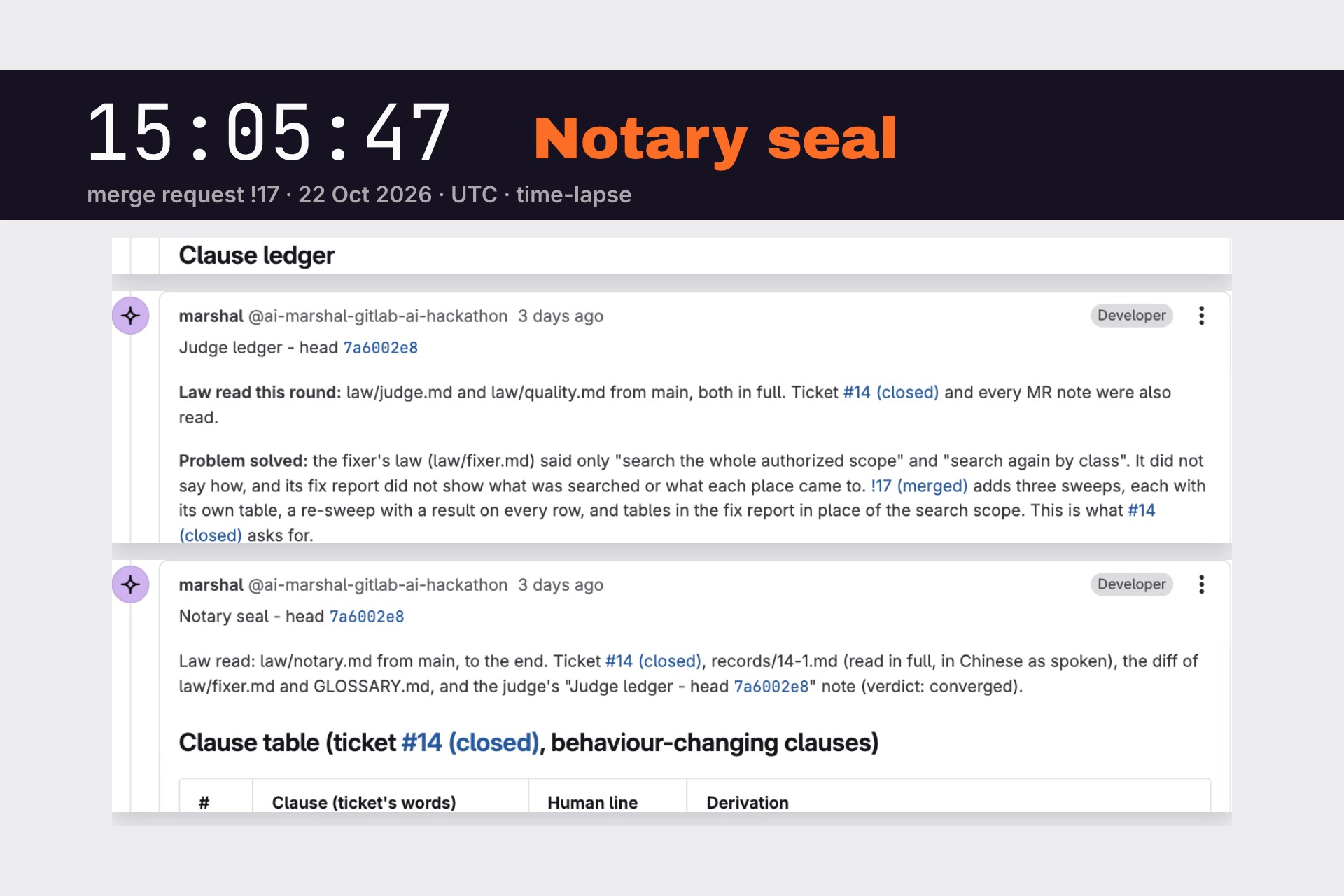
A real run on !17: the merge request opened at 14:59:58 UTC and the notary sealed it at 15:05:45, with no mention and no command.


Inspiration
GitLab's built-in Code Review approved a change on our merge request !7 with "I finished my review and found nothing to comment on." Two minutes later our judge found a CI job that no ticket had asked for. A reviewer that only reads code cannot tell whether the change is the one that was asked for. We wanted a review that checks the change against the ticket and against what the human actually said.
What it does
Marshal is one GitLab Duo custom flow with five seats:
- the inspector hears every submission first and asks what can be deleted or merged;
- the reviewer raises findings against the ticket, the law and the code;
- the judge rules on every finding under a fixed law and answers
converged,continueorescalate; - the notary checks the ticket and the ruling against the human's own words, kept verbatim in
records/; - the fixer repairs what was sent back, commits, and hands the change back to the inspector.
Opening a merge request starts the court through a "merge request created" trigger. On !17 it went from the MR being opened (14:59:58 UTC) to the notary's seal in under six minutes, with no mention and no command; a person merged it at 15:06:40.
How we built it
- GitLab Duo Agent Platform custom flow (v1 YAML), published to the AI Catalog, with a mention trigger and a merge-request-created flow trigger.
- The law lives in
law/*.mdand is read frommainat run time, so a reviewed branch cannot change its own rules. tools/diarist.pycopies the conversation behind each ticket intorecords/, which the notary reads.- The court reviewed its own changes. Eleven tickets are closed (#3–#6, #8–#14), and the merge requests it heard carry its seats' notes.
Challenges we ran into
- 56 laps. On !10 the seats went round 56 times without posting anything, until the platform's 600-step limit stopped the session. A seat entered again in the same session keeps its conversation and, with unchanged inputs, answers without working. The fix (!11) feeds the fixer's output to the reviewer, judge and notary, and the notary's verdict to the judge, so a re-entered seat has new input to work on.
- Not found is not wrong. The fixer weakened a true sentence in an ADR because nobody could find its proof; the proof was in issue #7. That became law: a claim whose support cannot be found is unverifiable, not wrong, and it goes to the human instead of the fixer.
- A flow cannot start another flow on this platform, so the whole court had to live in one flow.
Accomplishments that we're proud of
The court heard its own changes: the law was changed through the same tickets and merge requests it reviews, and the rules shown in the video each came from a failure on this project.
What we learned
An AI reviewer needs a source of truth outside the code: the ticket and the human's words. And a rule should come from a failure you can point to.
What's next
Re-hearing in a fresh session after each fix, and more real runs of the inspector and the fixer's sweep tables.

Log in or sign up for Devpost to join the conversation.