-
-
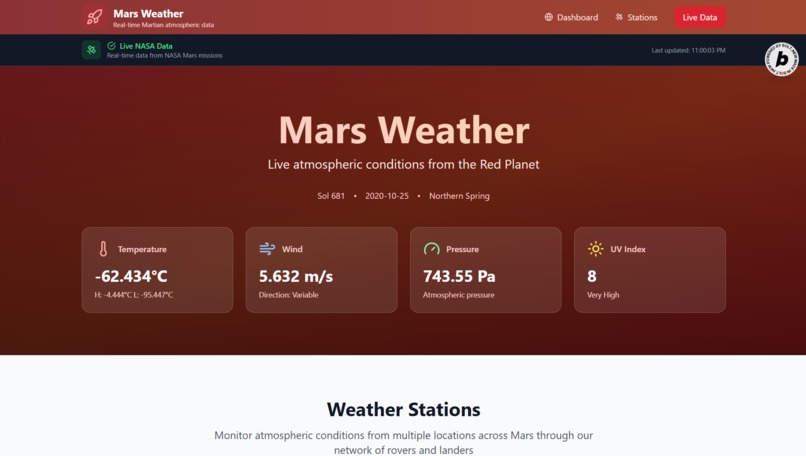
Homepage
-
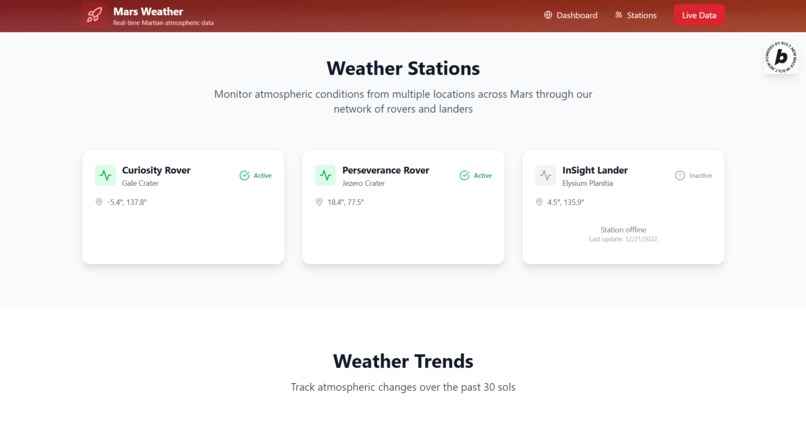
WeatherDetail
-
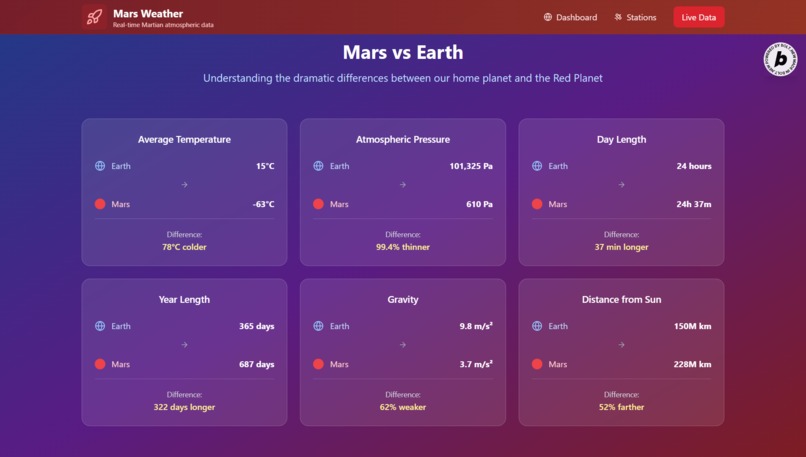
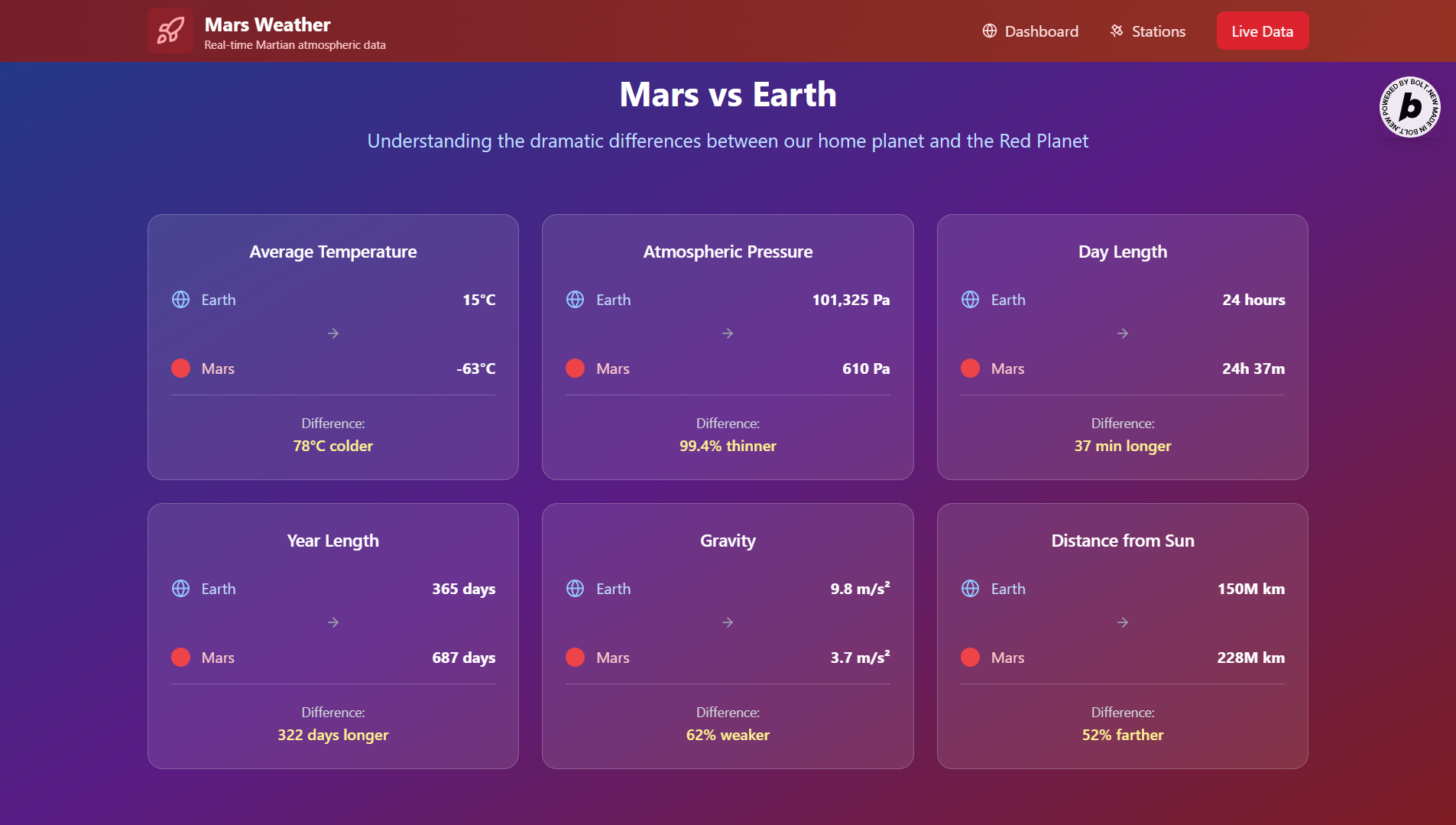
Mars's Weather VS Earth's

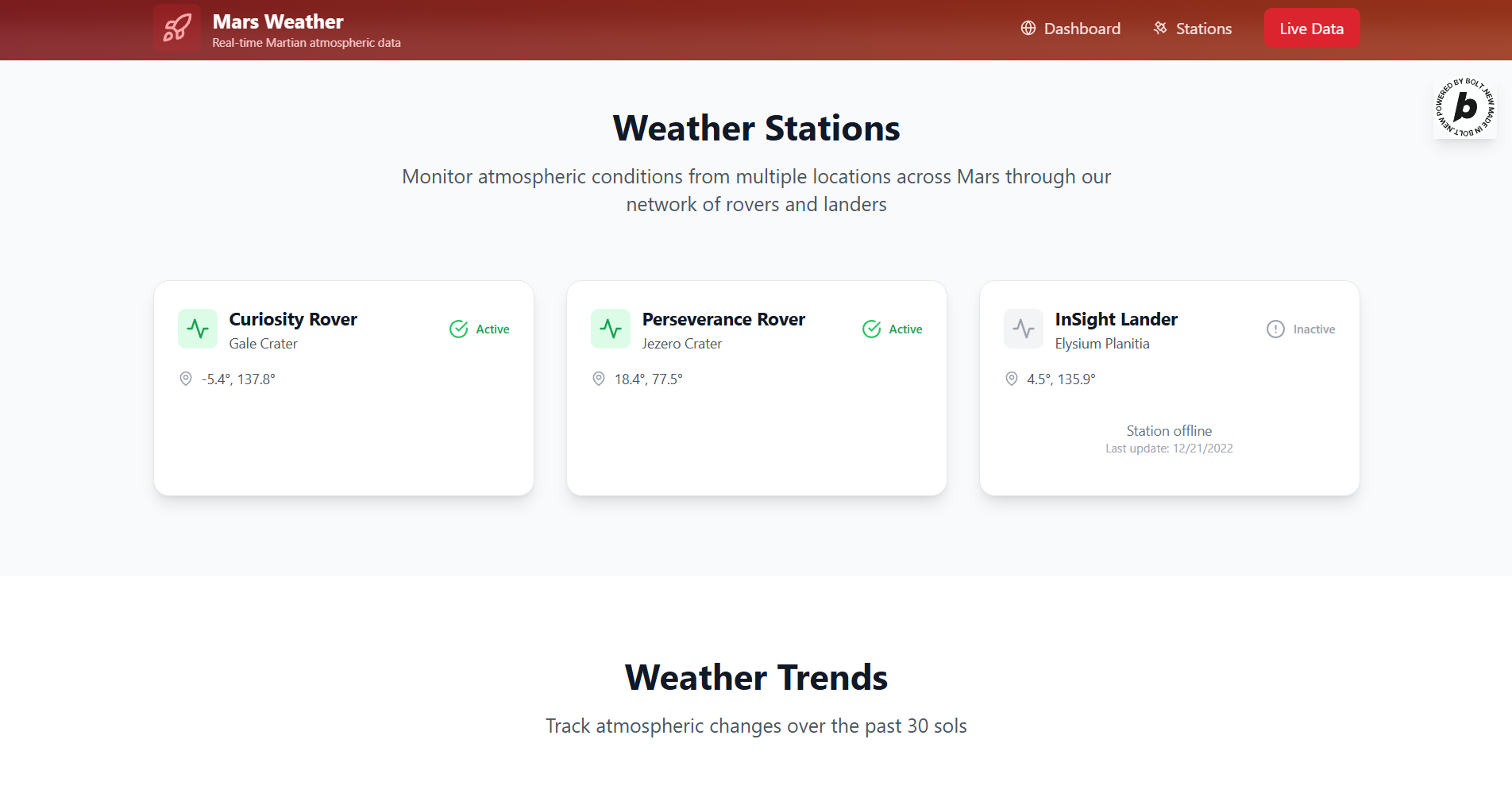
Inspiration
The idea for Mars Weather came from a playful curiosity about what the weather would be like on Mars if we could check it as easily as Earth weather apps. I’ve always found space exploration fascinating, and seeing NASA’s real-time Mars data made me want to build something small, clean, and fun to visualize it. I also wanted to test how much I could achieve using Bolt.new in a single-shot prompt to see how quickly ideas could turn into a functioning micro-app.
What it does
Mars Weather shows live atmospheric conditions from Mars, including temperature, wind speed, atmospheric pressure, and UV index, in a clean dashboard layout. It uses NASA’s real-time data feed to display the latest conditions on the Red Planet in a visually appealing, easily readable format.
How we built it
The project was built in one prompt using Bolt.new, leveraging its instant scaffolding to generate a clean, responsive interface with modern typography, a warm Mars-themed color palette, and clear component structure. It fetches live Mars data and displays it in modular cards for clarity. The navigation includes a dashboard, stations, and live data for a realistic weather app feel.
Challenges we ran into
The biggest challenge was seeing how much could be achieved in a single prompt, which meant I had to phrase my instructions clearly to get the UI and data structure I wanted. Ensuring the data display remained clear while keeping the design consistent within the constraints of auto-generated projects was also a fun limitation to work within.
Accomplishments that we're proud of
I am proud that this project was fully generated and functional in a single prompt, demonstrating how fast an idea can turn into a working micro-tool with modern no-code/low-code AI builders. The clean, aesthetic presentation of Mars data makes it genuinely enjoyable to check the weather on Mars as a quirky, educational side project.
What we learned
I learned how effective one-shot generation can be for prototyping small ideas quickly and that clear prompt engineering can lead to surprisingly usable results without additional tweaking. I also gained a better understanding of working with live API data inside a constrained auto-builder environment.
What's next for Mars Weather
While it was made for fun, I might add:
- A mobile-friendly optimization pass.
- Historical Mars weather trends visualization.
- A small Mars rover tracking widget.
- Open-source the code for others interested in space data visualization.
For now, it stands as a fun, silly, but functional project to remind us that building and learning can also be playful.
Built With
- bolt.new
- css
- html
- insight
- javascript
- mars
- nasa
- typescript
- vite
- weather

Log in or sign up for Devpost to join the conversation.