-
-
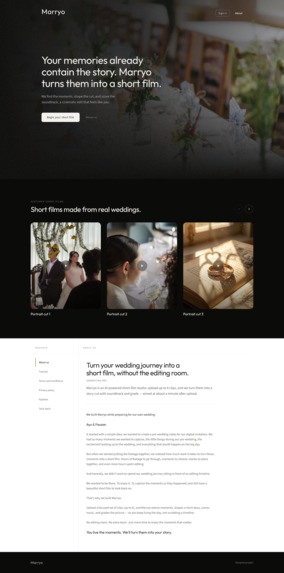
Marryo + Featured Video
-
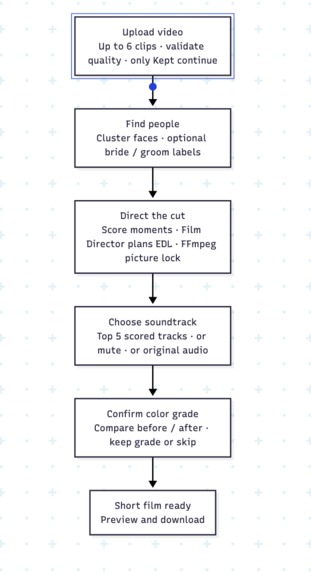
User Flow: after sign in
-
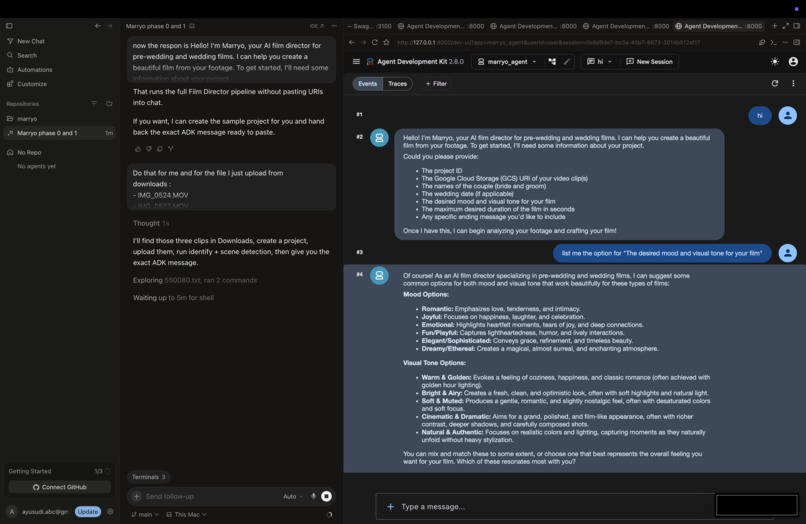
First time use ADK
-
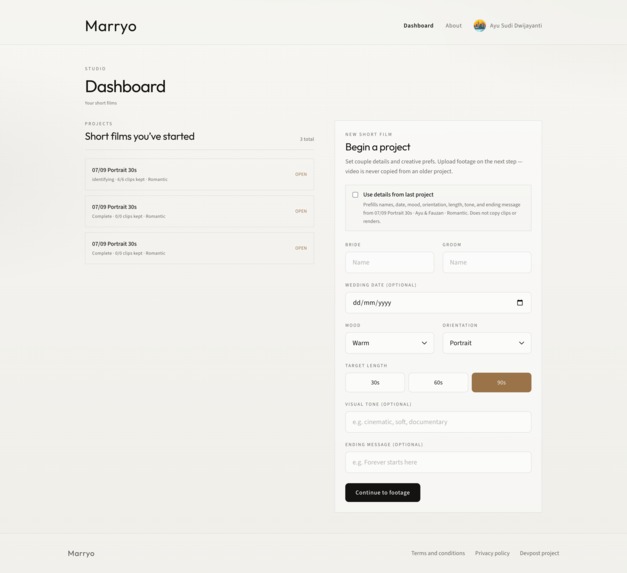
Dashboard User
-
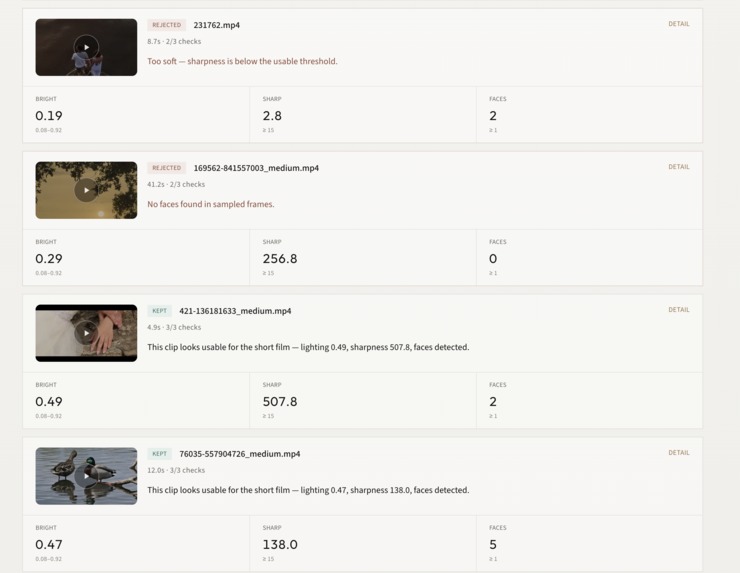
Reject / Accept video (positve + negative case)
-
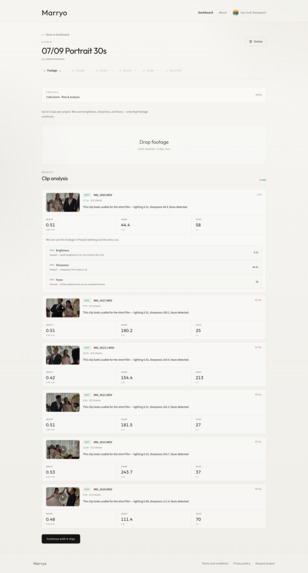
Video Analyze Result (in this screenshot all of video accepted)
-
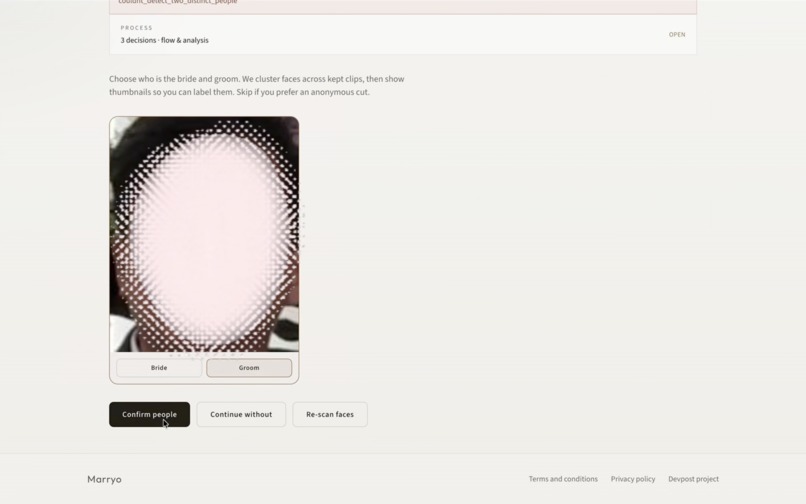
Identify Bride / Groom
-
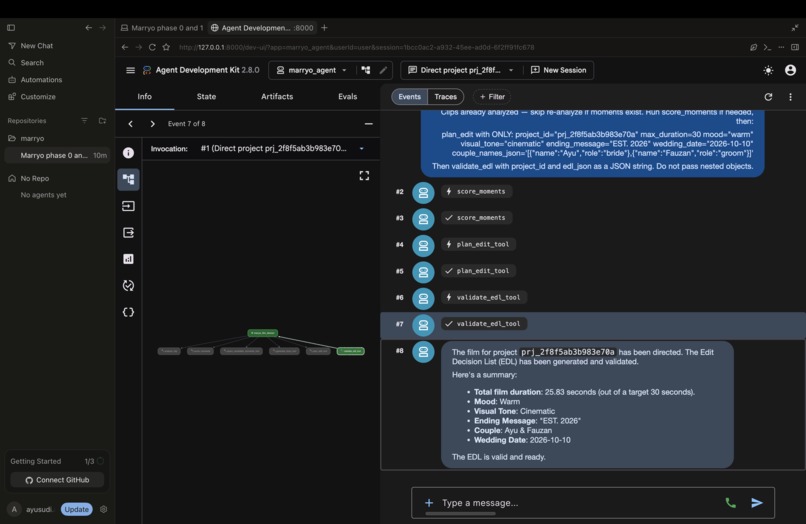
Google ADK used for EDL (Edit Decision List)
-
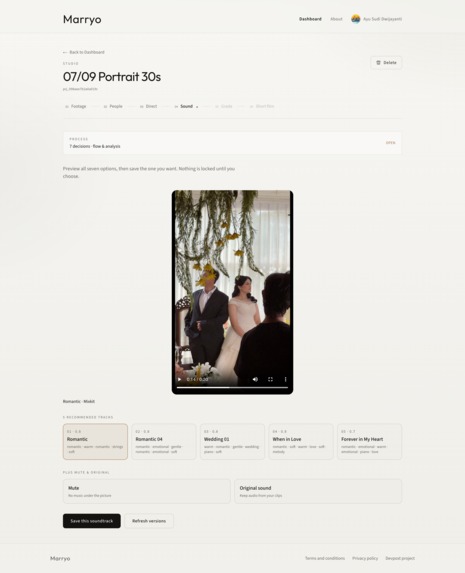
Rendered Video + 5 Recommended Soundtrack
-
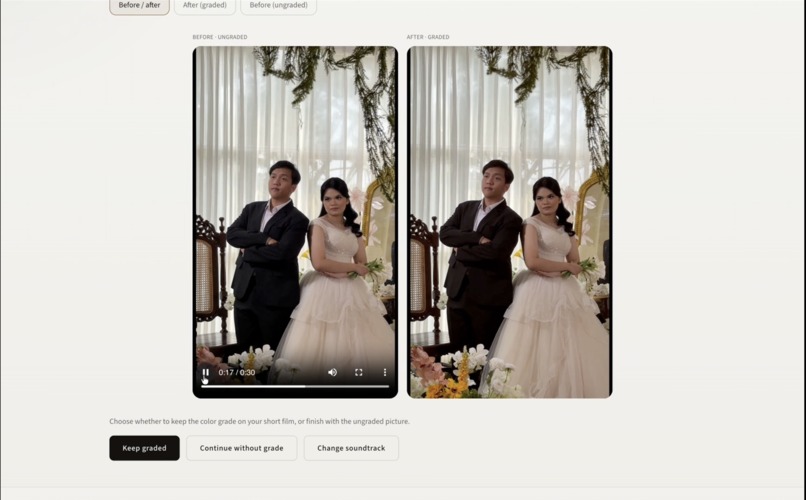
Color Grade Before vs After
-
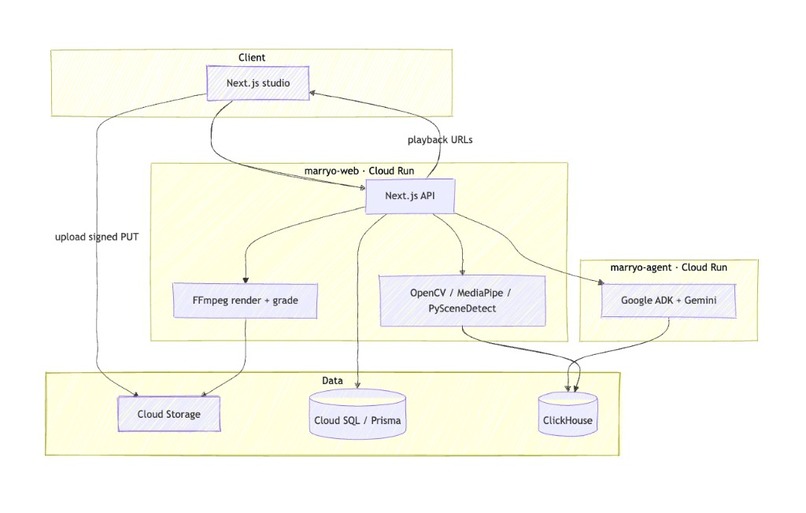
Architecture
-
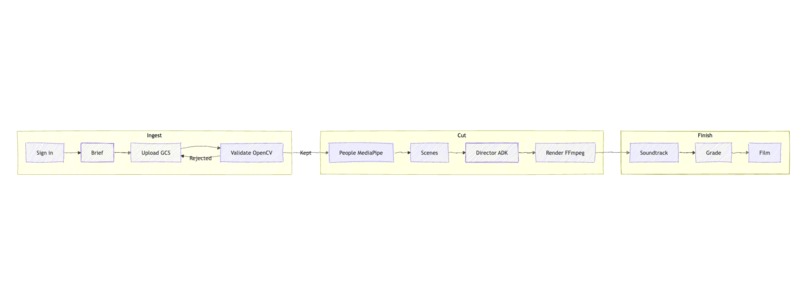
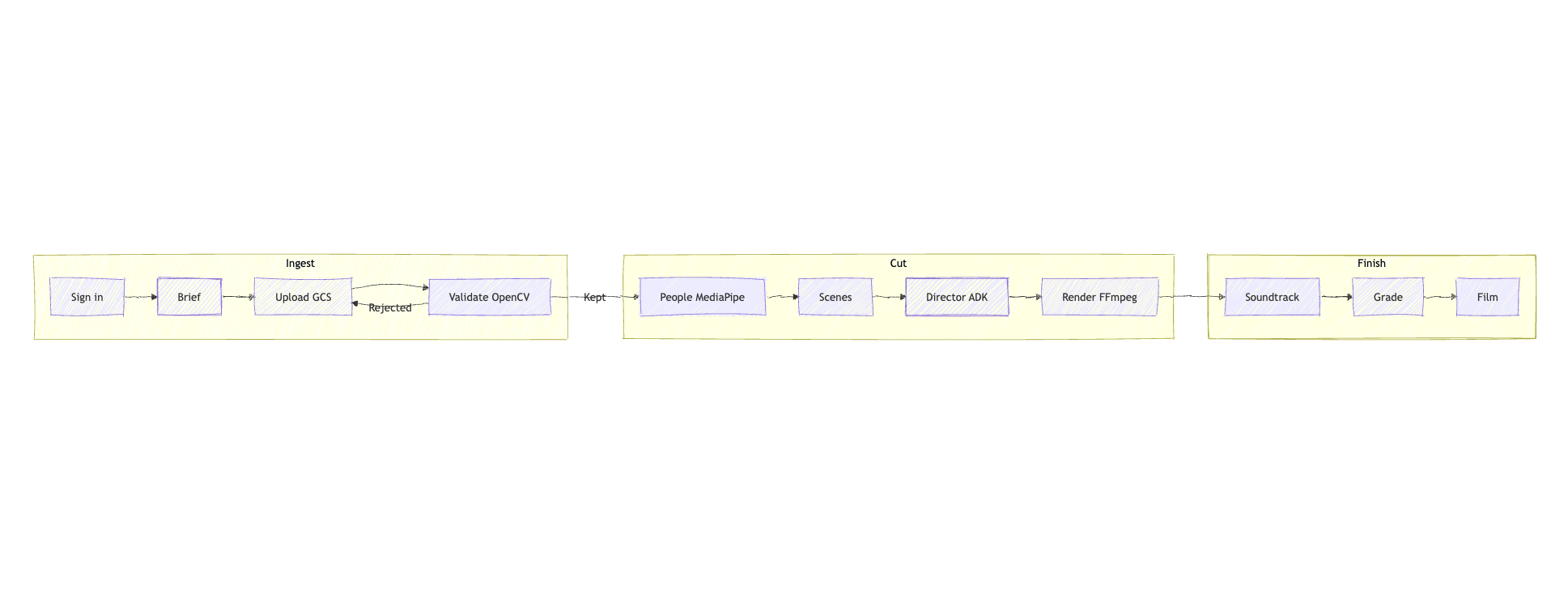
Ingest Cut Finish Flow (Render Flow)
-
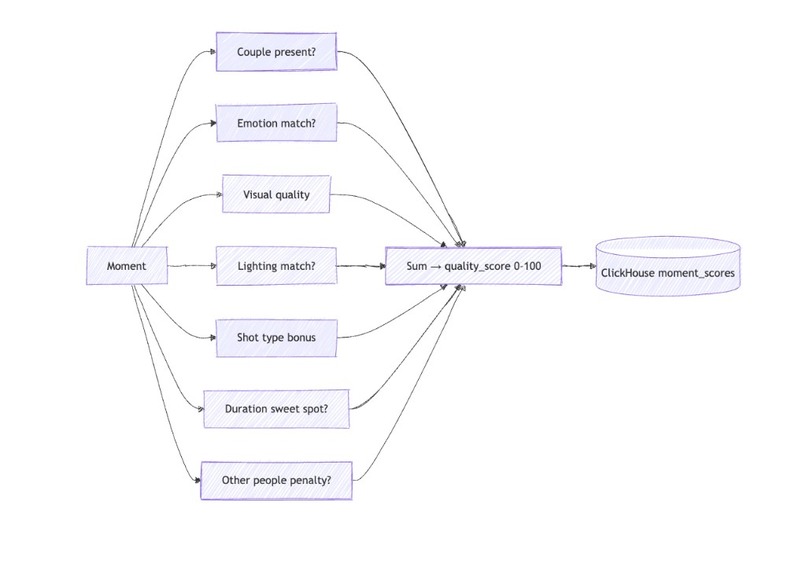
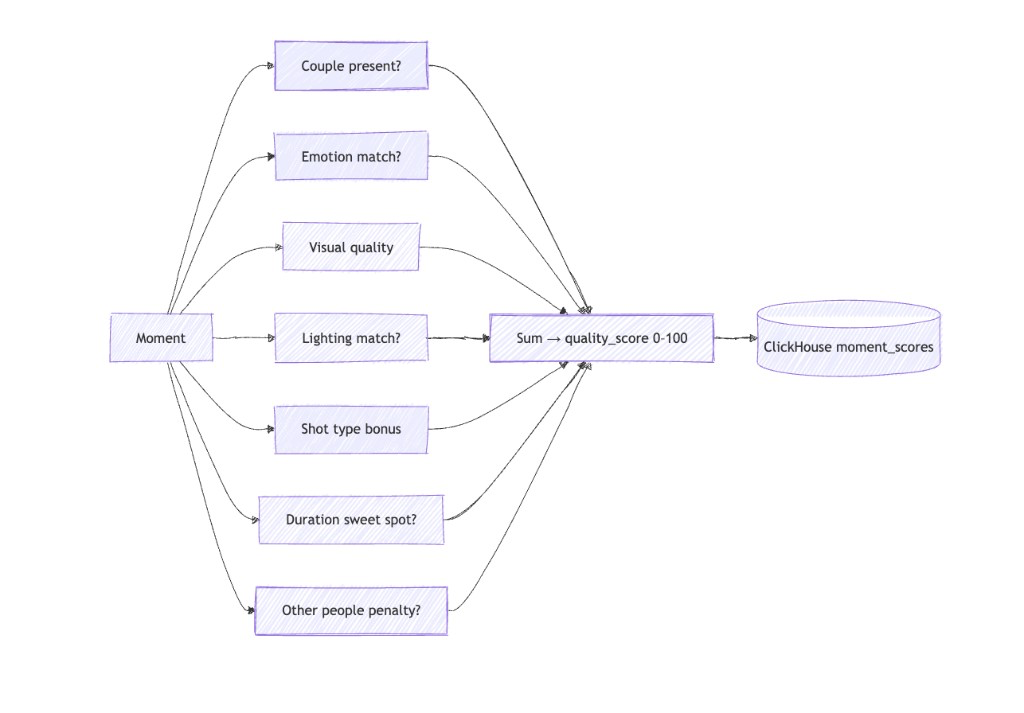
Moment Scoring
-
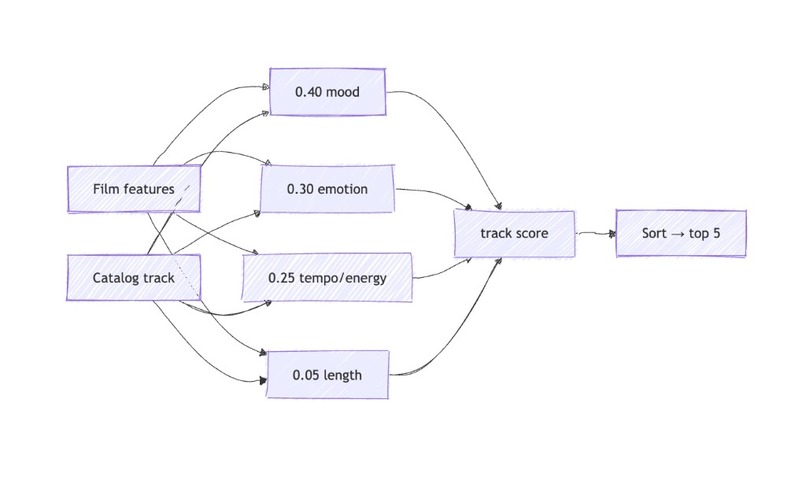
Soundtrack Scoring
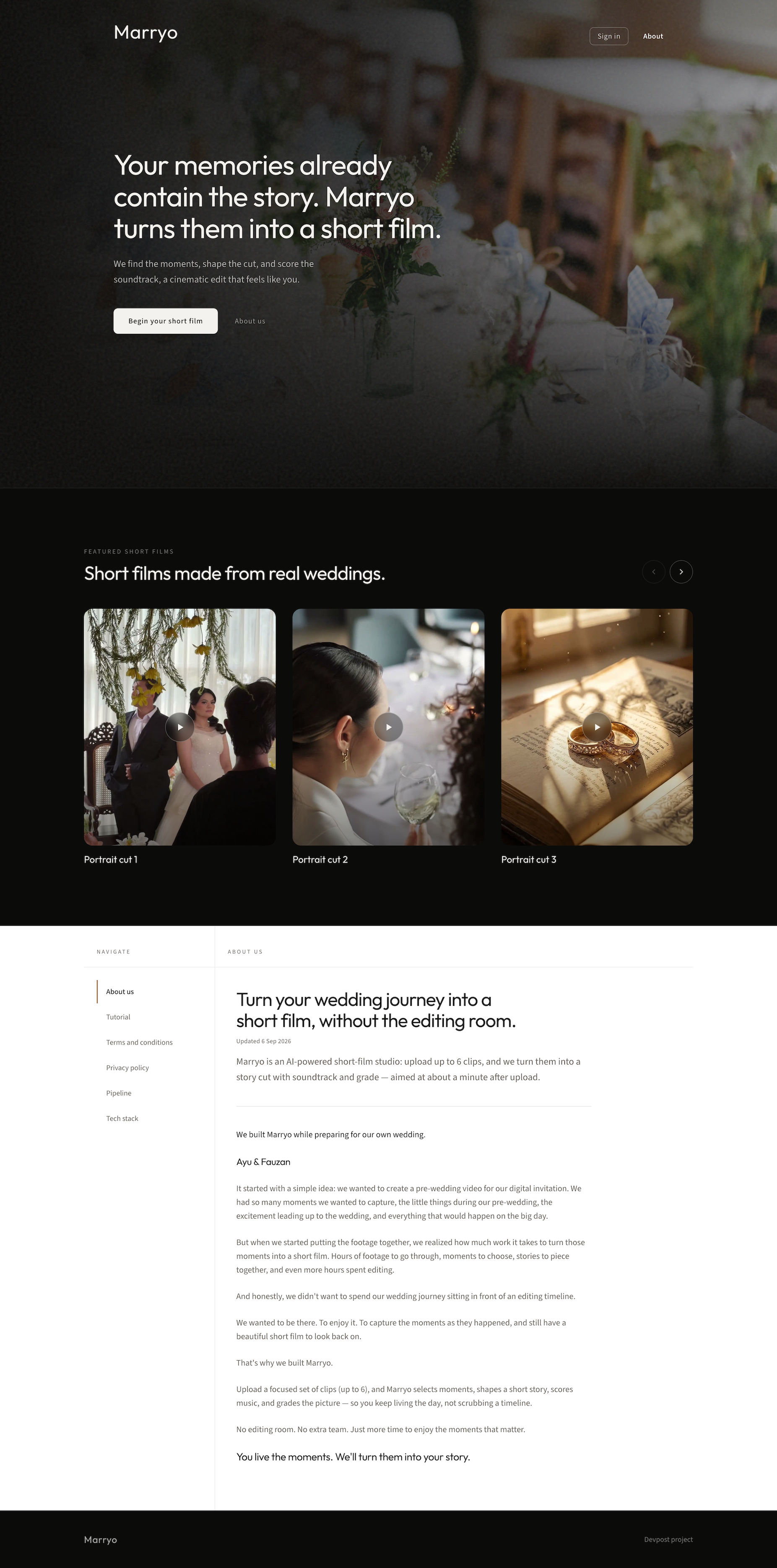
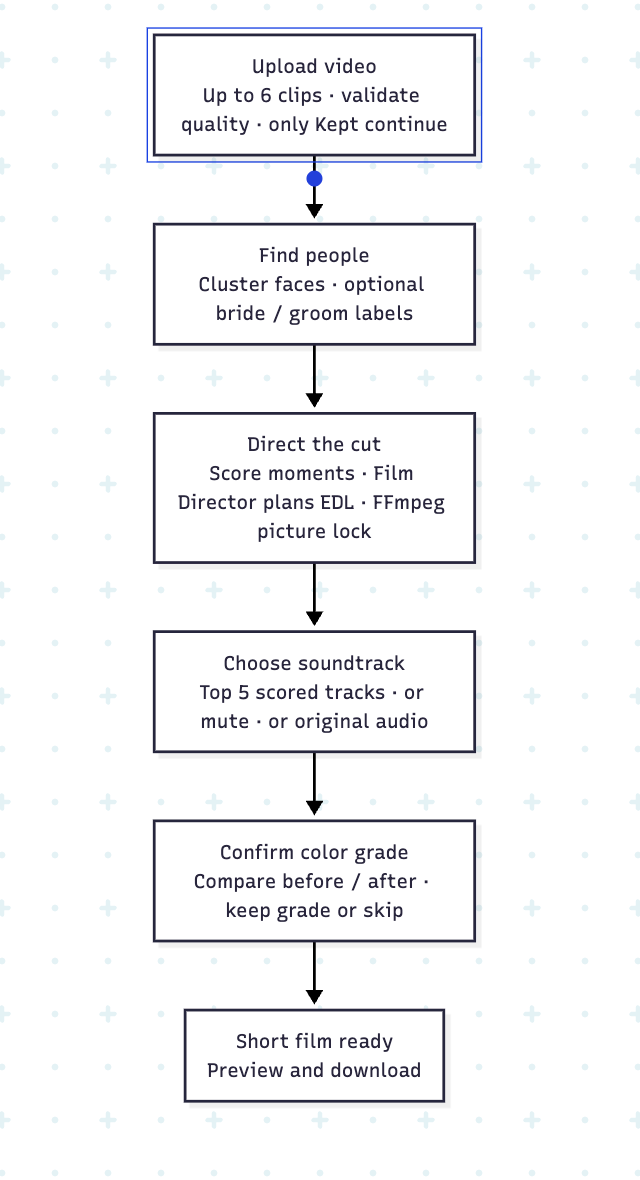
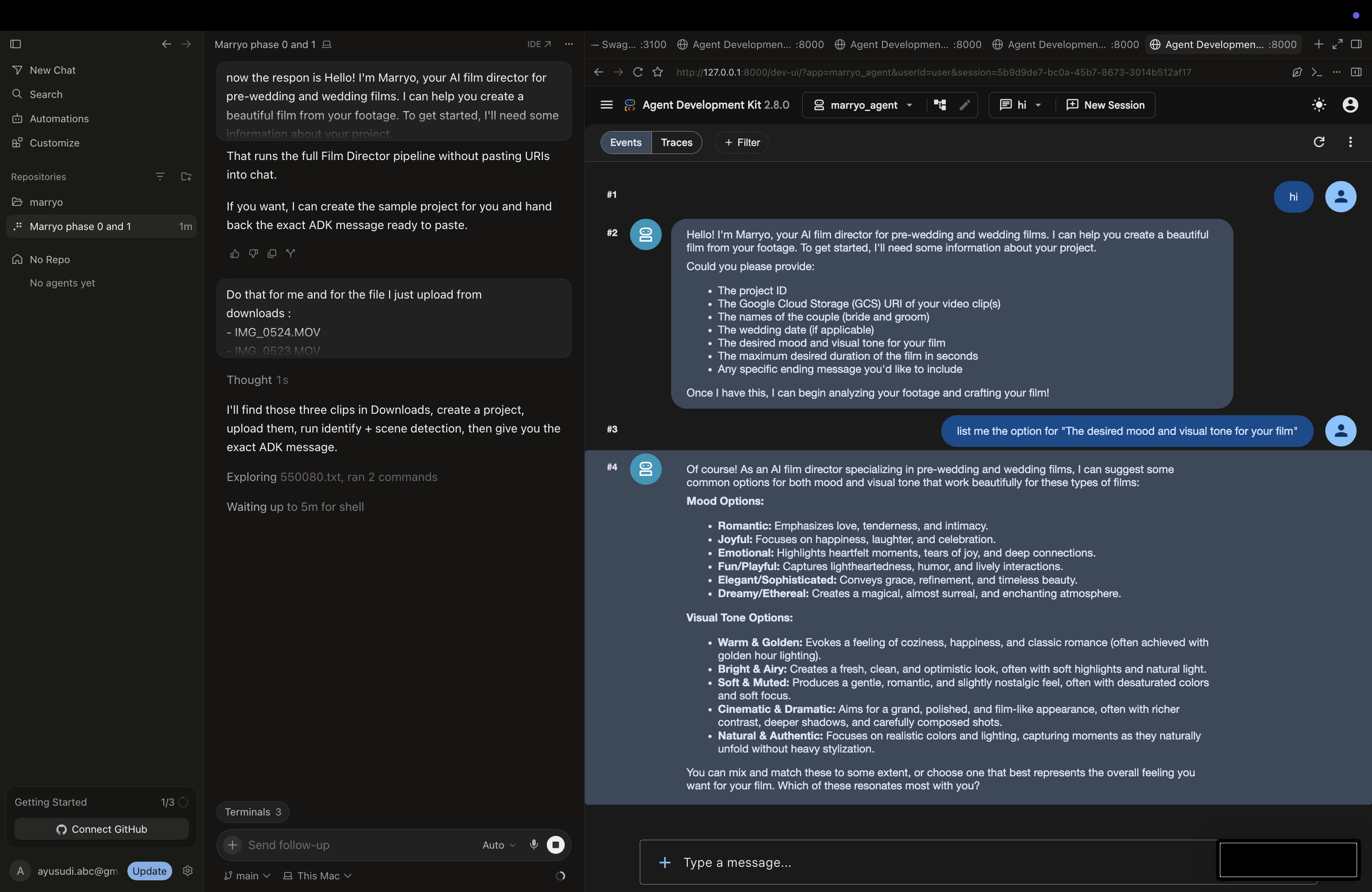
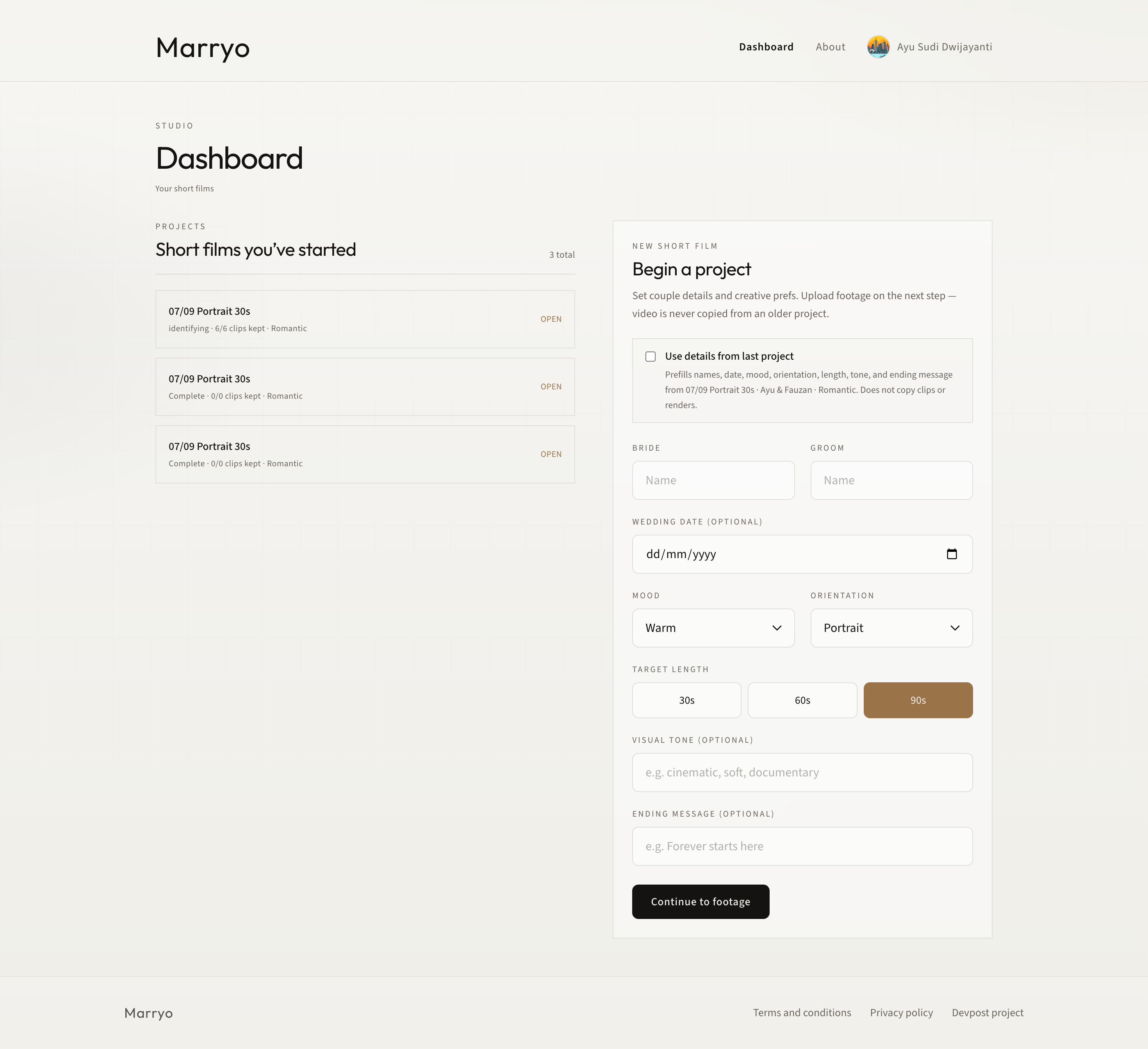
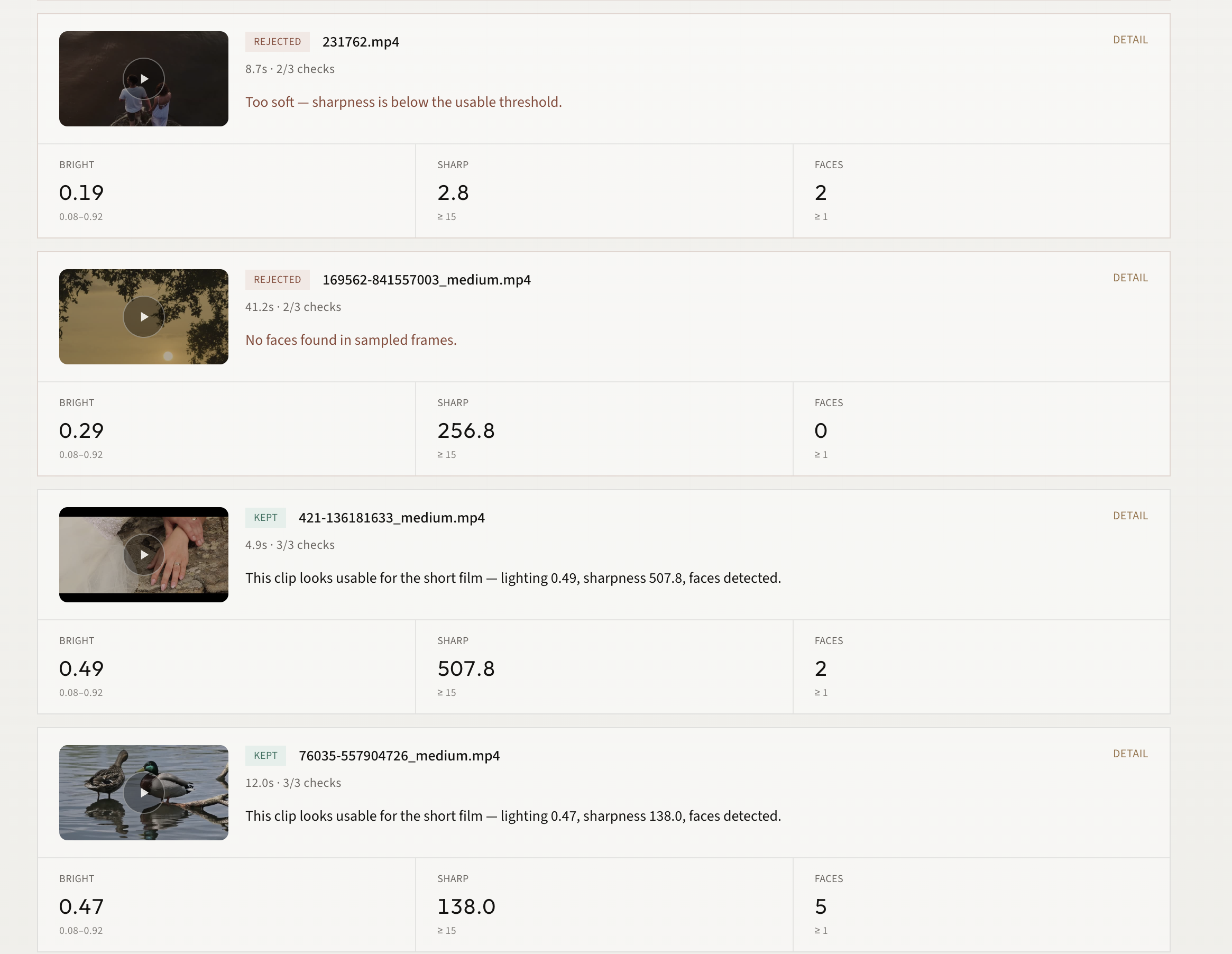
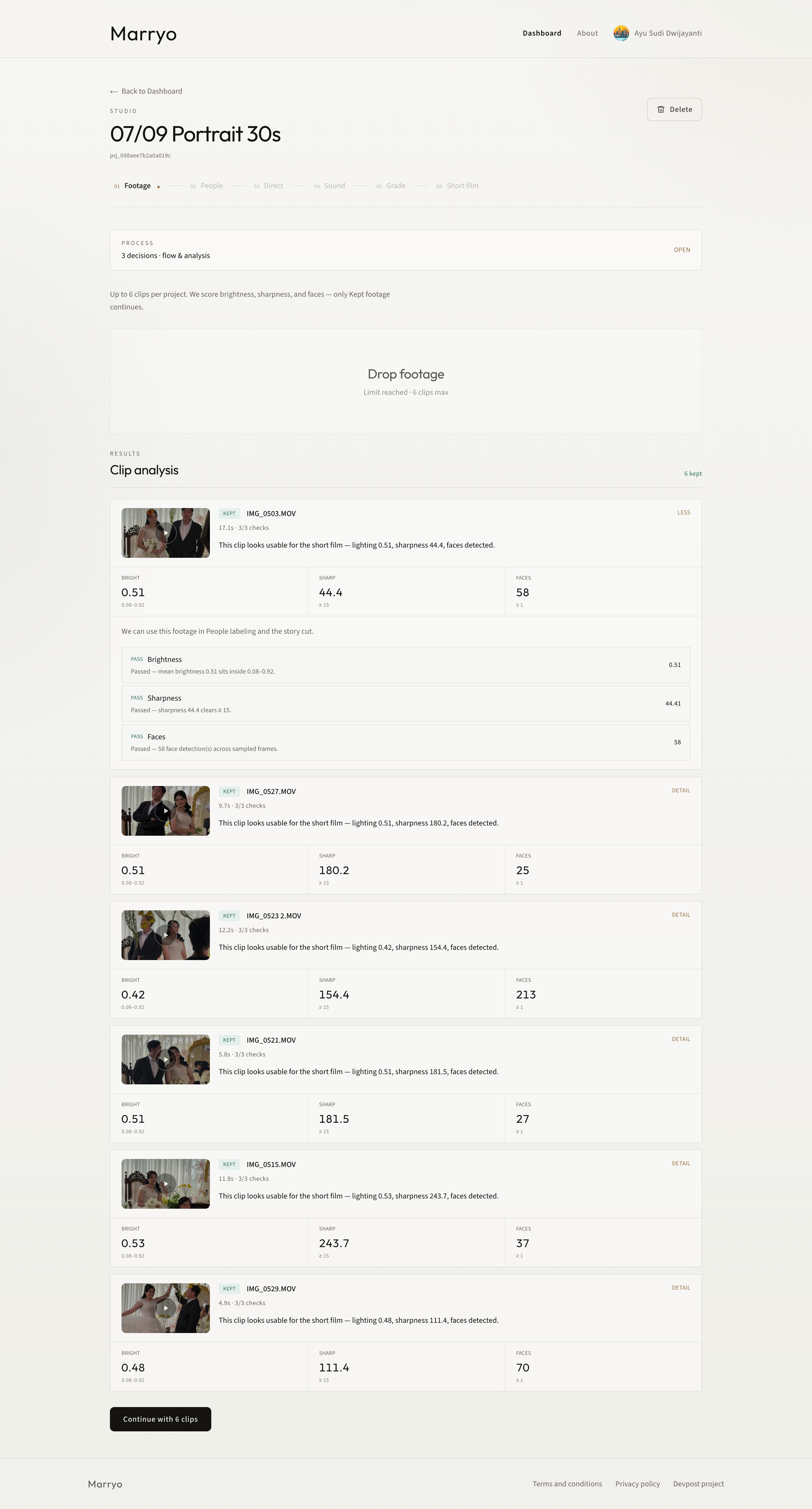
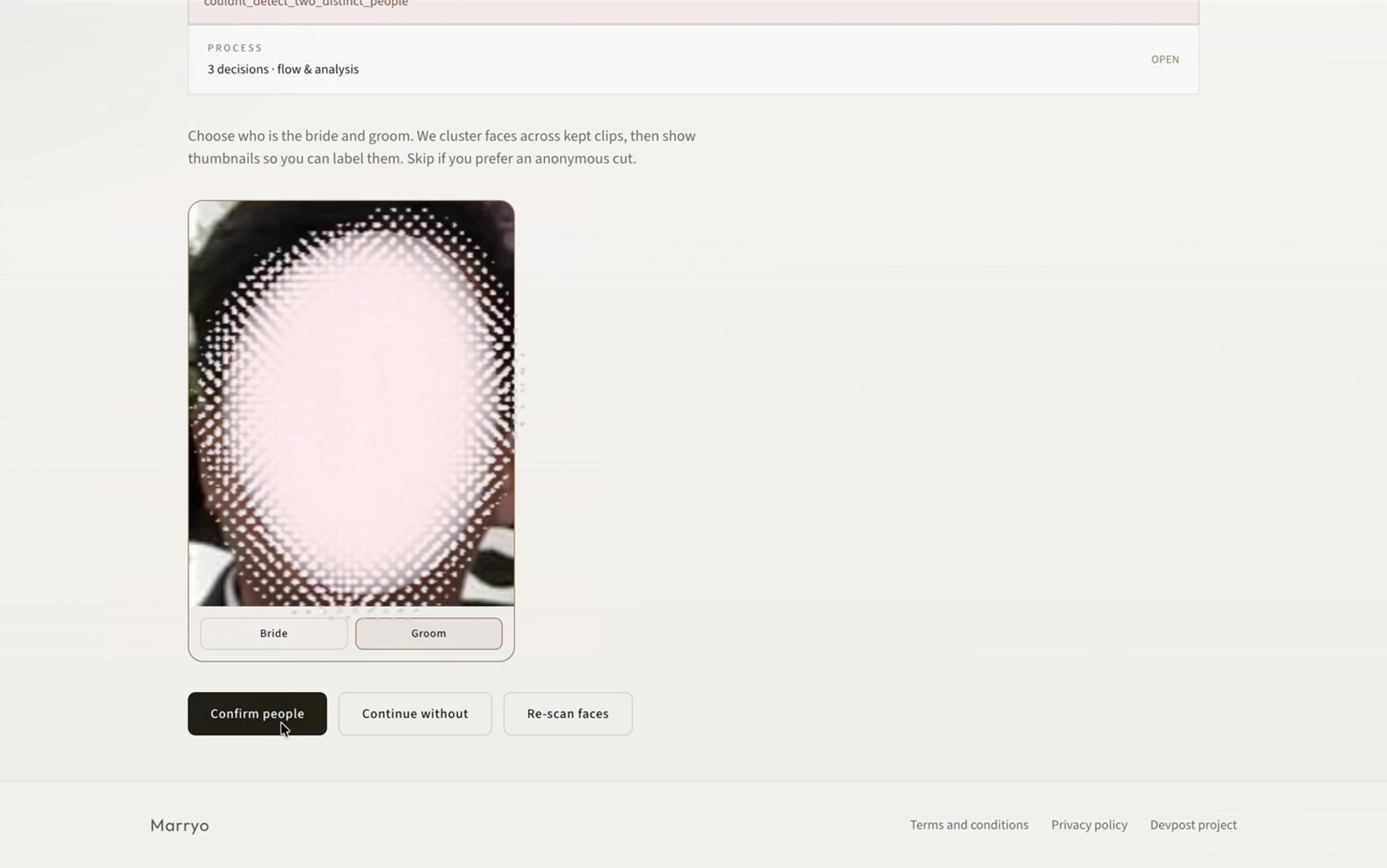
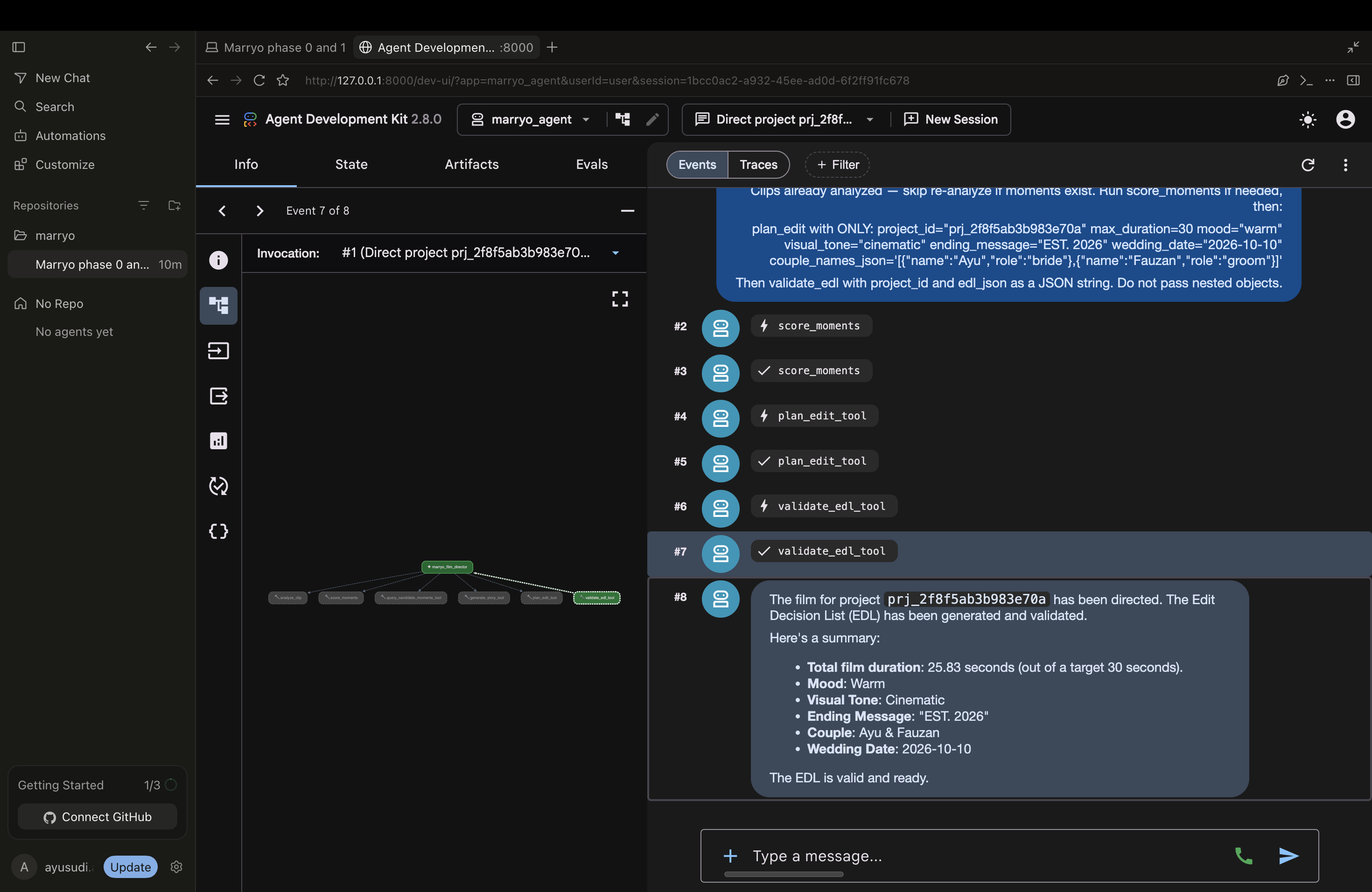
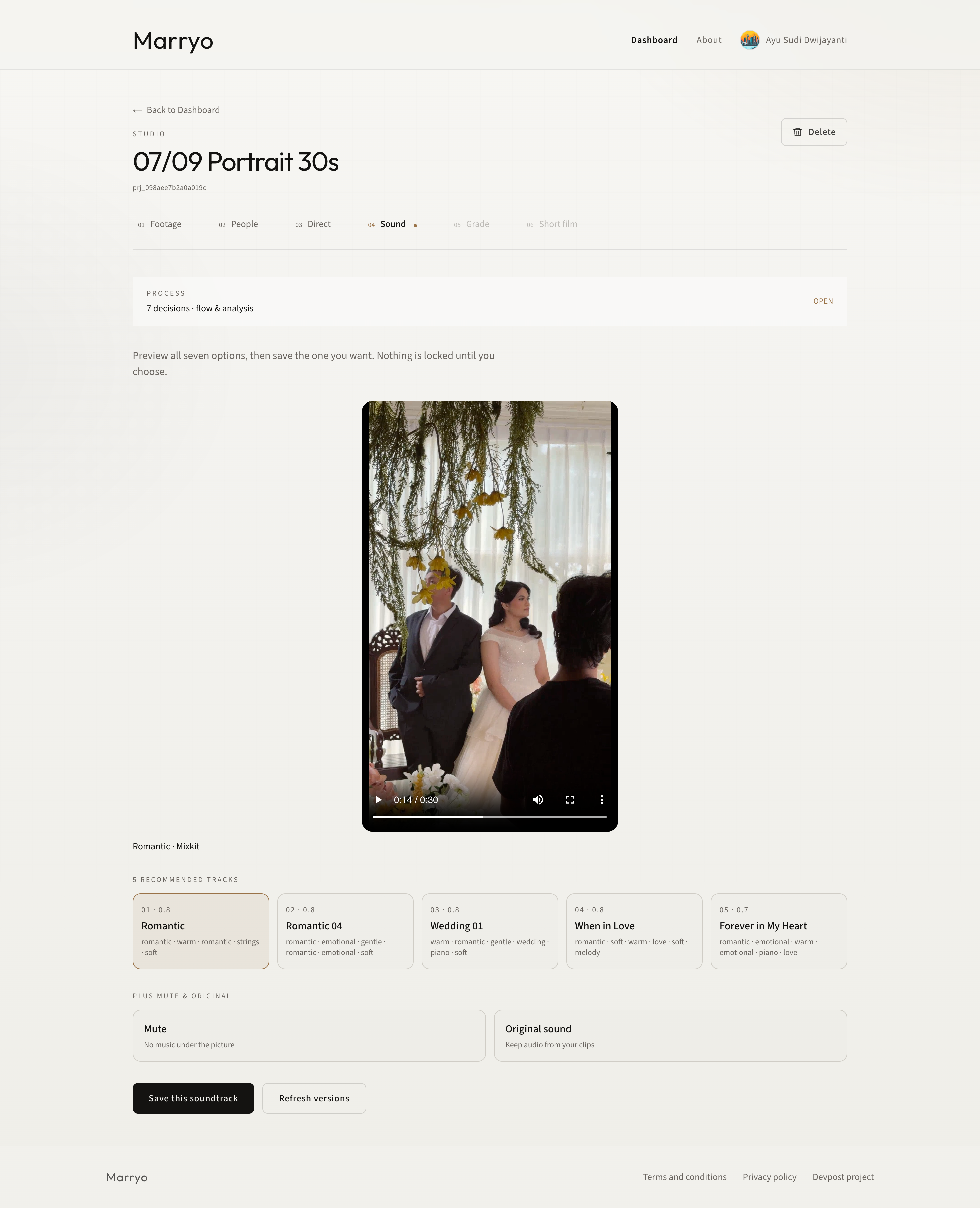
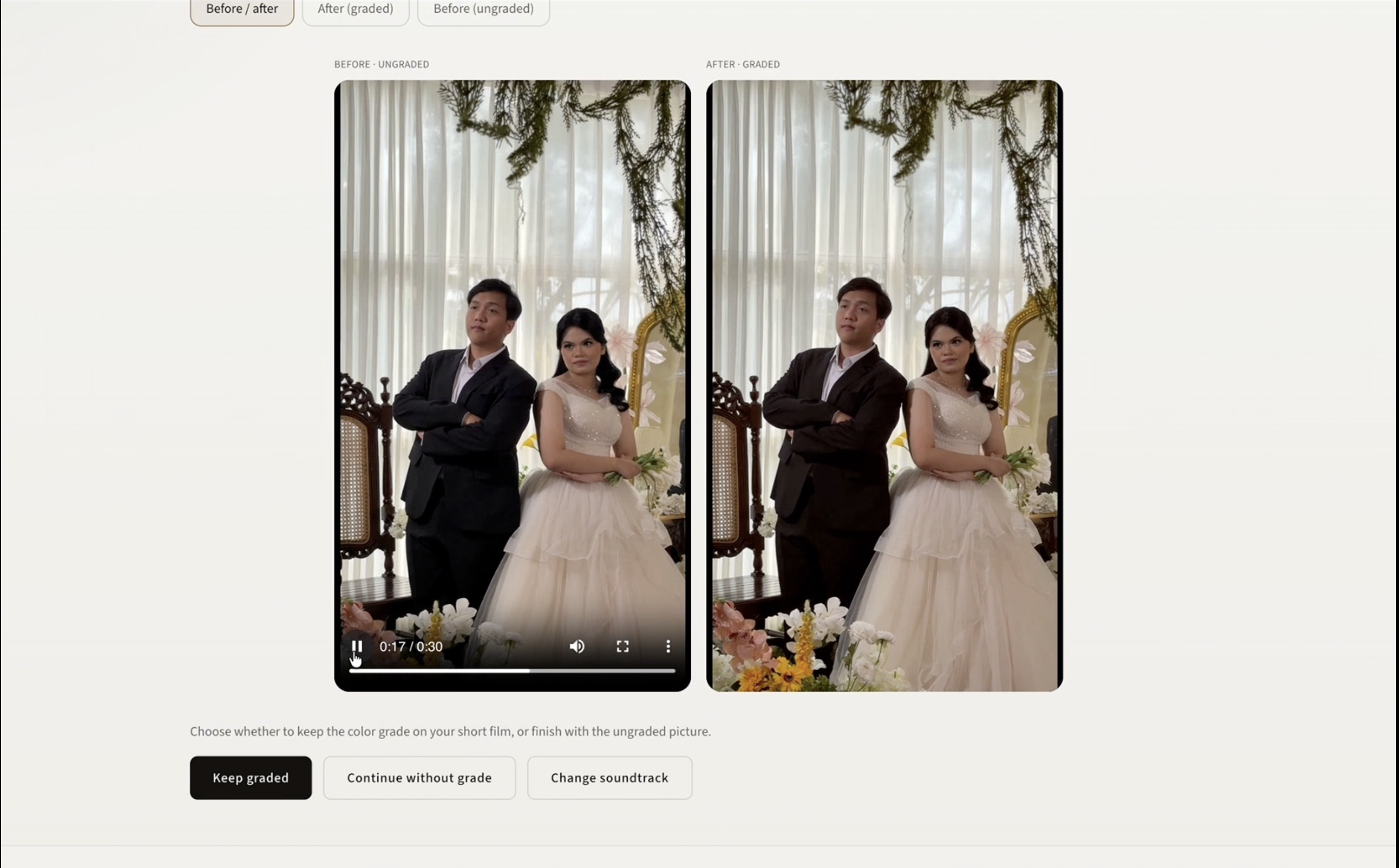
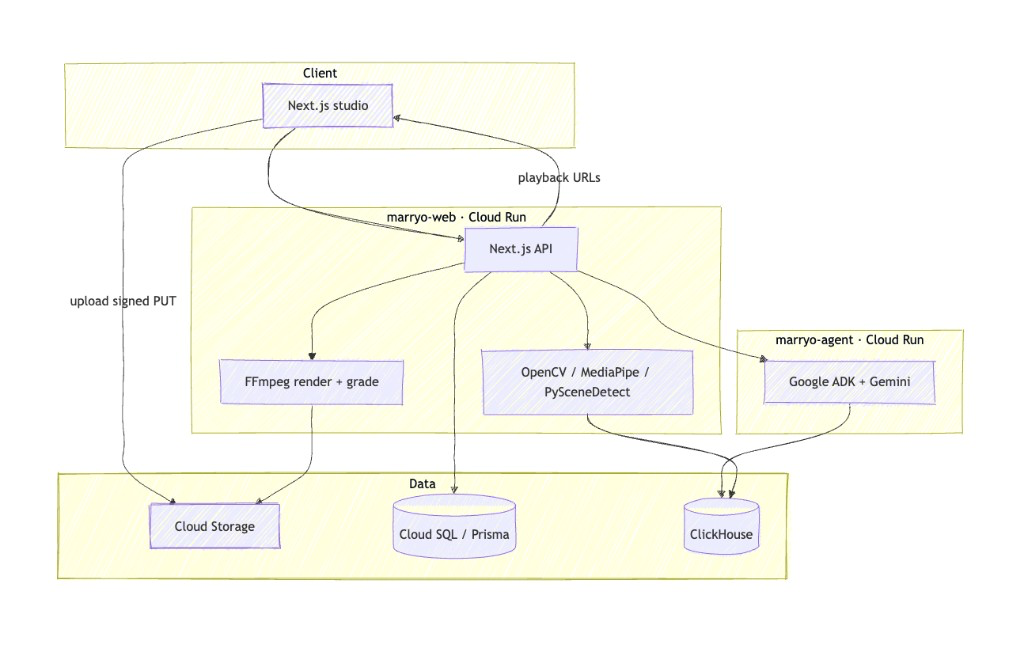
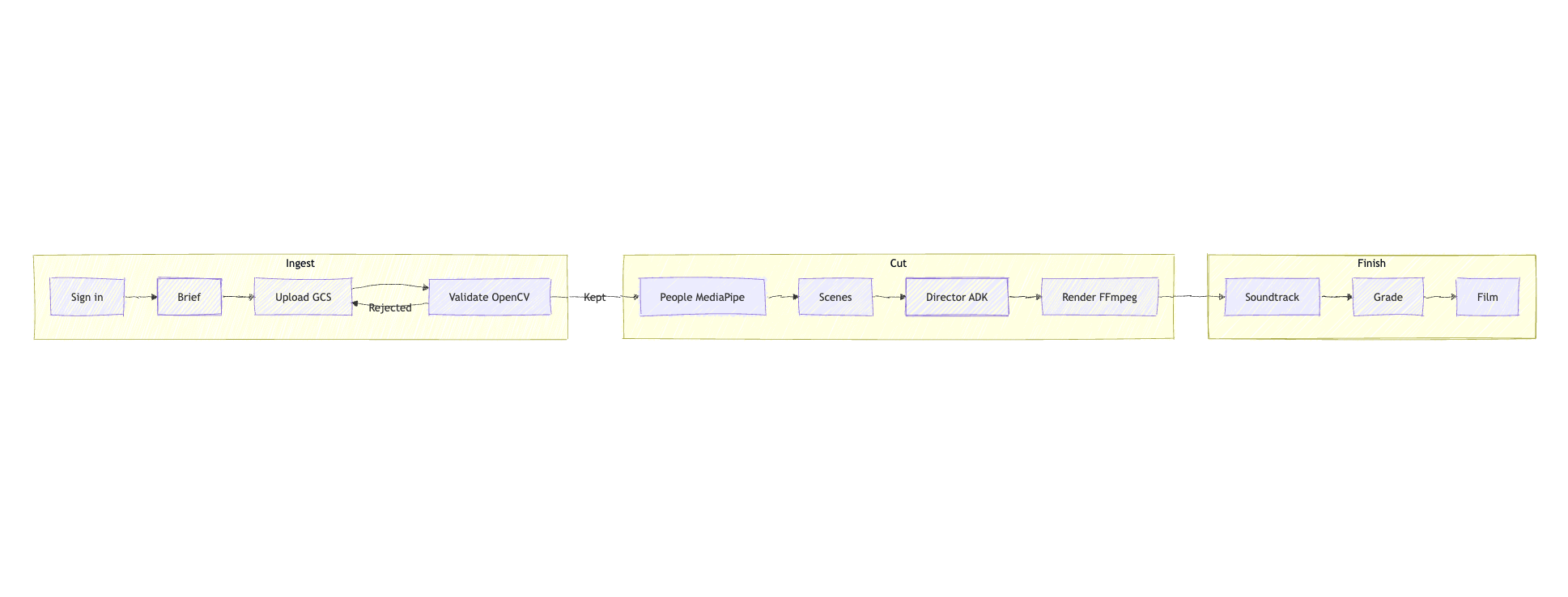
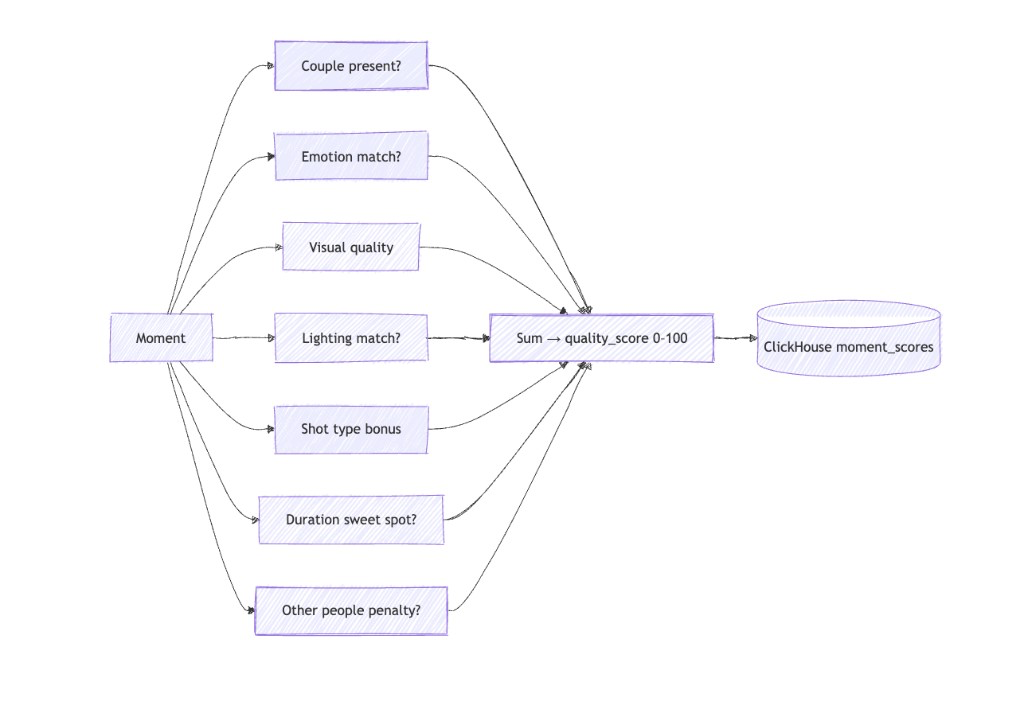
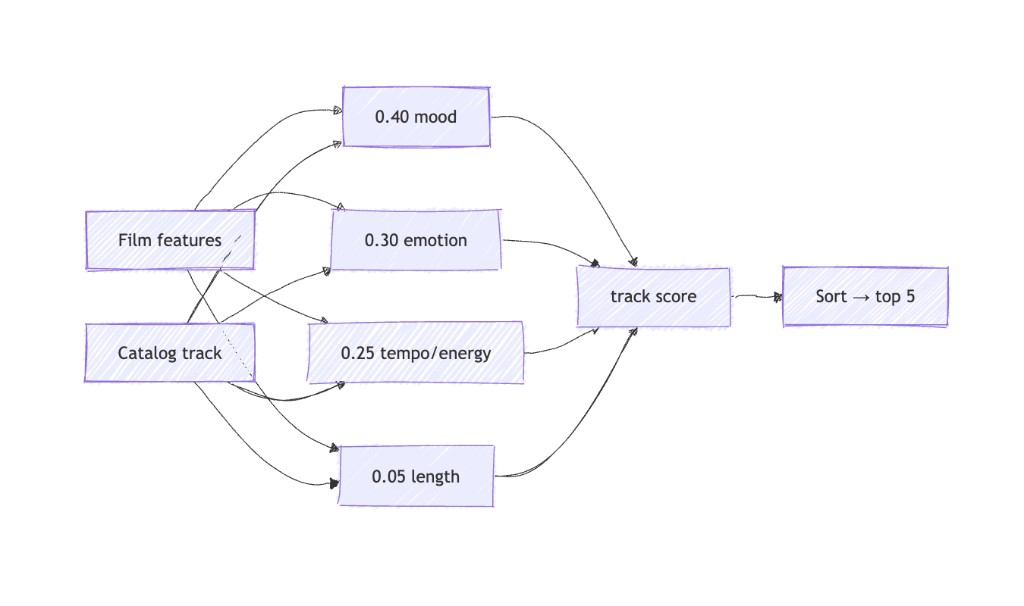
Table of contents
- Inspiration
- What it does
- How we built it
- How scoring works
- The Film Director in action
- Challenges we ran into
- Accomplishments that we're proud of
- What we learned
- What's next for Marryo
- Team / contributors
Inspiration
We built Marryo while preparing for our own wedding — Ayu & Fauzan.
We wanted a pre-wedding film for our digital invitation: little moments from the shoot, the excitement before the day, and everything leading up to it. Once we sat down with the footage, the reality hit — hours of scrubbing timelines, picking moments, shaping a story, and grading. We didn’t want our wedding journey spent in an editing suite.
We wanted to be present. Capture the day. Still walk away with something worth keeping.
That’s the spark: you live the moments; Marryo turns them into your story.
Live: https://marryo.ayusudi.com
What it does
Marryo is an AI pre-wedding short film studio. Couples upload a focused set of clips (up to 6), and Marryo produces a story cut with soundtrack and color grade — aimed at about a minute after upload.
The Film Director (Google ADK + Gemini) plans an EDL (Edit Decision List) — a validated JSON cut plan of which moments to use, in what order, and for how long — then FFmpeg renders that plan into a picture-locked MP4.
Studio flow
- Footage — upload and validate clips (container, brightness, sharpness, faces); only Kept clips continue
- People — MediaPipe face clusters; optional bride / groom labels
- Direct — scenes → moment scores → Film Director drafts and validates an EDL → FFmpeg picture lock
- Sound — five scored catalog tracks, mute, or original (preview freely, then save)
- Grade — compare before / after color grade, confirm
- Short film — preview and download retained cuts
You leave with a picture-locked short film — portrait or landscape — without opening a timeline.
How we built it
Marryo is an agentic pipeline, not a single chat box.
| Layer | Stack |
|---|---|
| Studio UI + API | Next.js, React, Tailwind, Auth.js (Google Sign-In) |
| Shared domain | TypeScript services (@marryo/services), Prisma + Cloud SQL (Postgres) |
| Film Director | Python Google ADK agent + tool functions |
| Vision / CV | OpenCV, MediaPipe, PySceneDetect, FFmpeg |
| Understanding | Gemini via Vertex AI |
| Moment analytics | ClickHouse + MCP Database Toolbox |
| Media | Google Cloud Storage (signed browser uploads) |
| Delivery | FFmpeg (normalize → stitch → grade → soundtrack remux) |
| Hosting | Cloud Run (marryo-web + marryo-agent), Secret Manager, Artifact Registry |
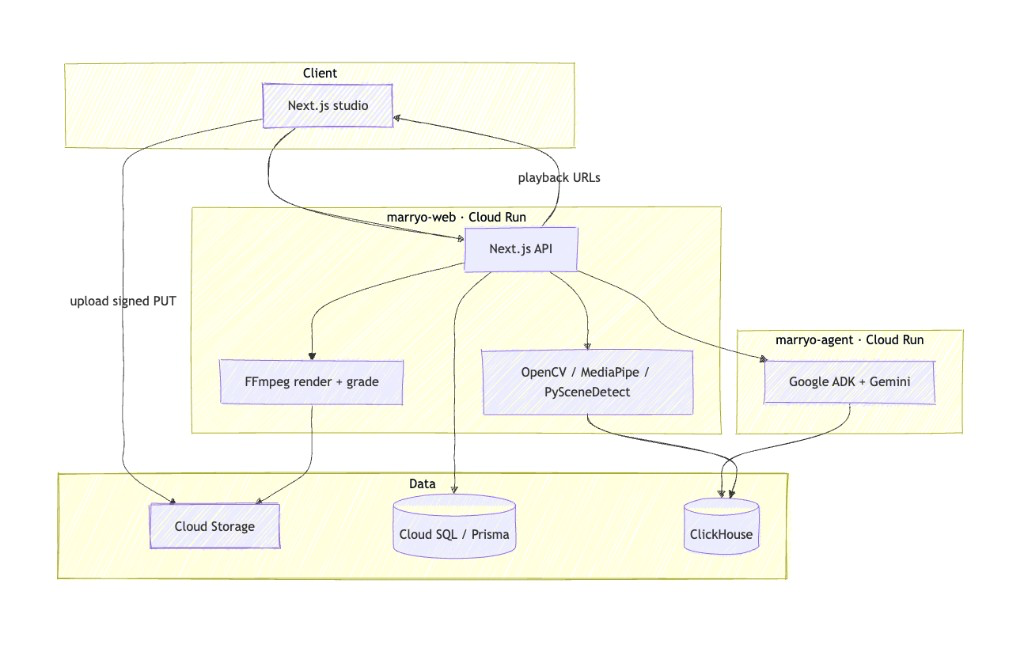
The Next.js API orchestrates the studio. The ADK agent owns storytelling: analyze clips, score moments, plan the edit, validate the EDL. Deterministic CV and FFmpeg handle the hard media work so the model doesn’t invent cuts it can’t render.
We optimized Direct → soundtrack for roughly <1 minute: clip caps, parallel scene detect/analyze, shared clip cache, parallel normalize + remux, and draft-friendly encode settings.
Building with ADK
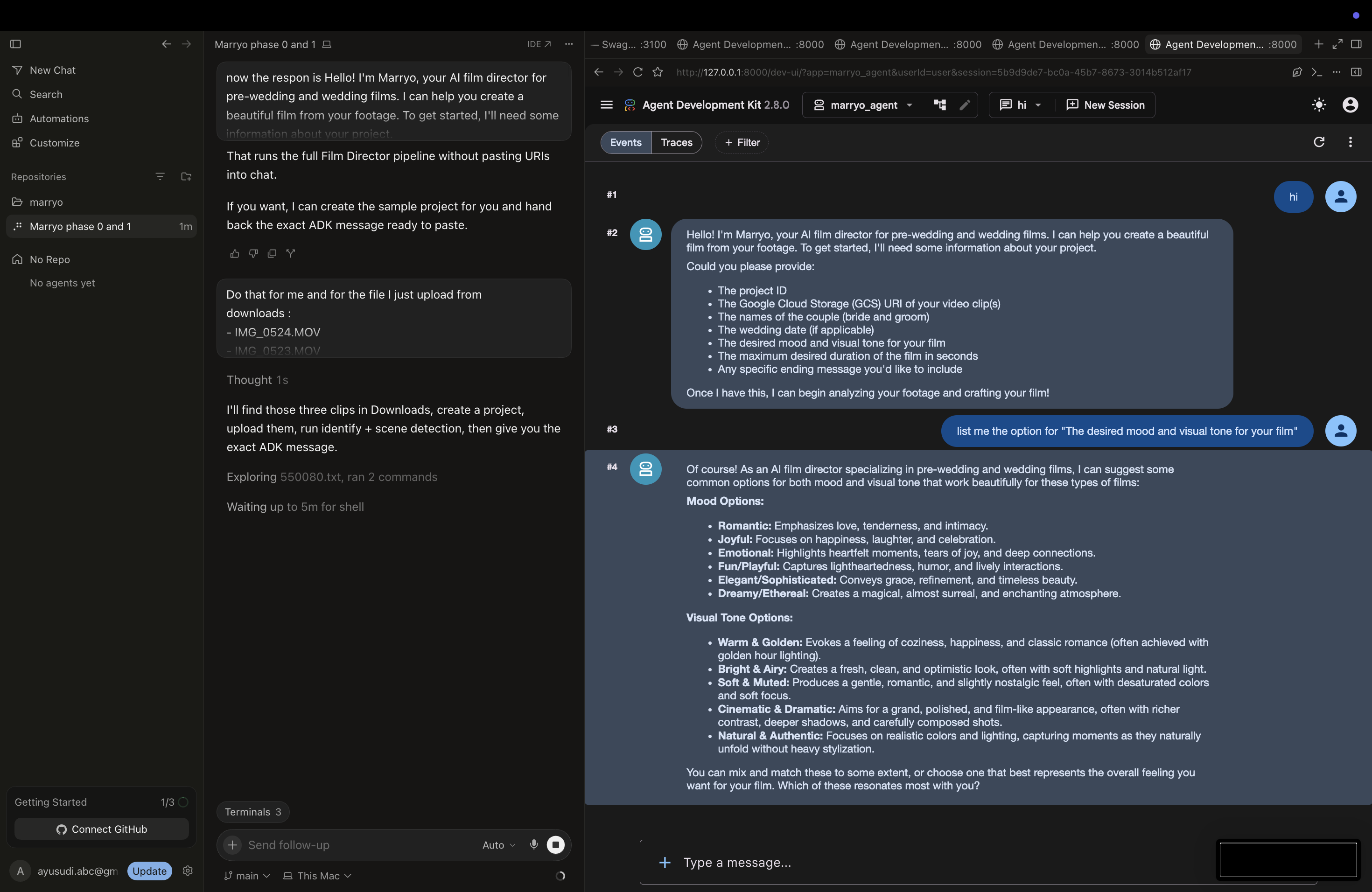
We iterated on the Film Director in the Google ADK web UI — briefing mood/tone options, then running tool traces end-to-end (score_moments → plan_edit → validate_edl) before wiring the same agent into Cloud Run.
Agent & tool roster
Marryo uses a single Google ADK Film Director (marryo_agent) with focused tools. Deterministic CV and FFmpeg sit beside the agent so the model plans an EDL that can actually render.
| # | Role | What it does | Stack |
|---|---|---|---|
| 1 | Film Director (ADK root agent) | Orchestrates analyze → score → story → plan → validate for a project brief (couple, mood, visual tone, duration) | Google ADK + Gemini (Vertex AI) |
| 2 | analyze_clip |
Describes scenes/moments from footage (no invented scores) | Gemini |
| 3 | query_candidate_moments |
Pulls ranked candidates from analytics | ClickHouse via MCP / tools |
| 4 | score_moments |
Writes deterministic quality_score breakdowns |
ClickHouse + scoring rules |
| 5 | generate_story |
Narrative beat structure for the cut | Gemini + ADK tool |
| 6 | plan_edit |
Drafts the EDL (order, in/out, cards) | Gemini + ADK tool |
| 7 | validate_edl |
Forced check: duration, variety, repetition — accept or revise | Deterministic validator |
| 8 | Footage validation | Container / brightness / blur / faces; Kept vs rejected | OpenCV + FFmpeg (ffprobe) |
| 9 | People / identity | Face clusters; optional bride/groom labels | MediaPipe |
| 10 | Scene detection | Real shot boundaries into ClickHouse | PySceneDetect |
| 11 | Picture lock | Trim, stitch, title/ending cards from validated EDL | FFmpeg + Pillow |
| 12 | Soundtrack | Rank catalog tracks; remux top 5 / mute / original | Mixkit + FFmpeg |
| 13 | Color grade | Apply grade; keep ungraded twin for compare / skip | FFmpeg presets |
Signature path: score_moments → plan_edit → validate_edl → FFmpeg picture lock — agent plans, tools execute, couple chooses sound and grade.
How scoring works
Two deterministic score engines sit between “creative” and “renderable.”
Moment scoring (Direct)
Each analyzed moment gets a quality_score (0–100) from theme weights in scoring.json (romantic / cinematic / fun): couple presence, emotion match, visual quality, lighting, shot type, duration sweet spot, and an other-people penalty. Scores land in ClickHouse; the Film Director prefers higher moments for the EDL.
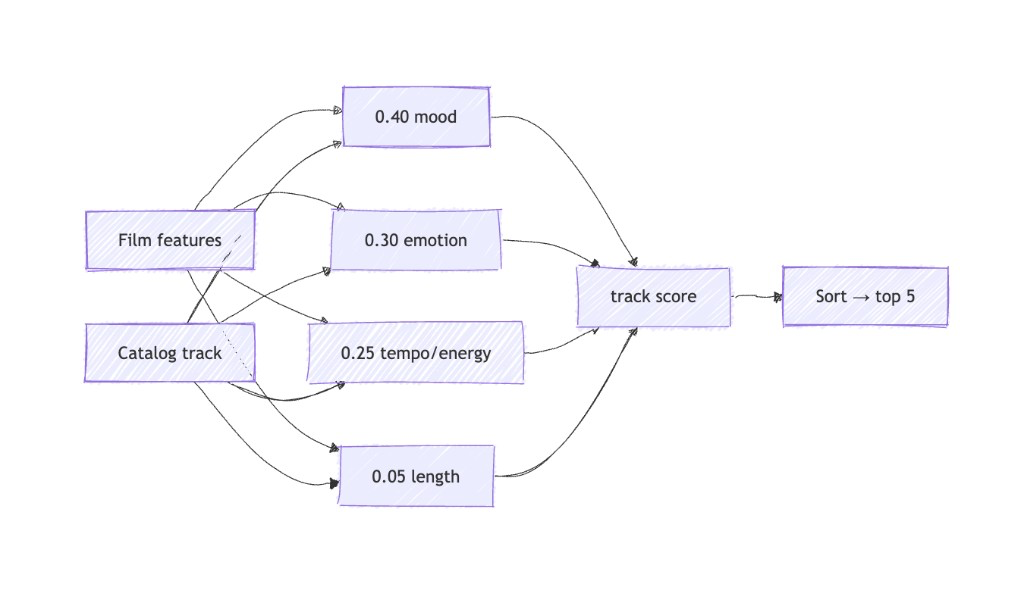
Soundtrack scoring (Sound)
After the picture lock, catalog tracks are ranked against the cut:
0.40·mood + 0.30·emotion + 0.25·tempo/energy + 0.05·length → top 5
Color grading (Grade)
FFmpeg applies visual_tone then mood filters from render_presets.json, and keeps an ungraded twin so couples can compare before / after before confirming.
The Film Director in action
The ADK agent (marryo_agent) runs tools such as score_moments → plan_edit → validate_edl, then returns a validated EDL for a real project (couple, mood, visual tone, target duration).
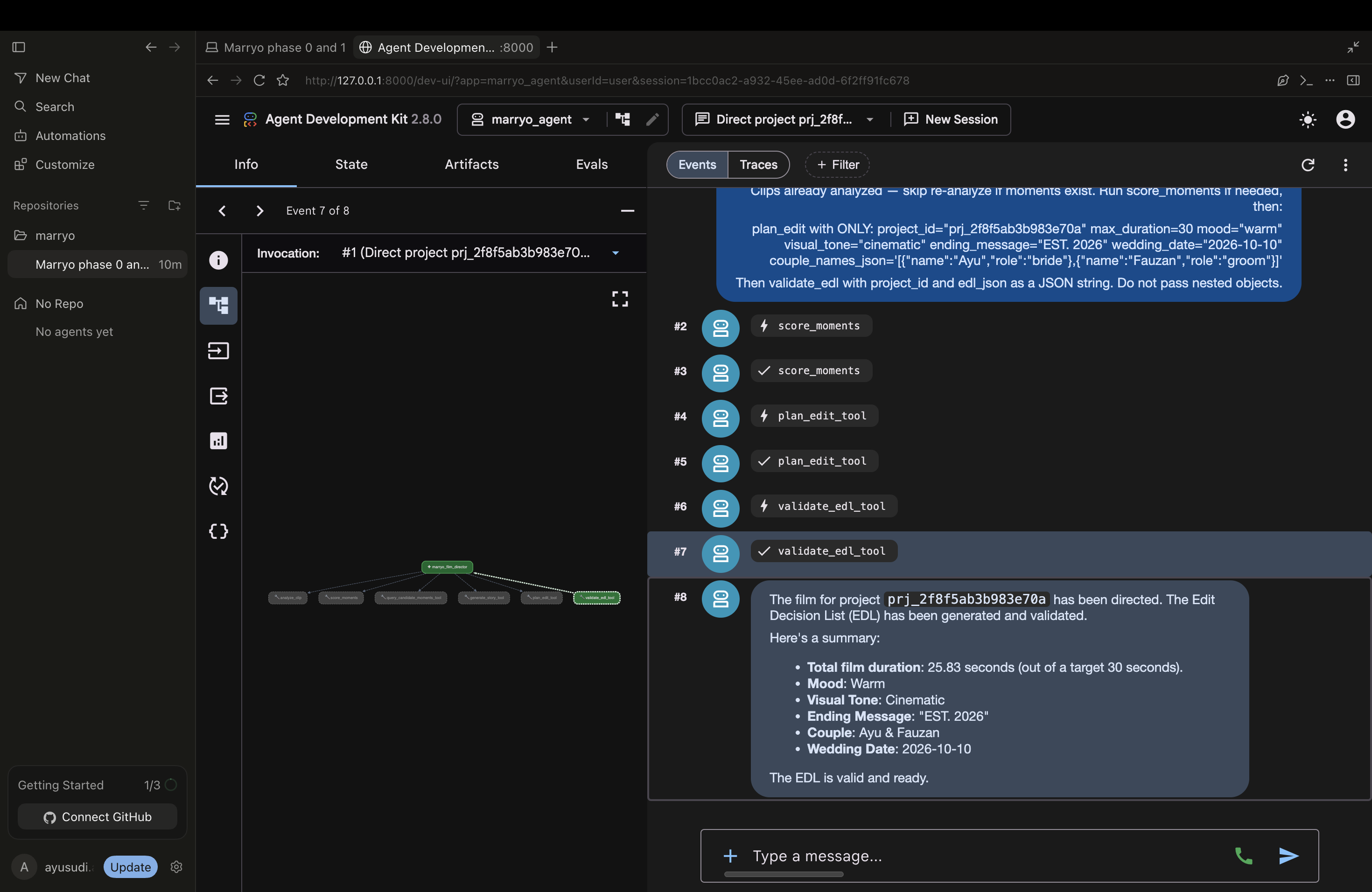
Example outcome from a warm / cinematic brief: ~26s cut against a 30s target, ending card copy, EDL marked valid and ready to render.
Challenges we ran into
- Agent vs. reality — LLMs love ambitious edits; FFmpeg needs a valid EDL. Validation and scoring had to sit between “creative” and “renderable.”
- Latency — early runs took 5+ minutes. Gemini, scene detection, and serial FFmpeg stacked. We cut scope (6 clips), parallelized, cached materialization, and folded grade into the stitch.
- Orientation — users chose portrait but got landscape pillars until render and player aspect were aligned end-to-end.
- Soundtrack & grade authorship — auto-picking music (and auto-advancing grade) felt wrong; couples need deliberate catalog / mute / original and keep-or-skip grade choices.
- ClickHouse config drift — a wrong
CLICKHOUSE_DATABASEsecret pointed atdefaultwhile tables lived inmarryo. We fixed the secret and qualified every table name so scoring can’t silently miss. - Split runtime — TypeScript studio + Python agent + ClickHouse + GCS means many moving parts to keep healthy locally and in production (Cloud SQL proxy, secrets, signed GCS URLs).
- Shipping under time pressure — Cloud Build + dual Cloud Run images made deploys slow; build failures and concurrent revisions taught us to harden types and ship in smaller, clearer releases.
Accomplishments that we're proud of
- An end-to-end studio: footage → people → Direct → sound → grade → short film
- A real Film Director agent on Google ADK with tools for analyze, score, story, plan, and validate
- ClickHouse-backed moment ranking exposed to the agent via MCP
- Sub-minute Direct→soundtrack path on capped footage (with Gemini still in the loop)
- Portrait/landscape-aware render and playback
- A clear product voice: tutorial, about, pipeline (scoring + grade), and tech stack that match what the system actually does
- Production on GCP: Cloud Run web + agent, GCS signed uploads, Cloud SQL, Vertex AI, custom domains
- Session hygiene: keep the short film the user chose; don’t hoard every remux forever
What we learned
- Agentic cinema works best when the agent plans and deterministic tools execute
- Media pipelines fail on the boring edges: aspect ratio, audio mux, cache locality, timeouts
- Latency is a product feature — couples won’t wait for a “smart” edit that feels like overnight batch
- Caps beat cleverness: fewer clips + parallel work beats unbounded footage + hope
- UX after the AI matters: soundtrack choice and grade confirmation are part of authorship, not afterthoughts
- Naming matters: calling the deliverable a short film is more honest than “film” for a 30–90s cut
What's next for Marryo
- Stronger identity and couple-aware storytelling across longer shoots
- Richer music matching and licensed catalogs beyond the Mixkit starter set
- Optional longer “ceremony day” modes with clearer time budgets
- Background jobs + status polling so waits feel as fast as they are
- Shareable invitation-ready exports and public gallery polish
- Vertex AI Agent Engine hosting for the Film Director at larger scale
Team / contributors
| Name | Role | Links |
|---|---|---|
| Ayu Sudi Dwijayanti | Co-builder | GitHub · LinkedIn |
| Muhammad Fauzan | Co-builder | GitHub · LinkedIn |
Built With
- authjs
- clickhouse
- cloud-run
- fastapi
- ffmpeg
- gemini
- google-adk
- google-cloud
- google-genai
- google-sign
- mcp
- mediapipe
- mixkit
- nextjs
- opencv
- pillow
- playwright
- prisma
- pydantic
- pyscenedetect
- sqlite
- swagger
- vertex-ai
- zod



Log in or sign up for Devpost to join the conversation.