-
-
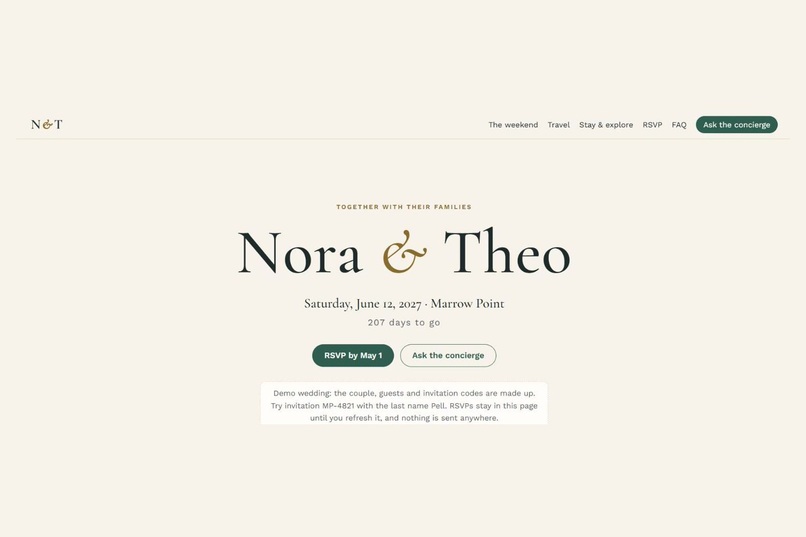
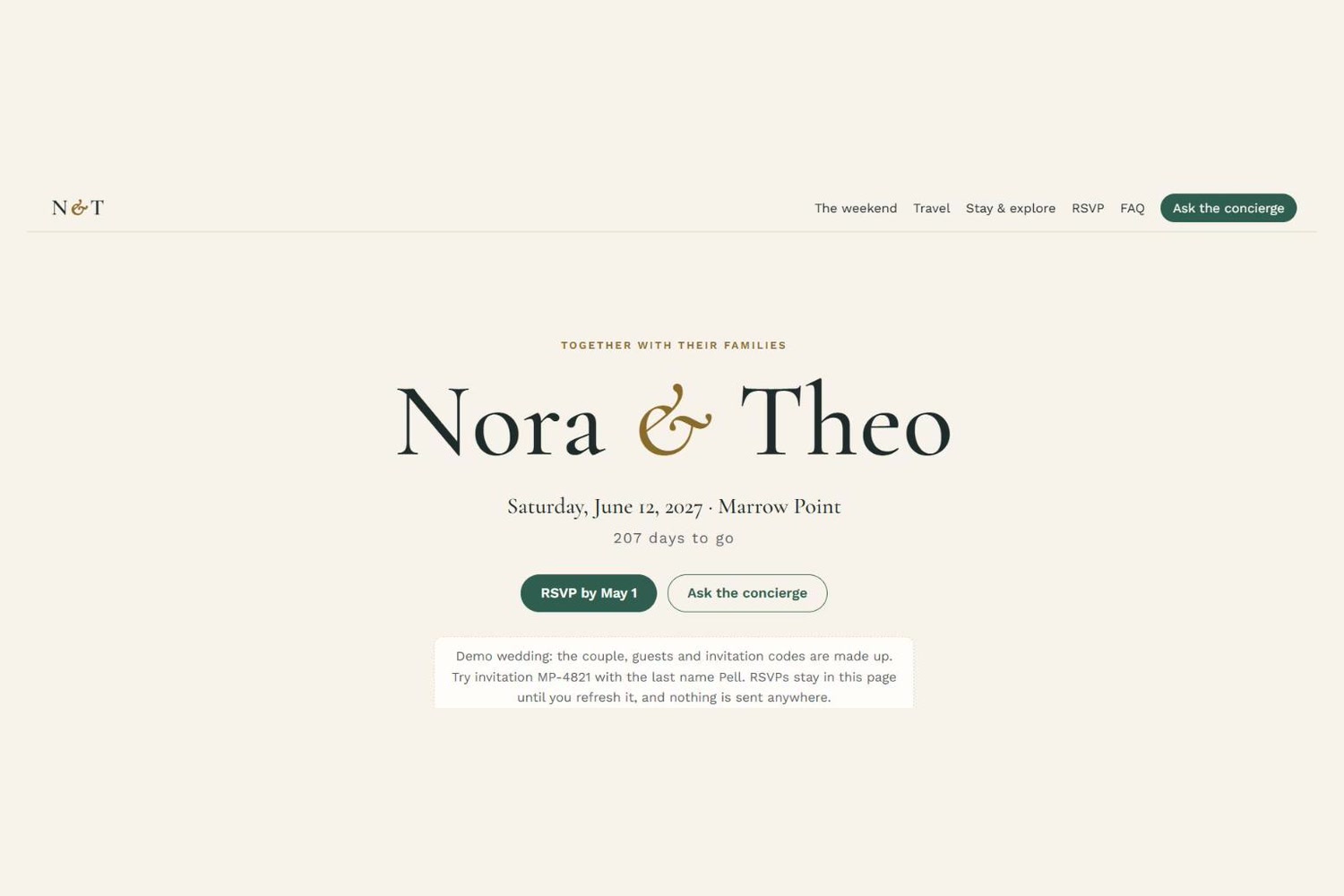
Nora & Theo's wedding site, with its guest concierge
-
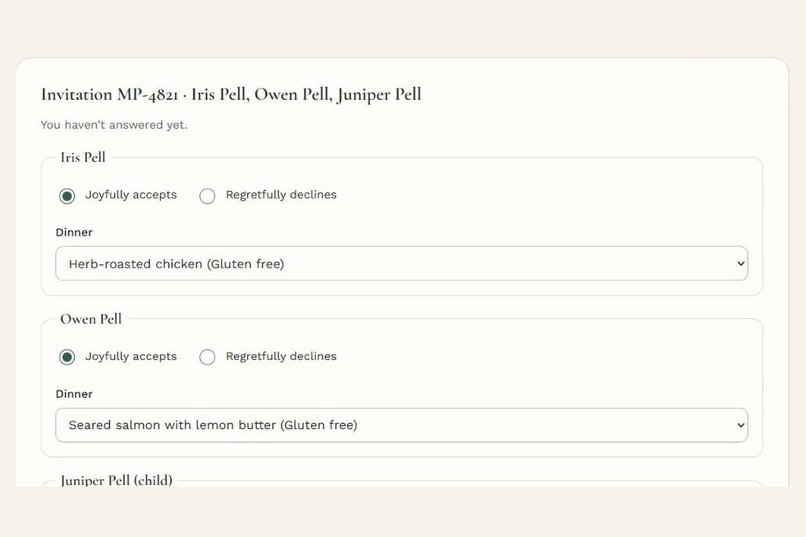
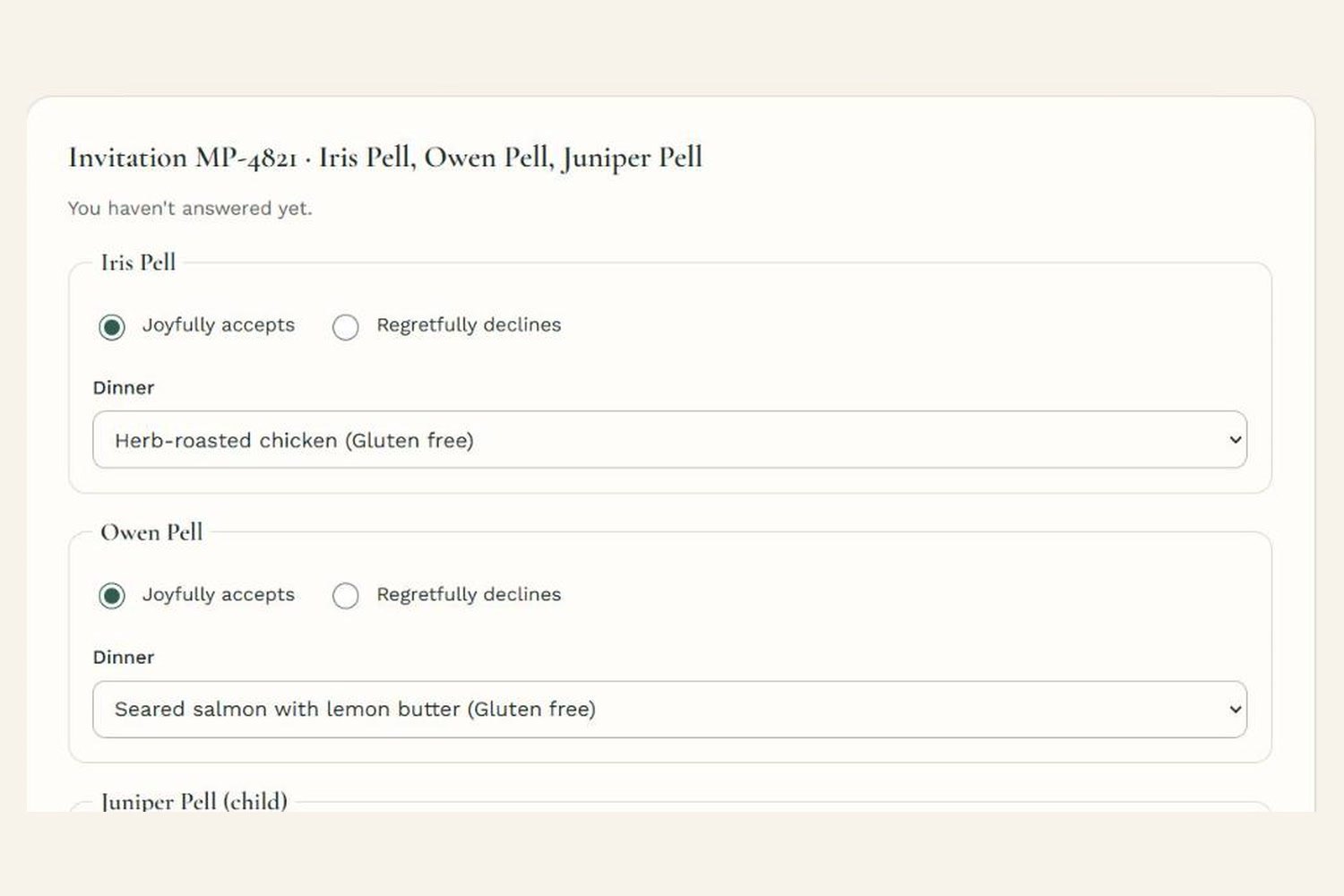
Asked in chat, the concierge fills in the RSVP form on the page
-
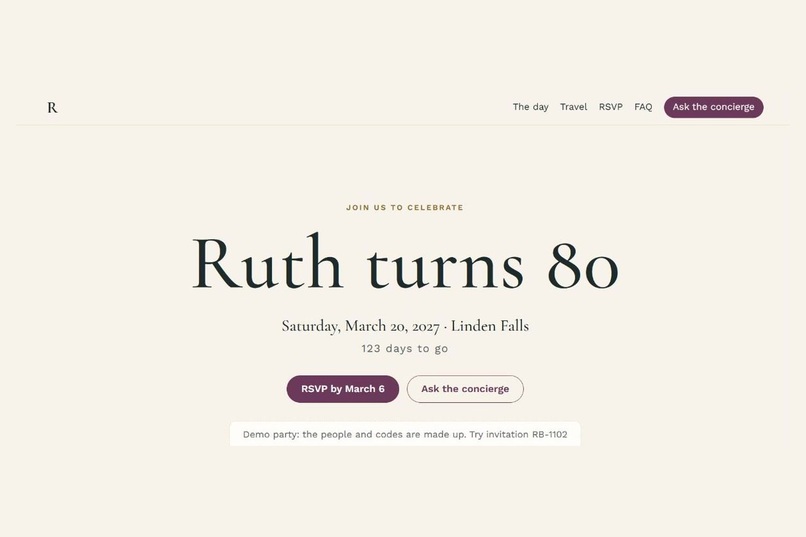
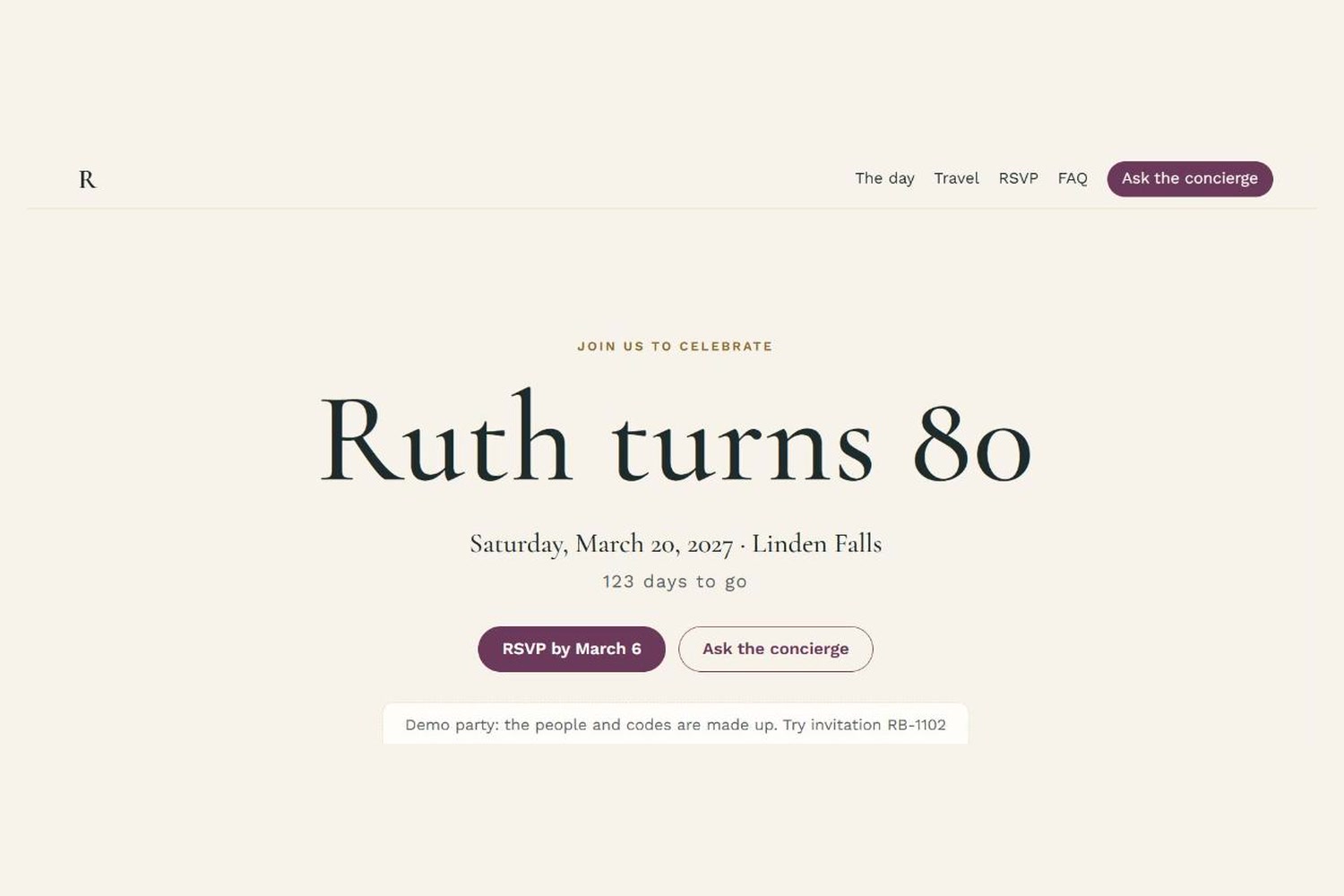
The event site kit made this birthday site from one event.json file
-
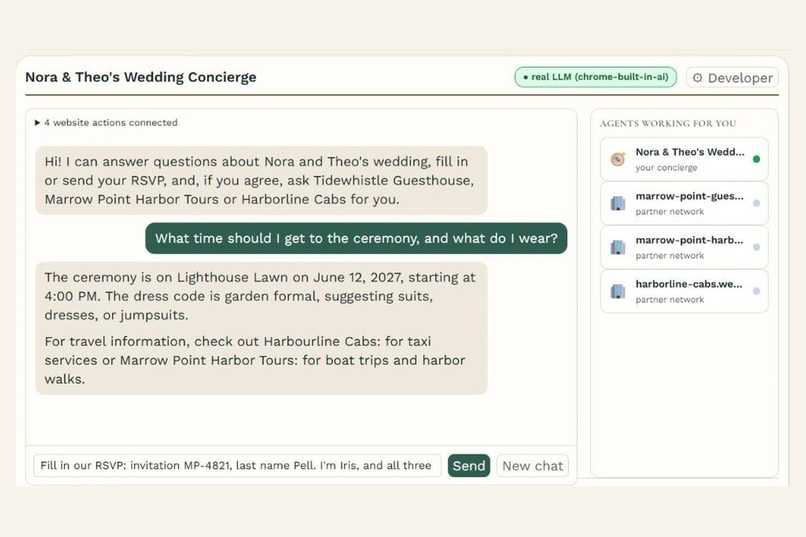
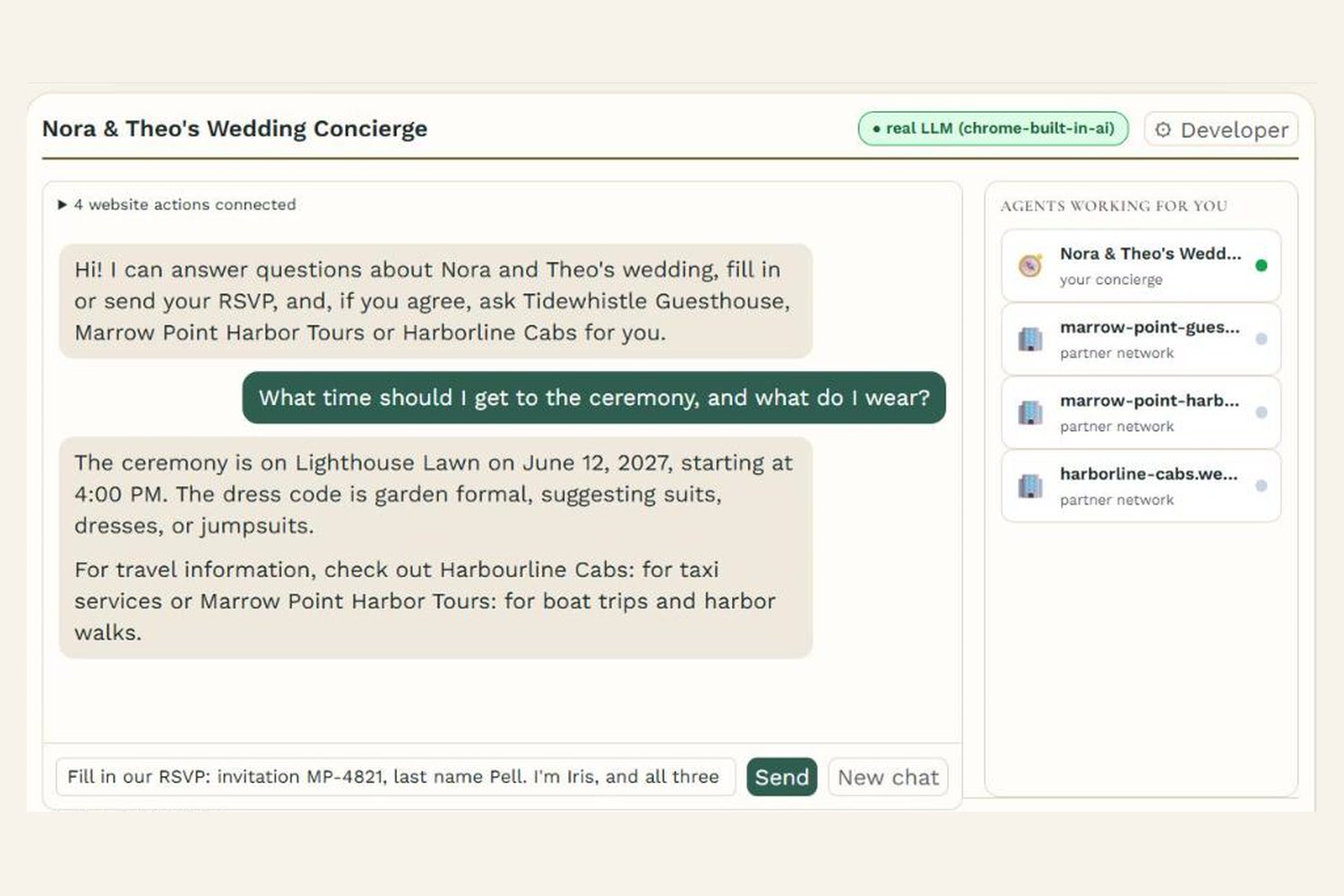
The concierge answers from the site's own details, on Chrome's built-in AI with no key
-
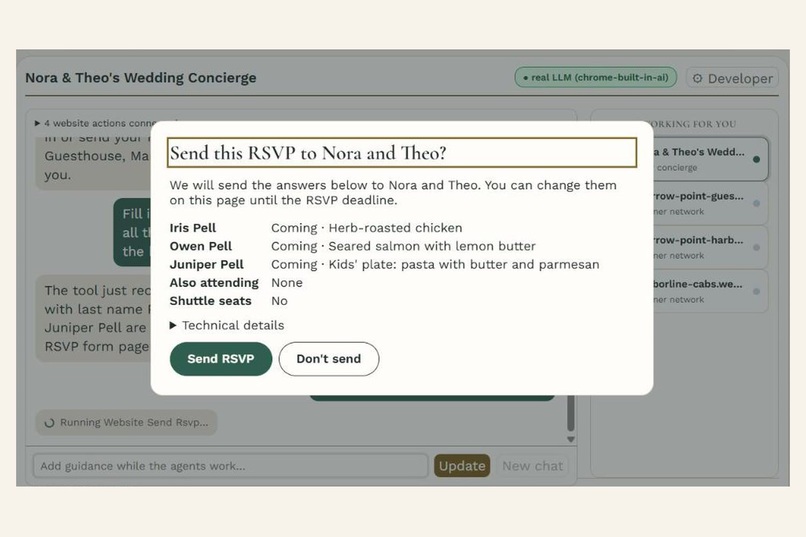
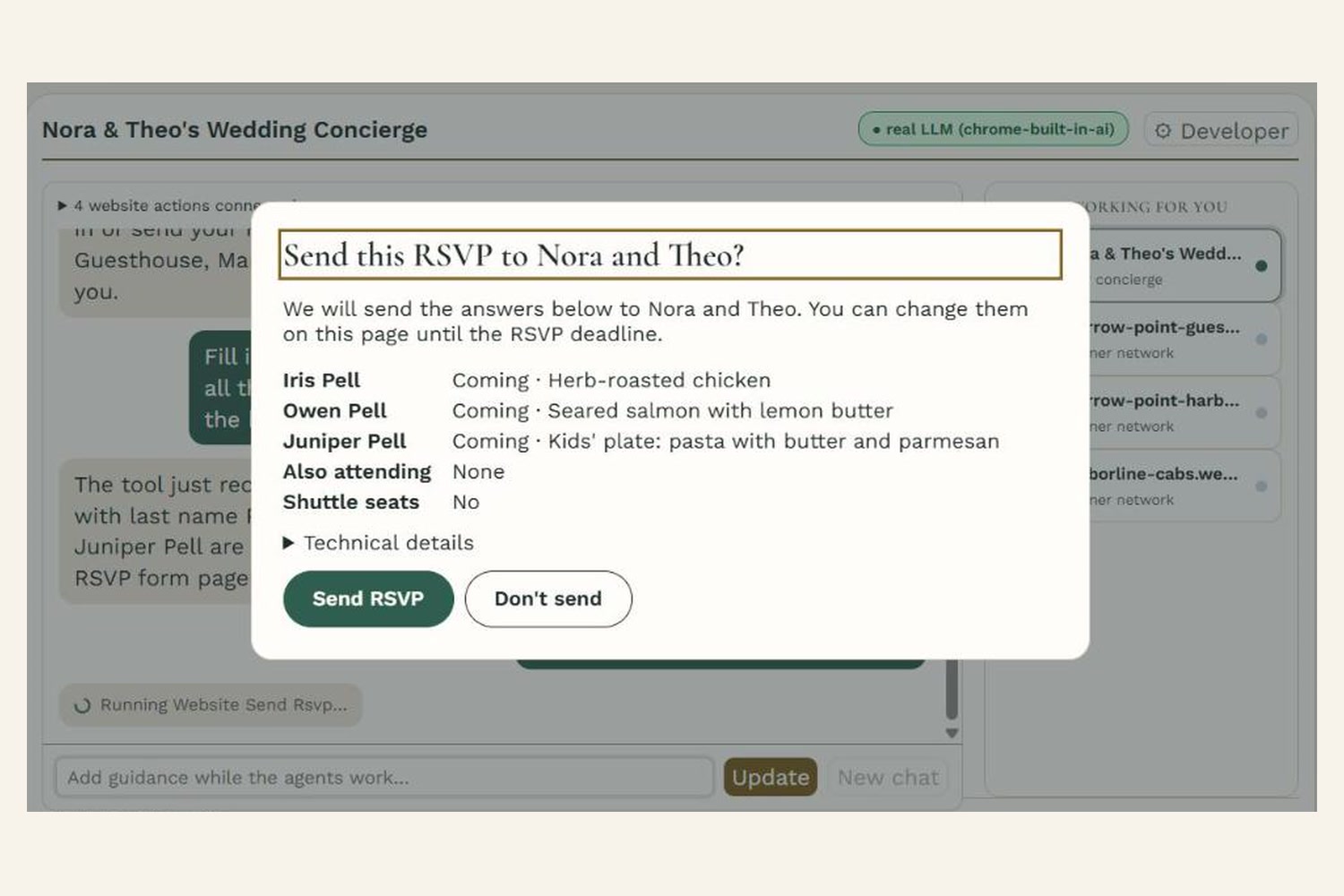
Before anything is sent, the guest sees exactly what goes to the couple and confirms
-
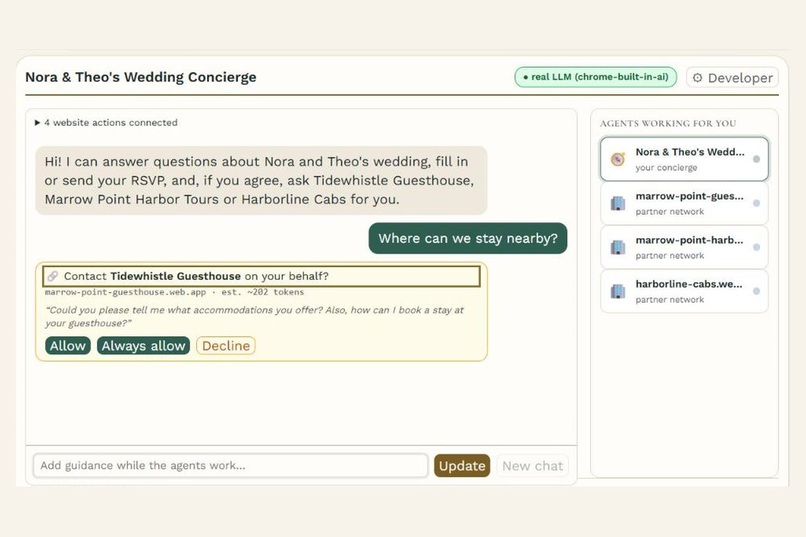
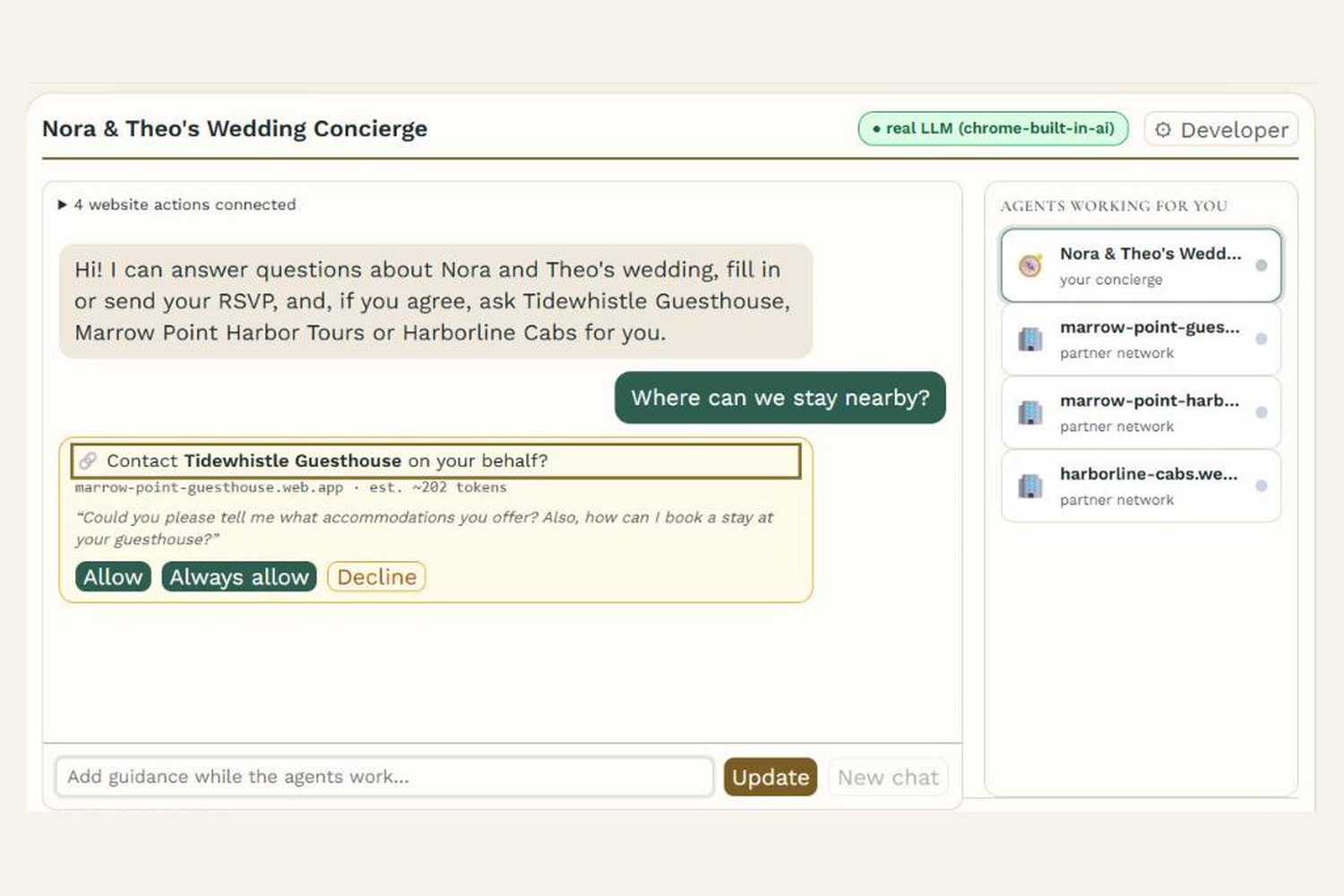
Before asking another site's assistant, the concierge asks the guest on a card
-
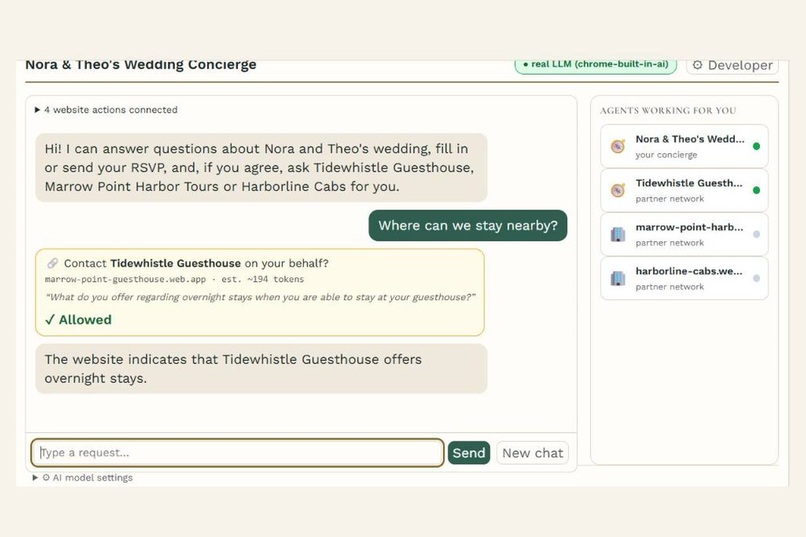
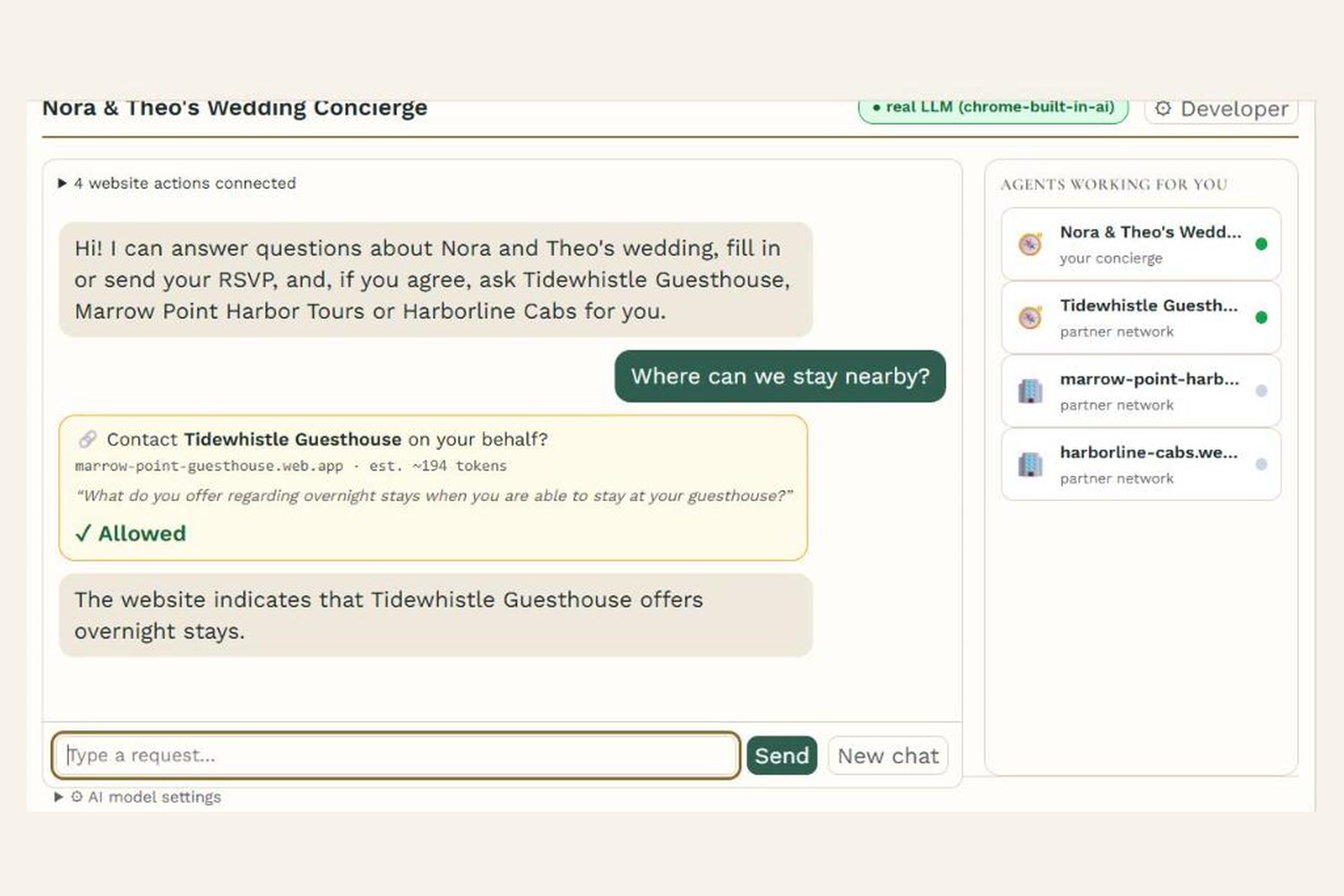
The guesthouse's own assistant answers, through the open agentic web
What it does
Wedding websites get the same questions over and over: what time, what to wear, where to stay, how to get there. Nora and Theo's site has a guest concierge that answers from the site's own data, fills in or sends the RSVP (the guest confirms first), and asks the local businesses' own AI assistants for help: a cab company, a guesthouse and a harbor tour company, each on its own website. Every partner call waits for the guest's OK on a card that shows the question, and requests never carry names, emails or codes.
No key needed
In Chrome, the concierge runs on the browser's built-in AI, so anyone can try it with no account or API key, and nothing they type leaves their device. A small in-page router answers the runtime's model requests on the device, in short capped steps, so the small model calls the right tool with valid arguments. Guests with their own key can use any provider instead.
Built for others to use
The Agentic Event Site Kit turns one event.json into a complete agentic event site: the page, the RSVP rules, the agent network, the manifest, discovery files and hosting headers, then runs the spec's validator. The wedding site is built with it, and a second example makes a birthday party site.
How I built it
- Open Agentic Web MVP Profile 0.2: the agentify skill, its browser runtime, the network build and validator, check_partner.
- Plain HTML, CSS and JavaScript modules. No framework, no server.
- Four sites on Firebase Hosting, each its own origin, with CORS on the public agent files and a CSP on the sandbox worker.
- Harborline Cabs is a new site written for this project. The guesthouse and tour company are the spec's own examples, hosted live as partners.
- Over 130 tests run the real runtime with a scripted model: every action, every RSVP rule, the confirmation dialogs, the consent card and the no-key router.
Challenges
The built-in model is small. It skipped lookups, invented answers, looped on tools, and once wrote without stopping, which froze the model for every tab. Chrome also fails a second constrained prompt in the same session. The router now runs each step in a fresh session, caps every step's length and time, forces a tool call before a first answer, asks a partner only when the question fits it, at most once, and falls back to plain text when a schema is refused.
How it follows the Open Agentic Web spec
- Publishes the network as JSON (marrow_point_wedding.network.json), with agent-manifest.json, links.json, agent-mcp.json and the .well-known discovery files, served with CORS so other sites can read them.
- Runs the network in the browser with the spec's runtime, embedded in the page with a chat interface and an AI model settings panel for any provider and key.
- The agent network works the website through declared site actions: read, write, and irreversible ones that need the guest's confirmation.
- It calls other agentic websites as partners (closed peer policy, allowed_peers, a labeled consent card for every call), and other sites can call it: check_partner passes both ways.
- Every site is built and checked with the spec's own build and validator.
What's next
Real hosts: a planner fills in event.json for a client, and the venue, florist and cab company each publish their own agent, so guests get one concierge that knows the whole town.
Built With
- chrome-built-in-ai
- css3
- firebase-hosting
- gemini-nano
- html5
- javascript
- node.js
- open-agentic-web
