-
-
MARMAR-Pillsight
-
Inspiration
Nearly half of patients (46%) misunderstand one or more prescription label instructions, additionally after medical consultations, patients immediately forget 40–80% of the information given, and of that remembered, only about half is accurate. MARMAR PillSight was born from a desire to restore clarity and trust between patients and providers. Whether you’re a patient struggling to remember a prescription or a provider trying to review a complex case — PillSight listens, transcribes, explains, and helps you move forward.
What it does
MARMAR PillSight is an AI-powered medication assistant for both patients and healthcare providers. It allows users to:
Speech-to-text and transcription of doctor‑patient conversations reduce forgetting and miscommunication. Bridging the reported 40–80% immediate information loss
Using text-to-speech and vector search, PillSight tackles the nearly 46% of misunderstood medications
MedCompare supports providers and patients dealing with regional drug differences, reducing risk of substitution errors globally.
How we built it
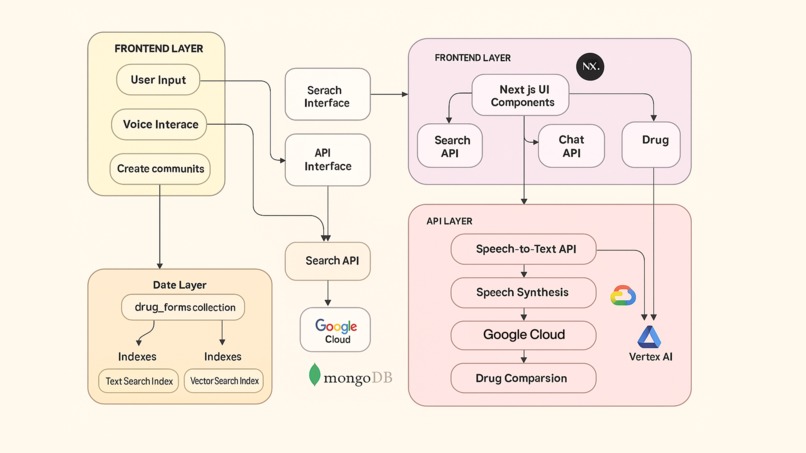
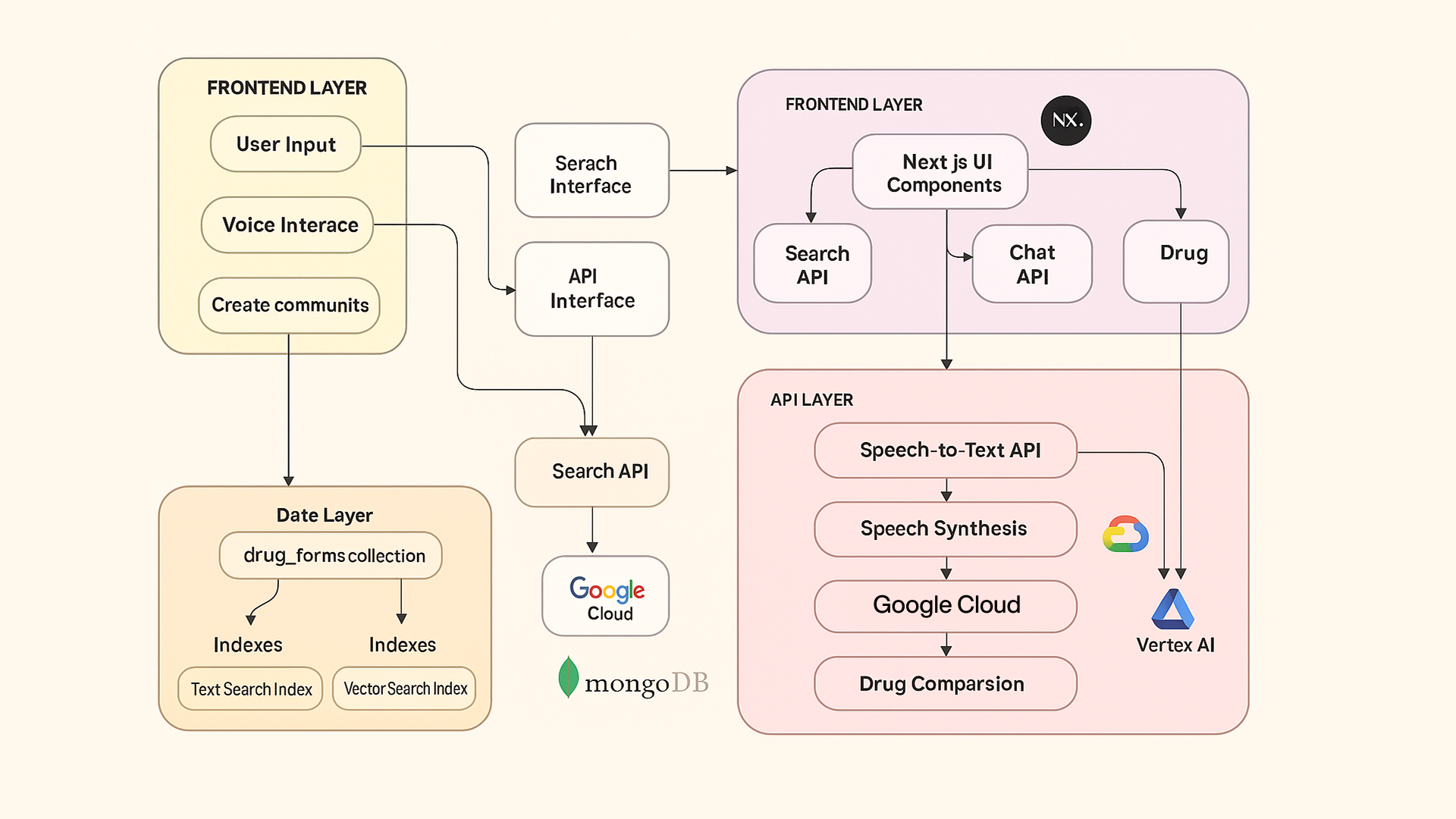
Frontend: Next.js 14, React, Tailwind CSS, Radix UI
Voice Input: WebRTC + MediaRecorder for live voice, and file uploads for provider-recorded audio
Transcription: Google Cloud Speech-to-Text API
Text-to-Speech: Google Cloud TTS for medication playback
Search Engine: MongoDB Atlas with Vector Search for high-relevance matches using AI embeddings
Embeddings Generation: Vertex AI used to vectorize drug data and explanations
International Matching: MedCompare module that maps brand/generic equivalents across countries
Architecture Principle: Built to fail gracefully — with fallback modes that ensure PillSight continues serving users even in degraded environments
Challenges we ran into
Handling poor-quality clinical audio for transcription
Creating a user interface intuitive enough for both patients and clinicians
Balancing openness (natural chat input) with accuracy (medical-safe matching)
Designing MedCompare to account for regional medication differences
Ensuring privacy and simplicity while still offering AI-rich interaction
Accomplishments that we're proud of
Supporting audio-based case reviews for healthcare providers
Creating a unified interface for medication discovery and understanding
Building real-time diagnostic panels for full system transparency
Introducing MedCompare — AI-powered global medication matching
Delivering a product that’s accessible, scalable, and emotionally intelligent
What we learned
Throughout building PillSight, we learned that voice isn’t just a technical feature — it’s a bridge to accessibility, trust, and human dignity. Designing for healthcare requires more than clean interfaces; it demands a deep balance between clinical precision and compassionate interaction. We also saw firsthand that AI is not here to replace care, but to translate, enhance, and protect it — especially in moments where clarity can change outcomes. Most of all, we learned that empathy isn’t a design add-on — it must be the foundation of every decision, every interaction, and every line of code.
What's next for MARMAR Pillsight
Next, we plan to expand MedCompare to support over 50 countries for international users, introduce multi-language transcription and audio output, integrate with EMR systems for seamless provider deployment, launch a lightweight mobile app for caregivers and clinics, and deploy PillSight in rural and low-resource settings where clarity can truly save lives.
Built With
- gemini
- google-cloud
- google-web-speech-api
- mongodb
- nextjs
- vertexai


Log in or sign up for Devpost to join the conversation.