-
-
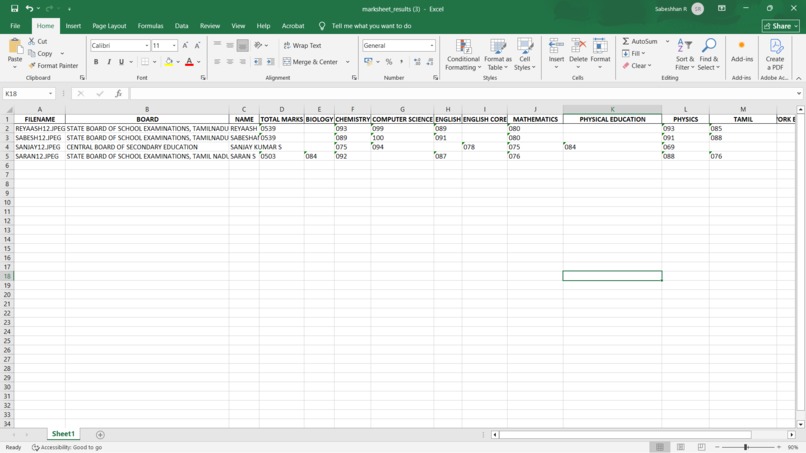
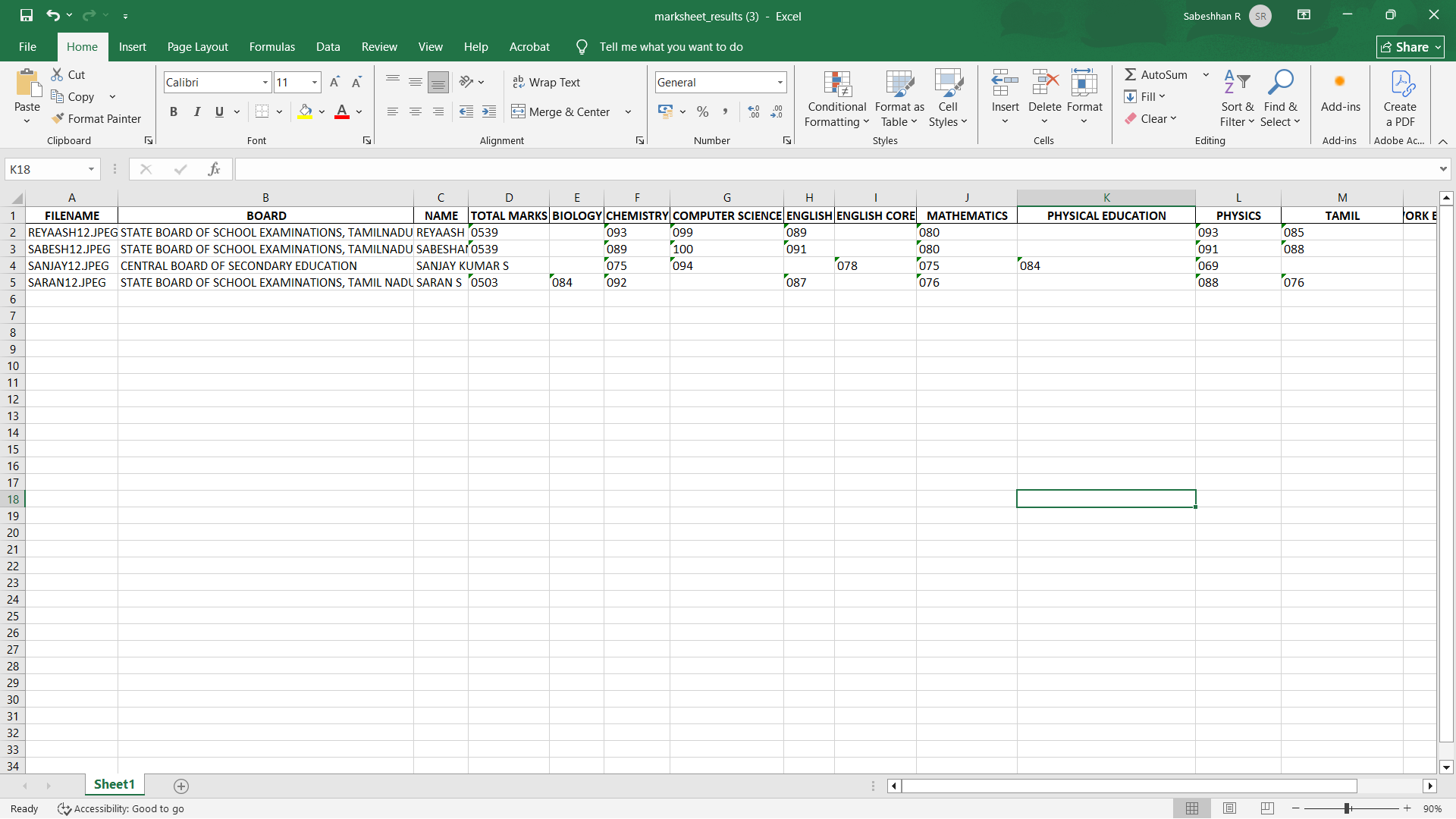
Results in csv file
-
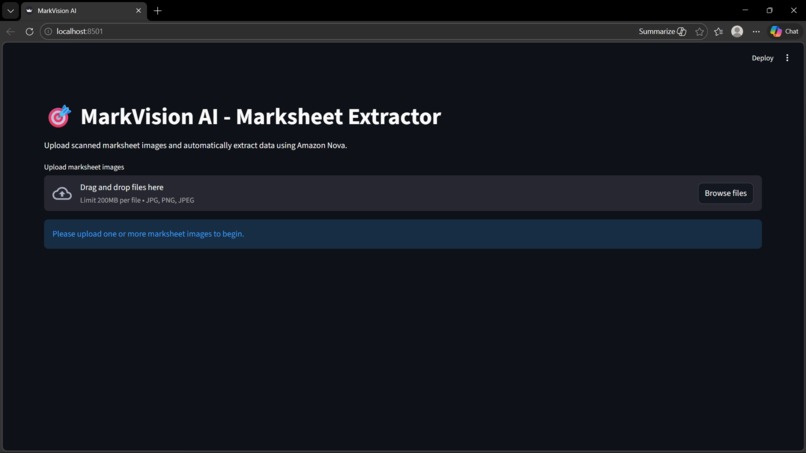
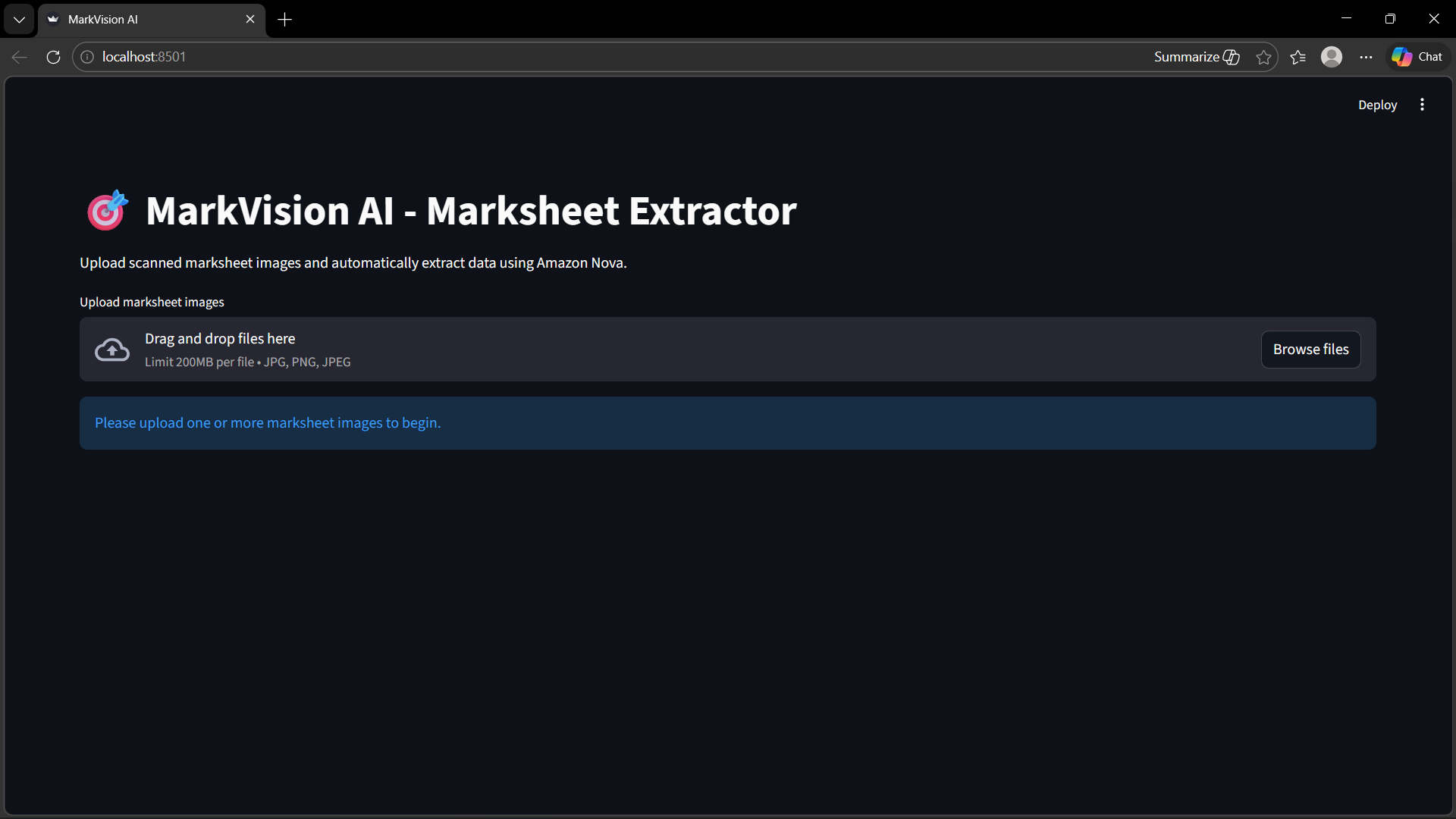
Upload page
-
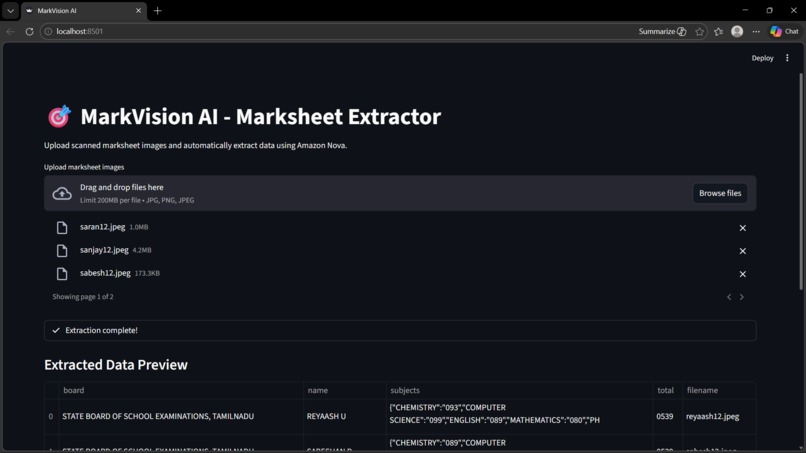
Uploading jpg or pdf
-
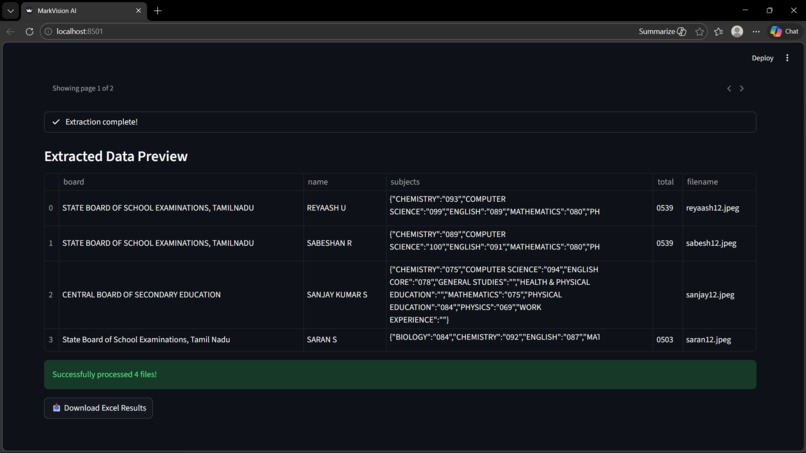
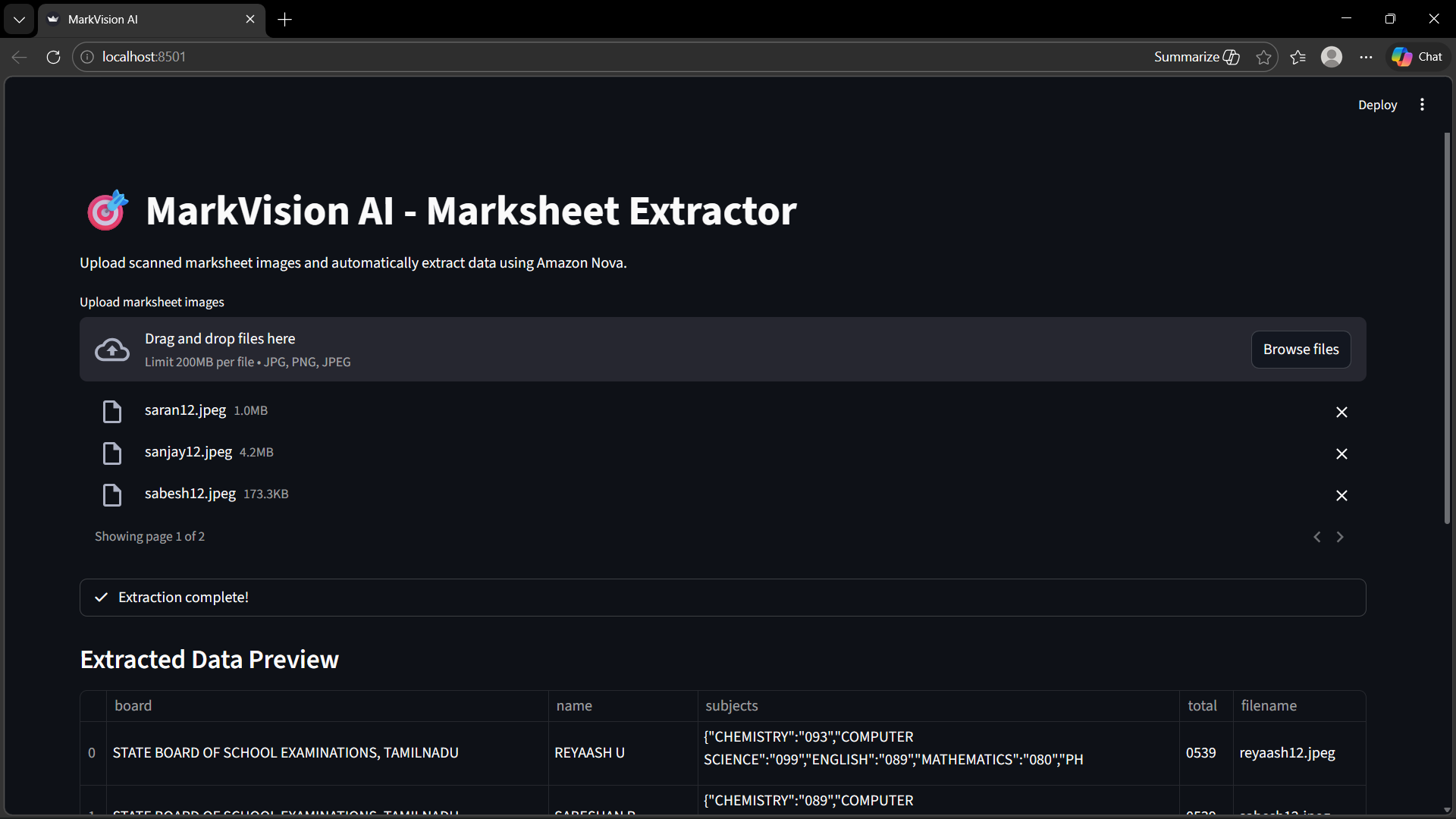
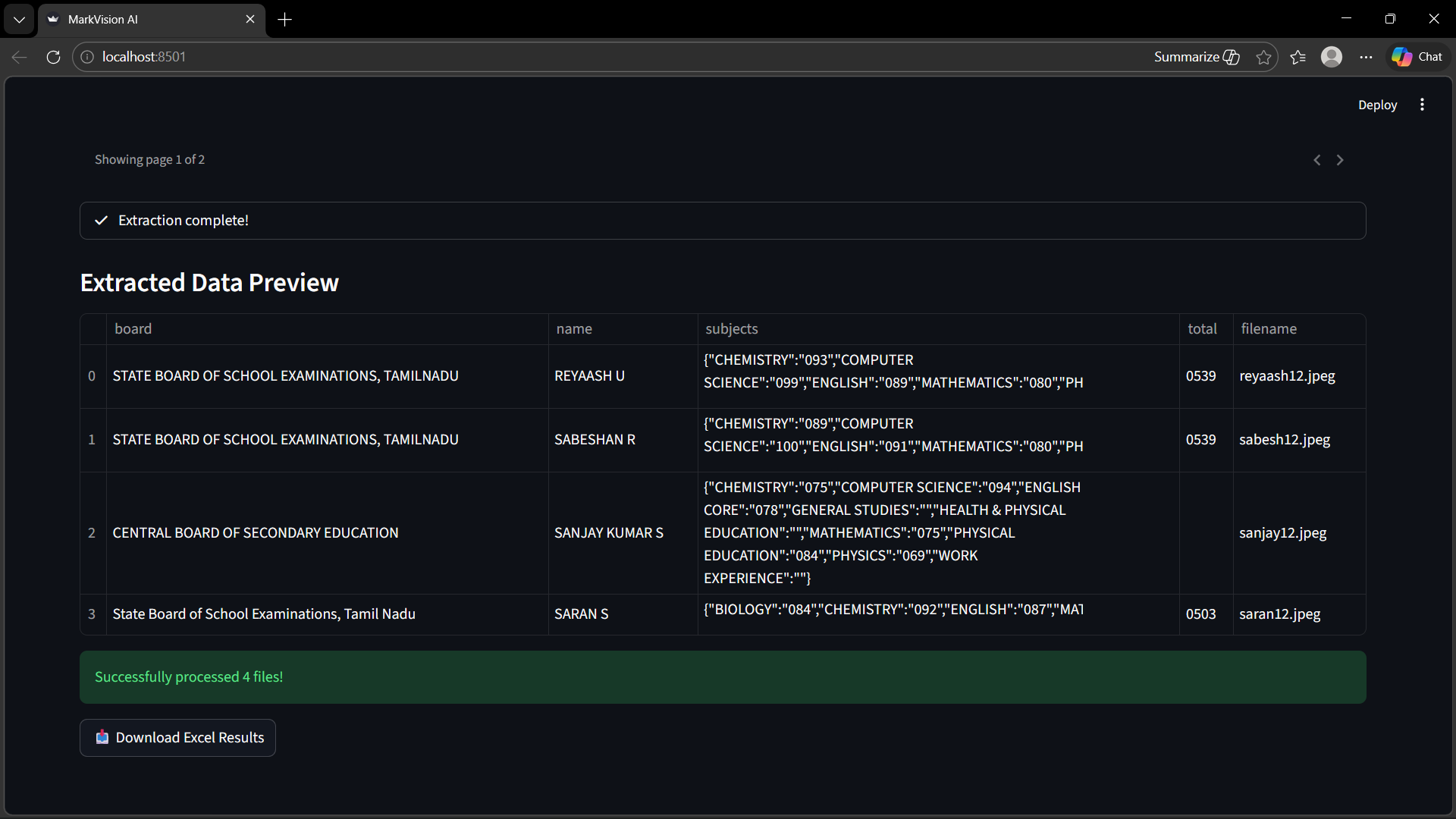
Extracting marks using NOVA 2 LITE
Inspiration
Educational institutions are frequently dealing with hundreds of marksheets on a semesterly basis. Administrators typically spend a great deal of time entering student names, subjects and marks in a spreadsheet by hand. This process is slow, repetitive and subject to human error. We were inspired to solve this problem by generative AI. By using Amazon Nova 2 Lite, we wanted to create a system that would be able to automatically comprehend marksheet images and translate them into structured digital records. The goal was to reduce the manual effort and demonstrate the power of multimodal AI in making the real world of administrative workflows easy.
What it does
MarkVision AI is an intelligent marksheet data extraction system. Users could upload one or more images of their marksheets and the application automatically analyzes their marksheets to extract important information such as education board, name of the student, subjects, marks obtained by individual subject, and total marks. The information extracted is then structured and exported in the form of an Excel file. The system supports marksheet from boards such as CBSE, Tamil Nadu State Board, etc. Institutions can quickly and accurately convert the unstructured documents to structured data through this system.
How we built it
We developed the application with Amazon Bedrock to get access to the Amazon Nova 2 Lite for multimodal document understanding. The frontend interface was created by using Streamlit and it gave the user the easy way to upload marksheet images. The images are then processed and sent to the Nova model that analyzes the document and extracts structured information. The data extracted is then processed using Pandas and exported in the Excel form using Openpyxl.
Challenges we ran into
One of the main challenges was dealing with differences in formats of the marksheet of various education boards. Each marksheet has different layouts, names for subjects and structures. Another challenge was to design prompts allowing the AI model to reliably extract structured information from the complex document layouts. We also had to make sure the system was able to process multiple images efficiently and produce clean structured output for export to Excel.
Accomplishments that we're proud of
We managed to create a working generative AI application, which converted marksheet images into structured datasets automatically. The system supports bulk image uploads and produces ready to use excel reports. Most importantly, we integrated Amazon Nova 2 Lite to show how multimodal AI can provide the understanding of real-world academic documents and automate a traditionally manual task.
What we learned
Through this project we were able to get some practical experience working with generative AI models using Amazon Bedrock. We learned how multimodal models can be used to analyze images of documents and extract structured information from them. We also learned about the critical role of prompt engineering in controlling AI models to generate accurate outputs for them. Apart from that, we gained better skills in creating full-stack AI applications using Python and cloud services.
What's next for MarkVision-AI
In the future, we are looking to expand the system to support more education boards and marksheet formats across India. We also are planning to add support for PDF marksheets, building a dashboard for academic analytics as well as integrating a database to store student records. Another improvement would be adding validation and error detection to ensure the marks extracted are accurate before the data is exported. Ultimately, we are looking to make MarkVision AI into a full-fledged AI-powered academic document management system.


Log in or sign up for Devpost to join the conversation.