-
-
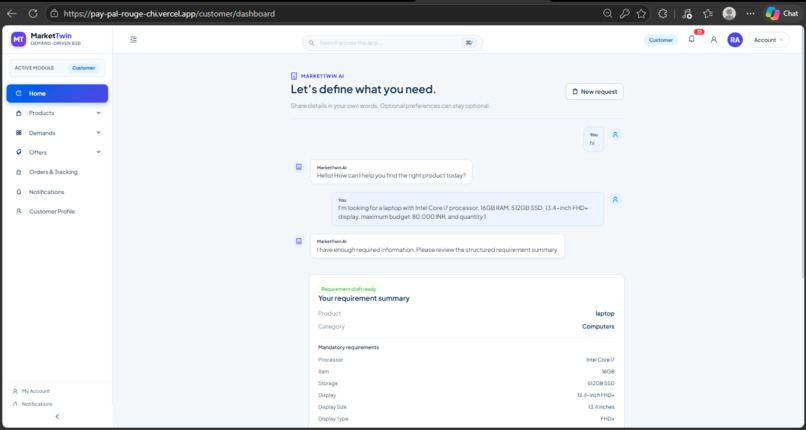
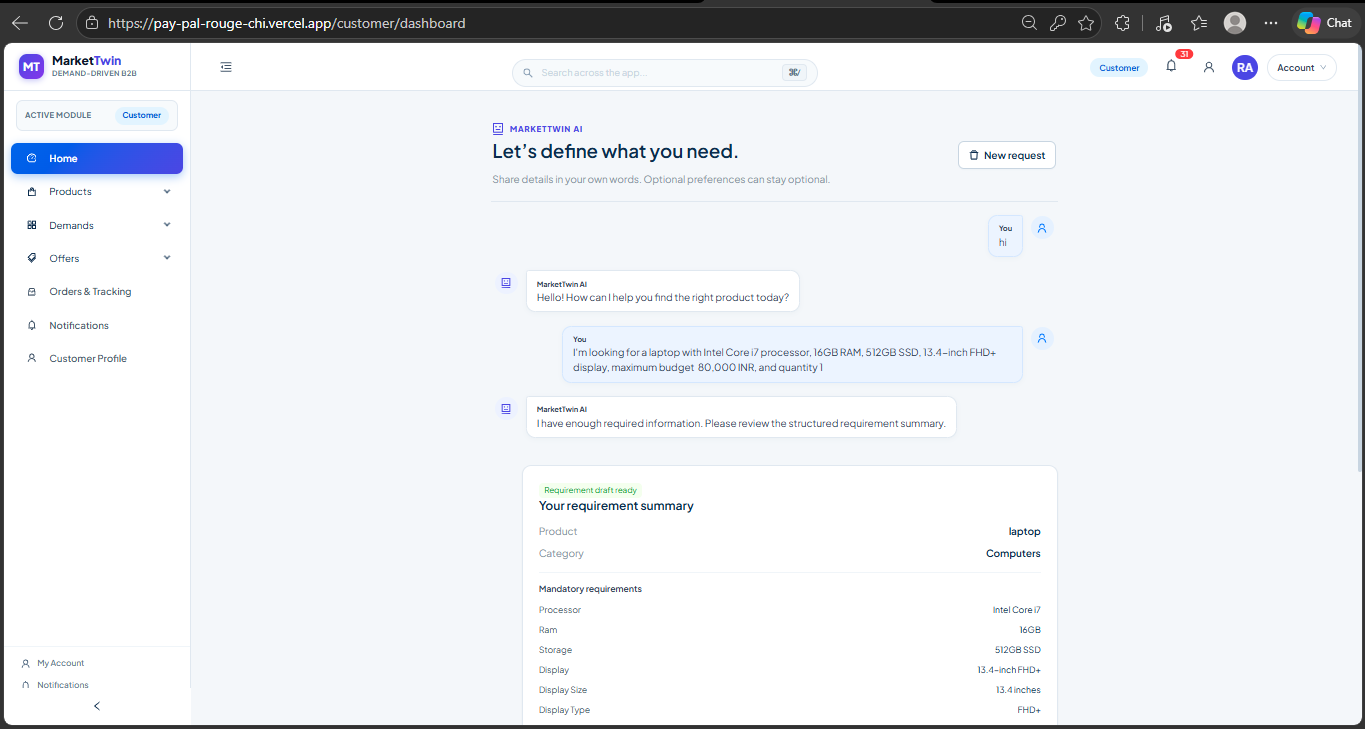
searching a product and response for that product
-
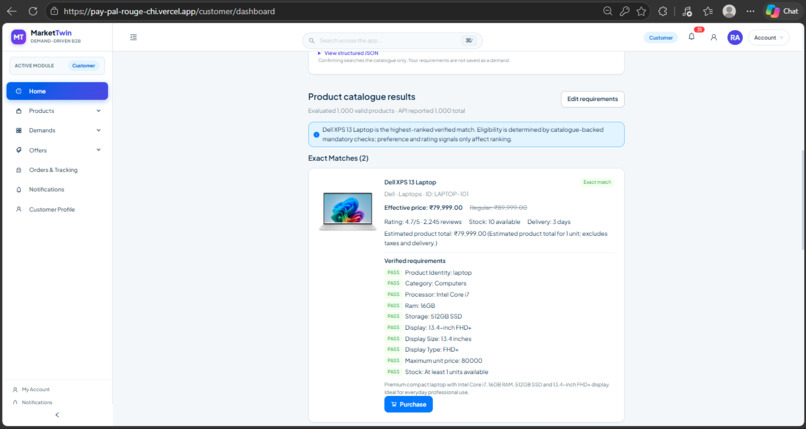
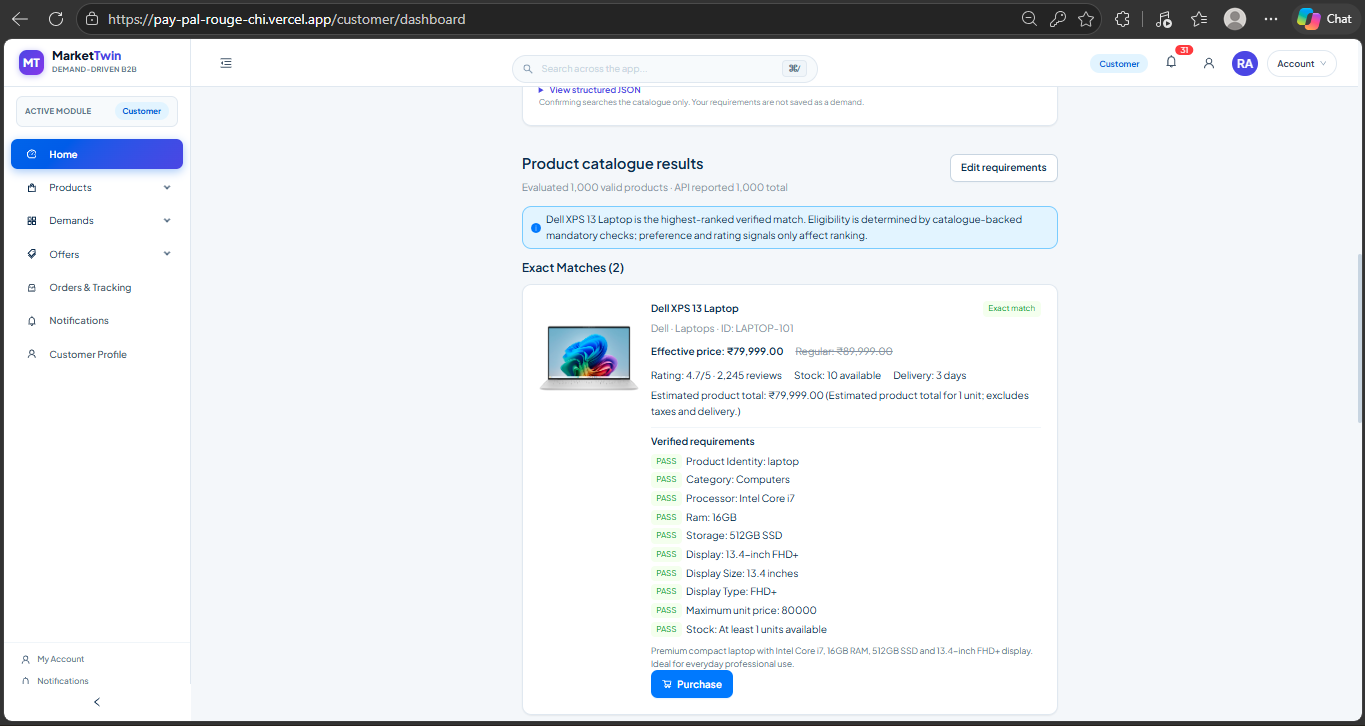
finding that product
-
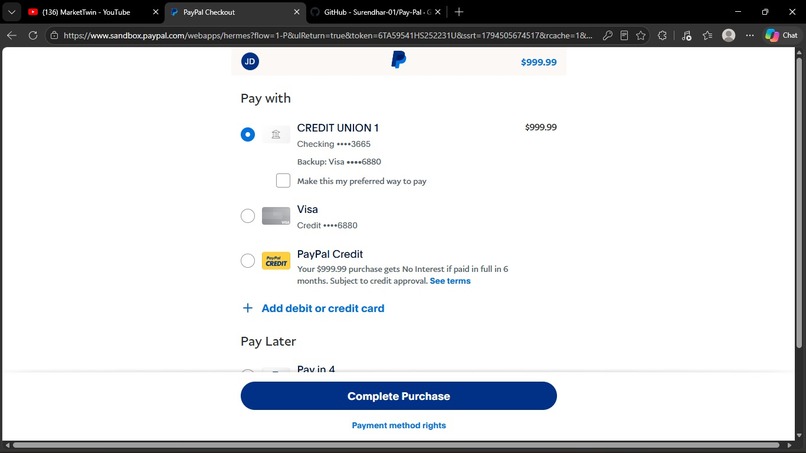
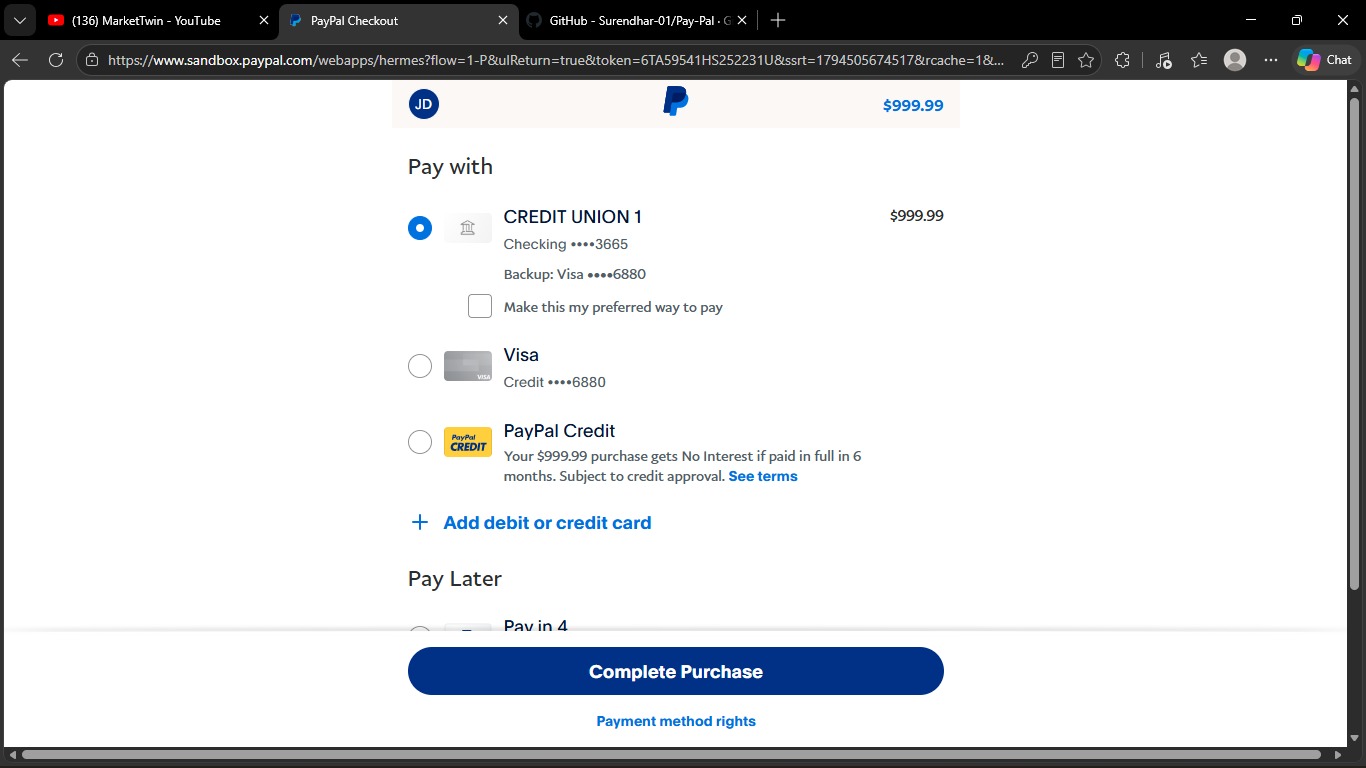
Choose payment method
-
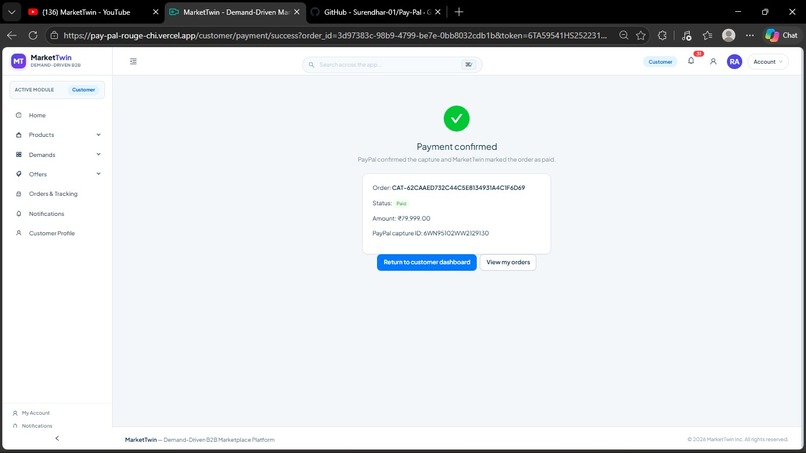
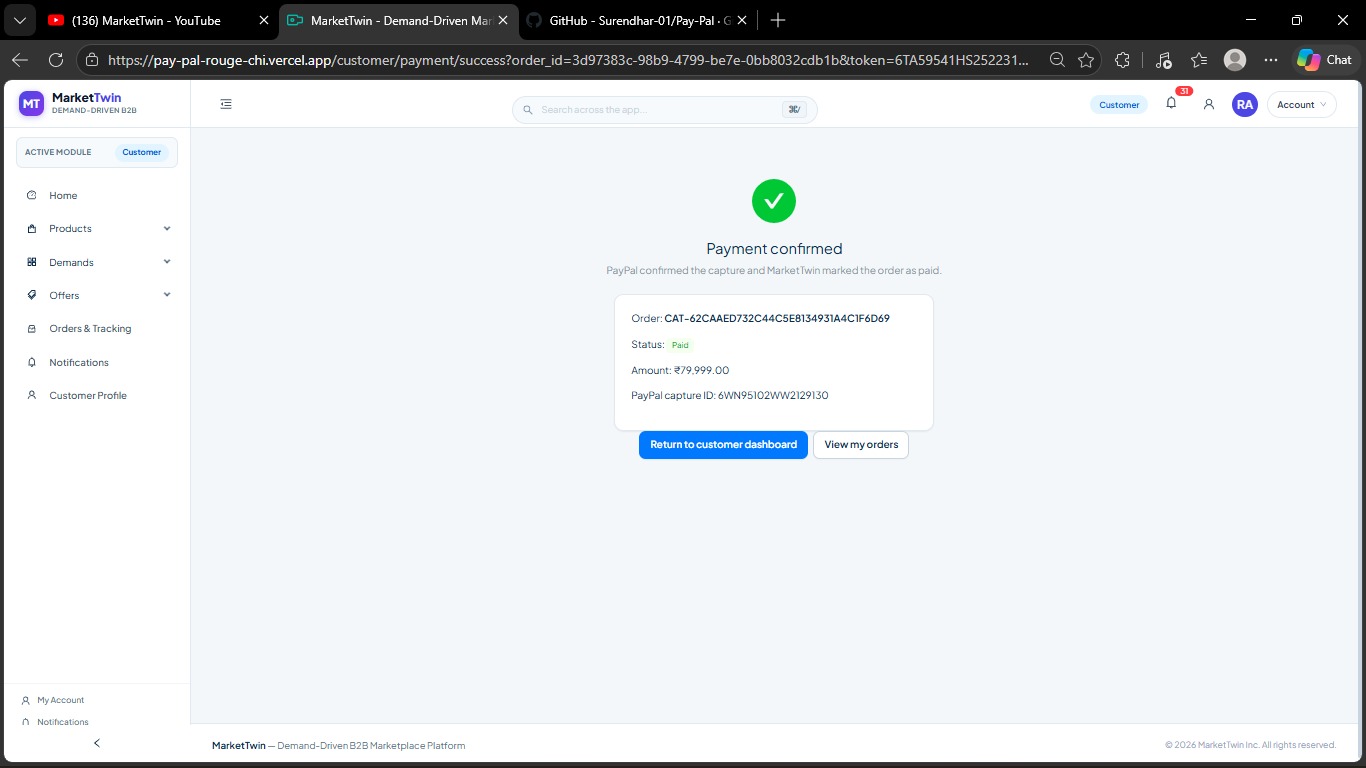
Order success
-
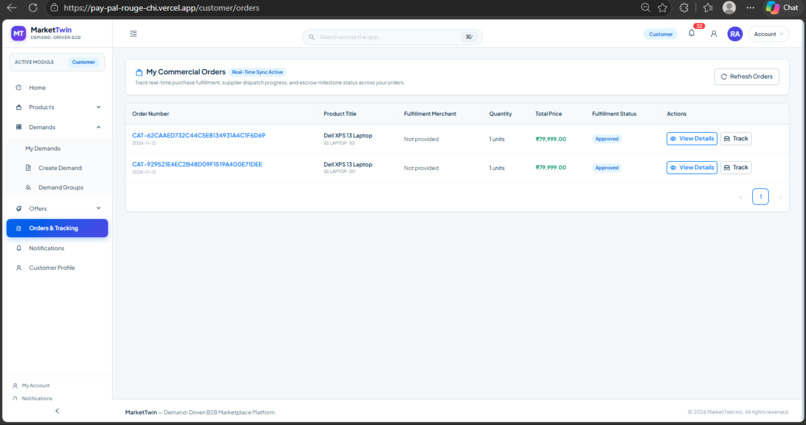
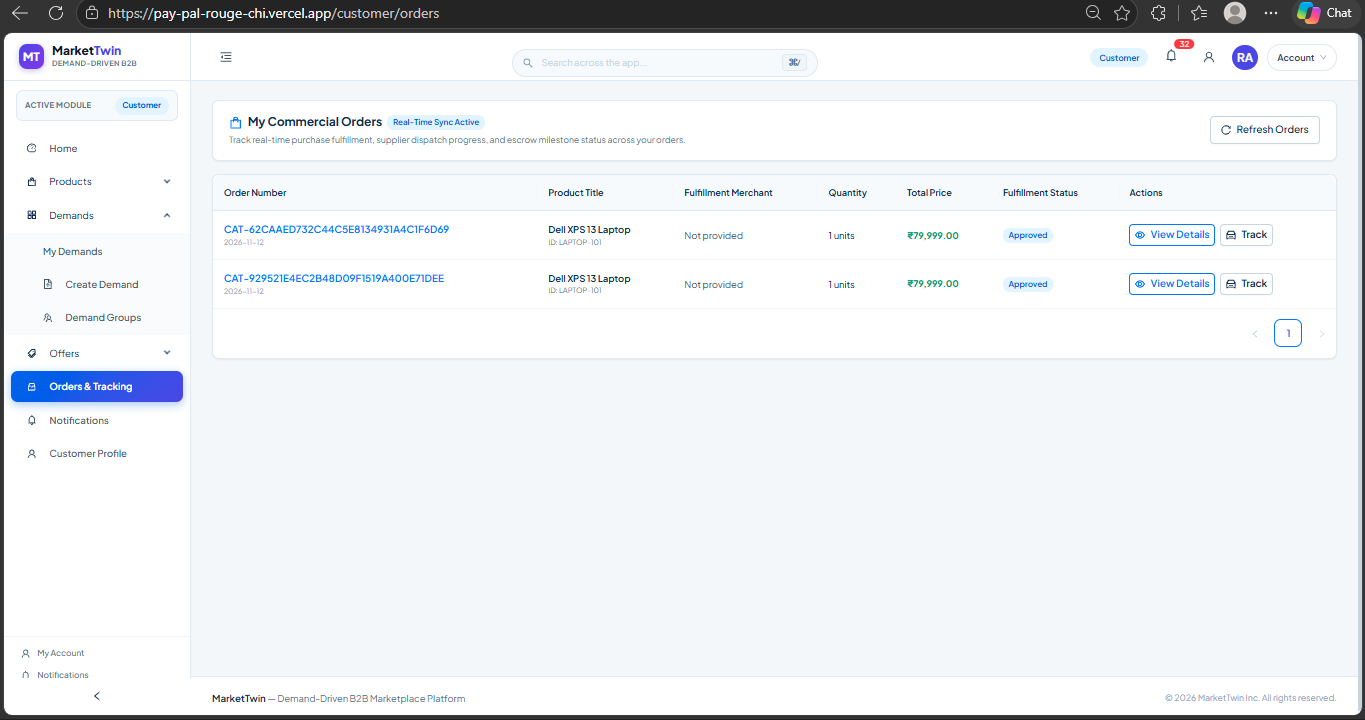
your orders list
-
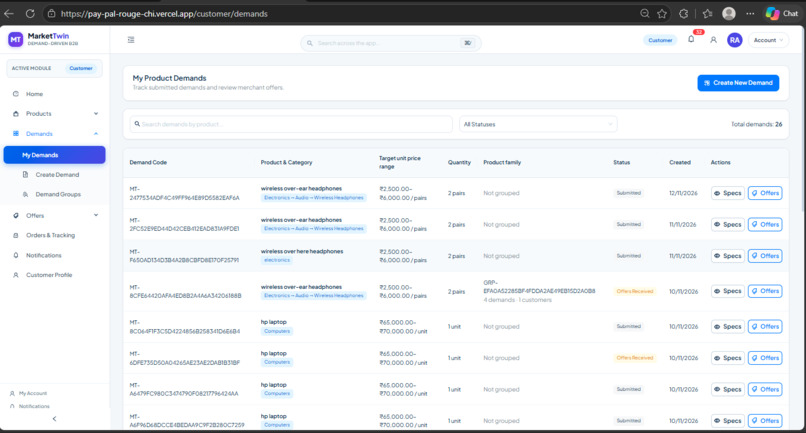
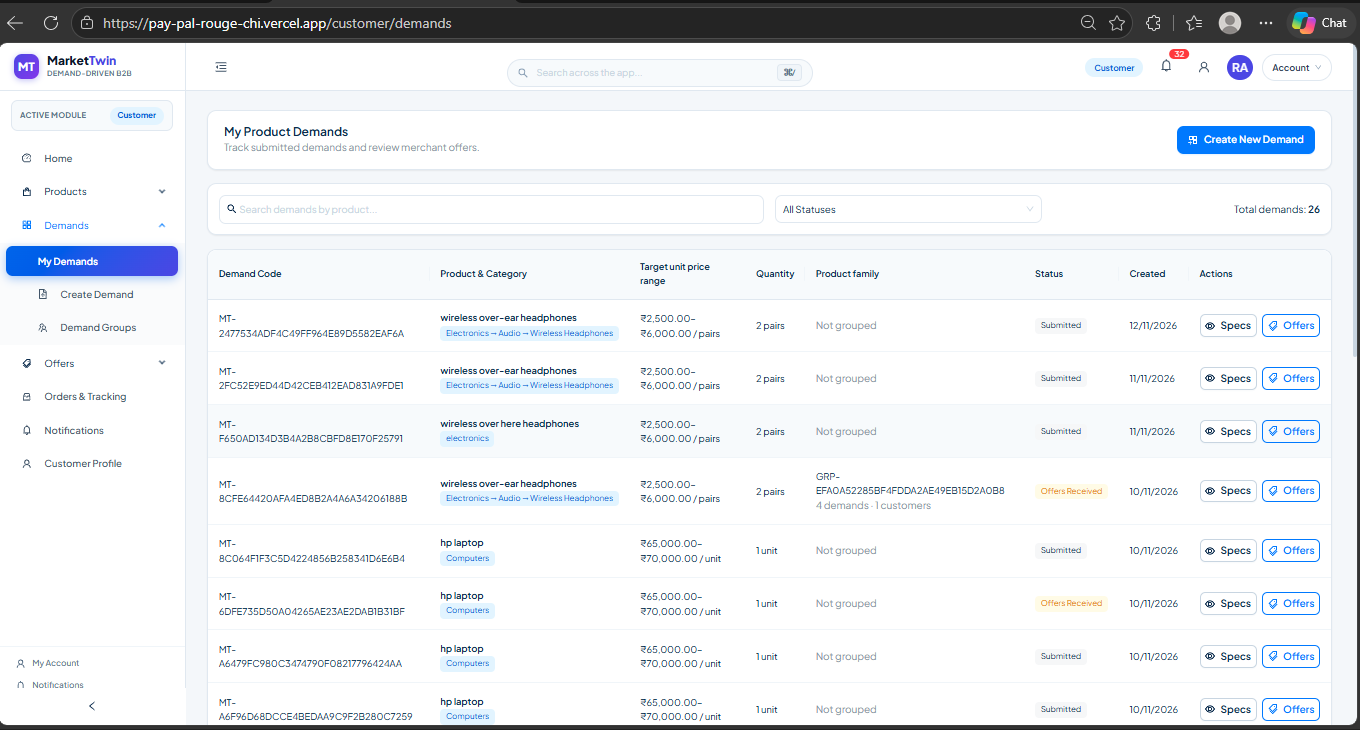
Demands created by a user
-
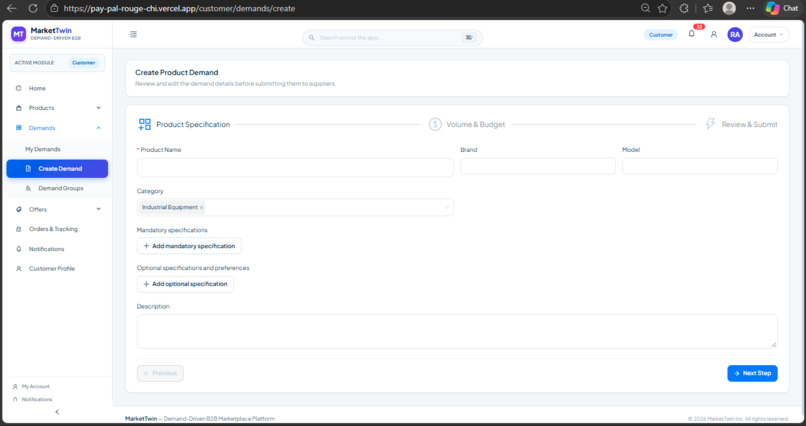
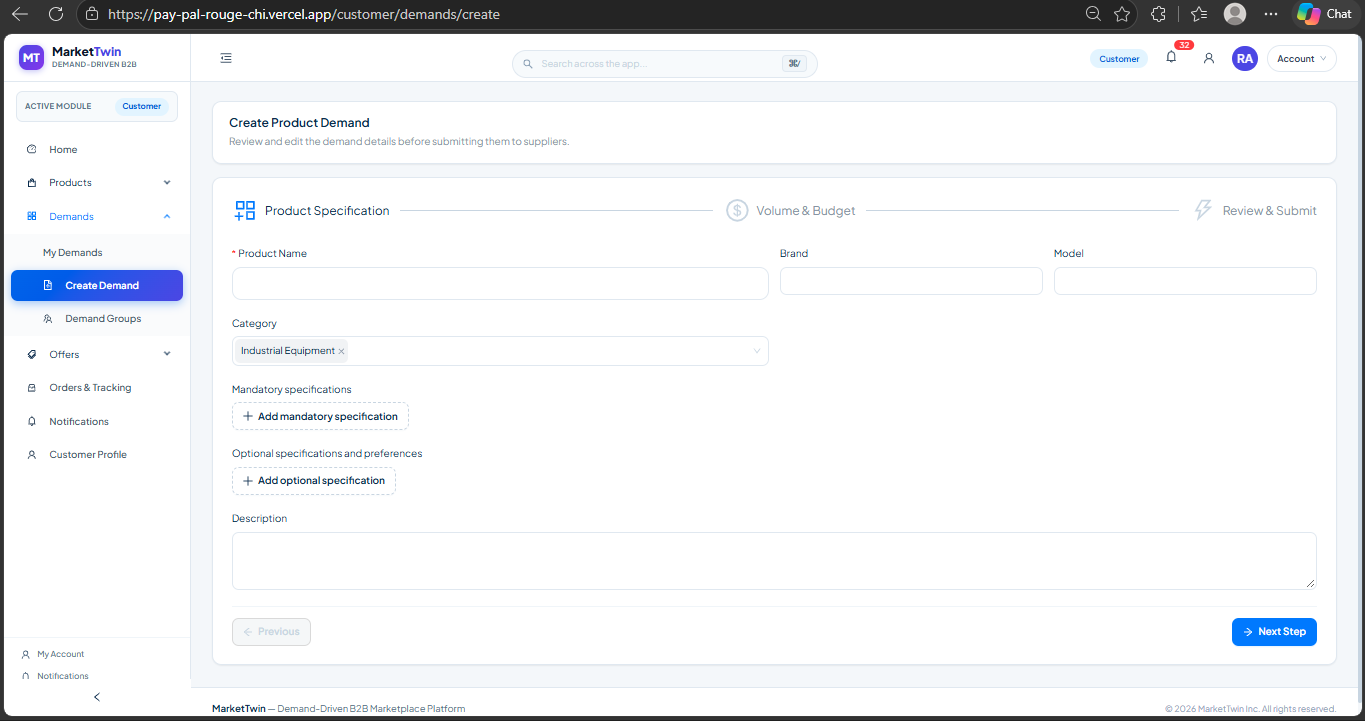
To create a demand for an unavailable product
-
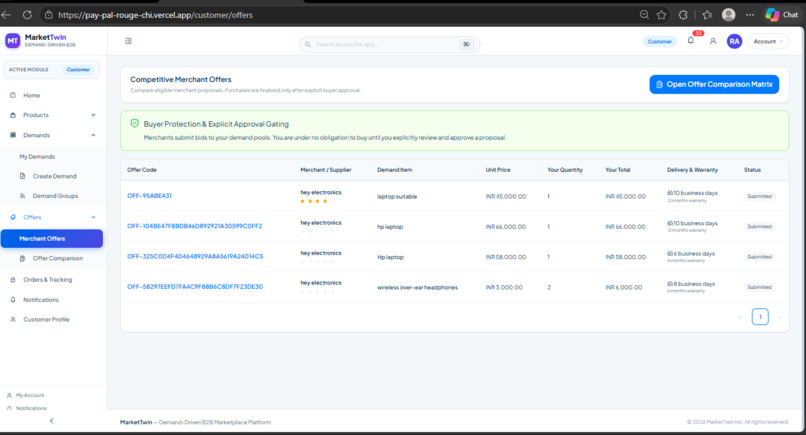
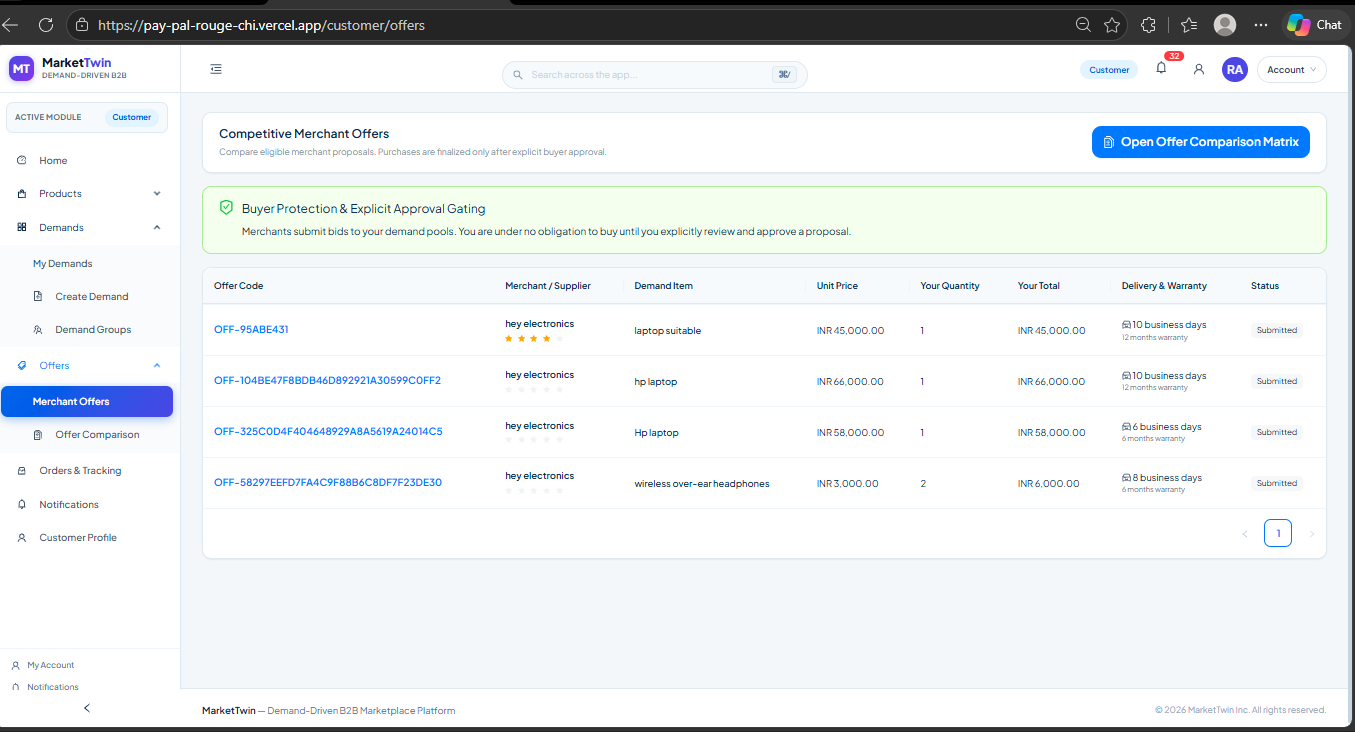
Offers offered by merchants for your demands
-
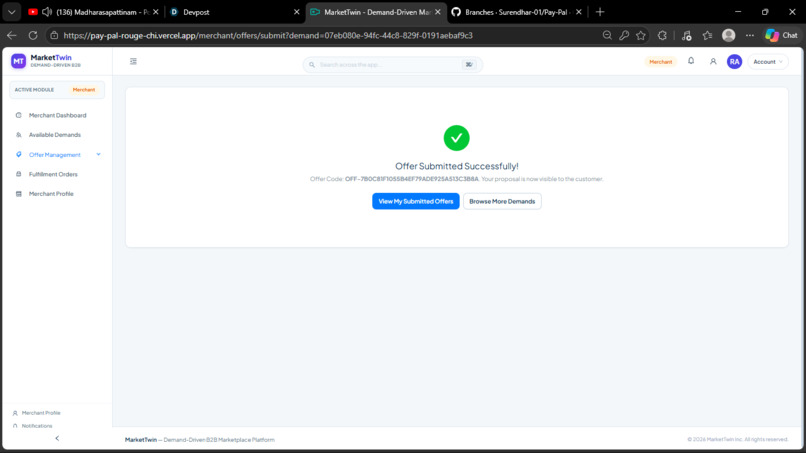
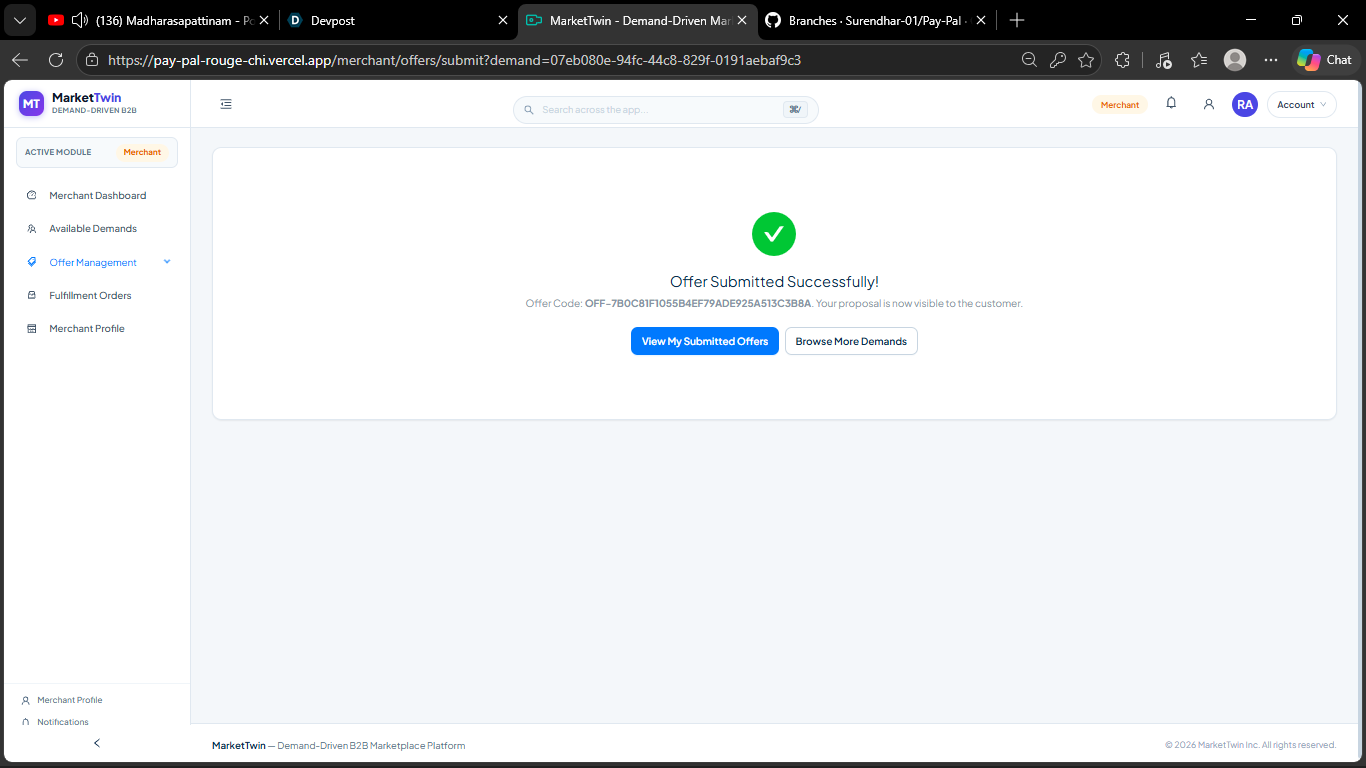
submitted offer
-
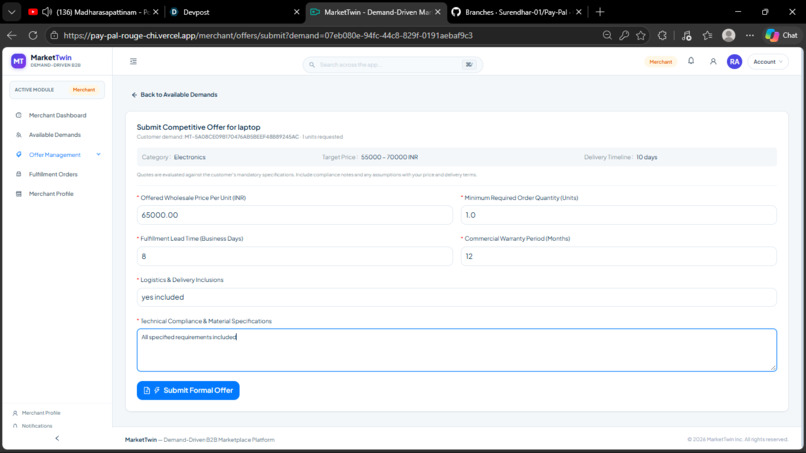
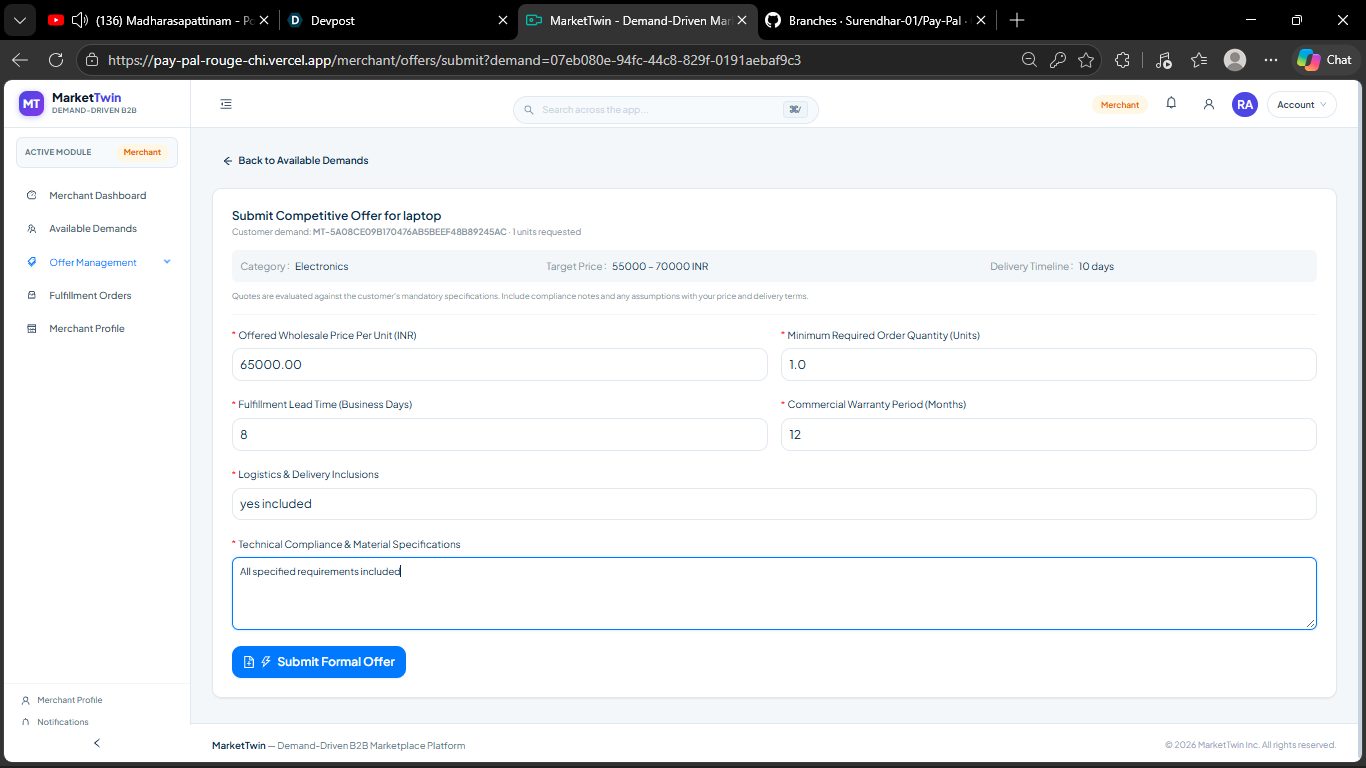
Offer submission
-
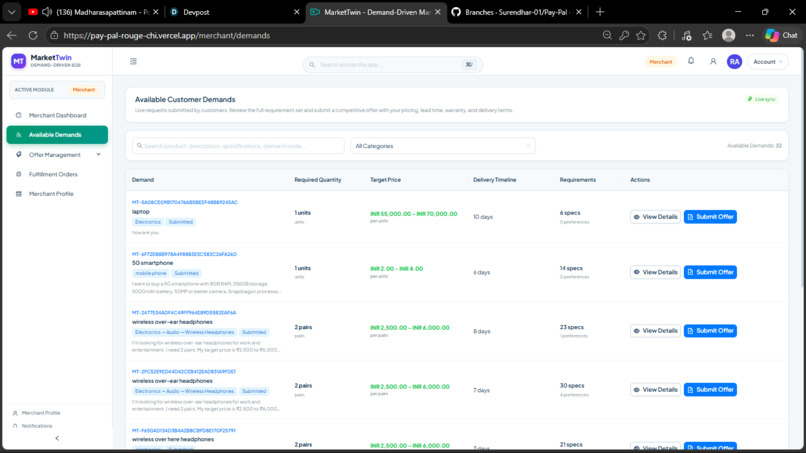
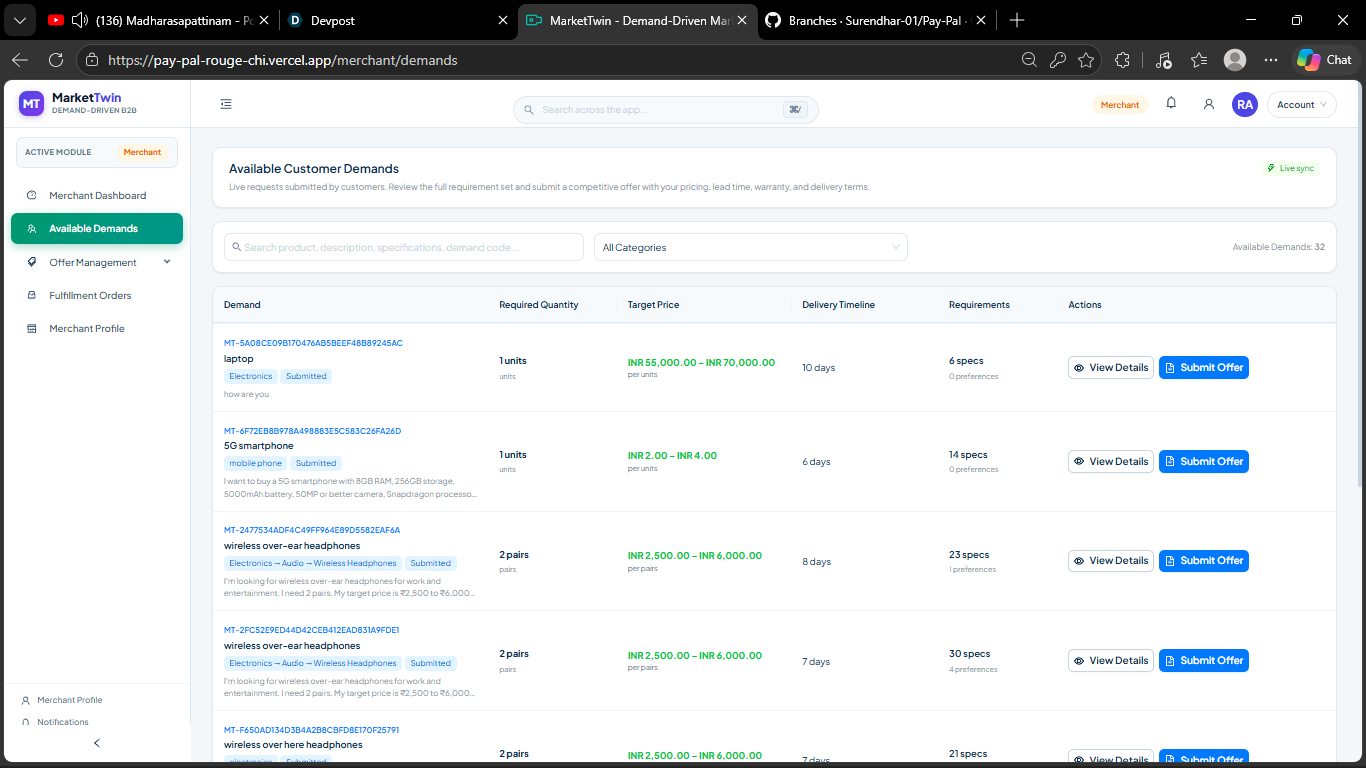
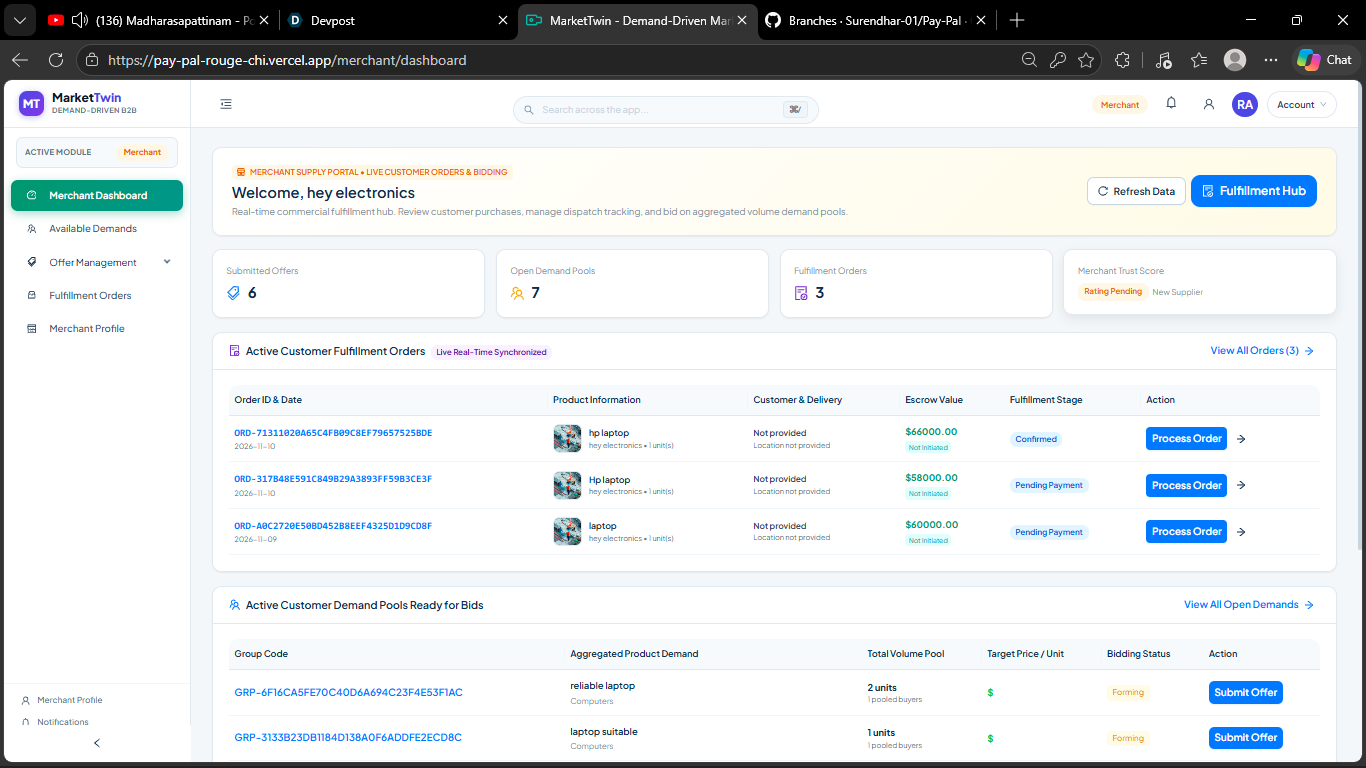
demands available for offers
-
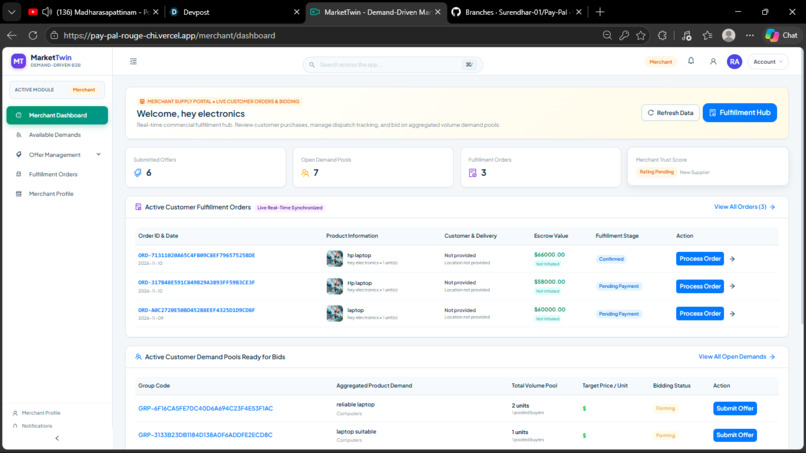
Merchant dashboard
-
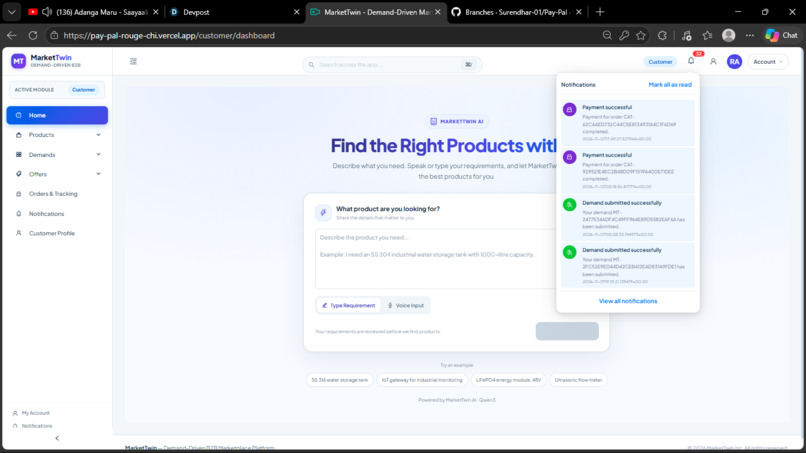
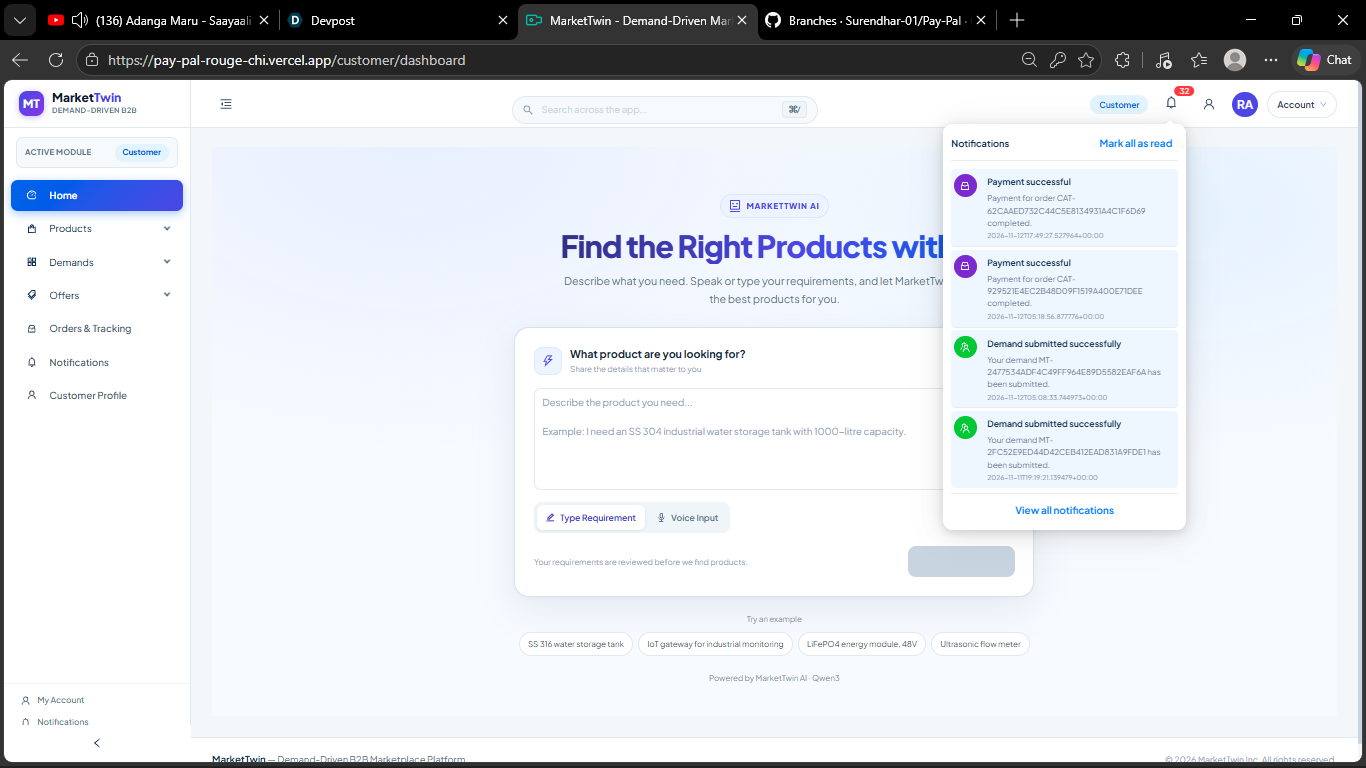
customer notified about the offer and can purchase the product once it is available
Inspiration
Online shopping is built around products that sellers already have available. But what happens when buyers cannot find exactly what they need within their budget, preferred features, or delivery expectations?
We wanted to explore a different approach: instead of making buyers search endlessly for products, what if buyers could express what they actually need and sellers could respond to that demand?
This idea led to MarketTwin — a demand-driven marketplace that connects buyers with suitable offers and helps sellers discover shared customer demand.
What it does
MarketTwin is an AI-powered demand-driven marketplace that connects buyer requirements with seller offers.
- AI-powered demand understanding: Buyers describe the product they need, including their budget, essential requirements, and expected delivery time.
- Intelligent demand grouping: Similar buyer demands are identified and grouped using semantic similarity and requirement analysis.
- Demand discovery for sellers: Sellers can discover grouped demands and submit offers based on what buyers are looking for.
- Offer validation: Seller offers are checked against mandatory buyer requirements before being considered suitable.
- Smart offer matching: Offers are evaluated based on price, delivery time, and product requirements.
- Buyer-controlled decisions: When an offer only partially matches a demand, the buyer can review the differences and decide whether to accept it.
- Waiting for better matches: Buyers can keep their demands active and receive an opportunity to consider suitable offers when they become available.
MarketTwin shifts the marketplace experience from searching through existing products to expressing demand and discovering relevant supply.
How we built it
We built MarketTwin using a full-stack architecture with AI-powered processing.
- Frontend: React, Vite, TypeScript, and Material UI for the user interface.
- Backend: Python and FastAPI for APIs, business logic, demand processing, and offer management.
- Database: Supabase PostgreSQL for application data, with pgvector for semantic similarity search.
- AI and embeddings: Ollama with Qwen 3.5 (4B) for AI-based language processing and Nomic Embed Text for generating 768-dimensional embeddings.
- Demand matching: Semantic similarity, normalized requirements, compatibility validation, and offer evaluation help connect related demands and suitable seller offers.
- Payments: PayPal is the intended payment integration for the marketplace checkout experience.
Challenges we ran into
One of our biggest challenges was identifying when two demands should actually be grouped together. Similar product descriptions do not always mean that buyers want the same thing. Budget, specifications, quantity, and delivery expectations can make otherwise similar demands incompatible. We worked on separating semantic similarity from requirement compatibility so that grouping decisions would be more meaningful.
Accomplishments that we're proud of
- Developed a demand-driven marketplace concept rather than another conventional product-listing platform.
- Built an AI-based workflow for understanding and comparing buyer requirements.
- Implemented semantic demand matching using vector embeddings.
- Designed compatibility checks that go beyond simple text similarity.
- Created a workflow where sellers can respond to grouped buyer demand.
- Focused on keeping buyers in control when evaluating offers that do not satisfy every preference.
What we learned
We learned that AI-powered matching requires more than finding similar words or product descriptions.
Semantic similarity helps identify related demands, but structured requirement validation is essential for determining whether those demands can genuinely be served together.
Most importantly, we learned to think about marketplaces as systems that can coordinate demand and supply rather than simply display available products.
What's next for MarketTwin
Our next goal is to make MarketTwin a complete, production-ready demand-driven marketplace.
We plan to:
- Complete and strengthen the PayPal-powered checkout experience.
- Improve demand grouping and compatibility accuracy.
- Introduce better seller insights into emerging and unmet customer demand.
- Strengthen scalability, security, and real-world testing.
- Our long-term vision is to make online shopping more responsive to buyers by allowing demand to shape what sellers offer.
Built With
- fastapi
- material-ui
- nomic-embed-text
- ollama
- pgvector
- postgresql
- python
- qwen-3.5
- react
- supabase
- typescript
- vite
