-
Main Image
-
Personas Generated
-

Campaign Ideas
-
Market Research
-
Detailed Campaign
-
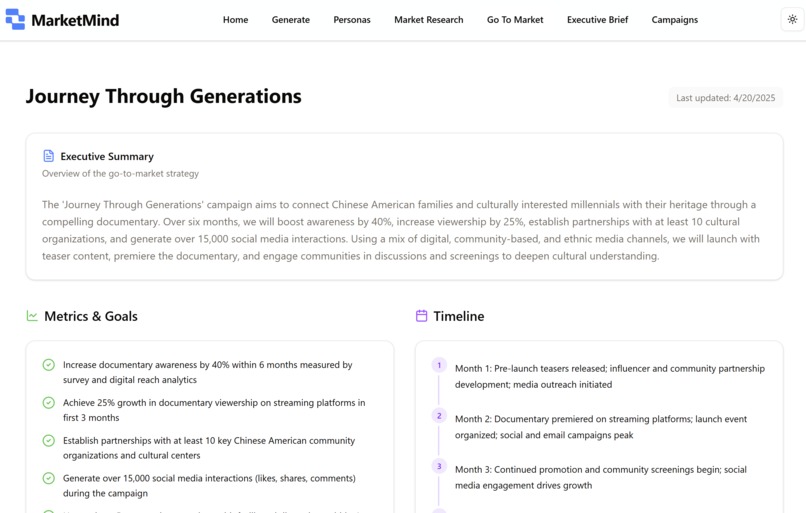
Go To Market Plan

🚀 The MarketMind Product Story
Bringing a new product idea to life is daunting. Before a single line of code is written or a prototype is built, teams are expected to understand the market landscape, analyze competitors, map out go-to-market strategies, define personas, and craft stakeholder-ready pitches—all while operating with limited time, data, and resources. For founders, product leads, and intrapreneurs, this early decision-making phase is often where great ideas stall. Traditional market research is expensive and slow, and strategic marketing guidance isn’t always accessible.
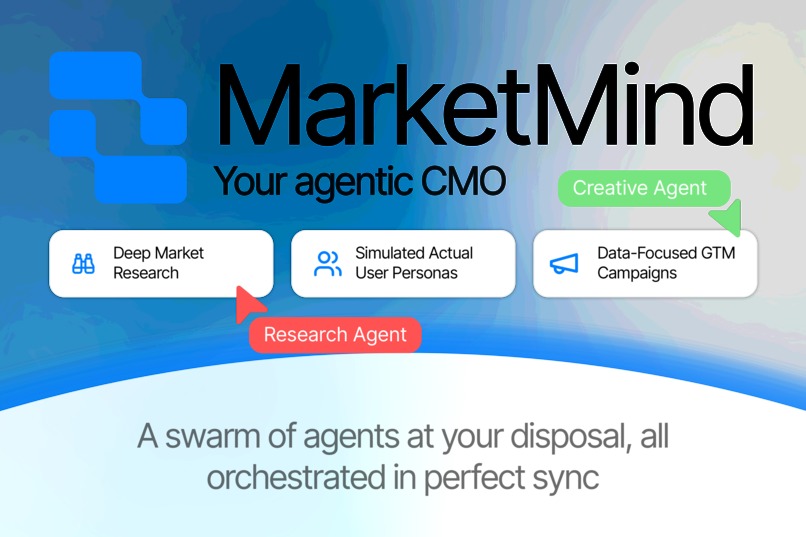
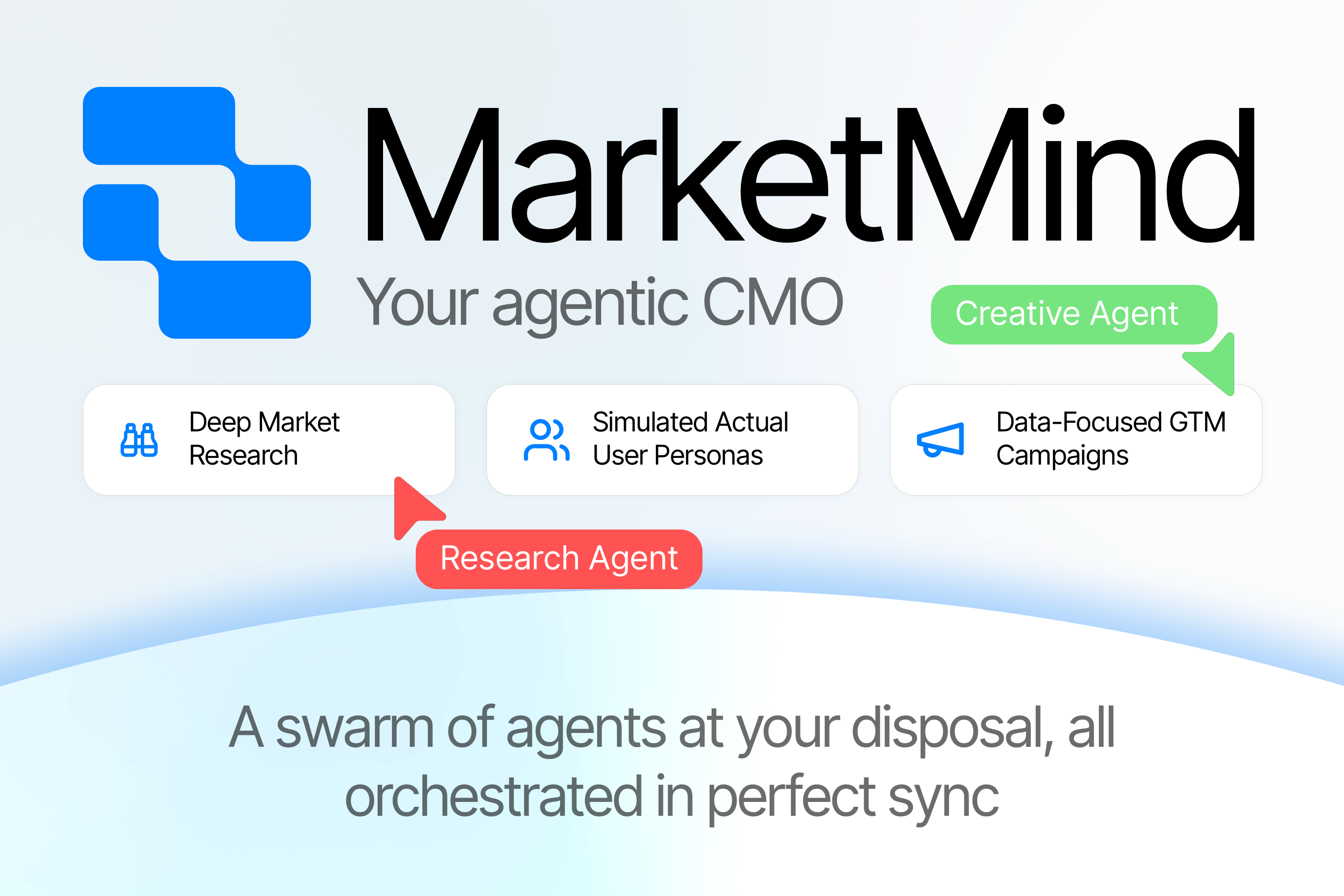
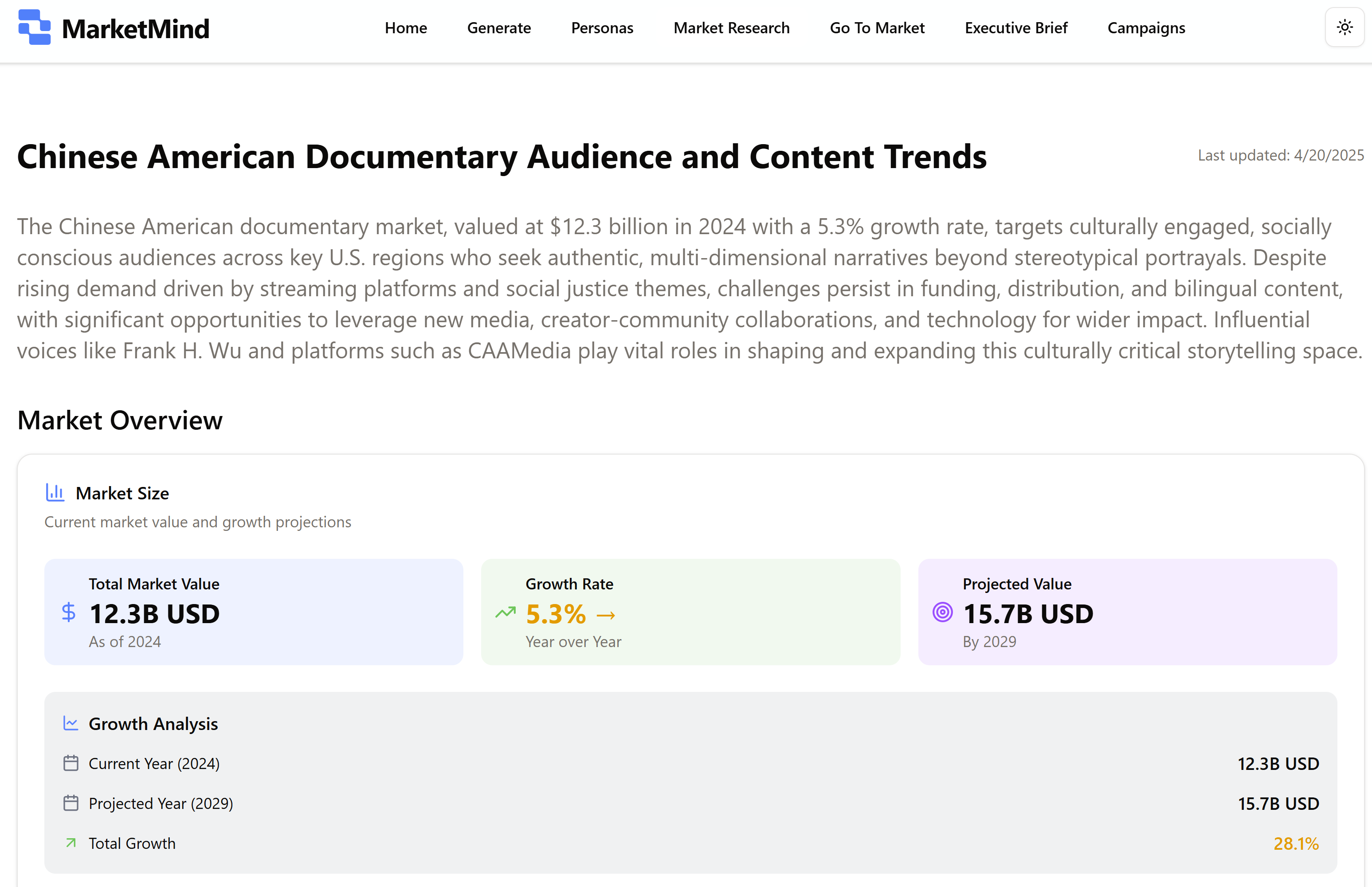
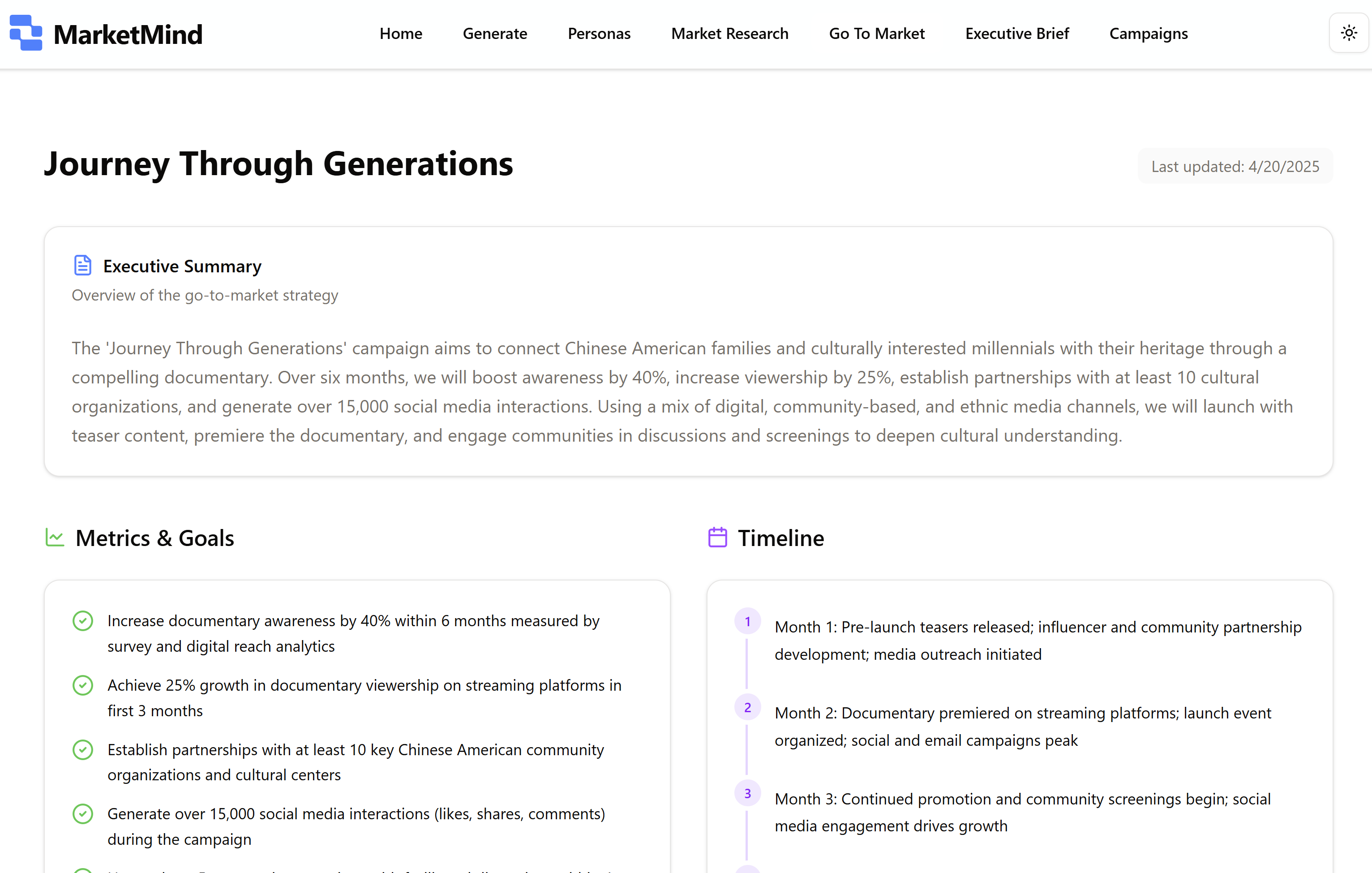
We built MarketMind to change that. MarketMind is your agentic CMO—a multimodal swarm of AI agents that delivers deep, actionable strategic insight in minutes. Users simply input a product idea, and a swarm of multimodal AI agents activates. Within minutes, MarketMind returns a full strategic briefing: market sizing and research, GTM opportunities, stakeholder-facing executive decks, persona development, campaign ideation—and even visuals. Whether you choose to pursue, pivot, or pause, you'll have the data, context, and clarity to make that call with confidence.
🧠 Agent Architecture & Coordination
MarketMind is built around a class-based, concurrent agent framework, where each AI agent represents a specific business function: market analyst, growth strategist, CFO, brand manager, persona architect, and more. These agents operate independently but communicate through message passing and shared memory structures. Each agent has access to episodic memory (short-term session context), semantic memory (longer-term knowledge across sessions), and procedural memory (task-specific workflows). All memory is stored and managed in a structured database, with strict isolation per agent to preserve individuality. Memories are reset only when a user initiates a new product idea, ensuring consistency within a session and clean slates between them.
Agent interactions are designed to reflect realistic team workflows. For example, a strategist may generate positioning statements based on trends surfaced by the analyst, while the creative agent simultaneously crafts visual assets tailored to the GTM segments identified. This distributed-yet-synchronous behavior enables modular execution and deep inter-agent collaboration—without blocking.
🤖 Model Strategy & Dynamic Prompting
To achieve low-latency, high-coherency reasoning across varied domains, we ran extensive evaluations to map models to task types.
- GPT-4.1 Mini is used for structured strategy development, logical flows, and GTM synthesis.
- Gemini 2.5 Flash Preview powers the persona system and live chats, offering lightweight speed and nuanced responses.
- Claude Sonnet 3.5 is used selectively for tone refinement and stakeholder-facing outputs.
Prompt engineering in MarketMind is dynamic—prompt templates are generated in real-time to match the user’s product domain, vertical, and strategic goals. This ensures outputs are both relevant and nuanced, avoiding generic marketing fluff.
🔍 Live Market Research via Agentic Search
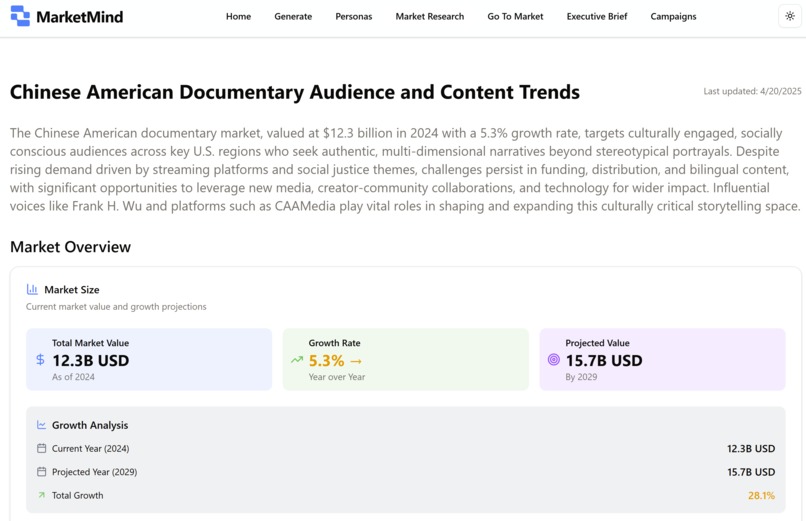
To ground MarketMind’s insights in fresh, relevant information, we integrated agentic search using Exa.ai. Each agent can independently query Exa for topically relevant articles, reports, and pages from the most recent and high-authority sources. These are parsed, chunked, and stored in semantic memory for downstream analysis. Unlike static RAG pipelines, MarketMind’s agents interpret retrieved data in context and share findings with other agents as needed—forming a live intelligence layer across the swarm.
🎨 Multimodal Outputs & Image Generation
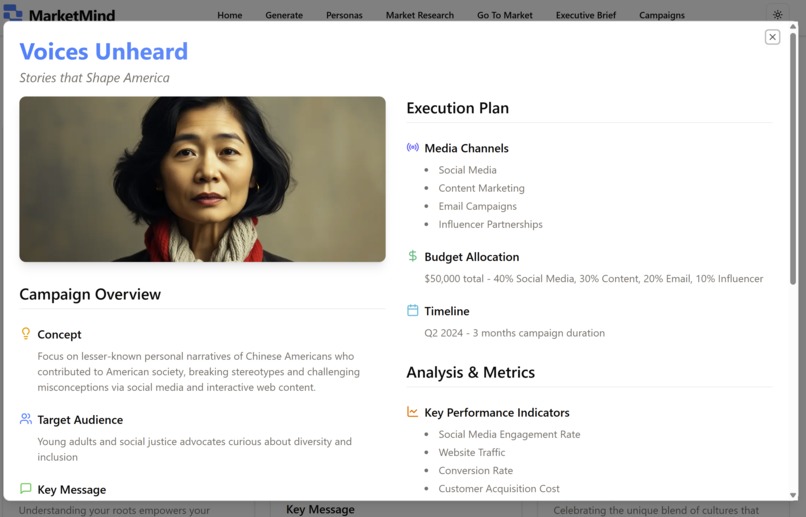
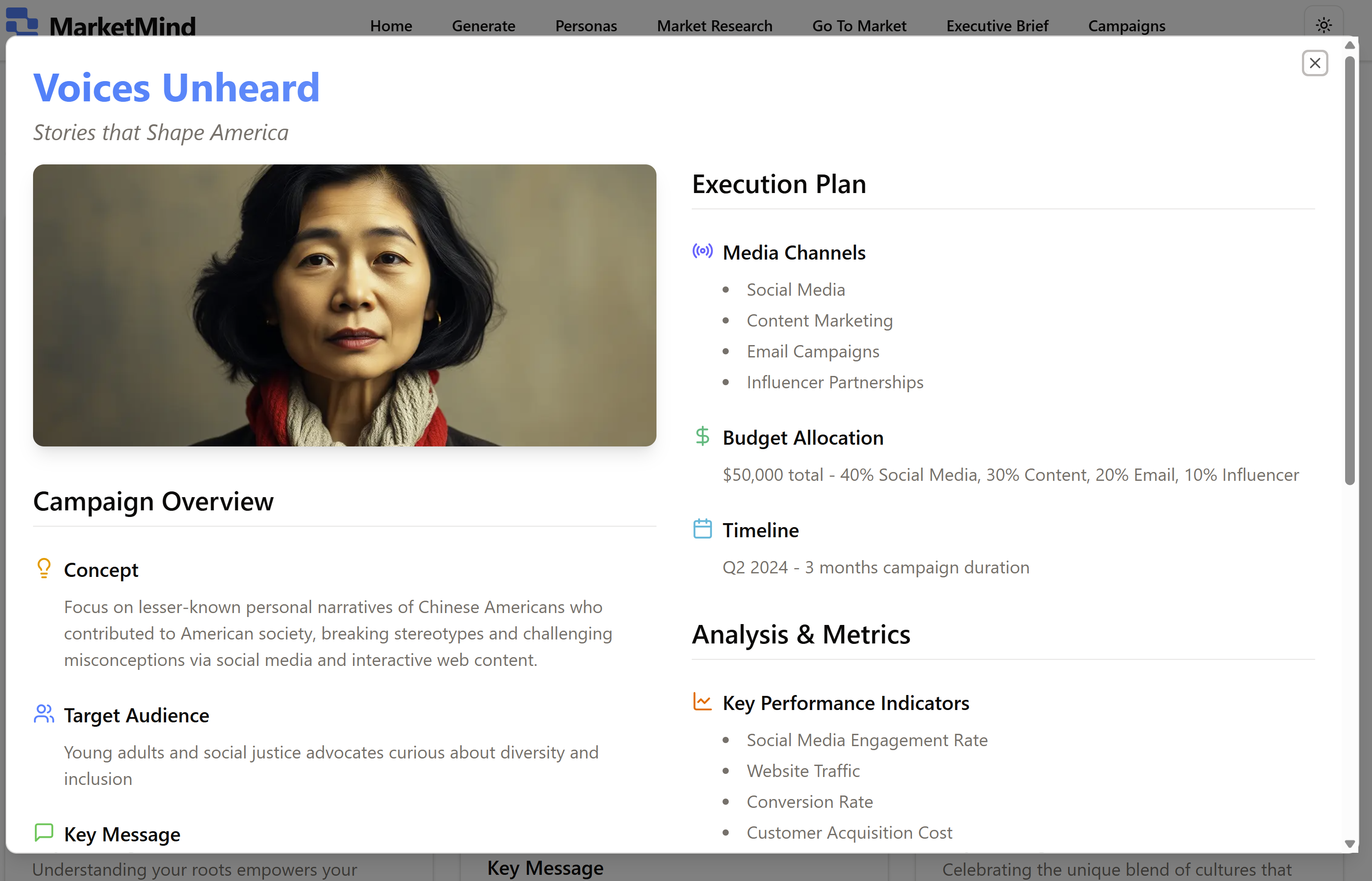
MarketMind is multimodal at its core. Creative agents use Fal.ai’s ImageGen3 and flux/schnell models to generate high-quality campaign visuals, ad mockups, and hyper-personalized persona images. Image prompts are templated dynamically from product category, value proposition, brand tone, and audience segment—ensuring consistency and purpose.
Each image is generated on the fly, embedded directly into campaign suggestions or persona cards, and becomes part of the strategic documentation. The visuals help bridge the imagination gap between abstract concepts and real-market execution.
🔥 HeatMap Analysis & Eye Tracking Simulation
One of MarketMind’s most advanced and user-loved features is HeatMap Analysis. This tool lets users upload a flyer, ad, or promotional visual and receive targeted feedback—not from abstract scoring algorithms, but from their AI personas. The flyer is segmented and analyzed using a multimodal model that simulates visual attention span. It estimates how long each persona’s “eyes” would linger on specific sections of the image, mimicking eye-tracking techniques used in traditional marketing research. The result is a visual heatmap overlaid on the original design, revealing which areas draw attention and which are overlooked. Combined with qualitative persona feedback, users gain both instinctive and analytical insight into what works and what doesn’t. It’s like running a usability test, a focus group, and a neuromarketing study—all in under a minute.
Building this feature required a deep fusion of multimodal inference and persona behavior modeling. We had to teach the system to balance simulated eye-tracking logic with individual persona preferences, demographics, and emotional response. It’s not just about what’s “visually interesting”—it’s about what’s interesting to the person viewing it.
🧬 Persona System & Group Interaction
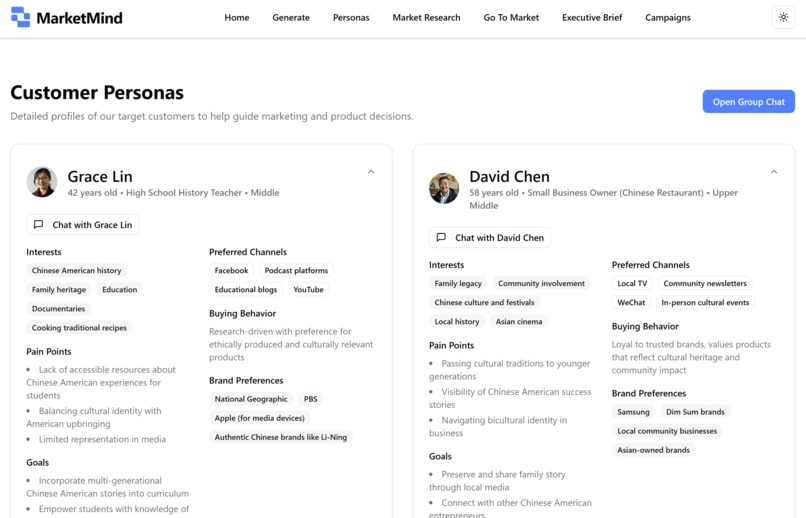
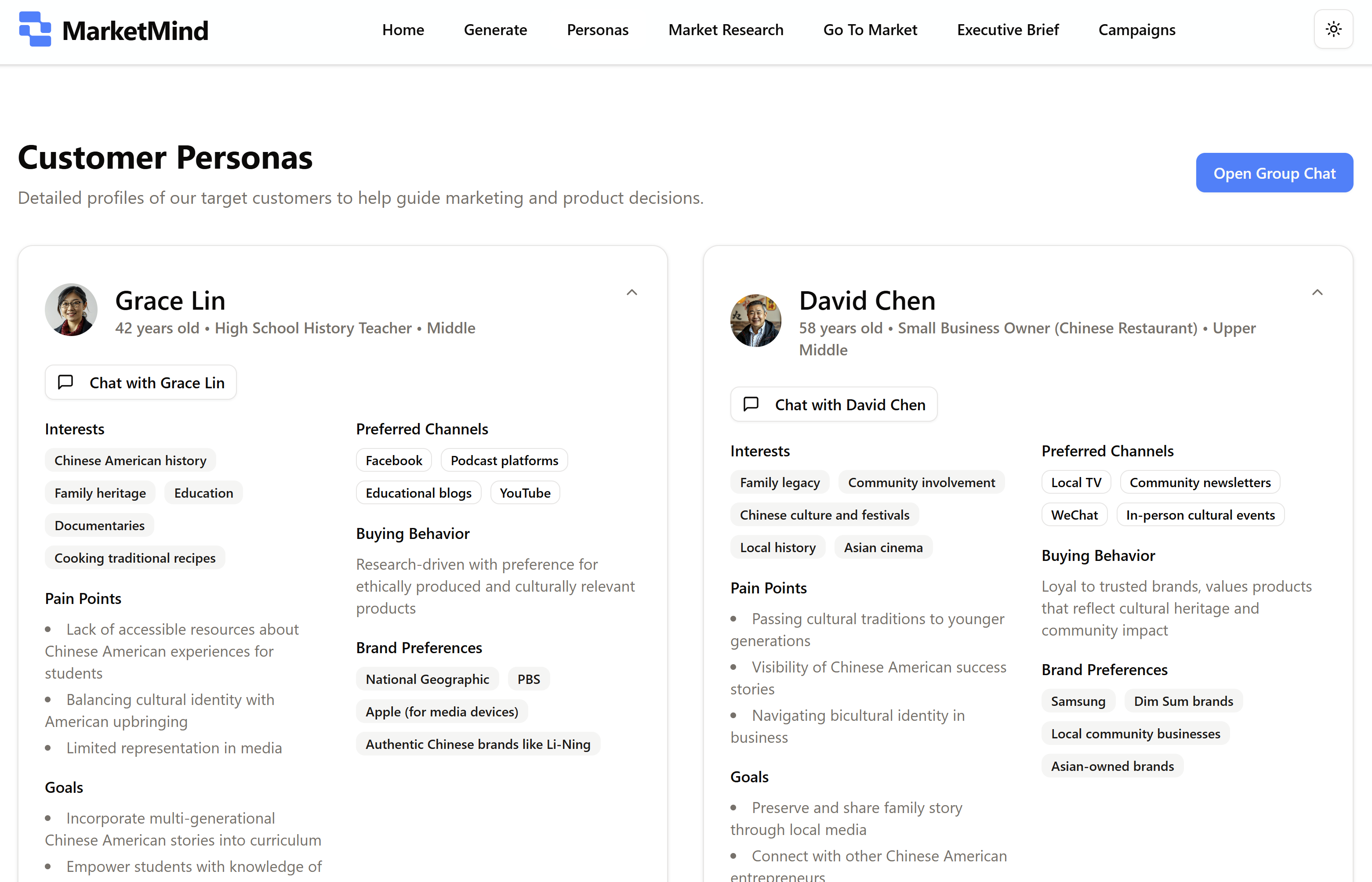
Personas are more than static profiles—they are fully interactive agents with memory, preferences, and voice. Each persona is generated with a detailed background, including demographics, motivations, objections, and language style. Users can engage in one-on-one chats to explore opinions, pitch products, or test messaging.
But MarketMind goes further. Users can initiate group discussions, where multiple personas interact live in a simulated focus group. This required building an extremely challenging memory isolation system with shared temporary context—so agents could reason together in real time, without contaminating their individual memory stores. This balance between individual identity and collaborative cognition was one of the most challenging yet rewarding parts of building MarketMind.
⚙️ Infrastructure & System Design
The frontend is built with React, delivering a sleek, responsive UI for agent outputs, persona chats, and visualizations. The backend runs on Python with FastAPI, orchestrating agent lifecycles, managing memory access, handling Exa and image model APIs, and coordinating pipeline execution.
All data is persisted using JSON-based schemas, giving us clean, structured, and future-ready storage for agents, prompts, outputs, and personas. The backend handles concurrency for parallel agent execution, manages streaming outputs to the frontend, and supports extensibility for new agent types or external integrations.
✅ The Outcome
MarketMind doesn’t just tell you what to do—it shows you what’s possible. It maps opportunity, analyzes risk, visualizes creative paths, and surfaces what resonates with your customers—real or simulated. Whether you're validating a concept, pitching to leadership, or planning launch strategy, MarketMind delivers the clarity, credibility, and creative edge of a full-stack CMO—powered by multimodal AI.

Log in or sign up for Devpost to join the conversation.