-
-
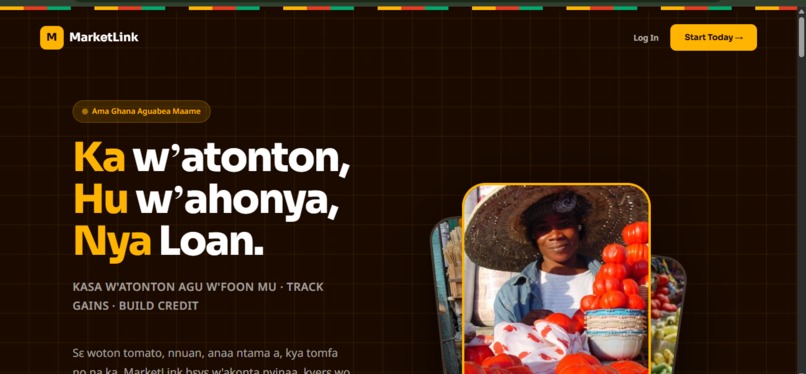
Landing Page
-
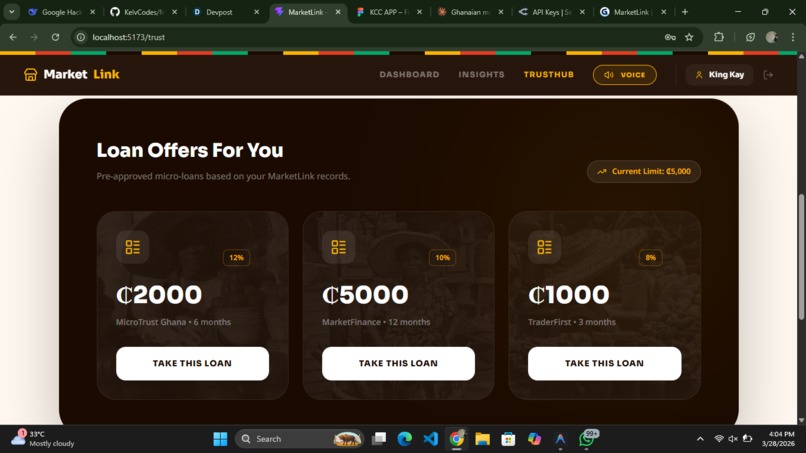
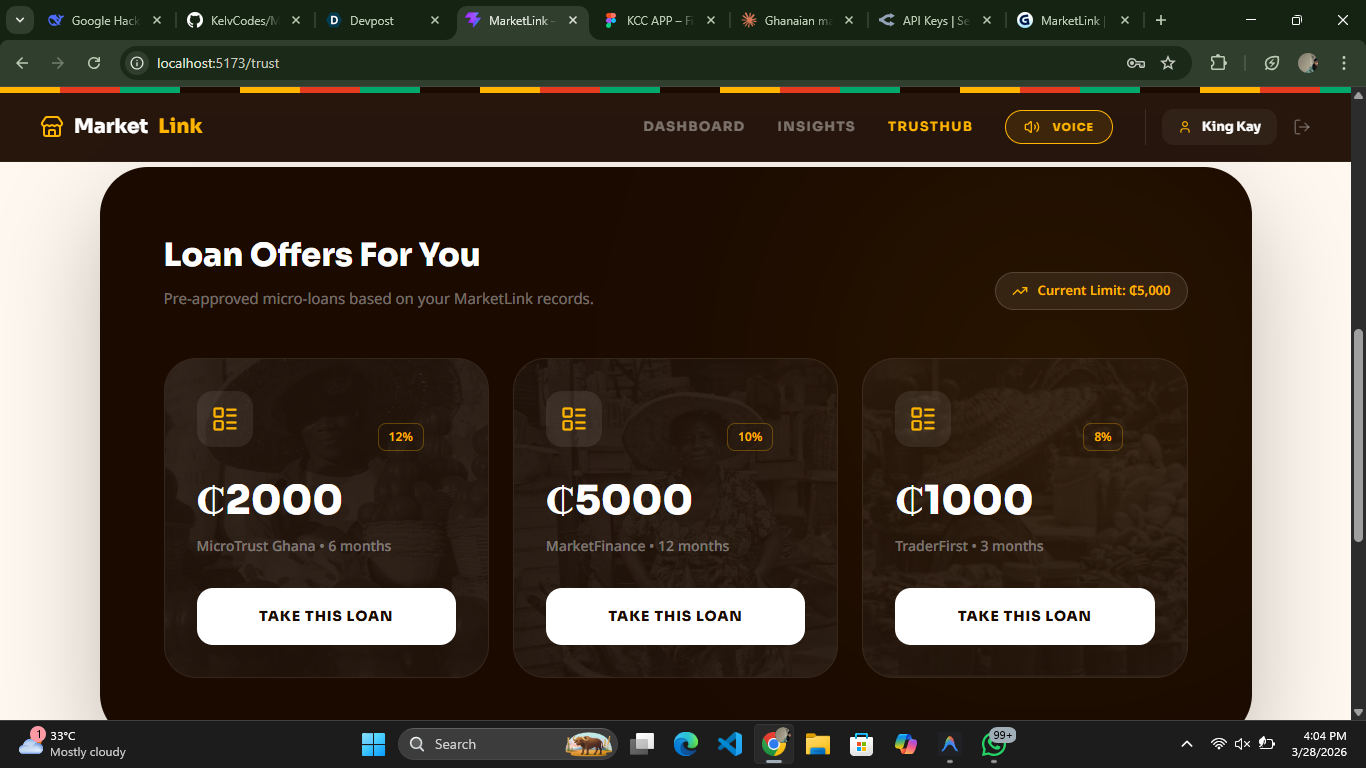
Eligible Bank Loans
-
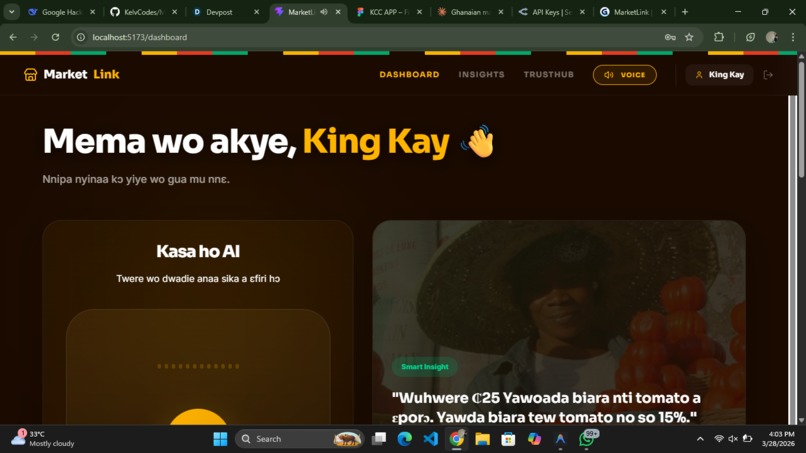
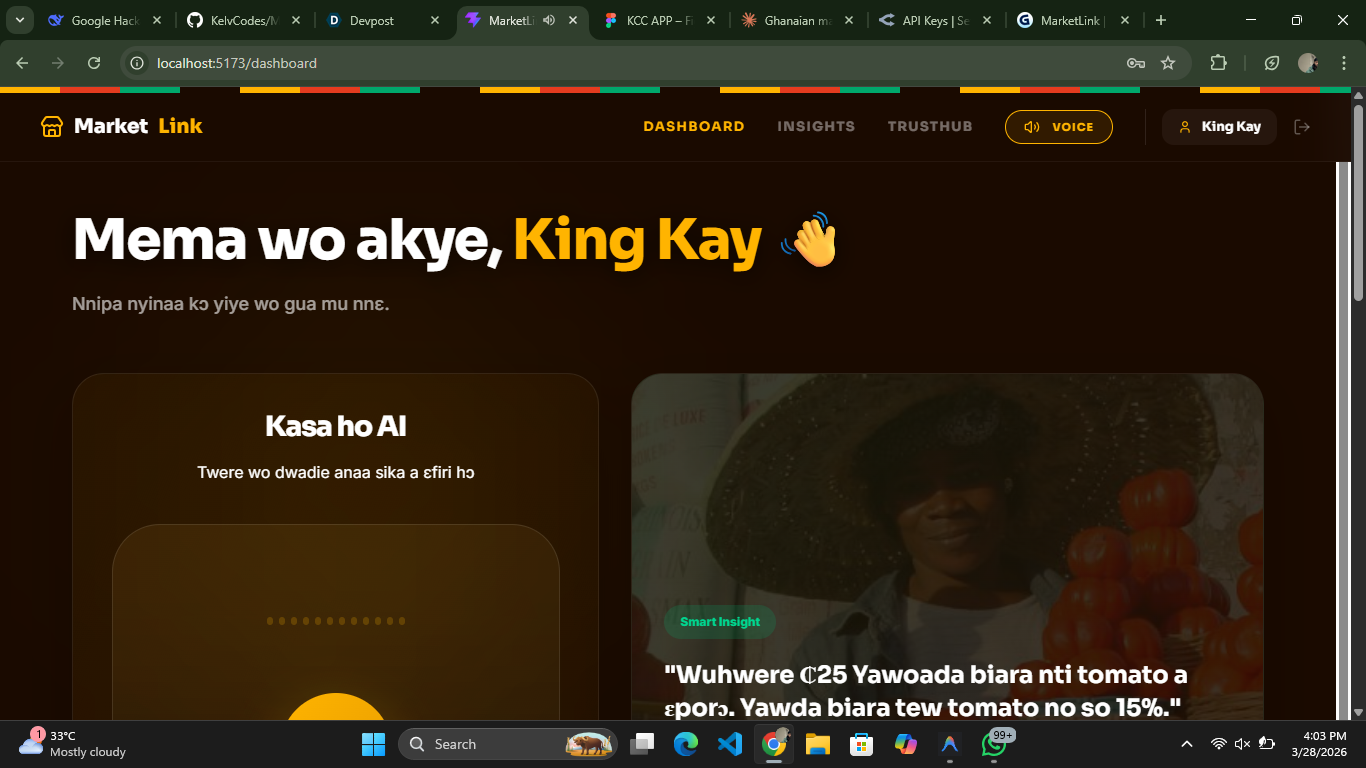
The Dashboard Page
Inspiration
Market traders in Ghana run the economy. Walk through Makola, Madina, or Koforidua and you'll see women selling tomatoes, onions, plantains — moving goods worth millions every day. Yet these same women are called "unbankable." They track business in their heads. Banks won't lend to them because they have no written records. Suppliers won't extend credit. Their economic potential stays locked away.
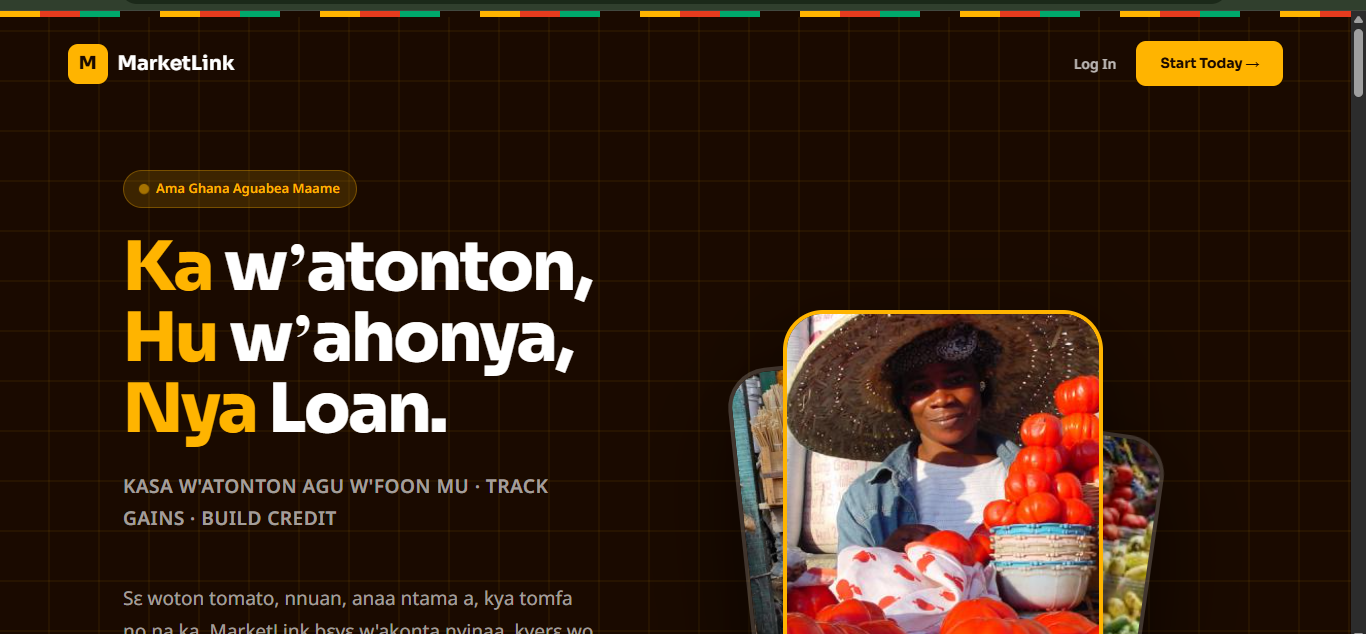
We met Ama in Madina Market. She sells tomatoes. She's been trading for 12 years. She has no bank account. She doesn't know her monthly profit. She wants to expand but can't get a loan. She said: "The bank asks for papers. I have nothing to show."
That conversation inspired MarketLink. We realized the problem isn't that traders aren't profitable — it's that their profitability is invisible to the formal economy. What if we could make it visible using only what they already have: their voice and their phone?
What We Learned
Building for market traders taught us that technology must adapt to users, not the other way around.
First lesson: Voice is the only interface that works. Many traders have low literacy. Typing is slow. Forms are intimidating. But every trader can talk. Voice-first design isn't a feature — it's a requirement.
Second lesson: Trust is everything. Traders won't share business information unless they see immediate value. Our first prototype gave advice. Traders liked it but didn't trust it. When we added the Trust Score and loan pathway, they leaned in. "You mean the bank will finally look at me?" one trader asked. That's when we knew we had something.
Third lesson: Simplicity wins. Our first design had charts, graphs, analytics. Traders ignored them. They wanted one thing: "Tell me what to do." We stripped everything down to voice in → advice out. That's all that mattered.
How We Built It
MarketLink is a voice-first web application built for hackathon demo speed and real-world usability.
Frontend: React with TypeScript and Tailwind CSS. We chose React for component reusability and TypeScript for type safety during rapid development. Tailwind gave us mobile-responsive design without writing custom CSS — critical for a project that must work on $50 Android phones.
Voice Processing: Browser SpeechRecognition API captures voice input. We added a simulation layer to show AI processing instantly during demos.
AI Intelligence: Claude 3.5 Sonnet via OpenRouter powers the business analysis. When a trader records a voice note, Claude extracts items, costs, sales, spoilage, and calculates profit. It also generates personalized advice and market intelligence. OpenRouter gave us free credits for unlimited demo calls.
Data Layer: LocalStorage stores user data for demo persistence. This lets us show a 3-month business history without building a backend — perfect for hackathon scope.
Trust Score: Claude generates a formal Trust Report based on tracked history, showing consistency, average profit, and loan eligibility. This bridges the gap from informal records to formal lending.
Market Intelligence: Simulated network effects show how aggregated anonymized data could help traders price smarter — a feature we'd scale post-hackathon.
Challenges We Faced
Challenge 1: Voice Recognition in Local Languages Browser SpeechRecognition supports English well but Twi and other Ghanaian languages are limited. Our solution: Demo in English with clear prompts, but architecture supports adding custom language models post-hackathon. We also built fallback text input so judges can still test functionality.
Challenge 2: Making AI Responses Feel Real-Time Claude API calls take 2-3 seconds. Traders expect instant responses. We added loading animations and optimistic UI updates so users see immediate feedback while processing happens. The demo feels fast even with real API calls.
Challenge 3: Trust Score Credibility Banks won't accept an AI-generated report — yet. We framed this as a "bridge" tool: the Trust Score isn't a formal document but a conversation starter that traders can show to microfinance partners. We also built in a "Download PDF" button that generates a professional-looking report, making the pathway tangible.
Challenge 4: Scoping for Hackathon Market intelligence and network effects would require real data from hundreds of traders. We simulated this in the demo with pre-written insights to show the vision without overbuilding. Judges understand the difference between "built fully" and "architected to scale."
Built With
| Category | Technologies |
|---|---|
| Frontend | React, TypeScript, Tailwind CSS, React Router, Lucide Icons |
| AI | Claude 3.5 Sonnet (via OpenRouter API) |
| Voice | Web SpeechRecognition API |
| State | React Context, LocalStorage |
| Deployment | Vite |
| Version Control | Git, GitHub |
Final Reflection
MarketLink isn't just a hackathon project. It's a real solution to a real problem affecting millions of women across Africa. We built it in 48 hours but architected it to scale. With real market data and microfinance partnerships, this could unlock billions in economic value that's currently locked away because informal traders have no voice in the formal economy.
The name says it all: MarketLink links market traders to the financial system — using the only tool they've always had: their voice.
Built With
- react
- typescript
- vite

Log in or sign up for Devpost to join the conversation.