Marketing AI Studio:
💡 Inspiration
Our vision for Marketing AI Studio was born at the intersection of three revolutionary concepts. We were deeply inspired by the specialized copywriting power of Jasper.ai, which proved that AI could master brand voice. However, we wanted to move away from simple chat boxes toward a visual, spatial way of working.
Taking a leaf out of Flow by Google Labs, we created a "marketing laboratory" where ideas are visualized on an infinite canvas. Finally, we integrated the high-efficiency workflows seen in tools like *Pomelli *, focusing on a "flow-state" experience where technical barriers disappear, leaving only pure creative strategy.
🚀 What it does
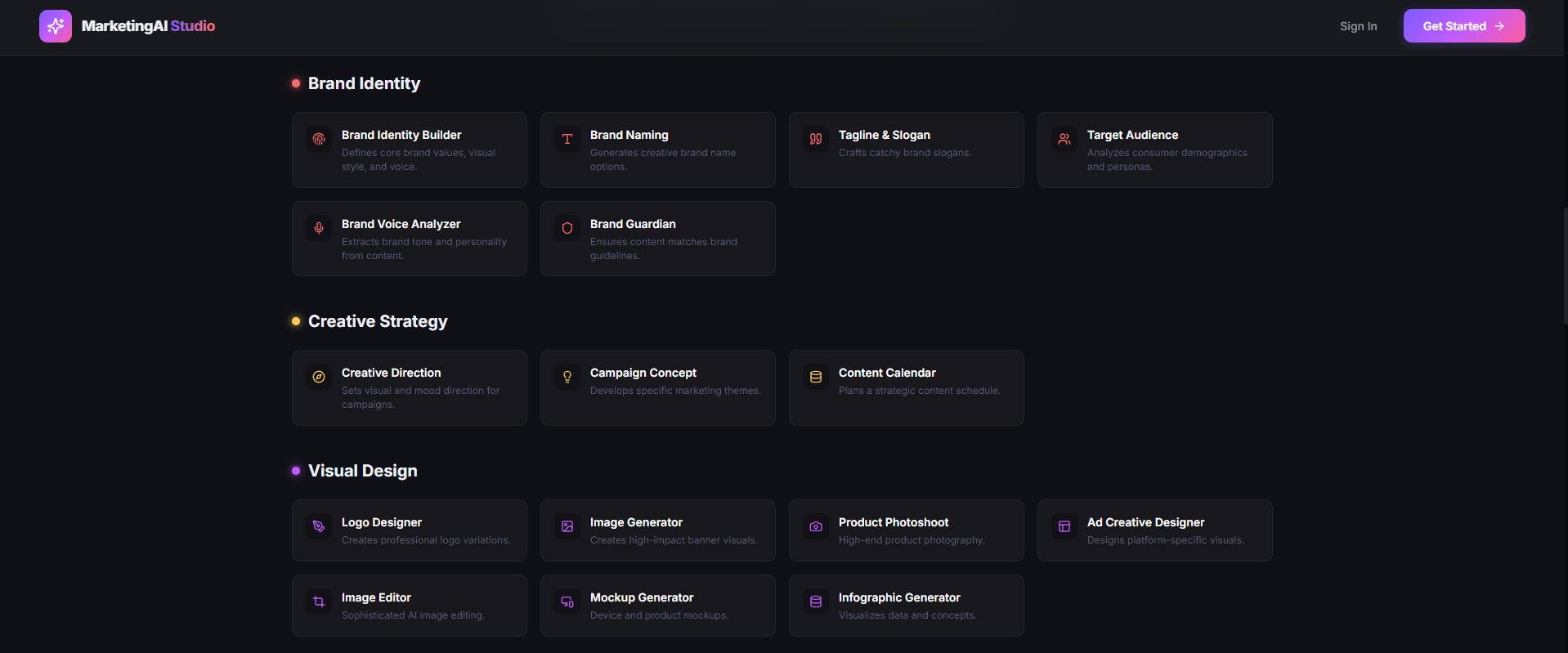
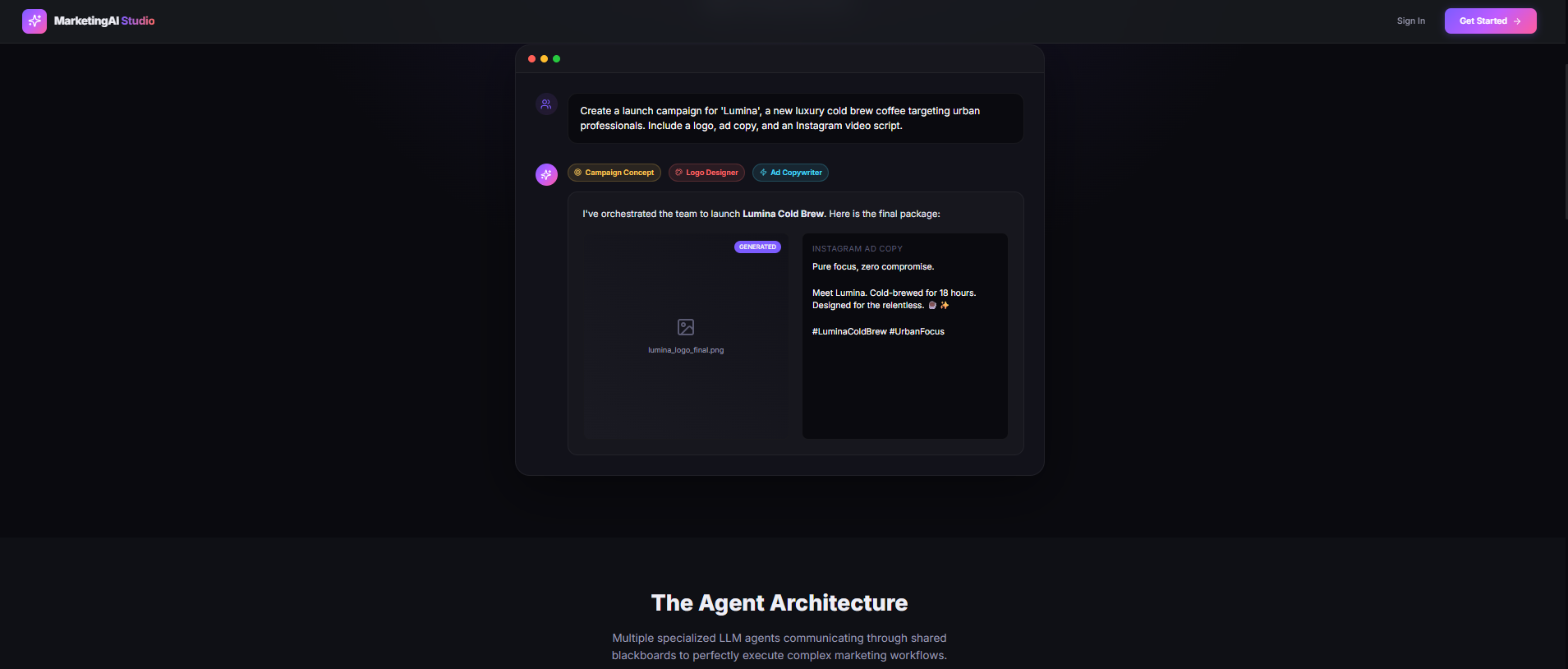
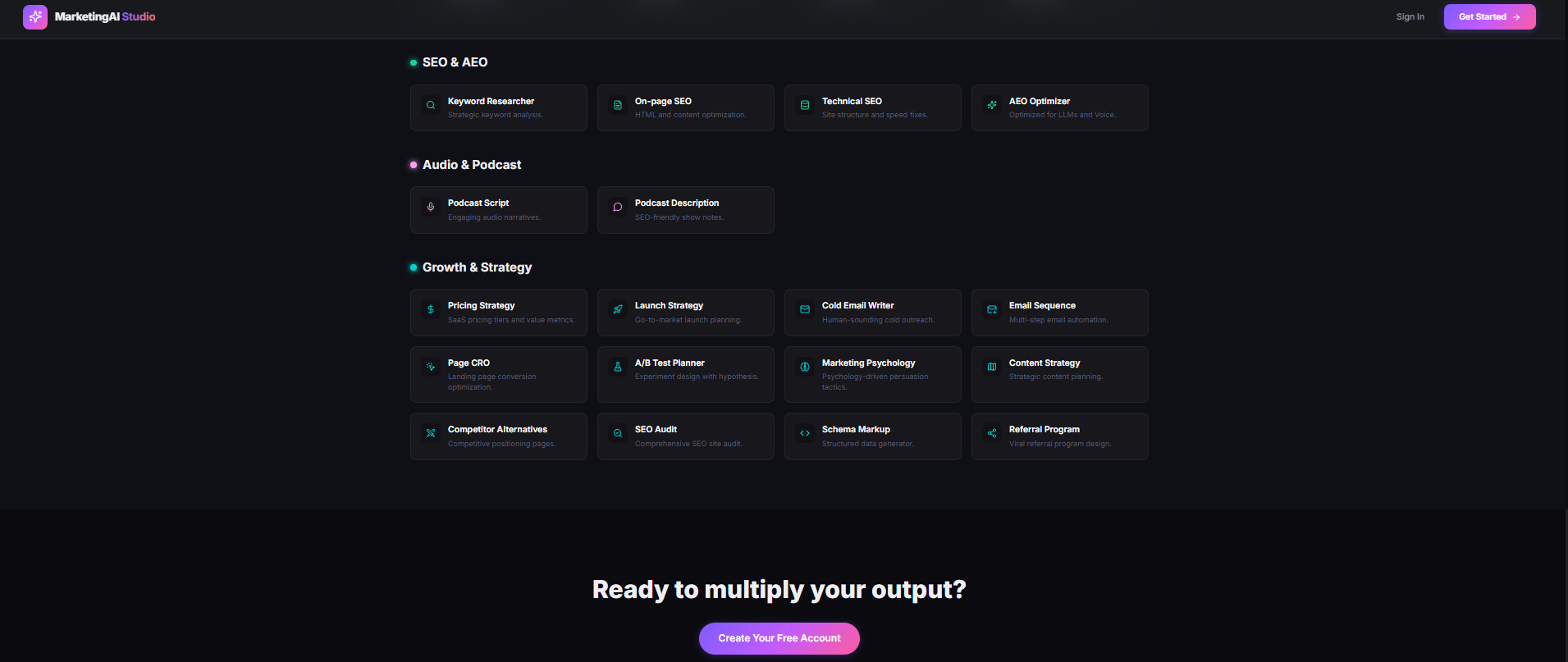
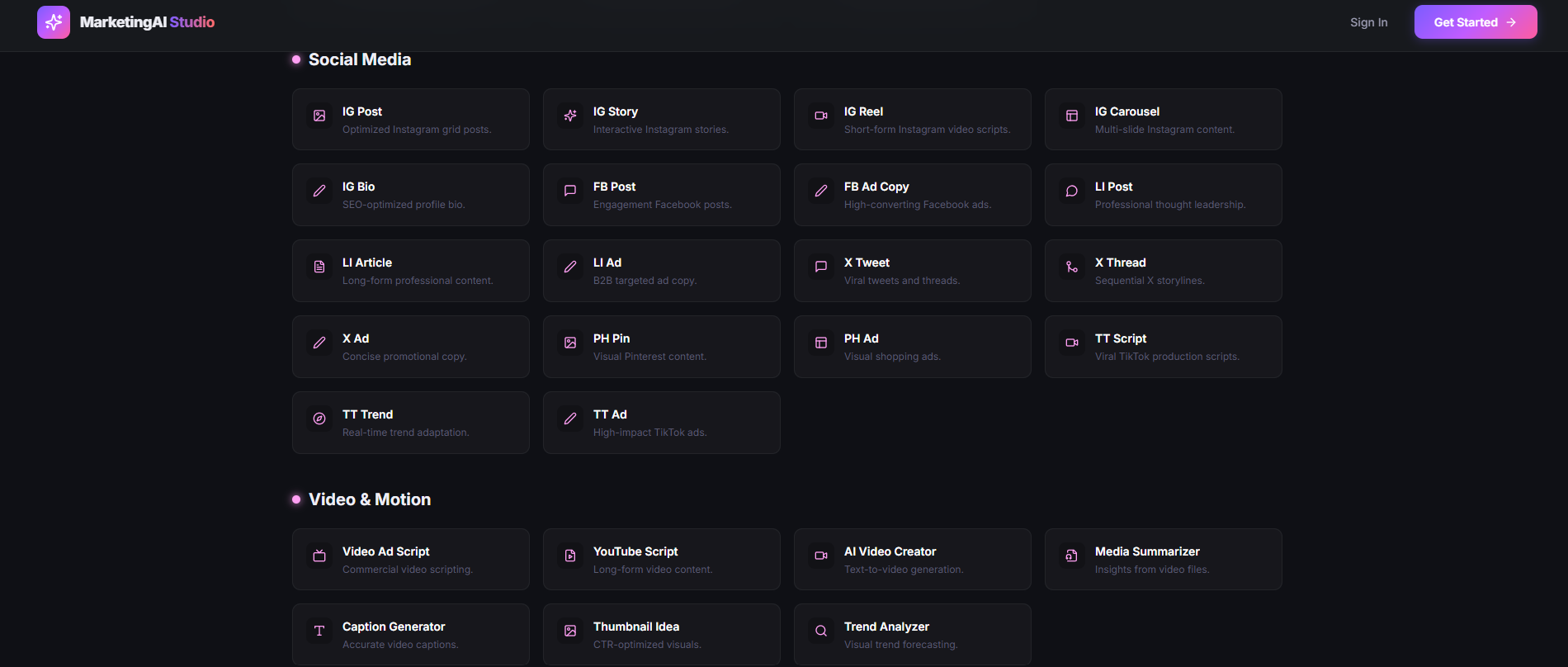
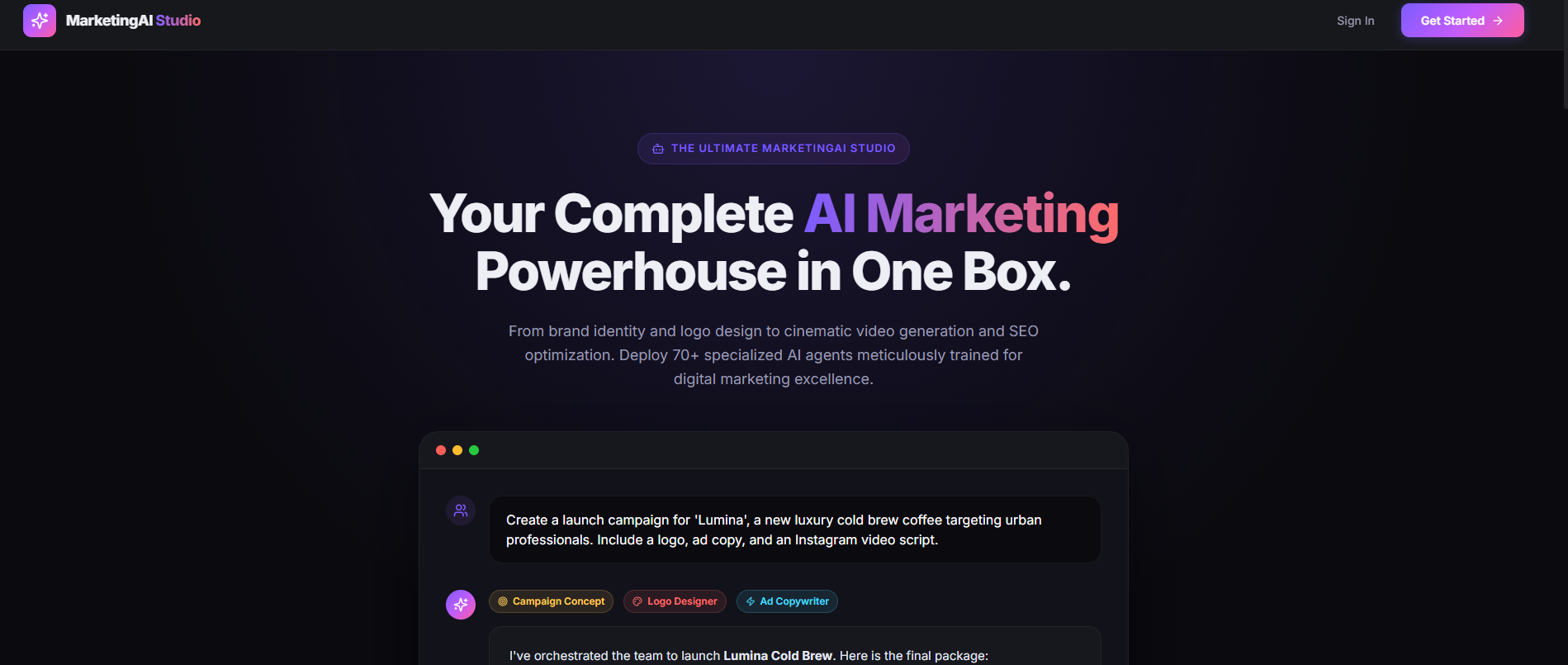
Marketing AI Studio is an all-in-one ecosystem for the modern digital landscape:
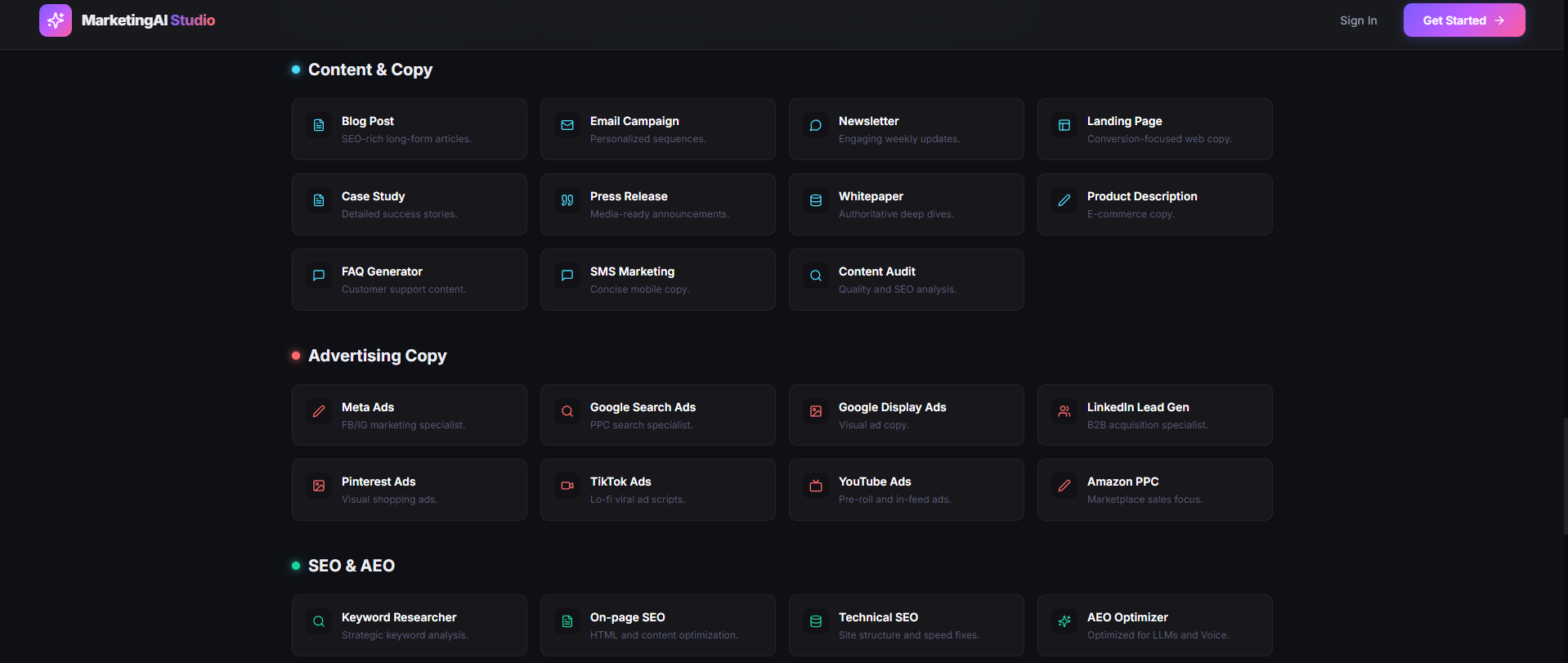
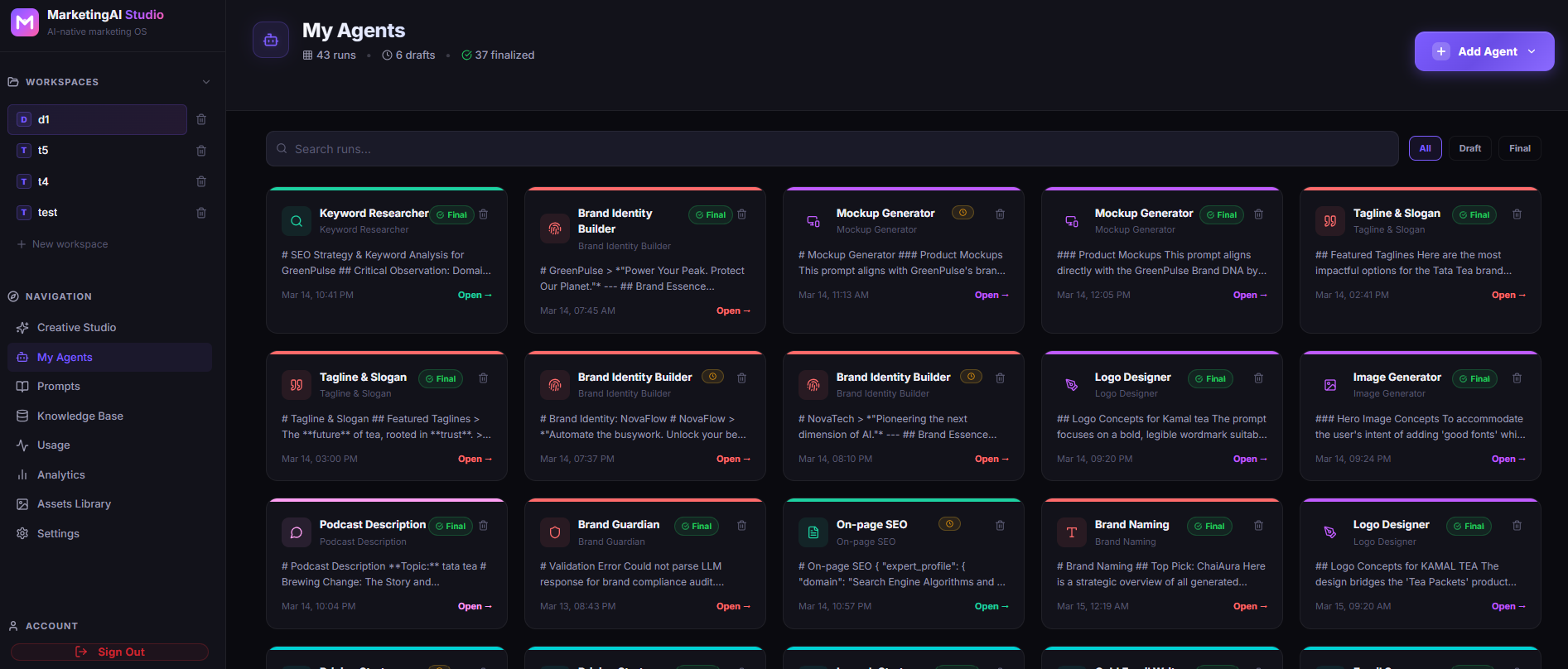
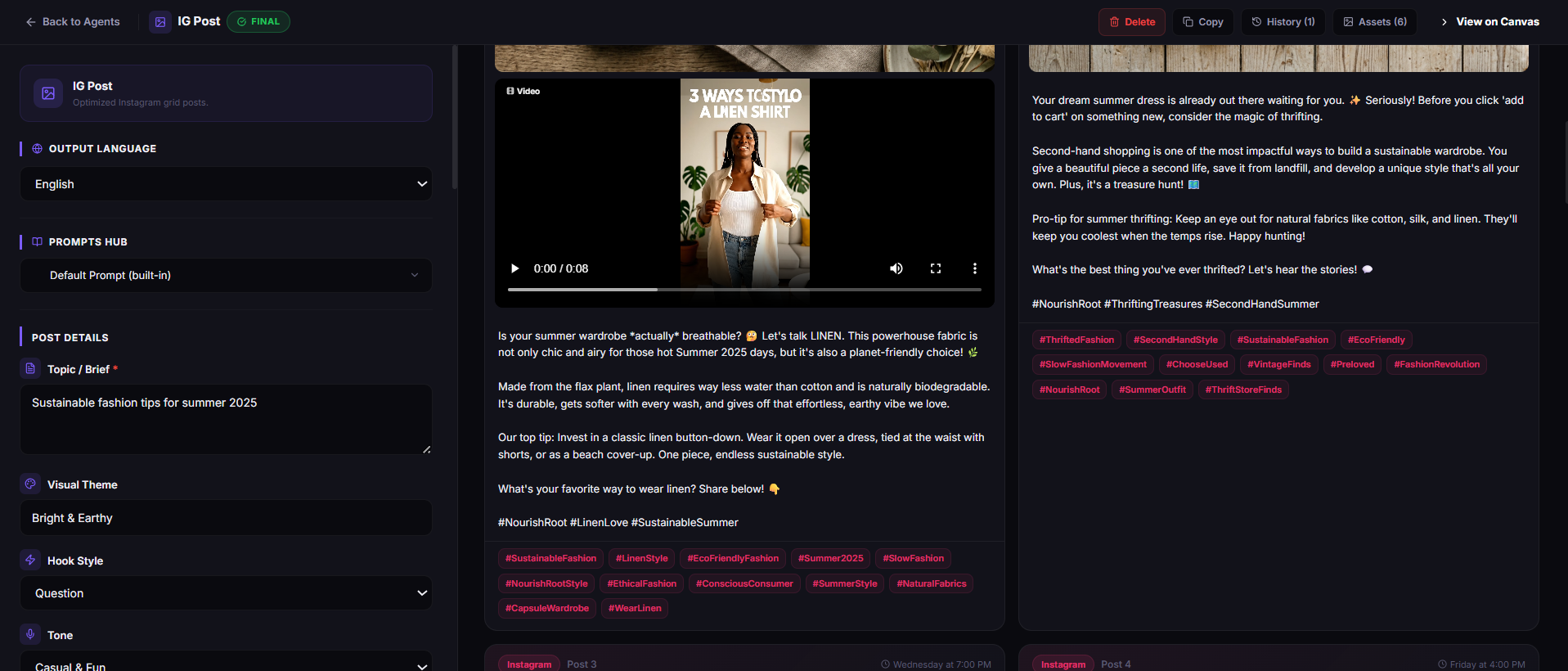
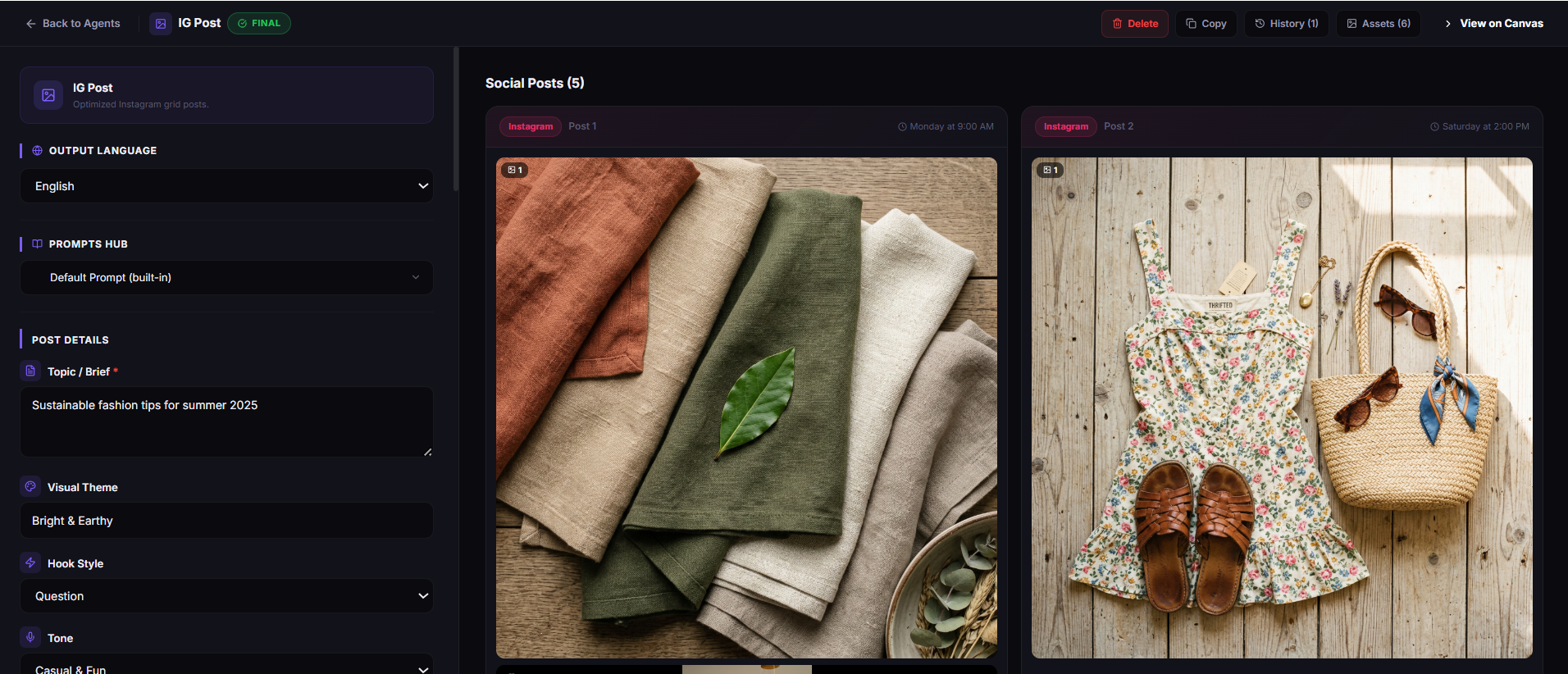
- 78 Specialized AI Agents: A powerhouse roster of specialists ranging from Growth Hackers and GTM Consultants to platform-specific experts for Instagram, LinkedIn, and TikTok.
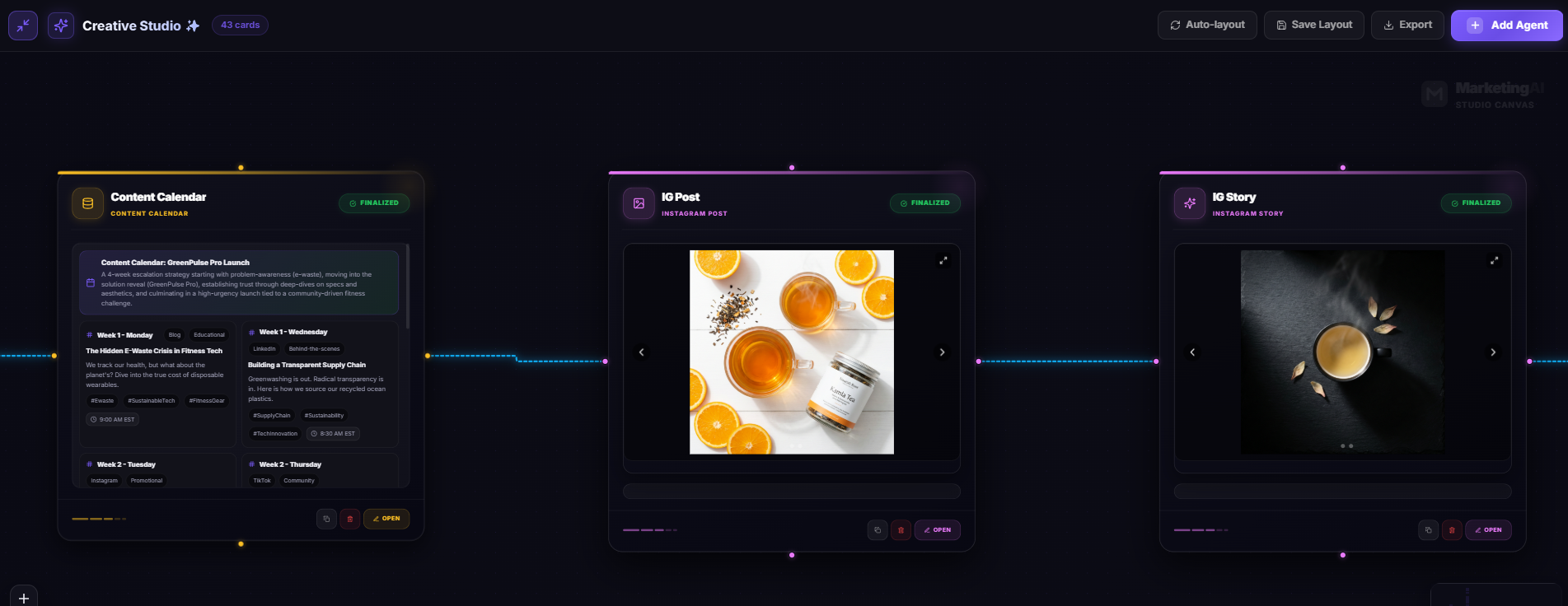
- The Interactive Canvas: A spatial environment (powered by React Flow) where you can map out campaigns, connect assets, and visualize your brand's growth.
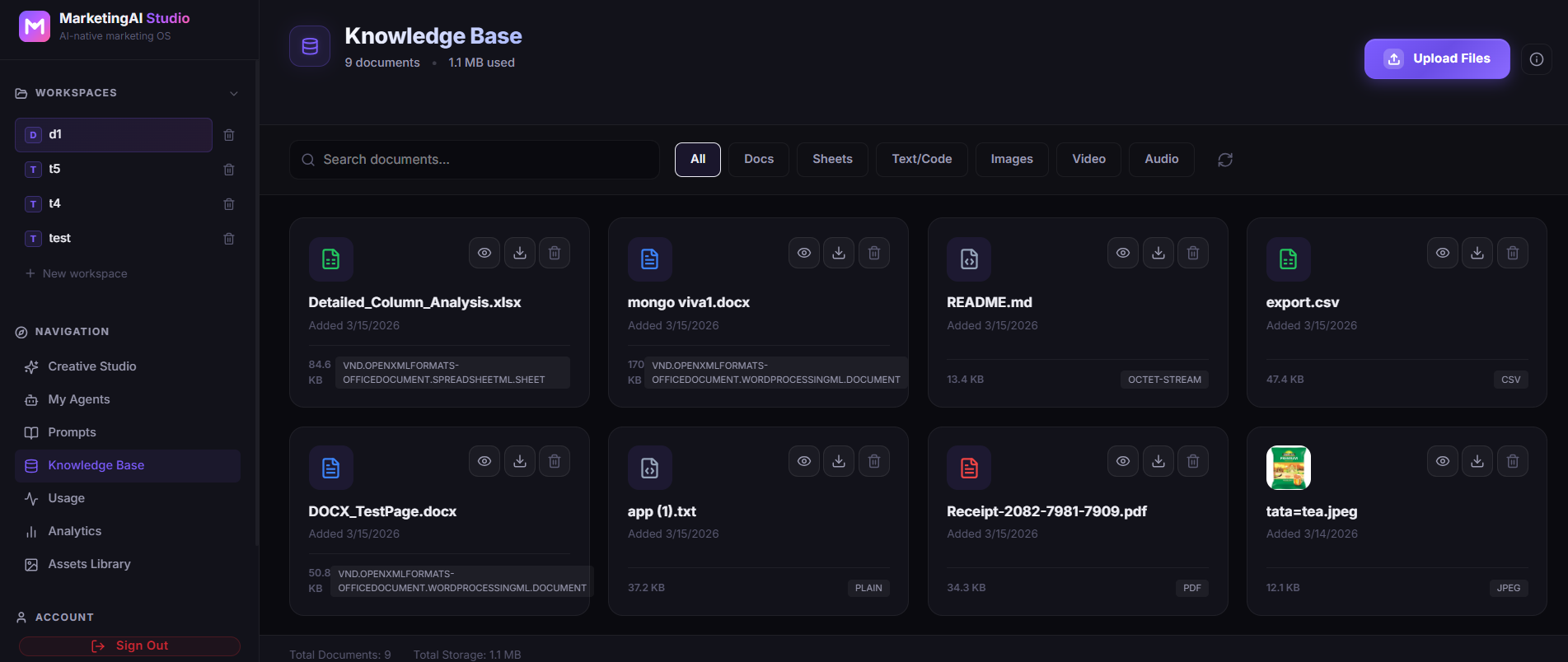
- Knowledge Base: An advanced system that allows agents to "read" your PDFs, Docs, and live URLs, ensuring every output is grounded in your company's real data.
- Brand Identity Engine: A system that creates a "Digital Fingerprint" (Voice, Values, Style), ensuring 100% consistency across all 78 agents.
🛠️ How we built it
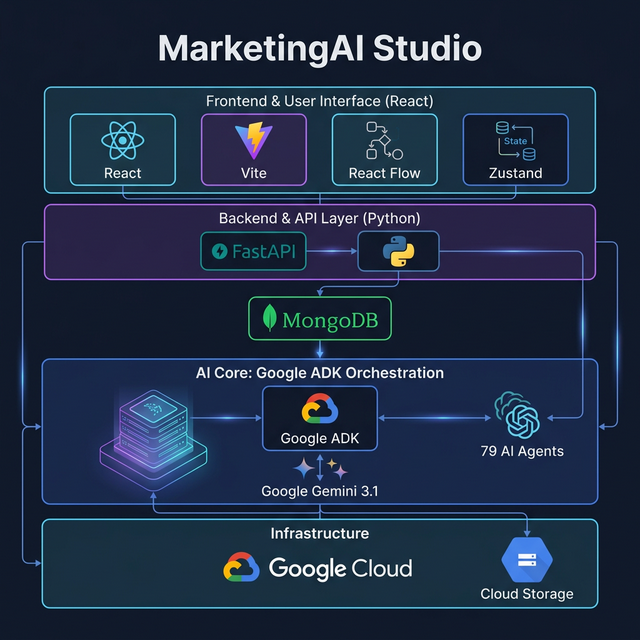
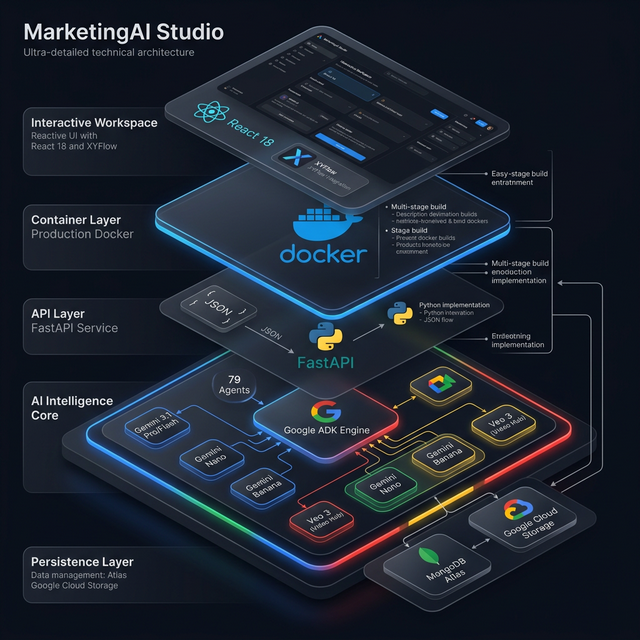
- Frontend: Built with React and TypeScript using Vite for lightning-fast performance.
- State Management: Powered by Zustand to orchestrate complex interactions between the Canvas and the Agent forms.
- Backend: A Python (FastAPI) core that handles the agentic orchestration and pipelines.
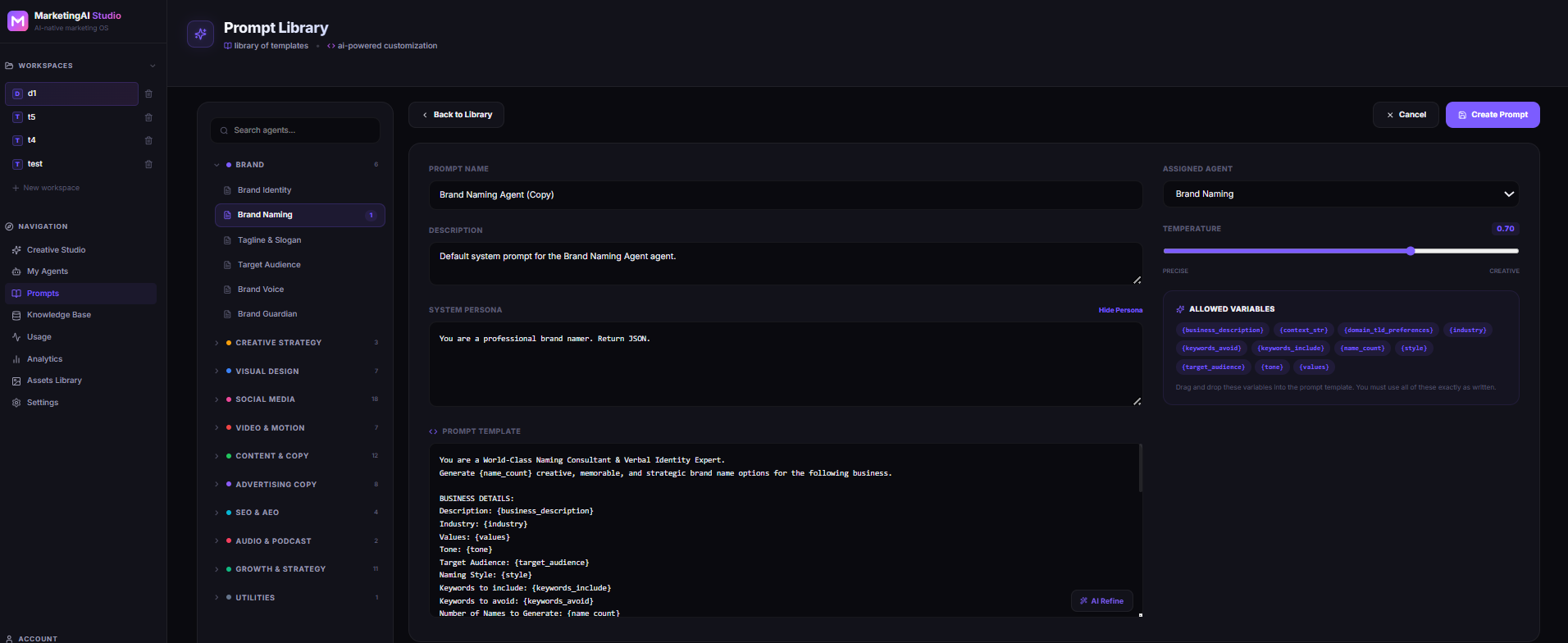
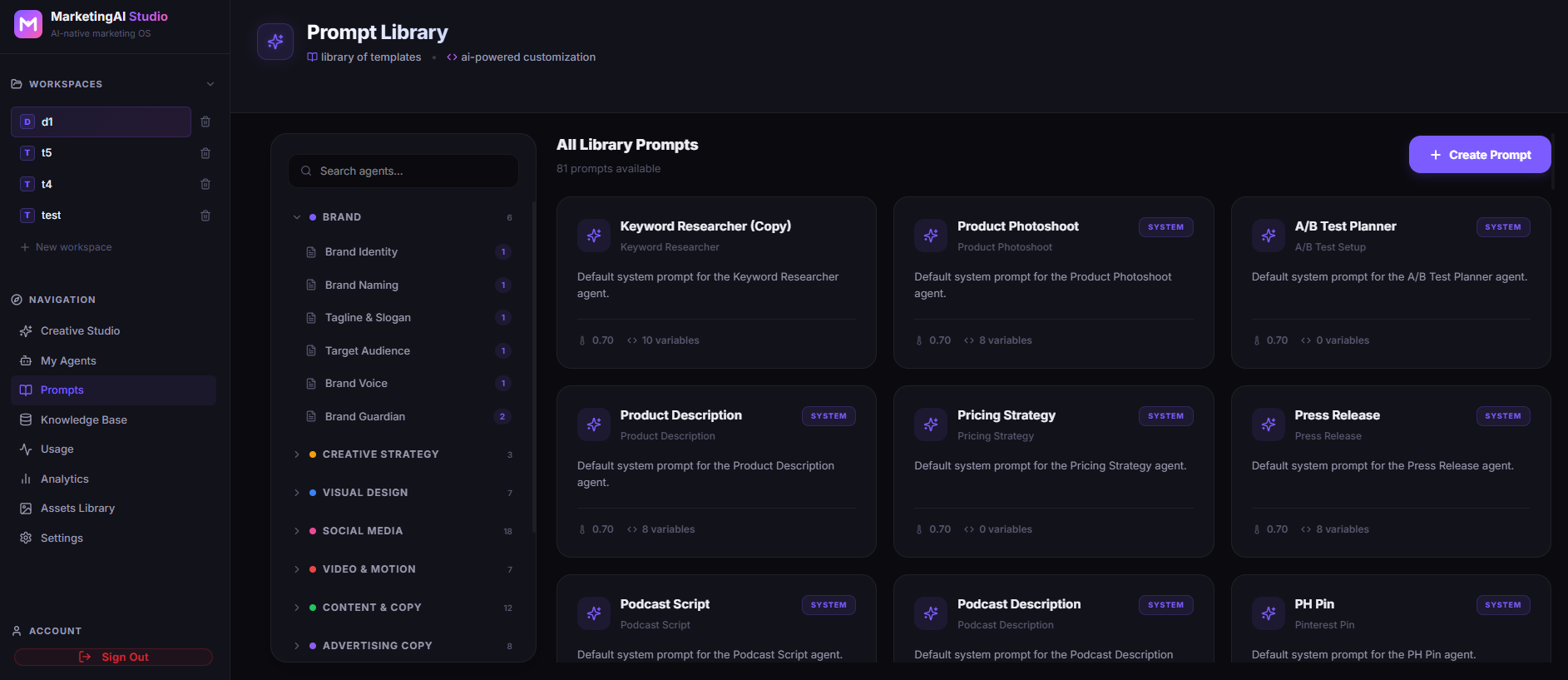
- Prompt Architecture: We developed a unique YAML-based Prompt Hub that externalizes intelligence, making it easy to tune and standardize agent behavior.
- Visuals: Integrated React Flow for the canvas and Lucid for our premium icon system.
🚧 Challenges we ran into
- State Orchestration: Syncing a drag-and-drop canvas with deep-nested forms was a major technical hurdle that required complex reactive state logic.
- "Instruction Drift": With 78 different agents, ensuring they didn't lose their "personality" over time required a robust prompt-standardization framework.
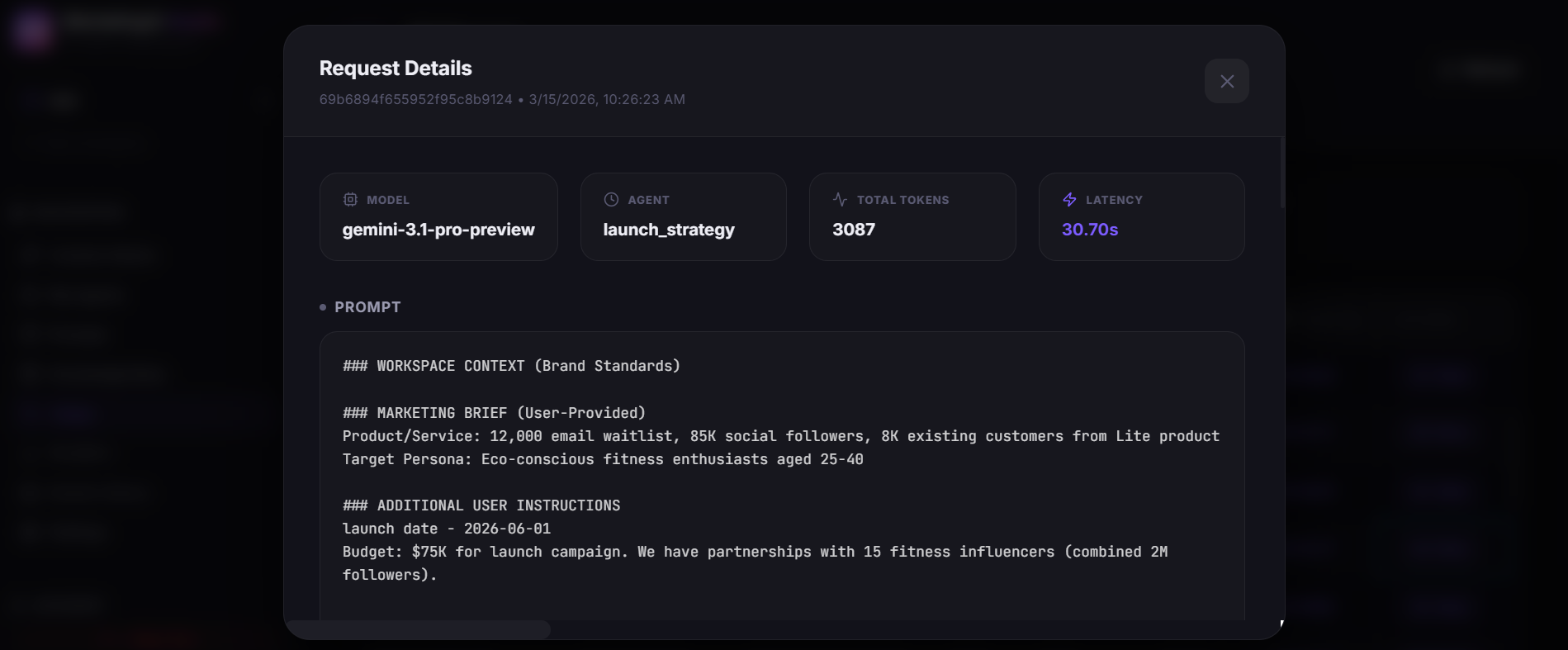
- Context Injection: Developing a seamless way to inject live web data (scraping) and file data (PDFs) into an AI's short-term memory without overwhelming the context window.
🏆 Accomplishments that we're proud of
- Scale: Successfully deploying 78 distinct agents, each with a unique prompt and utility.
- UX/UI: Architecting a "Premium-First" interface that makes complex AI orchestration feel like a simple creative studio.
- Zero-Hallucination Guardrails: Building a RAG pipeline that effectively grounds agents in user-provided brand facts.
🎓 What we learned
The biggest lesson was that Context is King. We realized that an AI agent's value isn't based on how "smart" the model is, but on how well it understands the user's specific business niche. We learned to prioritize context injection and brand alignment over just generating more text.
🔮 What's next for Marketing AI Studio
The MCP (Model Context Protocol) Roadmap
We are currently developing a Marketing AI MCP Server. This will transform the studio from a standalone app into a universal utility:
- Universal Access: By building an MCP server, anyone using an MCP-compatible client (like Claude Desktop) will be able to call our 78 specialized agents and tools directly from their own chat interface.
- Tool Integration: Our scraping tools, brand analysis engines, and content generators will become "Plugins" that any AI model can utilize.
- Collaborative Ecosystem: Moving toward a multi-player canvas where teams and their AI counterparts can work together in real-time.
- Social API Bridges: Developing direct "One-Click Publishing" from the Studio Canvas to LinkedIn, Instagram, and more.
Log in or sign up for Devpost to join the conversation.