-
-
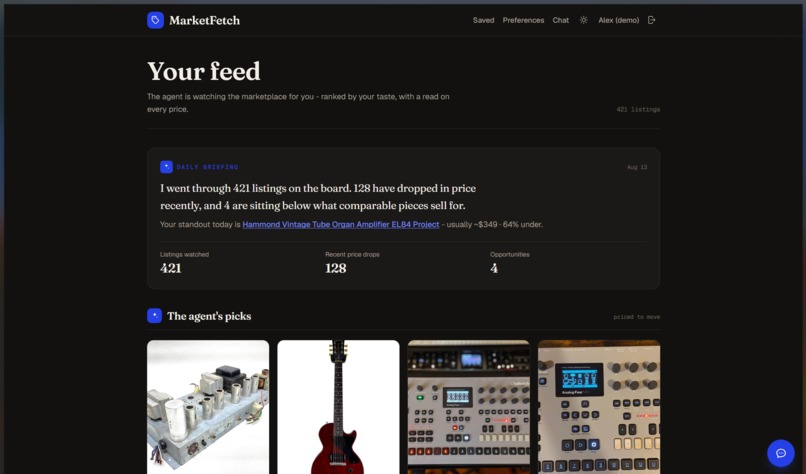
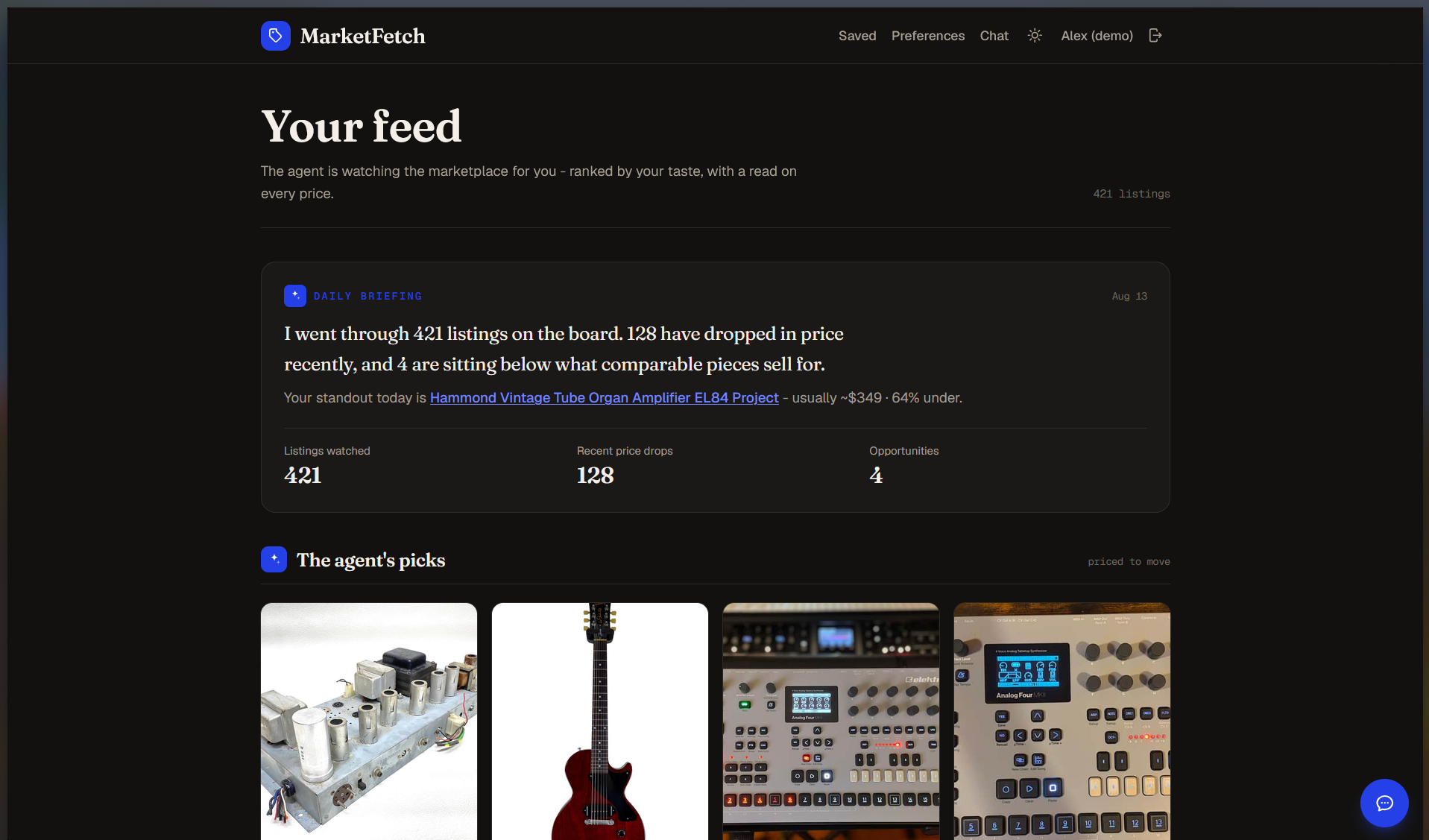
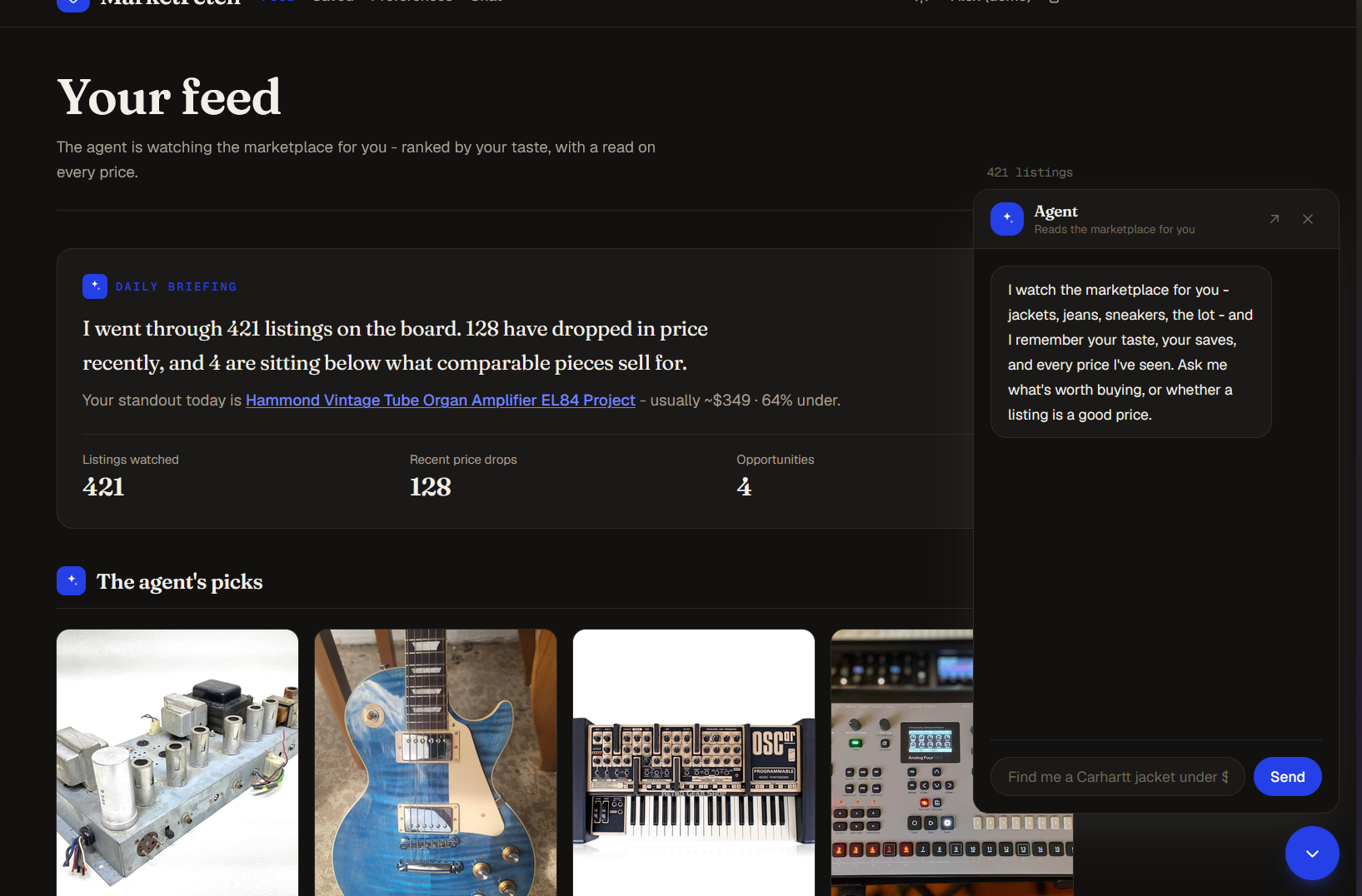
Home page
-
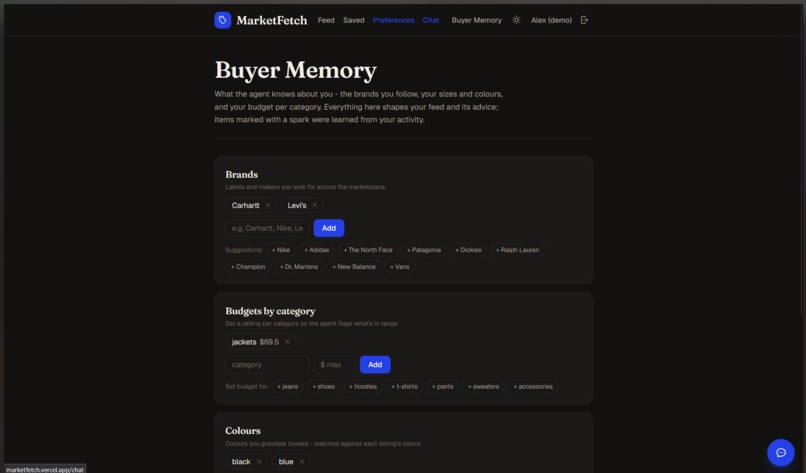
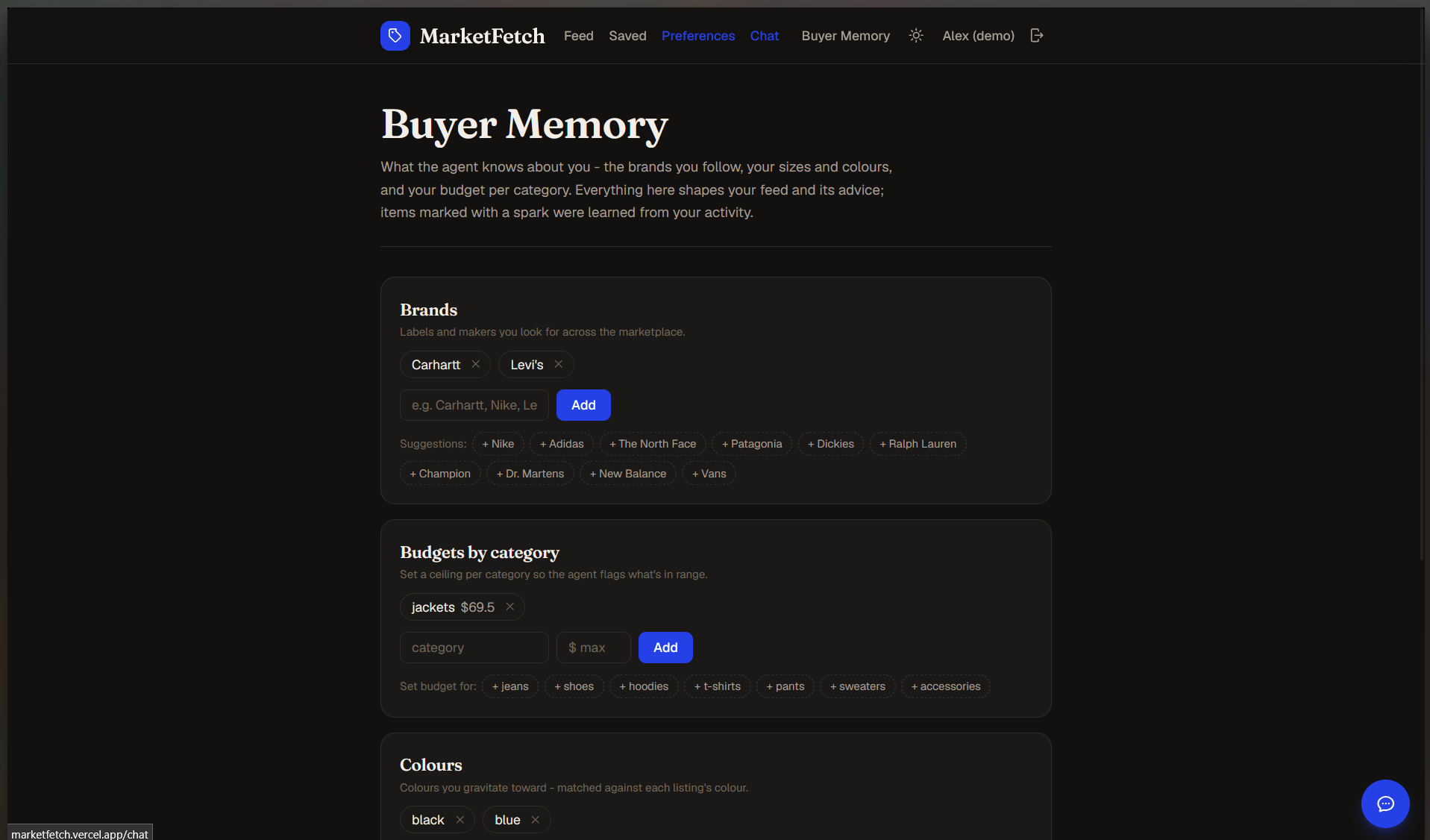
Preferences tab
-
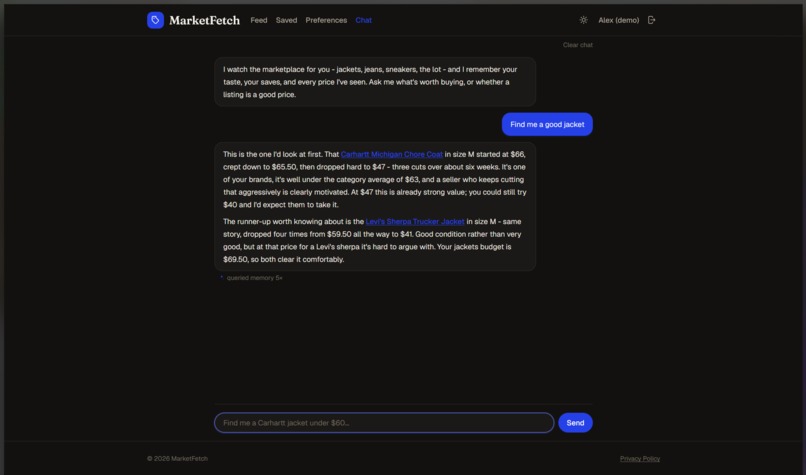
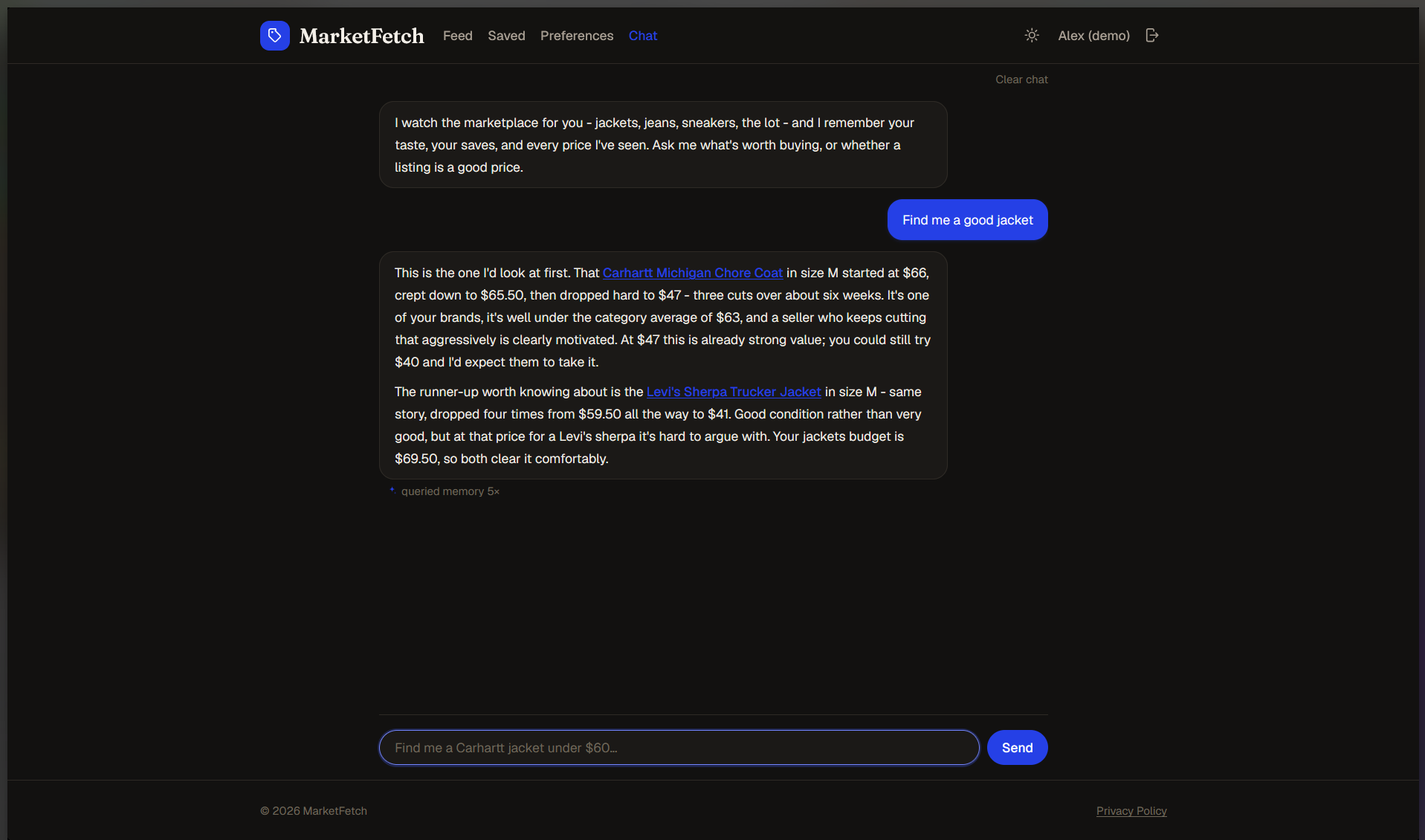
Ai chat bot tab
-
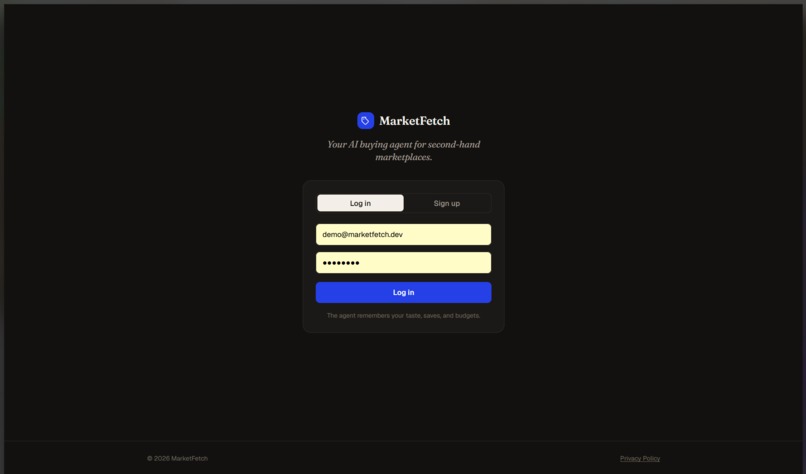
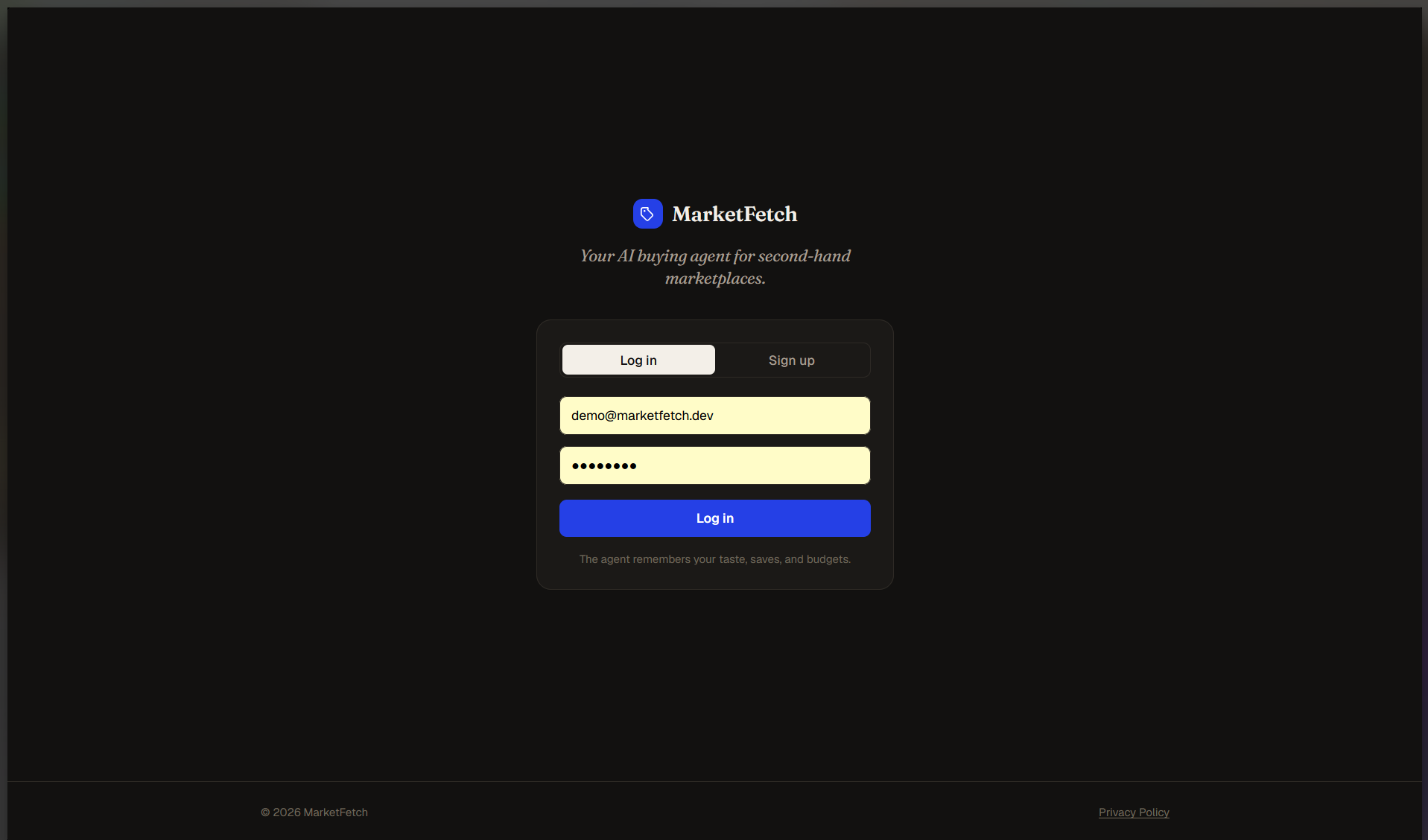
Log-in screen
-
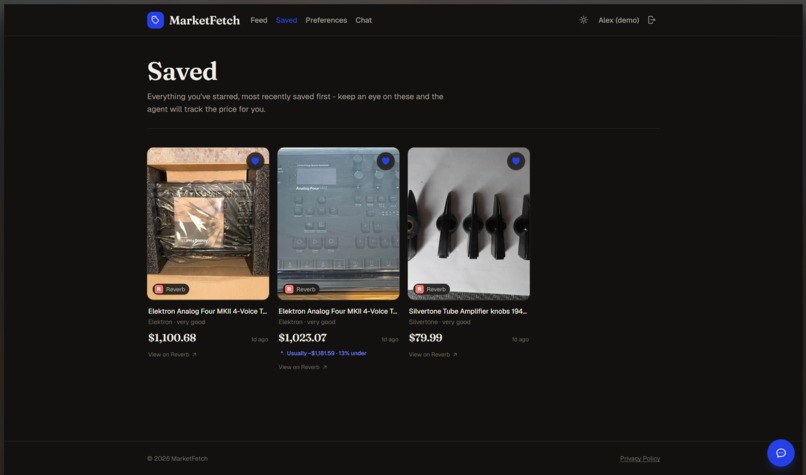
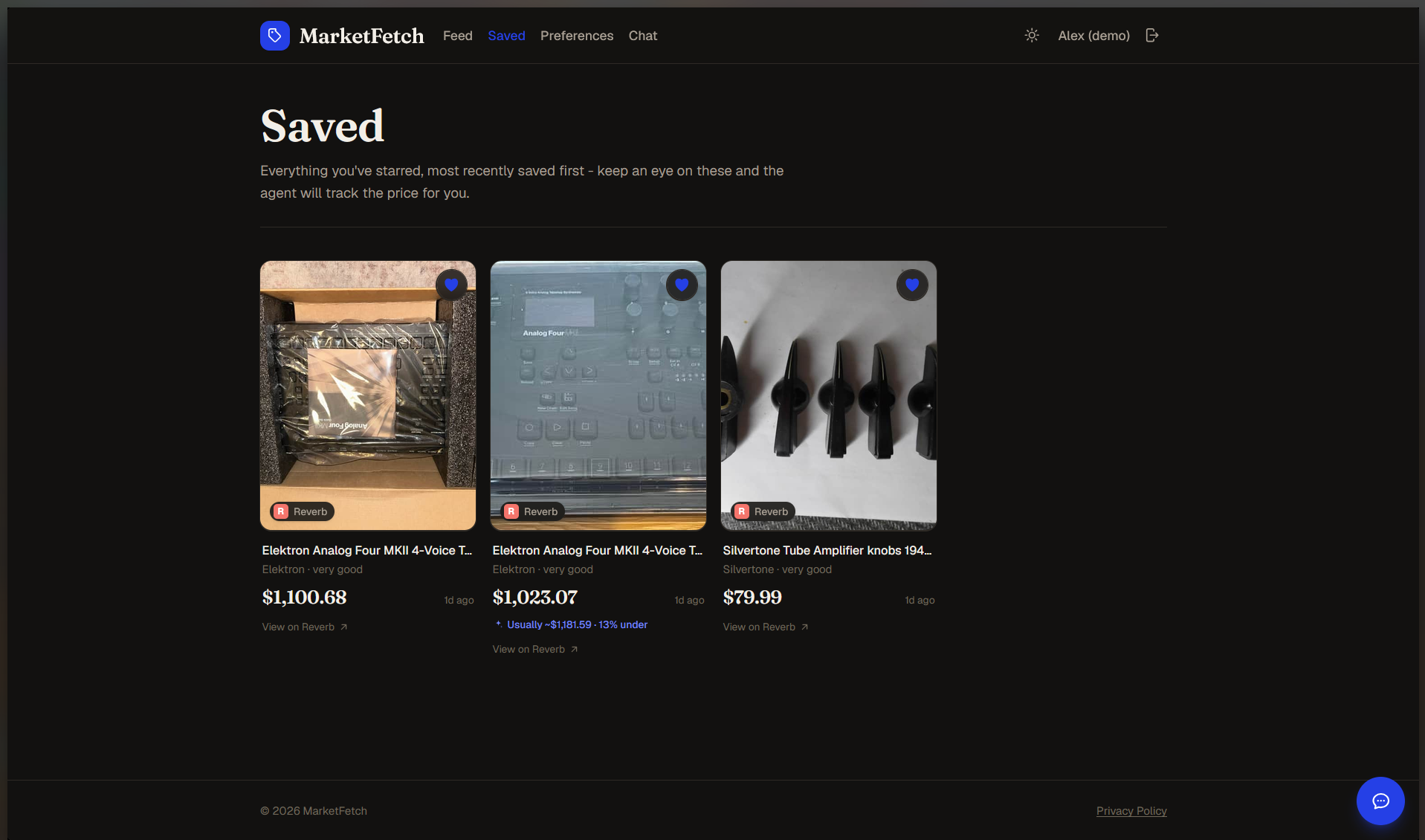
Saved listings tab
-
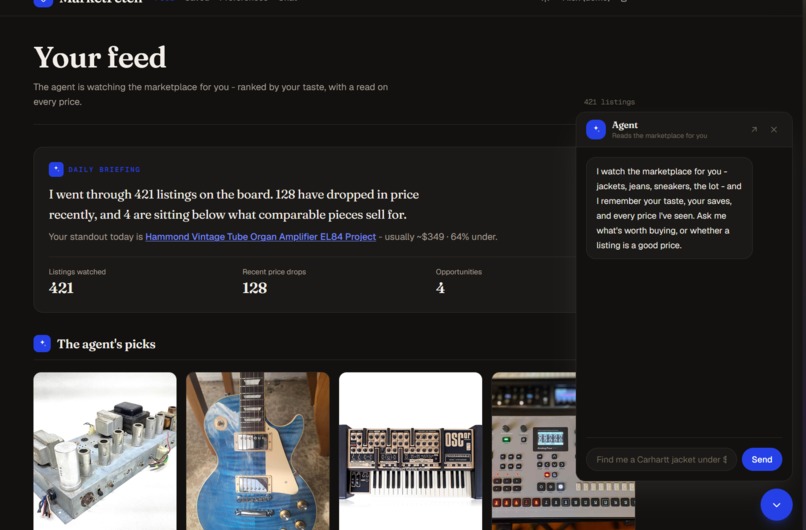
Chat bot in corner
Inspiration
Online marketplaces have an overwhelming number of listings, but finding something that is actually worth buying can take a lot of time. We wanted to build something that went beyond simply searching and filtering products. Instead, we wanted an agent that could understand what a person likes and actively look through a marketplace for opportunities that they might otherwise miss.
What it does
MarketFetch gives users a personalized marketplace feed powered by an AI agent. Users can set preferences such as brands, sizes, colors, styles, categories, and budget, and the agent uses those preferences to find and rank listings. Instead of just showing search results, it explains which items are worth considering and why.
How we built it
We built MarketFetch around an AI agent that evaluates marketplace listings using a user's preferences, including brands, sizes, colors, styles, categories, and budget. Rather than simply returning search results, the agent compares listings and explains why particular items are worth looking at.
We also built a persistent data layer using CockroachDB, allowing the application to store marketplace listings, user preferences, and information that can be used by the agent across interactions. The marketplace was designed so that different data sources can be incorporated into the same normalized listing system.
For the prototype, we created a realistic marketplace dataset with clothing listings so that the agent could demonstrate preference matching, deal detection, and ranking in a consistent environment.
Challenges we ran into
One of our biggest challenges was building a convincing marketplace experience without access to all of the large marketplace APIs we originally wanted to use. We had to create a flexible listing system and realistic clothing data while still keeping the architecture ready for additional marketplace sources in the future.
Another challenge was making the agent's recommendations feel genuinely useful instead of like a generic chatbot. We had to think carefully about what information the agent needed in order to compare listings, understand preferences, and identify good deals.
Accomplishments that we're proud of
We're proud that we were able to turn the idea of an AI-powered marketplace into a working end-to-end application. The agent can use persistent user preferences and marketplace data to make personalized recommendations rather than simply returning products based on a search query.
We're also proud of building the marketplace around a flexible data model that can support different sources and give the agent structured information to reason over.
What we learned
One of the biggest things we learned was that building an agent is about much more than connecting an LLM to a database. The quality of the agent depends heavily on the structure and quality of the information it has access to.
We also learned how useful persistent memory can be for agentic applications. Instead of treating every interaction as a completely new conversation, the system can retain information about a user's preferences and use it to make future recommendations more relevant.
What's next for MarketFetch
We want to connect MarketFetch to more real marketplace sources and expand beyond the initial clothing-focused experience. We also want the agent to become better at learning from user interactions over time, so recommendations can become more personalized without requiring users to manually update their preferences.
Built With
- amazon-titan
- anthropic-claude
- aws-bedrock
- cockroachdb
- discogs
- mcp
- next.js
- node.js
- react
- reverb-api
- tailwind-css
- typescript
- vector-search
- vercel

Log in or sign up for Devpost to join the conversation.