-
-
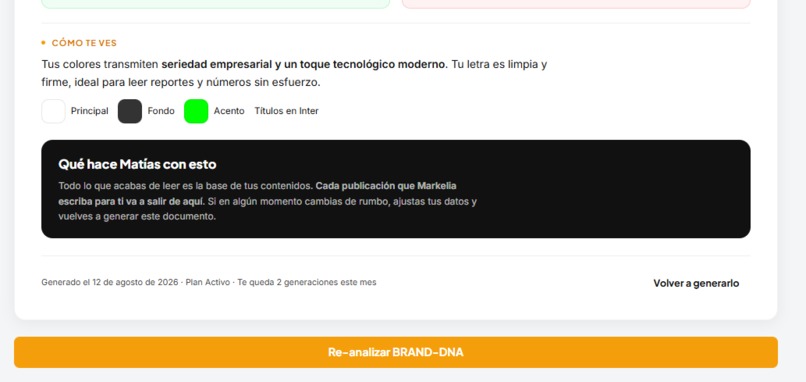
Brand-DNA con gemini III
-
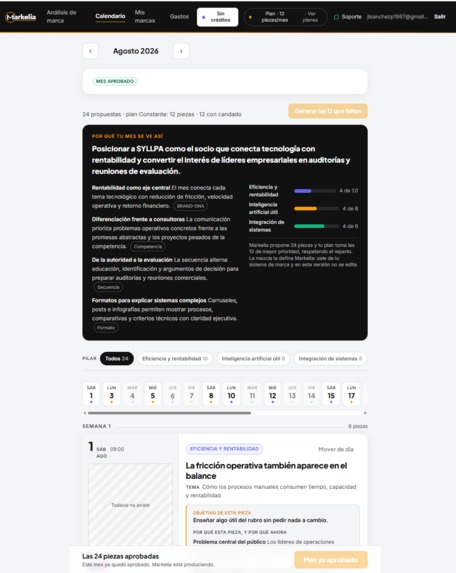
Calendario con OpenAI I
-
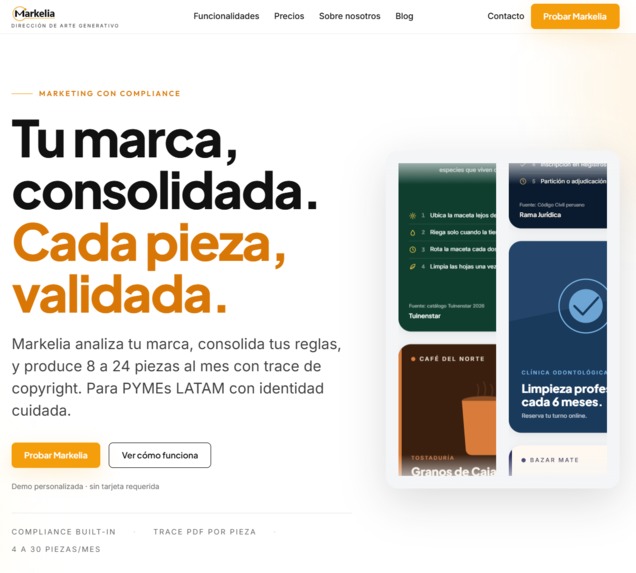
Web Principal
-
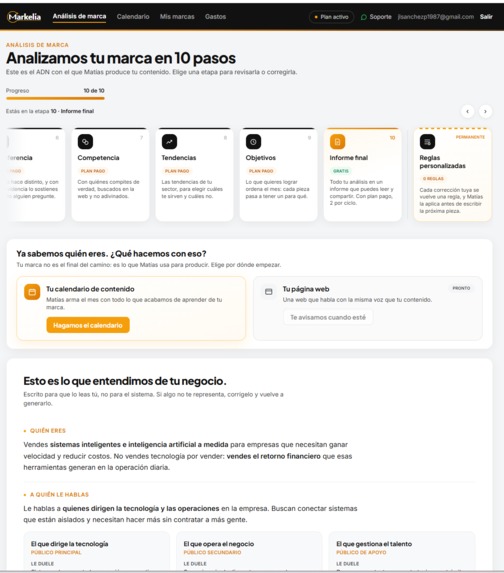
Brand-DNA con gemini I
-
Calendario con OpenAI II
-
Brand-DNA con gemini II
Inspiration
Markelia started with a problem we experienced ourselves. We run SafeSchool, a K–12 EdTech platform, and our marketing agency was significantly exceeding our budget. Worse, they delivered attractive posts but never discussed communication strategy or brand pillars with us—only isolated pieces with no system connecting them.
So we built our own internal marketing system, Matías. While developing it, we had to study the creative process from end to end. That was when we realized the problems we were experiencing were not unique to our agency. They are common throughout digital marketing for small businesses: no strategy, no consistency, and no persistent understanding of the brand.
We assembled a team of specialized agents to address those gaps and continued expanding the system until it could move from business research to strategy, planning, and finished visual content.
For this competition, we decided to take what we had validated internally and turn it into a real, competitive SaaS: Markelia.
SafeSchool was the starting point, but Markelia is a separate and independent product with its own brand and codebase. It builds on lessons learned from Matías, our internal marketing-agent system—which we disclose here as pre-existing work—but Markelia itself was created as a standalone, market-facing SaaS during this hackathon’s development period.
What it does
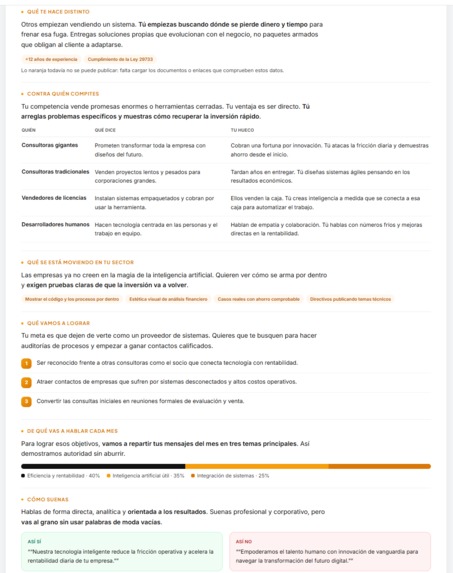
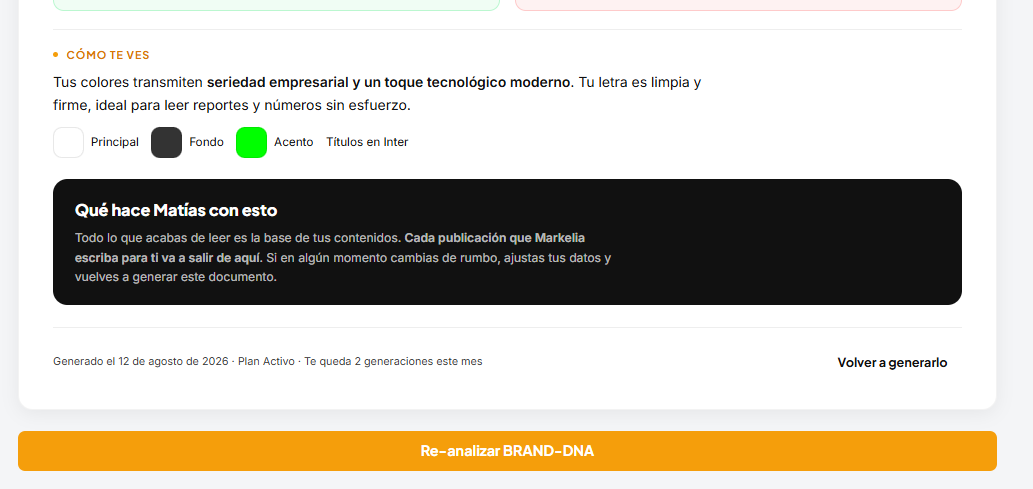
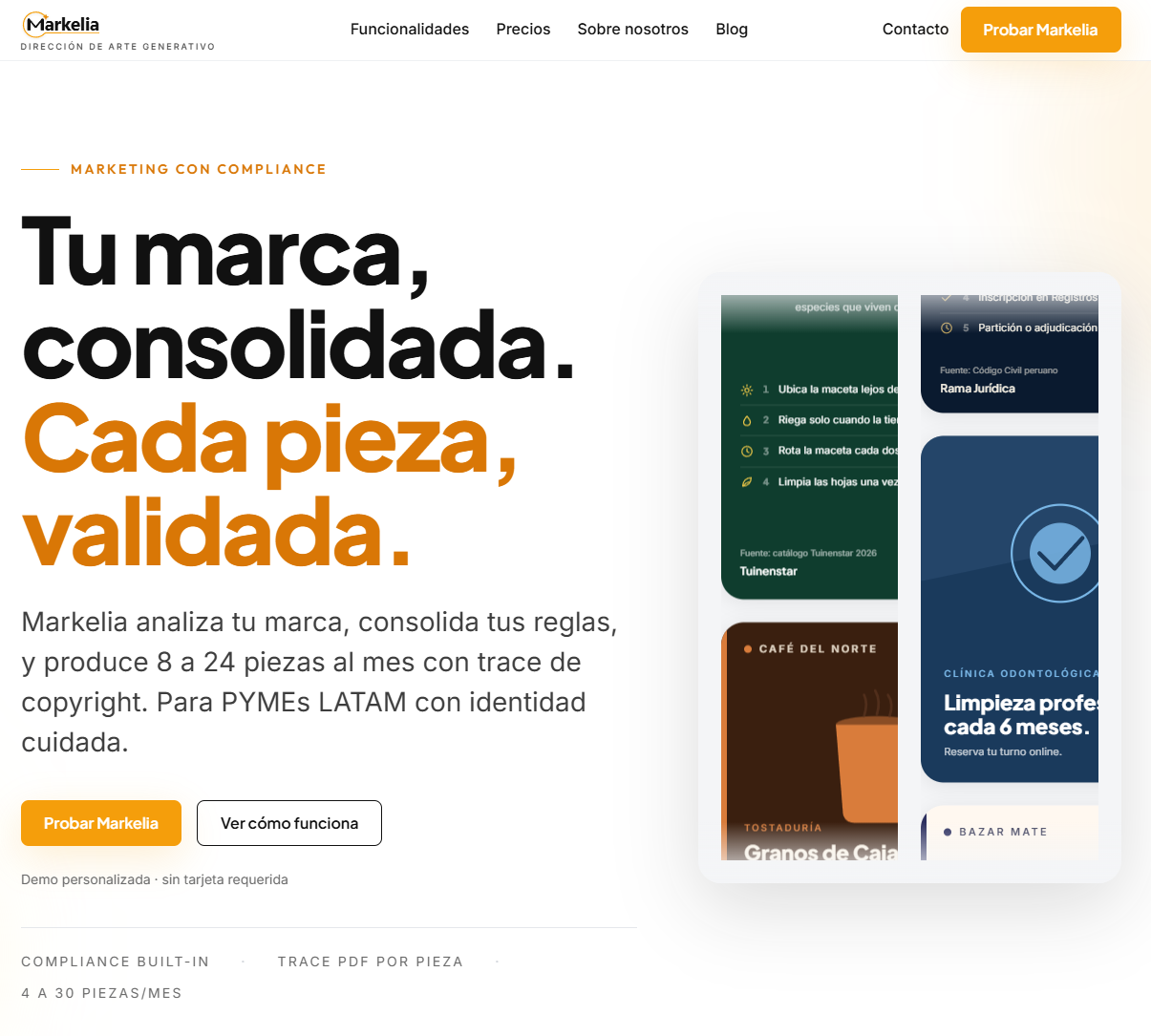
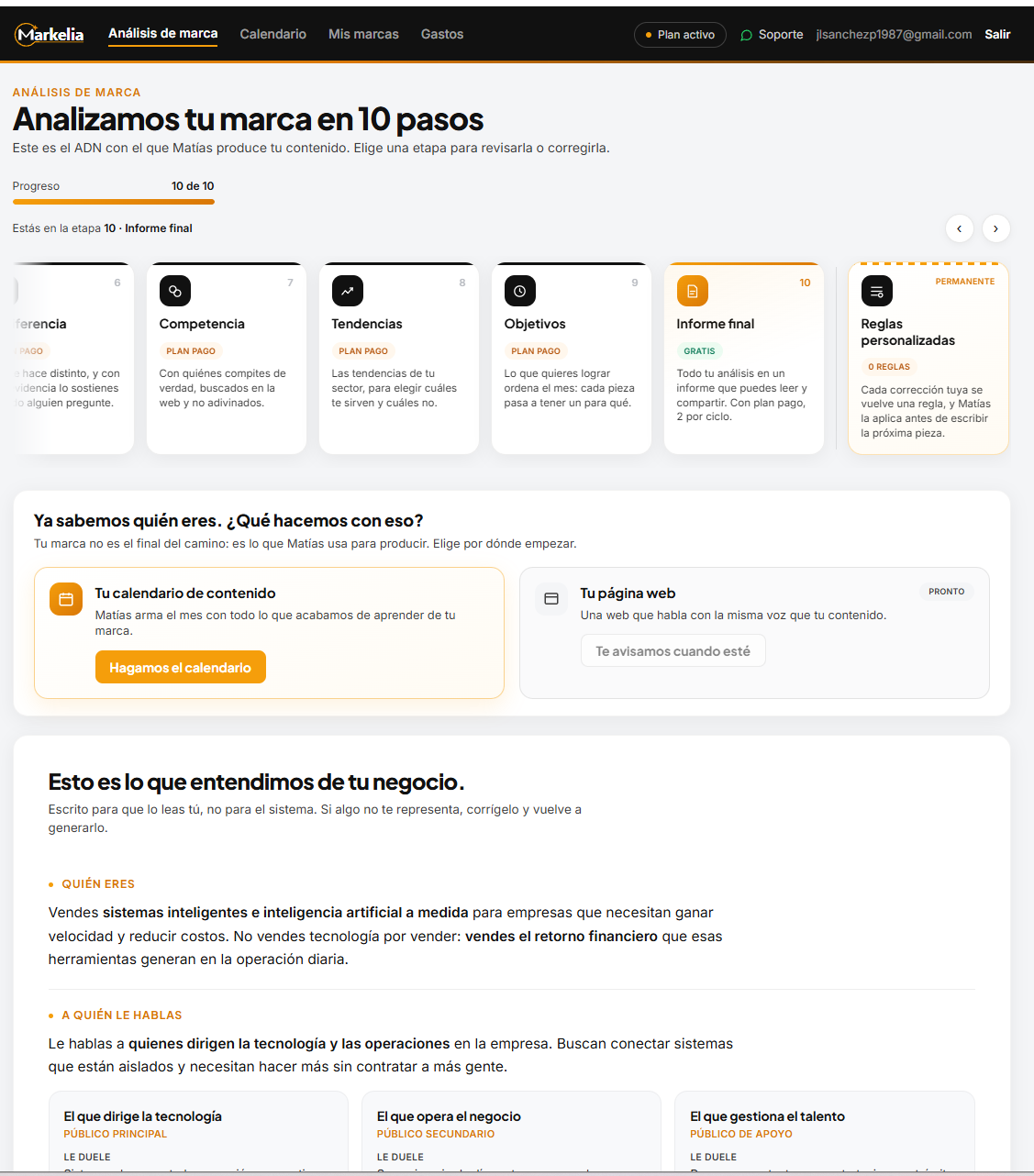
The user enters their business website. Markelia analyzes it to understand the company’s value proposition, target audience, market context, competitors, communication style, visual identity, brand colors, and the claims or restrictions that should govern its content.
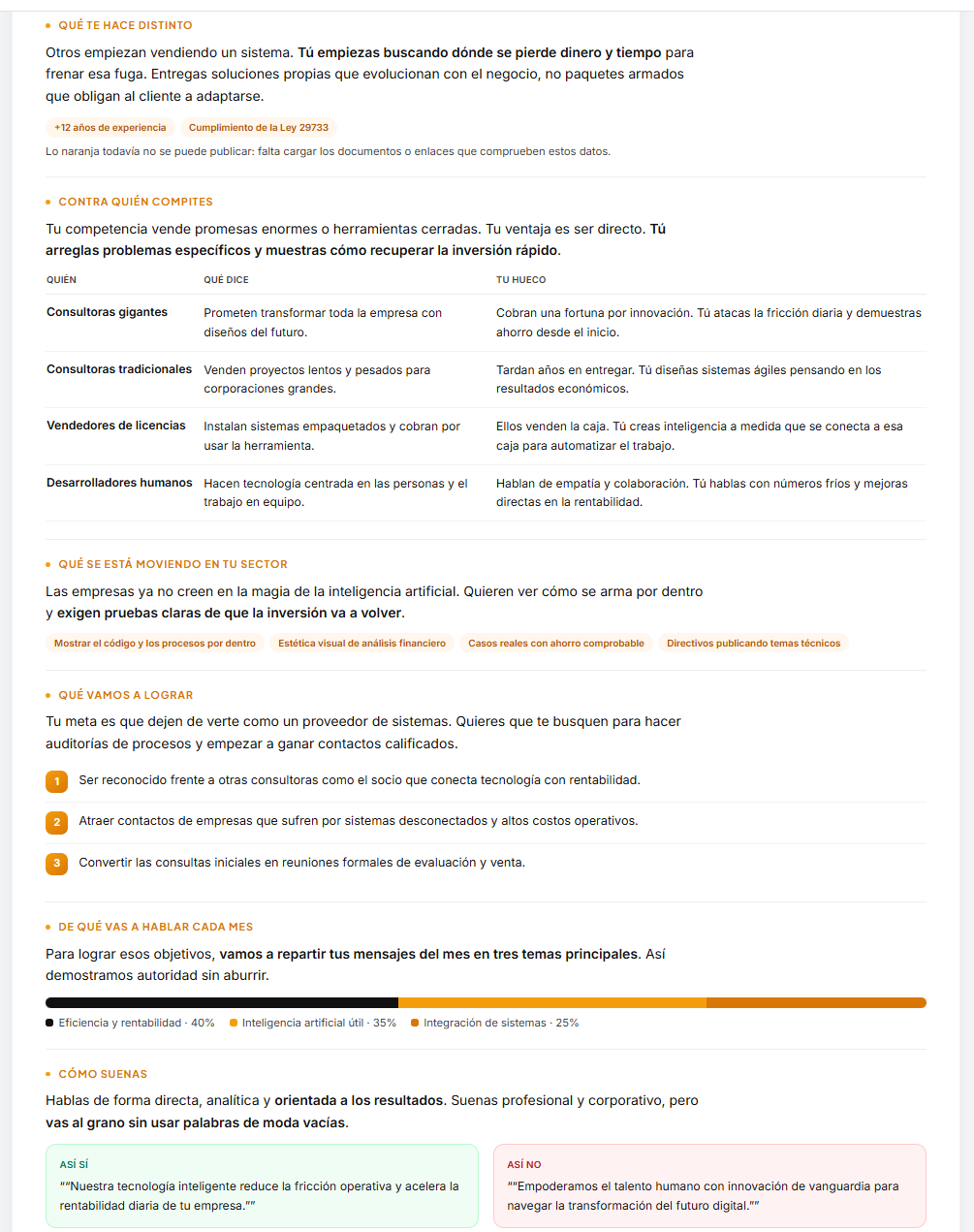
This analysis is transformed into a structured Brand DNA that the user can review and confirm. In approximately 15 minutes, a small business can obtain the strategic foundation that would normally require several meetings with a marketing team.
The Brand DNA is not just a report. It becomes the persistent source of truth used by every downstream agent.
From there, Markelia executes an end-to-end workflow:
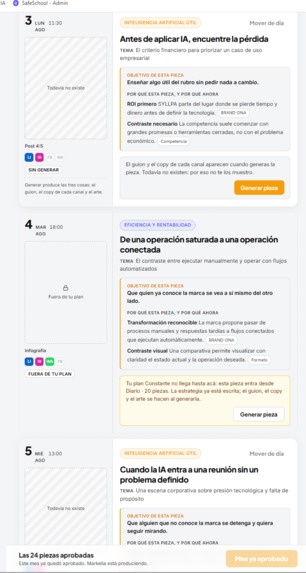
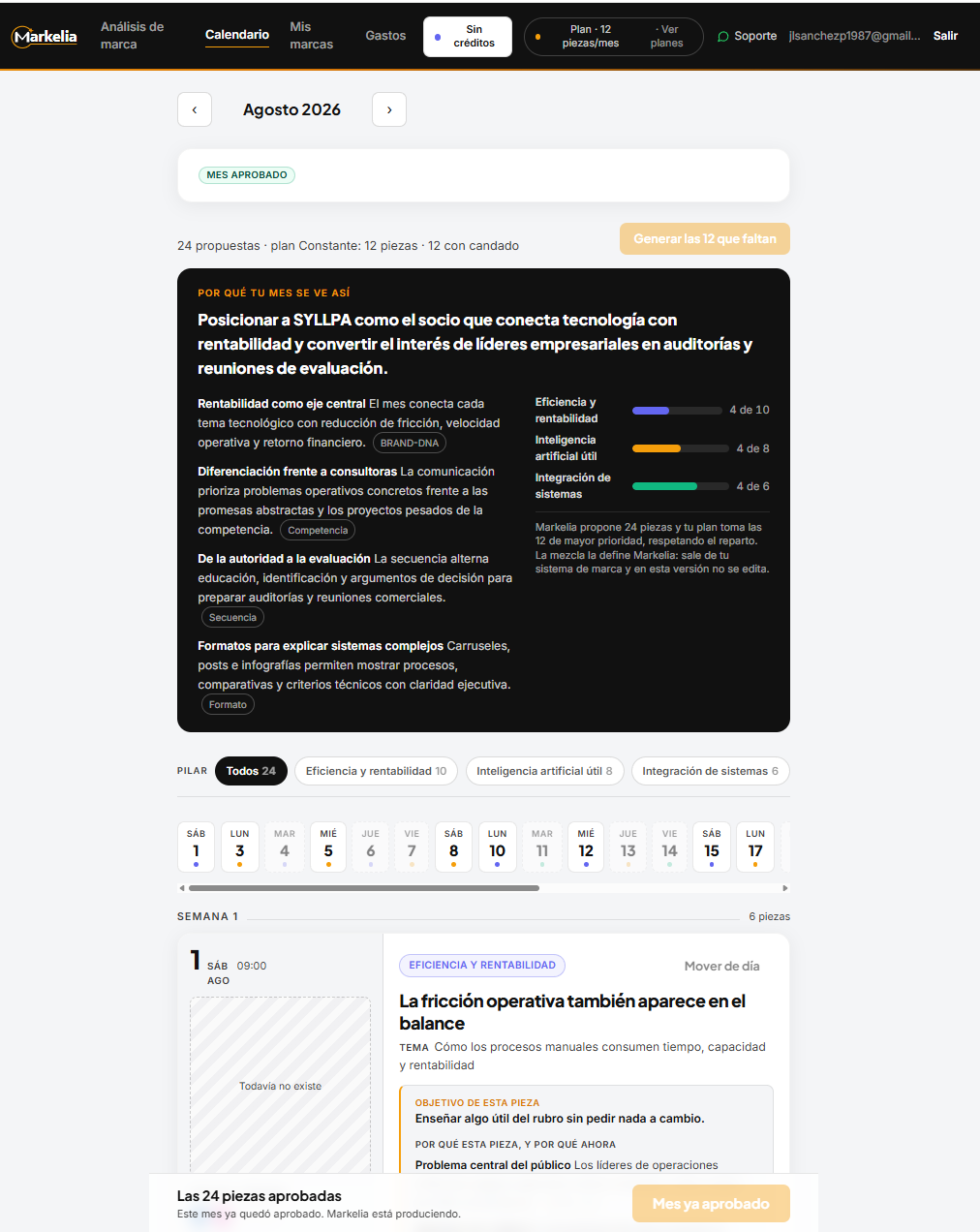
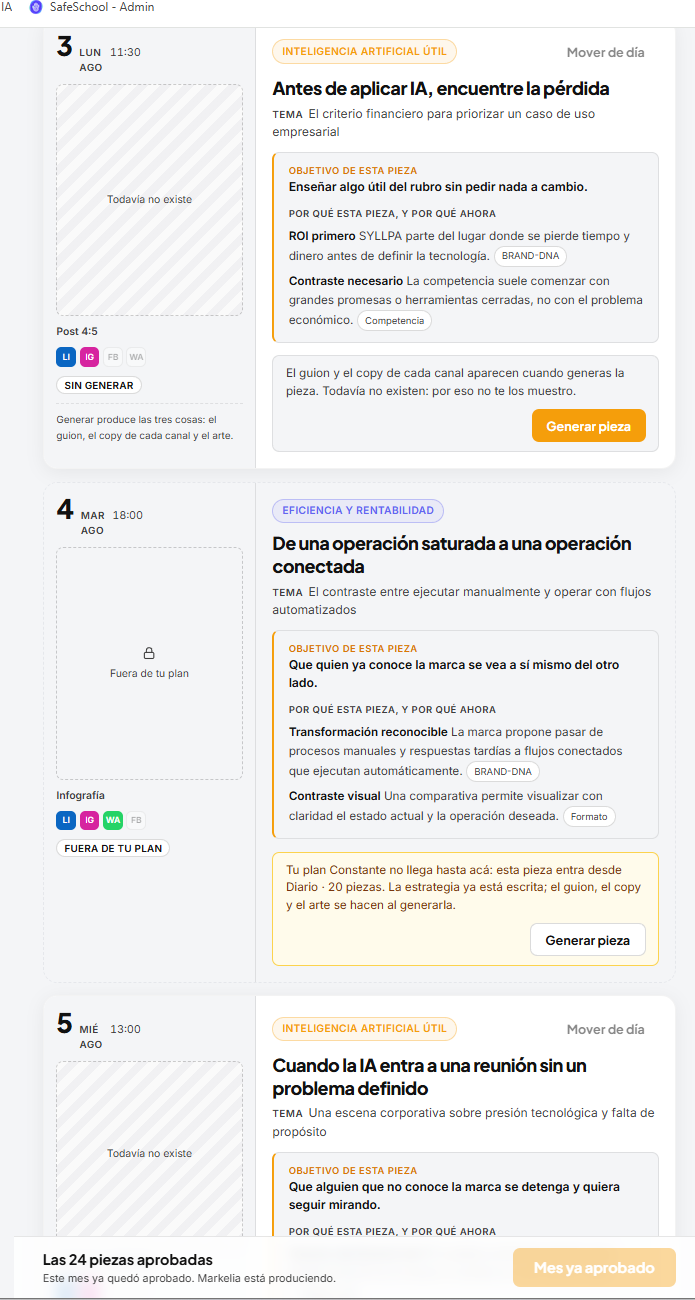
- It generates a strategic monthly content calendar based on the approved Brand DNA.
- Each publication includes a communication purpose, topic, specific objective, strategic rationale, recommended format, channels, and publication date.
- Markelia explains why it proposes each piece and why it should be published at that point in the month.
- The user can review the calendar, move publications, request corrections, and approve the month before producing the content.
- Each generated piece includes its script, channel-specific copy, call to action, and visual asset.
- The system also identifies channels where a publication would not be appropriate and explains why.
- Every approved piece moves through a specialized production pipeline: strategy → brief → script → copy → visual direction → image generation → composition → automated validation.
- Markelia currently produces static posts, infographics, and carousels.
- Before delivery, each piece is evaluated against the brand’s colors, tone, positioning, communication rules, and creative direction.
The positioning is simple: most AI tools give you isolated pieces. Markelia gives you a brand system that continuously governs what those pieces should say, how they should look, and why they should exist.
Your colors should not drift. Your tone should not change from one publication to the next. Your content should not begin from a blank prompt every time. Every piece should feel like part of the same brand and the same strategy.
How we built it
Markelia was built from scratch during the hackathon, but its architecture was informed by lessons learned from analyzing the internal system we had previously used in our own business. One insight shaped the product: the difficult part is not generating one piece. The difficult part is executing a coherent process—research, strategy, consistency, production, and validation—month after month.
Markelia is built as a pnpm and Turborepo monorepo. It includes a NestJS API, two Next.js applications—a public website and an authenticated client application—and a fleet of BullMQ workers that execute the analysis and production pipelines asynchronously.
The intelligence is distributed across specialized agents instead of relying on a single large prompt. Different agents are responsible for business research, market analysis, brand strategy, calendar planning, copywriting, visual direction, image generation, and quality validation.
Gemini is the strategic intelligence layer at the foundation of Markelia.
The complete Brand DNA process runs on Gemini through Vertex AI. Specialized Gemini-powered agents analyze the company’s website and progressively build an understanding of the business, including:
- Business context and value proposition
- Products and services
- Target audiences
- Market positioning
- Competitors and differentiation
- Communication personality and tone
- Visual identity and color system
- Content pillars
- Brand restrictions and communication risks
- Strategic recommendations
Gemini does not produce an isolated summary. It transforms fragmented business information into a structured Brand DNA that can be consumed programmatically by the rest of the platform.
Once the user approves the Brand DNA, the downstream production system takes over.
OpenAI language models power the strategic calendar and creative production pipeline. Specialized Terra and Sol agents transform the Brand DNA into monthly content decisions, scripts, publication copy, visual instructions, and validation criteria. GPT Image 2 generates the visual assets used to compose the final pieces.
This hybrid architecture allows us to use each model where it performs best. Gemini builds a deep strategic understanding of the business, while the OpenAI-powered production agents transform that understanding into finished marketing content.
The most important architectural decision is that no piece begins with an isolated prompt. Every calendar entry, script, caption, and visual instruction is grounded in the Brand DNA previously constructed by Gemini.
The application combines agentic reasoning with deterministic software. AI agents handle research, interpretation, strategy, and creative decisions, while the platform controls workflow state, approvals, queues, retries, generation jobs, persistence, and deliverables.
We also implemented validation stages that compare generated content against the Brand DNA. Instead of asking only whether a piece looks good, Markelia evaluates whether it truly belongs to that specific brand and supports its intended communication objective.
Every model call in Markelia is metered. Our AI Audit panel records costs by tenant, brand, and operation, supported by a per-call log containing the operation, provider, model, token usage, cost, and timestamp.
A production run measured on August 17, 2026—not estimated—cost approximately $0.423 for a static post or infographic and $0.594 for a four-slide carousel. The underlying text pipeline—brief, script, creative direction, copy, and validation—runs once regardless of the number of slides, while each additional generated image costs approximately $0.057. Based on our planned format mix, the weighted AI production cost is approximately $0.49 per delivered piece.
This metering allows us to verify the economics of every workflow instead of relying on provider estimates, detect unusually expensive operations, and maintain projected AI-production gross margins of approximately 94%–96% across our published subscription plans.
Challenges we ran into
Brand drift is the central problem. Making AI produce one attractive piece is relatively easy. Making dozens of pieces feel like they came from the same company is much harder. We addressed this by turning the Brand DNA into a persistent contract used throughout planning, production, and validation.
A brand report is not enough. The analysis had to become operational. We designed structured outputs so findings such as positioning, tone, audience, restrictions, and content pillars could directly influence every downstream decision.
The calendar needed real strategic depth. A list of generic topics was not useful. Each publication needed a reason to exist, a communication purpose, a specific topic and objective, a strategic rationale, an appropriate format, the correct channels, and a place within the monthly sequence.
Infographics and carousels are fundamentally different from static posts. They require information hierarchy, continuity between slides, controlled text density, and visual consistency. We separated strategy, script, copy, visual direction, generation, and composition into specialized stages.
Generated text and imagery require different kinds of control. Language models can define the message and creative direction, but image generation still requires precise instructions and validation to ensure that the result supports the content instead of competing with it.
Expensive assets should not be discarded. Early versions of the pipeline could regenerate more content than necessary after a failed result. We are developing a refinement process that preserves useful assets and regenerates only the elements affected by the user’s feedback.
Asynchronous generation is essential. Brand analysis and visual production cannot be treated like conventional synchronous requests. We built queue-based workers to manage long-running jobs, retries, failures, and progress without blocking the application.
Building the complete experience under time constraints required strict prioritization. Markelia combines research, brand strategy, content planning, visual generation, and SaaS infrastructure. We prioritized a coherent end-to-end MVP instead of adding every format and editing capability included in our roadmap.
What we learned
We learned that the hardest part of AI marketing is not generation—it is governance.
A business does not only need more content. It needs every piece to respect the same strategy, identity, audience, tone, and commercial objectives. Without persistent context and validation, generative AI simply produces disconnected content faster.
We also learned that agent specialization works best when every agent has a clearly defined responsibility, receives structured context, and produces an output that the next stage can consume and validate.
Markelia’s quality does not come from one enormous prompt. It comes from the contracts and workflows connecting research, strategy, planning, production, and validation.
Most importantly, we learned how far a small, AI-augmented team can move when complex work is divided among specialized agents and supported by deterministic software architecture.
What’s next
Our immediate priority is completing a refinement process that allows clients to request changes to a generated piece without restarting the entire production pipeline.
We will also add:
- Creation of additional campaign pieces outside the monthly calendar
- A visual Brand DNA and brand-rules editor
- More precise control over generated layouts
- Additional social media formats
- A reusable library of approved brand assets
- Stronger validation before and after composition
- Real billing for Latin America through international and local payment rails
- Performance analytics that can inform future calendars
- Integrations with social platforms for publishing and campaign management
Most importantly, the next step is putting Markelia in front of real small-business users and measuring whether the system saves them time, reduces their marketing costs, and gives them a level of strategic consistency they could not previously access.
The long-term goal is not simply to generate more posts. It is to give every small business access to a repeatable marketing system that previously required an agency or an internal multidisciplinary team.
How to test
Open https://app.markelia.agency and register using Google or a phone number. Enter any business website to run the complete Brand DNA analysis, review the final report, generate a monthly content calendar, and produce an available content piece.
A new Brand DNA analysis takes approximately 15 minutes. Individual content generation takes approximately two to three minutes.
For faster evaluation, a pre-seeded sandbox account is available. Its private access credentials are included in the “Pre-existing business resources” response, which is visible only to judges and organizers.
The interface is in Spanish because Markelia serves Latin American SMBs. The demonstration video includes complete English subtitles and shows the entire workflow end to end, including the per-call cost audit.
Built With
- agentic-ai
- bullmq
- cloudflare-r2
- firecrawl
- gemini
- generative-ai
- google-cloud
- gpt-image
- image-generation
- mongodb
- multi-agent
- nestjs
- next.js
- node.js
- openai
- redis
- saas
- turborepo
- typescript
- vertex-ai
- zod


Log in or sign up for Devpost to join the conversation.