Inspiration
Have you ever had an idea you were never able to launch? Or you launched it, and it didn't work the way you expected - no market traction, no traction at all? Every founder knows that feeling. Let me introduce you to the world's first go-to-market world model: a model that simulates real market conditions so you
What it does
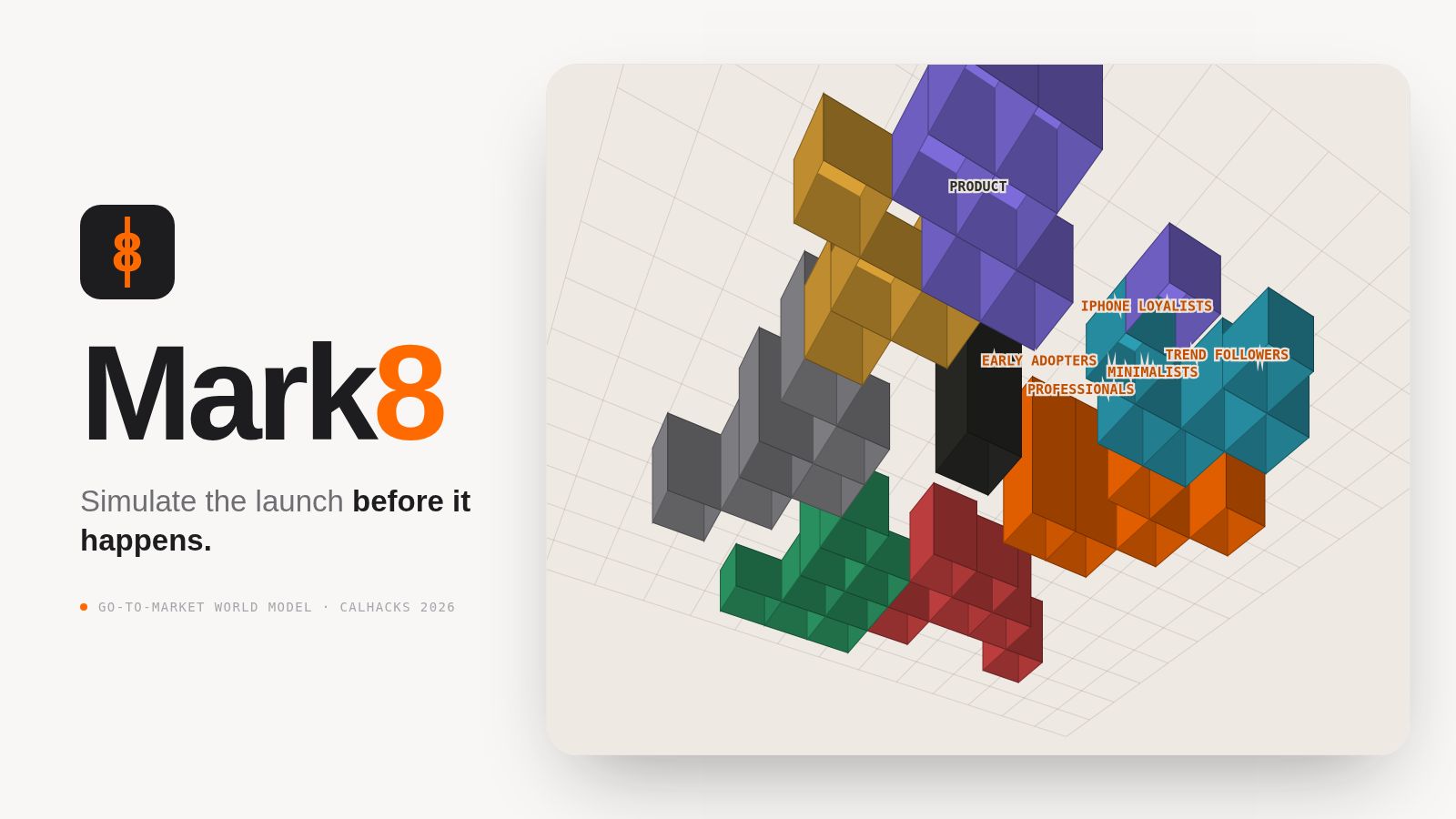
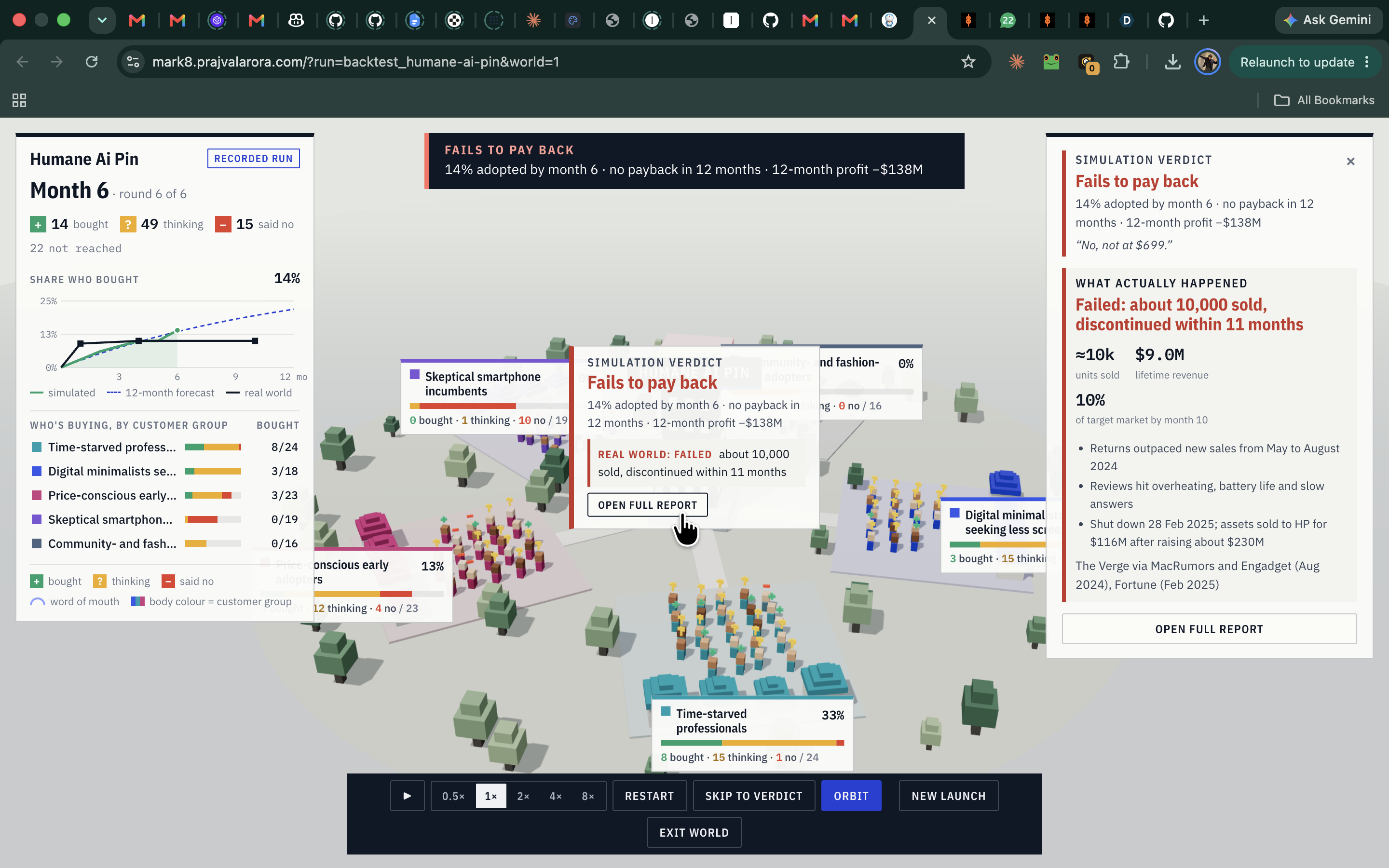
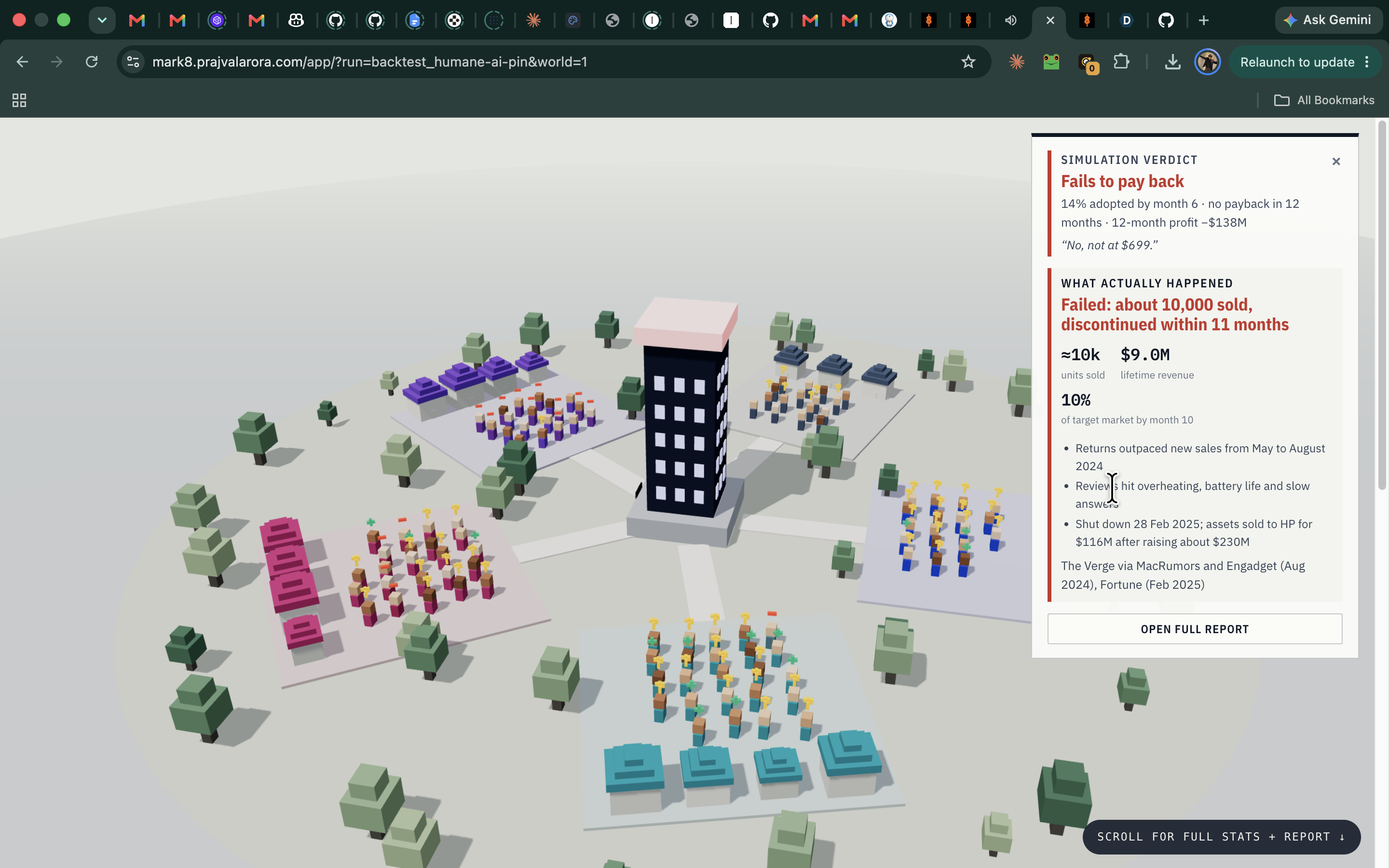
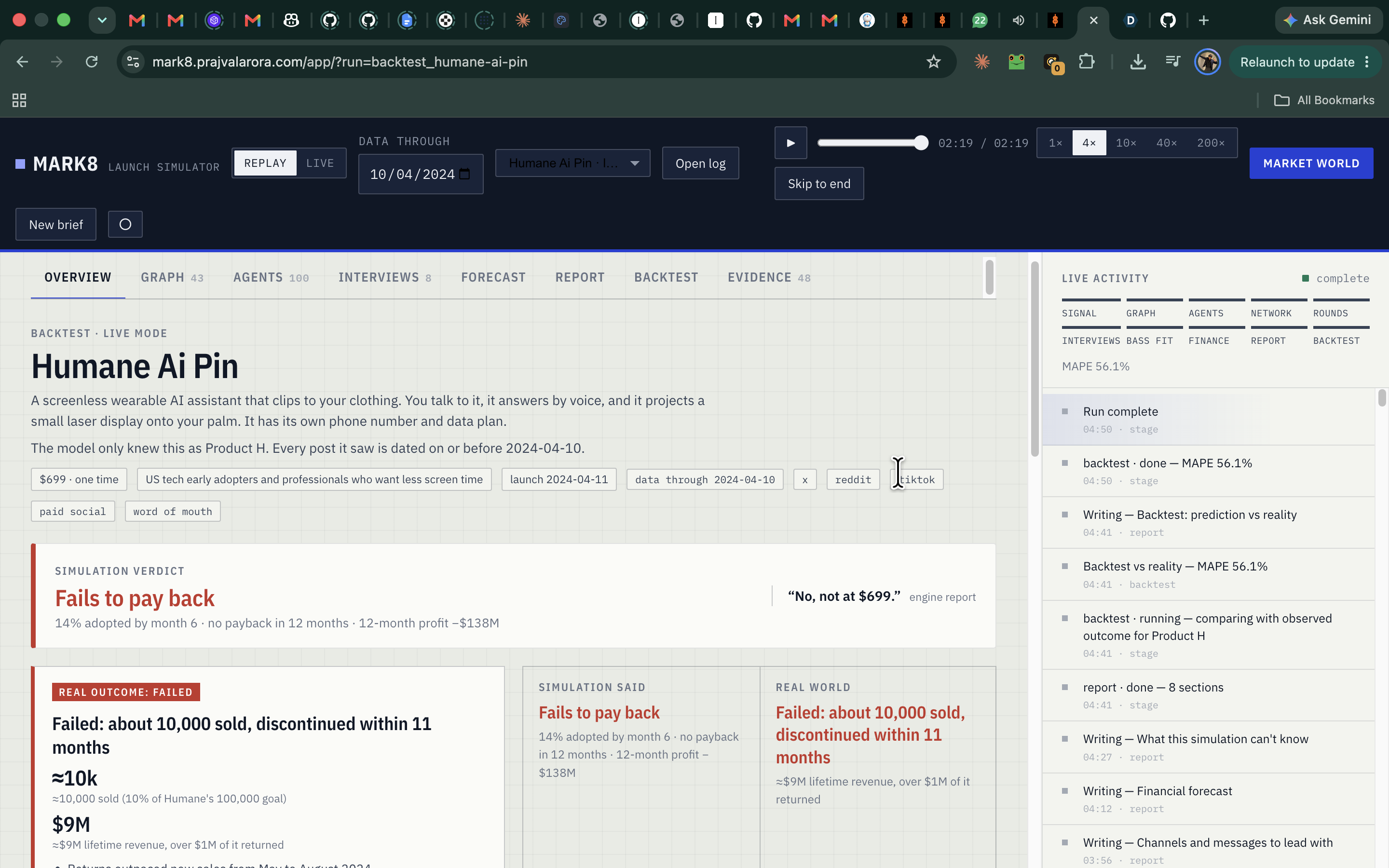
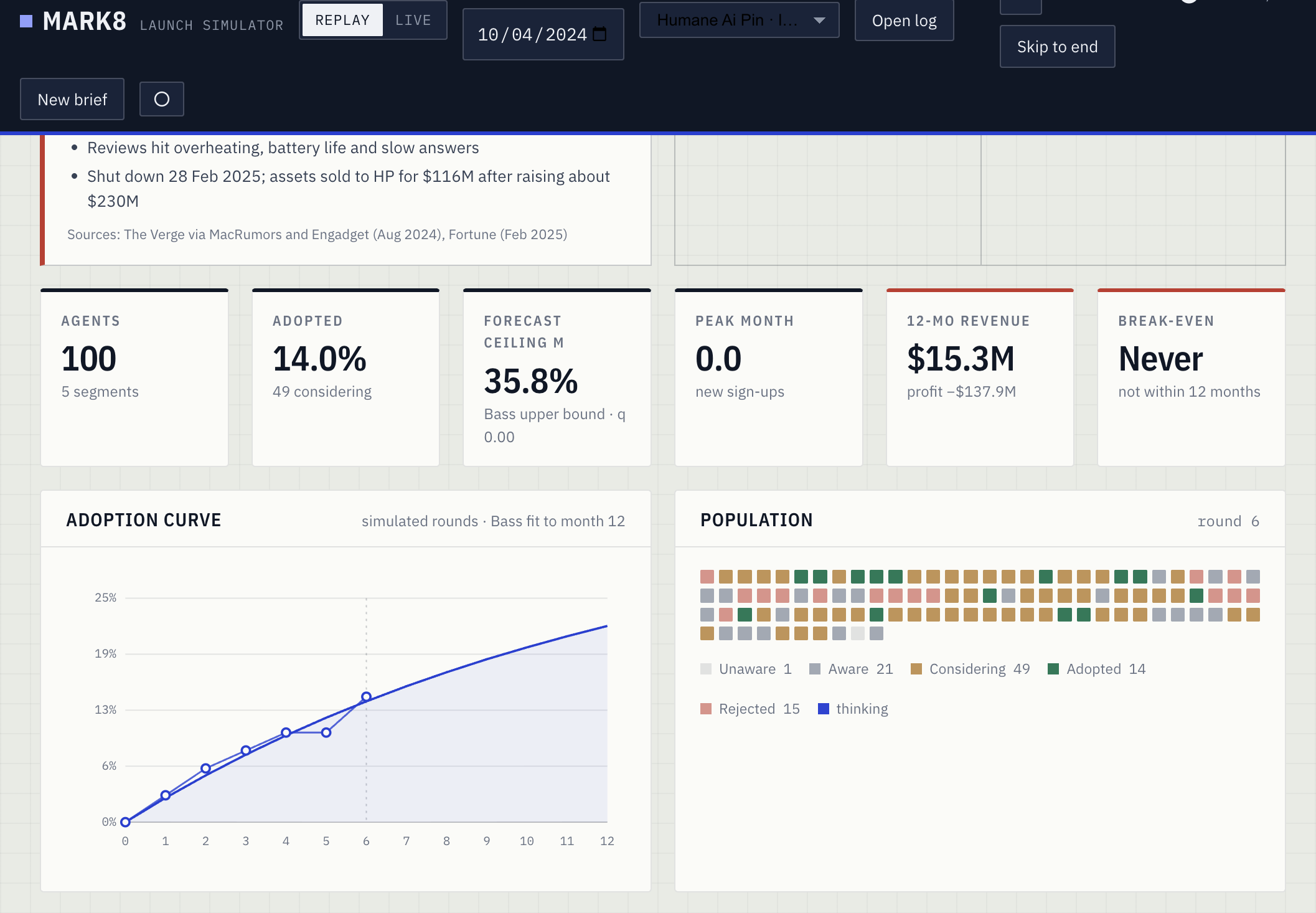
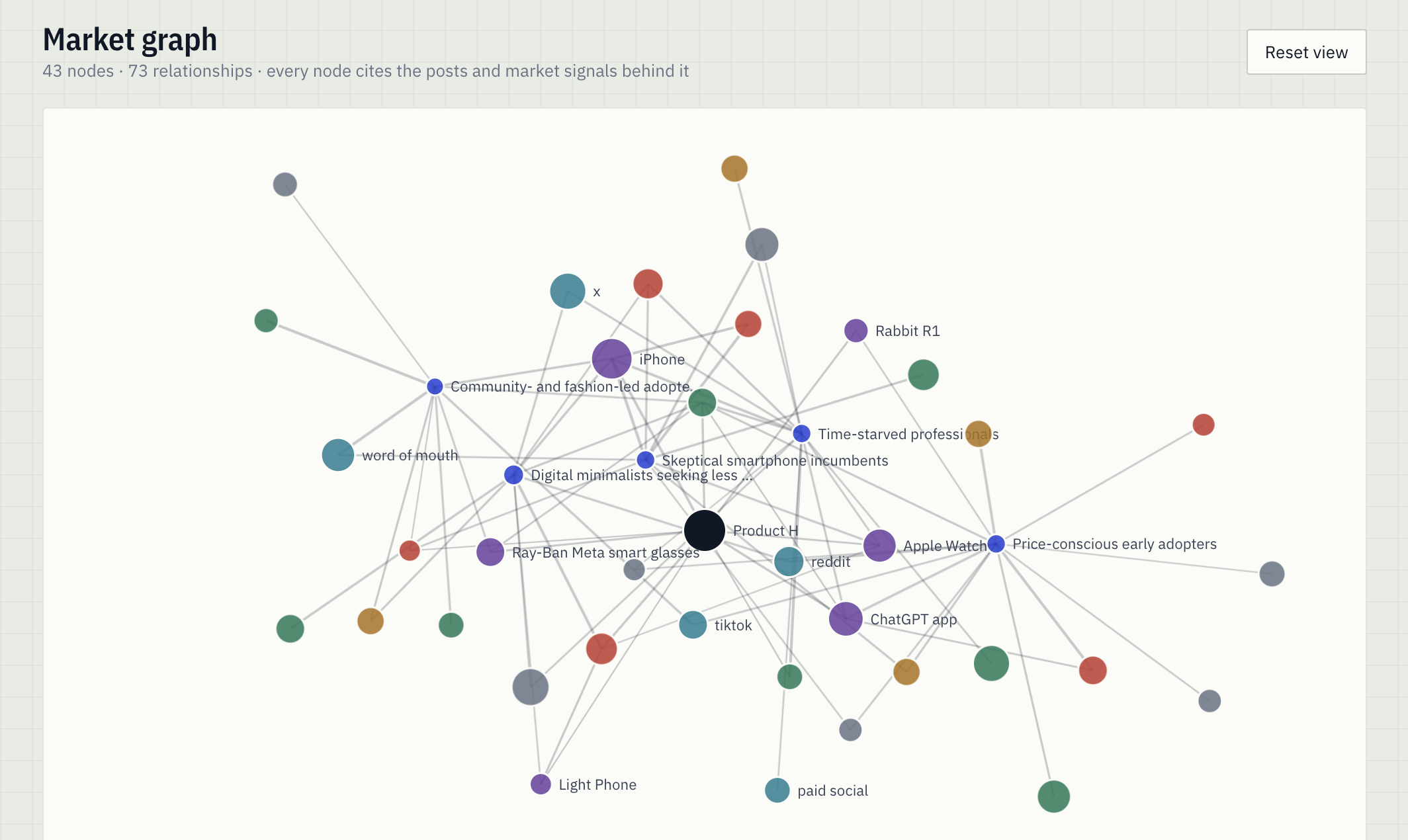
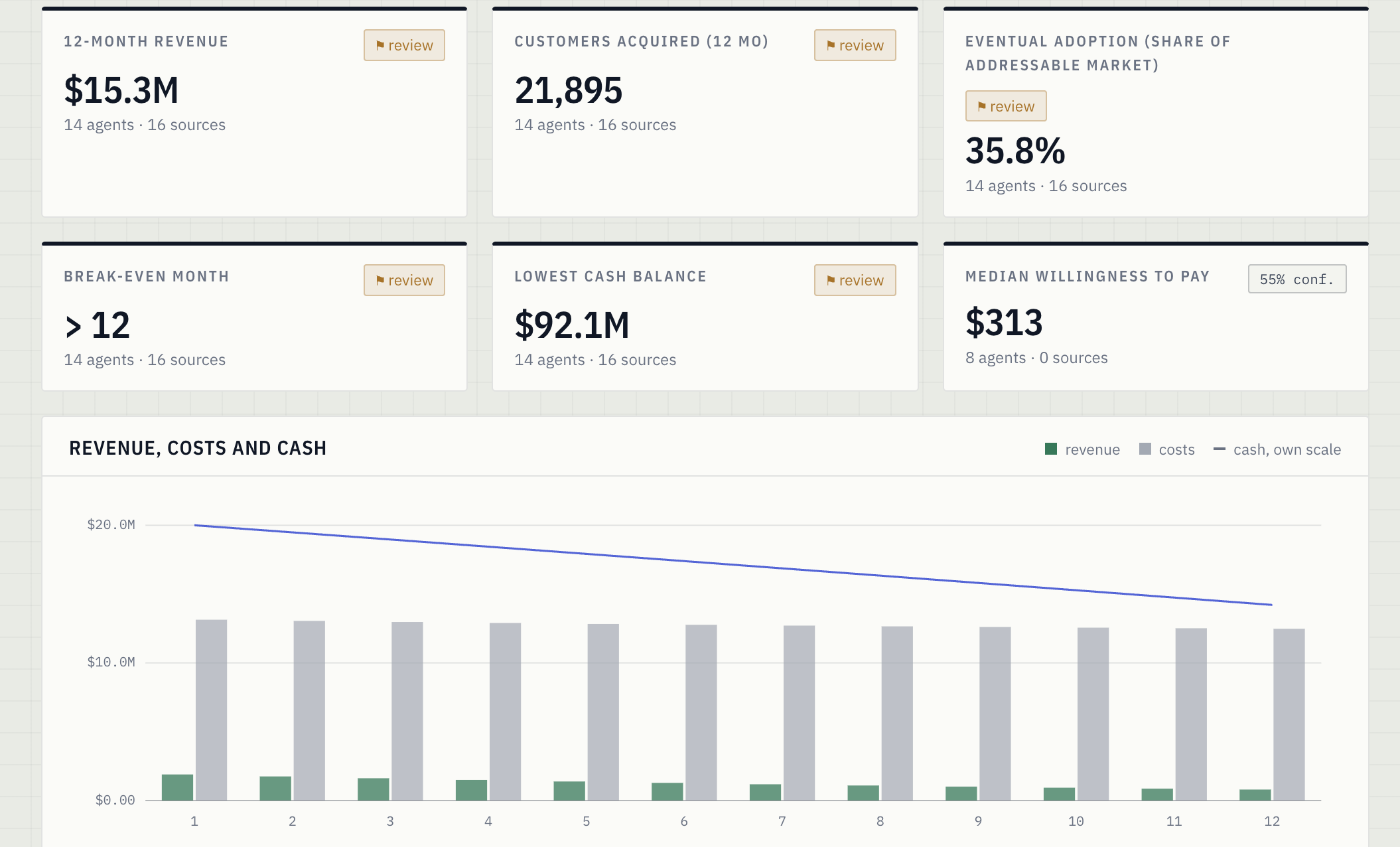
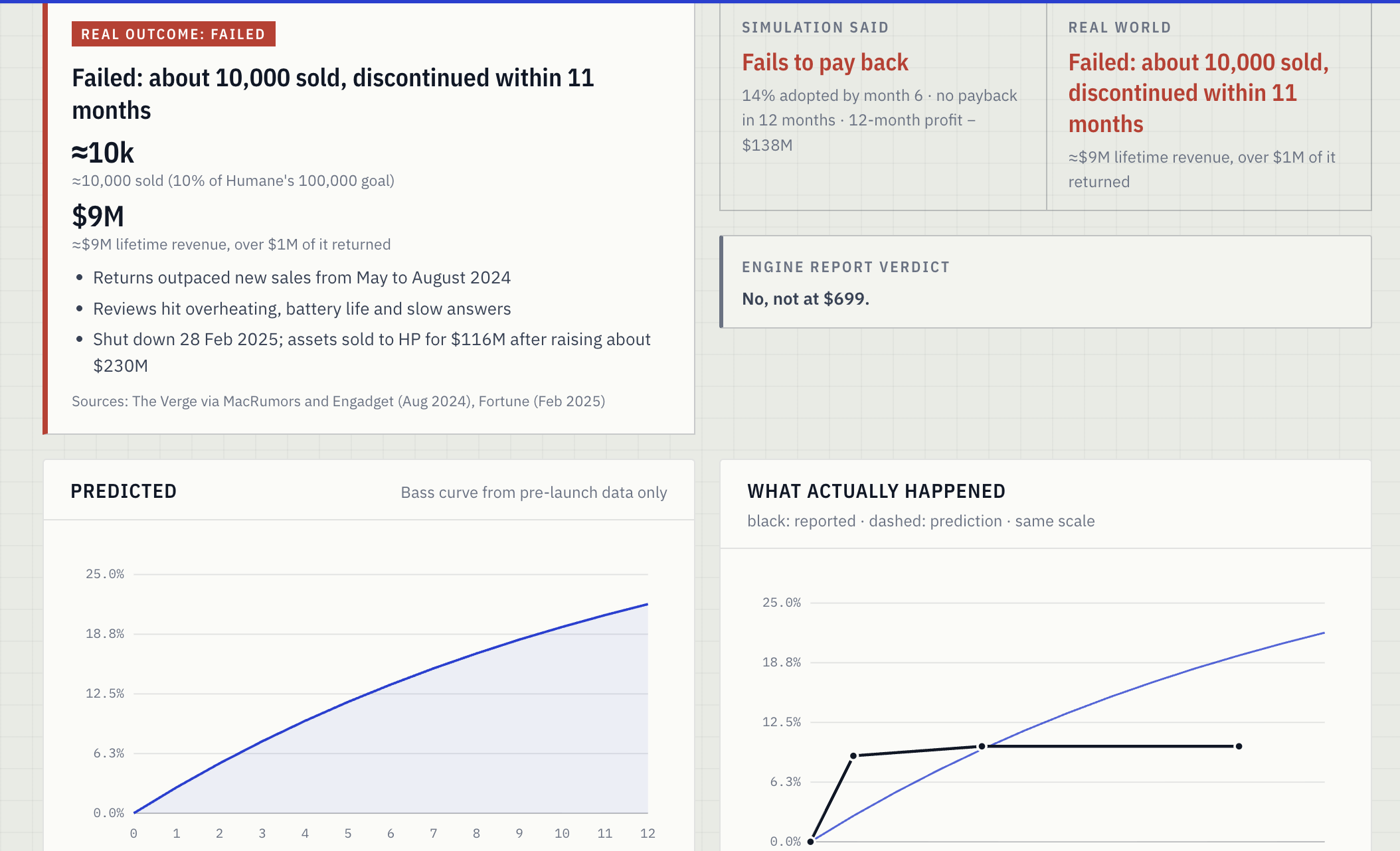
Mark8 is a world model for go-to-market strategy. It simulates synthetic users from your target market and models their behavior - how they'll react to your product launch - with real-world conditions (live social and economic situations) acting as context bias on every decision they make. The aggregate of all those simulated reactions is what builds your go-to-market strategy: adoption, revenue, and exactly where your launch breaks. [ Backtested against reality, it predicted the Humane AI Pin's failure and Ray-Ban Meta's success - before either played out. ]
How I built it
The real work wasn't the tech stack - it was building a world model and making the strategic call of what to consider and what to leave out. The world is infinitely complex, so I modeled only what actually moves buying decisions. Every synthetic user is grounded in real human data and carries a micro bias shaped by its own personality and by the live situations happening around it. I ran 8 in-depth interviews per launch alongside the full simulation, so you get both the numbers and the human reasoning behind them. The discipline of choosing the right 20% of factors is what makes the world model predict like reality.
Challenges I ran into
Modeling real-world conditions inside a simulation was the hardest part. My answer was Pareto's principle: we found the 20% of world factors that drive 80% of real customer buying behavior - economic and social conditions, current trends, and user psychology specific to the product. That 20% is what gets our synthetic users to answer like humans.
Accomplishments that I'm proud of
We backtested against reality. We ran the simulation at the moment the Humane AI Pin launched and Ray-Ban Meta was about to enter the market - and the simulation literally predicted what really happened: the Humane Pin would fail, and Meta would survive and take real market share. The world model called the future before it happened.
What I learnt!
It's incredibly tough to model the world in a simulation - but you don't have to model everything. 20% of the factors account for 80% of what actually happens.
What's next for Mark8 - Go-To-Market World Model
Live social signal flowing in continuously so the market graph updates with the real world. Letting founders run pricing and channel experiments inside the simulation and watch adoption shift in real time. And opening it up so any team can simulate their launch before they spend the money.


Log in or sign up for Devpost to join the conversation.