Inspiration
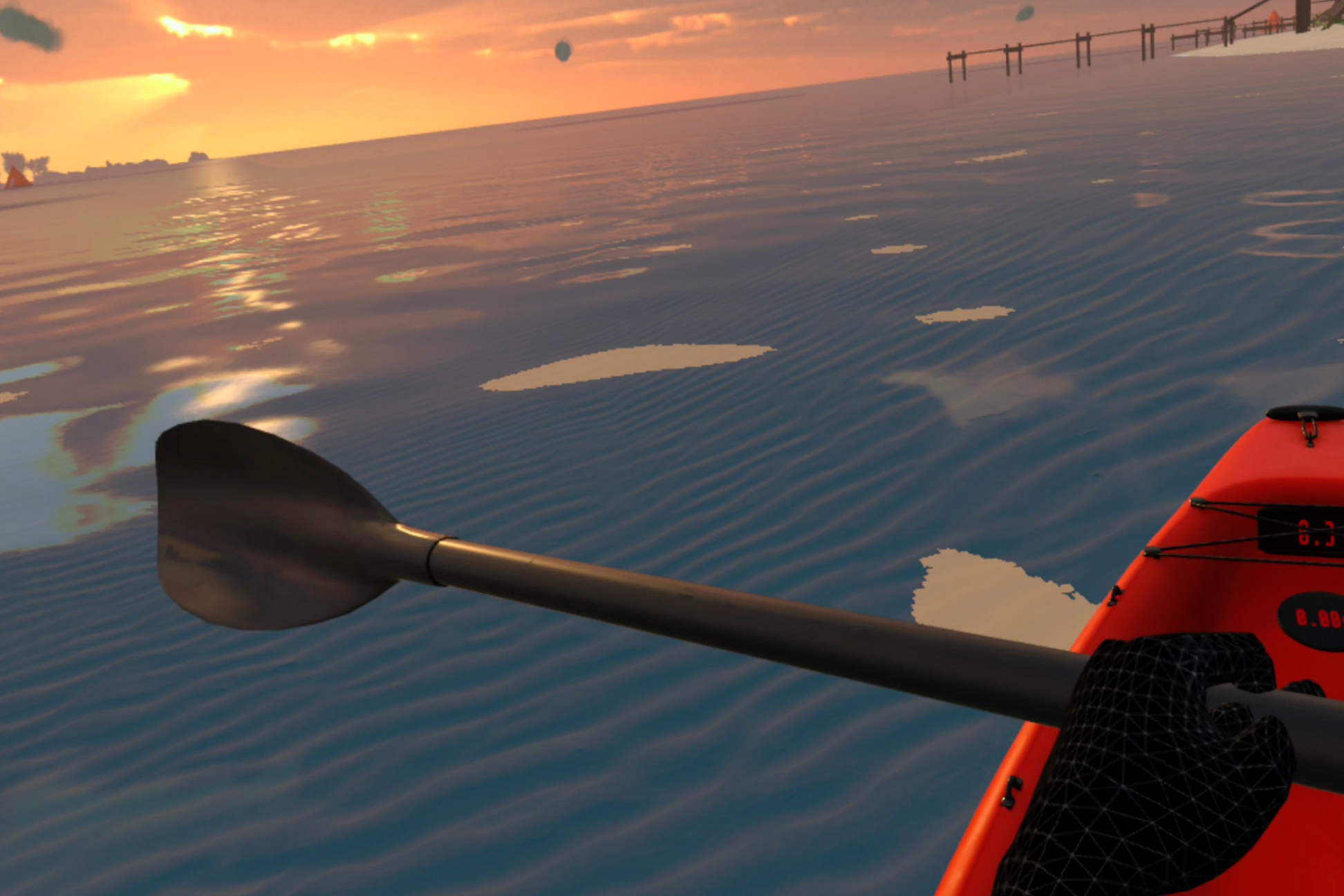
MarineVerse Kayaking began with something we kept hearing from players of MarineVerse Sailing Club: they loved spending time in our environments, even when they weren’t racing or learning to sail. Sometimes, the highlight was simply being on the water and watching the sunset.
Sailing is rewarding, but it takes time to learn. We wanted to offer another way into that experience, with a simpler starting point: pick up a paddle and go.
We originally developed MarineVerse Kayaking for Quest 3 in 2023, using its increased processing power to create richer environments. Our goal was to bring together the atmosphere of being outdoors, the satisfaction of moving a boat yourself and the freedom to explore at your own pace.
What it does
MarineVerse Kayaking lets players explore two contrasting environments: the Caribbean-inspired Akalana Islands and an Arctic landscape. You can take a gentle paddle, enjoy the scenery or put more energy into the journey.
The appeal is physical and immediate. Your movements connect you to the paddle, the kayak and the water. Rather than learning sailing terminology or managing a complex set of controls, you start with a familiar action: paddling.
We want it to be something people can enjoy in a short break or settle into for a longer escape, with room for both relaxation and an active challenge.
What changed for this competition
After development had largely paused around 2024, this competition gave us a reason to return to MarineVerse Kayaking with fresh tools and several years of player feedback.
Over the past two weeks, we upgraded Unity and the Meta SDK, revisited the reviews and feedback collected since launch, and focused on the parts of the experience that matter most when you are actually in the kayak.
We reworked the paddling physics and improved the existing hand tracking. The aim was to strengthen the connection between what your hands do and how the kayak responds, making paddling feel more natural and satisfying.
We also expanded the wildlife and are adding achievements and paddle statistics. These improvements serve different kinds of players: wildlife gives explorers more to notice, while achievements and statistics provide goals and a way to see progress across sessions. We want to give people reasons to return without turning a peaceful paddle into a checklist they have to complete.
How we built it
We built on the existing Unity project and updated its Meta SDK integration. We also used recent AI coding tools, including Codex, alongside Meta CLI and Unity CLI, to accelerate development and iterate on ideas.
That workflow helped us revisit a project that had been on pause and work through improvements quickly. The focus remained the experience inside the headset: the technology was useful insofar as it helped us make paddling, interaction and exploration better for players.
Challenges and lessons
Our central design challenge is making a physically responsive experience feel simple. A player should not need to understand the simulation underneath it. They should be able to move the paddle, see the kayak respond and begin exploring.
We also needed to balance progression with the original appeal of the app. Some players want a challenge; others want a quiet moment on the water. Our work on feedback, achievements and statistics is guided by that distinction.
Returning to the project reinforced the value of listening to what players already enjoy. Richer environments matter, but so does the feeling of each paddle stroke. The update brings those priorities together.
What’s next
We want to keep refining the paddling experience, learn from players’ responses to this update and bring more environments to explore.
The ambition remains straightforward: make the feeling of getting out on the water accessible to more people, whether they come for movement, exploration or a sunset.

Log in or sign up for Devpost to join the conversation.