-
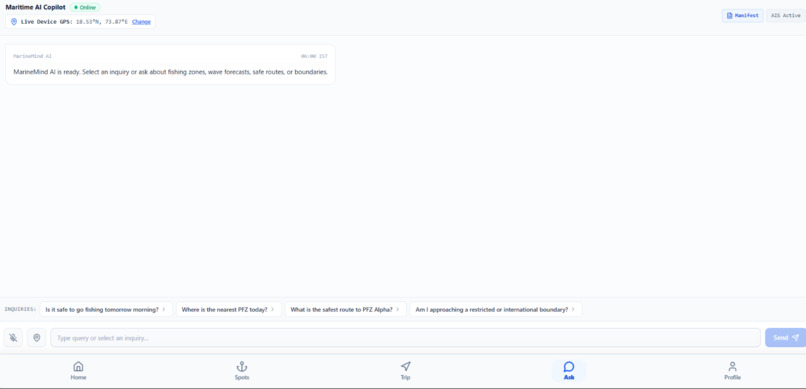
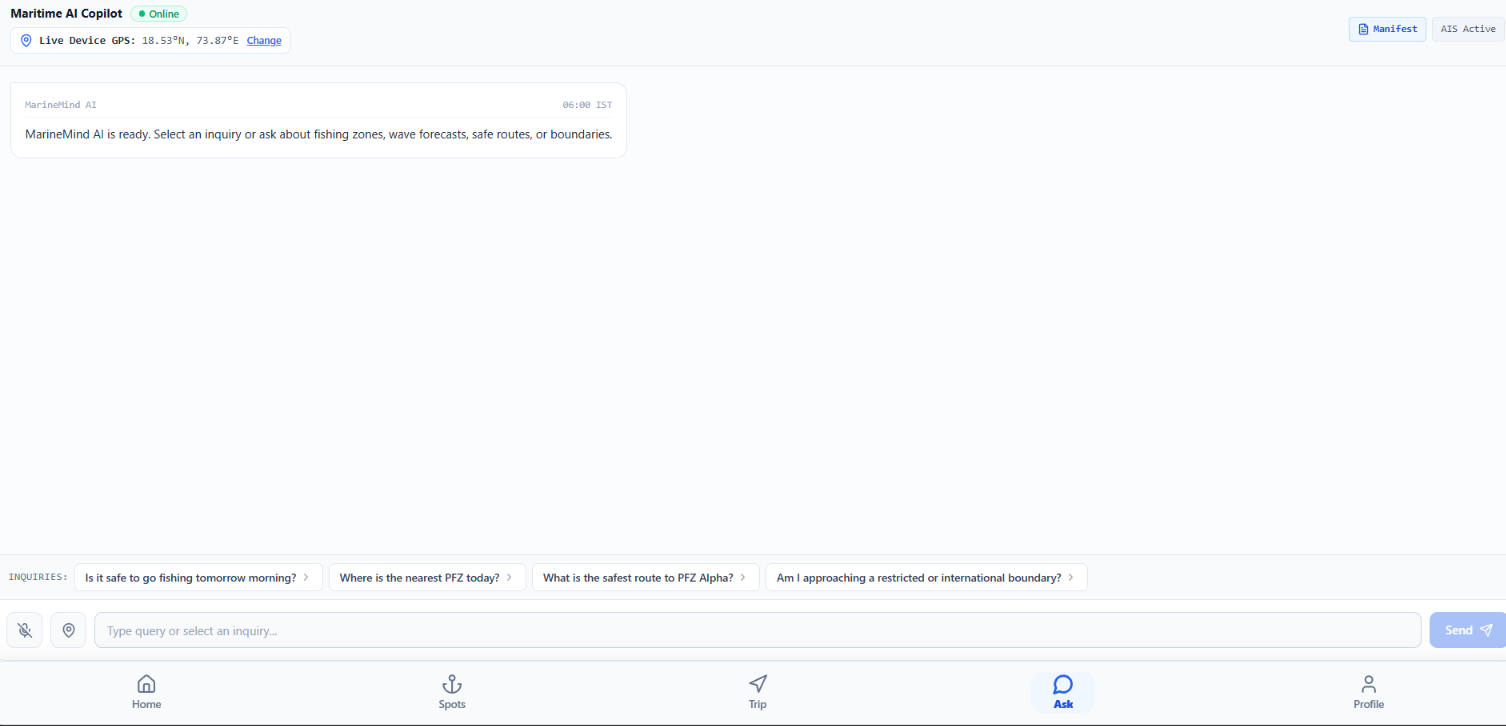
Assistive Chatbot
-
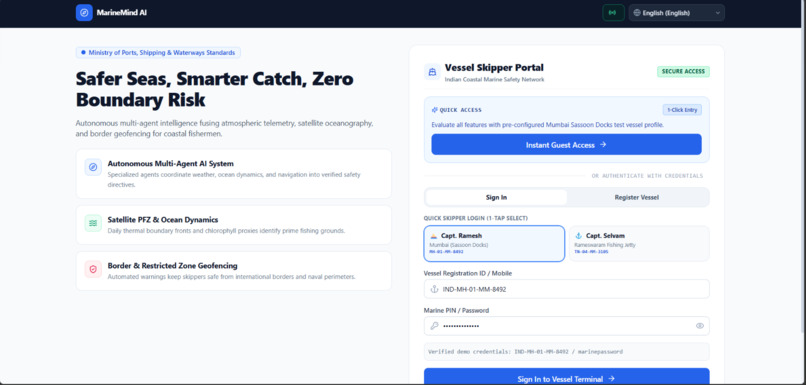
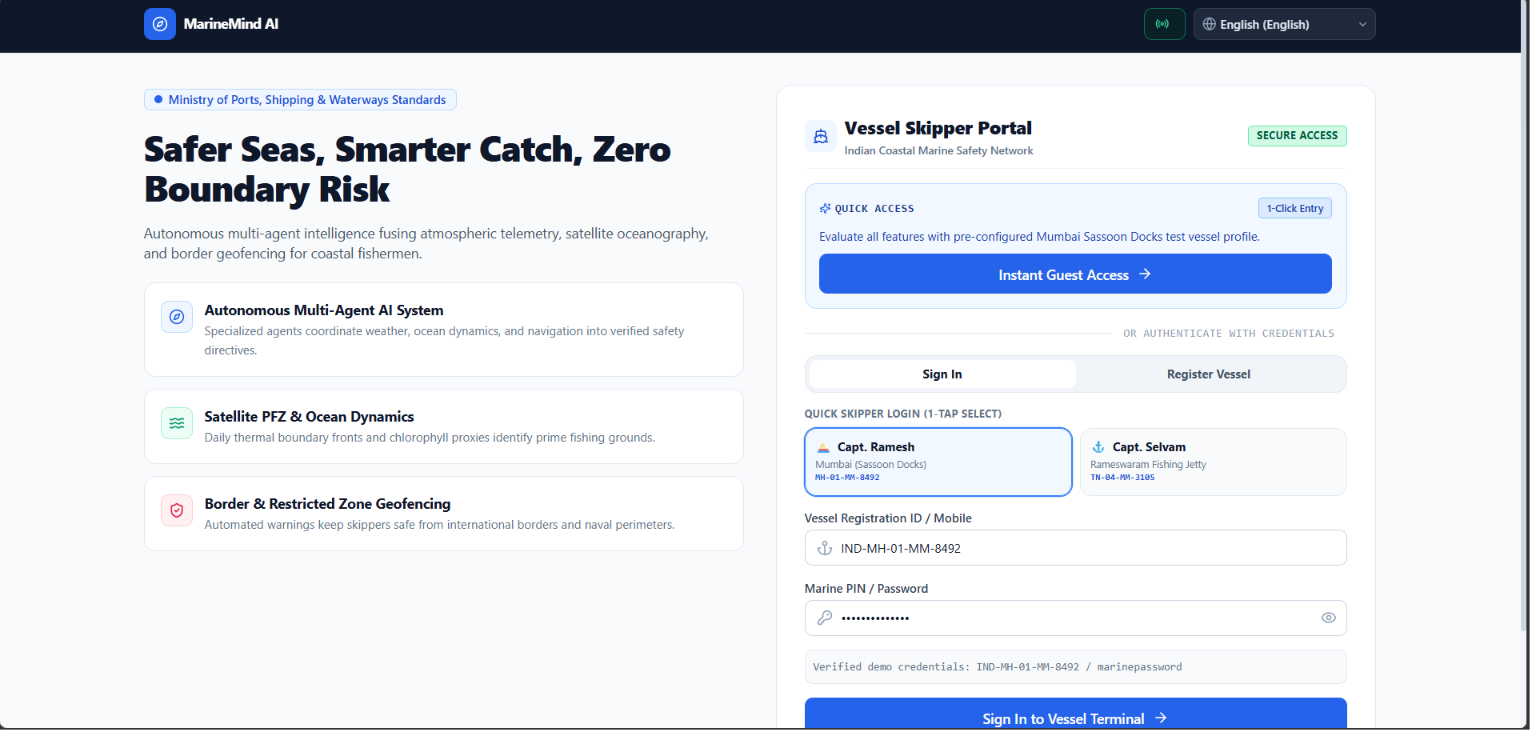
Landing Page
-
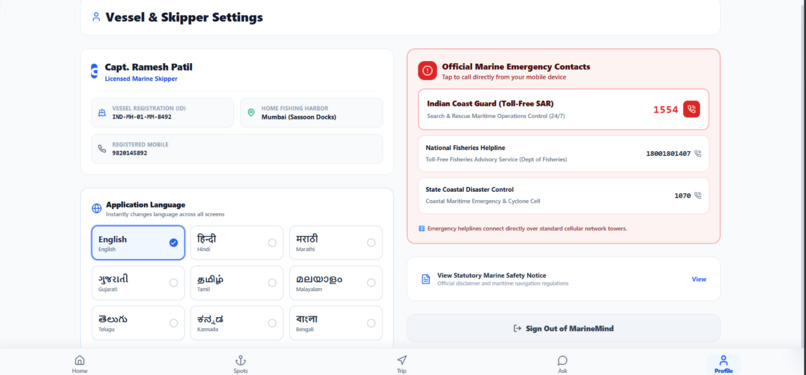
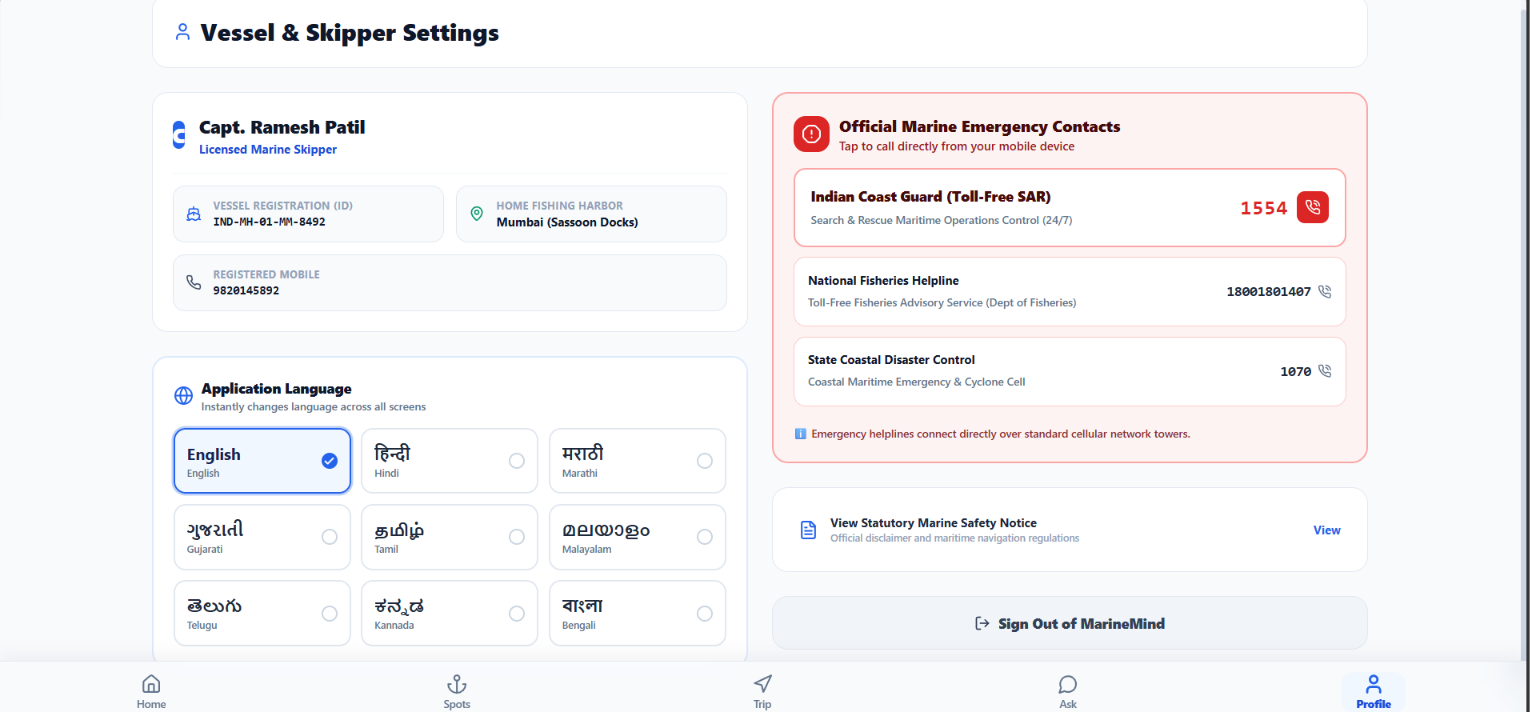
Profile Section
-
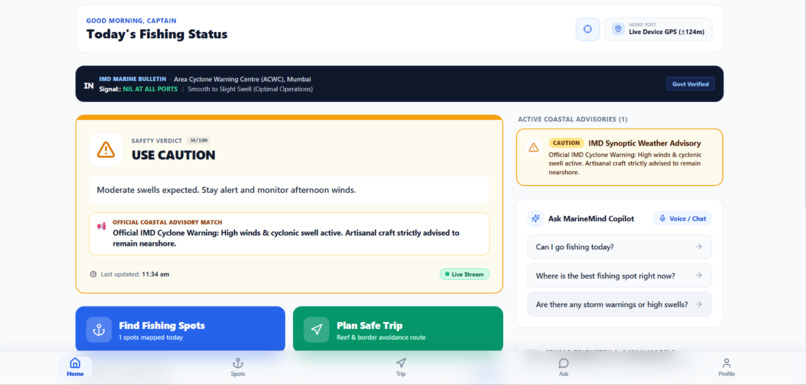
Alerts and Dashboard
-
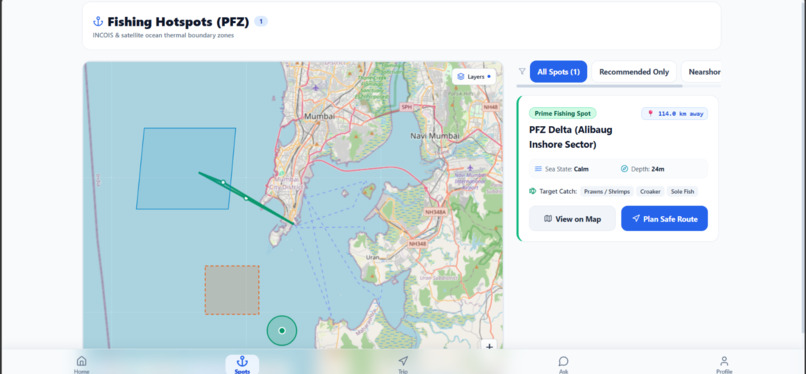
Safe Route Planning
Inspiration
Marine communities, especially small-scale fishermen, often make critical decisions based on fragmented information about weather, ocean conditions, potential fishing zones, and maritime safety.
Although relevant information exists across different platforms, accessing, interpreting, and connecting it to make informed decisions can be difficult.
This inspired us to develop MarineMind AI, an Agentic AI-powered marine intelligence platform that goes beyond conventional chatbots.
Our vision was to build a system that could understand user intent, coordinate specialized AI agents, process relevant marine information, and transform complex data into actionable insights through a unified interface.
We wanted to explore how Agentic AI could bridge the gap between fragmented marine information and practical decision-making for coastal communities.
What it does
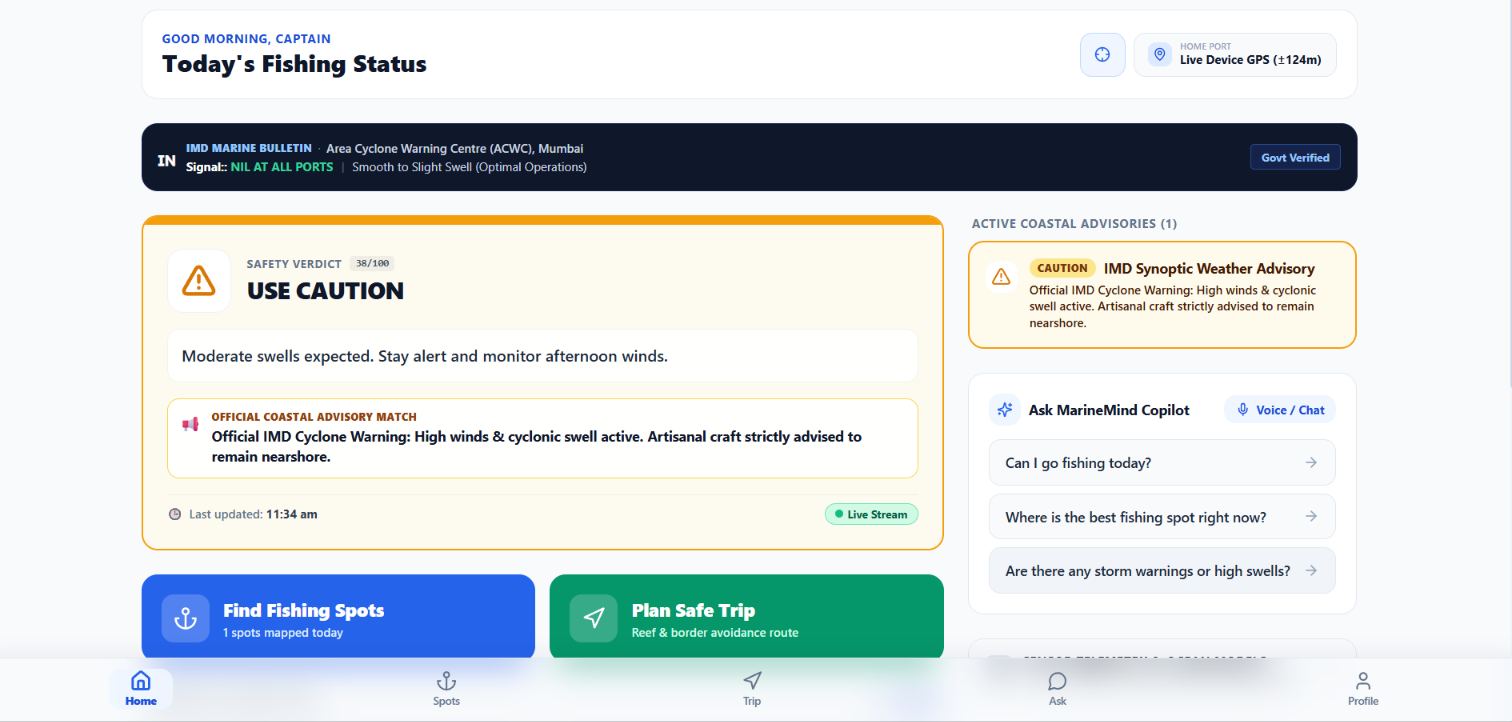
MarineMind AI is an intelligent marine decision-support platform that combines Agentic AI, geospatial intelligence, and environmental information.
Its key capabilities include:
- Agentic AI: Coordinates specialized agents to handle different marine-related tasks through an orchestration workflow.
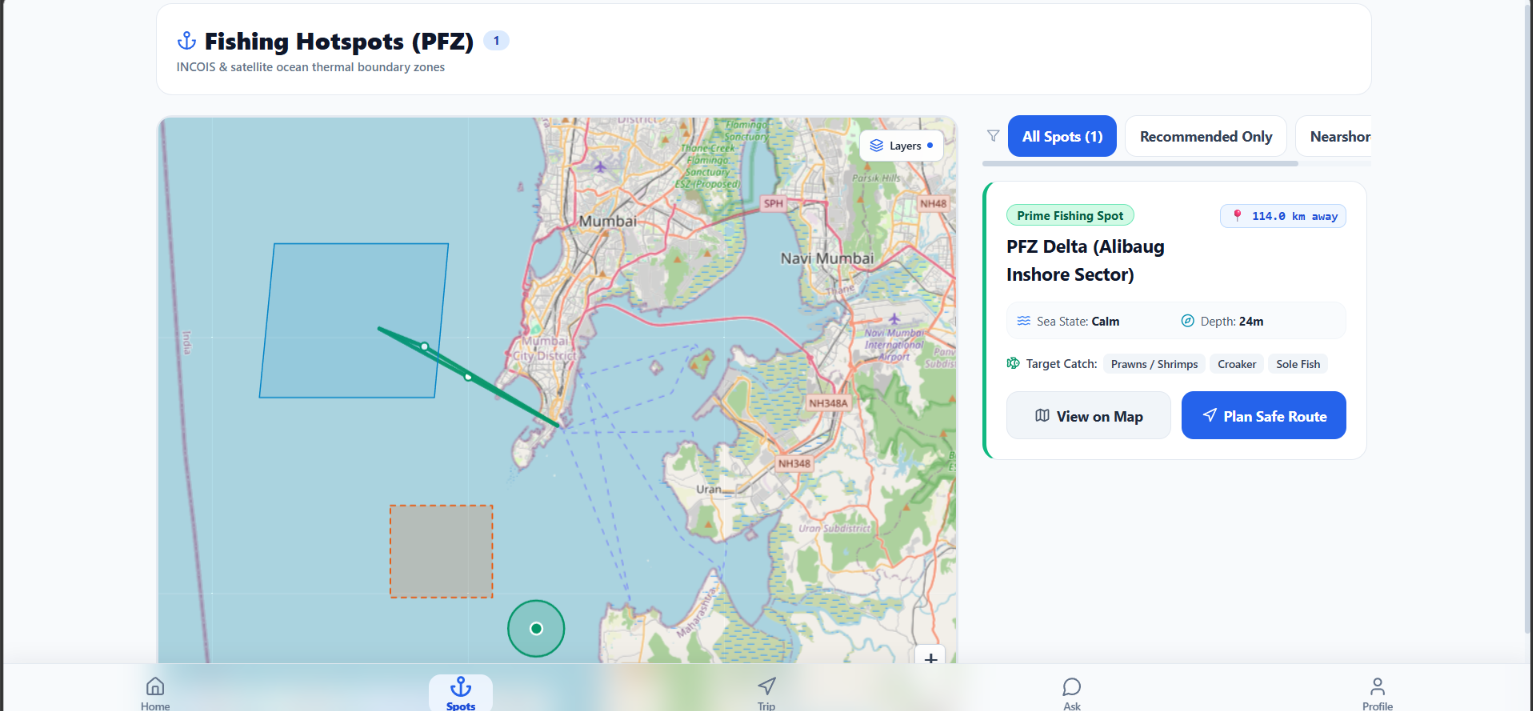
- Potential Fishing Zone (PFZ) Intelligence: Identifies and ranks potential fishing areas using available marine information.
- Weather Intelligence: Integrates weather information to help users understand environmental conditions.
- Geospatial Intelligence: Visualizes marine locations and supports geographical and route-related analysis.
- Marine Risk Assessment: Processes relevant environmental and spatial factors to generate understandable risk insights.
- Conversational Interface: Allows users to interact naturally, ask questions, and make contextual follow-up queries.
- Multilingual Accessibility: Aims to make marine intelligence accessible to users across different language backgrounds.
Instead of simply returning chatbot responses, MarineMind AI combines specialized processing, structured information, and AI-generated explanations to support more informed decisions.
How we built it
We built MarineMind AI using a modular full-stack architecture that integrates Agentic AI, backend services, geospatial processing, and interactive visualizations.
Technology Stack:
- Frontend: React, TypeScript, Vite, Tailwind CSS
- Geospatial Visualization: Leaflet
- Backend: Python, FastAPI
- AI Integration: Gemini API
- Geospatial Processing: Shapely
- Authentication: JWT
- Database: SQLite with PostgreSQL/PostGIS-ready architecture
- Deployment: Render
Agentic AI Workflow:
The platform follows a specialized agent-based workflow:
- User Input: Receives a natural-language query.
- Intent Recognition: Understands the user's requirement and identifies the relevant task.
- Agent Orchestration: Coordinates specialized agents according to the query.
- Data Processing: Processes available marine information, external API responses, and geospatial data.
- Result Synthesis: Combines relevant outputs into a contextual response.
- Presentation: Displays insights through conversational responses and interactive maps.
We adopted a hybrid intelligence approach, combining LLM-based reasoning with deterministic computations.
[ I = f(L,D,G) ]
Where (L) represents language-model reasoning, (D) represents structured data processing, and (G) represents geospatial computation.
This separation helps ensure that calculations and spatial analysis are not blindly delegated to an LLM.
Challenges we ran into
Building MarineMind AI involved several technical and architectural challenges.
- Agent Coordination: Designing an orchestration workflow that could coordinate specialized agents while maintaining consistent outputs.
- Data Reliability: Handling incomplete, unavailable, or inconsistent responses from external data sources.
- Geospatial Complexity: Processing geographical information and spatial relationships accurately.
- Context Management: Maintaining meaningful interactions across conversational follow-up queries.
- AI Reliability: Separating AI-generated explanations from actual data-driven results and deterministic calculations.
- Deployment Issues: Managing environment variables, authentication secrets, API integrations, and production configurations.
We addressed these challenges through modular architecture, structured data processing, fallback mechanisms, and separation of responsibilities.
One of our biggest challenges was ensuring that the system remained useful even when certain external information sources were unavailable.
Accomplishments that we're proud of
- Developed a working Agentic AI-powered marine intelligence platform rather than a conventional chatbot.
- Implemented a modular architecture with specialized agent responsibilities and orchestration.
- Integrated AI reasoning with deterministic processing and geospatial analysis.
- Built an interactive map-based interface for marine intelligence visualization.
- Implemented authentication and structured backend services.
- Developed a conversational interface designed around practical marine-related queries.
- Created a foundation that can be extended with additional marine datasets, agents, and predictive capabilities.
We are particularly proud of bringing multiple technologies together into one application with a clear real-world use case: making marine intelligence more accessible to coastal communities.
What we learned
This project taught us that building Agentic AI applications involves much more than connecting a language model to an API.
We gained practical experience in:
- Designing specialized AI agents and orchestration workflows.
- Integrating LLMs with deterministic algorithms.
- Working with geospatial data and spatial computation.
- Integrating external APIs and handling unreliable data.
- Developing context-aware conversational applications.
- Implementing authentication and backend security.
- Debugging production deployment issues.
- Designing technology around actual user needs rather than just technical possibilities.
Most importantly, we learned that reliable Agentic AI depends on controlled execution, trustworthy information, and meaningful coordination between specialized components.
What's next for MarineMind AI
We envision MarineMind AI evolving into a more comprehensive marine intelligence ecosystem.
Our future roadmap includes:
- Live Oceanographic Integration: Incorporating verified satellite, oceanographic, and environmental datasets.
- Advanced PFZ Intelligence: Improving potential fishing zone identification using validated real-world data.
- Advanced Multi-Agent Planning: Enabling agents to coordinate more complex, multi-step marine intelligence tasks.
- Predictive Risk Assessment: Developing better environmental and maritime risk prediction capabilities.
- Offline Accessibility: Supporting fishermen operating in areas with limited internet connectivity.
- Regional Language Expansion: Making the platform accessible to more coastal communities.
- Improved Maritime Safety: Integrating additional maritime safety information and decision-support capabilities.
Our long-term goal is to move from fragmented marine information towards an intelligent ecosystem where specialized AI agents can coordinate data, analyze situations, and support better-informed decisions.
MarineMind AI — Turning Ocean Data into Actionable Intelligence through Agentic AI.
Built With
- agentic-ai
- api-integration
- artificial-intelligence
- cloud
- data-analytics
- environmental-intelligence
- fastapi
- full-stack-development
- generative-ai
- geospatial-intelligence
- google-gemini
- jwt-authentication
- large-language-models
- leaflet.js
- marine-technology
- multi-agent-systems
- natural-language-processing
- python
- react
- rest-api
- shapely
- sqlite
- tailwind-css
- typescript
- vite


Log in or sign up for Devpost to join the conversation.