-
-
Virtual labs
-
Mystery
-
Home page
-
Home page section
-
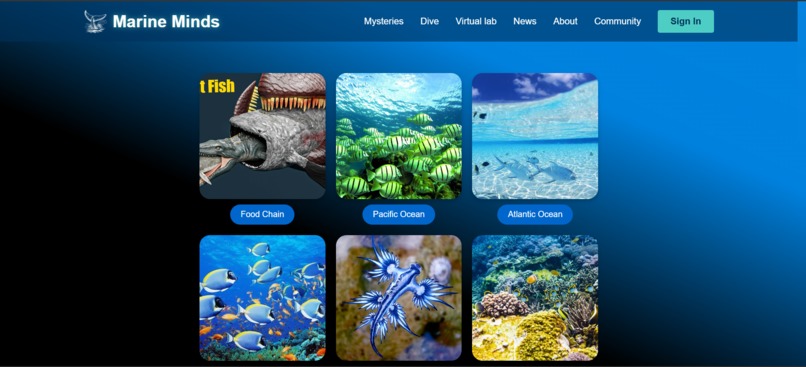
Games
-
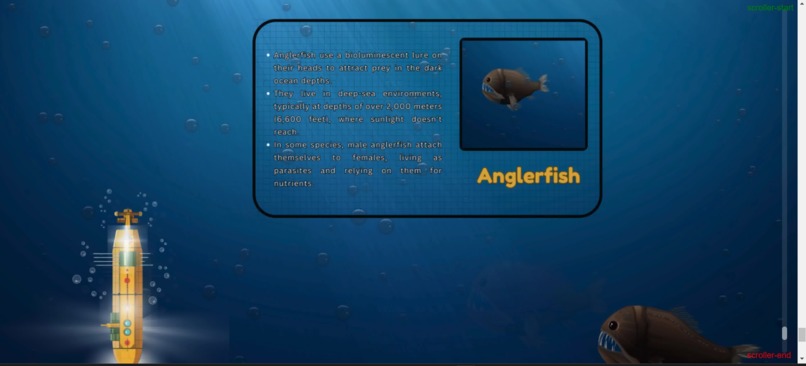
Dive in
Inspiration
The ocean is a realm of mystery and wonder, covering over 70% of our planet yet remaining largely unexplored. From the enigmatic depths of the Bermuda Triangle to the breathtaking biodiversity of coral reefs, our inspiration was to create a platform that educates, entertains, and connects users to the marine world. We wanted to merge learning with fun, making marine science accessible and engaging for everyone.
What it does
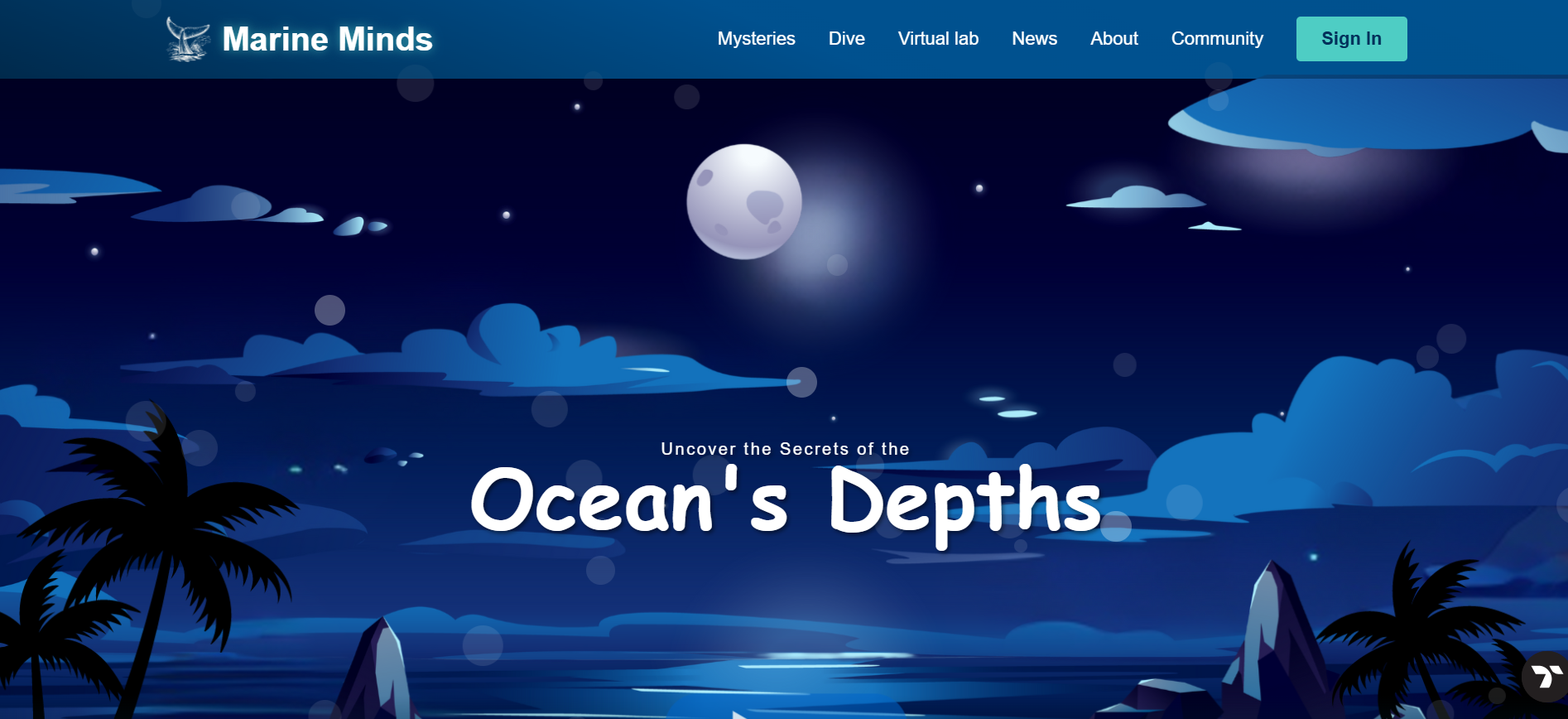
Marine Minds is an interactive platform designed to captivate and educate users about the wonders of the ocean. Here's an in-depth look at its features:
Immersive Ocean Games
Players can dive into engaging and dynamic games that simulate real-life ocean scenarios. These games allow users to step into various roles, such as:
- Marine Biologists: Study marine life, collect data on biodiversity, and analyze the effects of environmental changes.
- Scuba Divers: Explore underwater worlds, uncover hidden treasures, and complete challenging quests in breathtaking aquatic environments.
- Lifeguards: Respond to emergencies, rescue swimmers, and maintain beach safety, adding a thrilling element of responsibility to the gameplay.
Each game is designed to be entertaining while subtly teaching players about marine ecosystems, conservation, and ocean science.
Revealing Marine Mysteries
The platform delves into fascinating oceanic phenomena that spark curiosity. Users can explore topics like:
- The Bermuda Triangle: Learn about the myths, theories, and scientific explanations behind one of the ocean's greatest enigmas.
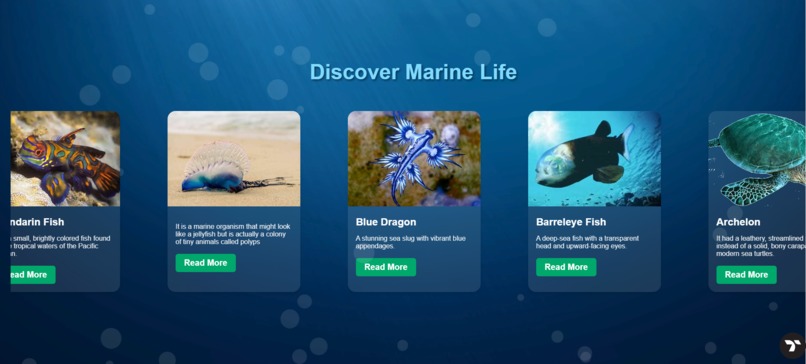
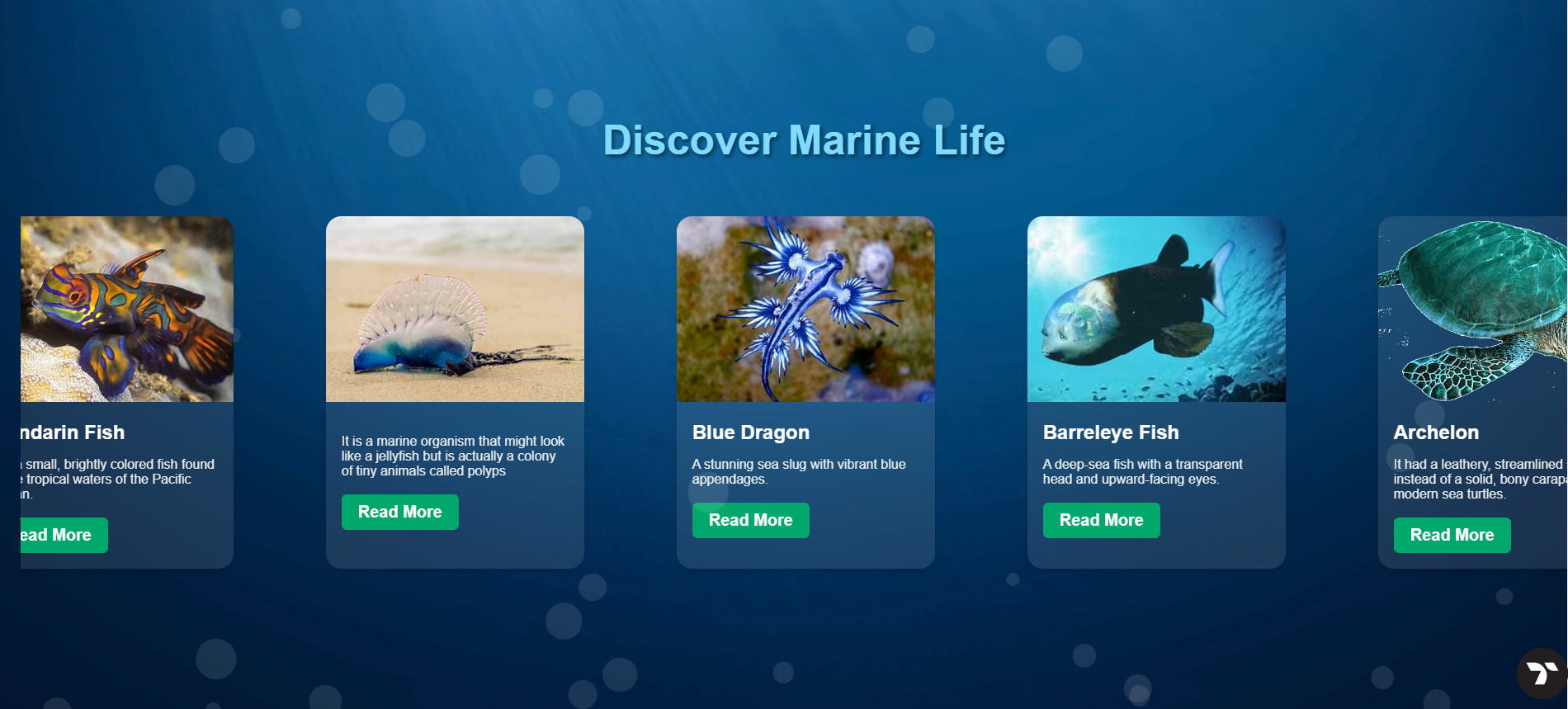
- Deep-Sea Discoveries: Uncover the secrets of the ocean's unexplored depths, including unique marine species and underwater structures.
- Historical Shipwrecks: Dive into the stories of lost vessels and their significance in history and marine archaeology.
Ocean News Section
Marine Minds keeps users informed about the latest developments in marine science and conservation through an up-to-date news section. Topics include:
- Advances in ocean technology, such as underwater drones and research vessels.
- Conservation efforts to protect endangered marine species and habitats.
- Global and local ocean-related events, policies, and initiatives.
This section fosters awareness and encourages users to stay connected to the ongoing efforts to preserve our oceans.
Virtual Labs
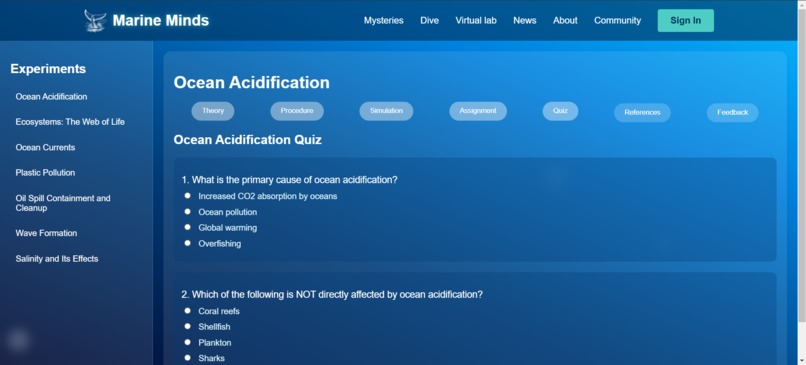
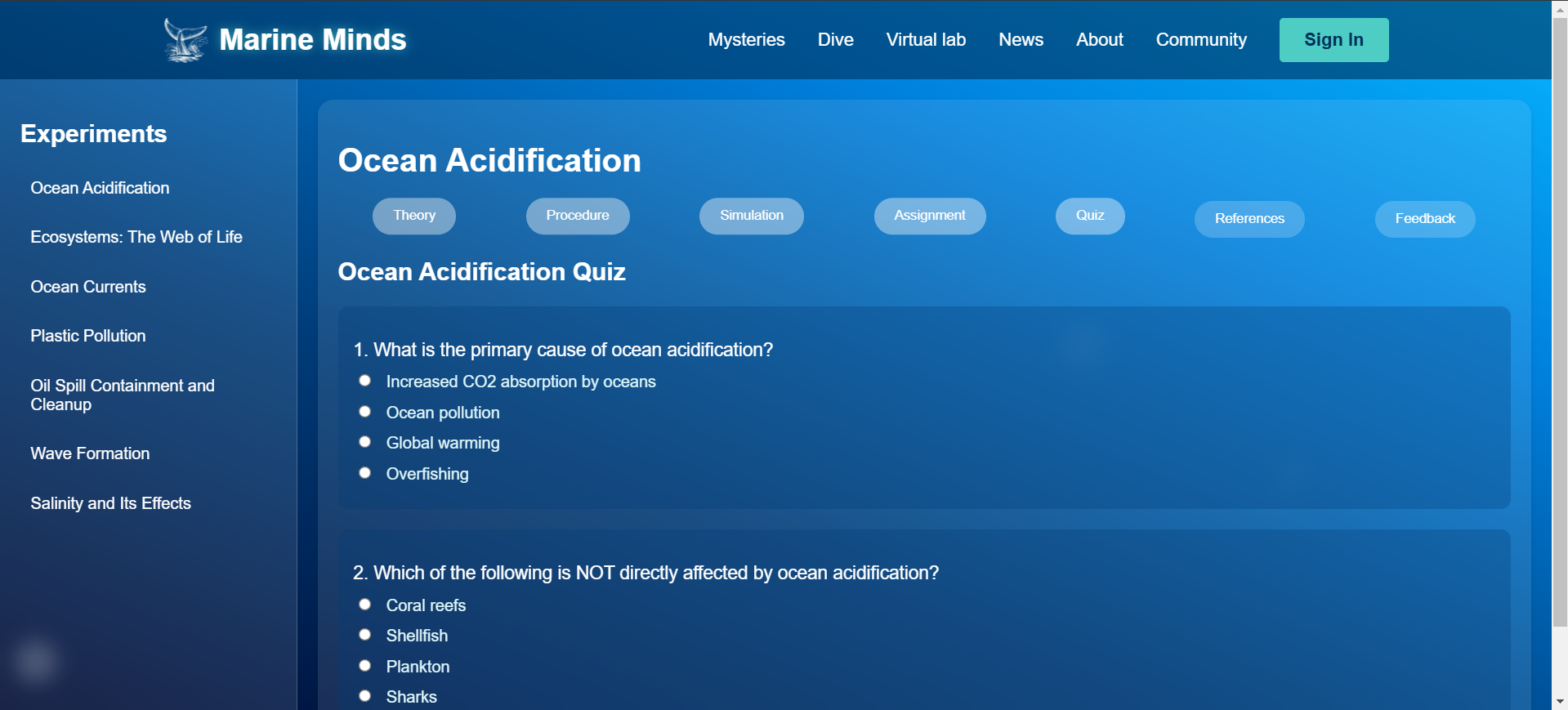
Marine Minds offers a hands-on learning experience through interactive virtual labs. Users can simulate and experiment with oceanic phenomena, such as:
- Ocean Acidification: Understand the impact of CO₂ on marine ecosystems and its effect on coral reefs.
- Wave Formation: Explore the physics behind ocean waves and how wind, gravity, and other forces shape them.
- Water Density and Ocean Currents: Discover how temperature and salinity affect the movement of ocean waters.
- Plastic Pollution Impact: Simulate the journey of plastic waste in the ocean and its consequences on marine life.
These labs are designed for students, educators, and enthusiasts, making marine science accessible and engaging.
Dive In Feature
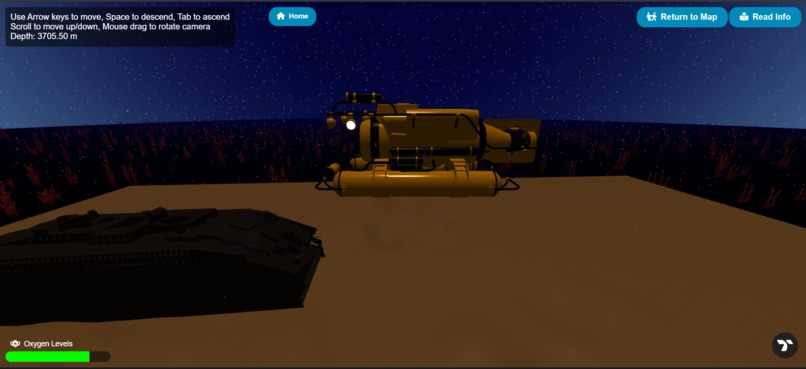
This feature allows users to experience the ocean’s depths in an engaging and educational way.
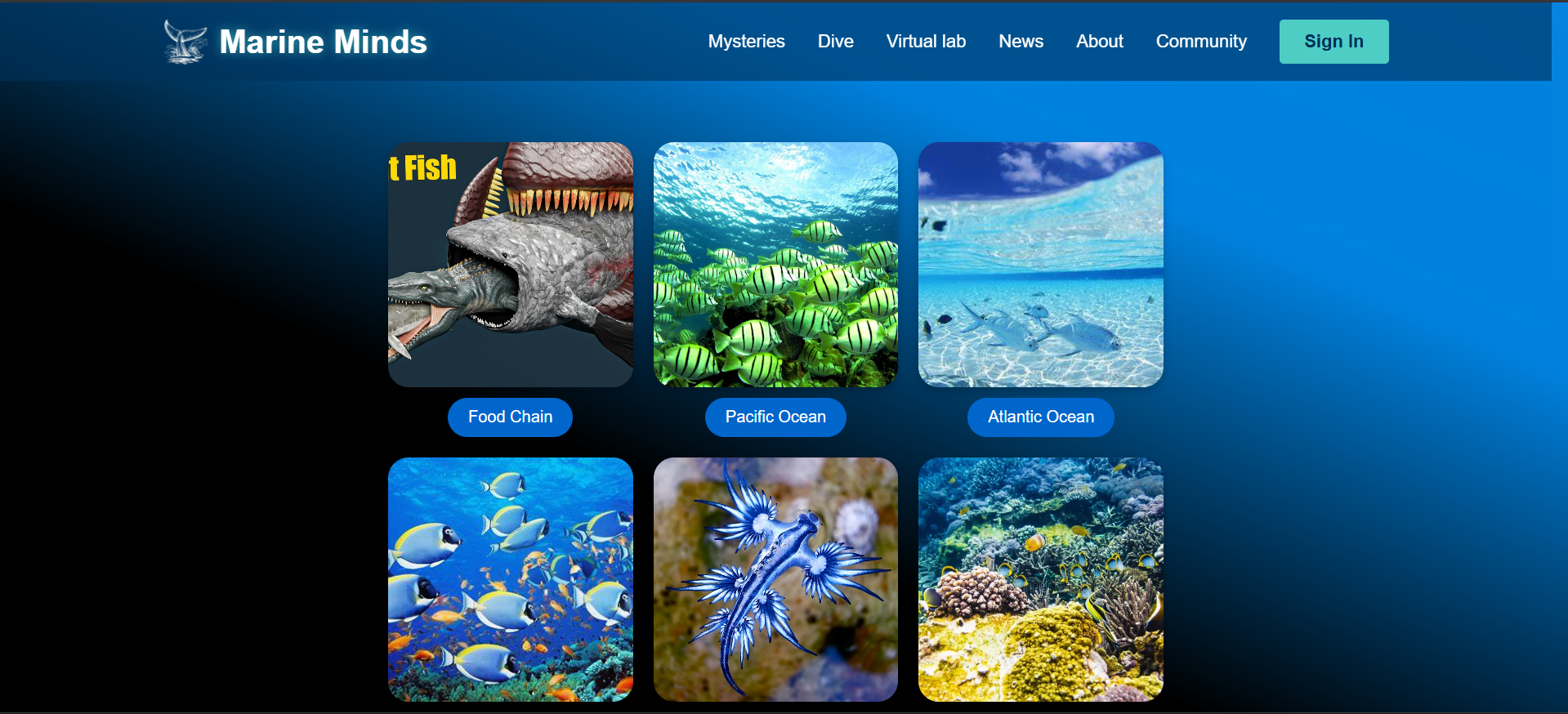
- Exploration Options: Users can choose to explore one of the five major oceans or embark on a unique Food Chain Dive to learn about oceanic food chains.
- Oceanic Beauty: The experience begins with auto-scrolling visuals showcasing the serene and dynamic beauty of the ocean, immersing users in its wonders.
- Manual Navigation: Once captivated by the initial visuals, users can navigate manually to explore deeper realms.
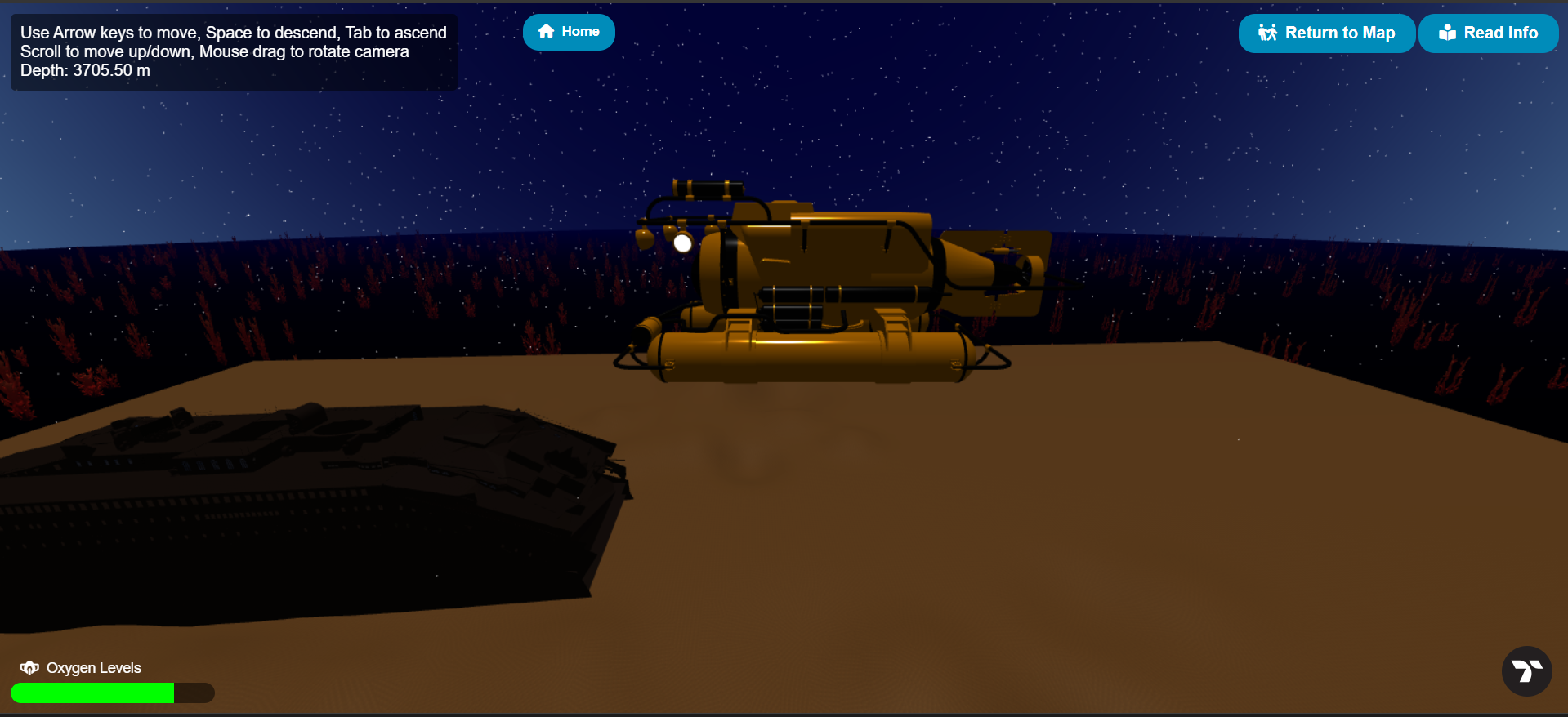
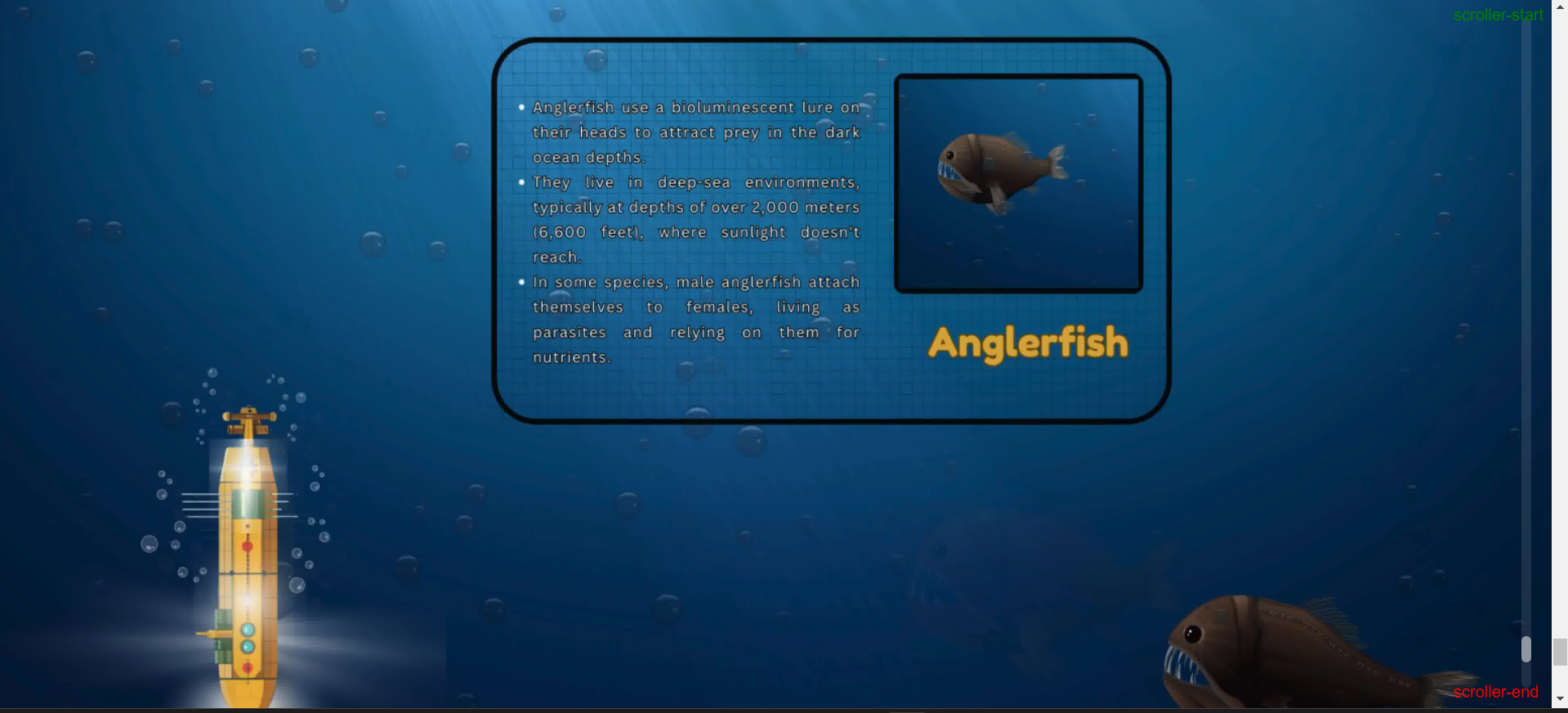
- Submarine Assistance: A virtual submarine guides users through the journey, displaying depth levels and uncovering marine creatures along the way. Each creature is accompanied by informative flashcards with engaging facts about their biology, behavior, and role in the ecosystem.
- Current Implementation: The Pacific Ocean and Food Chain Dive sections have been successfully implemented, providing users with a glimpse of the ocean's vast ecosystems and the interconnectedness of marine life.
Fostering Community through Gamified Learning
Marine Minds is more than just a platform—it’s a community for ocean enthusiasts. Through gamification, users can:
- Compete in leaderboards to showcase their achievements in ocean-related games.
- Earn rewards and badges for completing challenges and participating in virtual labs.
- Collaborate and share insights with like-minded individuals, creating a network of people passionate about marine exploration and conservation.
By combining education with interactive elements, Marine Minds bridges the gap between curiosity and meaningful connection to the marine world.
How we built it
- Frontend: React.js for an intuitive and responsive user interface.
- Backend: Node.js and Express for API development and data handling.
- Database: MongoDB for efficient storage of user data and content.
- 3D Visuals: Three.js for underwater explorations and visually rich content.
- Gaming Features: Unity and Sandbox for developing interactive gameplay with realistic mechanics.
- Collaboration: Managed through GitHub for seamless teamwork and version control.
Challenges we ran into
- Technical Complexity: Integrating Unity game mechanics with the web platform required extensive research and troubleshooting.
- Performance Optimization: Ensuring smooth rendering of 3D models and graphics without compromising user experience.
- Balancing Features: Managing the scope of the project while maintaining focus on quality.
- Learning Curve: Acquiring new skills in Unity, Three.js, and game development within tight deadlines.
Accomplishments that we're proud of
- Successfully integrating multiple technologies to deliver an engaging and educational platform.
- Developing interactive games and scenarios that highlight marine life and challenges.
- Creating a visually appealing and user-friendly experience with 3D underwater views.
- Encouraging curiosity and awareness about the ocean among users of all ages.
What we learned
- The power of teamwork and communication in overcoming obstacles.
- New technical skills in Unity, Three.js, and optimization techniques for better performance.
- The importance of user feedback in refining the platform for a better experience.
- Insights into marine science and how to gamify educational content effectively.
What's next for Marine Minds
- Expanding gameplay scenarios to include more roles, challenges, and interactive environments.
- Partnering with educational institutions to integrate Marine Minds into marine science curricula.
- Developing a community feature where users can share insights, achievements, and experiences.
- Introducing augmented reality (AR) experiences to enhance user interaction.
- Adding more virtual labs and experiments to explore oceanic phenomena.
Marine Minds is just the beginning of a journey to make waves in marine education and exploration!


Log in or sign up for Devpost to join the conversation.