Inspiration
The idea for Marine Minds was born from the United Nations Decade of Ocean Science for Sustainable Development (2021–2030), which emphasizes the importance of preserving the ocean and its ecosystems through collaboration, education, and innovation. This initiative inspired us to create a platform that bridges the gap between curiosity about the ocean's mysteries and a genuine connection to its conservation.
The ocean covers over 70% of our planet, yet much of it remains unexplored. Its role in sustaining life, regulating climate, and housing diverse ecosystems compelled us to raise awareness. We wanted to transform curiosity into action by designing a platform that educates, engages, and empowers users to explore and protect the ocean.
What it does
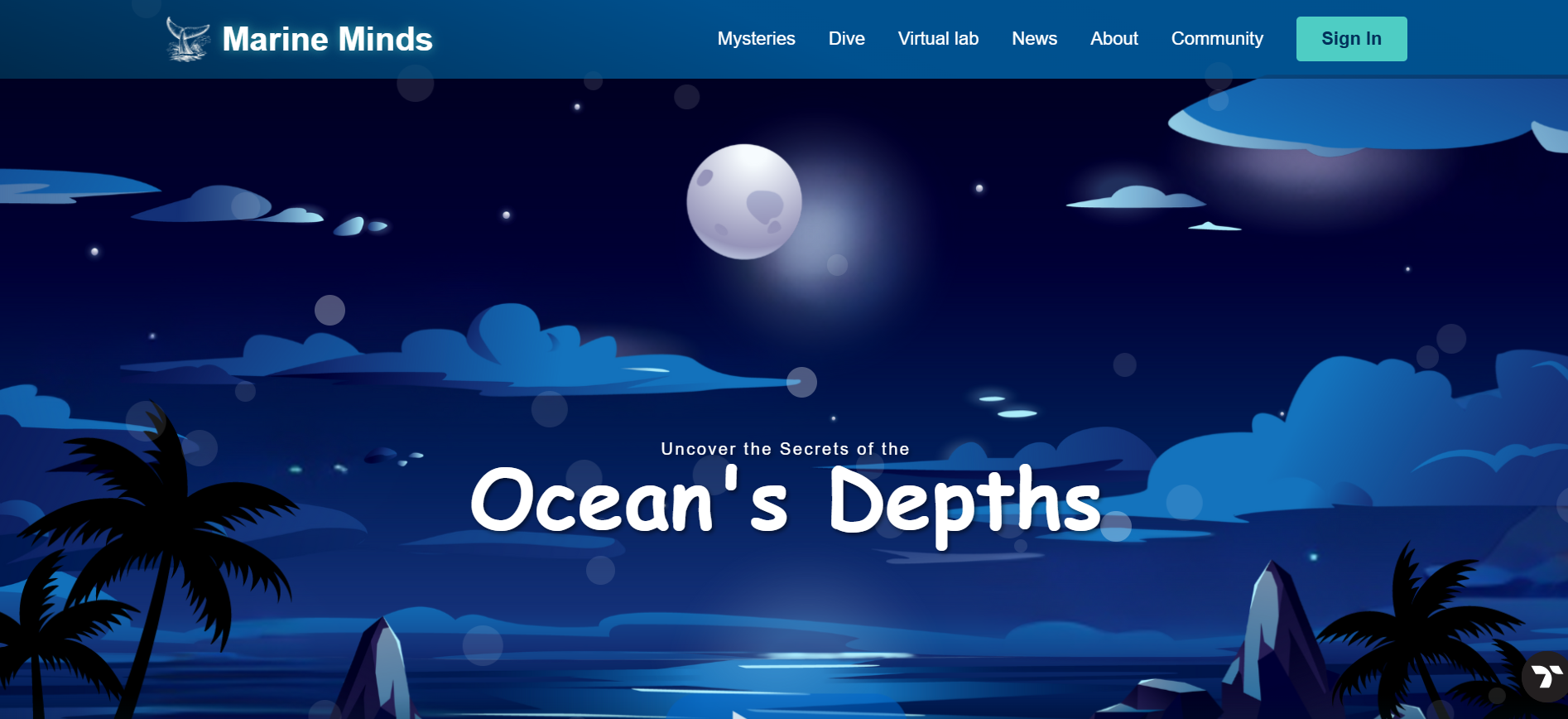
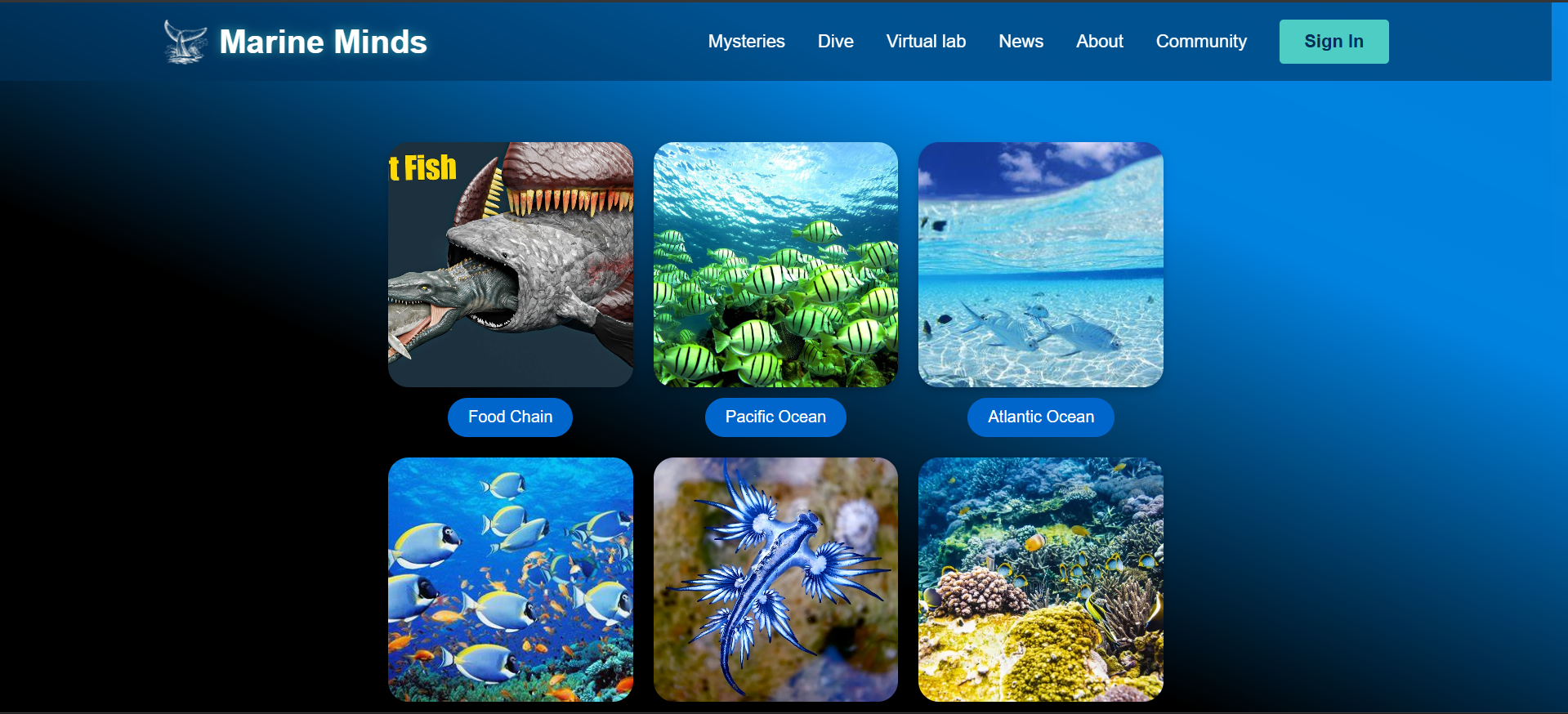
Marine Minds is an interactive online platform designed to explore and promote the wonders of the ocean. It combines education, entertainment, and engagement to inspire curiosity and action for ocean conservation. Here's what it offers:
- Immersive Game Experiences Three Unique Scenarios: Ship Scenario: Players rise through ship ranks by completing tasks and facing challenges, such as navigating storms or managing resources. Beach Scenario: Take on roles like fisherman, scuba diver, or lifeguard to tackle real-world-inspired challenges. Marine Biology Scenario: Explore underwater ecosystems, complete research missions, and solve ecological problems. Includes levels of varying difficulty, rewards, and customization options to keep players engaged while learning.
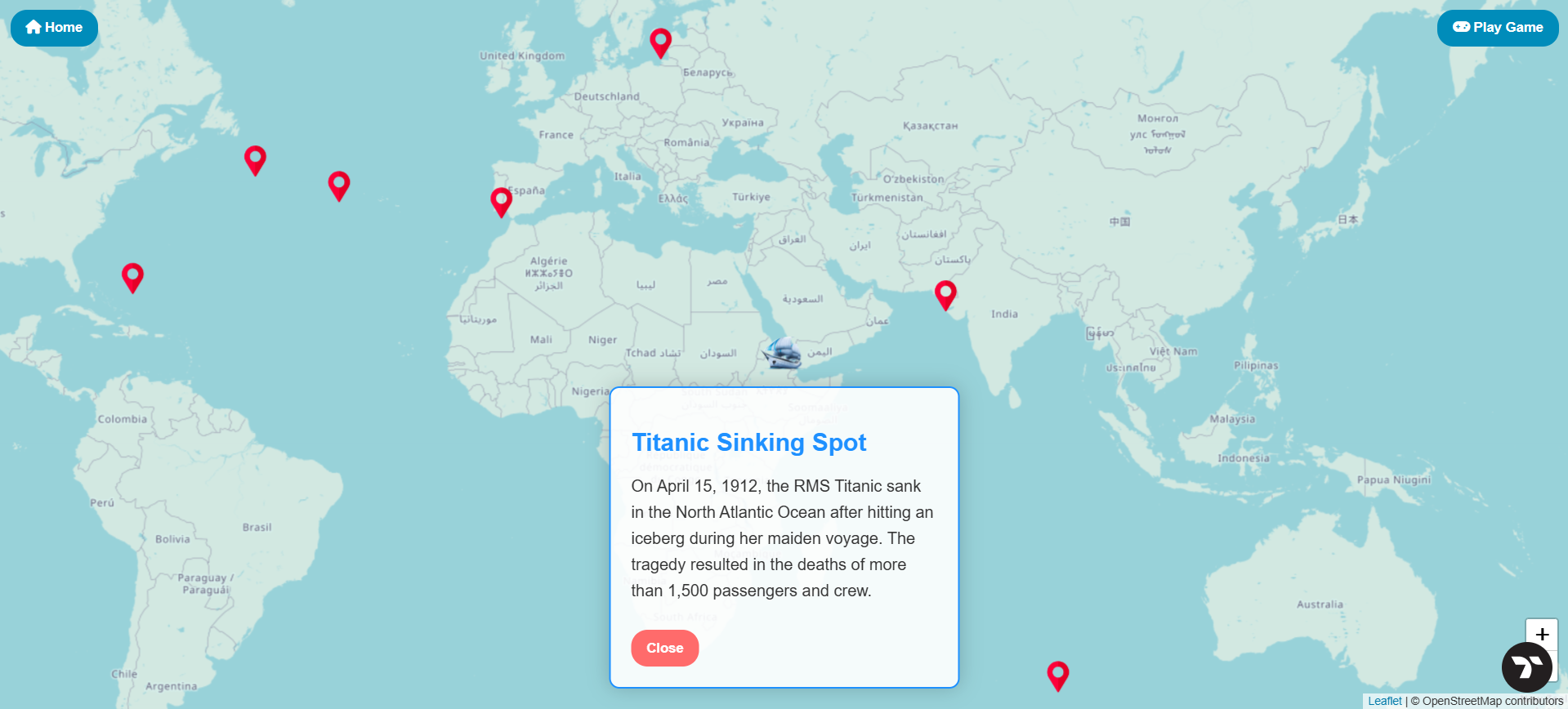
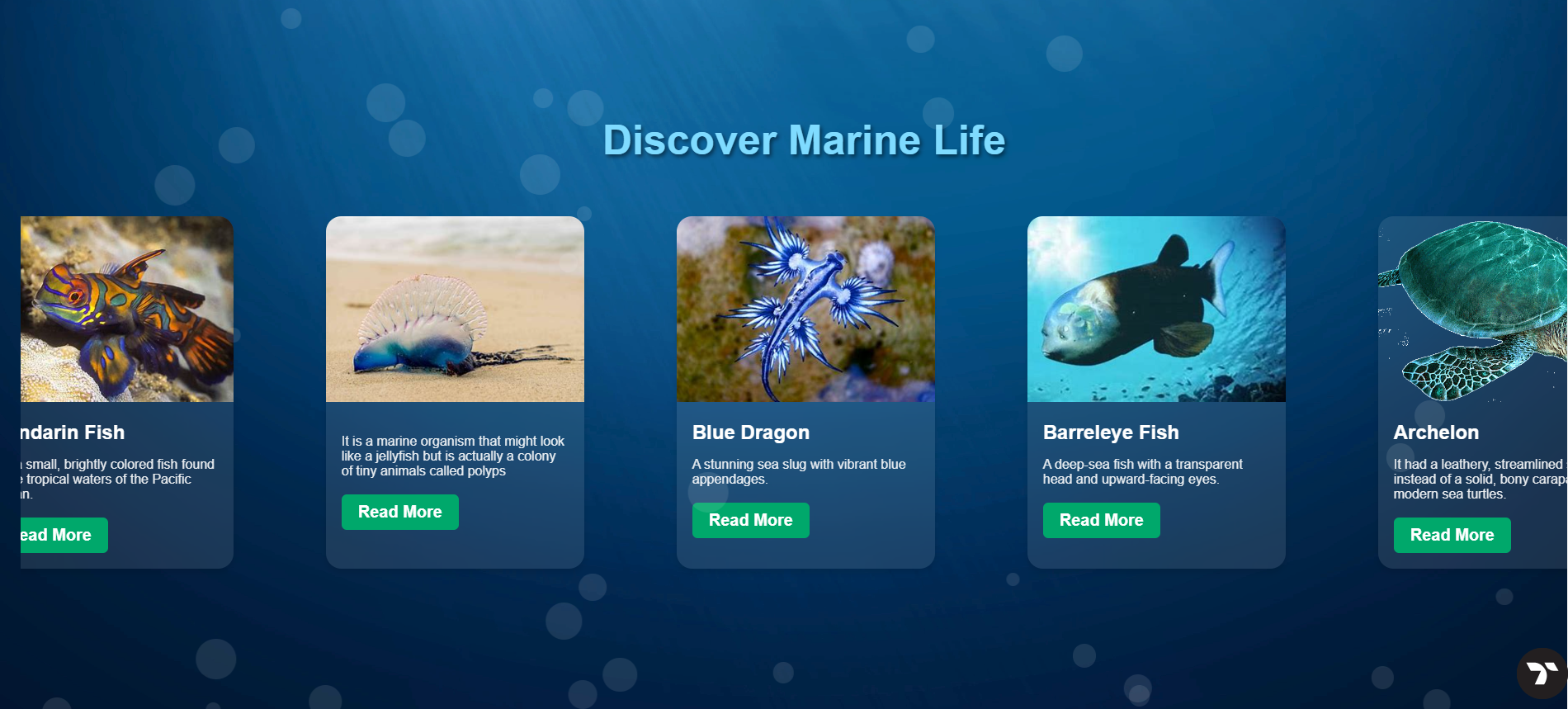
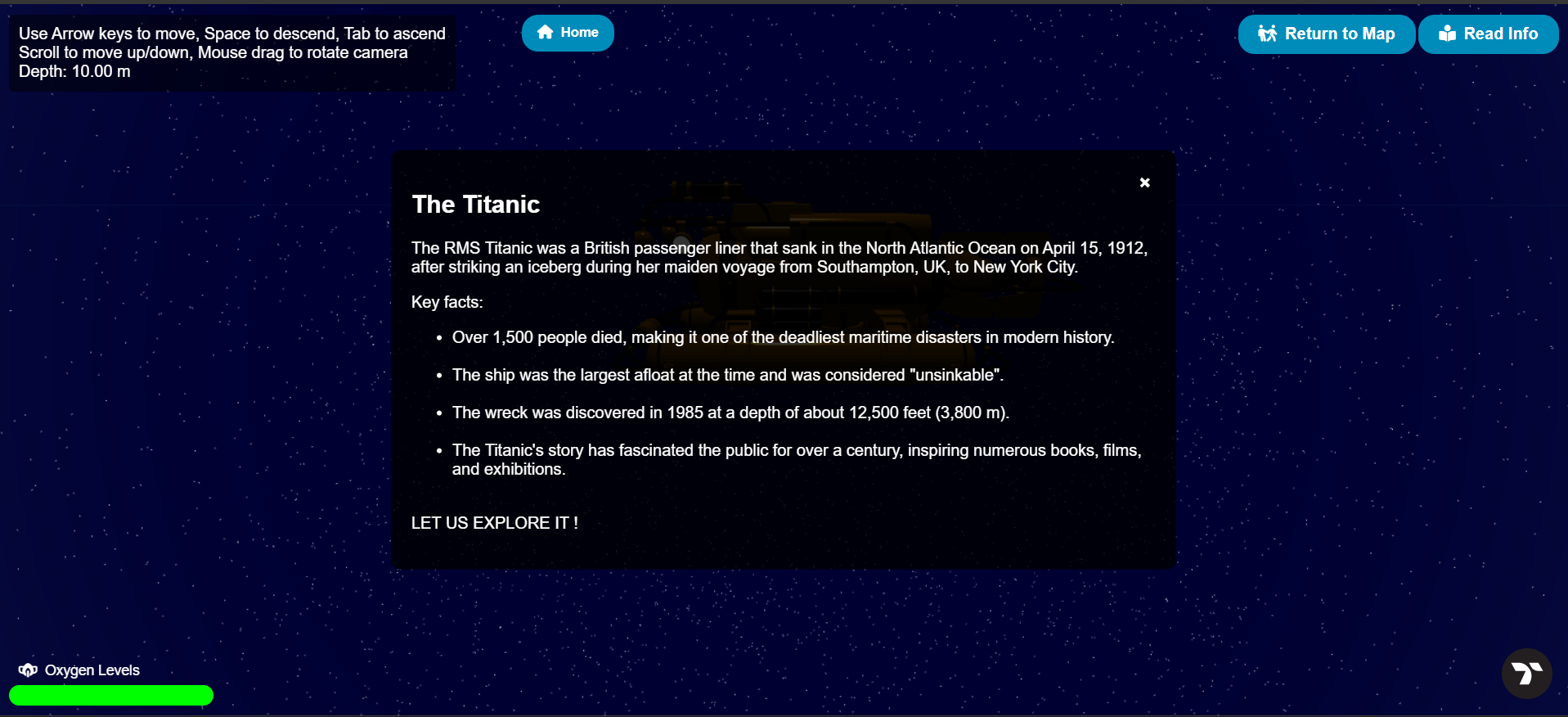
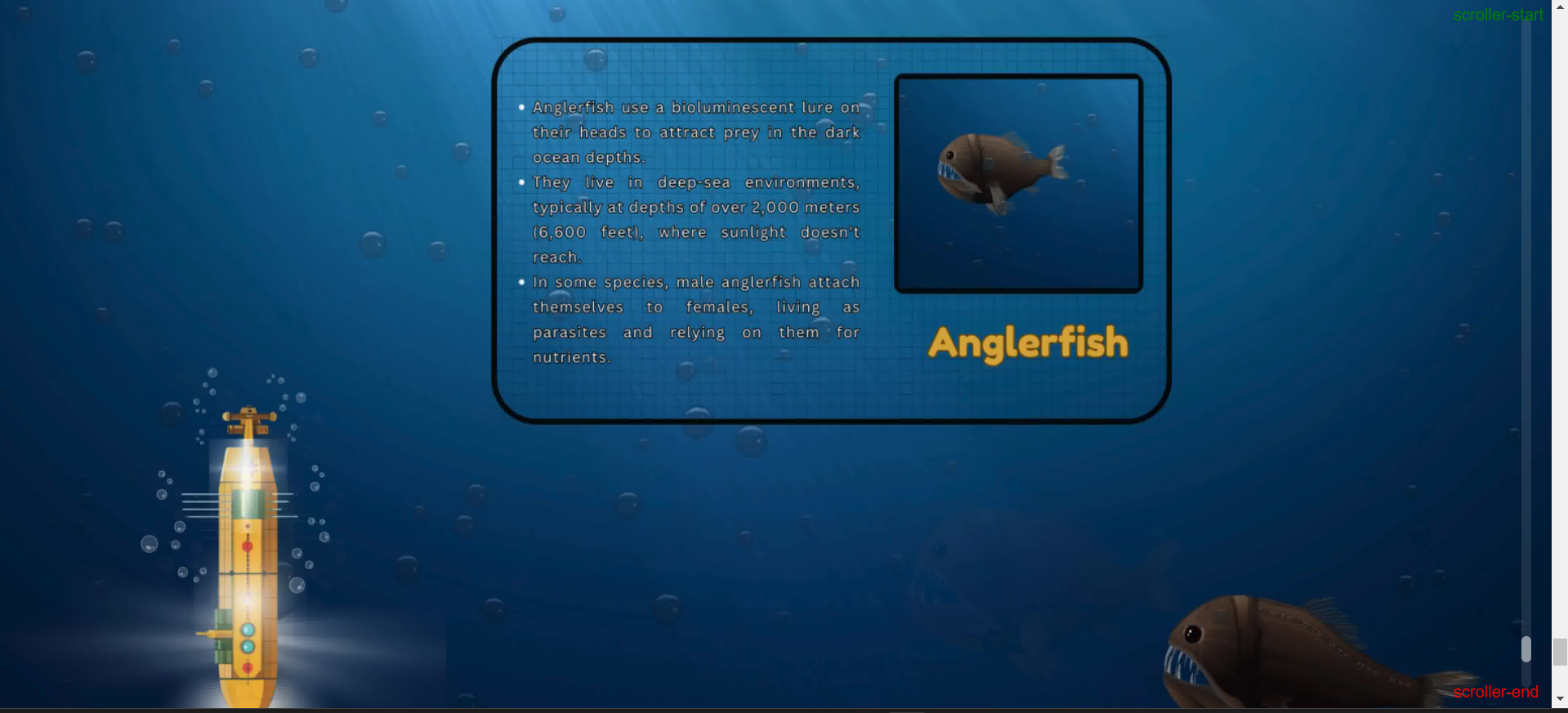
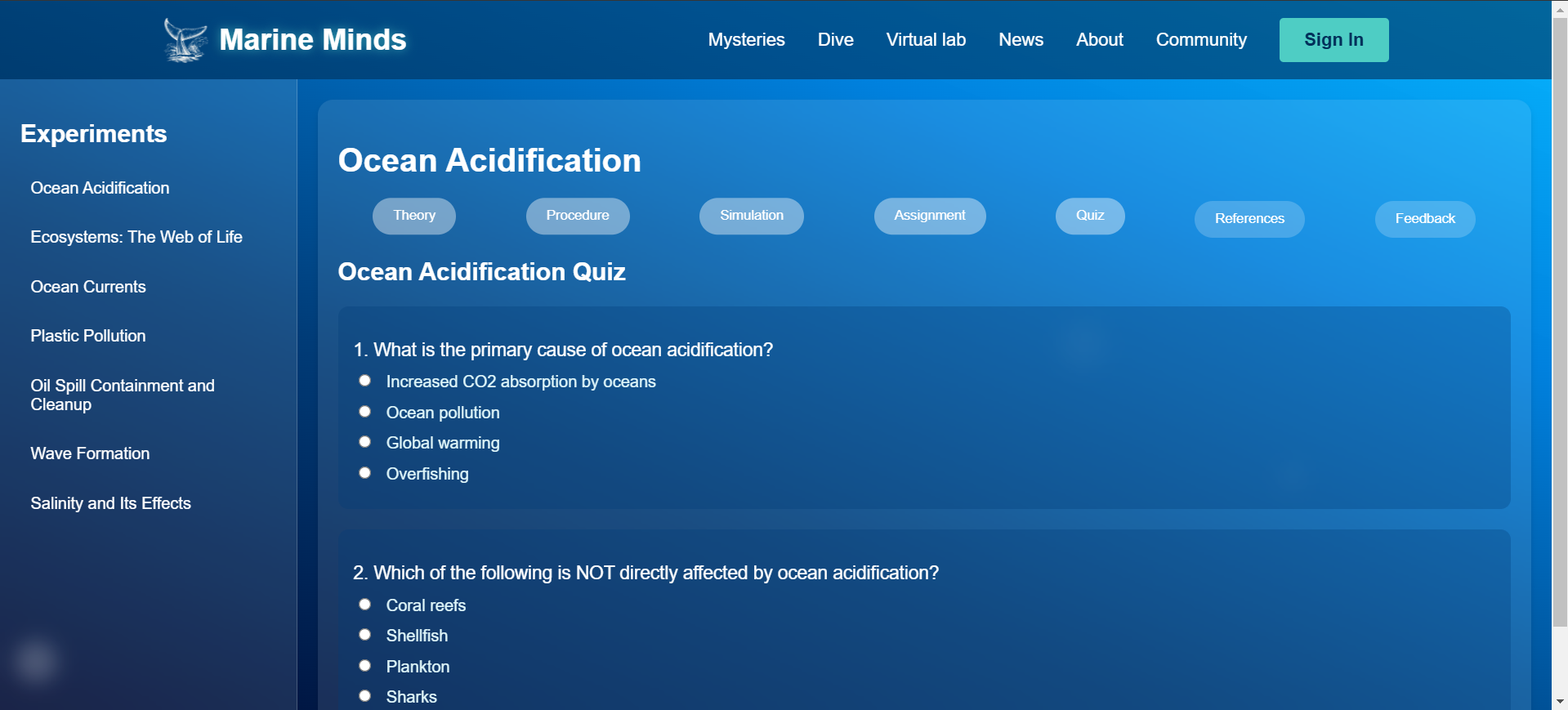
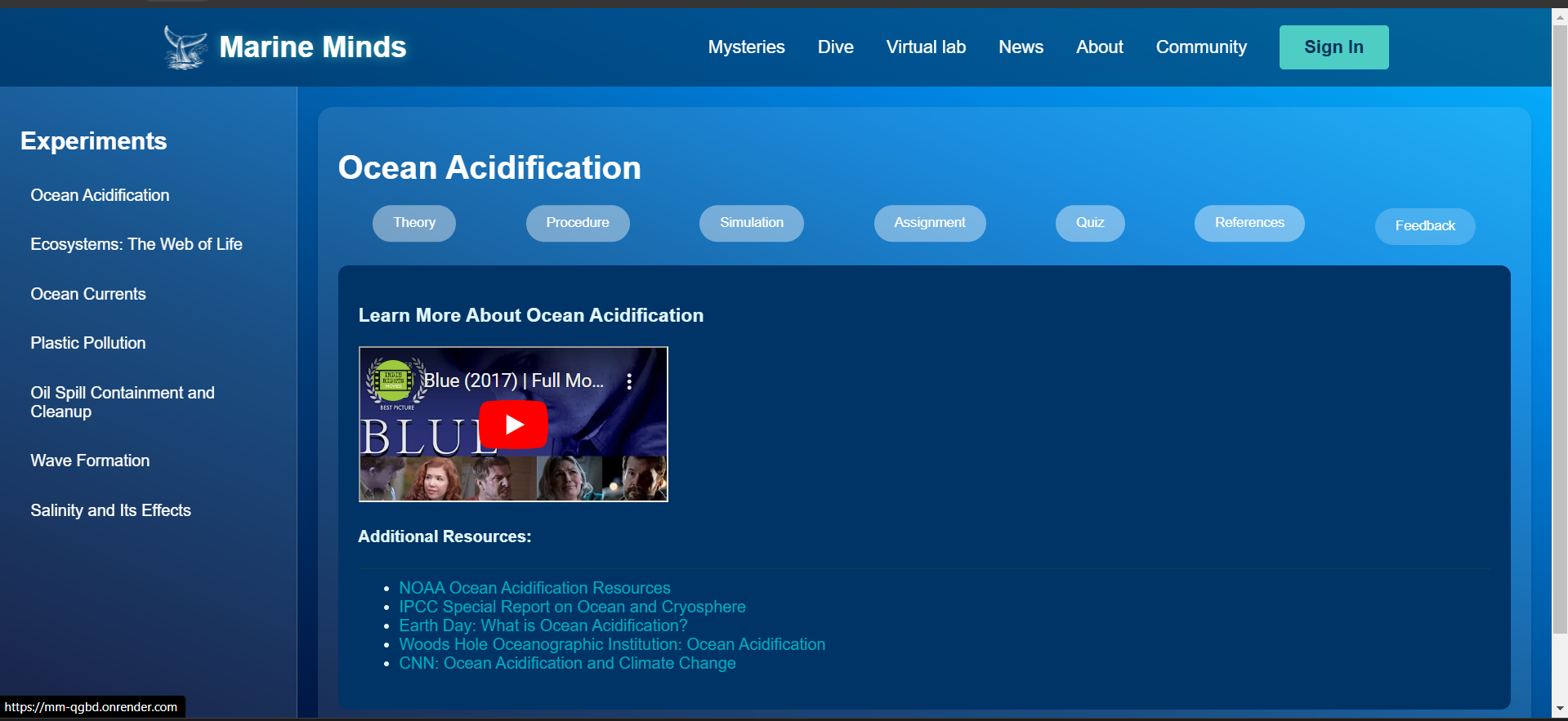
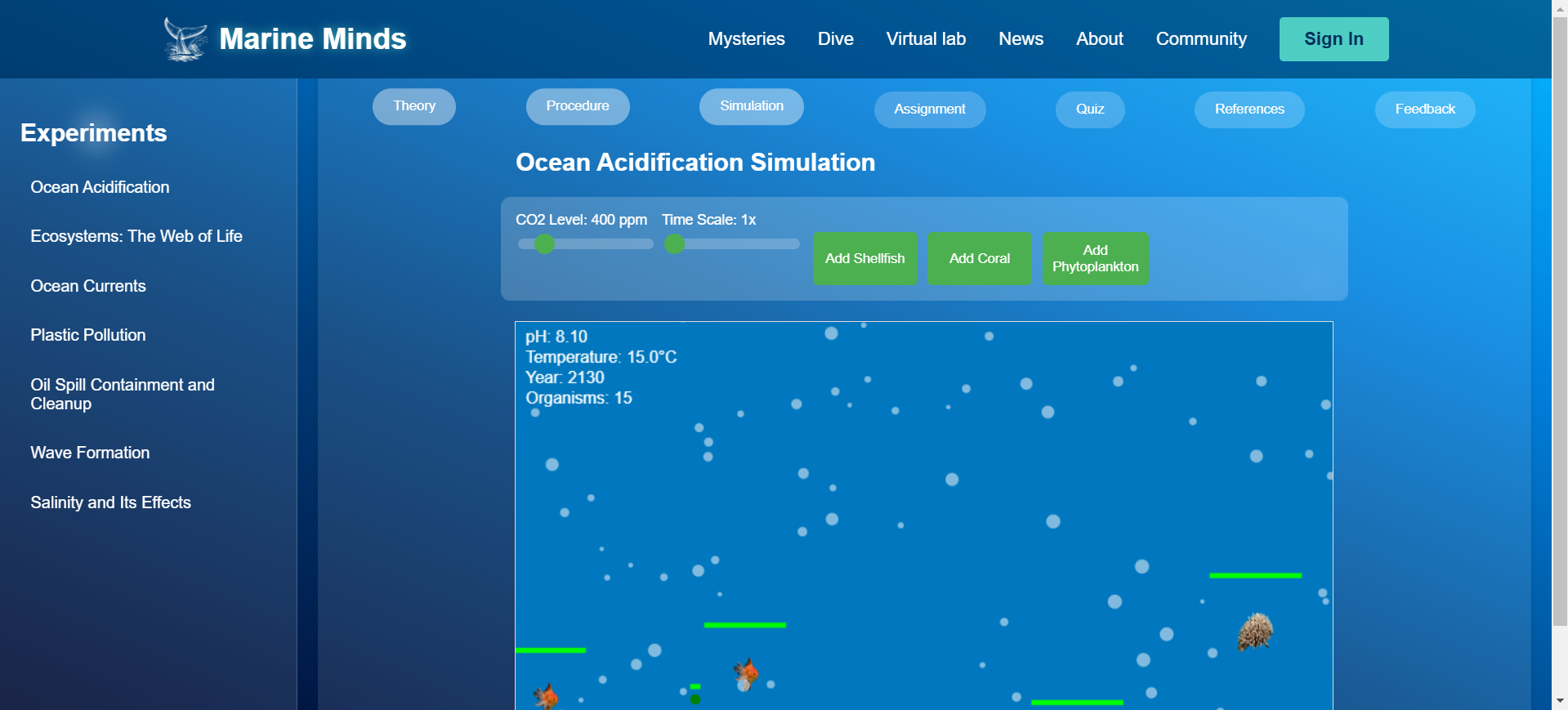
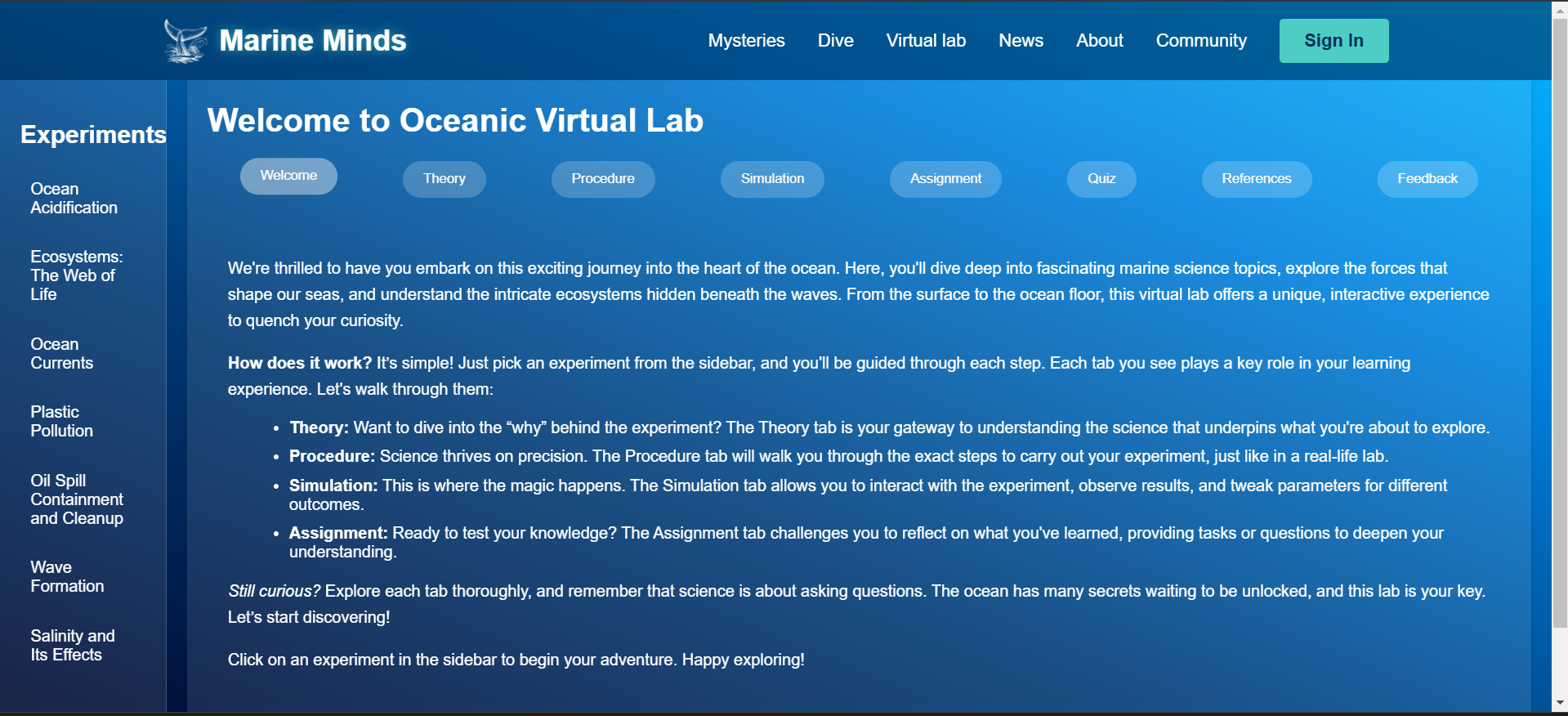
- Educational Features “Dive Into” Module: A scrolling feature that simulates a journey into the ocean's depths, showcasing marine biodiversity and habitats from coral reefs to deep-sea trenches. Ocean Mysteries Section: Explore fascinating phenomena like the Bermuda Triangle, bioluminescent creatures, and underwater volcanoes. Virtual Labs: Hands-on simulations of oceanic experiments, such as: Ocean acidification. Tsunami simulations. Plastic pollution and its impact on ecosystems. Salinity and buoyancy experiments.
- Community and Awareness A news section to stay updated on ocean-related discoveries and conservation efforts. Forums and discussions where users can share insights, ask questions, and collaborate on conservation initiatives.
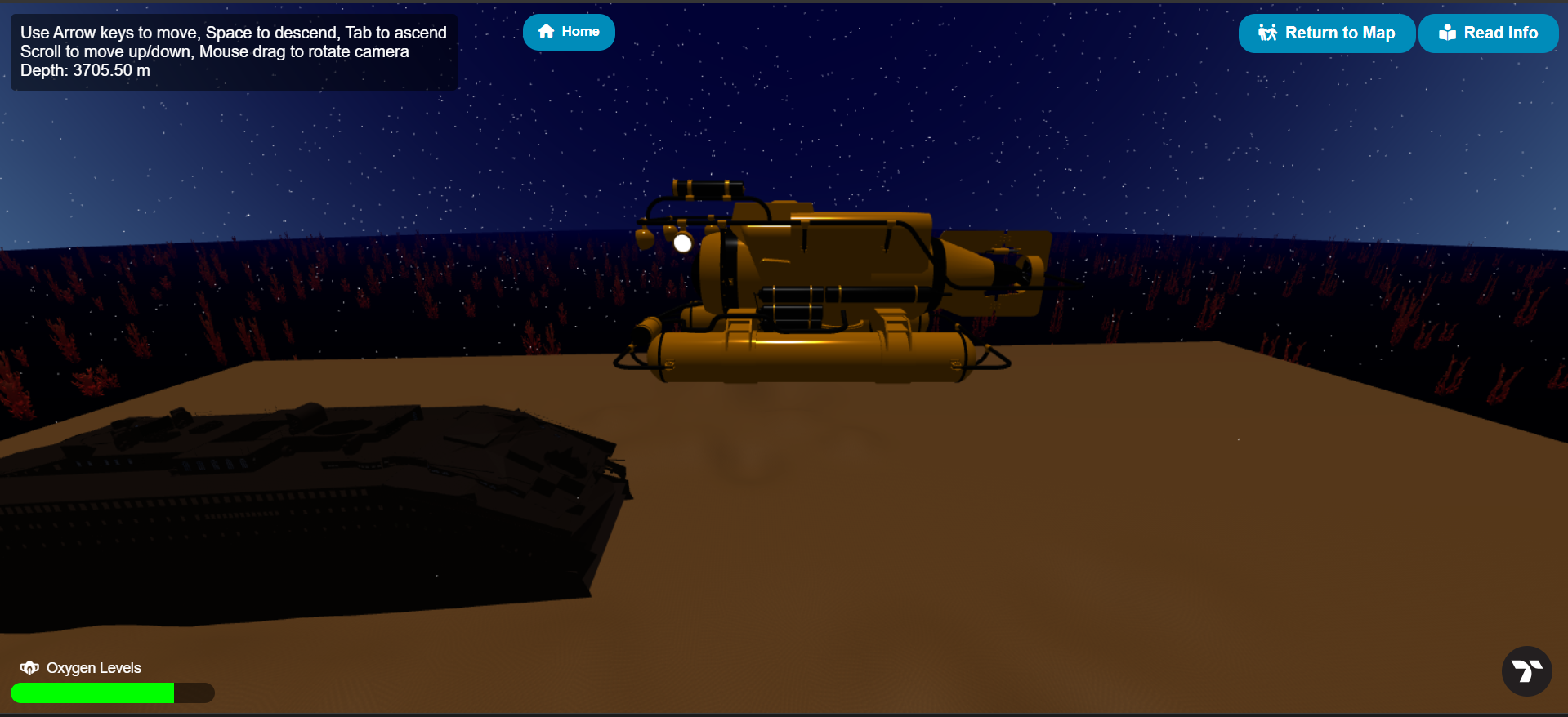
- Interactive and Inclusive Design Built with accessibility in mind, ensuring compatibility with various browsers and devices. Integrates visually stunning 3D environments powered by Unity and Three.js to immerse users in the beauty of marine life.
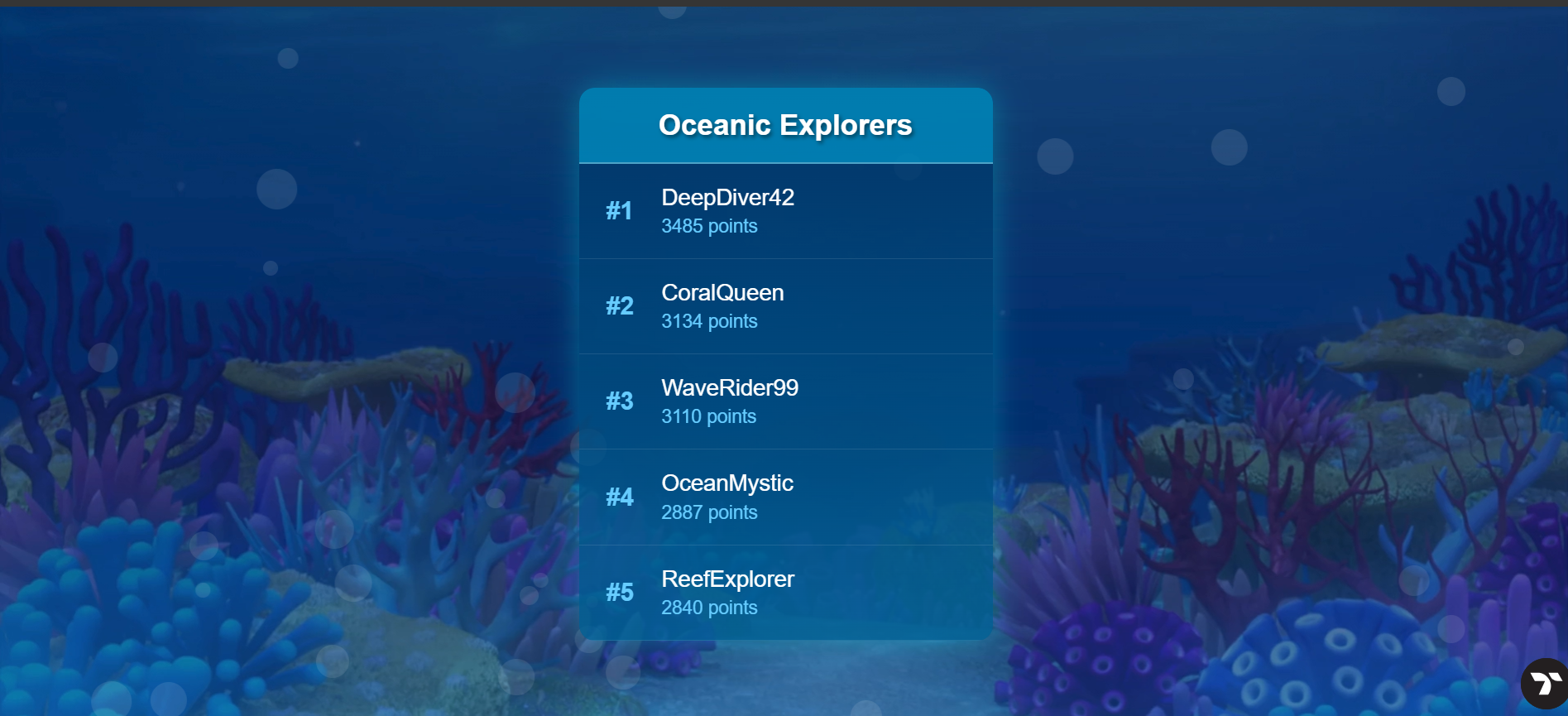
- Gamified Conservation Efforts Users earn rewards and achievements for completing missions that simulate real-world marine conservation tasks. Encourages proactive learning about the ocean’s critical role in sustaining life and the challenges it faces. Marine Minds is not just a game—it’s an interactive educational journey. By blending storytelling, gamification, and real-world relevance, it turns curiosity into understanding and connects users to the ocean in meaningful ways.
It serves as both a learning platform and a call to action, inspiring players to appreciate, explore, and protect the ocean while having fun.
How we built it
Creating Marine Minds was a multidisciplinary effort combining technology, creativity, and research. Here’s a breakdown of the development process:
- Conceptualization and Design Idea Formation: Inspired by the UN Ocean Decade, we outlined features that promote ocean exploration and conservation. Scenarios and Features: We mapped out the main game scenarios (Ship, Beach, and Marine Biology) and additional features like virtual labs and the “Dive Into” module. User-Centric Design: Wireframes and mockups were created to ensure an engaging, intuitive user experience. Visual Aesthetics: Opted for a low-poly art style to balance performance and a visually appealing environment.
- Game Development Tools Used: Unity Engine: For building immersive 3D game scenarios. Assets: Imported pre-designed assets like "Little Low Poly World - LITE SRP/URP" from the Unity Asset Store, alongside custom-built models. Game Mechanics: Scripts were implemented to handle: Player progression. Interactions in scenarios (e.g., fishing in the PFZ, saving swimmers as a lifeguard). Rewards and penalties based on task completion. Physics and Animation: Added realism to actions like swimming, fishing, and navigating through environments.
- Web Platform Development Tech Stack: Frontend: Built using React for a dynamic, responsive UI. Backend: Node.js and Express to manage server-side logic and API requests. Database: MongoDB to store user data, progress, and game details. 3D Integration: Three.js was used to incorporate stunning underwater environments and the “Dive Into” scrolling feature. Responsive Design: Ensured compatibility across devices and browsers.
- Educational Modules and Content Research: Explored topics like ocean acidification, the Bermuda Triangle, and marine biodiversity. Virtual Labs: Created interactive simulations to let users experiment with ocean science concepts. Ocean Mysteries: Curated captivating narratives to ignite curiosity about the ocean’s unexplored depths.
- Community Features Developed a news section using APIs to fetch real-time ocean-related updates. Added discussion forums to foster interaction and shared learning among users.
- Deployment and Testing Hosting: Frontend hosted on Netlify for seamless delivery. Backend deployed on Render for scalable server performance. Testing: Conducted usability testing to identify and fix performance issues. Fine-tuned gameplay mechanics and optimized load times for 3D assets.
- Collaboration and Teamwork Tools Used: GitHub: For version control and collaboration. Task Management: Distributed tasks using tools like Trello and Google Sheets. Team Roles: Game development, web development, and content creation were divided among team members based on expertise. Through this process, we combined cutting-edge technology with creative storytelling to bring Marine Minds to life, turning our vision into a fully functional, engaging platform for ocean exploration and conservation.
Challenges we ran into
Technical Challenges: Integrating large 3D models and maintaining performance across devices was a significant hurdle. Game Design: Balancing educational content with engaging gameplay required creative thinking and iterative testing. Time Management: Coordinating tasks among team members with different expertise while meeting deadlines was demanding. Data Representation: Simplifying complex marine science concepts for the general public without losing accuracy was a unique challenge.
Accomplishments that we're proud of
Creating Marine Minds was a journey filled with challenges and milestones. Here are some key accomplishments that stand out:
- Bringing the Ocean to Life We successfully developed immersive and educational gameplay scenarios:
Ship Scenario: Players advance through ship roles, tackling real-world-inspired tasks. Beach Scenario: Dynamic roles like lifeguards and fishermen, encouraging both fun and learning. Marine Biology Scenario: An engaging exploration of underwater ecosystems and challenges in marine science. These scenarios combine entertainment with meaningful learning about marine life and conservation.
- Innovative Educational Features We’re proud of how we turned complex ocean science concepts into accessible, interactive modules:
The “Dive Into” module vividly demonstrates ocean biodiversity by letting users virtually descend into the deep sea. Virtual Labs simulate critical experiments, such as ocean acidification and wave formation, fostering hands-on learning for all ages.
Combining Unity, Three.js, and MERN Stack Integrating Unity game development, Three.js 3D visuals, and the MERN stack into one cohesive platform was a major technical achievement. This required synchronizing diverse technologies to provide a seamless user experience.
Low-Poly Aesthetics with High Performance Creating a visually stunning platform without sacrificing performance was a challenge. Using a low-poly art style allowed us to deliver an appealing yet lightweight experience accessible on most devices.
Building a Community-Oriented Platform We developed features to inspire collaboration and action:
A news section for real-time updates about ocean conservation. Forums and discussions to enable knowledge-sharing and community building among ocean enthusiasts.
Real-World Relevance and Impact Aligning the platform with the United Nations Decade of Ocean Science mission, Marine Minds goes beyond being just a game—it’s a call to action, inspiring users to explore and protect the ocean.
Overcoming Challenges Despite initial setbacks—like optimizing 3D performance and ensuring device compatibility—we succeeded in delivering a polished, multi-faceted product. These hurdles helped us grow as developers, designers, and problem-solvers.
Inspiring Curiosity and Action The biggest accomplishment is transforming our passion for the ocean into a platform that connects users with its mysteries, fosters awareness, and inspires meaningful action.
Through Marine Minds, we’re proud to make learning about the ocean exciting and impactful for all.
What we learned
The journey of building Marine Minds taught us invaluable lessons:
Collaboration: Working as a team required effective communication, role distribution, and collective problem-solving. Game Development: We delved into Unity, Sandbox, and Three.js to create immersive underwater worlds, gaining hands-on experience with 3D modeling and game mechanics. Ocean Sciences: Researching marine biology, underwater ecosystems, and oceanic challenges deepened our appreciation for the ocean’s fragility and significance. Technology Stack: Leveraging the MERN stack, we strengthened our expertise in building responsive web platforms, integrating APIs, and deploying user-friendly interfaces. Public Awareness: We learned how to design educational content that informs and engages diverse audiences, blending facts with interactive elements for maximum impact.
What's next for Marine Minds
Our journey with Marine Minds is far from over! We’re excited about expanding and enhancing the platform to make an even greater impact. Here’s what we envision for the future:
- Expanding Gameplay and Scenarios 🎮 New Scenarios: Ocean Cleanup Missions: Introduce challenges focused on removing plastic and other pollutants. Climate Change Impact Simulation: Allow players to witness and address the effects of climate change on marine ecosystems. Advanced Mechanics: Enhanced AI for more realistic interactions with marine creatures. Multiplayer modes for collaborative gameplay.
- Integrating Real-World Data Collaborate with oceanographic organizations to incorporate real-time data into the platform: Sea temperature, coral bleaching reports, and more. Add live ocean news updates to keep users informed about global marine conservation efforts.
- Strengthening Educational Features Advanced Virtual Labs: Add more experiments, such as: Oil spill cleanup strategies. Marine food web balance simulations. Interactive Courses: Partner with educators to offer guided lessons on marine science and conservation.
- Community Growth and Engagement Social Features: Create user profiles for sharing progress and achievements. Add forums for discussions on ocean-related topics. Gamified Awareness Campaigns: Host challenges where players earn rewards for sharing conservation tips or completing real-world actions, like participating in beach cleanups.
- Accessibility and Inclusivity Develop a mobile-friendly version of the platform for greater reach. Translate content into multiple languages to engage diverse global audiences.
- Collaborations and Partnerships Work with: Nonprofits and NGOs focused on marine conservation. Researchers to incorporate cutting-edge findings. Educational institutions to promote ocean literacy among students.
- Business Model Expansion Eco-Friendly Merch Store: Offer merchandise where proceeds support ocean conservation efforts. Corporate Partnerships: Collaborate with brands that promote sustainability to fund platform development.
- Long-Term Vision Position Marine Minds as a global hub for ocean education, conservation, and exploration. Use technology to bridge the gap between curiosity and action, empowering users to become proactive ocean stewards. By constantly innovating and staying true to our mission, Marine Minds will continue to inspire and connect people with the beauty and importance of the ocean.
Built With
- c#
- canva
- canvas.js
- css3
- d3.js
- express.js
- framer
- gsap
- html5
- javascript
- mongodb
- node.js
- p5.js
- sandbox
- three.js
- unity


Log in or sign up for Devpost to join the conversation.