-
-
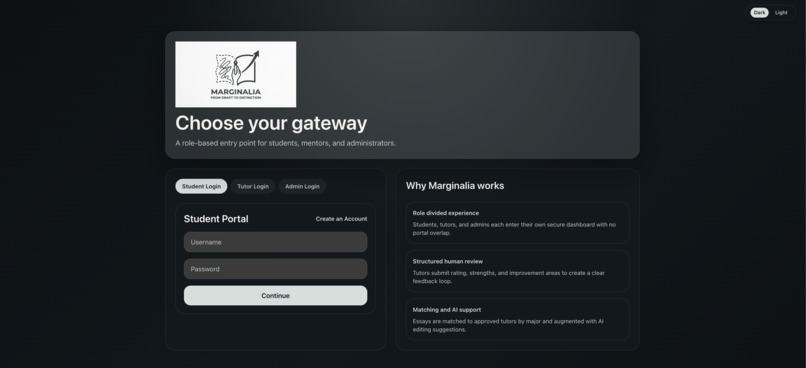
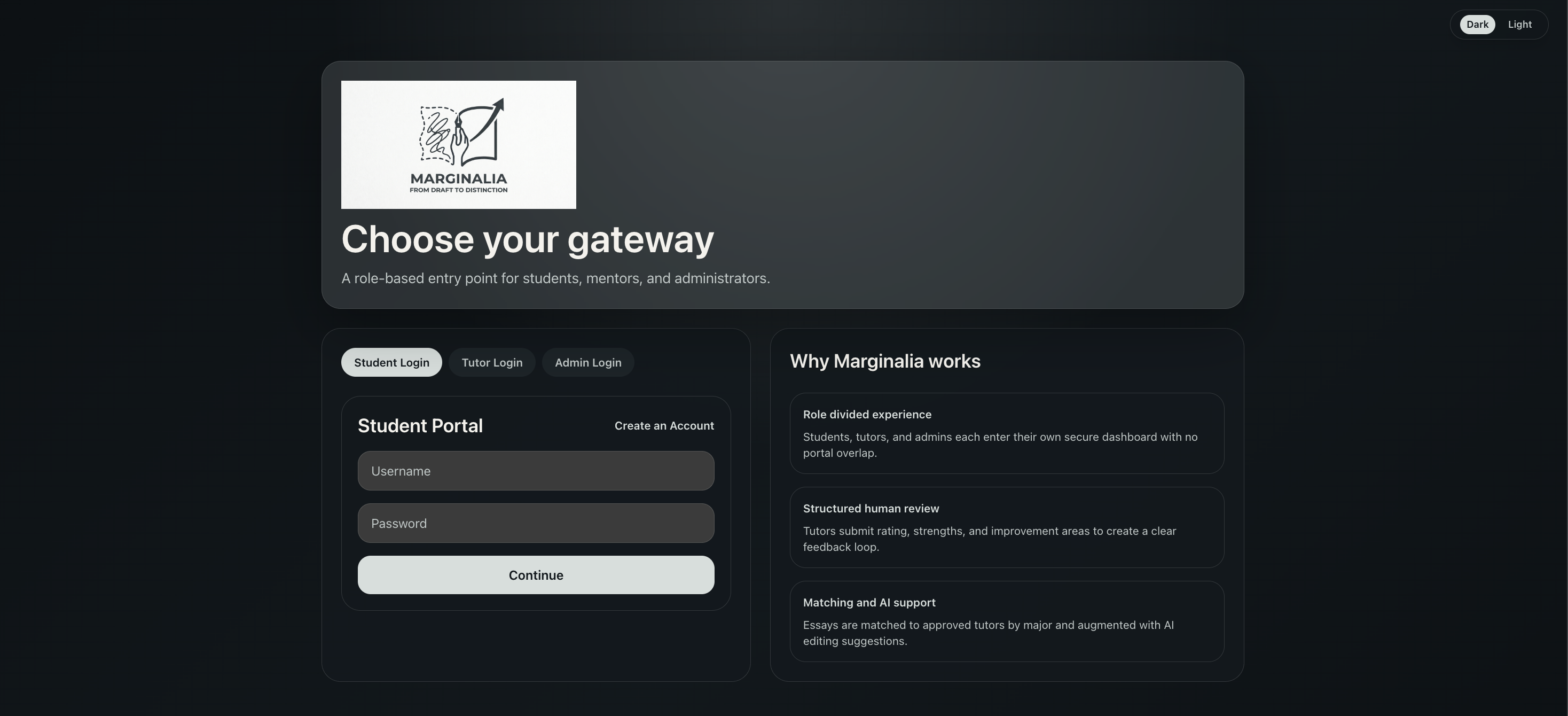
A streamlined, clutter-free interface with dedicated portals for students, tutors, and admins.
-

The dedicated team behind this solution. Working across time zones, everyone put their full energy into bringing this project to life.

As students, we've all been in the same situation, finishing essays and wanting feedback before submitting them, only to realize our teacher has dozens of papers to grade, and our friends usually reply with "Looks good!" We felt that there had to be a better way to make peer feedback quicker, better and more useful. That's where the idea for Marginalia came from. We wanted to create a space where students could help each other improve their writing through short, structured, and anonymous reviews without the process feeling overwhelming.
Marginalia lets students receive fast feedback on their essays, one paragraph at a time. Instead of sharing an entire document and waiting days for comments, students submit a single paragraph to a review feed. Other students review it by rating one aspect of the writing, leaving a short critique, and suggesting one improvement. Breaking reviews into smaller tasks makes them faster to complete while giving writers feedback that's actually useful. At the same time, it helps reduce the amount of time teachers spend reviewing early drafts.
We built Marginalia in Visual Studio Code using modern web technologies, while using AI-assisted coding tools to troubleshoot bugs and experiment with different ideas more efficiently. Our biggest focus wasn't adding lots of features; it was making the experience feel simple and intuitive. We spent most of our time refining the review flow so students could easily submit paragraphs, review others, and navigate the platform without any confusion.
One of the biggest challenges was keeping the review process short without making the feedback feel shallow. We wanted students to give meaningful comments, but we also knew they wouldn't spend ten minutes reviewing every paragraph. Finding that balance took a lot of trial and error. We also made several changes to the interface to make everything feel clean, straightforward, and easy to use while keeping the anonymous review system smooth.
We're proud that we took a problem we've personally experienced and turned it into something practical. Instead of building another document editor, we rethought how feedback itself could work. The paragraph-by-paragraph review system makes giving feedback feel less intimidating, and we're happy with how simple and approachable the overall experience turned out. Seeing the idea come together into a working prototype was one of our biggest achievements.
This project taught us that building a good product isn't just about writing code; it's about understanding how people actually use it. We learned that even small design decisions can have a big impact on the user experience. Most importantly, we realized that breaking a large task into smaller, focused interactions encourages more people to participate and results in better feedback for everyone.
This is just the beginning. We'd love to expand Marginalia into a platform that schools and universities can use every day. Some of the features we'd like to add include classroom spaces, teacher dashboards, progress tracking, customizable review categories, and integrations with learning platforms. Our long term goal is to make quality feedback easier to access while giving teachers a tool that saves time and helps students become stronger, more confident writers.

Log in or sign up for Devpost to join the conversation.