-
-
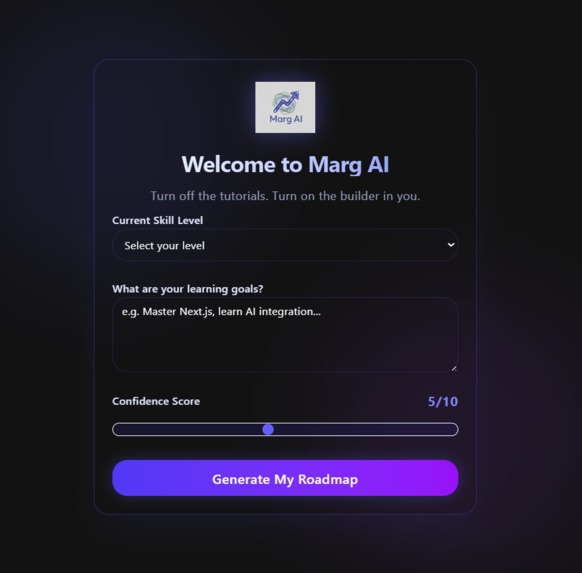
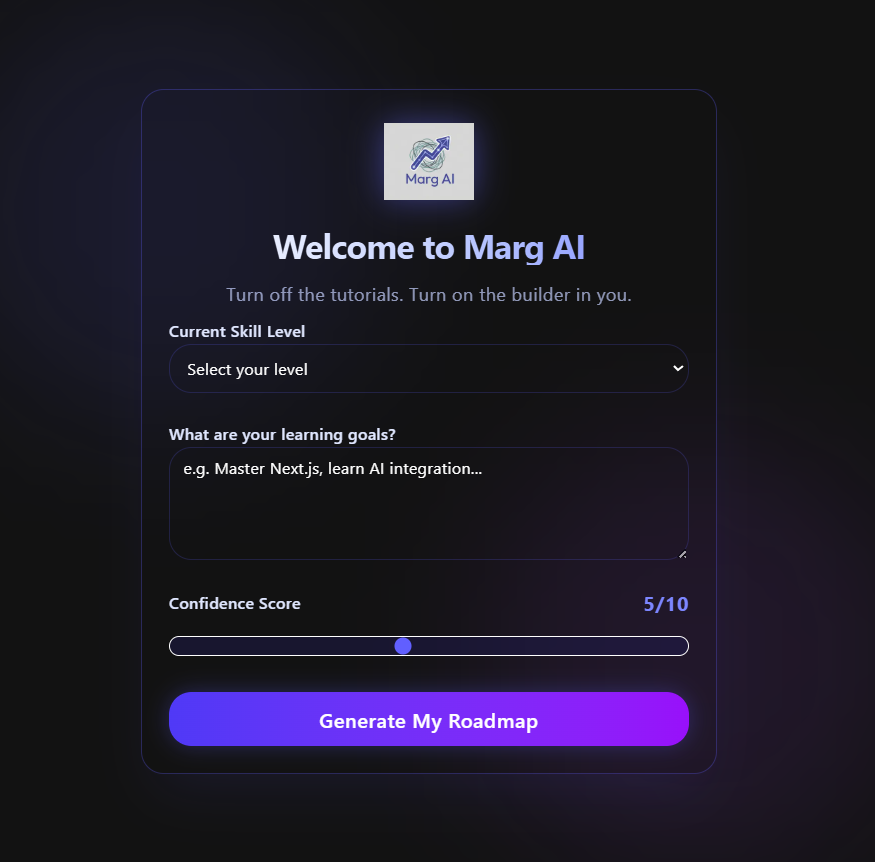
Onboarding Page
-
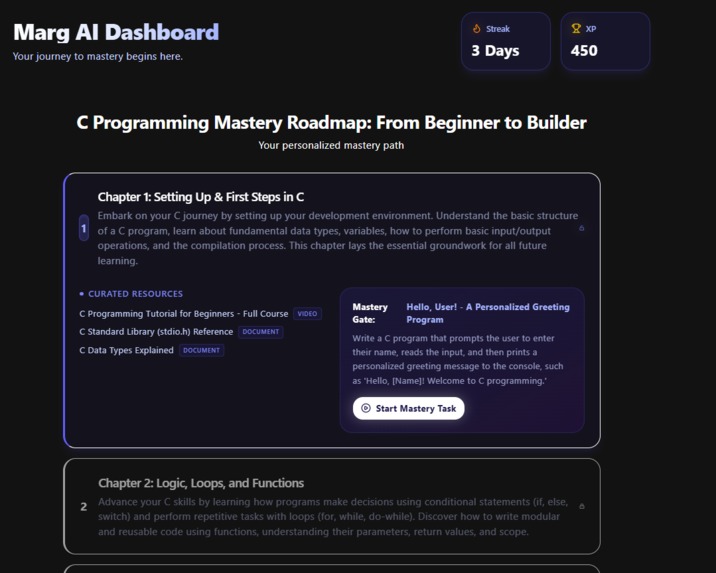
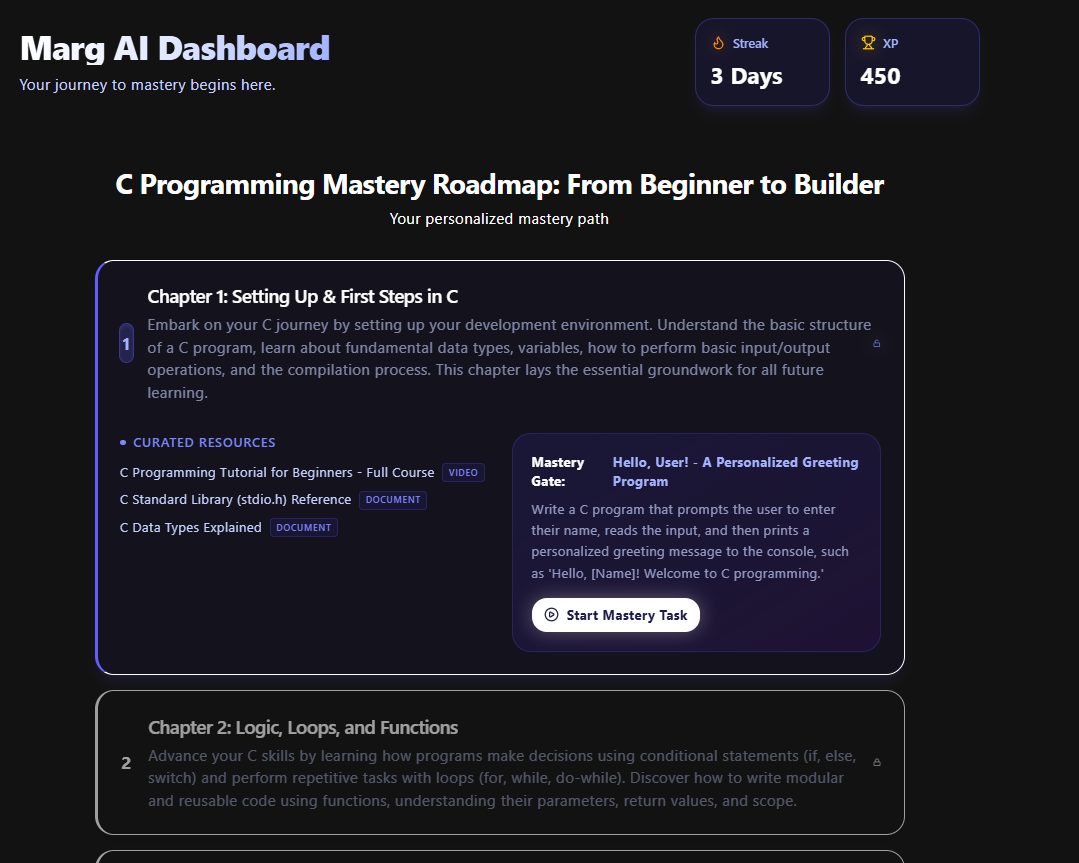
Generated Roadmap For learning
-
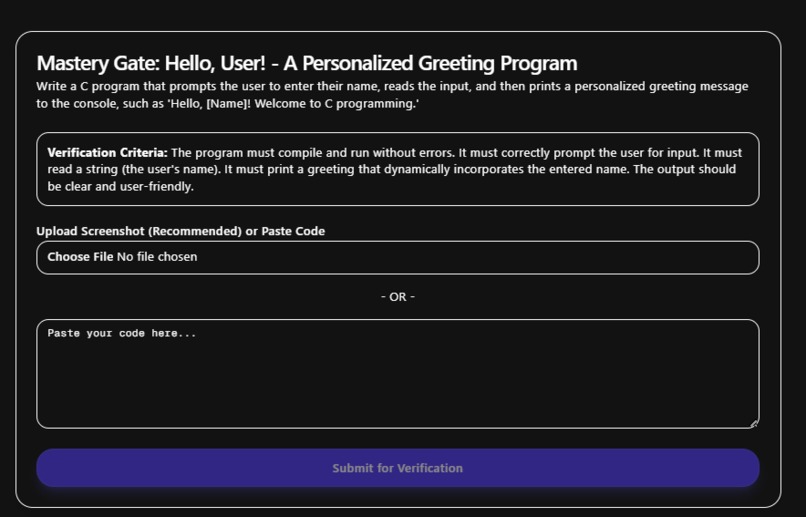
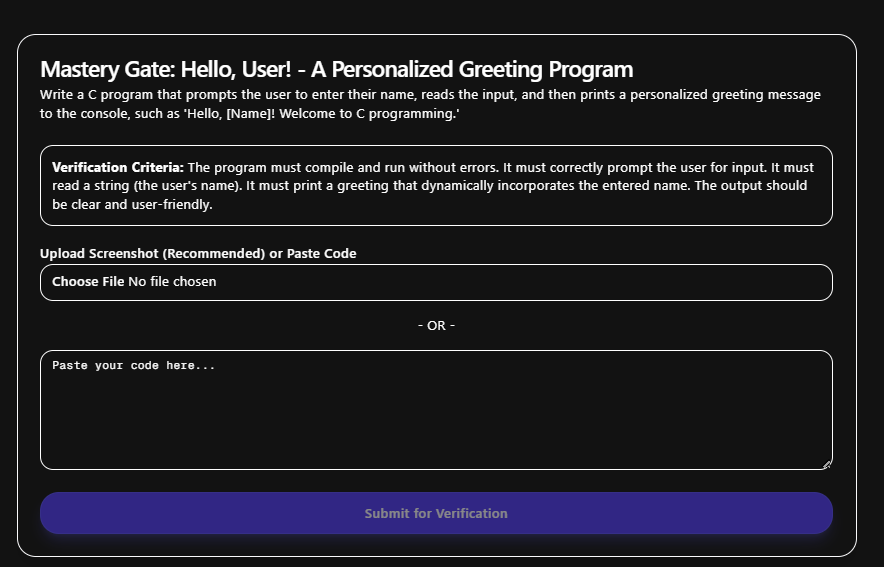
Window For task Submission .
Inspiration
I’ve spent years trying to learn complex skills — programming, ML, research, systems — and every single time I hit the same wall: too many resources, zero direction.
You search for “learn Python” or “learn ML” and suddenly you’re drowning in:
- 100 YouTube playlists
- 50 blogs saying different things
- Courses that assume you already know half the topic
- AI tools that dump generic advice without context
The problem wasn’t lack of motivation — it was lack of a clear path.
Most learning platforms either:
- Give static roadmaps that don’t adapt to who you are
- Or use AI that generates vague, motivational fluff
I wanted something different — a system that forces clarity, adapts to my level, and makes learning unavoidable through action.
That frustration is what led to Marg AI — Marg meaning “path”.
What it does
Marg AI is an AI-powered learning roadmap generator that turns confusion into a clear, actionable path.
Instead of asking “What should I learn?”, Marg AI asks:
- What do you already know?
- How confident are you?
- What’s your background?
- What’s your goal?
- How much time can you actually give?
Based on this, Marg AI:
- Generates a personalized, step-by-step roadmap
- Curates specific resources instead of dumping links
- Breaks learning into checkpoints with timelines
- Locks progress behind proof-of-learning tasks
To move forward, users must either:
- Build something small, or
- Explain what they learned in their own words
This prevents copy-paste learning and turns Marg AI into a learning-by-building system, not just another AI wrapper.
How we built it
Marg AI was built as a solo project with speed, experimentation, and iteration in mind.
Tech stack (current prototype):
- Next.js for the frontend
- Google Antigravity for rapid UI and workflow experimentation
- Gemini API for reasoning-based roadmap generation
- Supabase (planned / partially integrated) for user data and progress tracking
The system works by:
- Collecting structured user inputs instead of vague prompts
- Feeding them into a constrained AI reasoning layer
- Generating specific, scoped roadmaps (not generic advice)
- Attaching tasks that require real effort before progression
The architecture is intentionally simple so it can evolve based on real user feedback, not assumptions.
Challenges we ran into
This project wasn’t just about building — it was about designing learning itself, which brought several challenges:
Preventing generic AI responses
AI naturally wants to generalize. I had to carefully constrain prompts and logic to enforce specificity.Designing tasks that prove understanding
Many learning tools fail because users can cheat. Designing tasks that require thinking — not copying — was hard.Balancing structure vs freedom
Too much rigidity feels restrictive. Too much freedom recreates chaos. Finding that balance took iteration.Building fast without overengineering
The goal was learning and validation, not perfection.
These challenges shaped Marg AI into something more intentional and grounded.
Accomplishments that we’re proud of
- Built a working end-to-end prototype under time pressure
- Designed a system that prioritizes action over consumption
- Transformed a personal learning pain into a real product
- Avoided building “just another AI chatbot”
- Created something I would genuinely use daily
Most importantly, Marg AI represents clarity over noise — which is rare today.
What we learned
This project taught me far more than just tech:
- Learning systems fail when they don’t respect human psychology
- AI is powerful, but only when properly constrained
- Building fast teaches more than endless planning
- Real products are born from personal frustration
- Shipping something imperfect beats thinking endlessly
I also learned how frontend, backend logic, AI reasoning, and product thinking connect — not as isolated skills, but as a system.
What’s next for Marg AI
Marg AI is just getting started.
Planned next steps:
- Add time-based roadmaps with realistic pacing
- Improve task evaluation (self-reflection + lightweight scoring)
- Collect real user feedback and iterate fast
- Narrow down to specific niches (students, developers, researchers)
- Potentially open-source parts of the roadmap logic
The long-term vision is simple:
Help people escape tutorial hell and actually move forward.
Built With
- antigravity
- css
- gemini
- next.js
- node.js
- postgresql
- react
- sql
- supabase
- tailwind
- typescript
- vercel


Log in or sign up for Devpost to join the conversation.