-
-
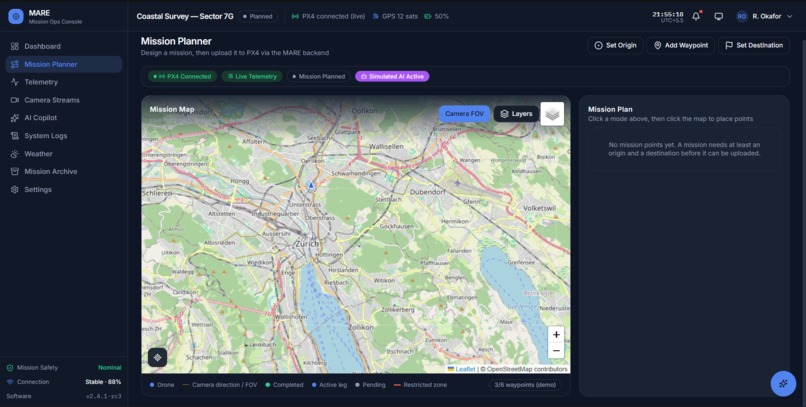
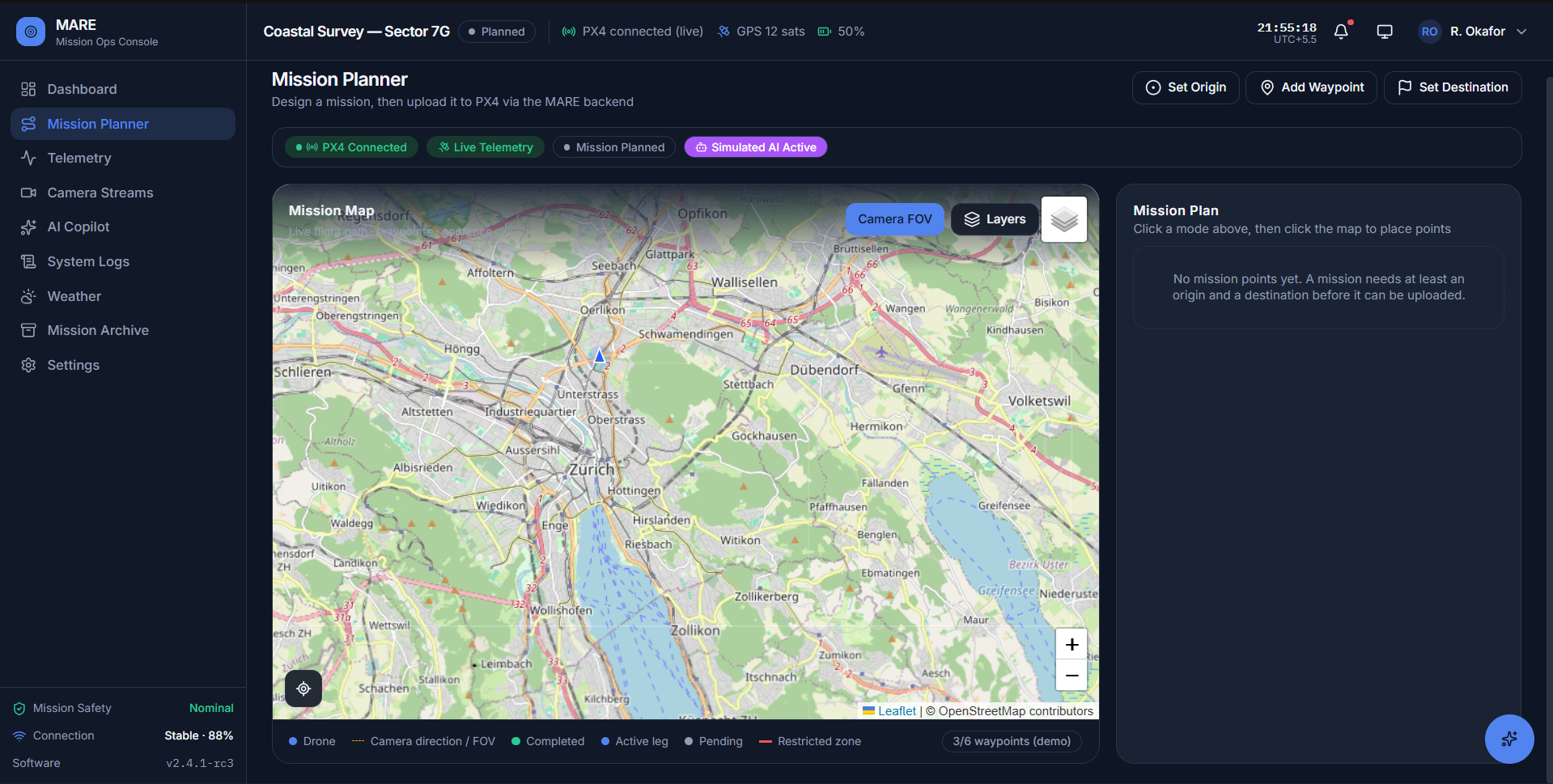
Mission Planner the interactive mission map, waypoint planning interface, PX4 connection status, simulated AI-assisted mission capabilities.
-
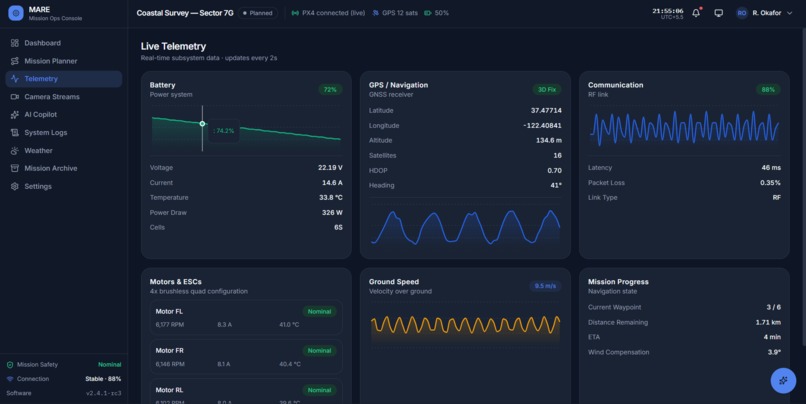
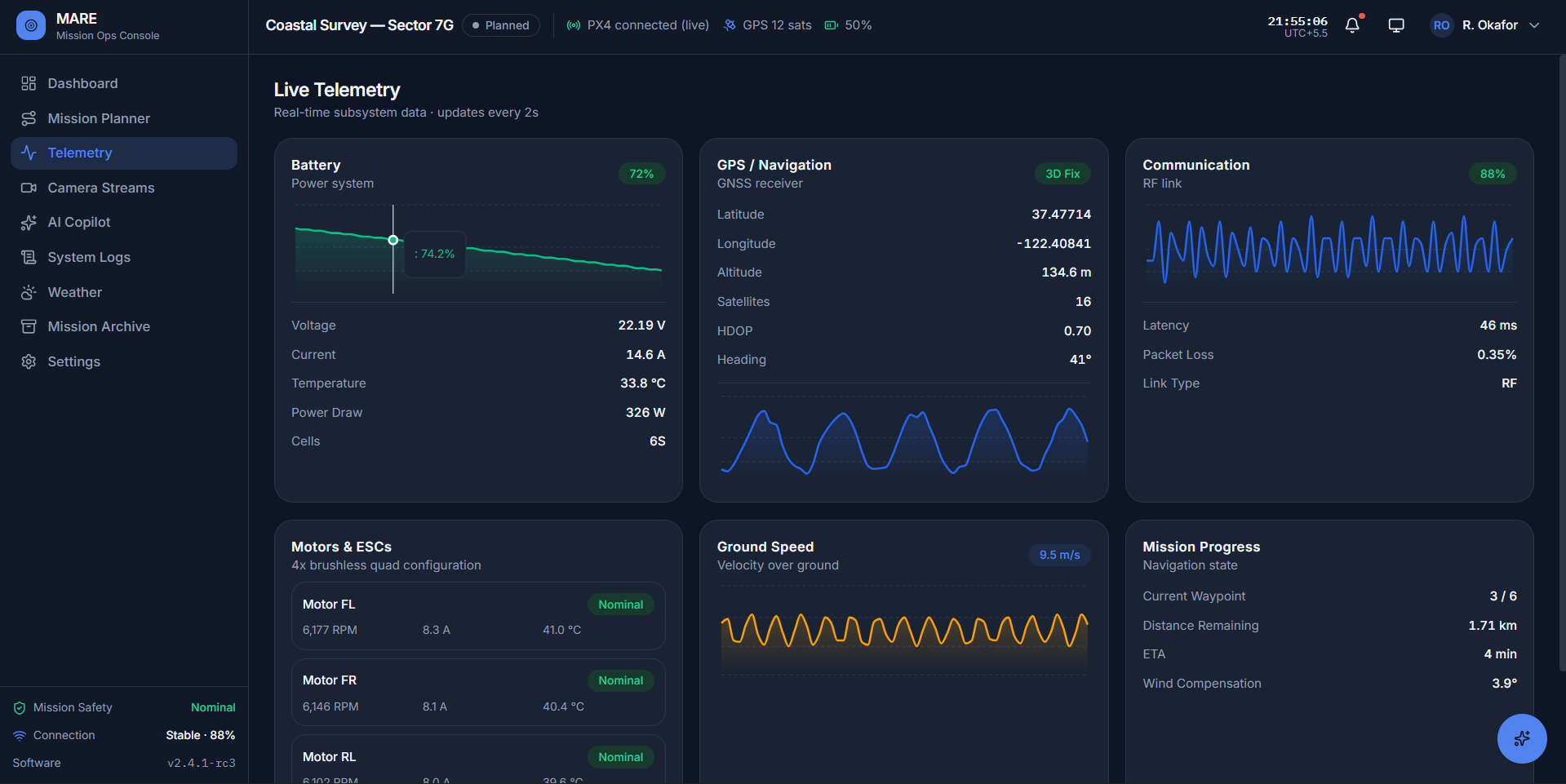
MARE Live Telemetry dashboard displaying real-time battery, GPS, communication, motor, ground-speed, and mission-progress data.
-
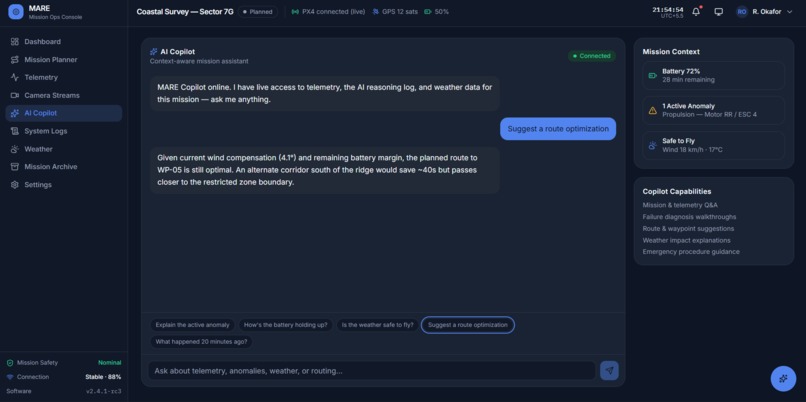
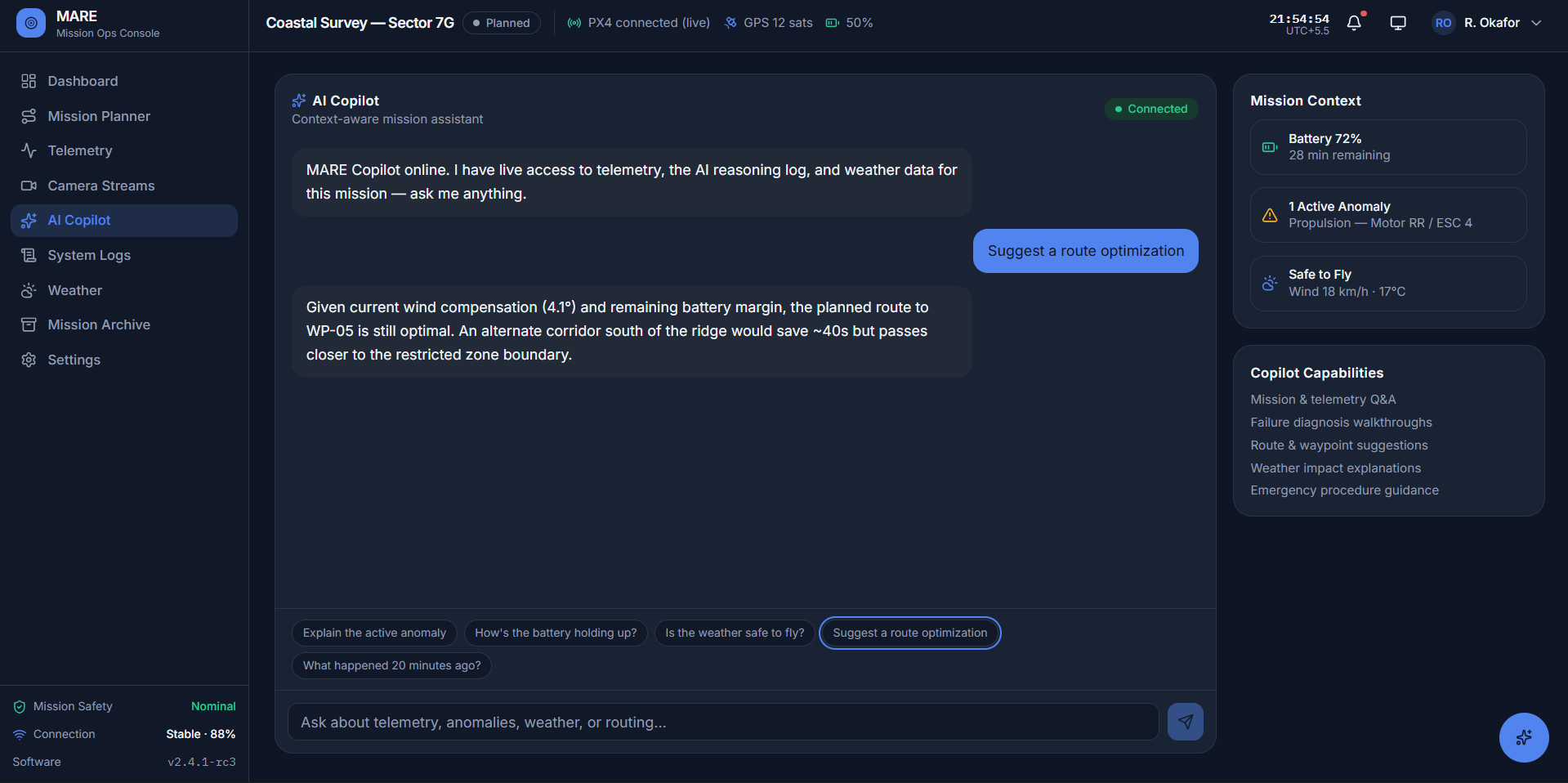
MARE AI Copilot providing context-aware mission assistance using live telemetry, anomaly information, weather conditions, and route data.
-
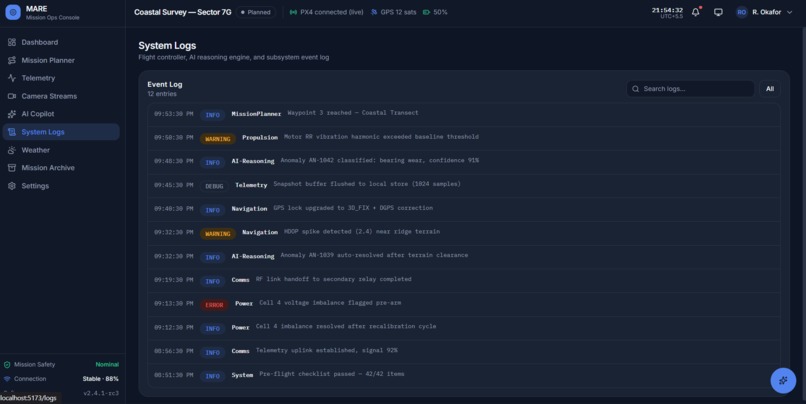
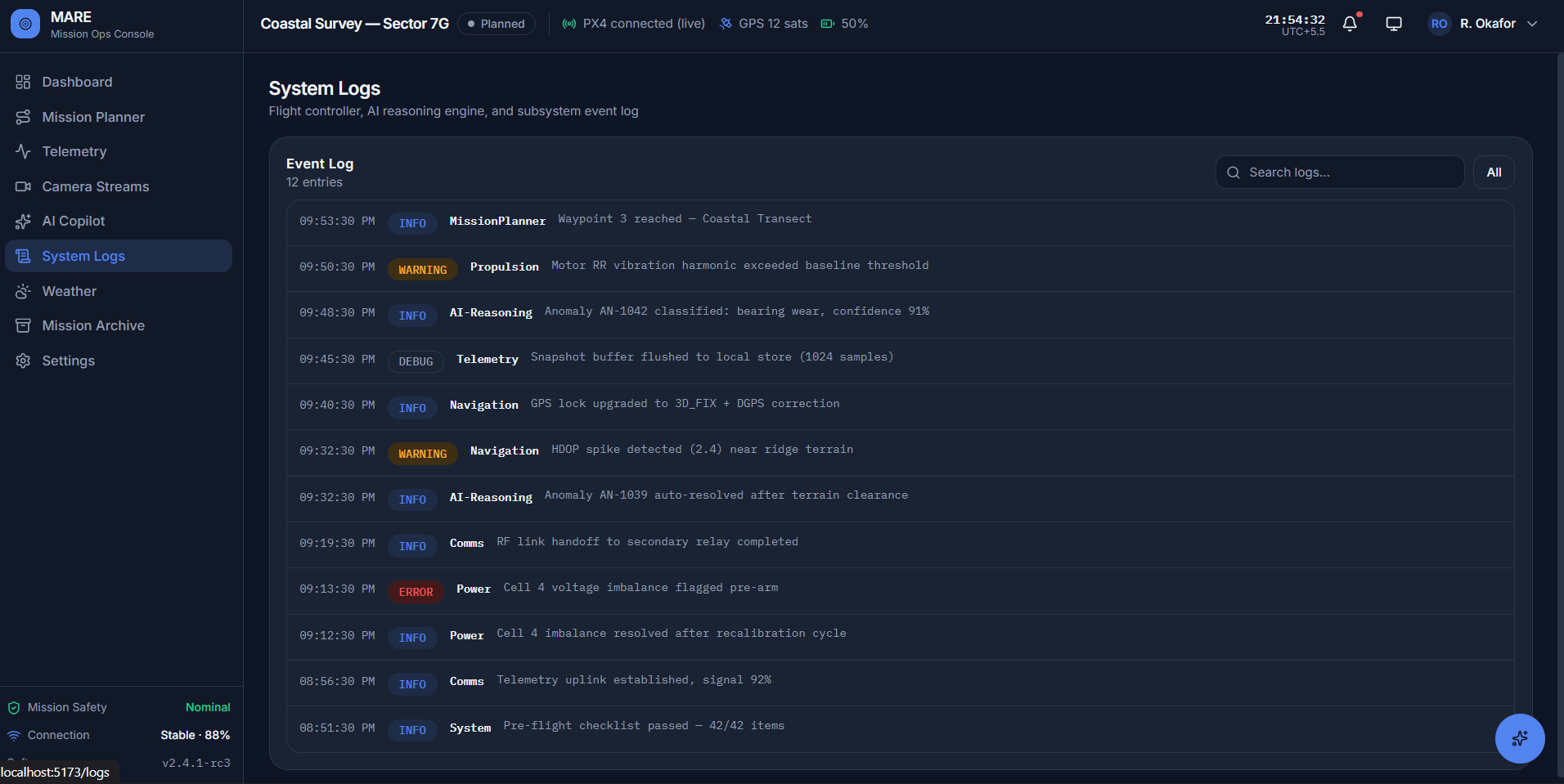
MARE System Logs dashboard displaying chronological flight-controller, telemetry, navigation, communication, power, and AI-reasoning events.
-
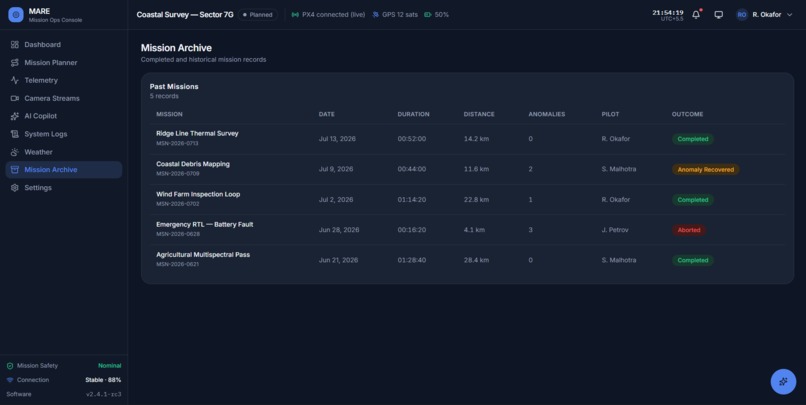
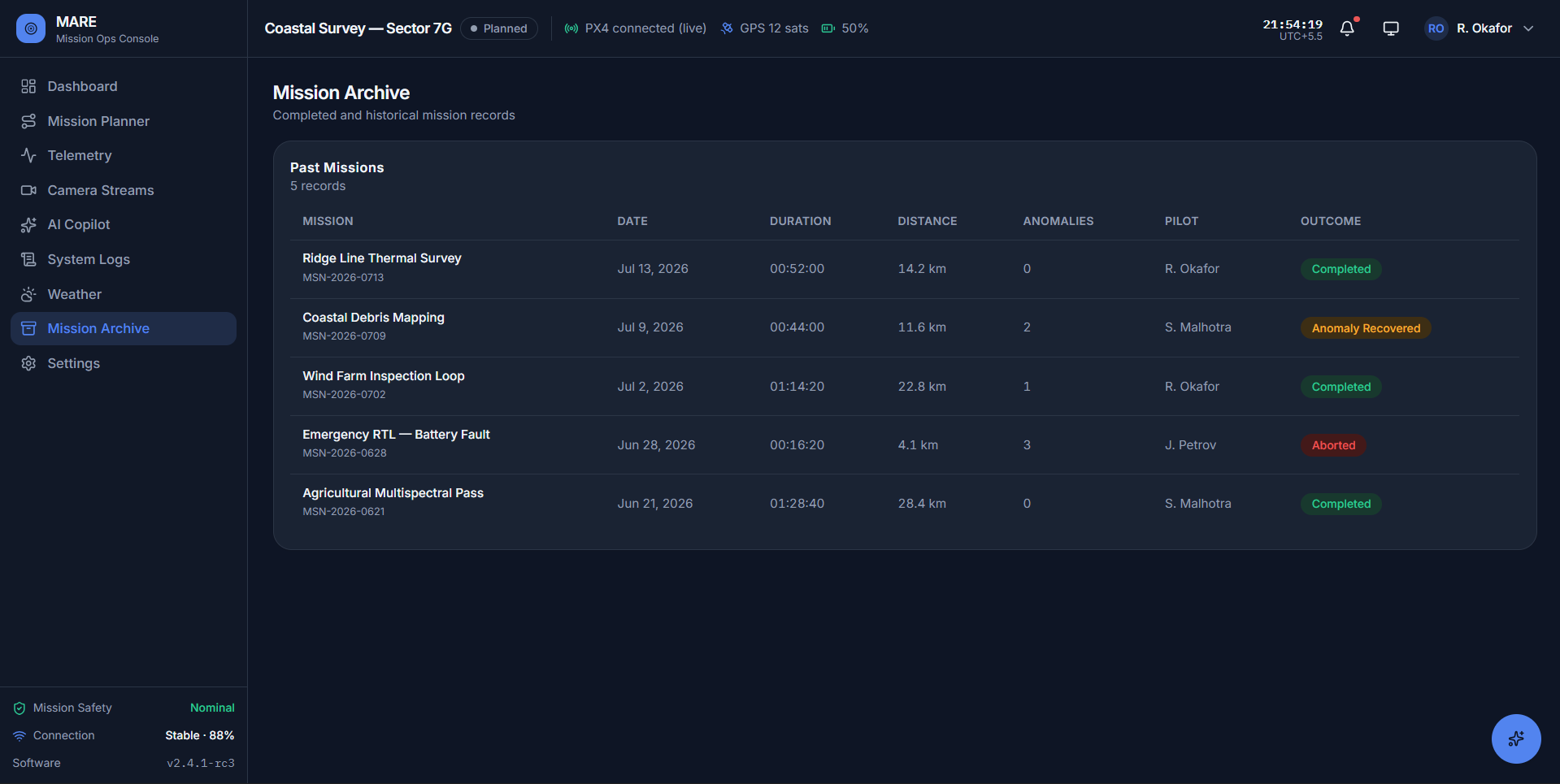
Mission Archive displaying historical missions, including mission duration, distance, anomaly count, pilot information, and mission outcomes
-
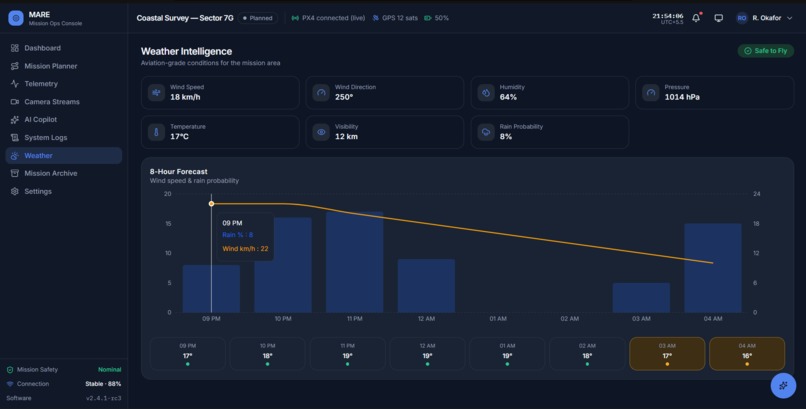
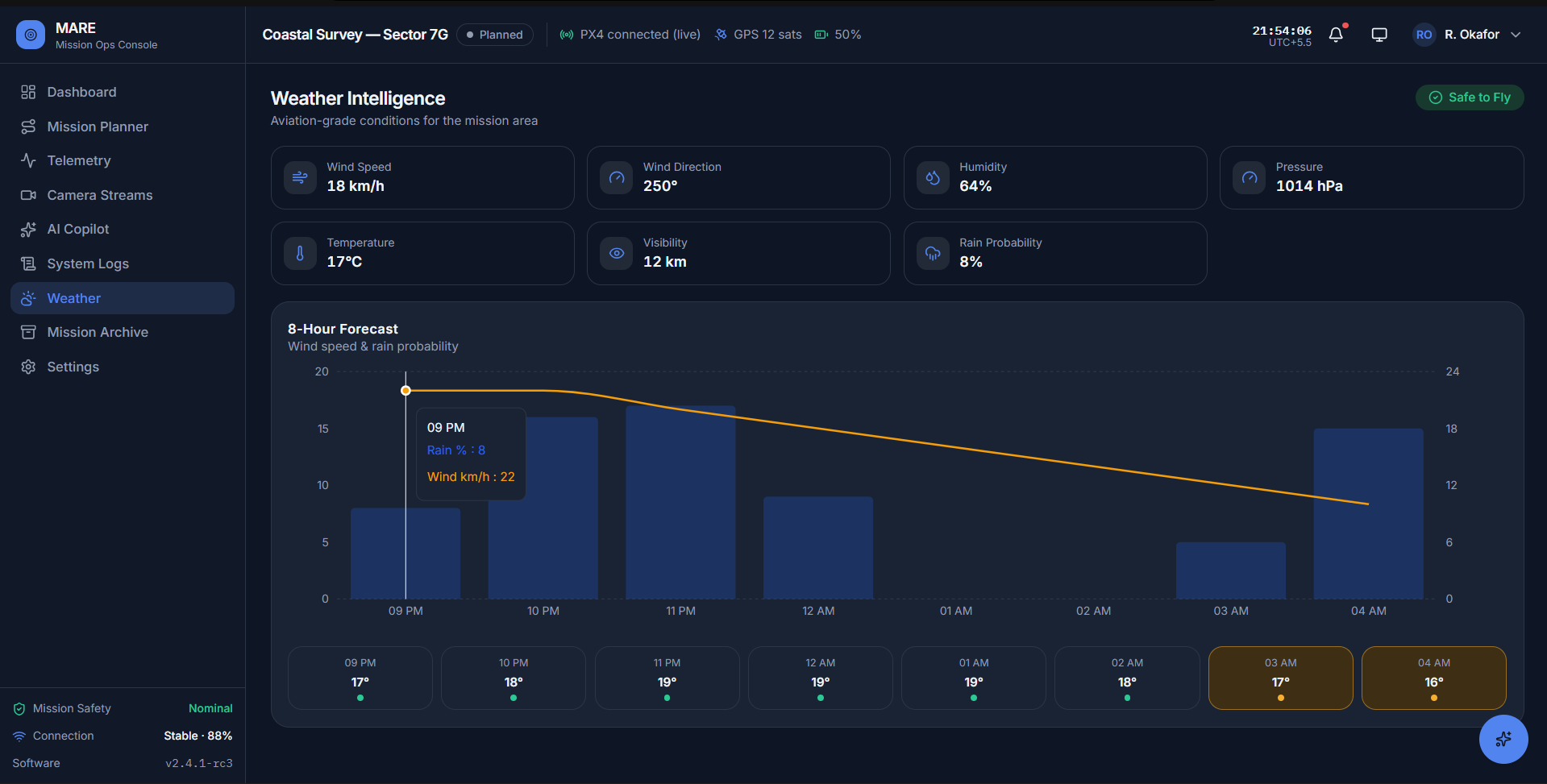
MARE Weather Intelligence dashboard displaying real-time weather conditions and an 8-hour forecast for mission-area flight assessment.
-
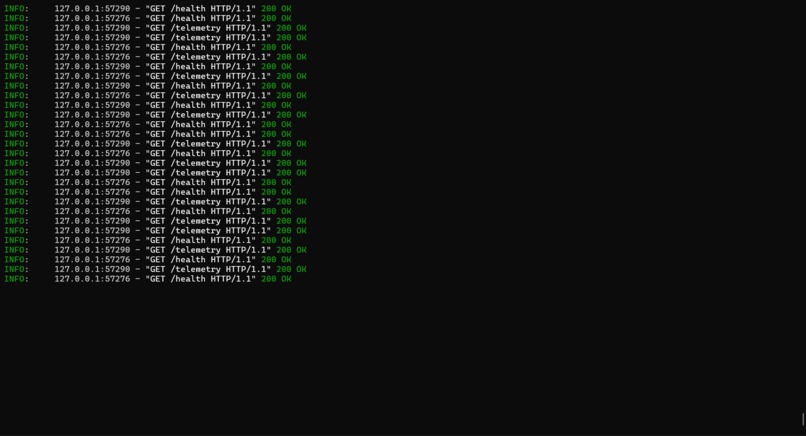
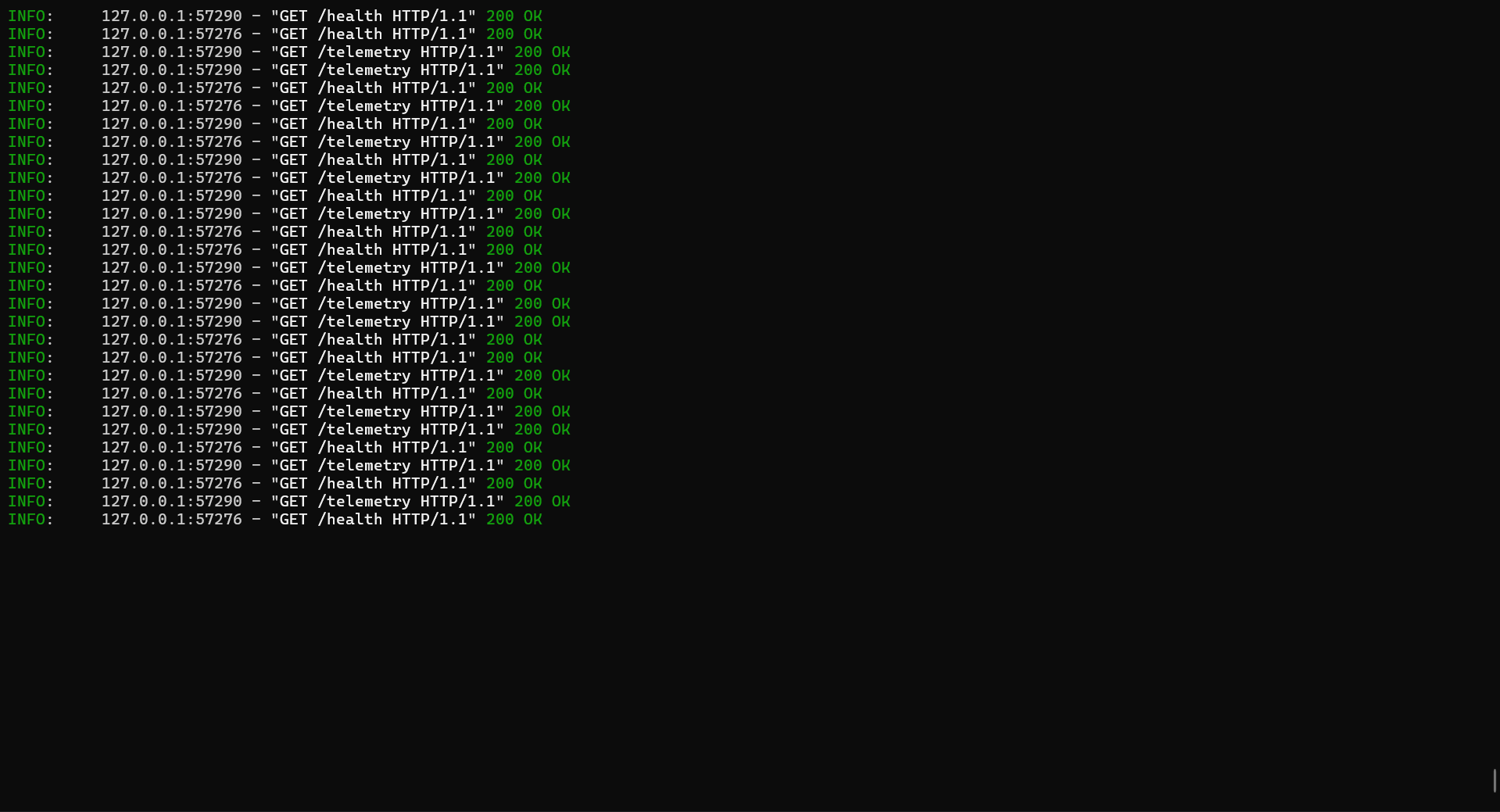
confirming active communication between the MARE backend and frontend.
-
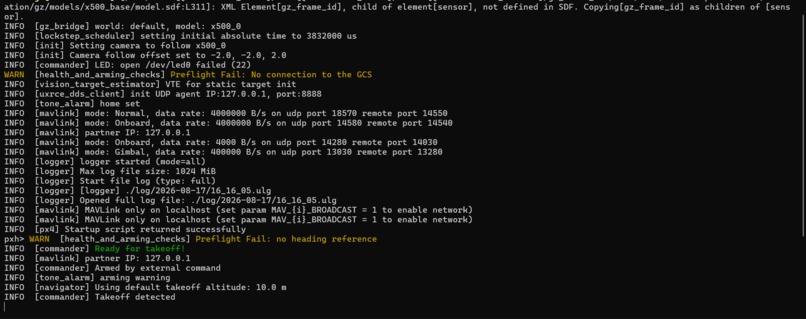
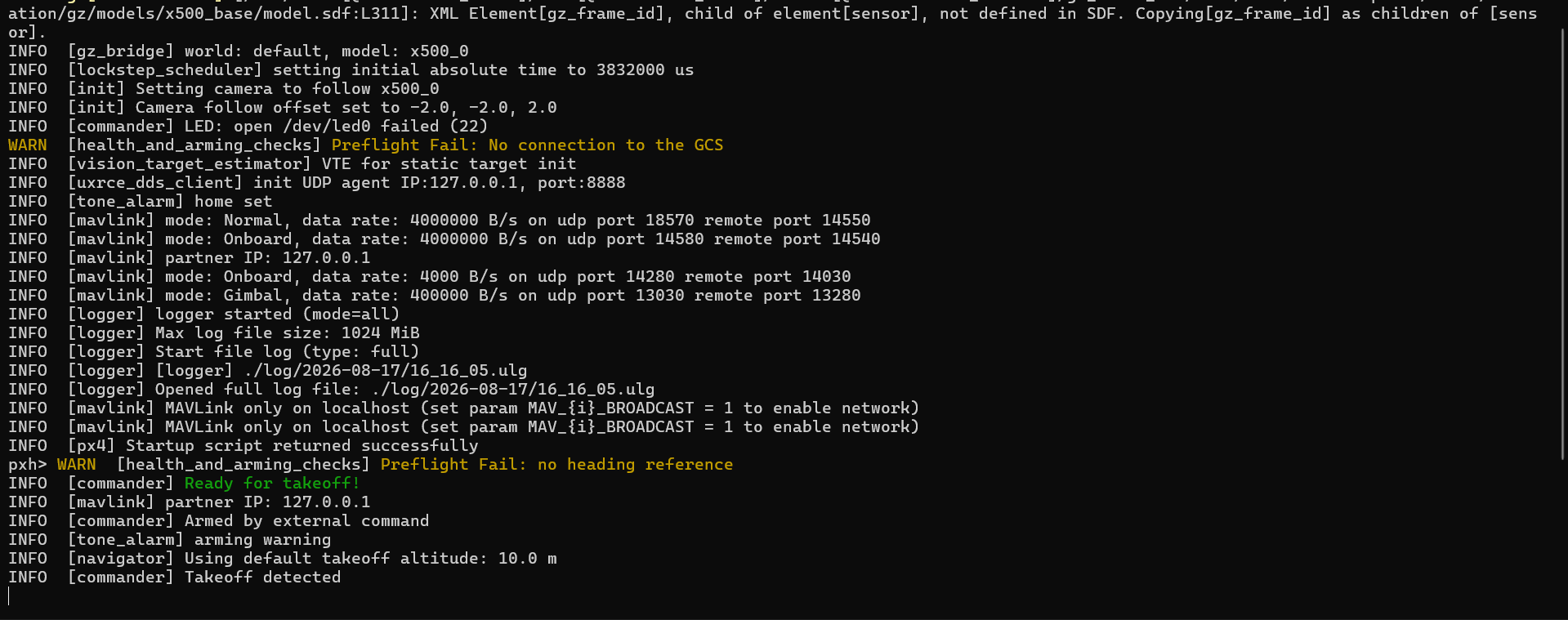
PX4 SITL console showing successful drone initialization, MAVLink communication, telemetry logging, arming, and takeoff detection
-
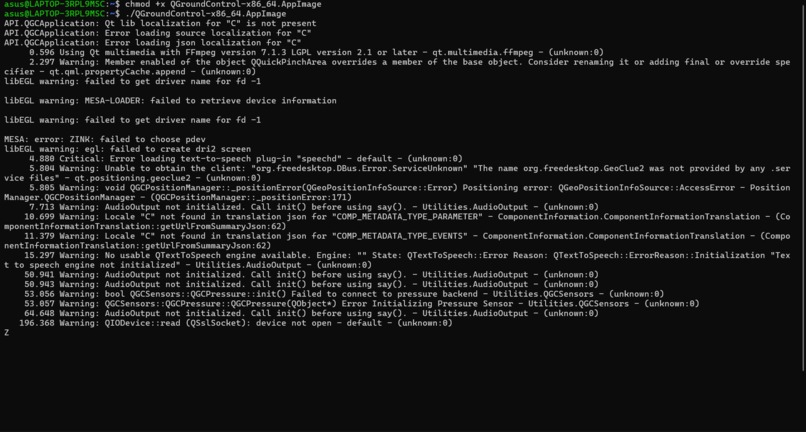
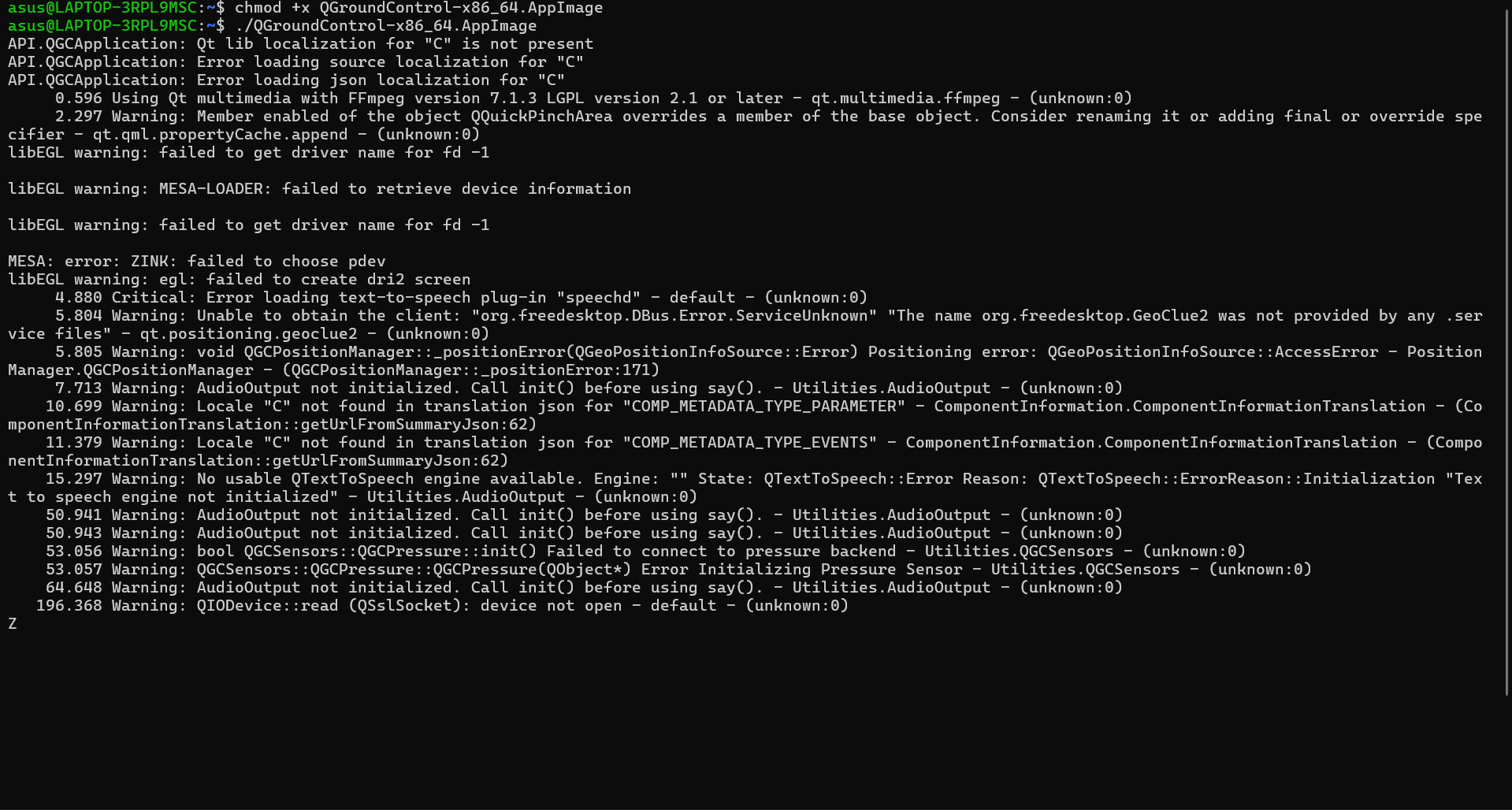
QGroundControl startup console displaying initialization messages and environment-related warnings while establishing the interface
Inspiration
Modern autonomous drones generate thousands of telemetry values every minute—battery voltage, motor RPM, ESC temperature, GPS quality, IMU data, communication quality, altitude, velocity, and more.
While existing flight-control systems can detect many anomalies, they often do not answer the questions operators actually need:
- What happened?
- Why did it happen?
- How serious is it?
- What should happen next?
Mission-critical operations still depend heavily on human expertise to interpret telemetry under time pressure.
We envisioned a future where every autonomous drone could have its own AI Mission Engineer.
That vision became MARE (Mission Anomaly Reasoning Engine)—an AI-powered Mission Control in a Box that bridges the gap between raw telemetry and actionable operational intelligence.
Instead of overwhelming operators with isolated alerts, MARE reasons about anomalies, estimates mission risk, and recommends corrective actions in real time.
Although our MVP focuses on autonomous drones, the underlying architecture is designed to scale to satellites, robotics, and other autonomous mission-critical systems.
What it does
MARE continuously monitors live telemetry from autonomous drones and transforms low-level sensor data into mission-level intelligence.
Telemetry Sources
MARE can work with telemetry including:
- Battery voltage and current
- Motor RPM
- ESC temperature
- GPS quality
- IMU data
- Altitude
- Velocity
- Flight mode
- Mission state
- Communication quality
Instead of producing isolated alerts, MARE performs structured reasoning.
For every significant anomaly, the system attempts to determine:
- What happened?
- Why did it happen?
- How confident is the diagnosis?
- What is the mission risk?
- What should the operator do next?
Example
Instead of simply displaying:
Motor 3 Current High
MARE can provide context such as:
Motor 3 is drawing increased current while RPM gradually decreases and ESC temperature continues to rise. This pattern is consistent with progressive bearing degradation. Mission risk is moderate. Recommend reducing thrust and initiating Return-to-Home.
The objective is not to replace the operator.
It is to help operators make faster, better-informed mission decisions.
How we built it
MARE follows a hybrid mission-intelligence architecture that combines deterministic engineering reasoning with Gemini's natural-language capabilities.
System Architecture
                 PX4 SITL Simulator
                        │
                MAVLink Telemetry
                        │
              Feature Extraction Layer
                        │
             Mission Knowledge Engine
                        │
         Mission Anomaly Reasoning Engine
                        │
                  Gemini API
                        │
          AI Mission Operations Dashboard
1. Telemetry Layer
A PX4 Software-In-The-Loop (SITL) simulator provides live MAVLink telemetry from a simulated autonomous drone.
This allows us to test MARE in a controlled environment while working with telemetry and mission states representative of real flight-control workflows.
2. Feature Extraction
Raw telemetry is transformed into operational indicators that are more useful for reasoning, including:
- Voltage sag
- RPM imbalance
- Battery discharge trends
- Thermal changes
- GPS degradation
- Communication quality
- Mission-phase awareness
For example, electrical power can be calculated as:
$$ P = VI $$
where:
- $V$ is battery voltage
- $I$ is battery current
When motor torque is available or estimated, mechanical efficiency can be expressed as:
$$ \eta = \frac{T\omega}{VI} $$
where:
- $T$ is motor torque
- $\omega$ is angular velocity
- $V$ is electrical voltage
- $I$ is electrical current
These derived features provide additional context beyond individual raw sensor values.
3. Mission Knowledge Engine
This layer contains structured engineering knowledge about the drone and its subsystems.
Rather than relying entirely on a model to discover relationships from data, MARE explicitly incorporates relationships between:
- Motors
- Batteries
- ESCs
- GPS
- IMU
- Communication systems
- Mission phases
For example:
Motor Current ↑
Motor RPM ↓
ESC Temperature ↑
        │
        ▼
Possible Cause:
Bearing Degradation
This engineering context allows MARE to reason about relationships between telemetry signals, rather than treating every alert independently.
4. Mission Anomaly Reasoning Engine
This is the core of MARE.
Rather than sending raw telemetry directly to Gemini, MARE first performs structured engineering reasoning.
The reasoning layer combines:
- Telemetry relationships
- Engineering knowledge
- Historical trends
- Mission context
- Subsystem behavior
to infer:
- Potential root cause
- Confidence score
- Mission risk
- Recommended recovery action
The reasoning workflow can be represented as:
$$ \text{Telemetry} \rightarrow \text{Knowledge} \rightarrow \text{Reasoning} \rightarrow \text{Risk Assessment} $$
This separation is important because the system's operational reasoning remains grounded in explicit engineering logic rather than relying entirely on a generative model.
5. Gemini-Powered Mission Intelligence
Gemini is not responsible for detecting anomalies or making the underlying engineering diagnosis.
Instead, it receives the structured reasoning output from MARE and converts it into clear, explainable mission intelligence for the operator.
For example:
Hypothesis:
Motor Bearing Degradation

Confidence:
91%

Mission Risk:
Medium

Recommendation:
Return-to-Home
can become:
Motor 3 exhibits increased current draw while RPM decreases and ESC temperature continues to rise. This pattern is consistent with progressive bearing degradation. Recommend reducing speed and initiating Return-to-Home before the condition becomes critical.
This architecture keeps the operator in the decision loop while reducing the risk of unsupported or inconsistent AI explanations.
Challenges we ran into
One of our biggest challenges was deciding where AI should actually make decisions.
Initially, we explored end-to-end machine-learning approaches. However, mission-critical systems require more than prediction accuracy—they require explainability, reproducibility, and operator trust.
We therefore redesigned MARE around a hybrid reasoning architecture where engineering knowledge performs the core anomaly reasoning, while Gemini focuses on communicating those conclusions in natural language.
Another challenge was balancing real-time performance with rich reasoning.
By separating feature extraction, reasoning, risk assessment, and explanation into independent layers, we were able to keep the operational reasoning lightweight while still providing detailed diagnostics to the operator.
Testing the system with PX4 SITL also allowed us to reproduce mission states and telemetry conditions without depending on physical hardware during development.
Accomplishments that we're proud of
We're proud that MARE goes beyond traditional anomaly detection.
Instead of generating disconnected alerts, our system provides:
- Explainable diagnostics
- Root-cause reasoning
- Mission risk assessment
- Confidence estimation
- Actionable recovery recommendations
- Real-time telemetry visualization
- Mission planning and monitoring
- AI-assisted operational decision support
We also designed MARE as a domain-independent architecture that can evolve beyond drones into satellites, robotics, and other autonomous mission-critical systems.
What we learned
Building MARE taught us that operators don't necessarily need more telemetry—they need better decisions from the telemetry they already have.
We also learned that combining structured engineering knowledge with modern foundation models can produce AI systems that are more transparent and trustworthy than relying entirely on black-box prediction.
Most importantly, we realized that mission intelligence is fundamentally about reasoning, not simply detecting anomalies.
Detection tells an operator that something is wrong.
Reasoning helps explain what is wrong, why it is happening, how serious it is, and what to do next.
What's next for MARE
Our immediate objective is to further validate MARE through increasingly realistic autonomous-drone simulations and, eventually, pilot deployments.
Short-Term Roadmap
- Expand PX4 SITL integration and test coverage
- Add more realistic anomaly and failure scenarios
- Improve anomaly reasoning accuracy
- Expand the real-time operator dashboard
- Validate the system with drone researchers and industry partners
- Incorporate additional telemetry and subsystem relationships
Long-Term Vision
MARE is designed to evolve into a universal Mission Intelligence Platform supporting:
- Autonomous drones
- Satellites
- Robotics
- Aerospace systems
- Autonomous marine vehicles
As operational data grows, MARE could incorporate:
- Predictive maintenance
- Fleet-level intelligence
- Adaptive learning
- Cross-mission anomaly analysis
- Autonomous mission planning
Our vision is simple:
Every autonomous system deserves an AI Mission Engineer.
Built With
- docker
- fastapi
- gemini
- mavlink
- mavsdk
- next.js
- postgresql
- px4
- python
- qgroundcontrol
- react
- sitl
- websockets


Log in or sign up for Devpost to join the conversation.