-
-
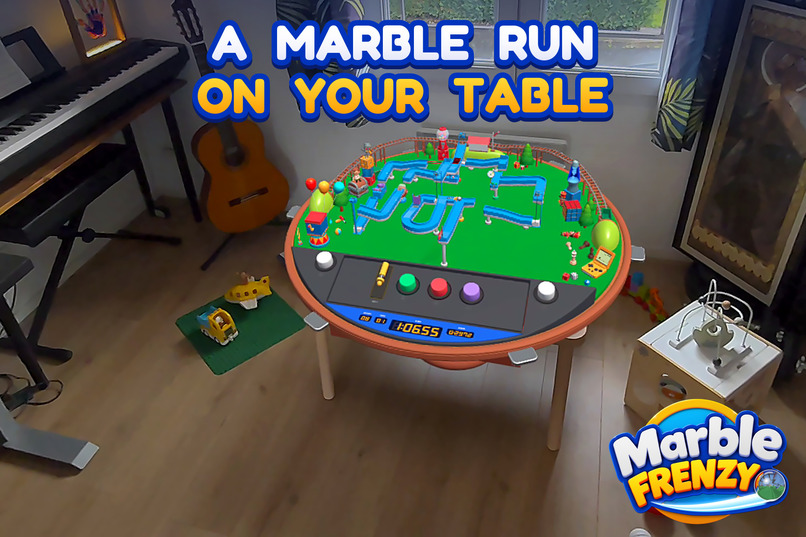
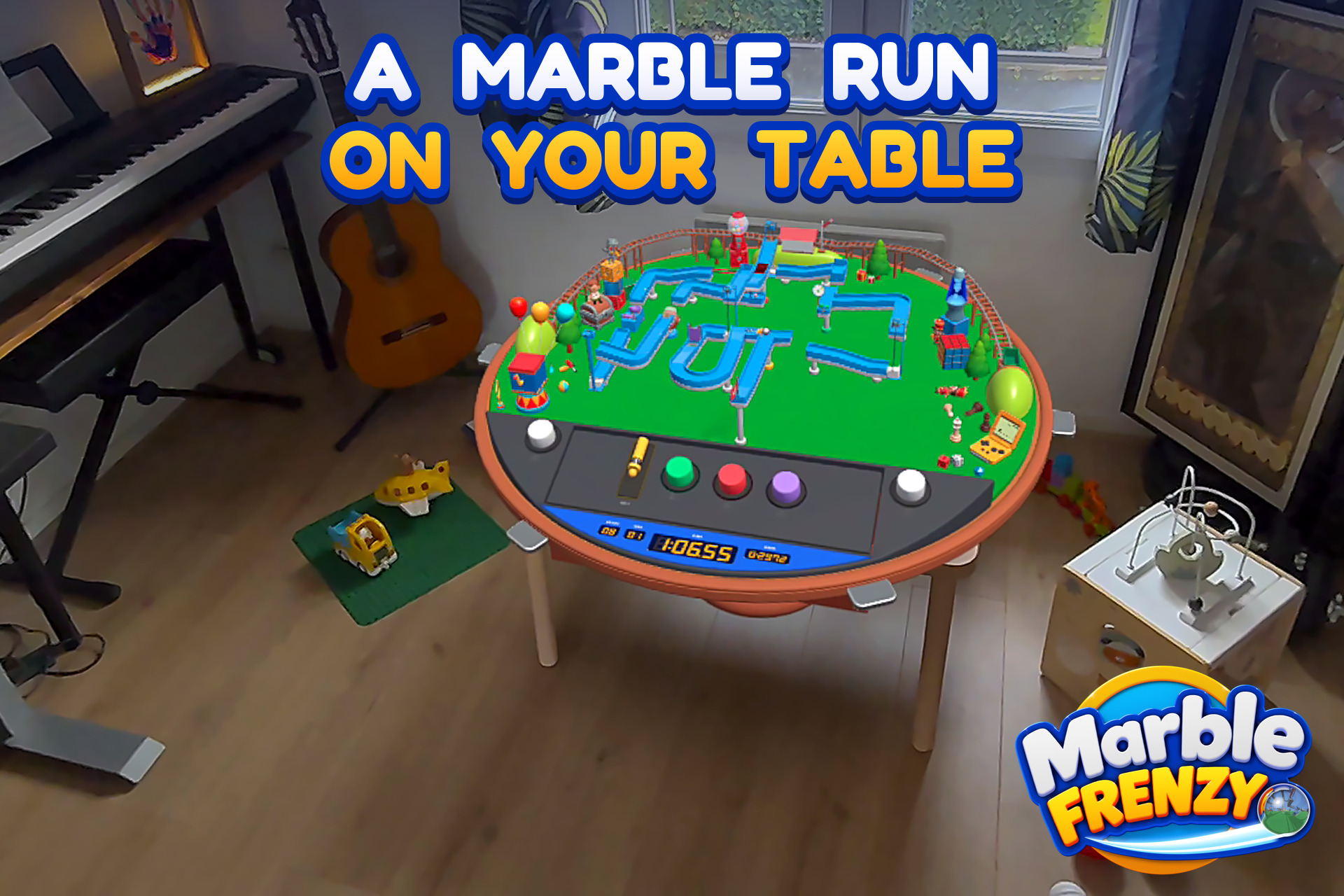
A marble run on your table
-
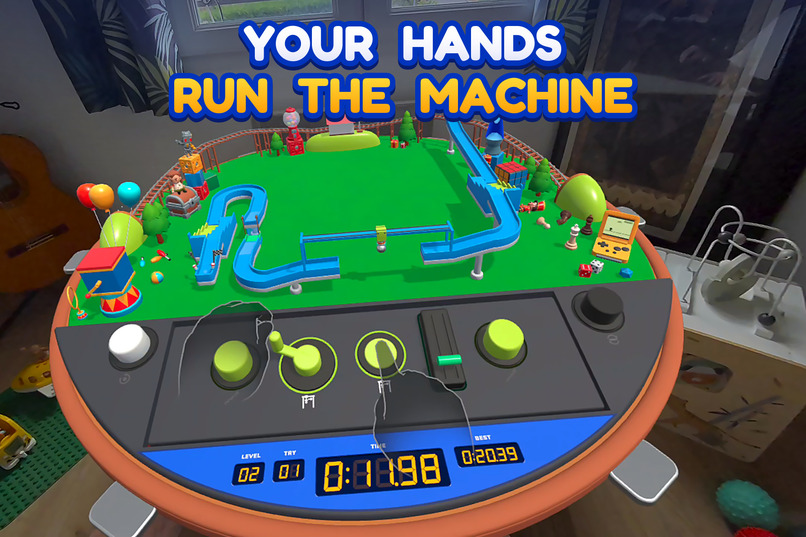
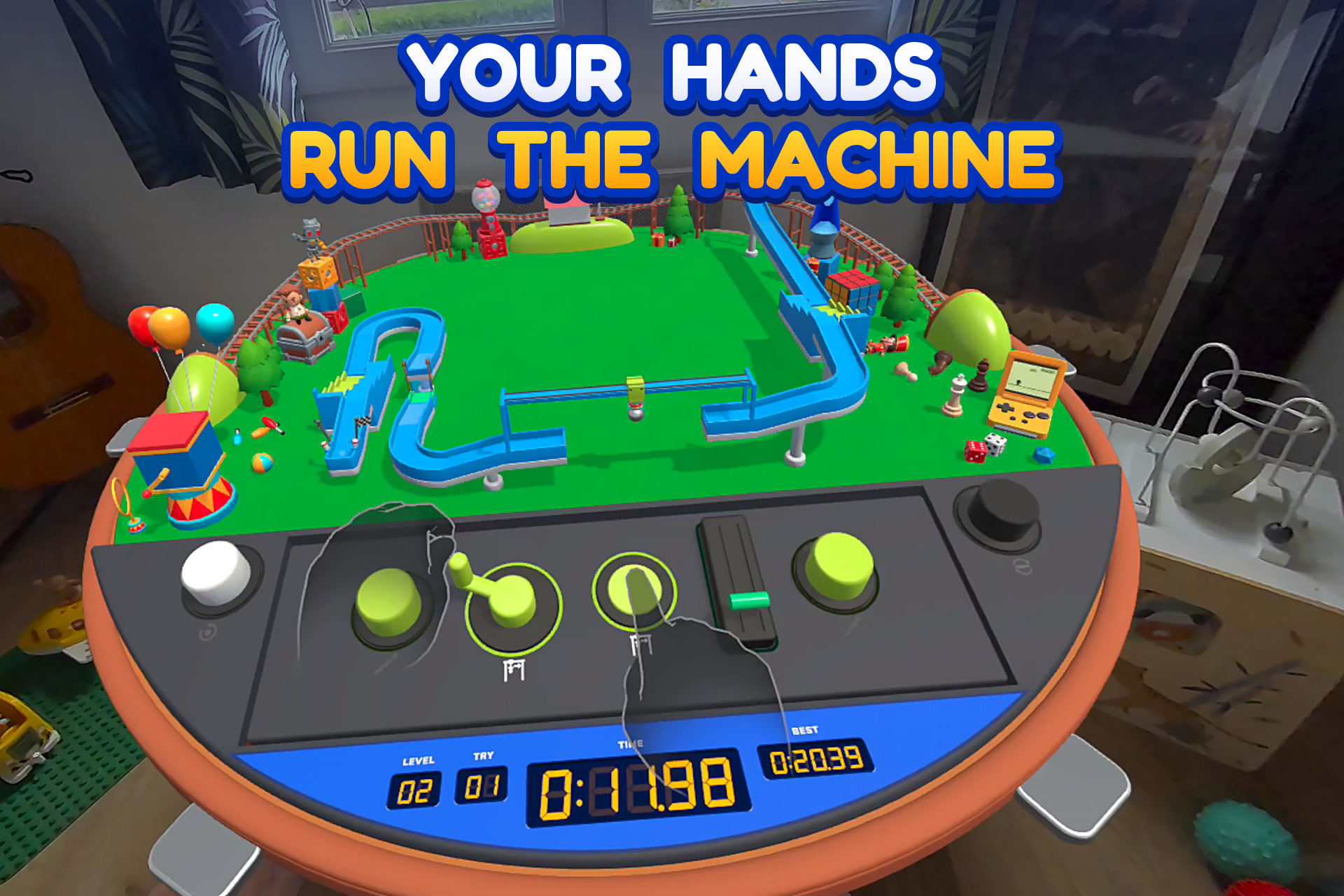
Your hands run the machine
-
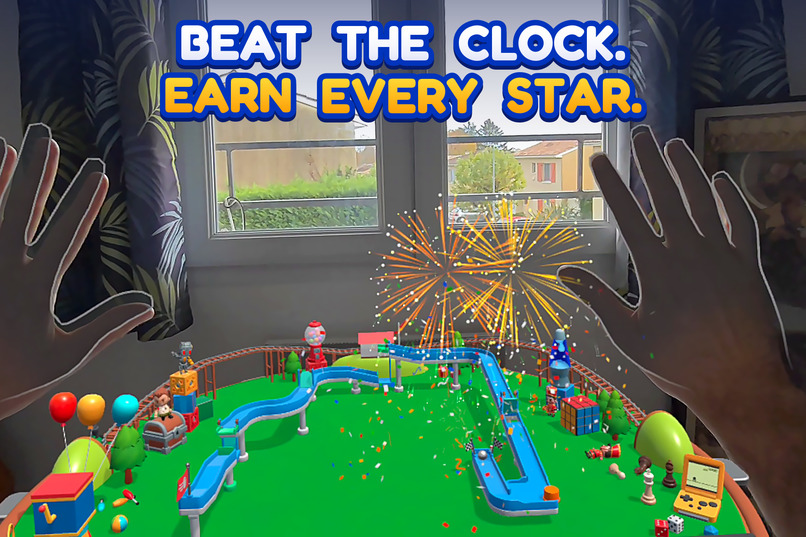
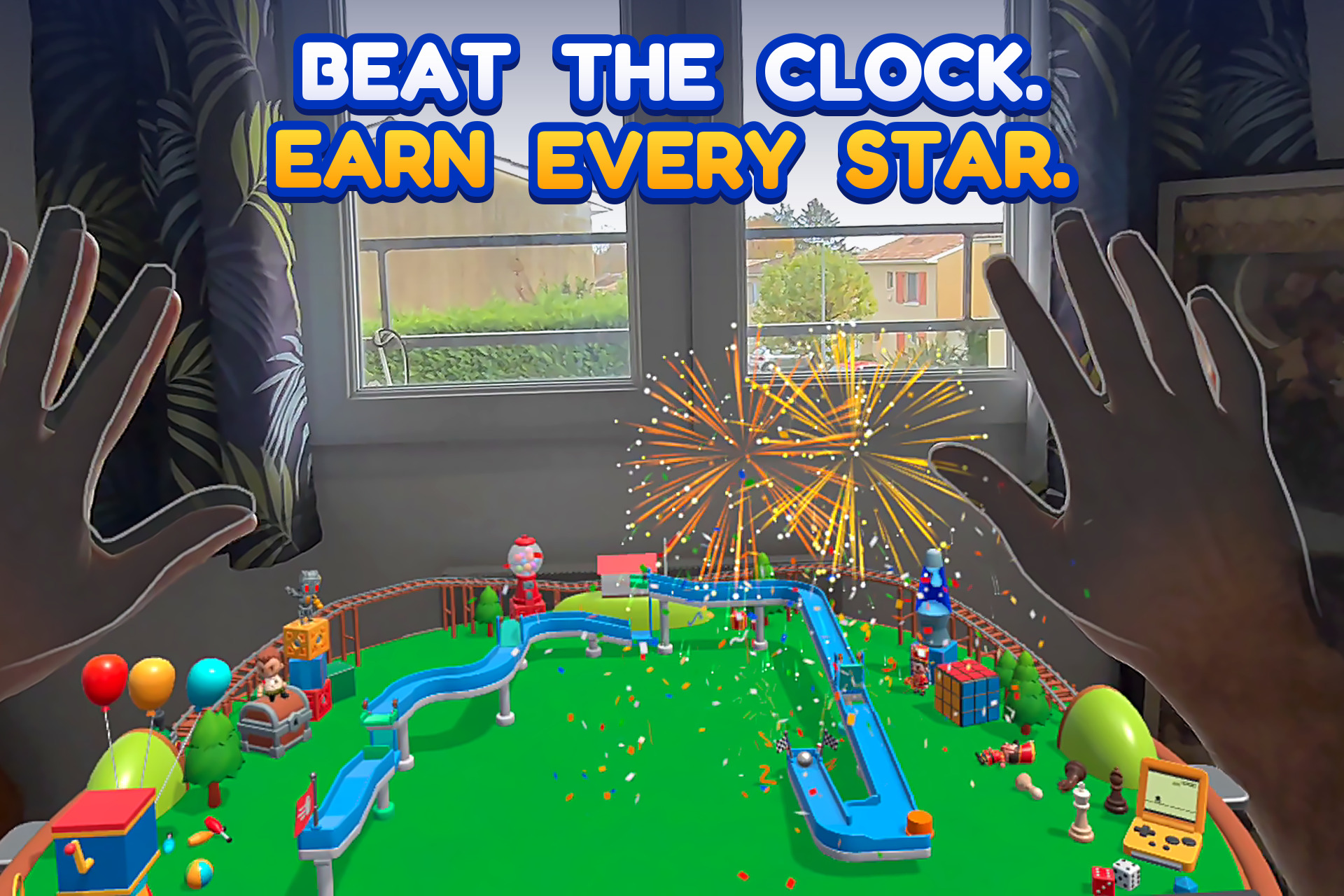
Beat the clock. Earn every star.
-
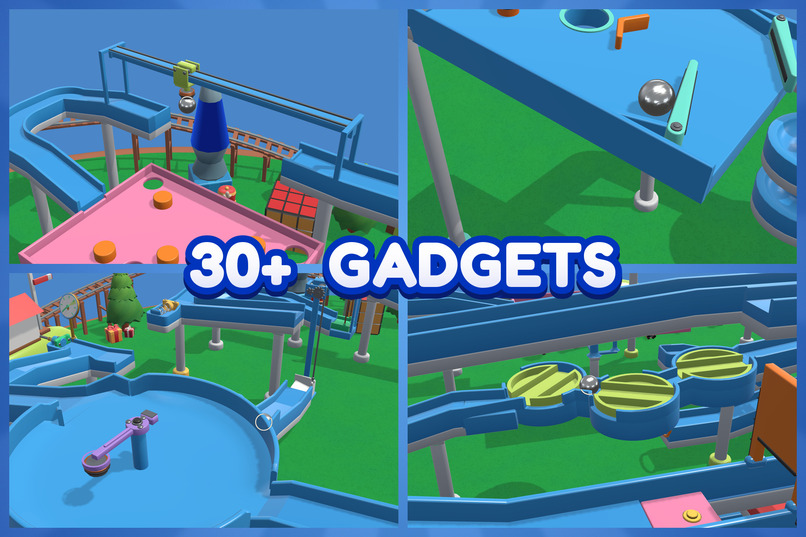
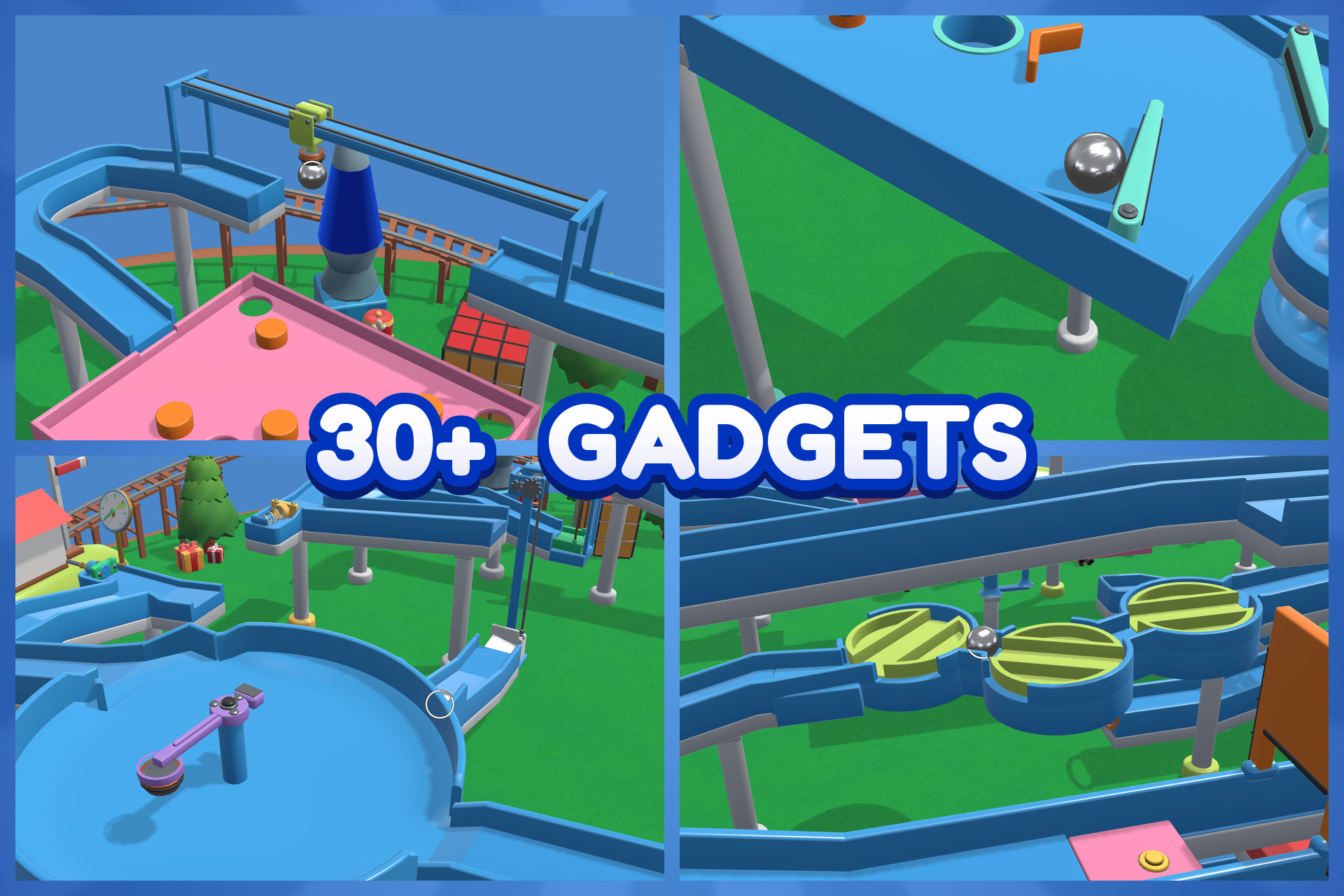
30+ gadgets
-
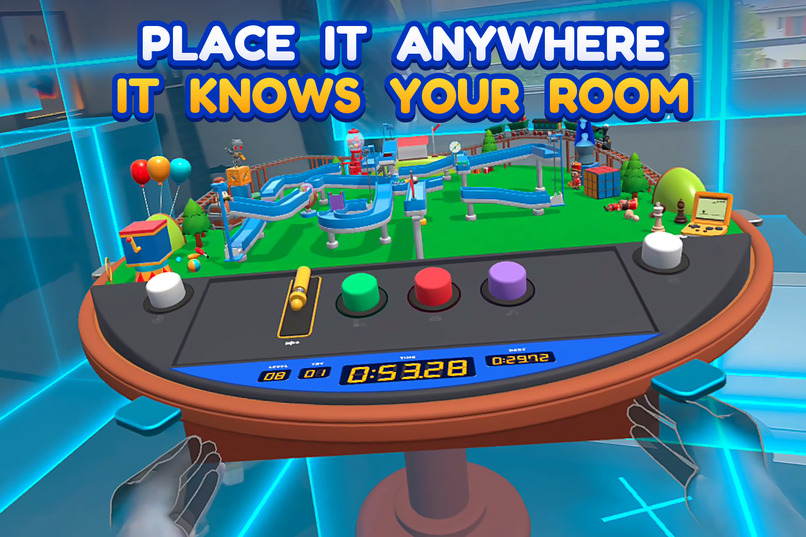
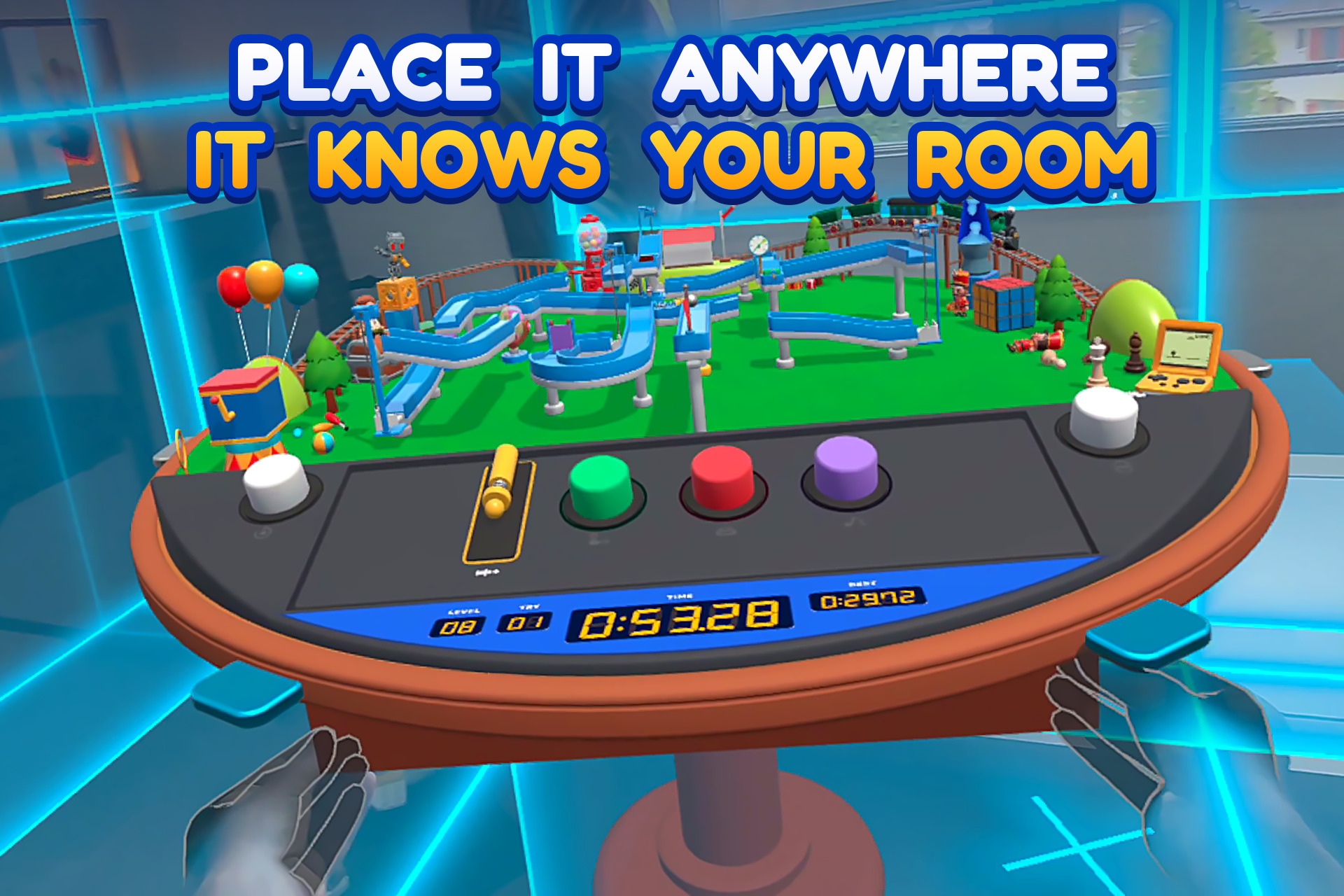
Place it anywhere it knows your room
-
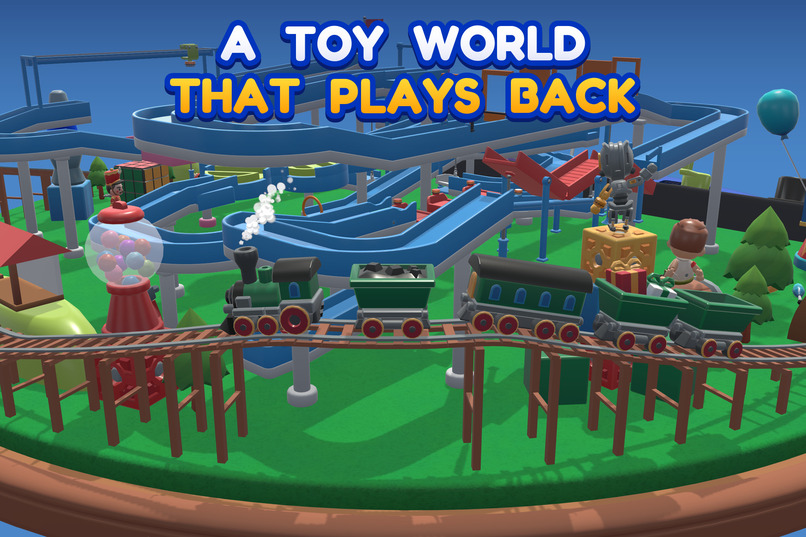
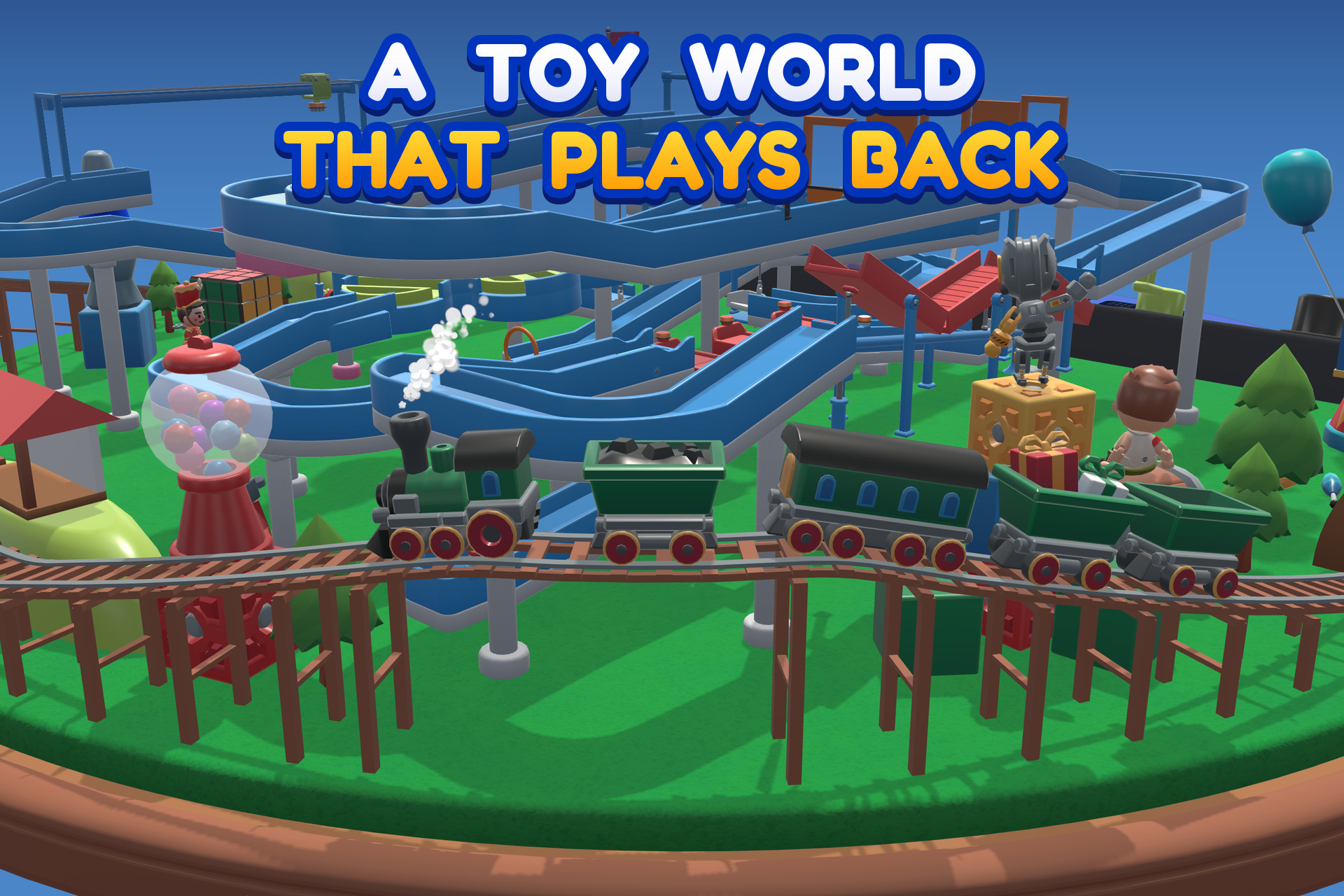
A toy world that plays back
Inspiration
As kids, we loved tabletop marble games where buttons and levers steer a ball through traps. We wanted that toy on your desk, pushed further: you play the machine, the marble follows.
What it does
Marble Frenzy sets a toy marble run at your real table's height. The marble rolls alone; your bare hands work a console: push buttons, turn cranks, slide levers, twist knobs, tilt a joystick, each wearing the color and icon of the machine it drives.
Machines are the stars: gantry cranes, air shuttles, flippers, catapults, cup cascades and more. In short levels, read the track, time your moves and beat the clock for three stars that unlock new marbles and trails.
Around it, a candy-colored childhood toy box comes alive: a train puffs through tunnels, soldiers and a clown keep you company, dice and blocks tumble at your touch.
How we built it
Two developers, just over a month:
- Unity 6, URP, Meta XR SDK v207 and OpenXR, tuned for Quest 3, 3S.
- Hand tracking drives every control 1:1, raw and unsmoothed: your finger's timing is the gameplay.
- MRUK finds your real table; two-hand adjustment and a no-scan mode cover any room.
- A dedicated physics scene, fixed 1/360 s substeps.
- Modular grid blocks generated in C# and shaped in Blender.
- FoV-aware menus; clean pause when the headset comes off.
- Reworked KayKit toys for fast prototyping and a coherent art direction.
AI as a tool, humans at the wheel. We used AI assistants like any good tool: to write code, tests and tooling faster, and to draft sound effects we picked and tuned by ear. We kept coding ourselves, and the technical architecture, game design, level selection, art direction and headset playtests stayed ours; time saved went into content, playtests and polish.
Challenges
A 15 mm marble feels every seam: we welded floors at mesh level and hunted invisible contacts substep by substep. Passthrough, shadows and moving machines share a tight frame budget.
The hardest design problem: modular machines that accept varied marble speeds, hand the ball cleanly to any neighbor, and feel precise yet natural under tracked hands. Pacing balances variety and a steady difficulty curve, so failing never becomes frustration.
Accomplishments
A crank turns, three machines line up, the marble races through: it feels like a real toy. The console reads instantly; predictable physics gives the same result for the same gesture.
Close to store-ready: built for hands alone, playable seated, stable at 90 Hz, a solid base for Meta's upcoming VR glasses.
What we learned
MRUK was new to us: reading unseen rooms and falling back gracefully without a scan taught us to design for the player's space. Pocket-sized, seated play was our other lesson: every control within easy reach, the console tilted toward you, no need to stand or lean.
What's next
Multiplayer races, community levels, a level editor and new machines, for a Meta VR Store launch targeted in Q1 2027.


