-
-
Thumb nail
-
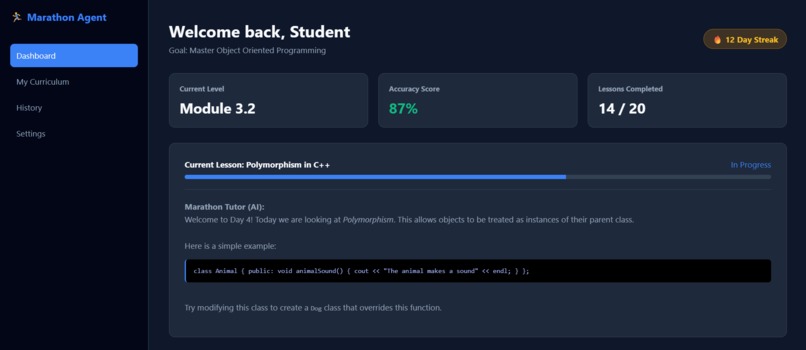
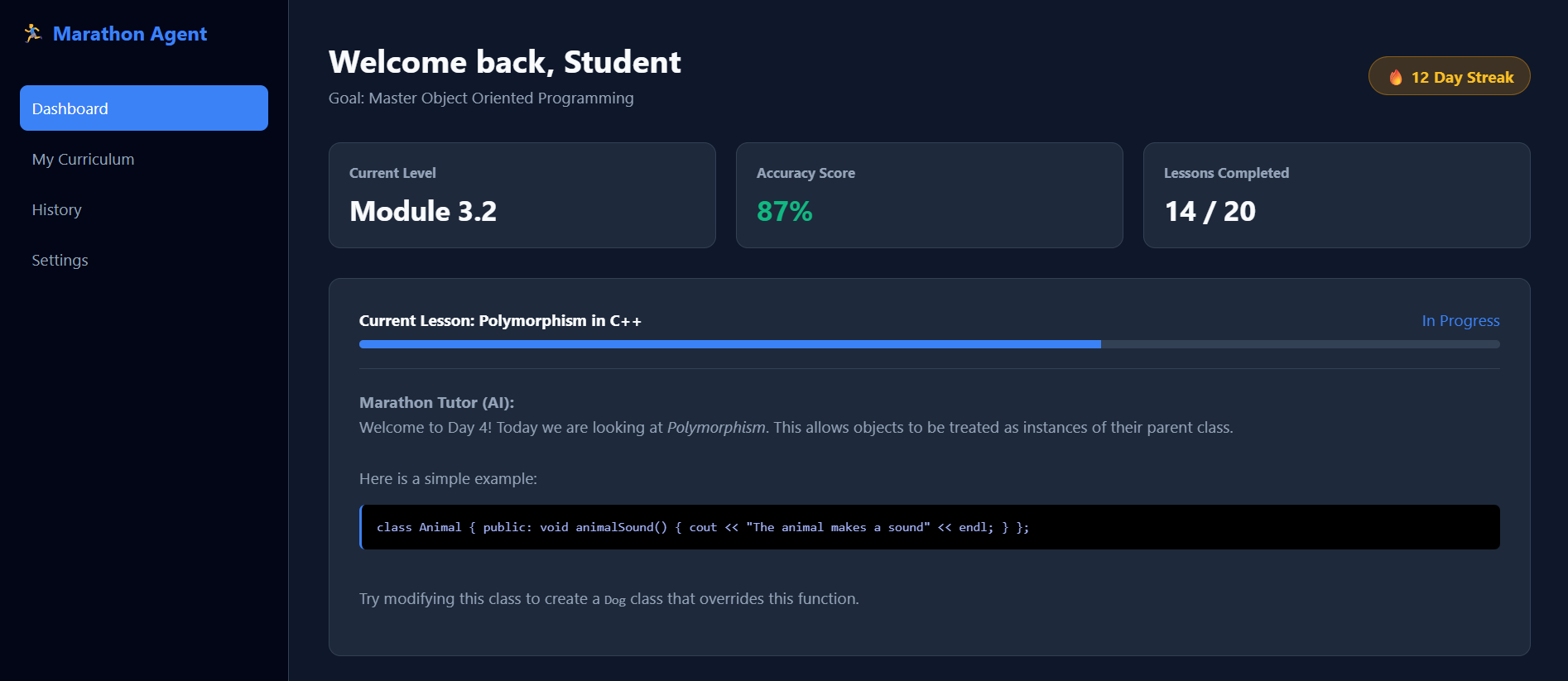
UI Dashboard Student Dashboard: Gamified UI tracking streaks, daily goals, and real-time adaptive lesson plans.
-
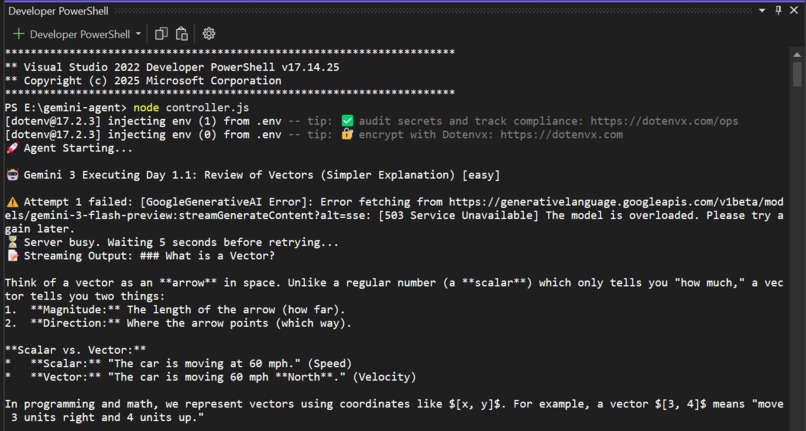
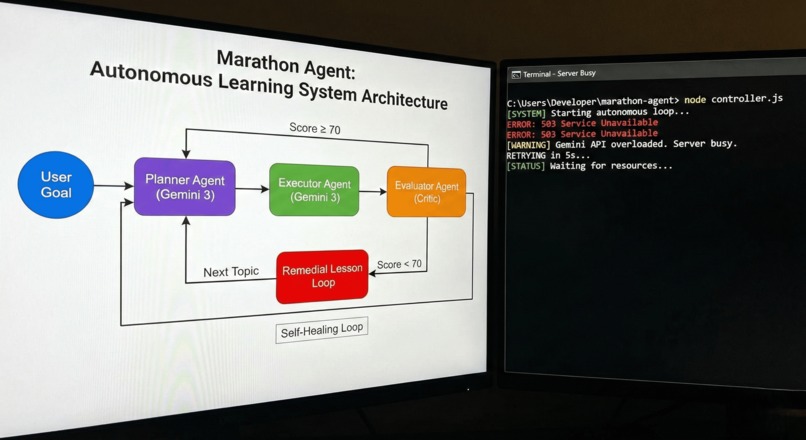
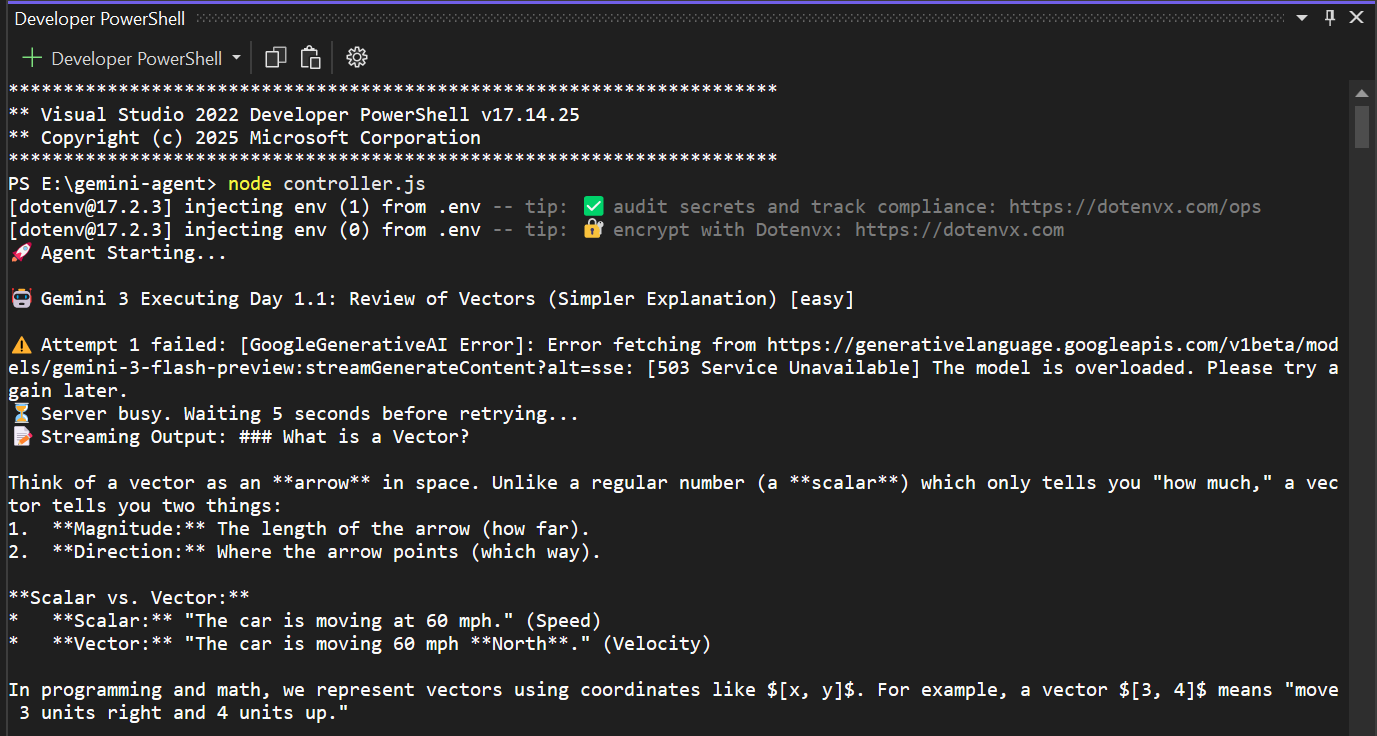
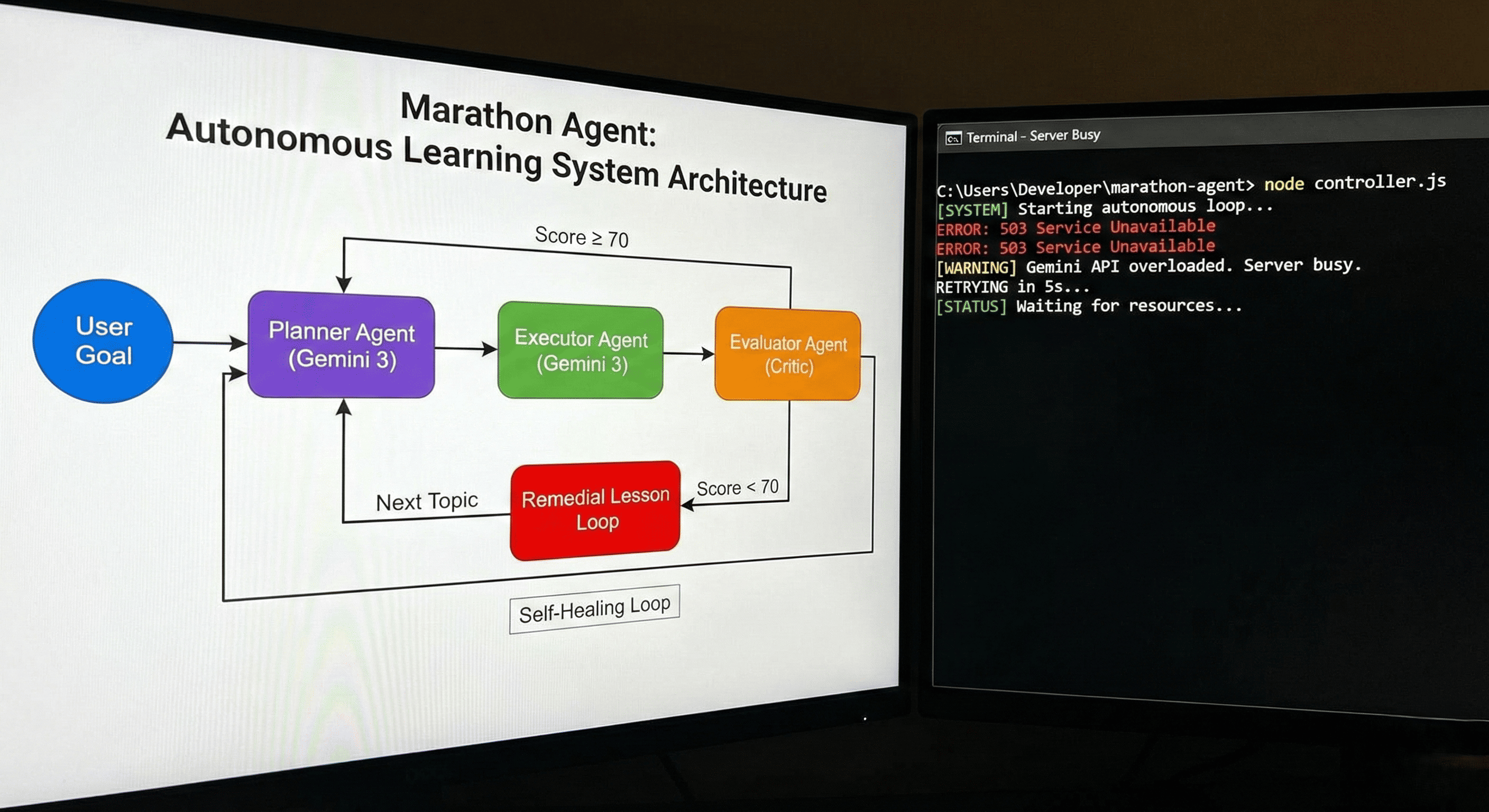
Server Busy Screenshot Resilience: The system detects 503 "Service Unavailable" errors and auto-retries without crashing.
-
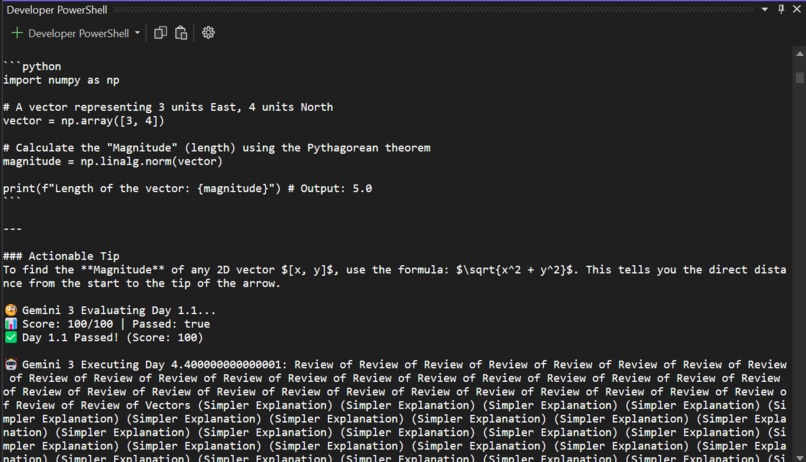
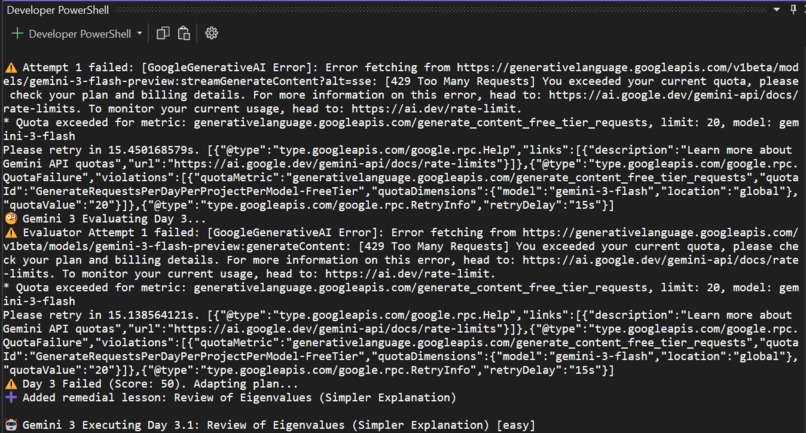
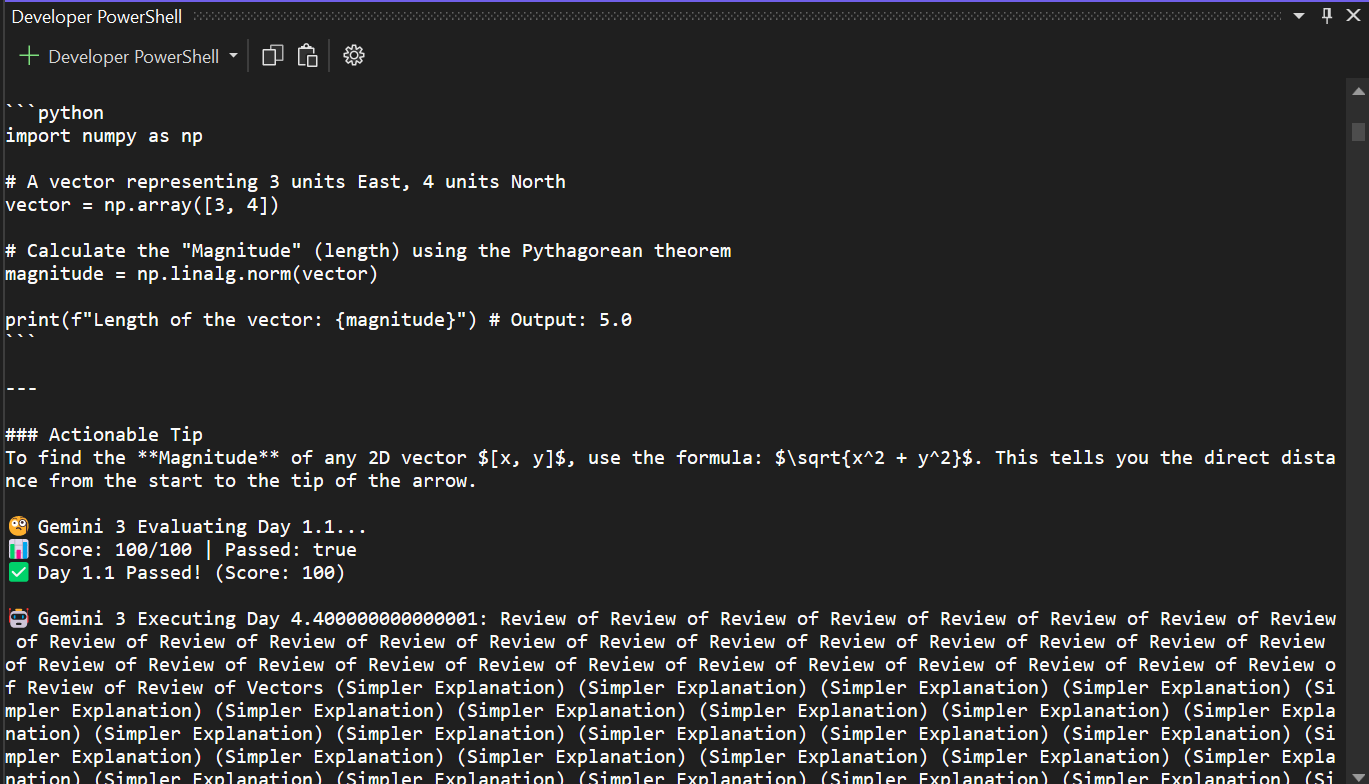
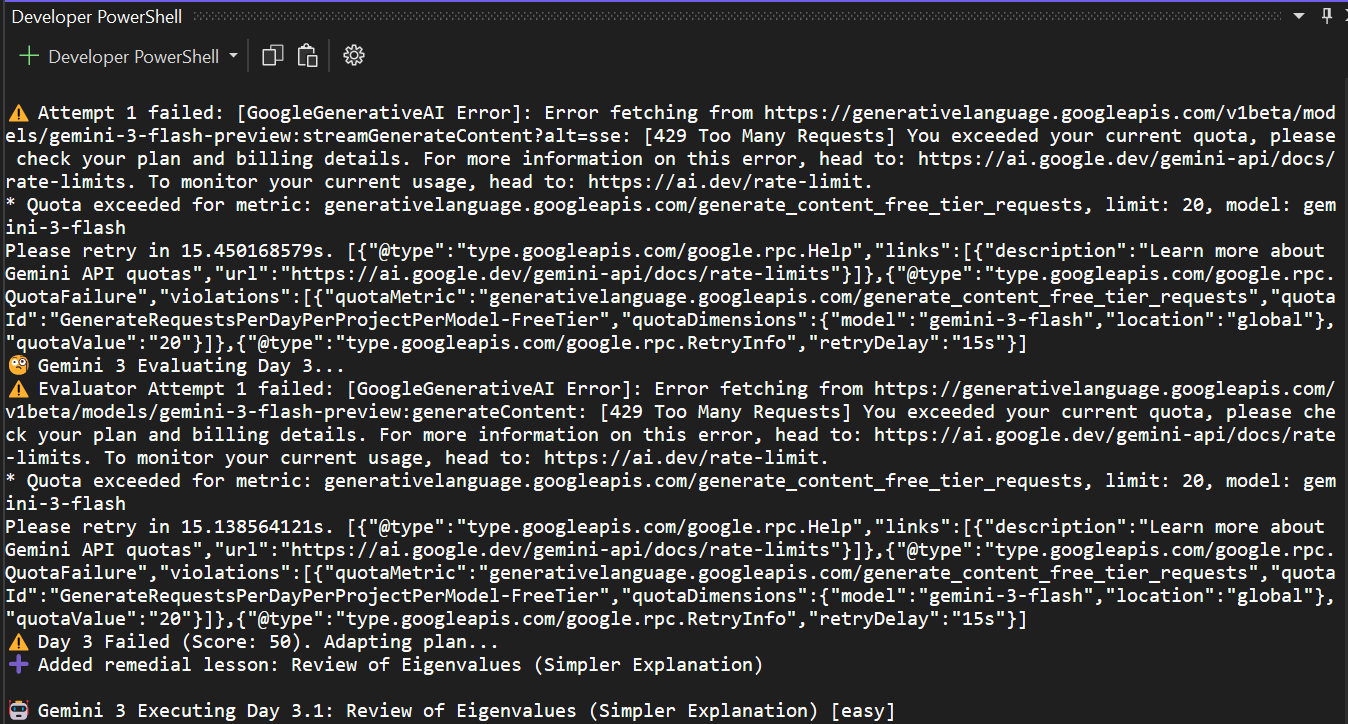
Terminal Logs The Brain in Action: Real-time logs showing Planner, Executor, and Evaluator agents collaborating.
-
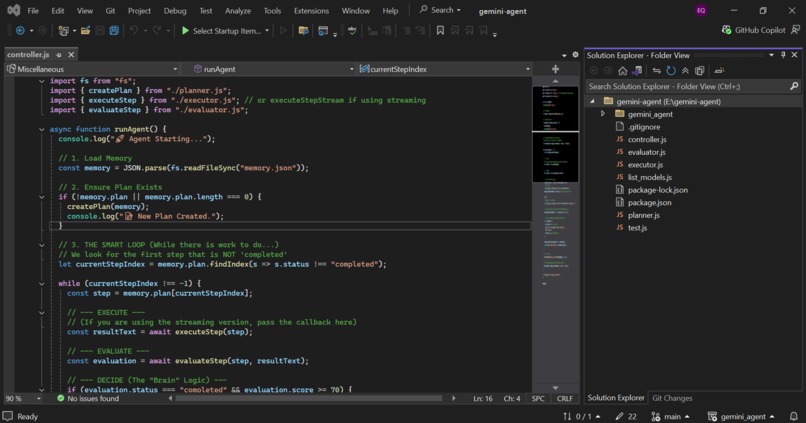
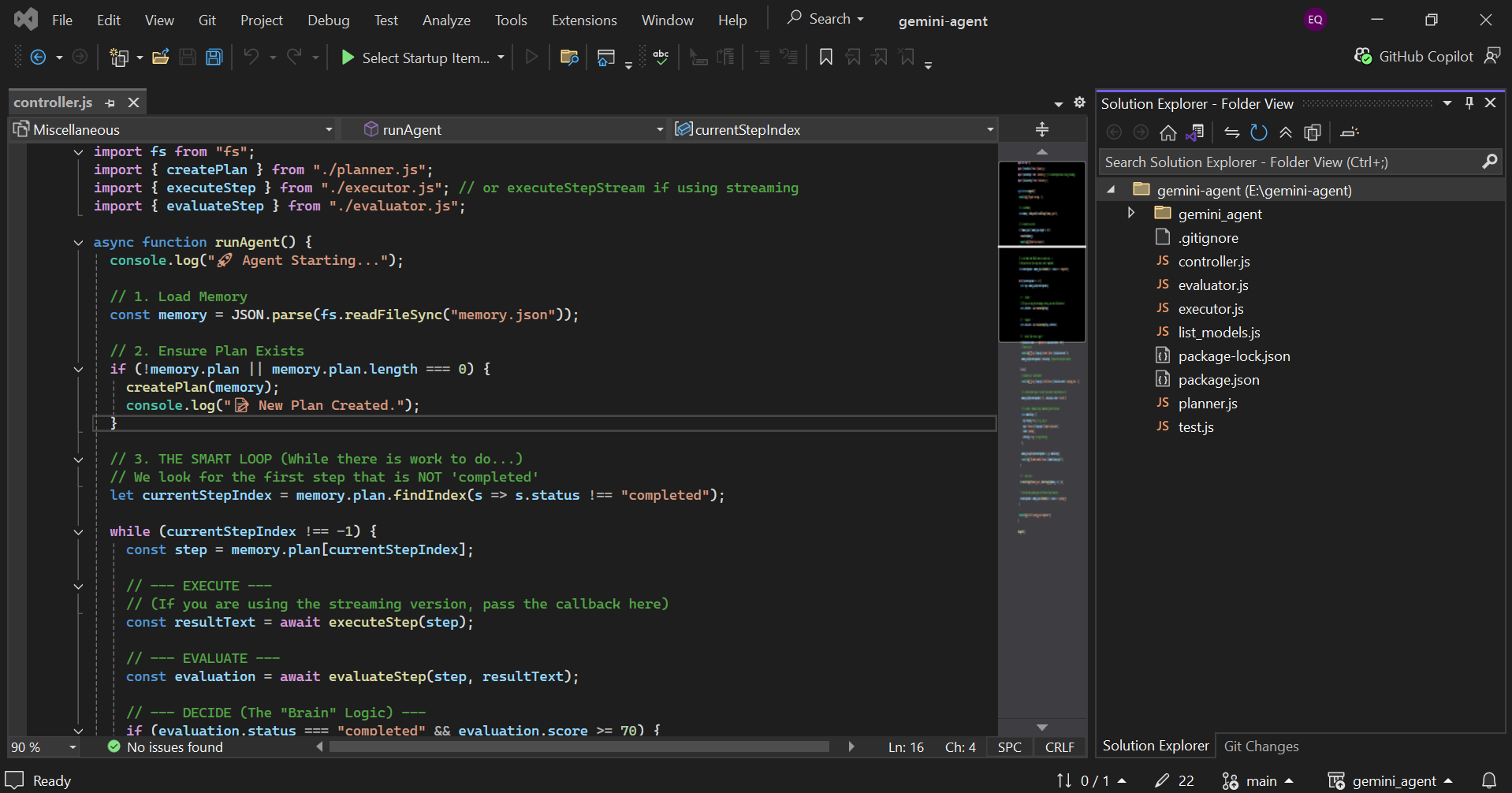
Project Structure Monorepo Structure: Clean separation between the Node.js backend (Gemini 3 logic) and React frontend.
-
Architecture Diagram System Architecture: The "Self-Healing" loop automatically inserts remedial lessons if the score < 70.
-
Autonomous Remediation: Automatically detects knowledge gaps (Score < 70) and inserts custom "repair" lessons in real-time to ensure mastery
💡 Inspiration
Education is often treated like a sprint—last-minute cramming—rather than a marathon of steady growth. I noticed that most AI tutors today are passive; they sit and wait for the student to ask questions.
I wanted to build something proactive.
My inspiration came from the idea of a "Thinking Tutor": an autonomous system that plans a curriculum, teaches actively, evaluates understanding in real-time, and slows down when a student struggles—just like a human teacher would.
🧠 What It Does
Marathon Agent is an autonomous, self-healing educational system powered by Google Gemini 3.
Goal Setting:The user provides a learning goal (e.g., "Learn Object-Oriented Programming").
Autonomous Planning:A Planner Agent generates a dynamic, multi-step syllabus.
Active Teaching:An Executor Agent teaches each lesson with explanations, analogies, and code examples.
Self-Evaluation (The Critic):A built-in Evaluator Agent grades each lesson from 0–100.
Self-Healing Curriculum: If a lesson scores below 70, the system automatically inserts a targeted "Remedial Lesson" before moving forward.
This creates a continuous feedback loop where the system adapts to the learner instead of pushing them ahead blindly.
🛠️ How I Built It
I structured the project as a Monorepo, strictly separating logic from presentation.
Backend (The Brain) Built with Node.js and the google-generative-ai SDK.
Implements three autonomous agents:Planner (curriculum), Executor (content), and Evaluator (grading).
Why Gemini 3? I chose Gemini 3 Flash Preview for its ultra-low latency. It allows agent-to-agent feedback loops to happen almost instantly, without the sluggishness of older models.
Frontend (The Face) Built with React, TypeScript, and Vite (generated via Google AI Studio).
Provides a gamified dashboard with learning streaks, daily goals, and progress tracking.
The Logic Loop I implemented a custom control loop that follows this logic:
Plaintext Next Step = Advance Curriculum (if Score >= 70) Remedial Lesson (if Score < 70)
⚠️ Challenges I Faced
The "Yes-Man" Problem: The Evaluator initially scored every lesson 100/100. I had to refine the Critic’s system instructions to enforce strict academic judgment.
Security & Git History: I accidentally committed an API key early on. This was a hard lesson in security. I learned to scrub Git history, use .gitignore effectively, and move all secrets into .env files.
Infinite Agent Loops: Autonomous agents can get stuck talking to themselves. I implemented strict state control and exit conditions to prevent this.
🏆 Accomplishments I am Proud Of
Building a fully working self-healing curriculum that detects failure and fixes itself.
Achieving near-instant agent feedback enabled by Gemini 3 Flash.
Establishing a clean, professional frontend–backend architecture.
📚 What I Learned
Specialization Wins: Multiple specialized agents outperform one large, complex prompt.
Gemini 3 Precision: The model excels at following structured instructions (like returning strict JSON for grading).
Security First: Secure key management is not an afterthought; it is essential in real-world AI development.
🚀 What’s Next
Full Integration: Connecting the backend and frontend via a REST API for real-time streaming.
Long-Term Memory: Replacing local JSON storage with a vector database (e.g., Pinecone) to remember student progress over months.
Voice Mode: Adding text-to-speech for verbal explanations.
🏁 Built for the Google AI Hackathon
Built With
- git
- github
- google-cloud
- google-gemini
- javascript
- node.js
- npm
- react
- typescript
- vite


Log in or sign up for Devpost to join the conversation.