-
-
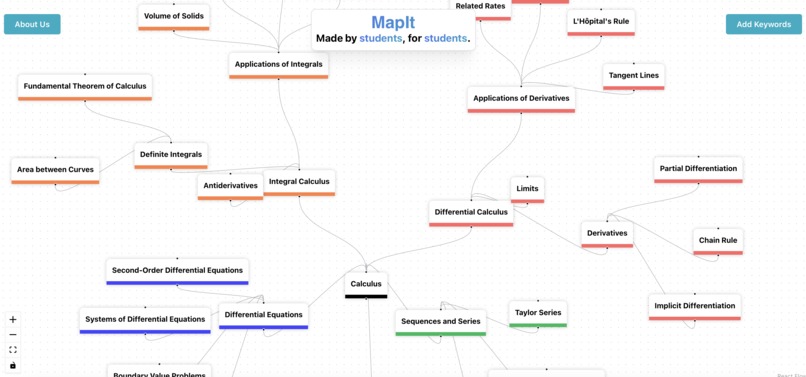
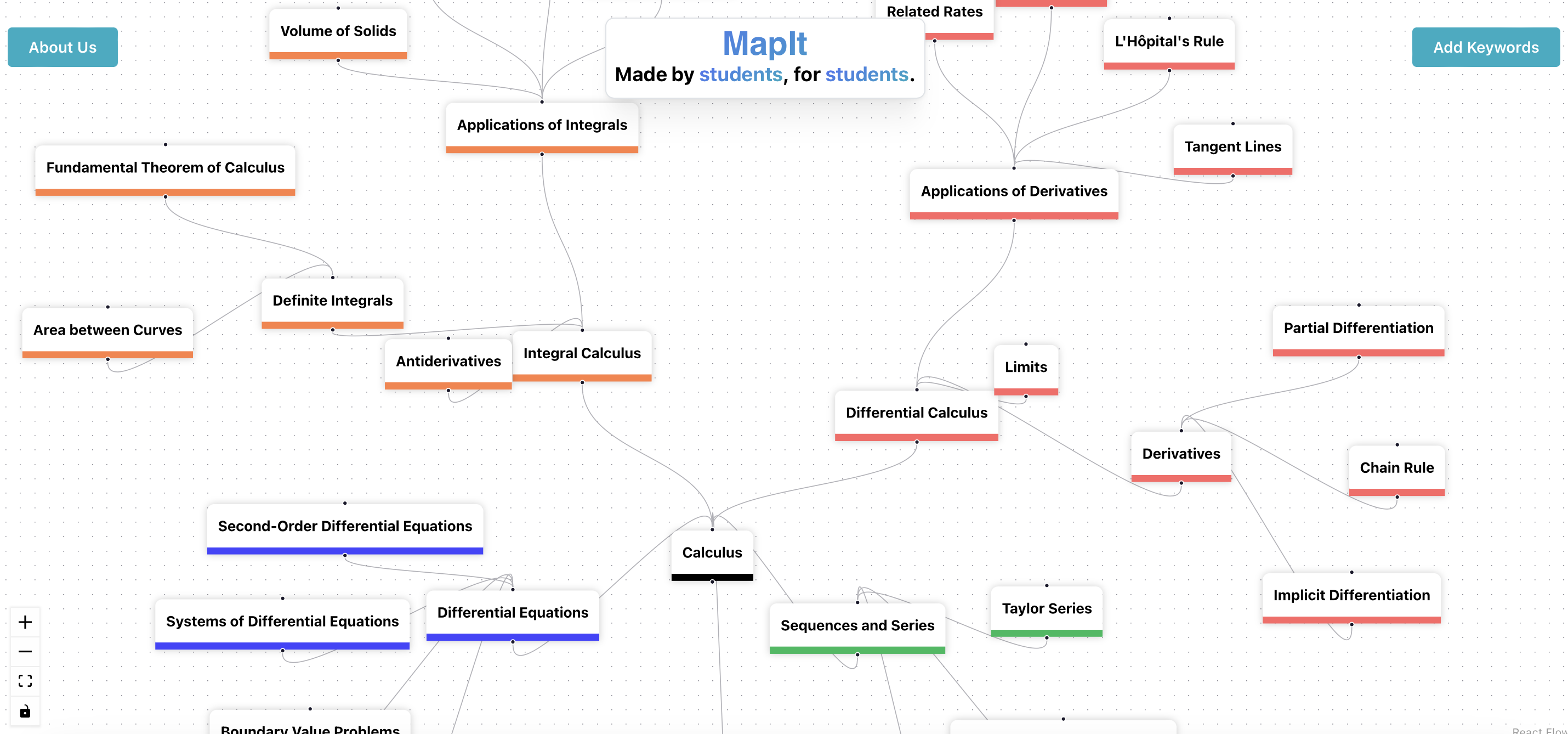
Main screen with MindMap
-
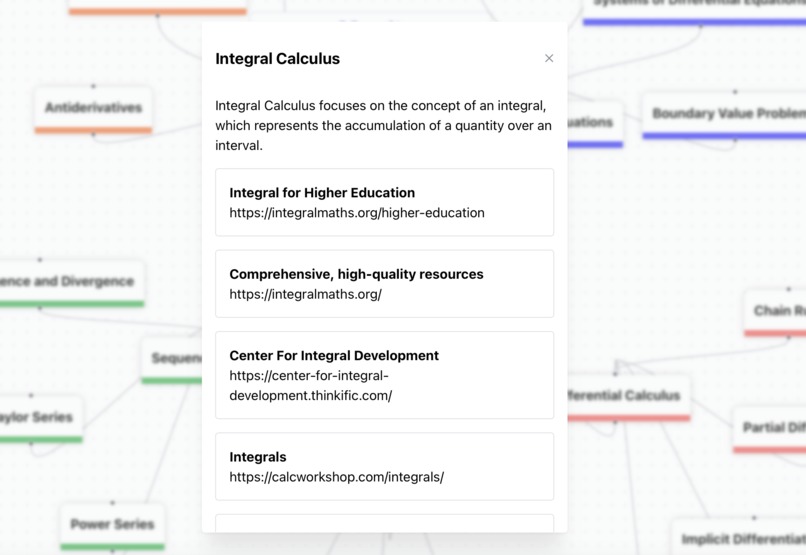
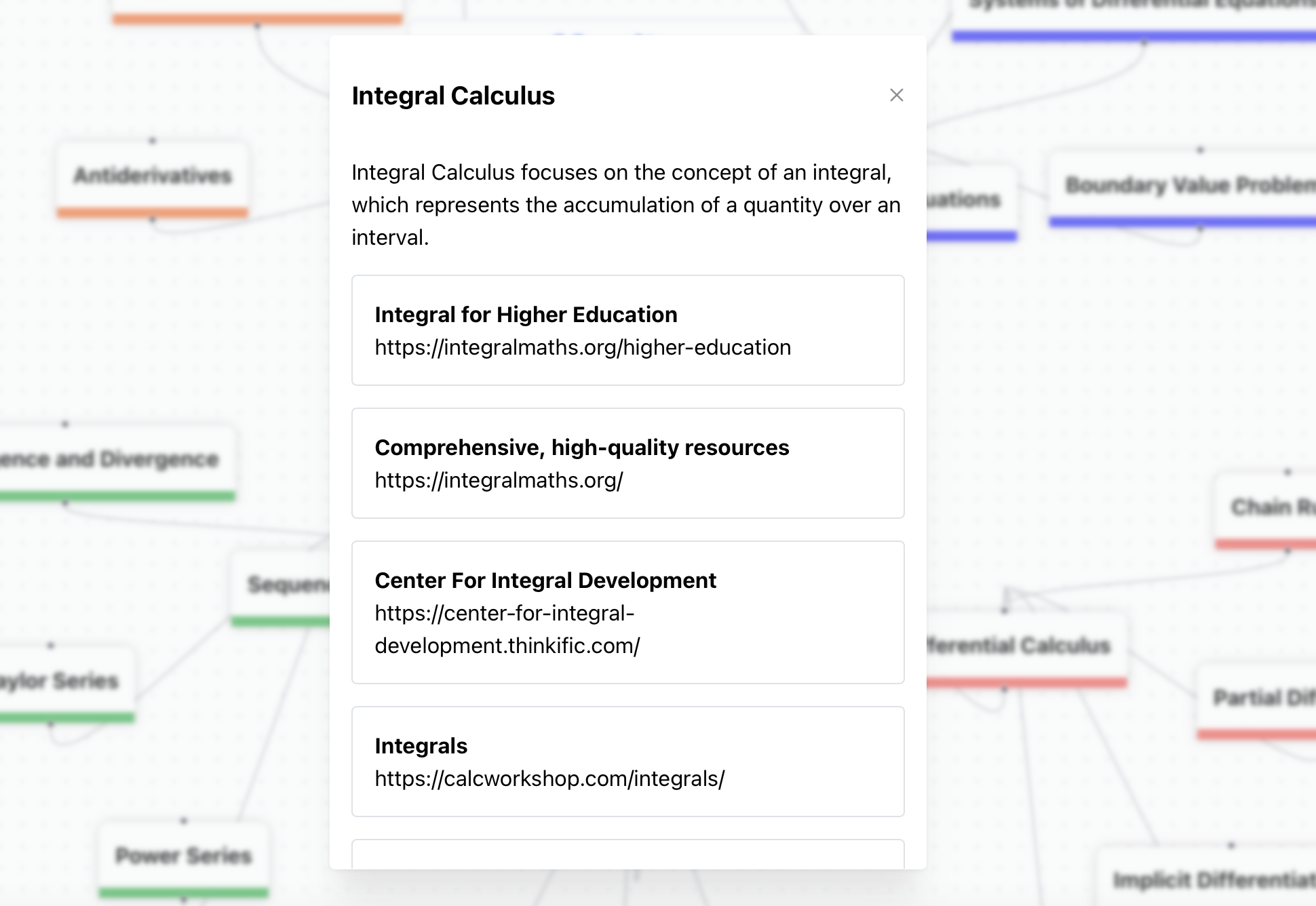
Example of Modal for more info on each keyword node
-
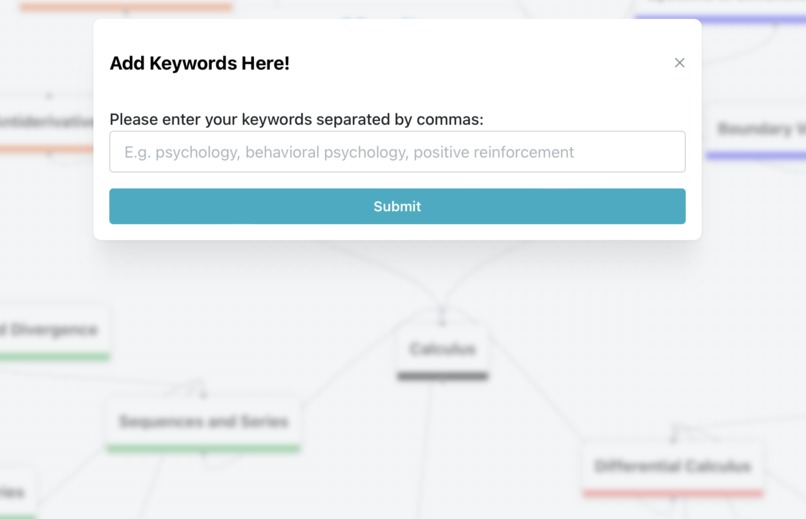
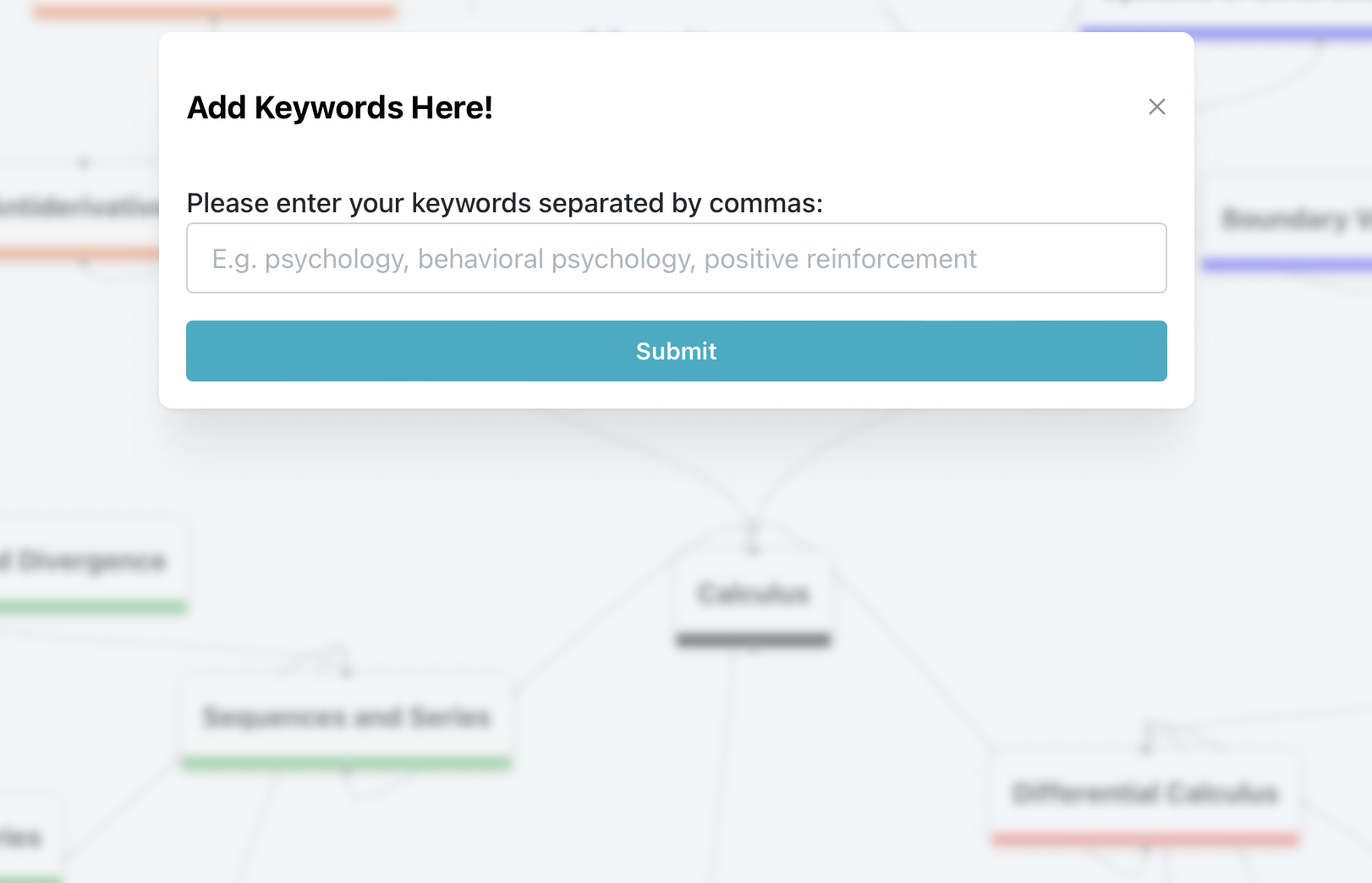
Modal for adding new keywords to create a mind map
-
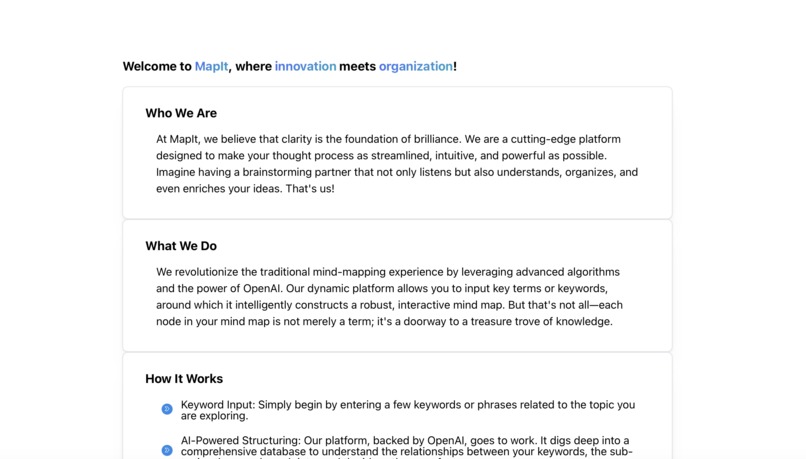
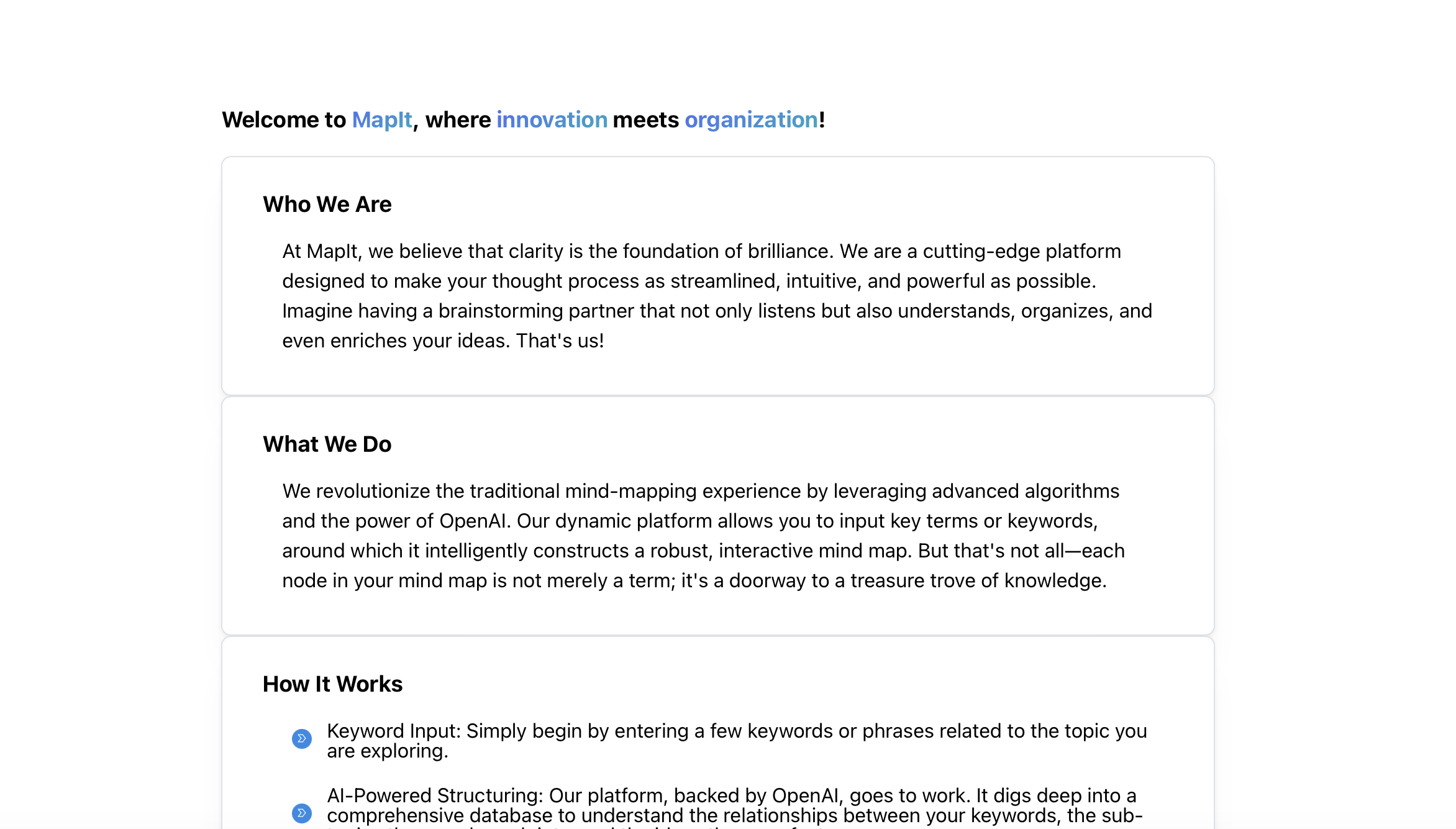
About Us page
Inspiration
The genesis of our project came from a personal experience—our teammate Ashok's struggle to prepare for a psychology exam. It was then that we stumbled upon a YouTube video explaining the virtues of mind mapping as an effective learning tool. This inspired us to create MapIt, a technology-based solution designed to facilitate a more efficient learning process for students and knowledge enthusiasts alike.
What it does
MapIt is an intelligent learning tool that employs Artificial Intelligence to automate the creation of mind maps. The user simply inputs their desired keywords or concepts, which are then organized into a centralized topic. From there, our AI dynamically generates a mind map that branches into related sub-concepts and keywords. Should a particular node pique your interest, clicking on it enables you to delve deeper into related ideas and access additional resources via Metaphor, our integrated information platform.
How we built it
Our application is built on a robust stack, comprising Amazon AWS for backend services, Python for backend logic, and TypeScript in conjunction with React for frontend development. AWS plays a critical role in data persistence, hosting the user profiles and their respective mind maps. It also runs the Python code that makes API calls to OpenAI. TypeScript and React handle the UI/UX aspect, capturing user interactions and relaying the necessary data to the backend for real-time updates. Metaphor is also utilized in typescript to update the user with additional information.
Challenges we ran into
-Ideation and realization: It was a great challenge to start with a vague idea, create features, specifics, and details, and make that into an feasible product using code. -UI/UX: Striking a balance between aesthetics and functionality was challenging. We wanted the website to be visually appealing yet easy to navigate.
Accomplishments that we're proud of
We take immense pride in crafting a platform specifically designed to augment the academic experience for students and lifelong learners. Additionally, the user interface we've developed seamlessly melds visual appeal with operational efficiency—a design choice we are particularly proud of.
What we learned
-Teamwork: The importance of good communication and collaboration among team members. -Technical Skills: We improved our skills in AWS, React, and Python, and learned how to integrate multiple technologies seamlessly. -AI Capabilities: We gained a better understanding of the capabilities and limitations of AI in automating knowledge curation. -User-centric Design: We learned how crucial it is to keep the user in mind while designing both the front-end and back-end systems.
What's next for MapIt
-Mobile Application: Our next milestone is to extend MapIt's reach through a dedicated mobile application. -Advanced Analytics: We aim to introduce analytics features that evaluate user study patterns and recommend personalized learning strategies. -Global Expansion: Preparations are underway for a global launch, complete with multi-language support, to make MapIt universally accessible. -API Integrations: Our future iterations will include integration with other educational platforms and databases to provide a richer resource pool for learning. -Community Features: We are also exploring the idea of a community hub within the platform where users can share their mind maps and additional study resources.

Log in or sign up for Devpost to join the conversation.