-
-
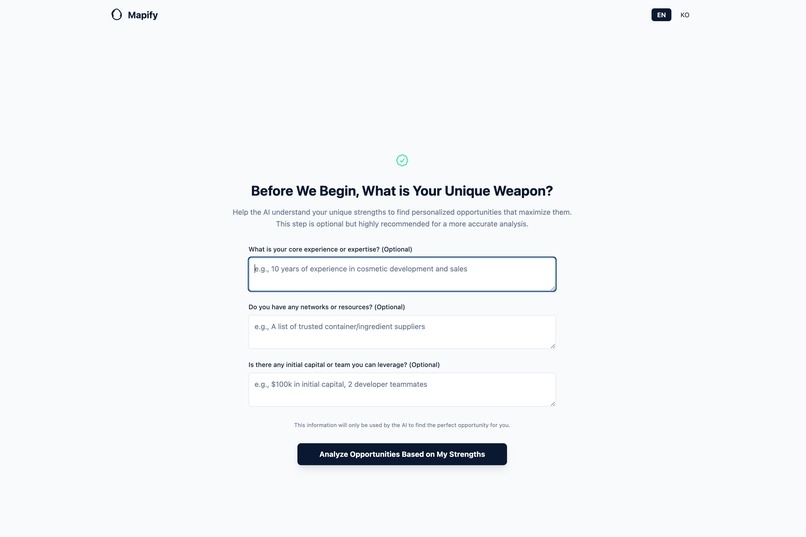
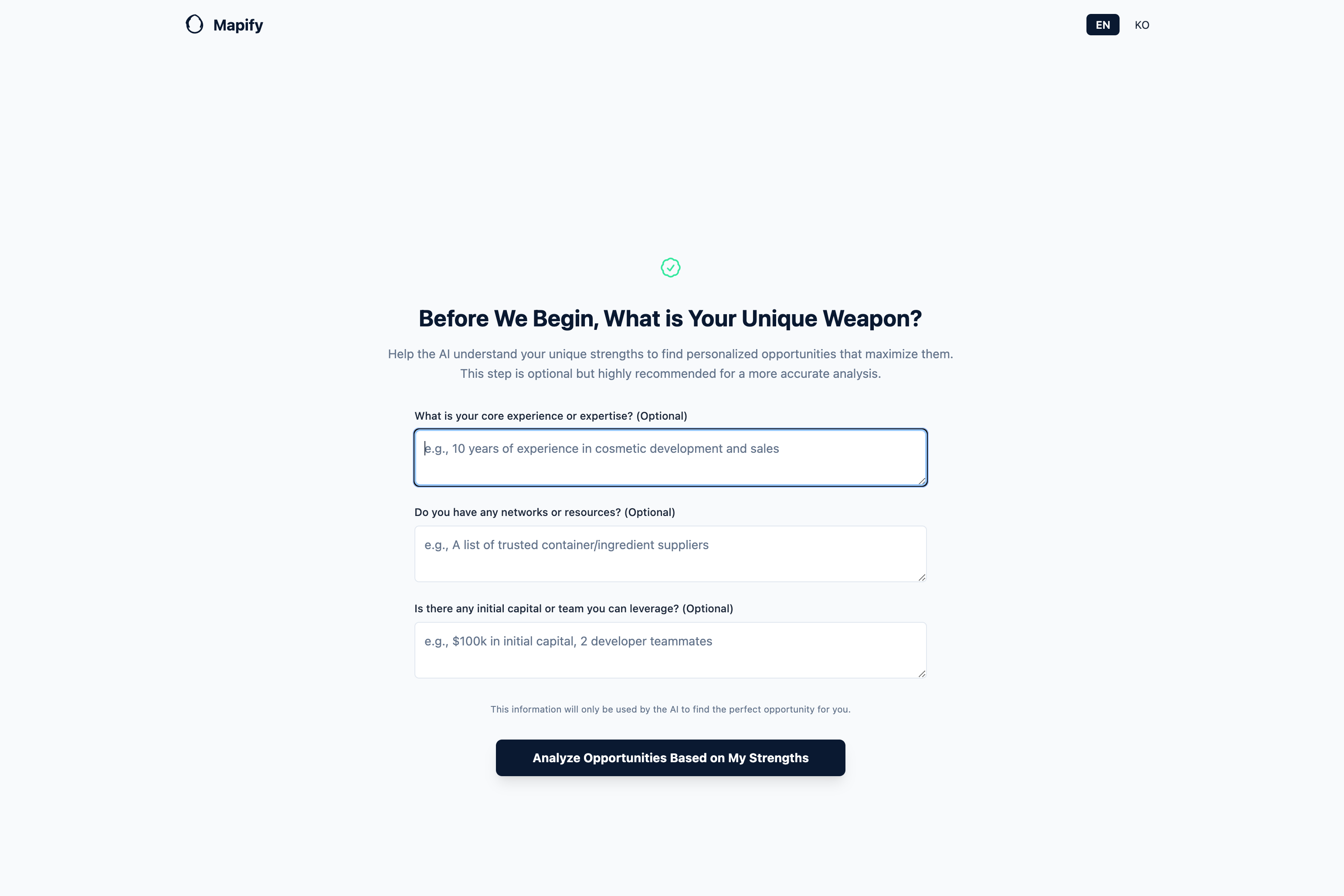
Input your unique strengths like expertise and networks. The AI will then find market opportunities perfectly tailored for you.
-
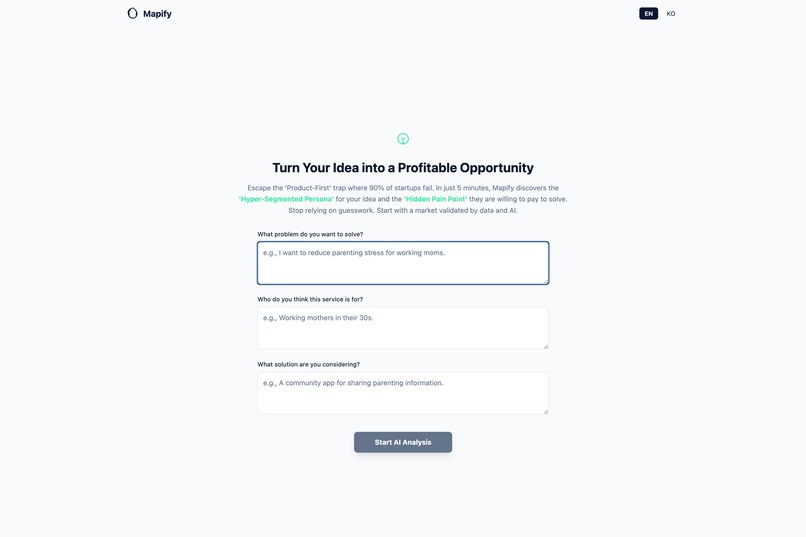
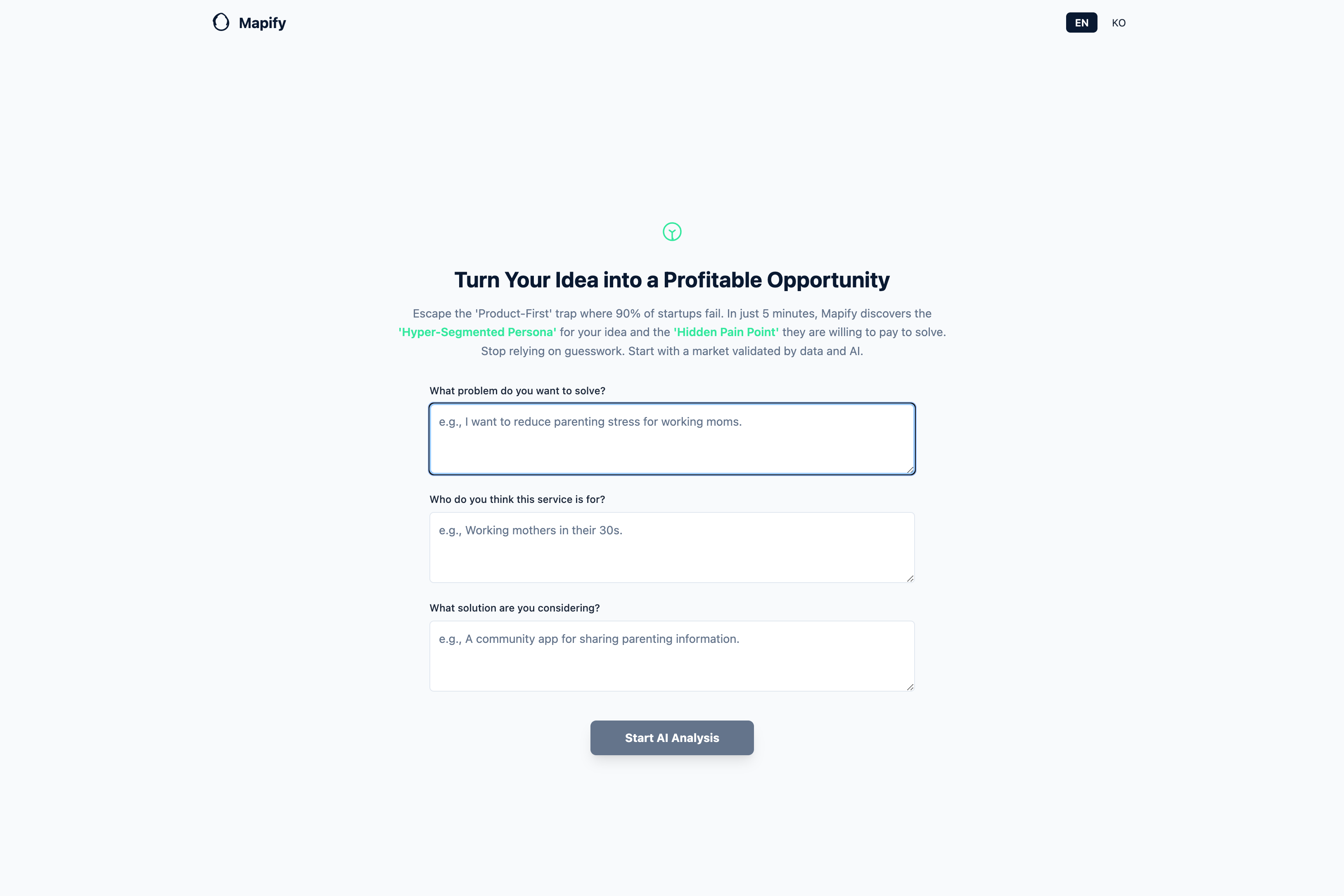
Outline your idea: the problem, audience, and solution. This creates the core hypothesis that the AI will rigorously test against the market
-
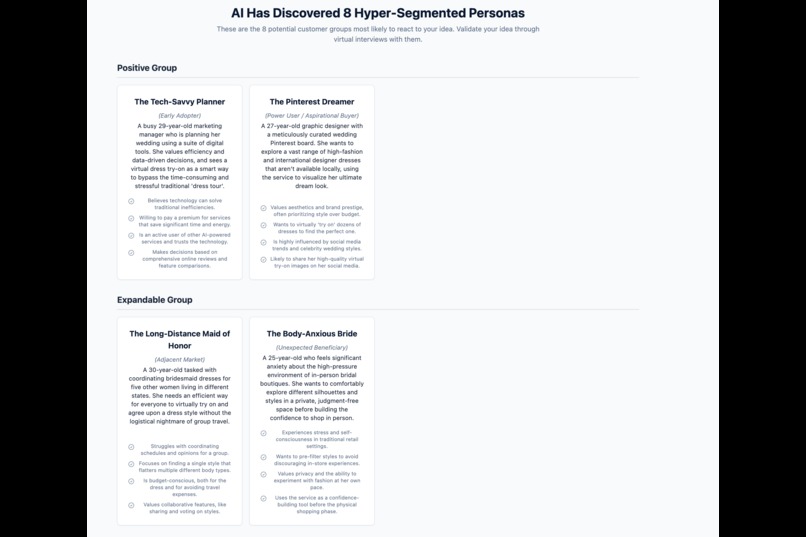
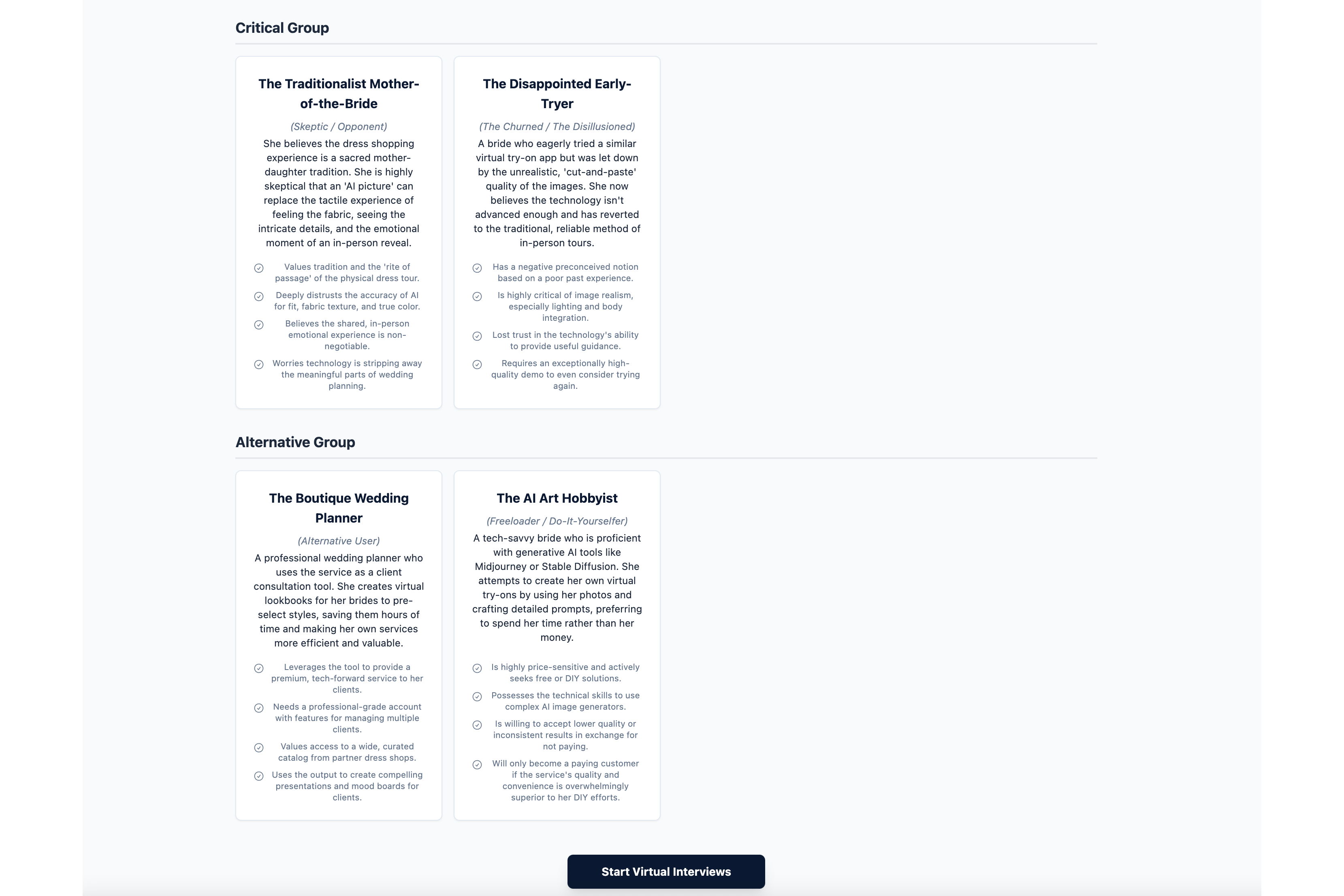
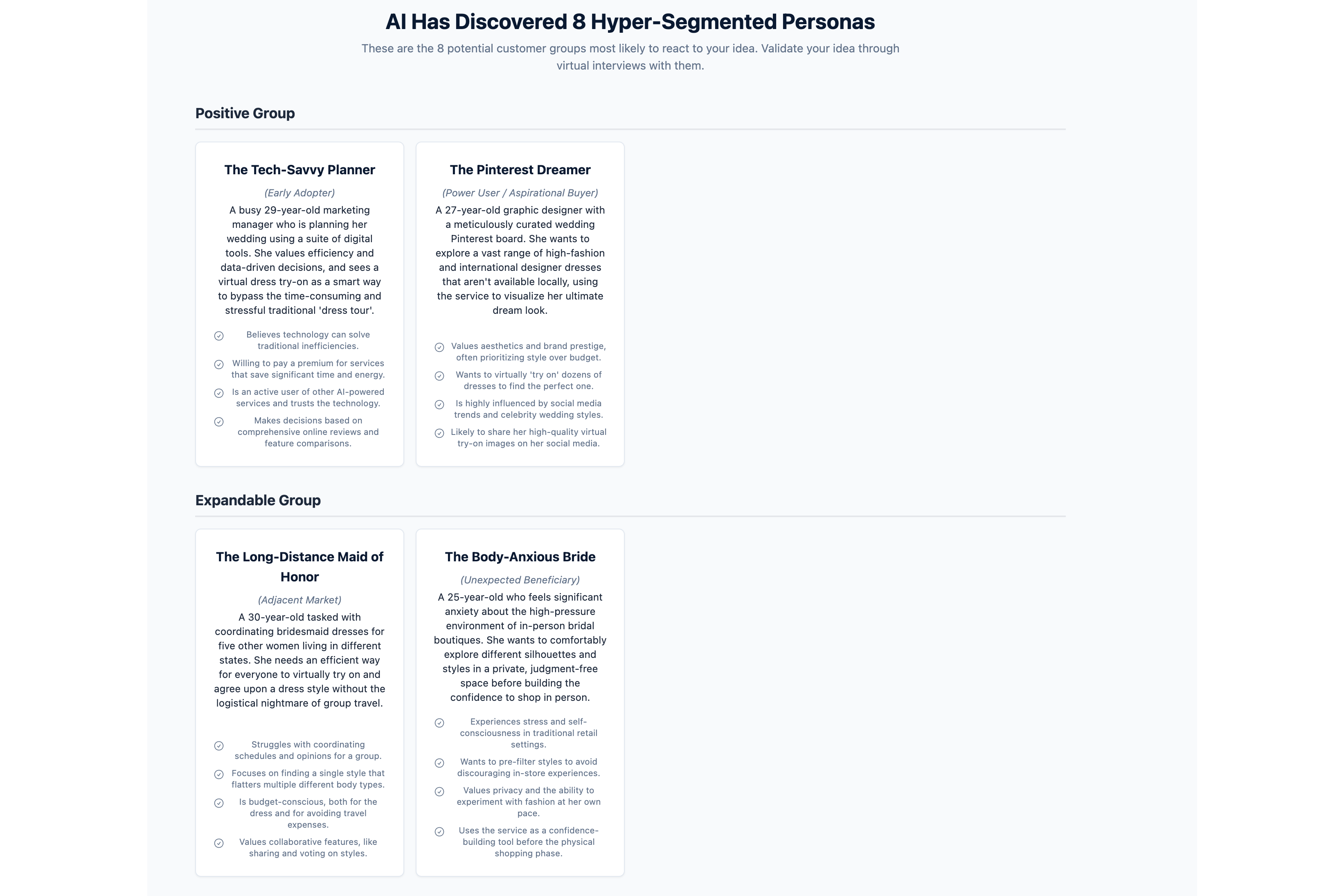
AI discovers 8 distinct customer personas for your idea. They are automatically categorized into strategic groups like Positive and Critical
-
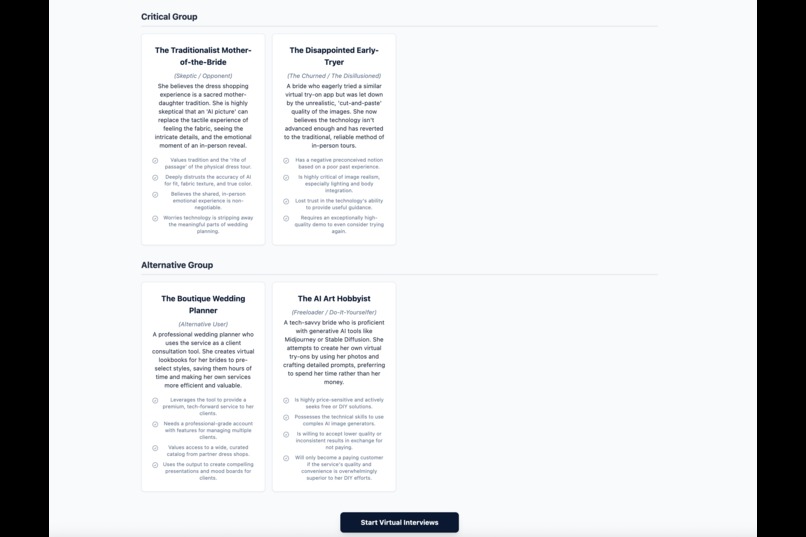
Initiate the validation phase. The AI will now conduct in-depth interviews with all 8 personas to test your core assumptions.
-
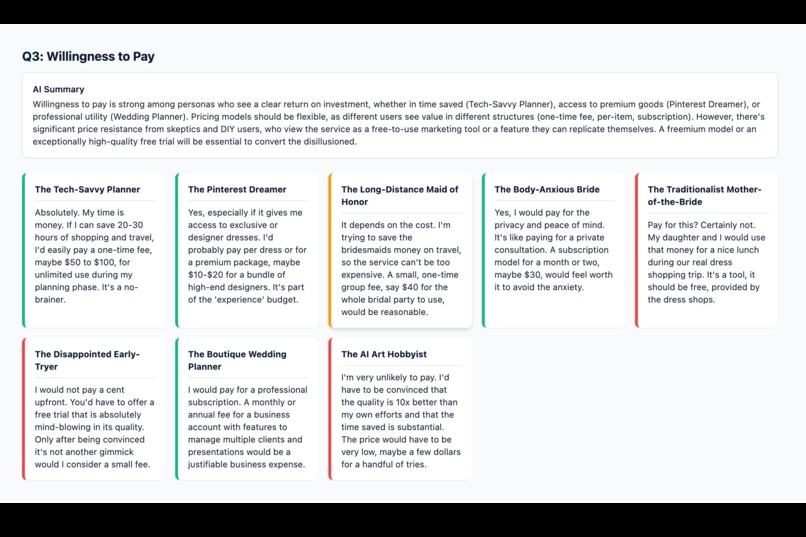
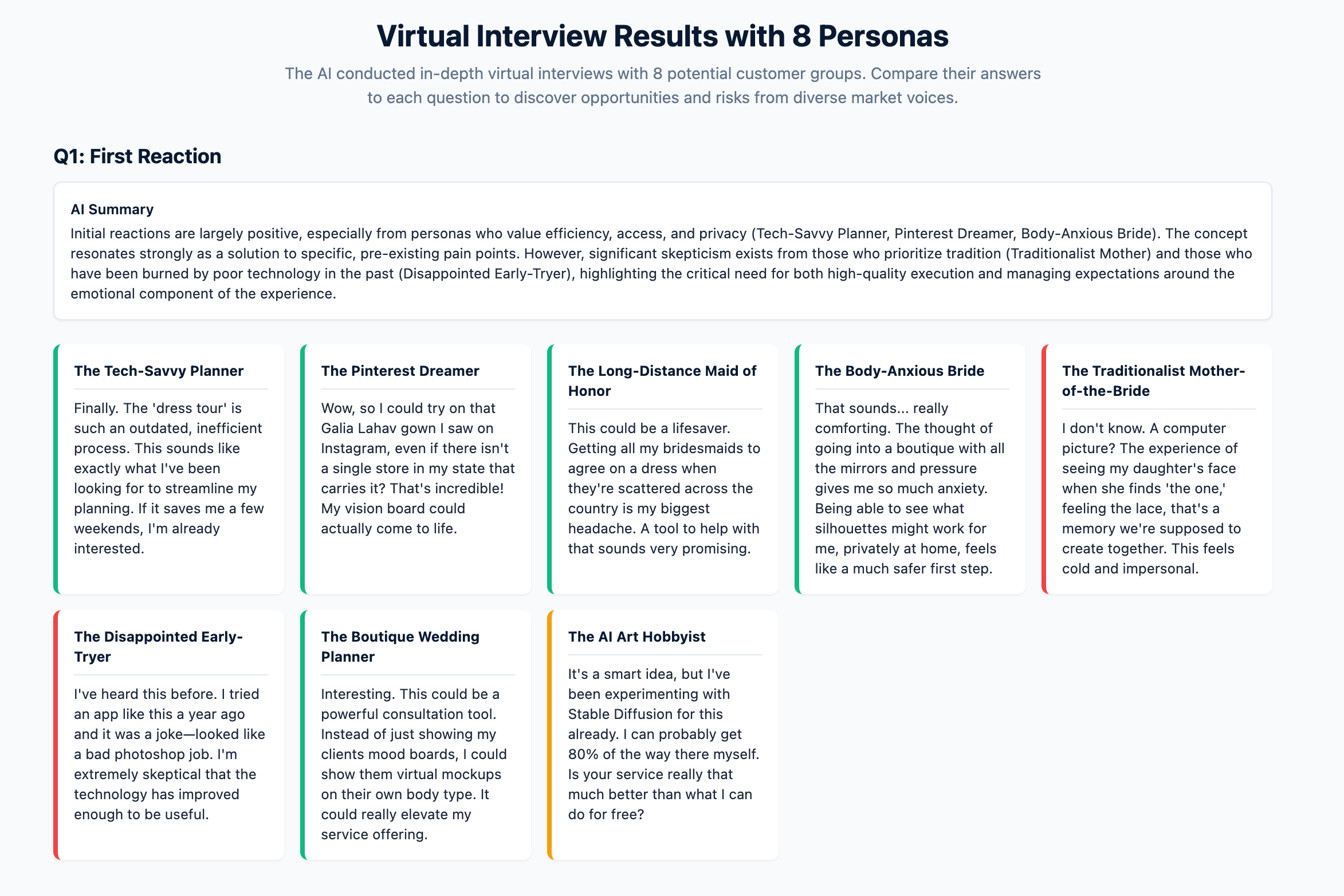
each persona's unfiltered first reaction.Instantly gauge your concept's initial appeal and first impression across diverse market segments
-
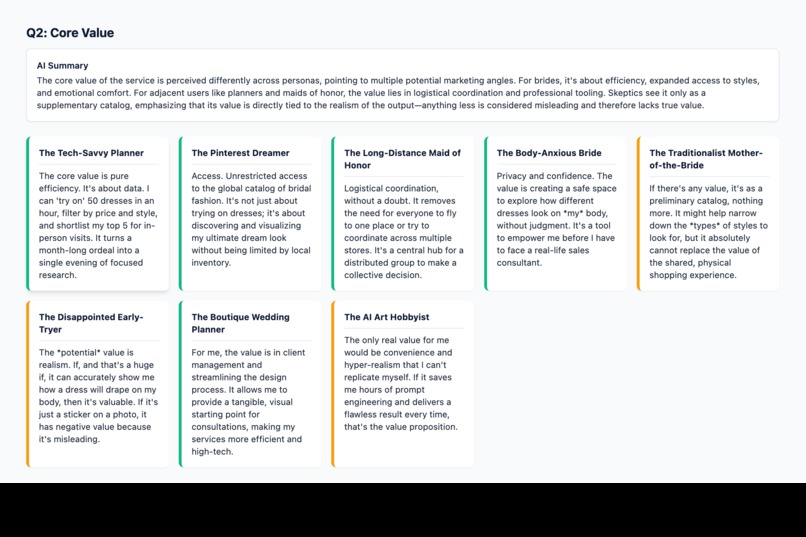
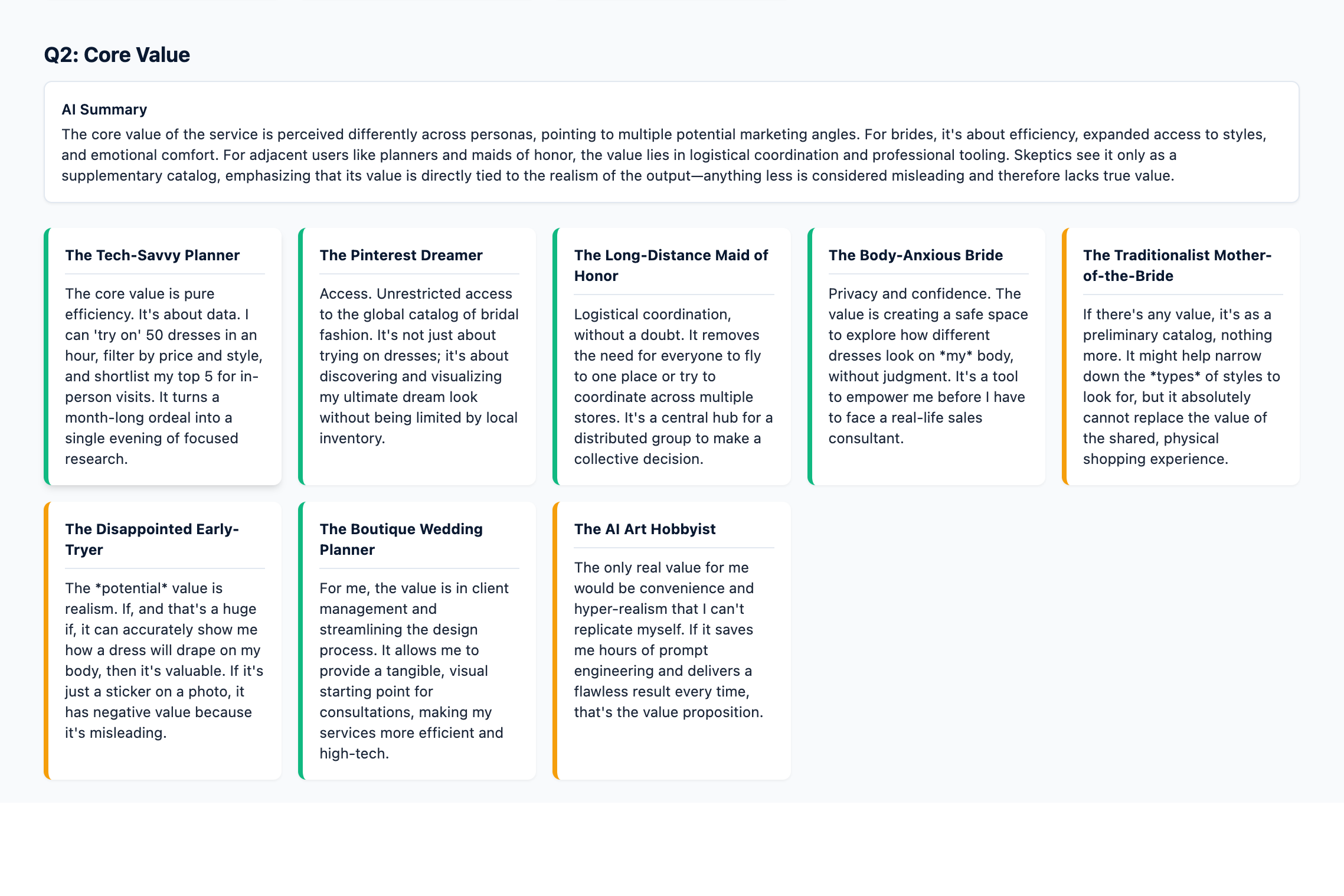
Discover what each persona values most. This highlights the different angles of perceived benefit, from efficiency to emotional comfort.
-
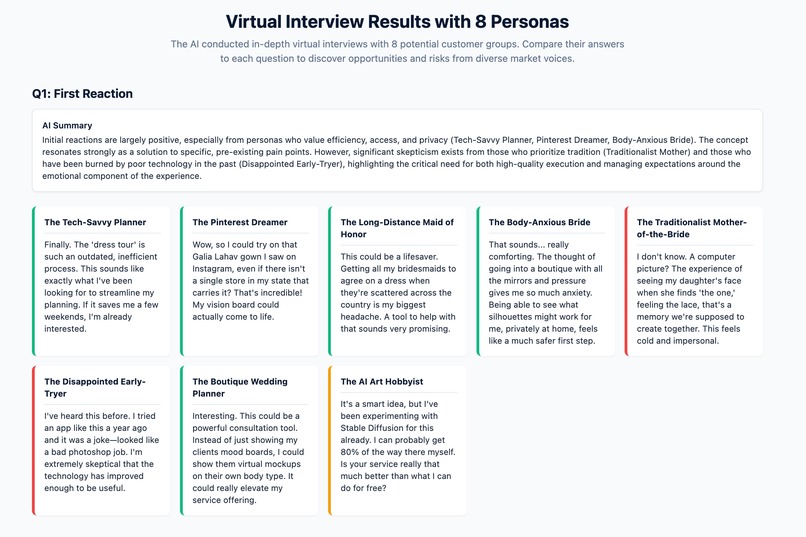
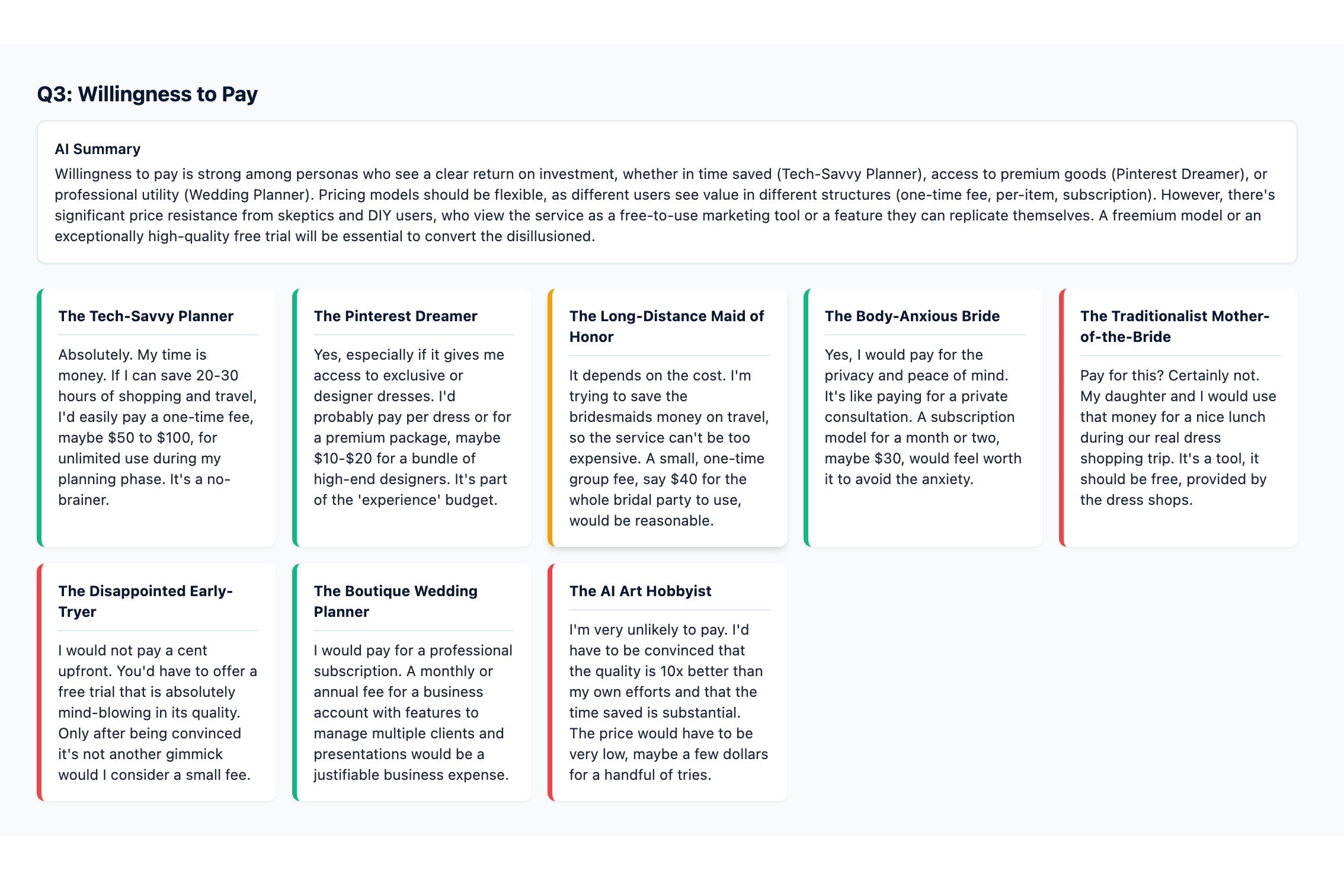
Validate your business model. Compare what each persona is willing to pay, revealing your most profitable customer segments.
-
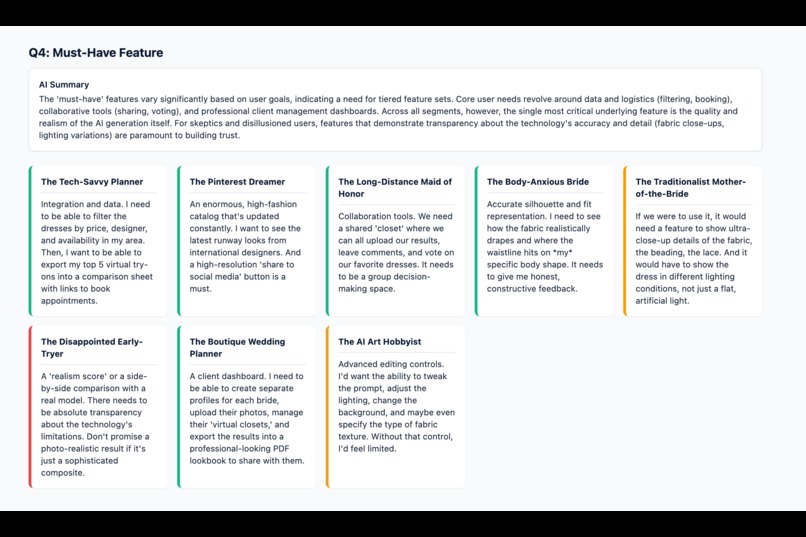
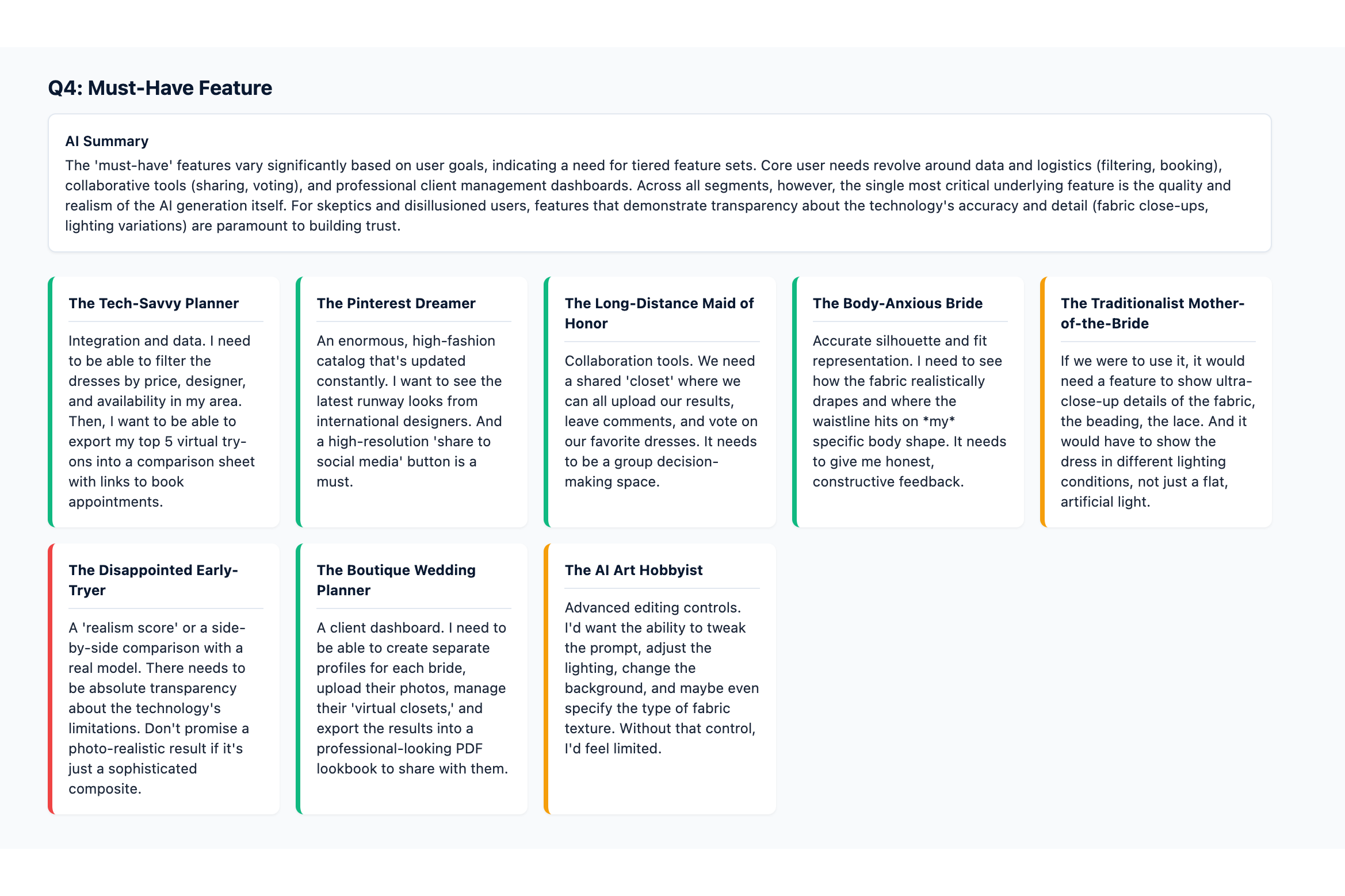
Find out which features are non-negotiable for each persona. This gives you a clear, data-driven guide for prioritizing your MVP.
-
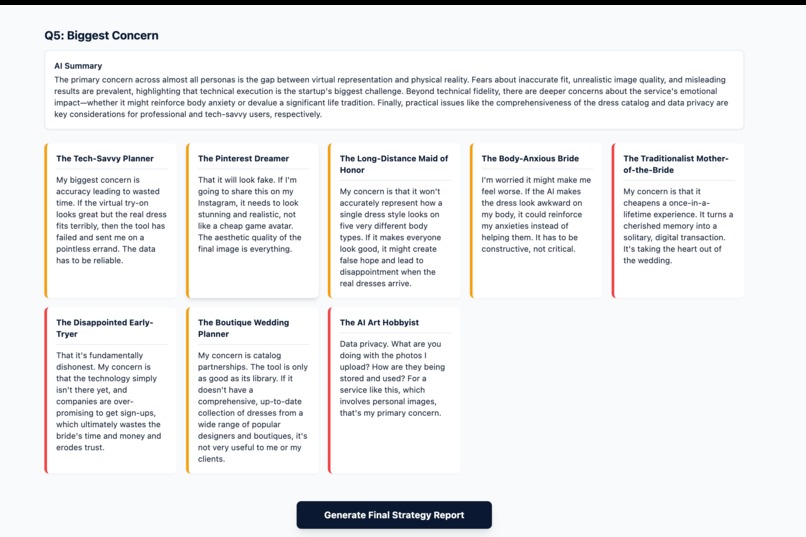
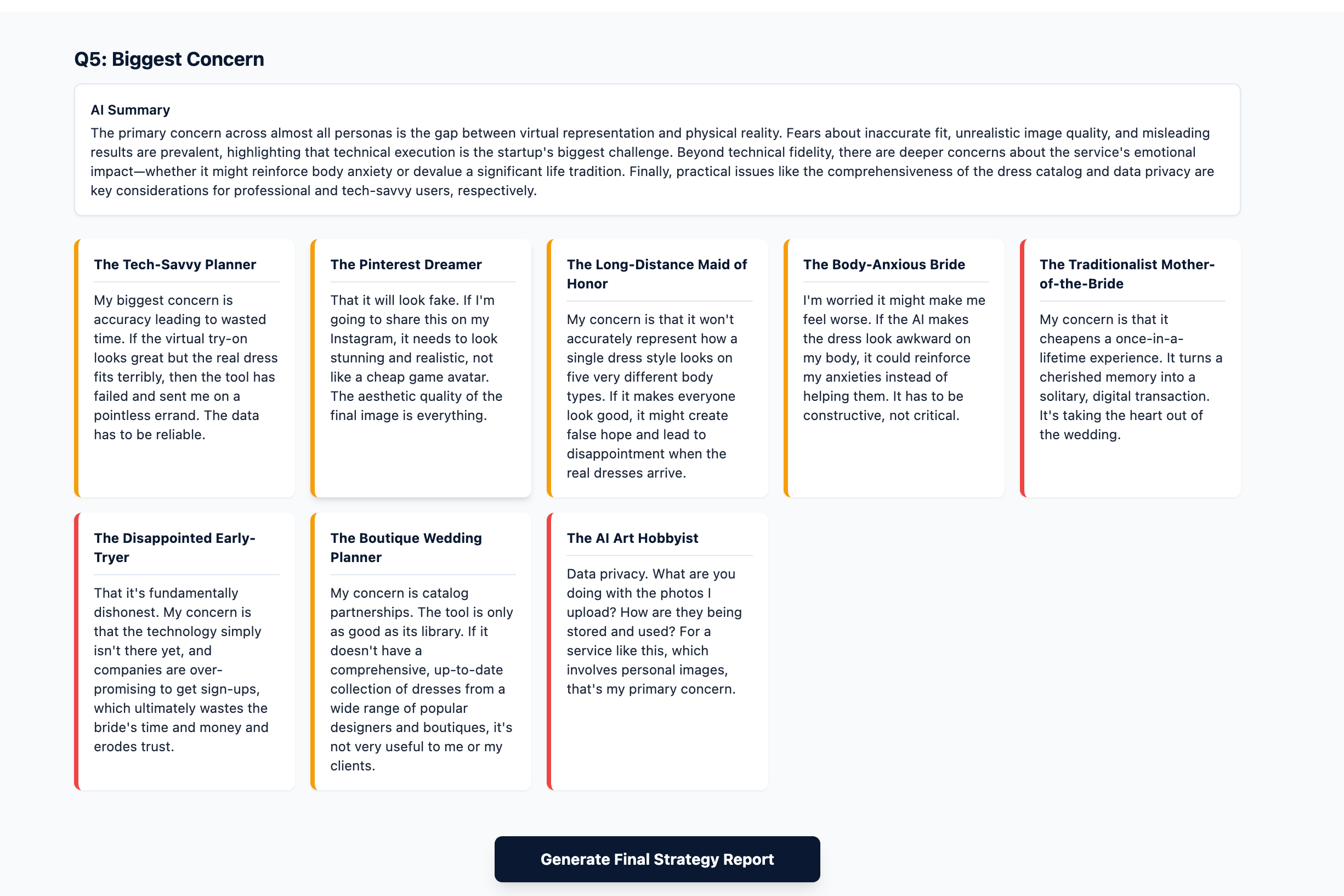
Uncover the primary fears, risks, and objections from each persona.helps you proactively identify and address potential roadblockstoadoption
-
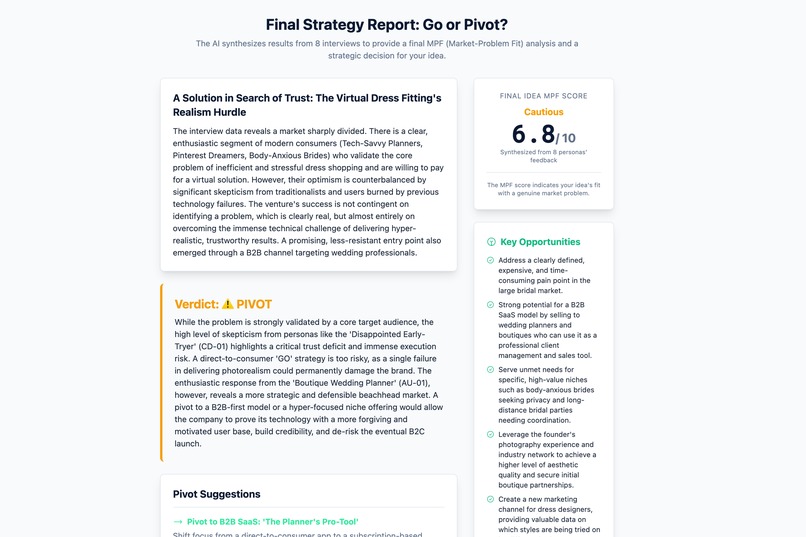
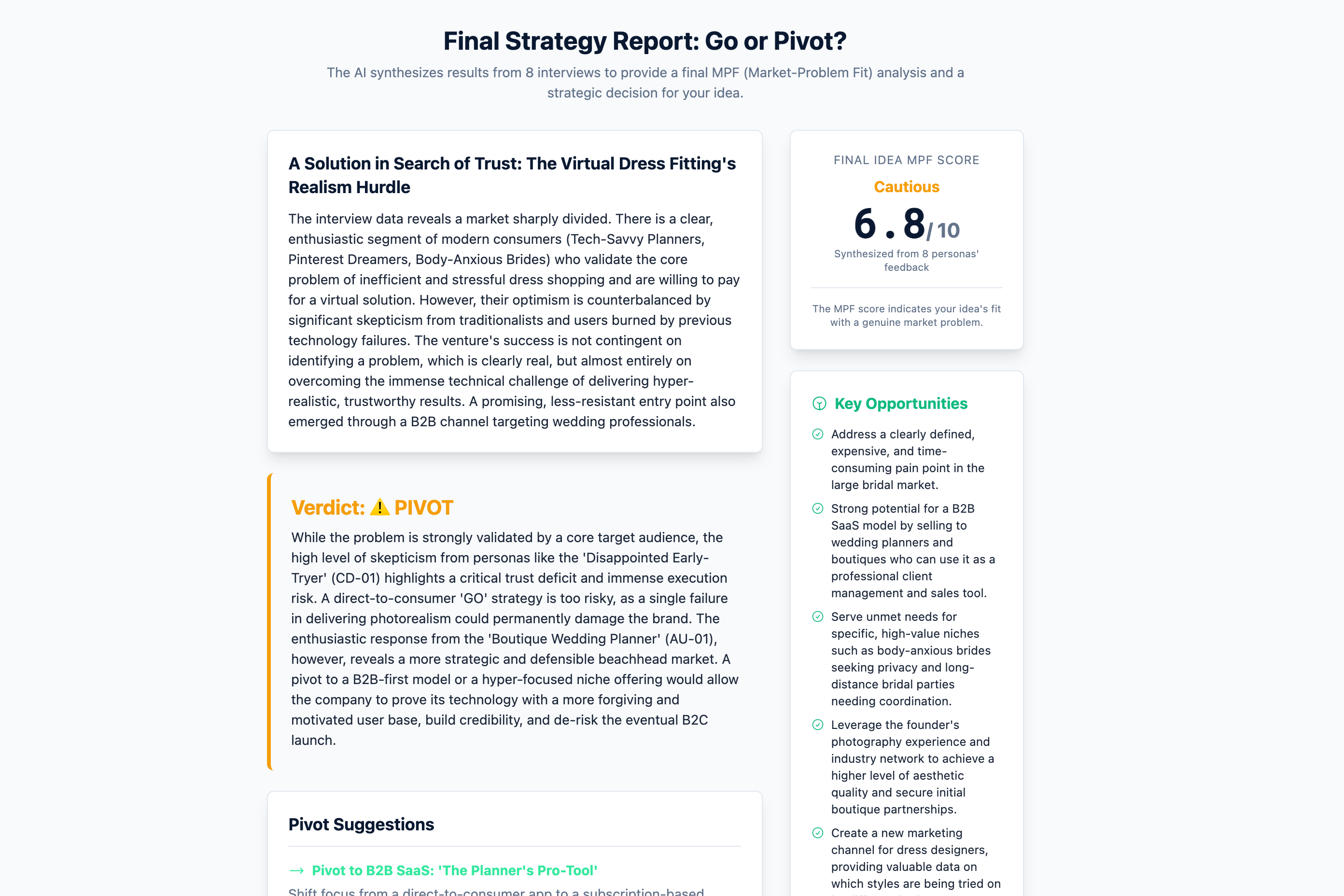
The AI synthesizes all data into a final verdict. Get your calculated MPF score and a clear, data-driven "Go" or "Pivot" recommendation.
-
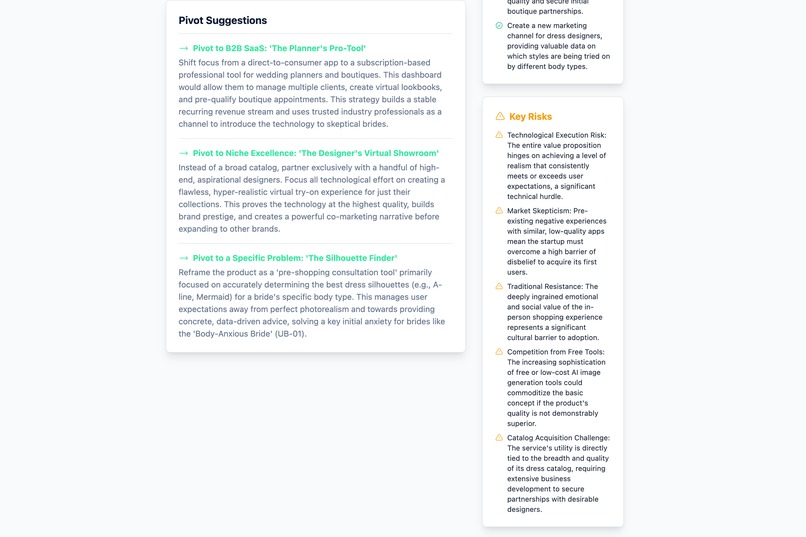
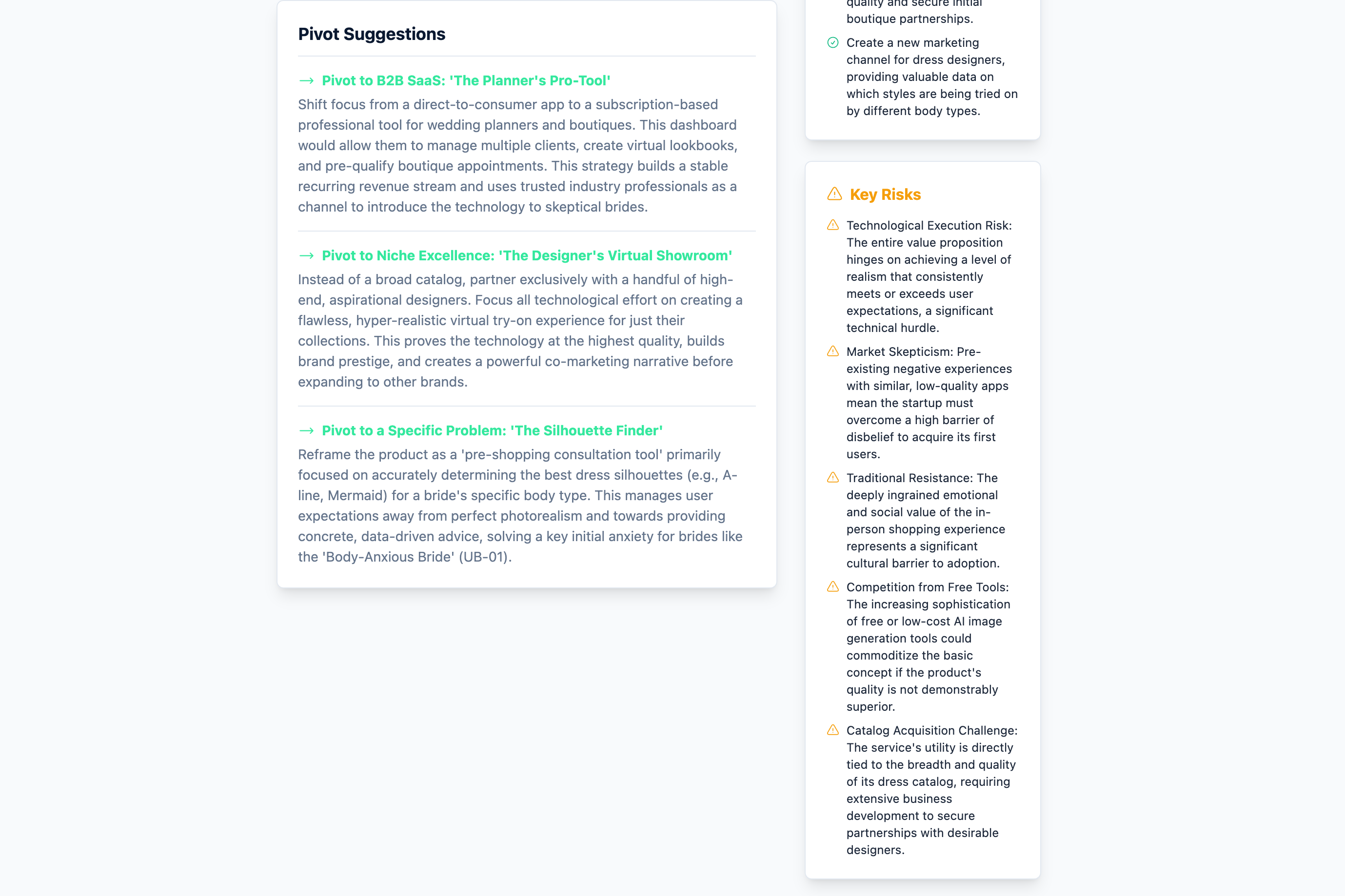
Get your prescription. Mapify delivers concrete pivot suggestions and a list of key risks, giving you an actionable path forward.
Inspiration
The startup graveyard is filled with beautifully engineered products that nobody wanted. The mantra of "Product-Market Fit (PMF)" forces founders into a costly, soul-crushing cycle of building, launching, and pivoting, with a 90% failure rate as the grim reality. Our inspiration came from a simple, radical question: "What if we could flip the script?" Instead of searching for a market for our product, what if we could find a validated market first, and then build the perfect product for it? We were inspired to end the era of guesswork and build a tool that champions the Market-Product Fit (MPF) philosophy.
What it does
Mapify is an AI-powered strategic platform that de-risks new business ideas before you write a single line of code. It acts as a "success navigation" system for founders. A user inputs their initial idea and unique strengths, and Mapify gets to work. First, it generates a diverse set of hyper-specific, realistic customer personas, creating a "map" of the potential market landscape. Then, it runs a virtual focus group or individual interviews, simulating how these different personas would react to the user's idea. The final output is a clear, actionable strategic report that identifies the strongest opportunities, critical feedback, potential new features, and a data-driven MPF score, replacing uncertainty with a validated roadmap.
How we built it
Mapify is built entirely on the power of advanced prompt engineering within the Google AI Studio environment, leveraging the capabilities of the Gemini model family. Instead of a complex backend, our core logic resides in a sophisticated, multi-step "Chain-of-Thought" prompt. This single prompt orchestrates a two-step process:
- Market Exploration Agent: First, the AI defines several distinct customer segments based on our "Axis of Variation" framework (e.g., Early Adopters, Skeptics, Adjacent Markets).
- Persona Generation Agent: Then, it uses those distinct profiles to generate each detailed persona individually, ensuring true diversity.
The front-end is designed as a clean, intuitive web interface (conceptualized with React/Vue in mind) to make this complex analytical process feel simple and magical for the user.
Challenges we ran into
Our biggest initial challenge was persona homogeneity. The AI, anchored by the user's initial idea, tended to generate personas that were all minor variations of each other. To solve this, we engineered the "Axis of Variation" framework directly into the prompt, forcing the AI to explore radically different viewpoints, including outright opponents.
The second challenge was score inflation. The AI consistently produced high MPF scores (e.g., 9.2-9.5) because it's trained to be helpful and positive. We solved this by separating the AI's qualitative analysis from a rule-based scoring engine. We also introduced a "Red Team" or "Devil's Advocate" step in the prompt, forcing the AI to critically challenge the idea first. This ensures the final score is a balanced, objective measure, not just an echo of optimism.
Accomplishments that we're proud of
We are incredibly proud of successfully simulating a "virtual focus group" purely through prompt engineering. Having multiple AI personas with conflicting viewpoints debate an idea and generate emergent insights is a significant breakthrough.
Most importantly, we've created a tool that shifts the founder's mindset from "Is my idea good?" to "For whom is my idea a perfect solution?". We don't just provide data; we provide a clear, strategic direction, empowering founders to avoid months of wasted effort and build with confidence from day one.
What we learned
- Diversity is the key to validation. A great idea validated against a biased or homogenous sample is a recipe for disaster. Forcing the exploration of diverse, even oppositional, viewpoints is non-negotiable.
- Don't let the AI grade its own homework. LLMs are brilliant analysts but biased graders. The most reliable system uses the AI for qualitative insights and a separate, rule-based logic for quantitative scoring.
- Knowing what not to build is the biggest ROI. The most valuable insight Mapify provides isn't always the "next big idea," but the data-driven confidence to abandon a flawed one before investing a lifetime into it.
What's next for Mapify
Our vision is to evolve Mapify from a validation tool into an end-to-end AI strategic partner. Our roadmap includes:
- Deeper Behavioral Simulations: Moving beyond initial reactions to simulate a 30-day user journey, predict engagement patterns, and identify potential churn risks.
- AI-Powered Solution Co-creation: Instead of just validating a user's idea, the AI personas will actively participate in brainstorming and designing the feature set for the Minimum Lovable Product (MLP).
- Integrations: Connecting with platforms like GitHub, and industry-specific forums to pull in richer, real-world context for even more accurate analysis and persona generation.
Built With
- advanced-prompt-engineering
- chain-of-thought-(cot)
- css
- gemini-api
- google-ai-studio
- react.js-(conceptual-ui)

Log in or sign up for Devpost to join the conversation.