-
-
image
Inspiration
This project began with one powerful question: “How can someone navigate the world when memory doesn’t always show up?” MapBuddy was inspired by real-life challenges faced by individuals with short-term memory loss, post-traumatic brain injury, or early-stage dementia. Traditional navigation apps provide direction, but they don't remind users why they're traveling. For someone vulnerable to disorientation or forgetfulness, this gap isn’t just inconvenient it’s isolating. As someone deeply committed to justice and accessibility, I wanted to create something that goes beyond location services. I wanted an empathetic companion one that listens, reminds, and restores independence with gentle clarity.
What It Does
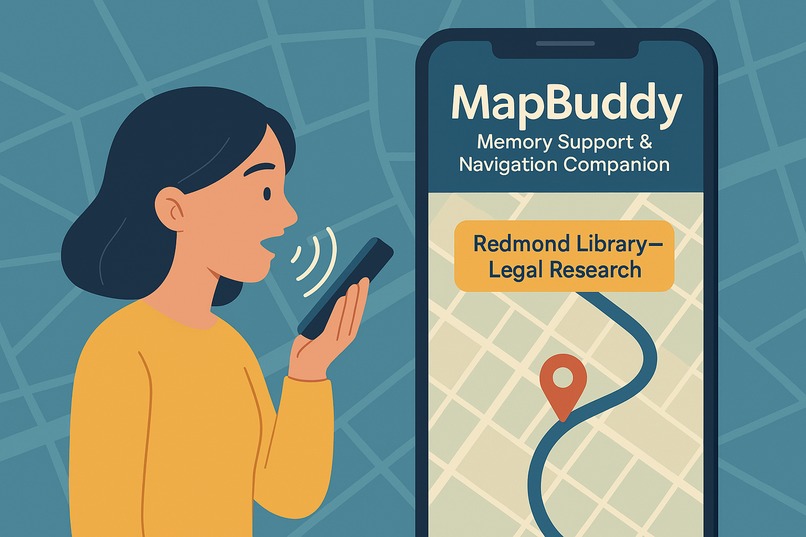
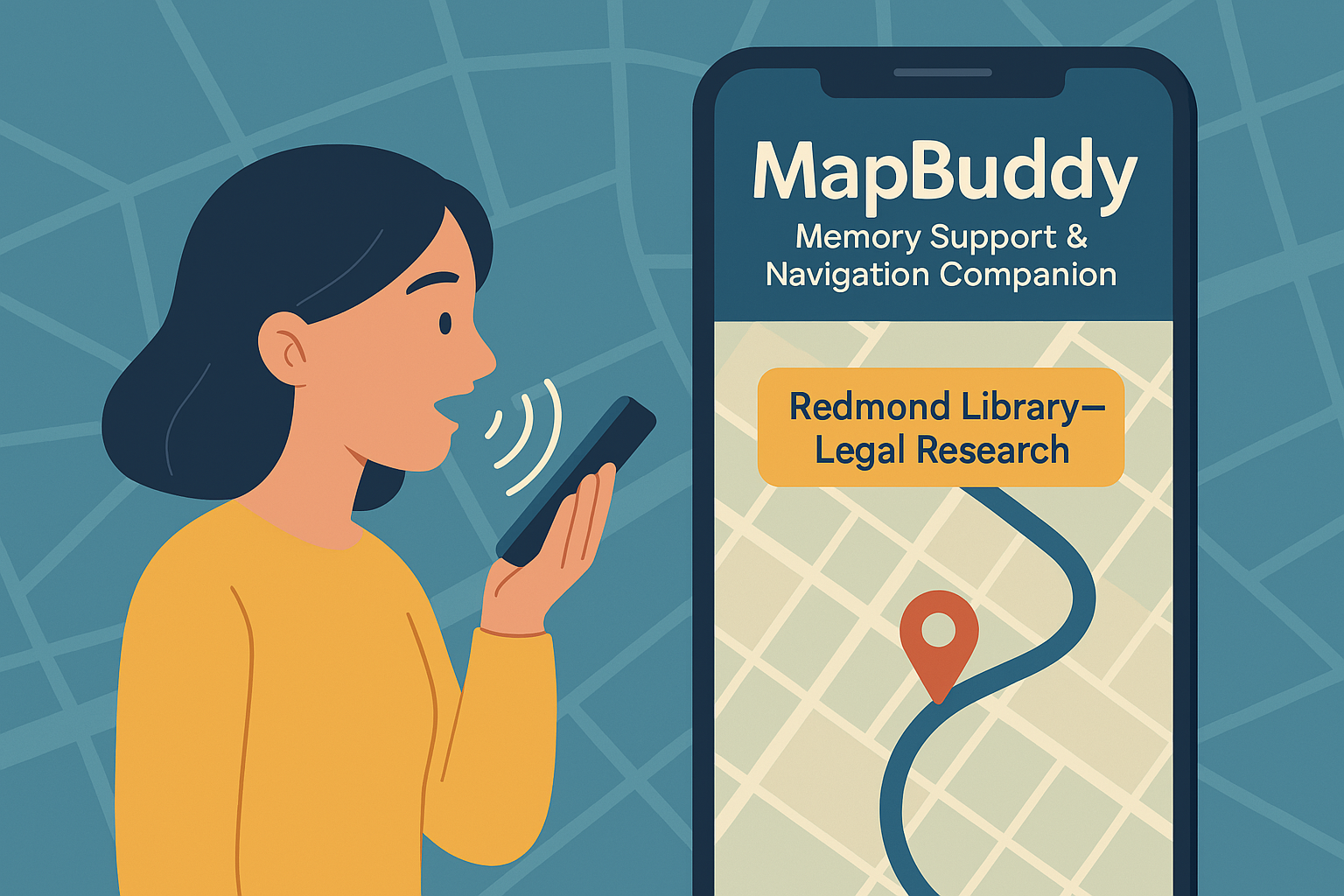
MapBuddy allows users to speak their destination and reason for travel—capturing intent through voice. It stores that trip data and delivers periodic reminders of where they’re going and why. It also answers voice queries like “Where am I?” with street-level information. This empowers users who may experience disorientation to regain clarity during their journey.
How I Built It
- Backend: FastAPI framework serving multiple endpoints
- Voice Commands: Speech-to-text powered by Google Cloud Speech
- Mapping: Google Maps API with live location rendering via Jinja2 templates
- Reminders: Asynchronous loops using
asyncio.create_task()for periodic updates - Voice Playback:
pyttsx3for spoken feedback (local mode), silent fallback on cloud - Deployment: Hosted on Render with secure credential storage and environment variable setup
Challenges I Ran Into
- Managing real-time voice transcription and keyword parsing across different accents
- Debugging async reminder loops and ensuring silent fallback in cloud-hosted environments
- Balancing simplicity with emotional relevance—making sure reminders felt supportive, not robotic
- Coordinating secure access to APIs while maintaining portability across environments
Accomplishments That I Proud Of
- Delivered a working voice-to-travel system entirely solo—with backend, logic, deployment, and interface
- Built inclusive design for memory-based support with minimal cognitive load
- Successfully deployed and tested on both local and cloud setups
- Integrated real-time speech and map systems in under a week before LSAT prep kickoff
What I Learned
- How to deeply integrate voice tech with backend logic
- The nuance of building for accessibility not just ease of use, but emotional safety
- Strength in solo development: learning to troubleshoot, pivot, and trust intuition under pressure
- Deployment intricacies: from threading issues to environment-specific fallback modes
What’s Next for MapBuddy
- Emergency SOS and caregiver alert systems
- Route deviation detection with smart auto-correction
- Wearable integrations for outdoor navigation
- AI-powered “re-orientation” suggestions based on trip history
- Full conversational voice assistant with multimodal support
Built With
- fastapi
- gardio
- google-cloud-speach-to-text
- google-directions
- google-maps
- jinja
- python
- pyttsx3
- speech-recognition

Log in or sign up for Devpost to join the conversation.