-
-
Overview
-
Chatbot
-
Volunteer Map
-
Educational Response
-
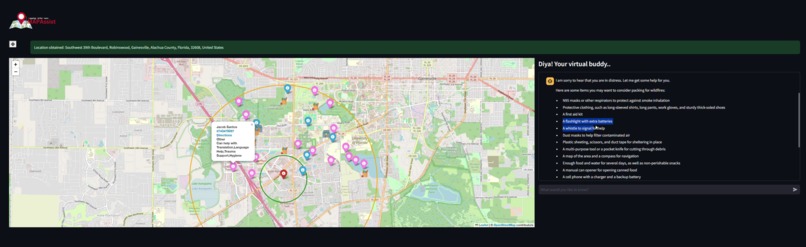
Final look
Inspiration
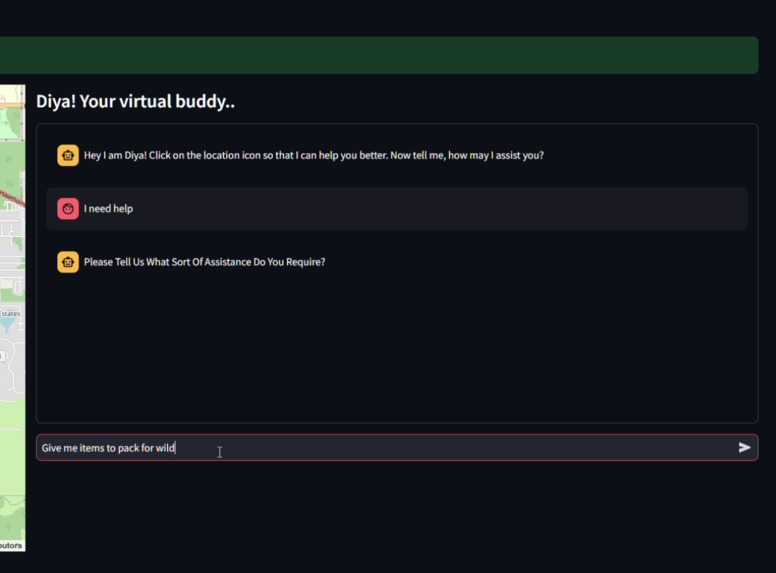
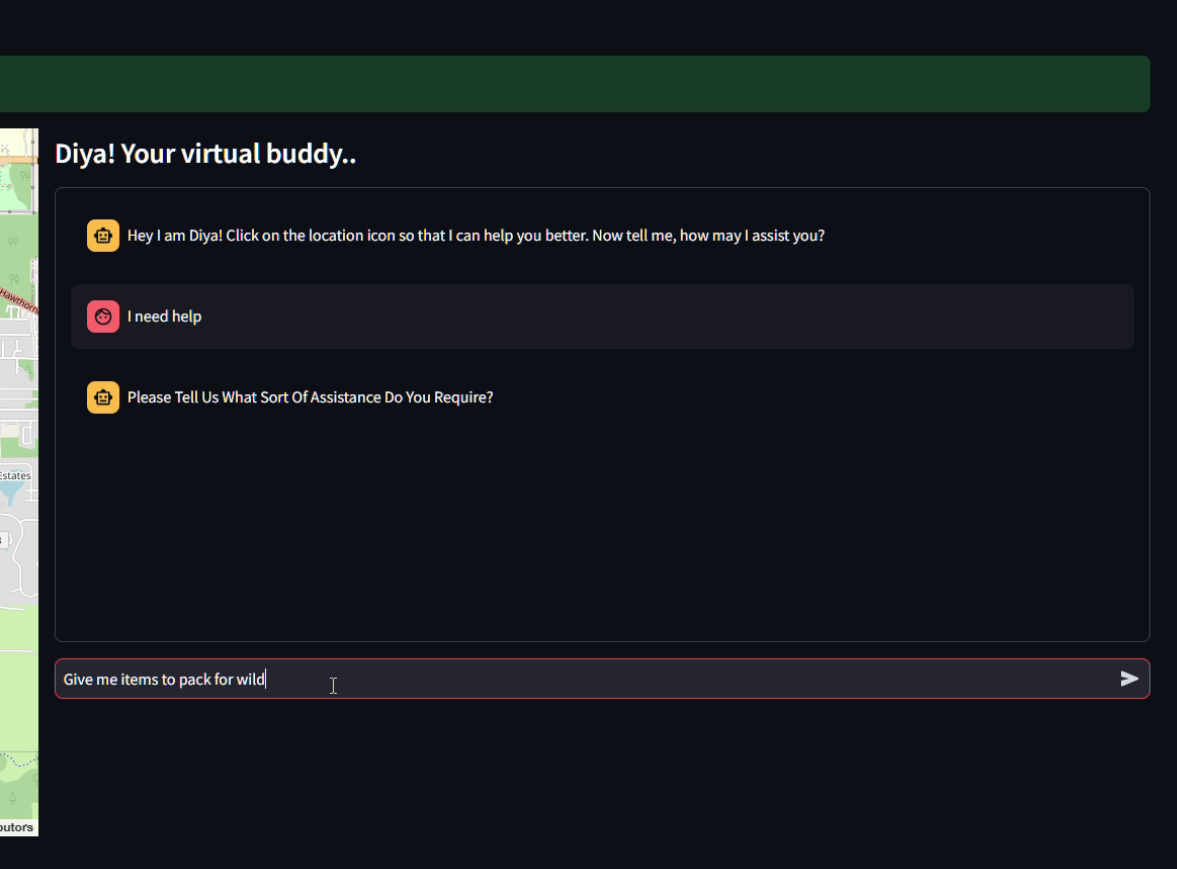
A UN study found that many disasters share root causes, notably poor governance, and that their impacts are interconnected. Addressing these links could help mitigate disaster effects. Researchers highlighted eight key strategies for disaster risk reduction: aligning with natural processes, fostering innovation, collaboration, securing livelihoods, adjusting consumption, strengthening governance, risk planning, and enhancing early warning systems. Our product targets five of these areas. A major challenge in disaster management is a lack of context-specific solutions and overgeneralization, often missing traditional knowledge. Our chatbot provides tailored, local solutions, leveraging "Distributed Help," where individuals assist nearby volunteers, reducing response times effectively.
Additionally, we address mental health needs. A study published by the NIH indicates that mental health disorders can affect up to 87.6% of individuals during a disaster. Enhancing community resilience, improving healthcare access, and implementing suitable mitigation strategies can improve outcomes for vulnerable populations. By fostering a sense of community, MAPAssist aims to lower these rates and provide vital support.
What it does
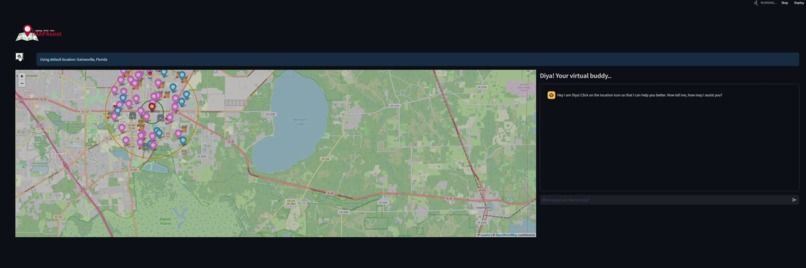
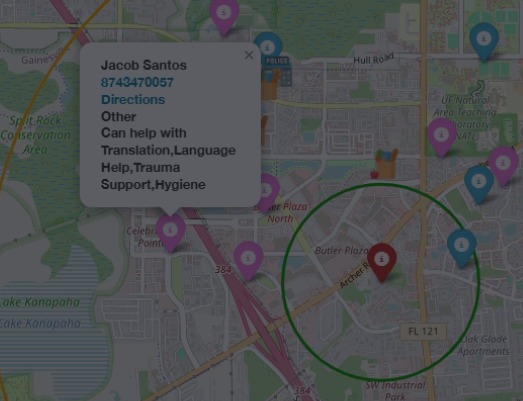
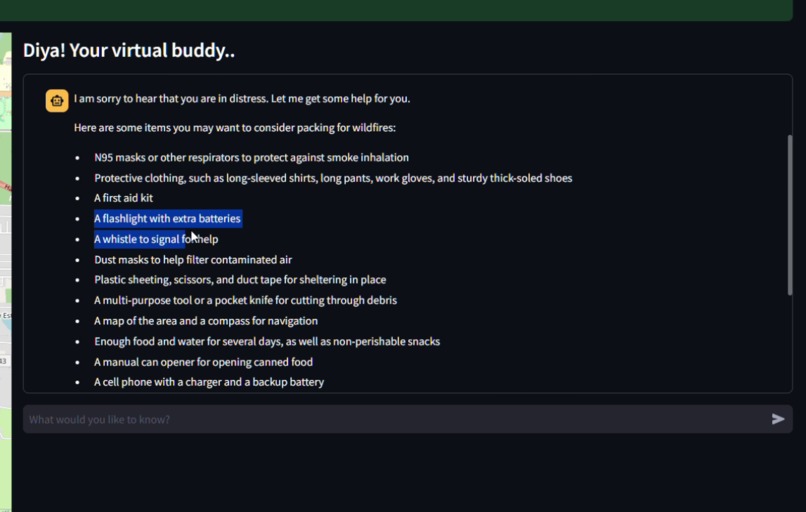
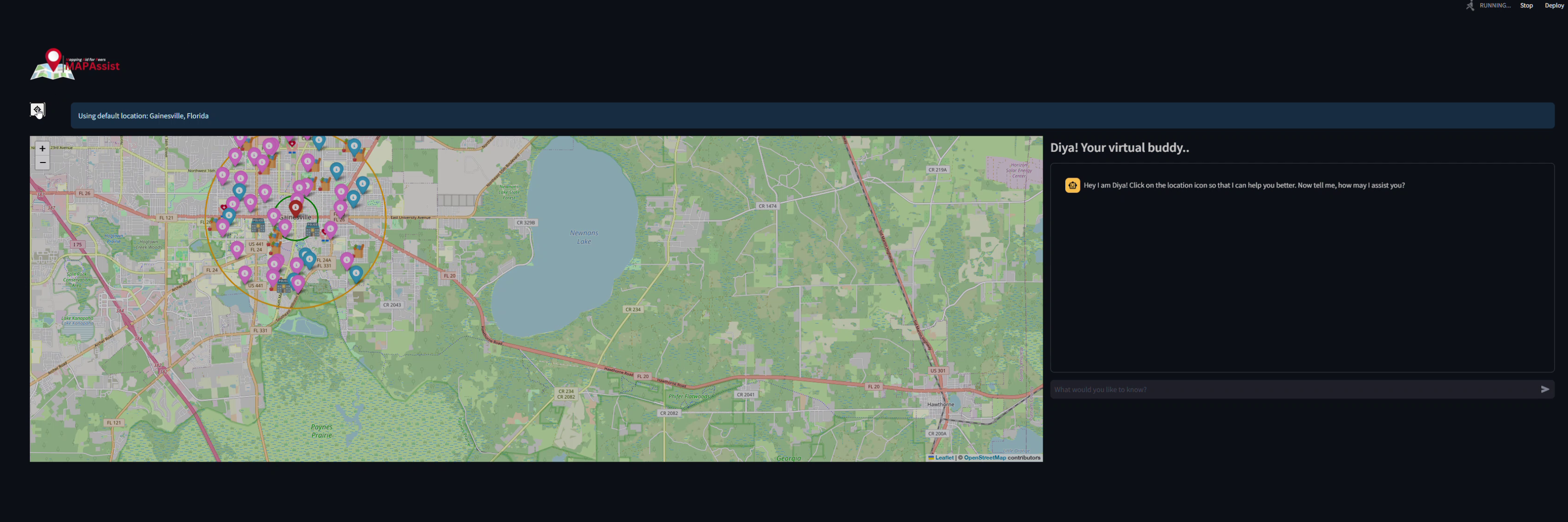
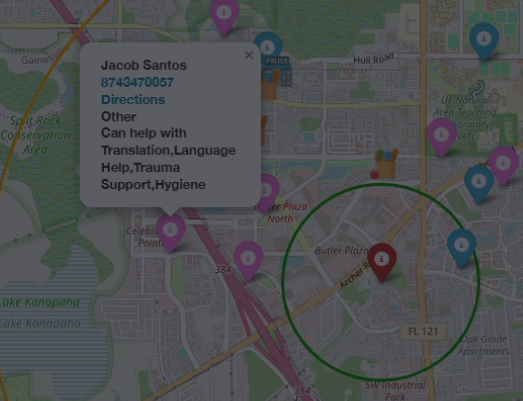
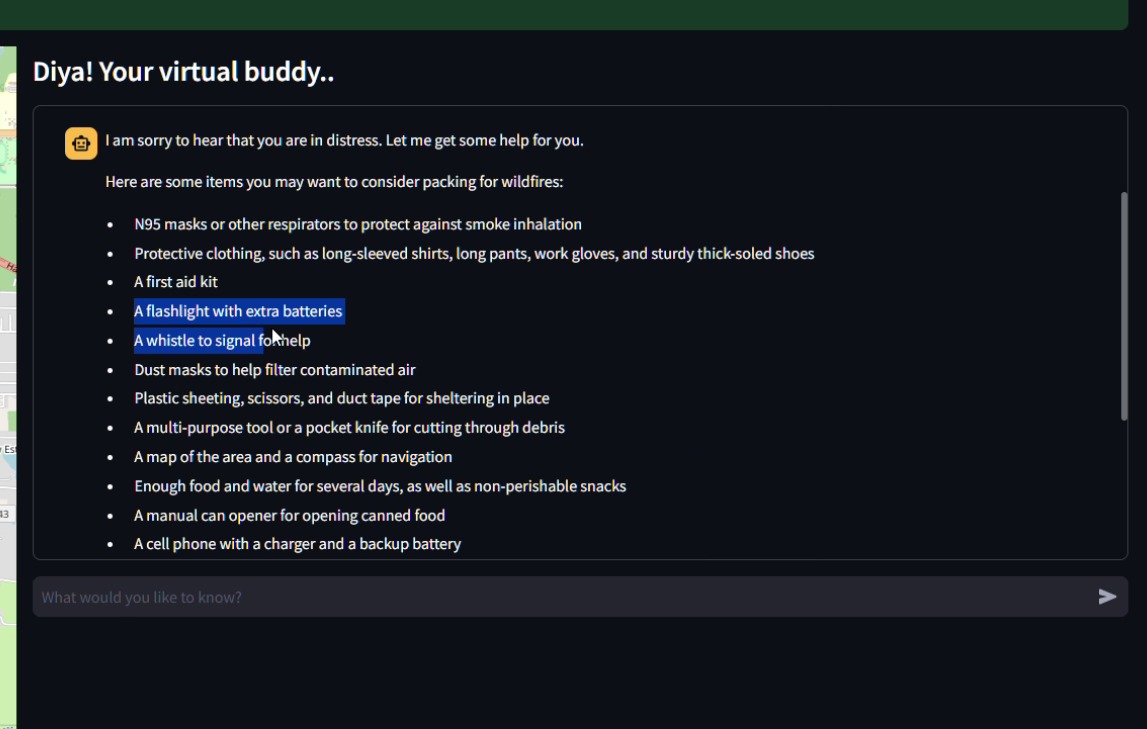
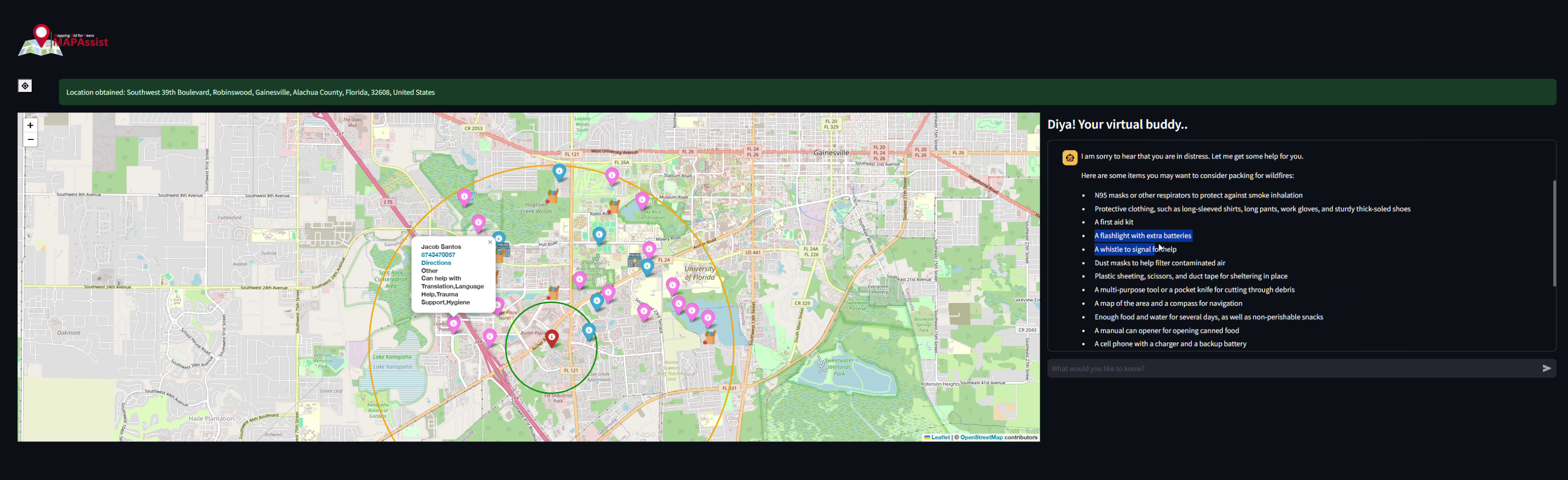
MAPAssist: Our app is designed to provide customized assistance during disasters. When users face a crisis, the app guides them on what steps to take based on the specific type of disaster they are experiencing. If a user requires essential resources—such as food, medical supplies, or services like medical consultations—the app pinpoint locations nearby where they can access these resources. These locations often belong to their neighbors, fostering community support.
To facilitate this, we maintain a comprehensive dataset of volunteers who are willing to help. Anyone can sign up as a volunteer, offering their skills or extra resources to assist others in need. When someone requires assistance, the app quickly maps them to the nearest available volunteer who can provide the necessary support. In essence, our app connects individuals in crisis with their local community, ensuring timely assistance and enhancing resilience during emergencies.
How we built it
- Streamlit
- Watson AI (IBM watsonx functions, foundation models, vector indexes, and RAG-Retrieval-Augmented Generation)
- Languages: Python, HTML, CSS
- APIs: Watsonx
Challenges We Encountered
Learning Curve with Streamlit: Streamlit was a new framework for us, requiring time to familiarize ourselves with its features.
Adaptation to WatsonxAI: While WatsonxAI was also new, its intuitive functionality allowed us to quickly get up to speed.
Prompt Engineering: Fine-tuning foundational models through prompt engineering was essential to ensure we received customized, prompt responses.
Integration Issues: Establishing a seamless connection between our Streamlit app and WatsonxAI presented some technical challenges.
Accomplishments We're Proud Of
- Cross-Department Collaboration: Effectively coordinated between the CISE department and the ISOM (Information Systems and Operations Management) department. Partnered with CISE team members on coding and technical development, while ISOM team members focused on market research and product-market fit analysis, leveraging diverse expertise to drive project success.- *Rapid Development: Built an AI-driven platform in just two days while learning Watson AI and Streamlit.
- Broad Audience Impact: Created a tool designed to assist a wide range of users during natural disasters.
What We Learned
- Understanding Watsonx AI: Gained insights into the intuitive capabilities of the Watsonx AI platform.
- Value of Collaboration: Recognized the importance of teamwork and a results-driven mindset.
What's Next for MAPAssist
- Expanded Volunteer Data Collection: Scaling volunteer data acquisition to reach a larger audience.
- Broader Scalability: Enhancing the tool’s capabilities beyond urban areas.
- Natural Calamity Predictions: Developing predictive features for natural disasters.
- Integration with Local Authorities: Collaborating with local agencies to assist those in distress.
Built With
- ai
- css
- csv
- folium
- generative
- ibm-watson
- llm
- map
- python
- streamilt


Log in or sign up for Devpost to join the conversation.