Inspiration–A Tale of Bothersome Bookings
Picture this: you have deadlines fast approaching with things to do and people to meet, and on top of it all, you have to figure out where you’re going to work.
Current digital booking systems make this a pain! You seldom know what rooms are available to you and where, and you often struggle to have all availability information at your fingertips. Don’t you wish you could see booking information? Well fret no more.
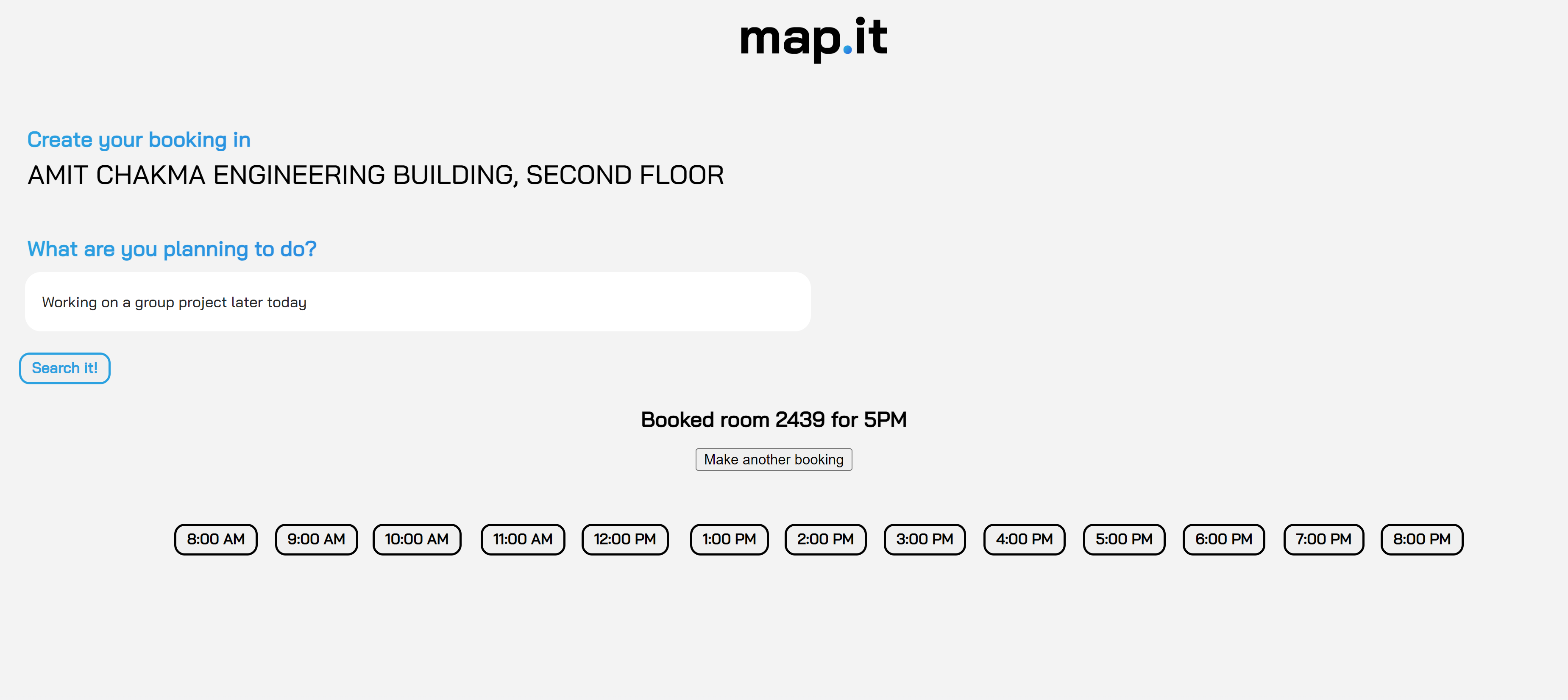
Search it! Pick it! Book it! With map.it.
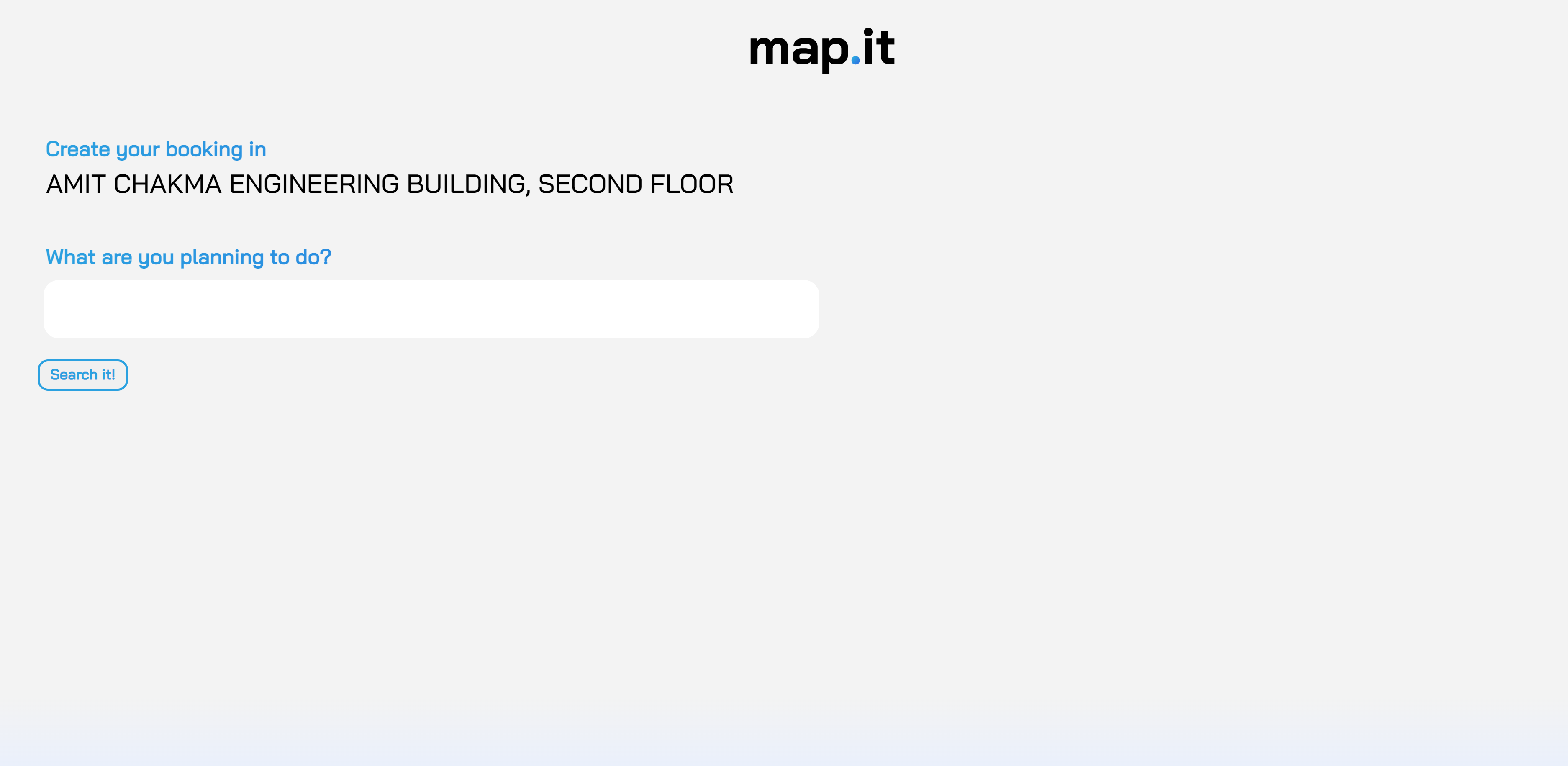
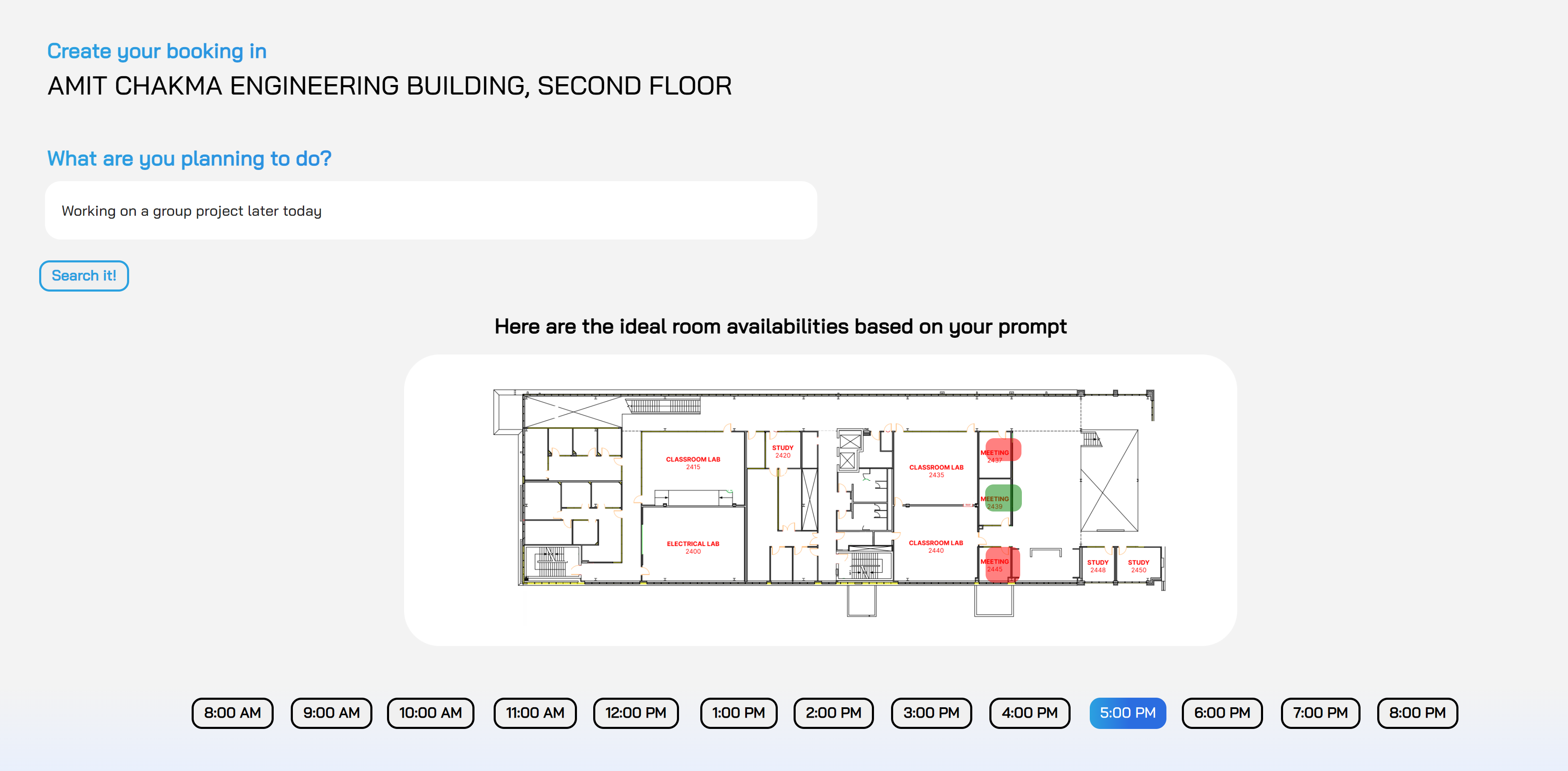
map.it is your one-stop shop for all your room-booking needs. It’s an intuitive and accessible web application that works by showing you a visual floor plan of the building you wish to book a room in. The best part is that you don’t even need to read the floor plan to figure out which room to book; simply type in what you need a booking for, and map.it will intelligently determine your best booking options from the rooms scanned on the floor plan.
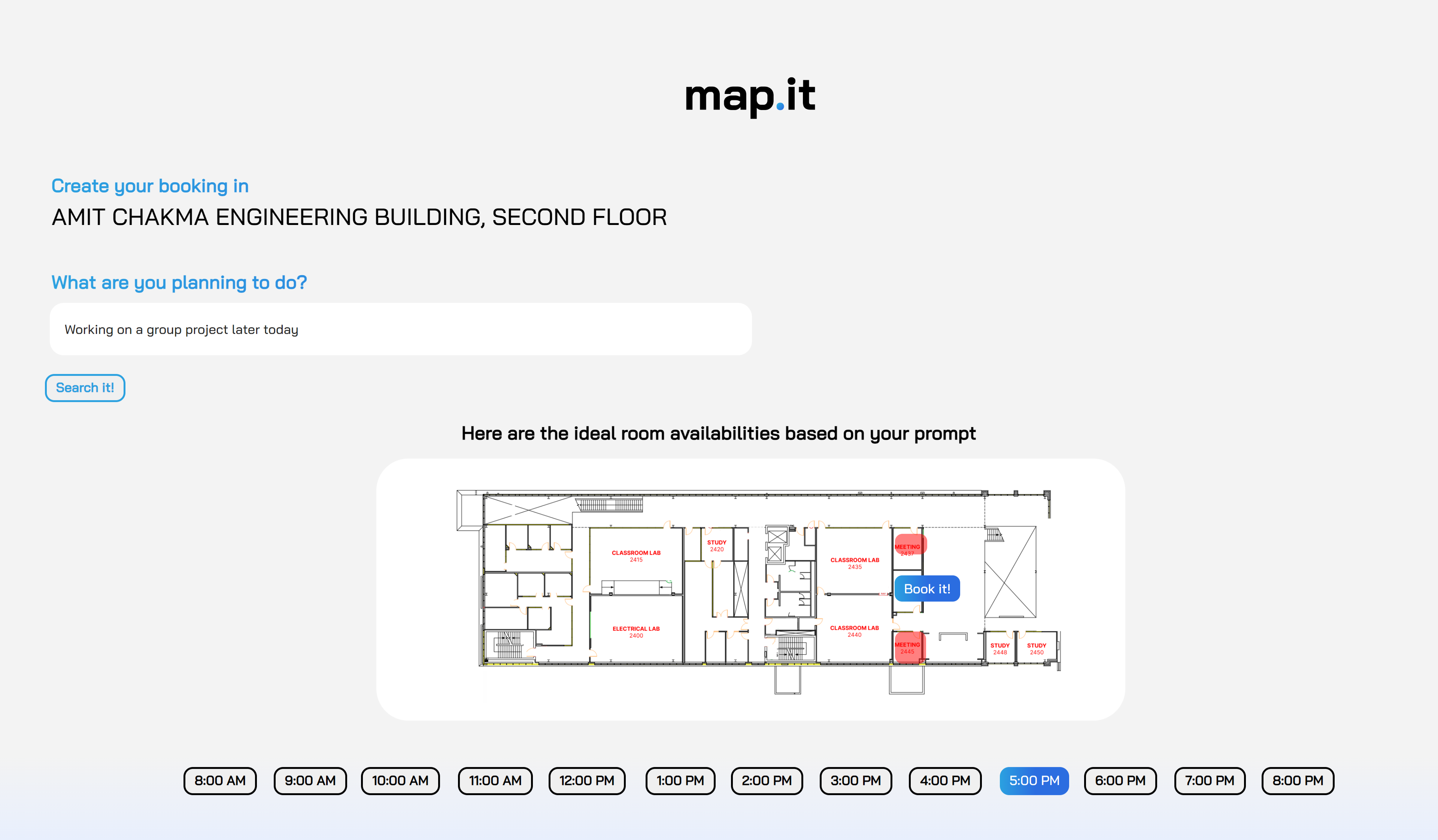
From there, you get a glanceable view of all the room statuses pertaining to your needs throughout the day (red for occupied, green for available). Simply click on any available room and confirm to complete your room booking.
How We Built It
At the heart of map.it is the Cohere classification API, which takes as input a set of training examples categorizing when you might want to book the room (morning, afternoon, and evening), what kind of space they are looking for, whether its a classroom space, a meeting room, or simply a study space to focus in, and the duration of your booking. The highest confidence scores for each sub-category are captured in a Node endpoint, which the front-end React web application hooks up to, in order to filter the spaces and times accordingly.
The Google Cloud Platform is also heavily leveraged; the Google Vision API is used to extract the labelled room numbers from the map and corresponding coordinates of the label bounding boxes used to create the overlaying clickable areas of the map. Google Storage is used to store a reference to the map passed into the Vision API. Google Firestore enables the storing of room availabilities for each time of the day, which the web application reads and writes to.
Accomplishments
Having experienced the grievances of confusing booking systems, we’re proud to have created a platform that meaningfully enhances the utility of something that is instrumental to our daily lives. As we leave behind the era of online schooling, shared spaces on university campuses are needed more than ever before to support continued learning and sustain community growth. At the same time, hybrid working models have popularized immensely, and many institutions are adapting by shrinking their needlessly large workspaces. As such, a technology like map.it could help facilitate a navigable, frictionless shared workspace model.
Learning Opportunities
There were several obstacles faced while building map.it, particularly with getting all the pieces to work together. However, working on this project opened our eyes to the power of machine learning and natural language processing; having such power so easily accessible through Cohere's developer-friendly API is inspiring and motivates us to continue to envision ways to apply artificial intelligence to enhance applications, for the better of society.
The Future of map.it
Going forward, we hope to implement functional administrative features that allow institutions to upload their building’s floor plans and generate shareable links for their constituents to use and start booking rooms. Furthermore, integration with popular online calendar tools would allow users to seamlessly integrate map.it’s booking abilities into their digital schedules and create prompts based around their currently-scheduled events.
Built With
- cohere-co.classify-api
- figma
- firestore
- google-cloud-vision-api
- google-storage
- node.js
- react


Log in or sign up for Devpost to join the conversation.