-
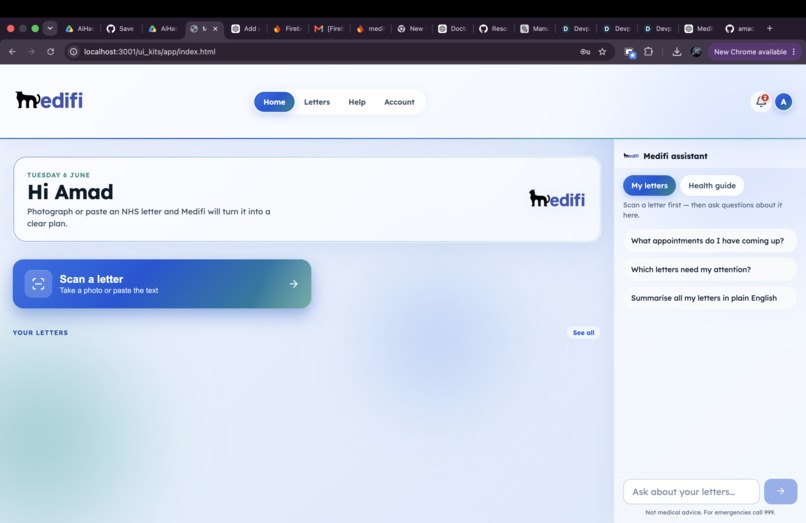
HomePage
-
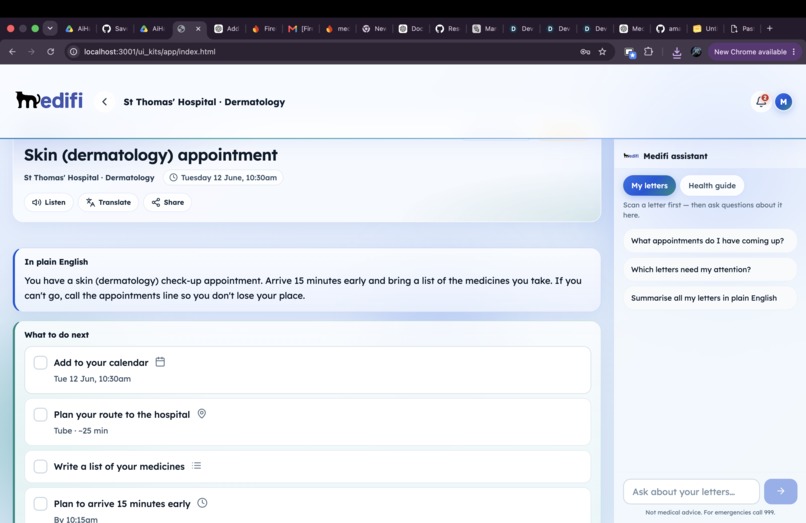
Letter parsed
-
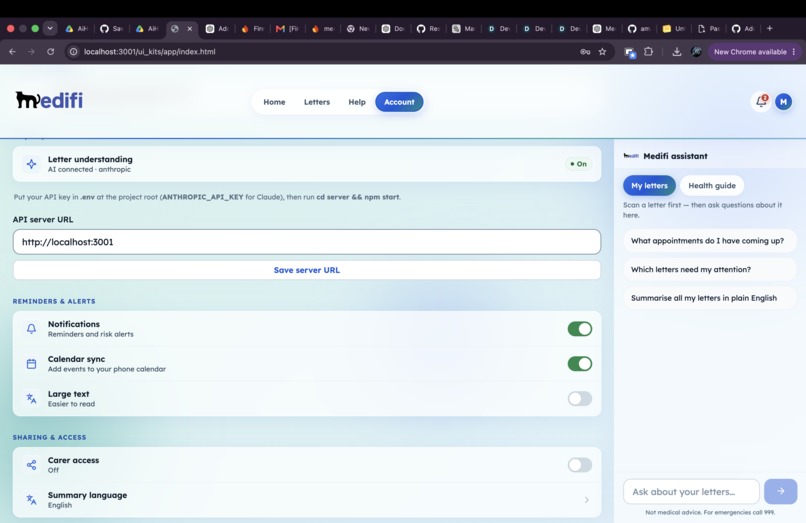
Settings
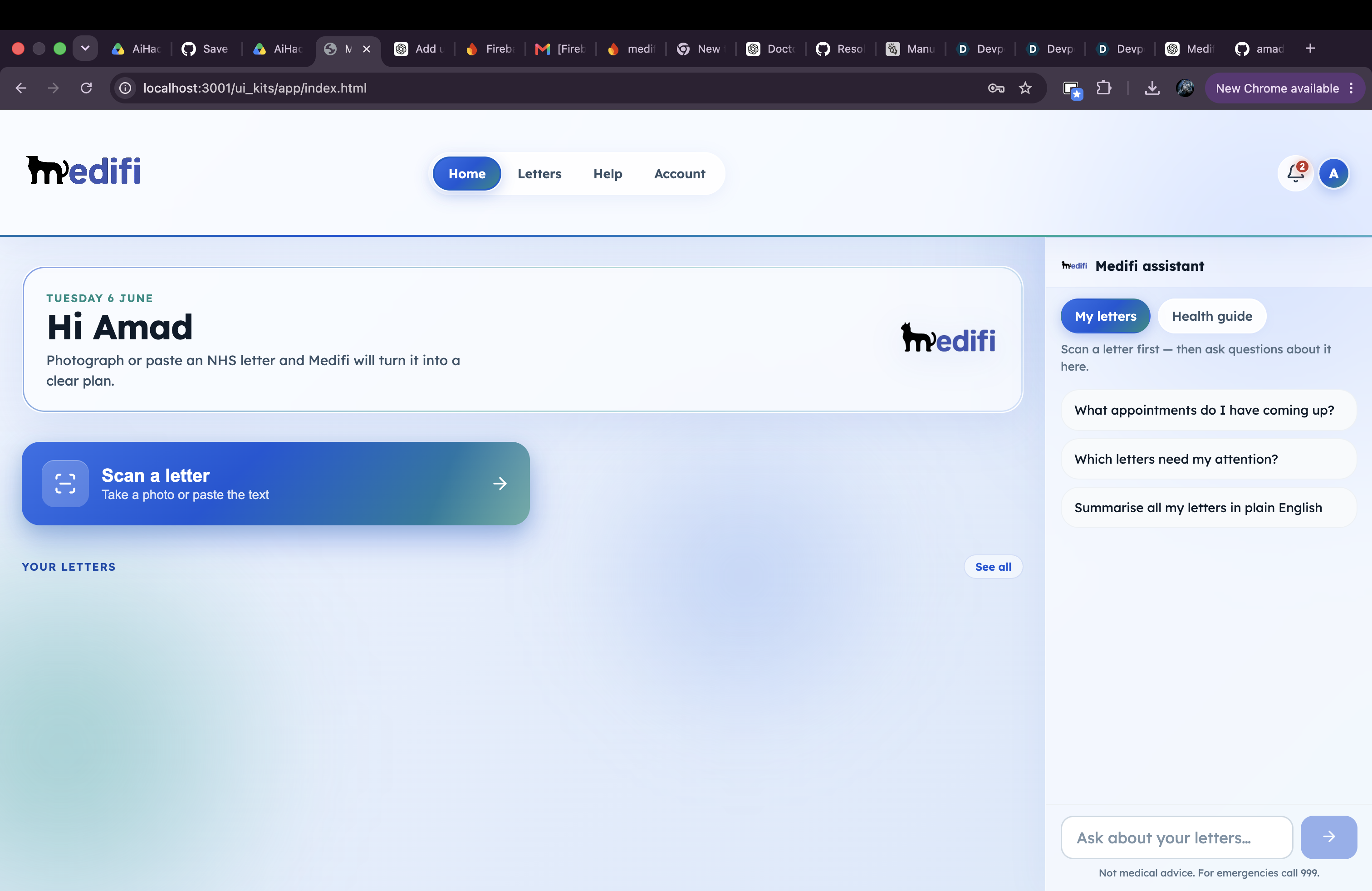
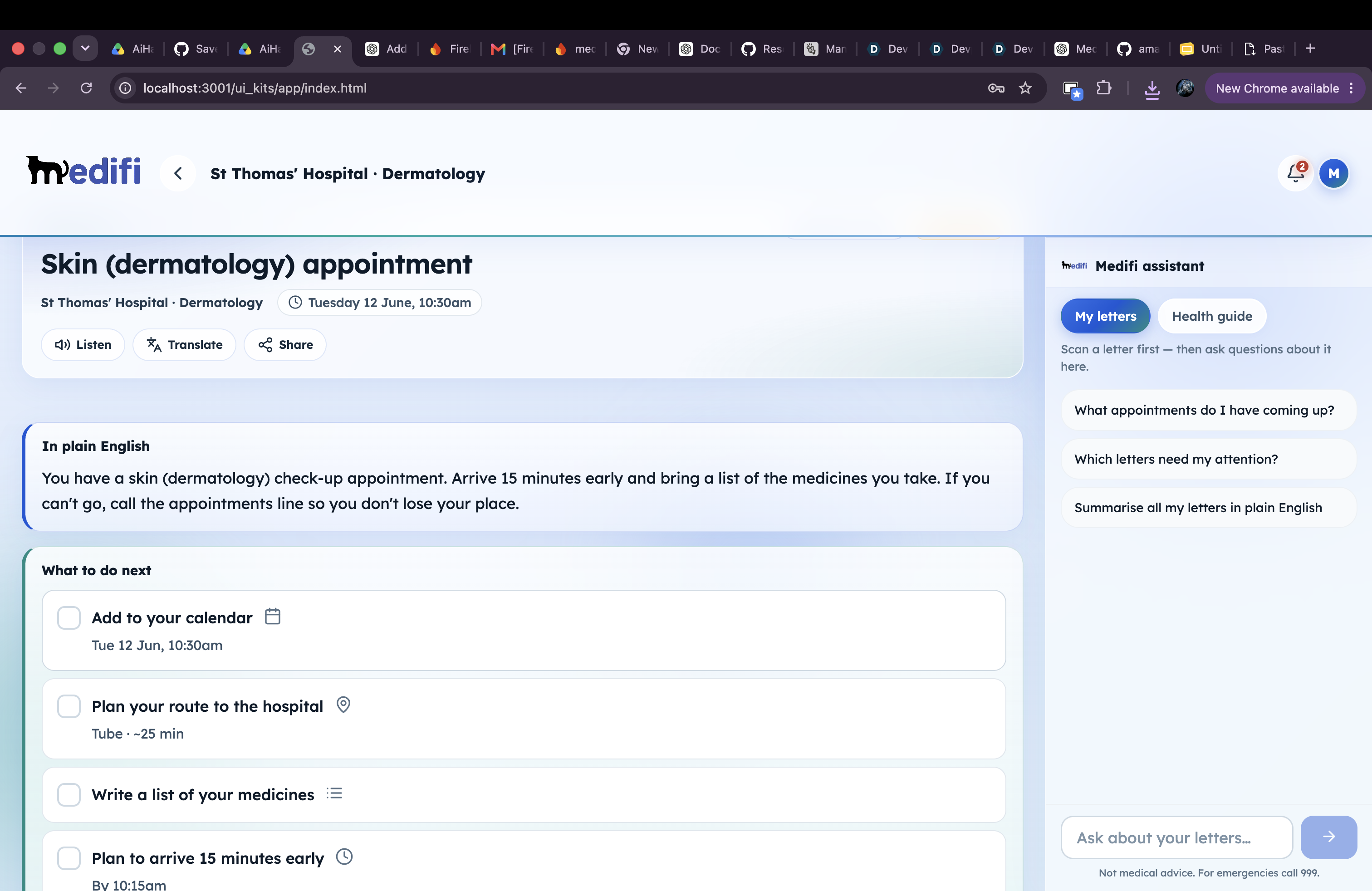
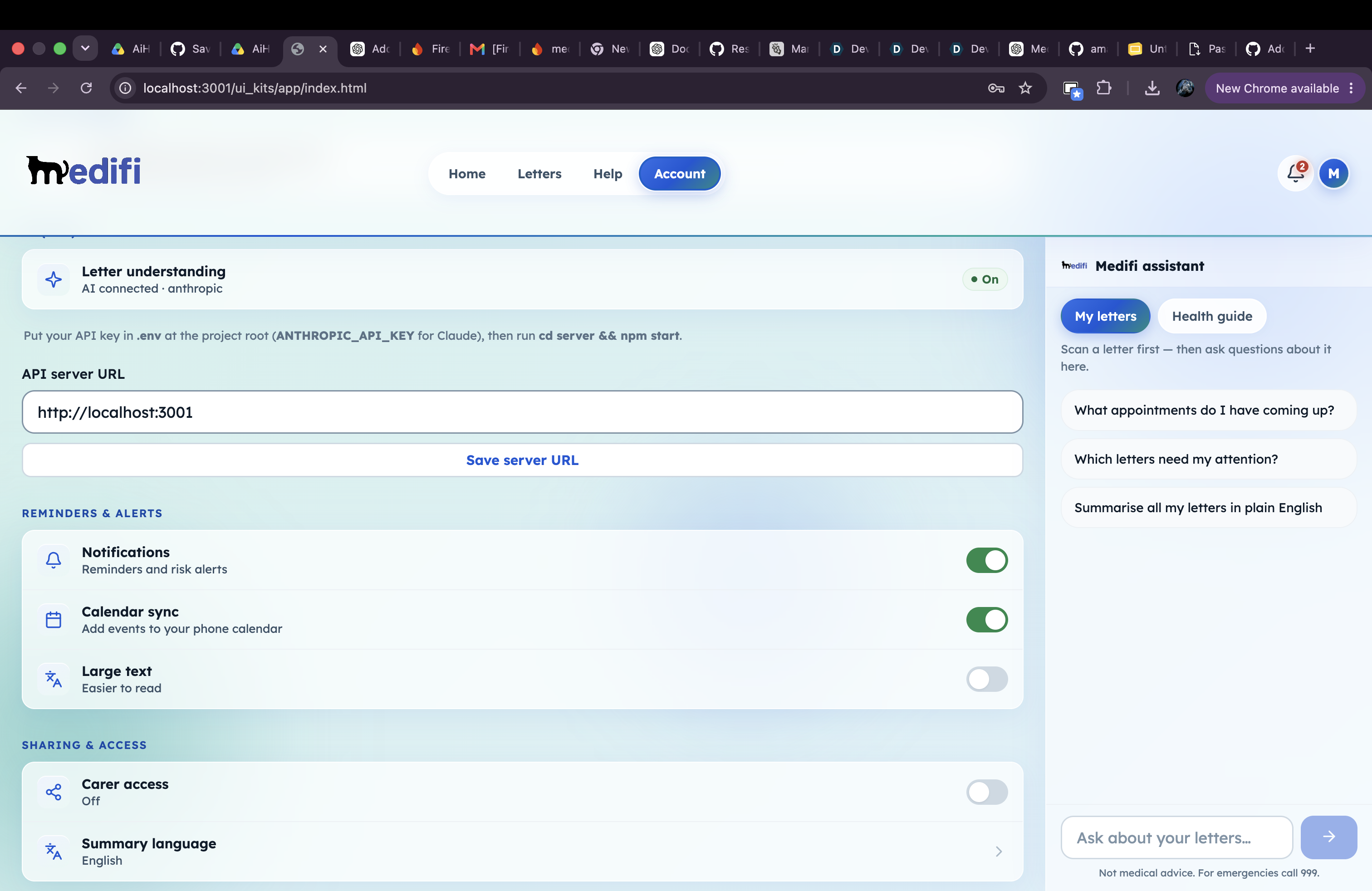
Inspiration NHS letters are full of jargon, buried dates, and easy-to-miss admin details — and when people miss them, care gets delayed. We built Medifi for patients who leave the GP or hospital with a letter and think: “What does this actually mean, and what do I do now?” We’re not replacing clinicians — we’re fixing the confusing admin layer that sits between patients and the care they’re already entitled to.
What it does Medifi is NHS Letter Lens: scan or paste a letter and get a plain-English summary, a “what to do next” checklist, and traffic-light risk flags for things like past dates, missing contacts, or vague instructions. Users can save letters to their account, add appointments to their calendar, get directions to clinics, connect their inbox to pull in NHS emails, and chat with an AI assistant about their letters and health questions — all in one calm, patient-first app.
How we built it We built a React web app with a custom design system (Medifi Blue, Lens Teal, risk colours) and a Node/Express backend that proxies LLM calls so API keys stay server-side. Letter parsing uses OCR + Claude/GPT to extract structured data; Firebase Auth + Firestore keeps profiles, letters, and health data per account. We added IMAP email sync for NHS messages, an MCP server for inbox tools, maps/transport integration for appointment locations, and a docked AI chat panel grounded in the user’s saved letters.
Challenges we ran into NHS letters vary wildly in layout — so we had to combine OCR, heuristics, and LLM parsing without over-promising medical accuracy. Getting per-account data right (Firestore rules, scoped storage, login across devices) took real iteration. Email inbox sync meant handling IMAP credentials safely and deduplicating imports. We also had to be careful with tone and trust: looking clinical and credible without impersonating an official NHS product.
Accomplishments that we're proud of We went from a stub repo to a working end-to-end product in a hackathon: scan → AI plan → risks → calendar → maps → saved library. The admin risk system (green / amber / red) is a clear differentiator — it catches the stuff patients actually miss. We’re proud of the accessible, plain-English UX, real account persistence, inbox integration, and a polished responsive shell with the Medifi assistant built in.
What we learned Patients don’t need more medical jargon — they need clarity, confidence, and one obvious next step. LLMs are strong at summarisation but still need guardrails, source-of-truth messaging (“check your original letter”), and structured output. Building for the NHS context means designing for trust, privacy, and realism — demo data and production-grade auth/rules are different problems, and both matter.
What's next for Medifi Ship production Firestore rules and onboarding, expand letter types (results, referrals, discharge summaries), and add carer/shared-access modes. Deeper NHS-adjacent integrations (e.g. more reliable email/NHS App-style flows where permitted), validated risk rules with clinical input, and Welsh + community language support. Longer term: a lightweight “letter readiness” score for practices — helping the NHS send clearer letters in the first place, not just helping patients decode them after.

Log in or sign up for Devpost to join the conversation.