-
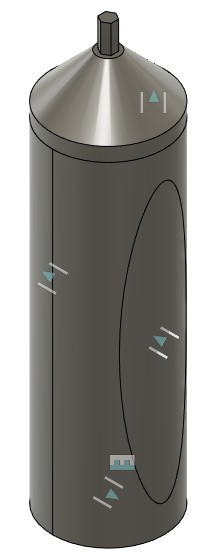
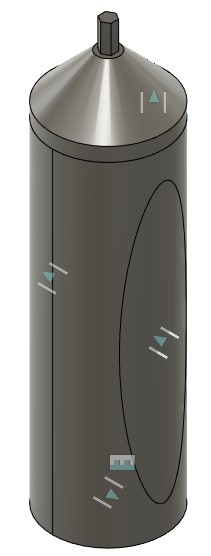
The assembled multitool with a 6mm hex bit attached.
-
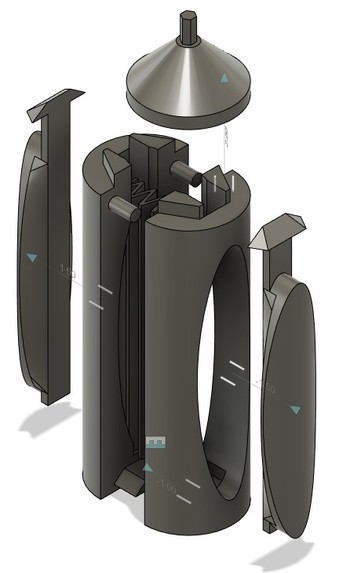
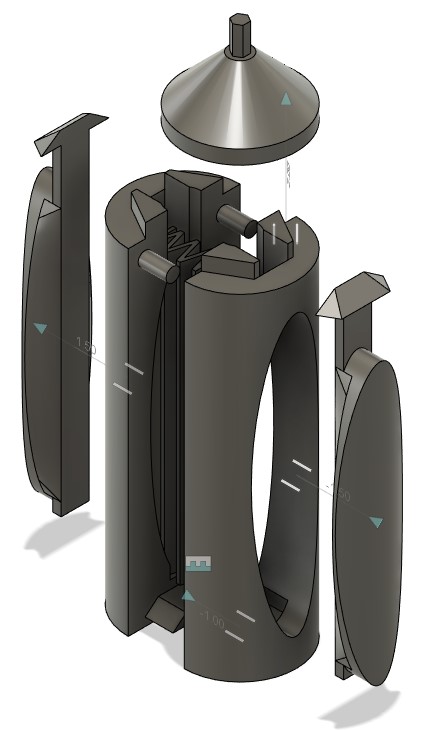
An exploded look at the assembled multitool, exposing the 3D printed spring inside.
Inspiration
The Starship rocket payload has a limited weight capacity, so the more weight we can reduced on the habitat, the more can be used for the offloading of the habitat itself.
What it does
We created a fully 3D printed multitool, modular 3D printed concrete blocks, and a 3D printed air compressor. THe multitool is large enough for astronauts to use outside the habitat with their spacesuits on, and the quick release allows the same tool to be used with multiple toolheads. The modular concrete blocks allow for the astronauts to create furniture and other buildings with just one 3D printed file. The air compressor will allow the astronauts to clean off the solar panels when they get covered in dust and sand from the Martian sandstorms.
How we built it
We utilized our personal 3D printers and fusion 360 to print and CAD the models respectively
Challenges we ran into
Our personal printers had a difficult time printing the models. However, the 3D printers sent up to mars with the astronauts will have a higher resolution than the ones we had available to us, so I have no doubt that the prints will work better for them.
Accomplishments that we're proud of
Although our actual prints weren't a success, we're still proud of the designs we came up with in order to solve the problems at hand. Furthermore, we were able to delve deeper into the relationship between design and manufacturing, coming to further understand problems that can arise during the actual manufacturing process of products we design.
What we learned
While printing our prototypes we were able to test the limits of the speed, tolerance, and overhang capability our personal 3D printers, allowing us to better design parts that we can print in the future. Furthermore, we gained a more in-depth knowledge of gcode, discovering commands that were previously unknown to us
Built With
- 3dprinting
- autodesk-fusion-360
- prusaslicer
- ultimakercura


Log in or sign up for Devpost to join the conversation.