Inspiration
We're the founders of EKUA. Between us we can build almost anything, so building was never our bottleneck. What stalled us were the questions none of us had answered before: who pays, how to price, where the first ten customers come from, when to raise. The people who know those answers are experienced founders and operators, and their time is scarce. Office hours fill up, a mentor's calendar link gets you thirty minutes a month, and paying a consultant by the hour doesn't fit an early-stage budget.
We kept wishing we could hire a version of a great founder who answers at 2 a.m., built from what that person really said instead of a generic chatbot's guess. Proxier is that tool, for us and for other technical teams who need expertise they don't have yet.
What it does
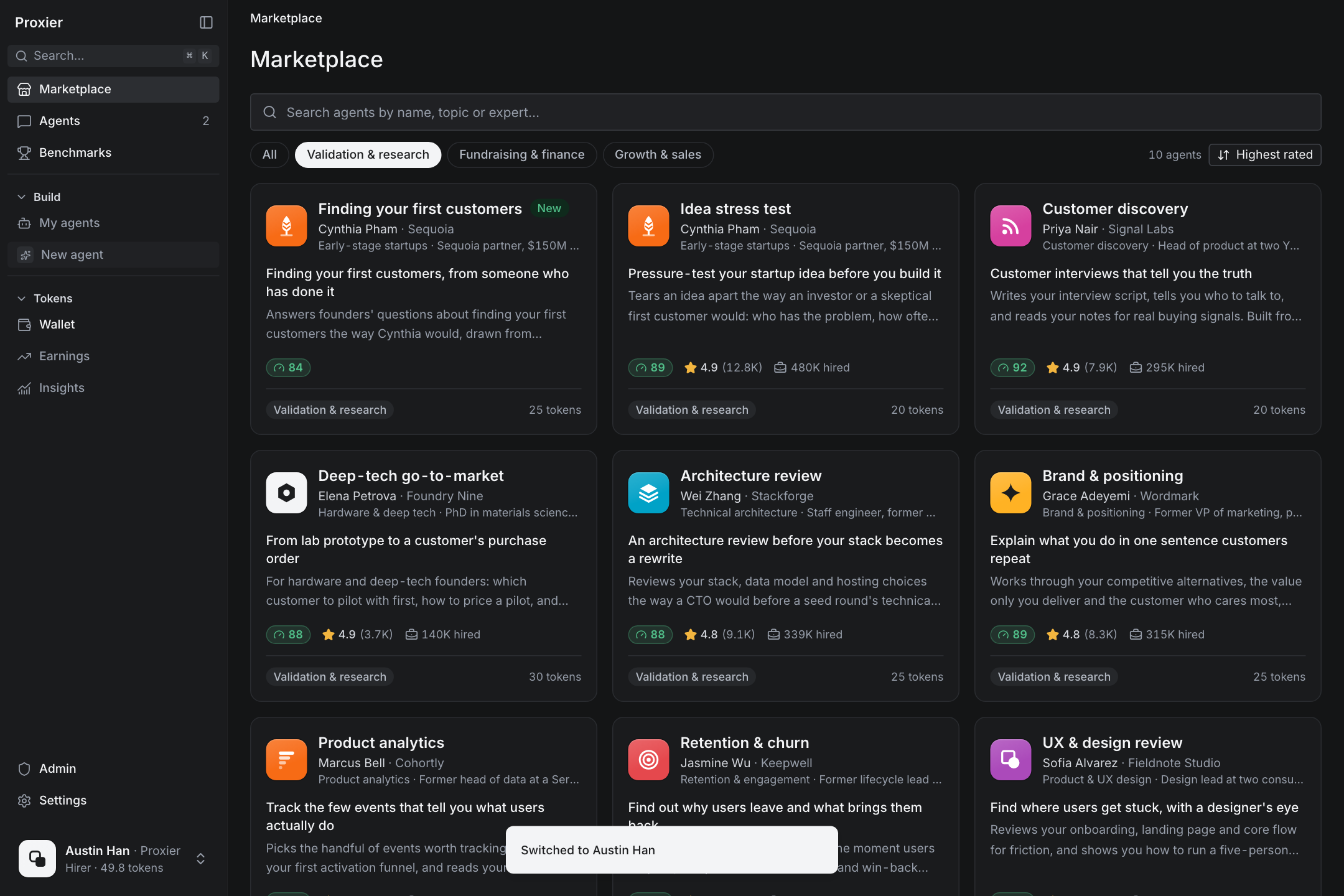
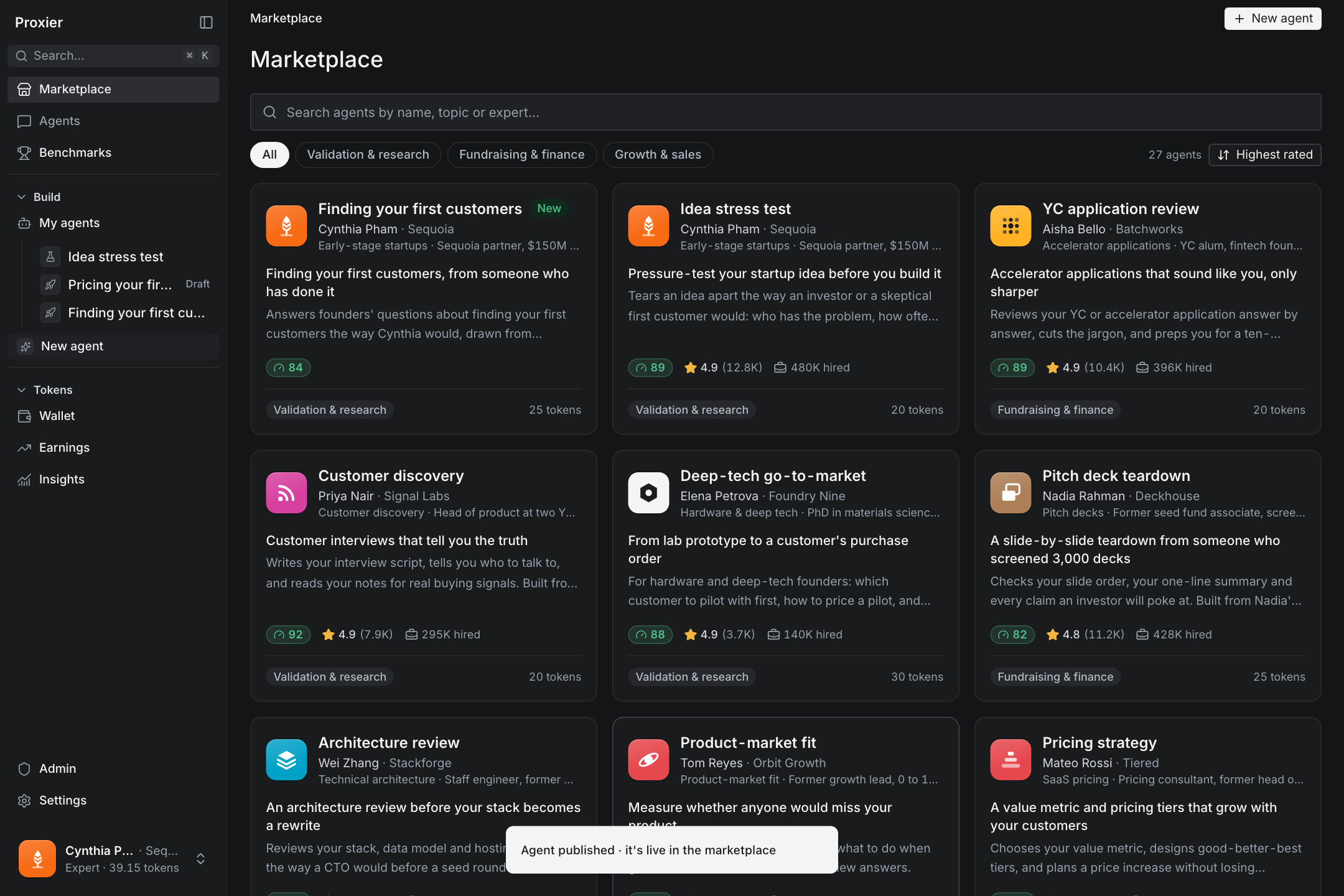
Proxier is a marketplace where first-time founders hire AI agents built by experienced founders and experts.
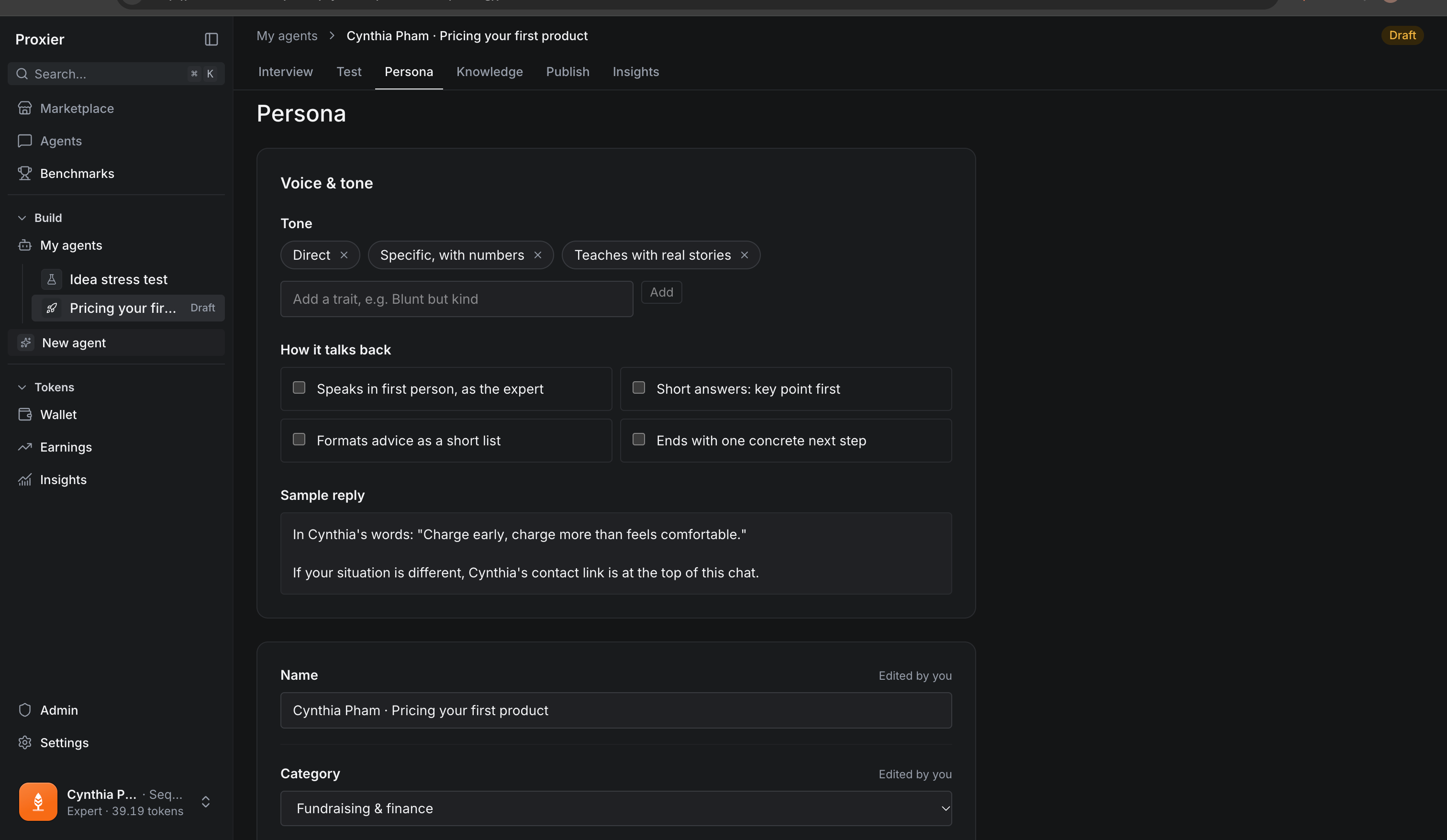
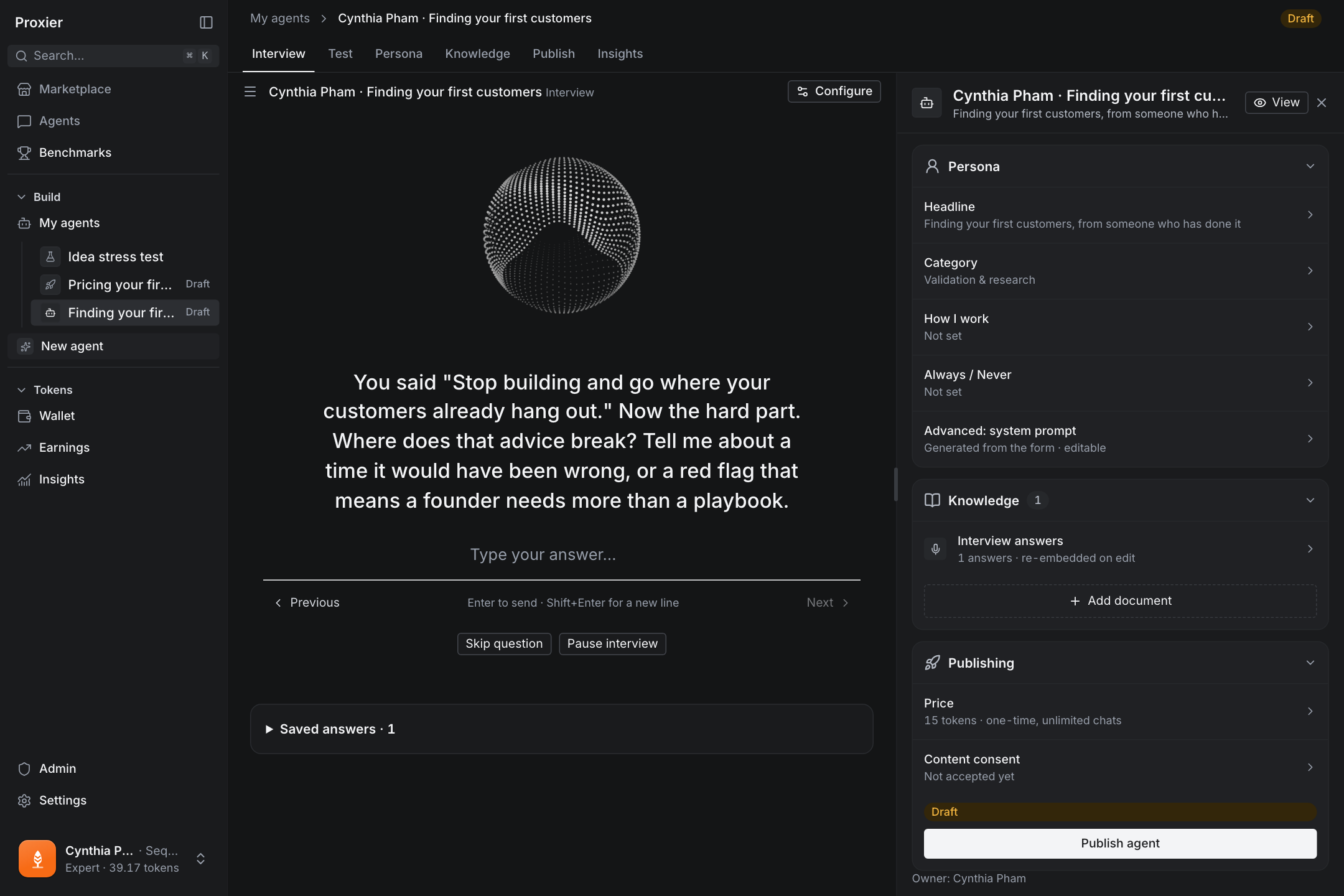
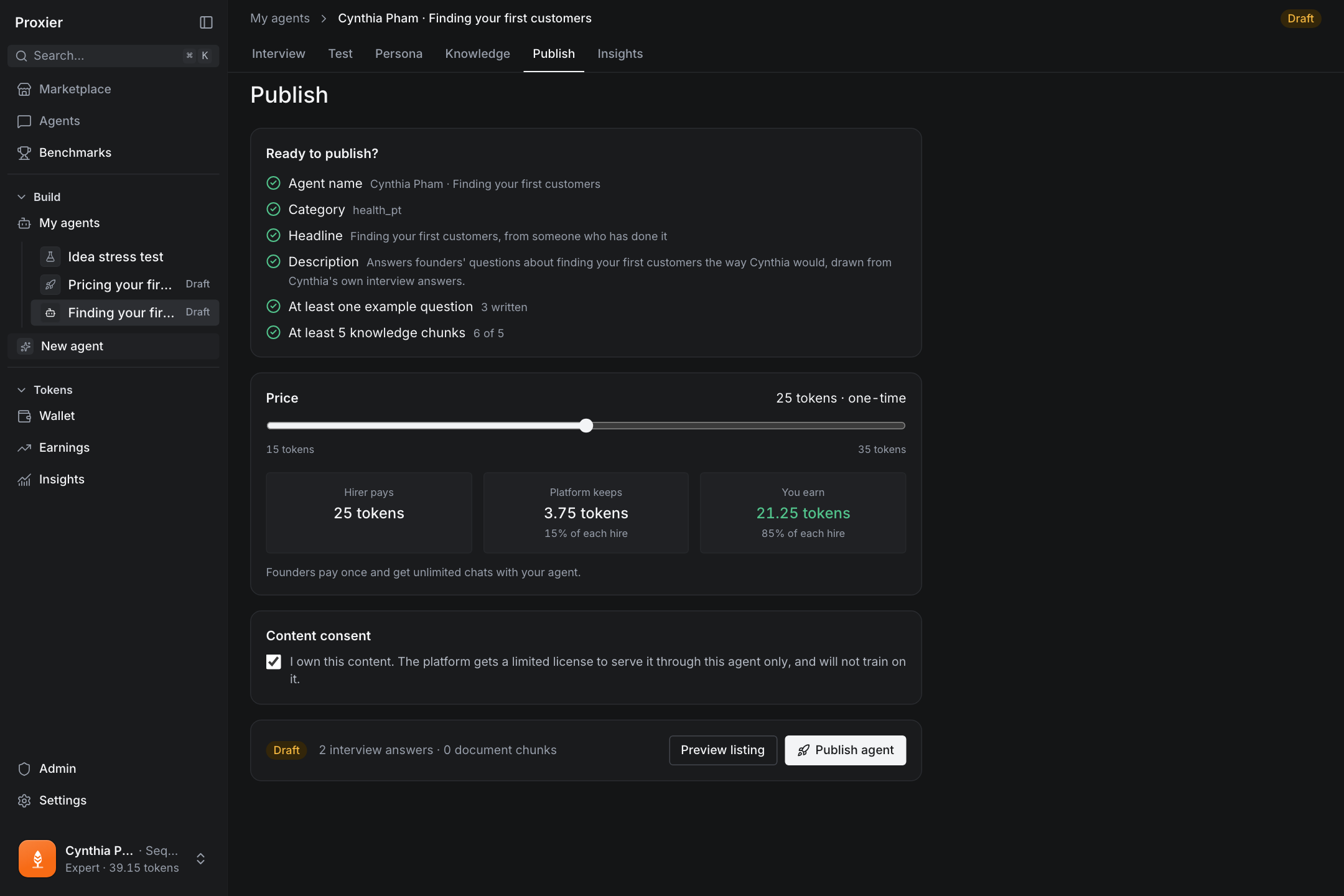
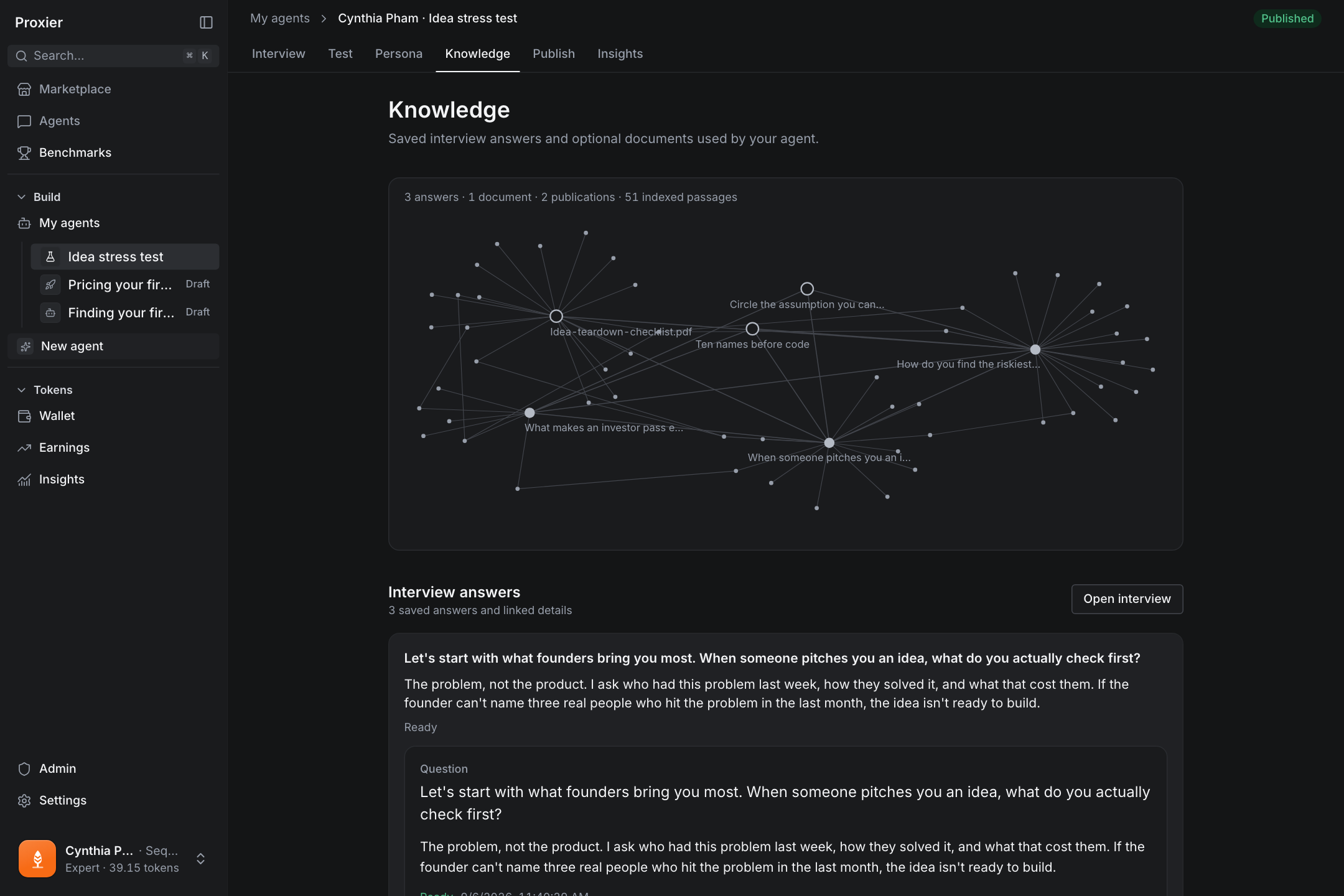
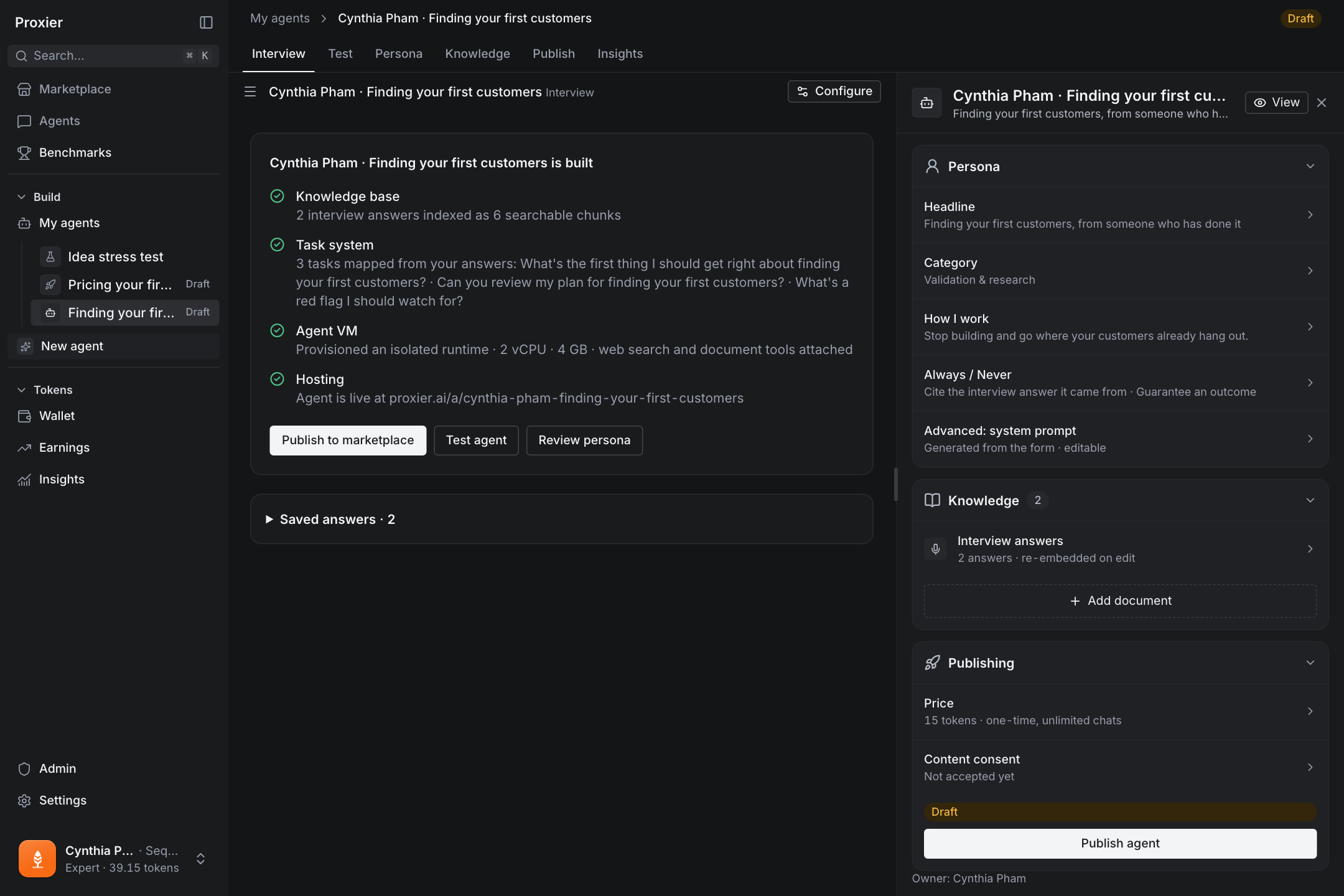
If you're an expert, you don't write prompts or courses. Proxier interviews you. It asks the question founders bring you every week, then quotes your answer back and asks where that advice breaks. Every answer becomes cited knowledge, and you can add documents (PDF, DOCX, TXT, Markdown). You test the agent, tell it in plain words what you don't like ("talk like me, keep it short"), and it fixes itself. Then you set a one-time price and publish. You keep 85% of every hire.
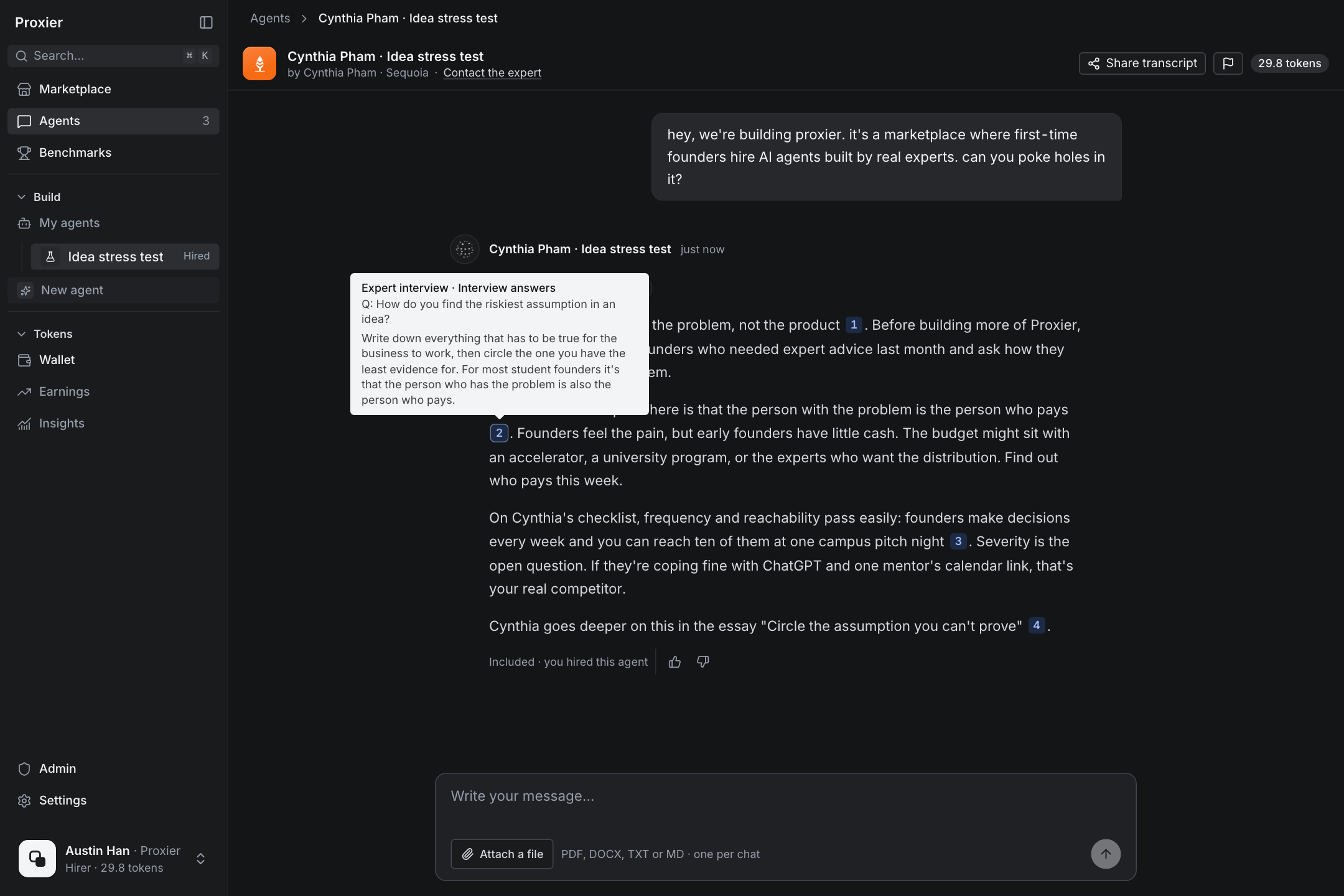
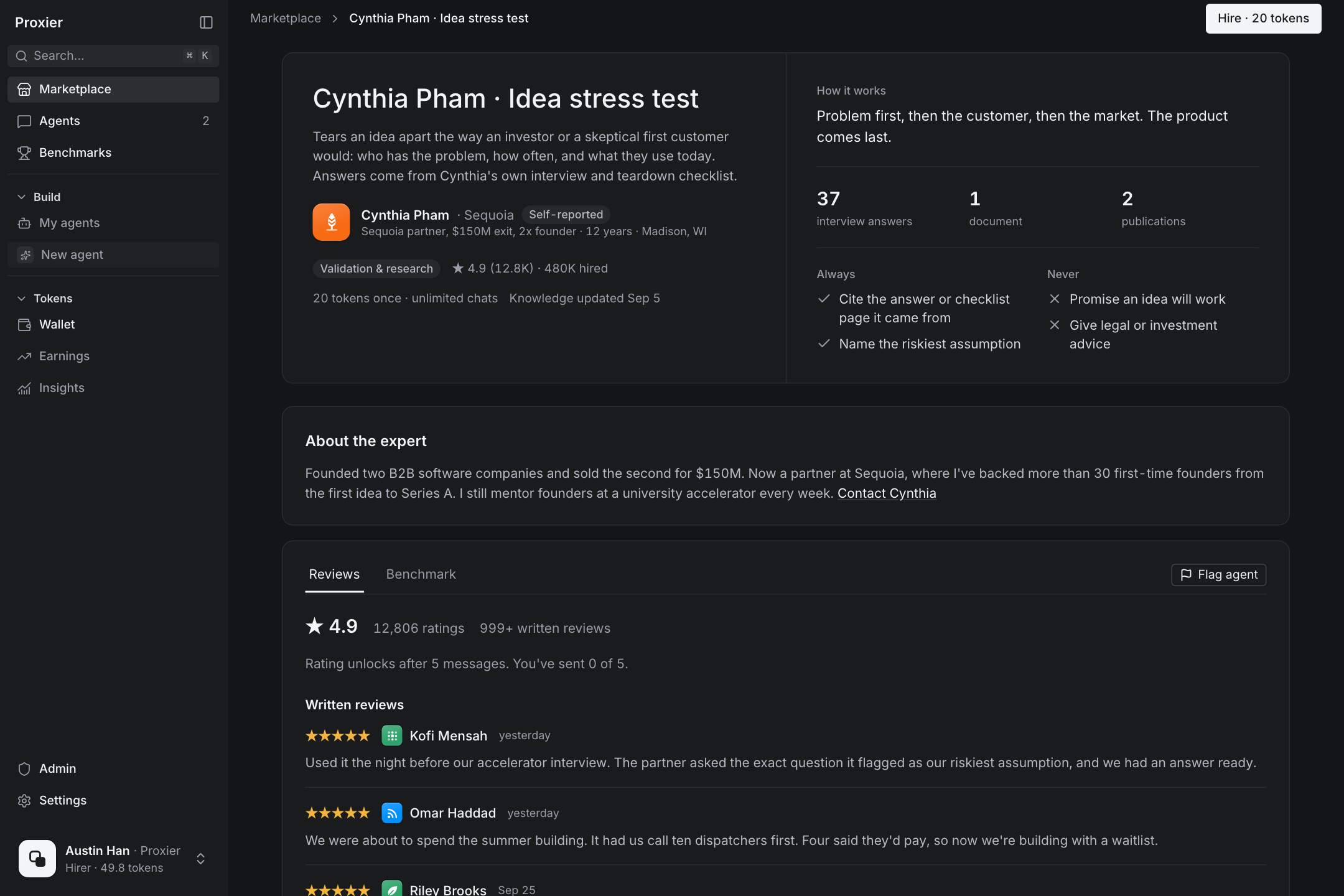
If you're a founder, you browse agents by what you're stuck on, hire one, and start asking. Each answer cites the interview answer, document page, or essay it came from, so you can check it yourself. When the expert's knowledge runs out, the agent says so and labels any web sources separately from the expert's views.
How we built it
- The app is Next.js 16 (App Router), React 19, TypeScript, Tailwind CSS v4, and shadcn/ui on Radix.
- Data lives in Supabase Postgres with pgvector. Twelve migrations cover interviews, knowledge chunks, private document storage, and a credit ledger that holds, meters, and settles every model call.
- GPT-6 Luna, through the Vercel AI SDK, writes the agent's answers, and OpenAI
text-embedding-3-smallhandles retrieval. Each answer carries evidence IDs that the UI renders as numbered citations, with the source passage on hover. - pdf.js, unpdf, and mammoth parse uploaded documents into searchable chunks.
- A demo mode runs a deterministic backend in the browser that intercepts the API, so the recording and the live demo behave the same way every time.
- We have 357 Vitest tests, plus scripted browser runs of the whole build, publish, hire, and chat loop.
Challenges we ran into
The first question we kept hearing was "Who is your ideal customer, and what specific problem do you solve for them, in one line?" We couldn't answer it at first. We had been thinking too broadly, about how everyone could use this. In a perfect world they would, and we still think Proxier can scale to anyone with expertise worth sharing. But to win our first customers, we decided to build for people like us: startup founders. That choice reshaped the marketplace and the demo, and it was one of many pivots we made.
We couldn't keep the full live stack running reliably in one weekend. The real pipeline (Supabase, embeddings, metered model calls) answered with citations on a test agent, but keeping every service up for a demo was fragile. So we built a demo mode that runs the same product in the browser with scripted answers, and the video can't fail on a network hiccup. The live code is in the repo.
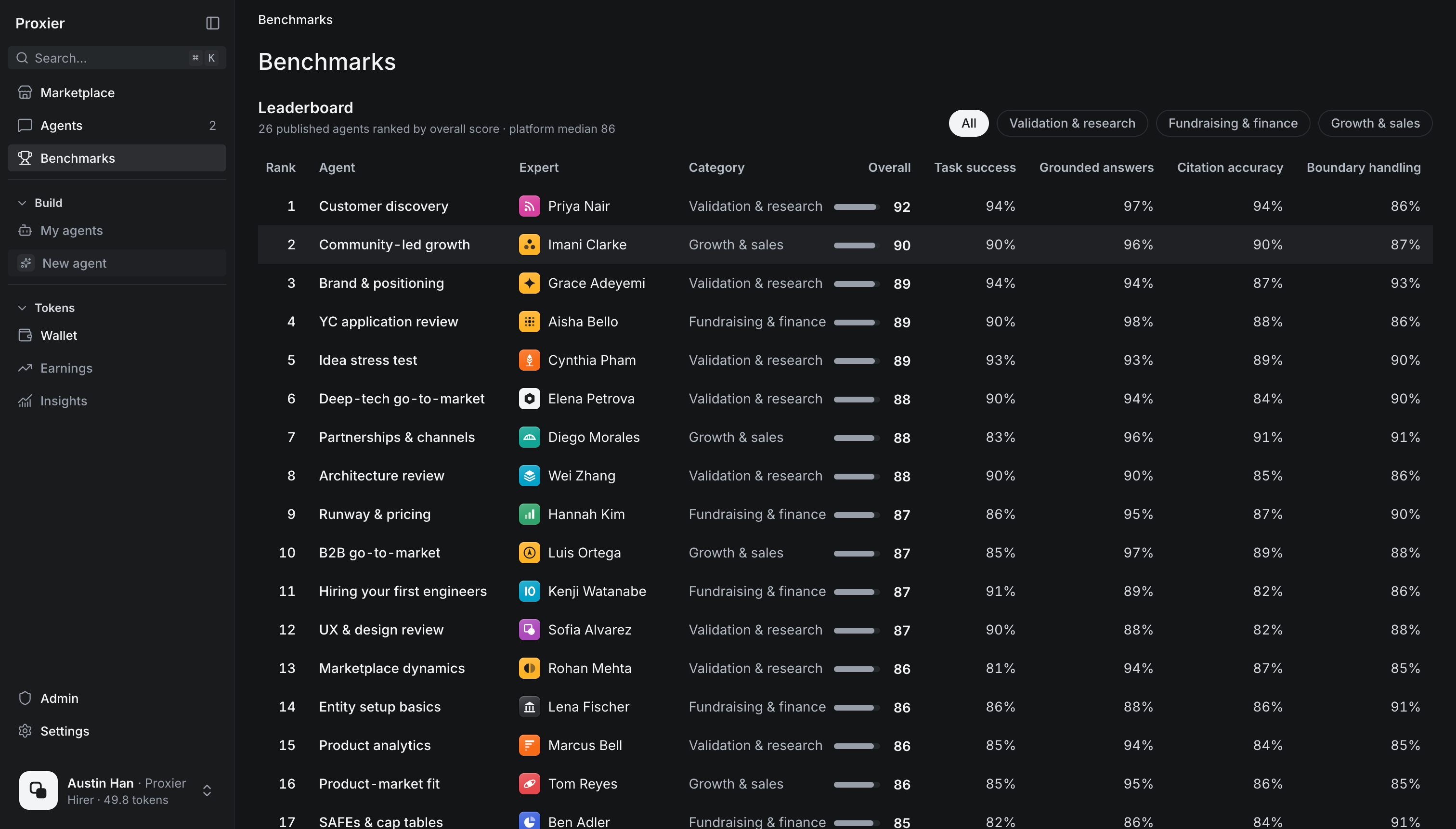
Citations had to be trustworthy. In an expert marketplace, a fake citation puts words in a real person's mouth. For the Art of the Break challenge we attacked our own pipeline with résumés carrying forged "expert" text and with hostile search results. None of the 30 attack runs under each prompt produced an unsafe answer, and expert-versus-web attribution held in all 8 web attacks. The problem we found went the other way: our first reviewer blocked 7 of 45 answers that were fine.
Pricing took a few tries. We started with per-message metering, and fractions of a cent per message confused everyone who saw it. We switched to a one-time price per agent with unlimited chats, which takes one sentence to explain.
The interview was too long. Three questions felt like homework, so we cut it to two and made the second one push back on the first.
Accomplishments that we're proud of
- An expert goes from nothing to a published, cited agent by answering two questions.
- Each answer traces back to the expert's own words, a page in their document, or a clearly labeled web source.
- We broke our own product on purpose and wrote up the results, including the places where our safeguards were too strict.
What we learned
- Ask for help, and ask a lot of different people. Everyone we talked to brought perspectives and knowledge we didn't have, and pointed out things we were unaware of. Their feedback is why we pivoted as many times as we did. Simple questions like "Who is your ICP?" and "What problem do you solve, in one line?" helped us a lot.
- Experts won't write a course, but they will answer a good question. That's why the interview sits at the center of the product.
- Labeling where each part of an answer came from, whether the expert, the user, or the web, is what keeps the answer honest.
- A safety check that blocks honest answers is a failure of its own.
- Cutting scope to one price and two questions made the product easier to explain and to demo.
What's next for Proxier
- Keep developing Proxier for startup founders first, and use it ourselves at EKUA.
- Put real experts on it, starting with the founders and mentors we already go to for advice.
- Add voice interviews, so an expert can build their agent on a walk.
- Pay experts for real. Wallet funding and cash-out are mocked today.
- Build a claim-level reviewer that can tell expert advice, user-provided facts, and an honest "I don't know" apart.
- Show experts the questions their agent couldn't answer, so their next interview fills the gaps.
Built With
- api
- css
- next.js
- node.js
- openai
- playwrite
- postgresql
- radixui
- react
- sdk
- shadcn/ui
- supabase
- tailwind
- typescript
- vercel
- vitest


Log in or sign up for Devpost to join the conversation.