-
-
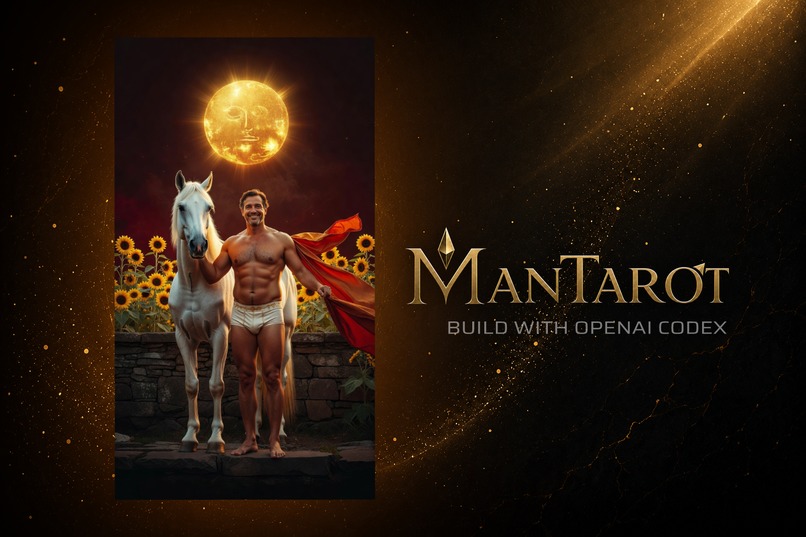
ManTarot — An AI-powered tarot experience designed exclusively for gay men, built with OpenAI Codex.
-
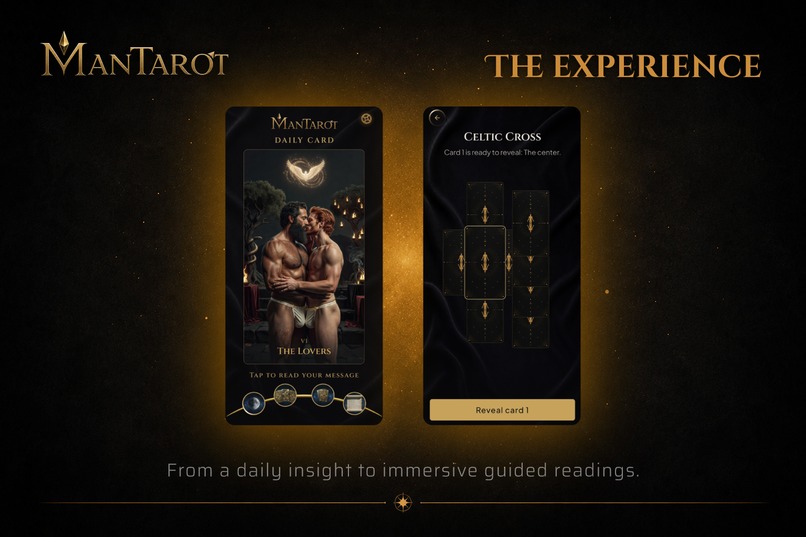
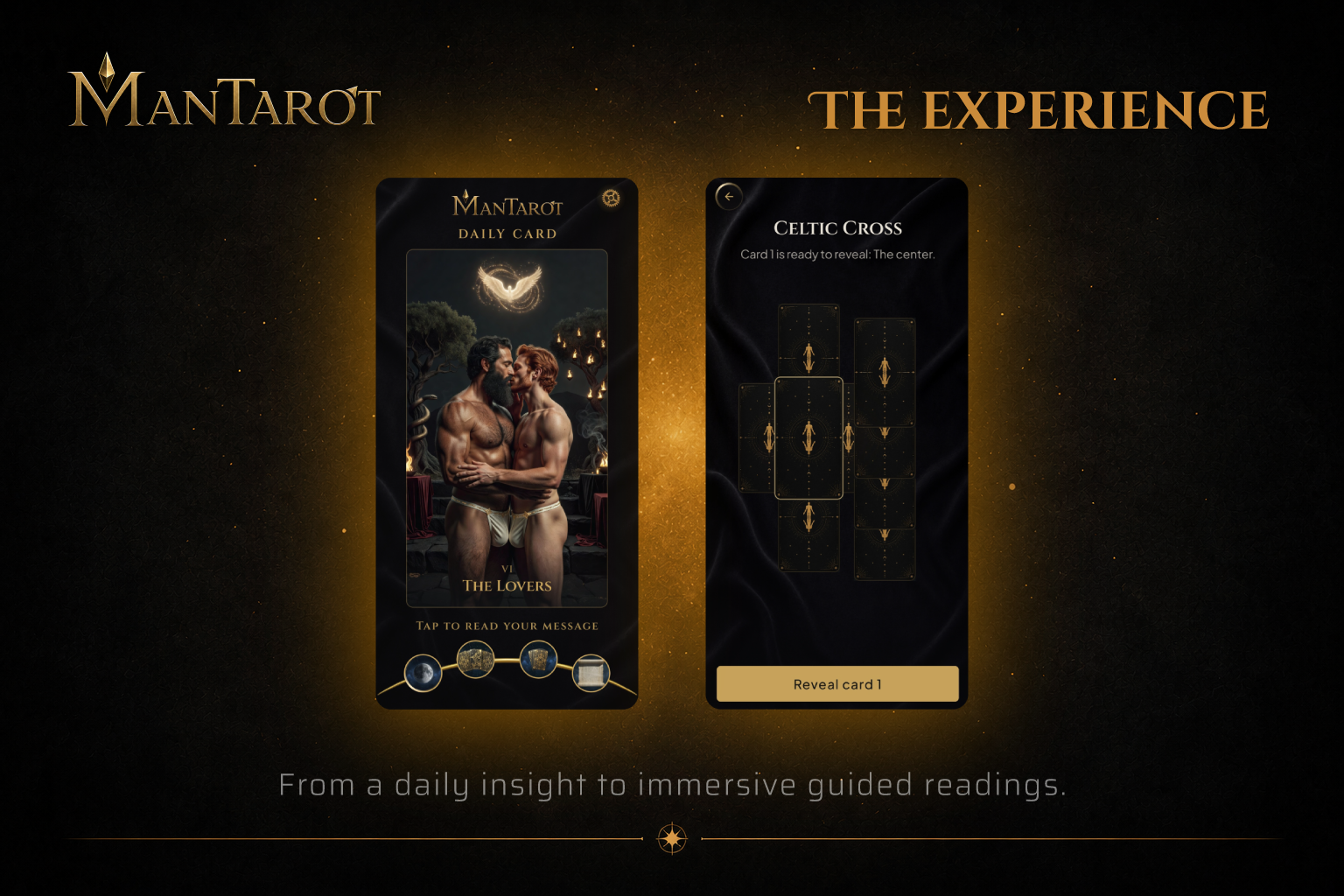
From a daily card to immersive guided readings with cinematic interactions and multiple tarot experiences.
-
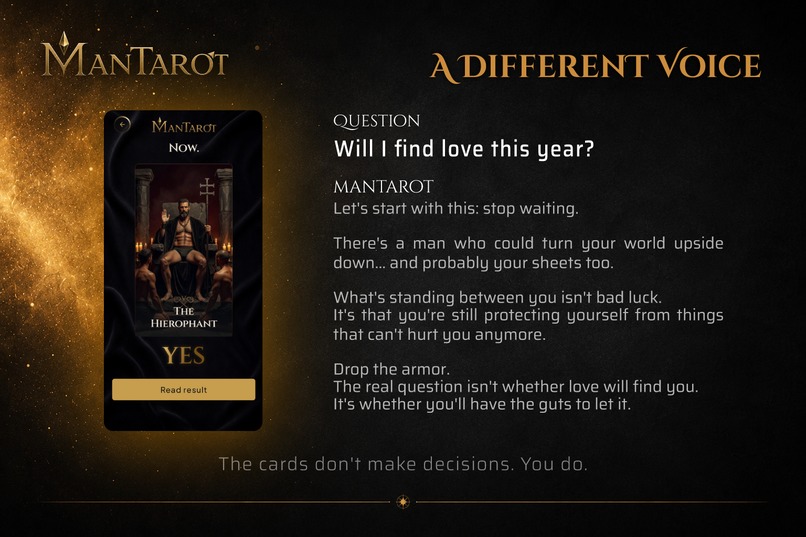
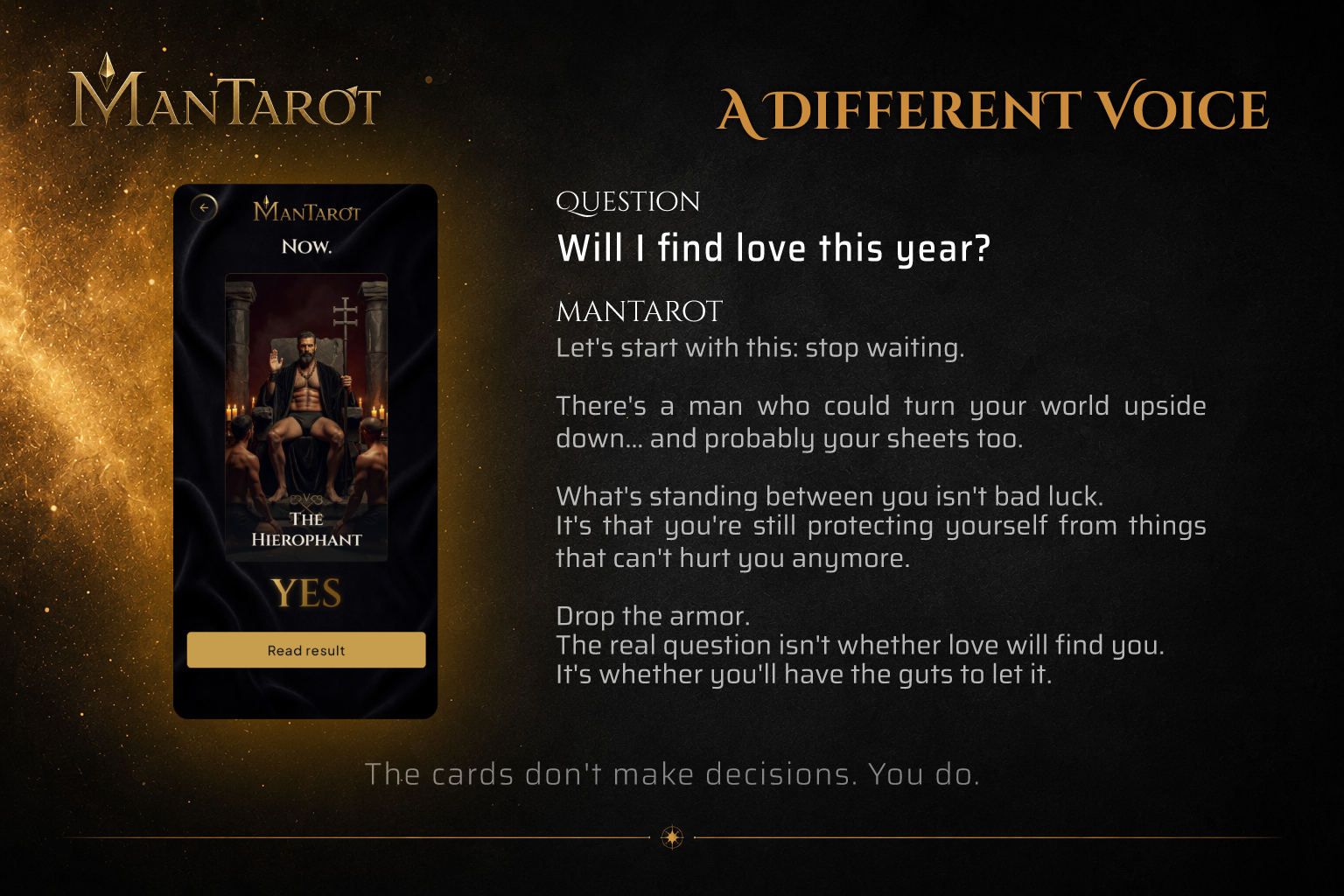
A masculine, authentic AI voice that speaks naturally to gay men instead of generic spiritual clichés.
-
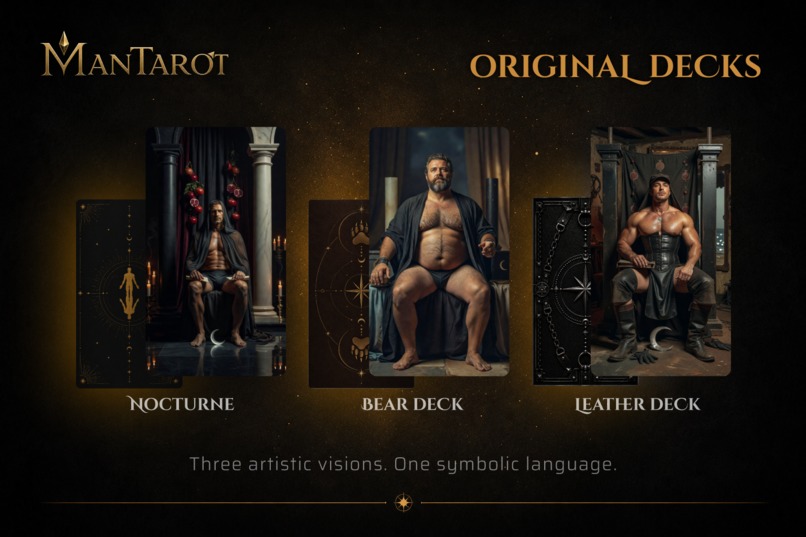
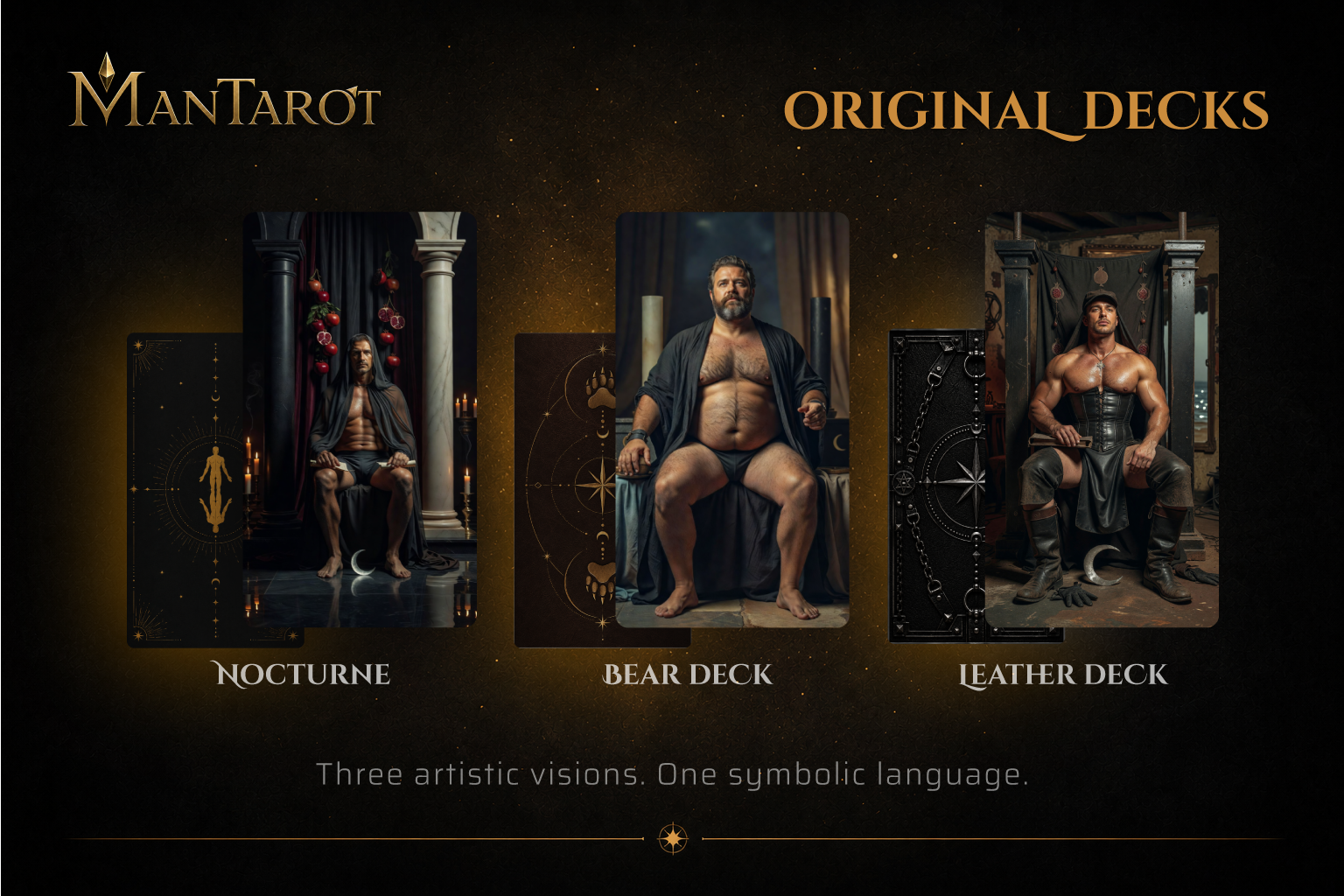
Three original artistic worlds sharing the same symbolic language: Nocturne, Bear Deck and Leather Deck.
-
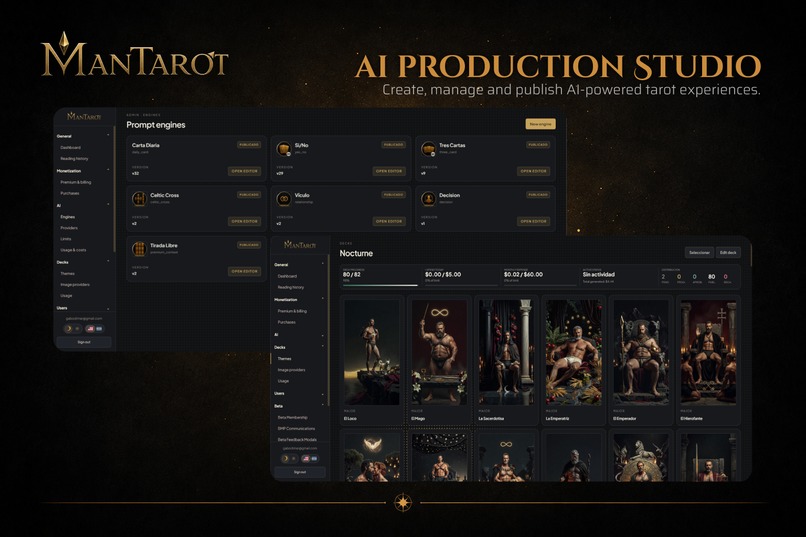
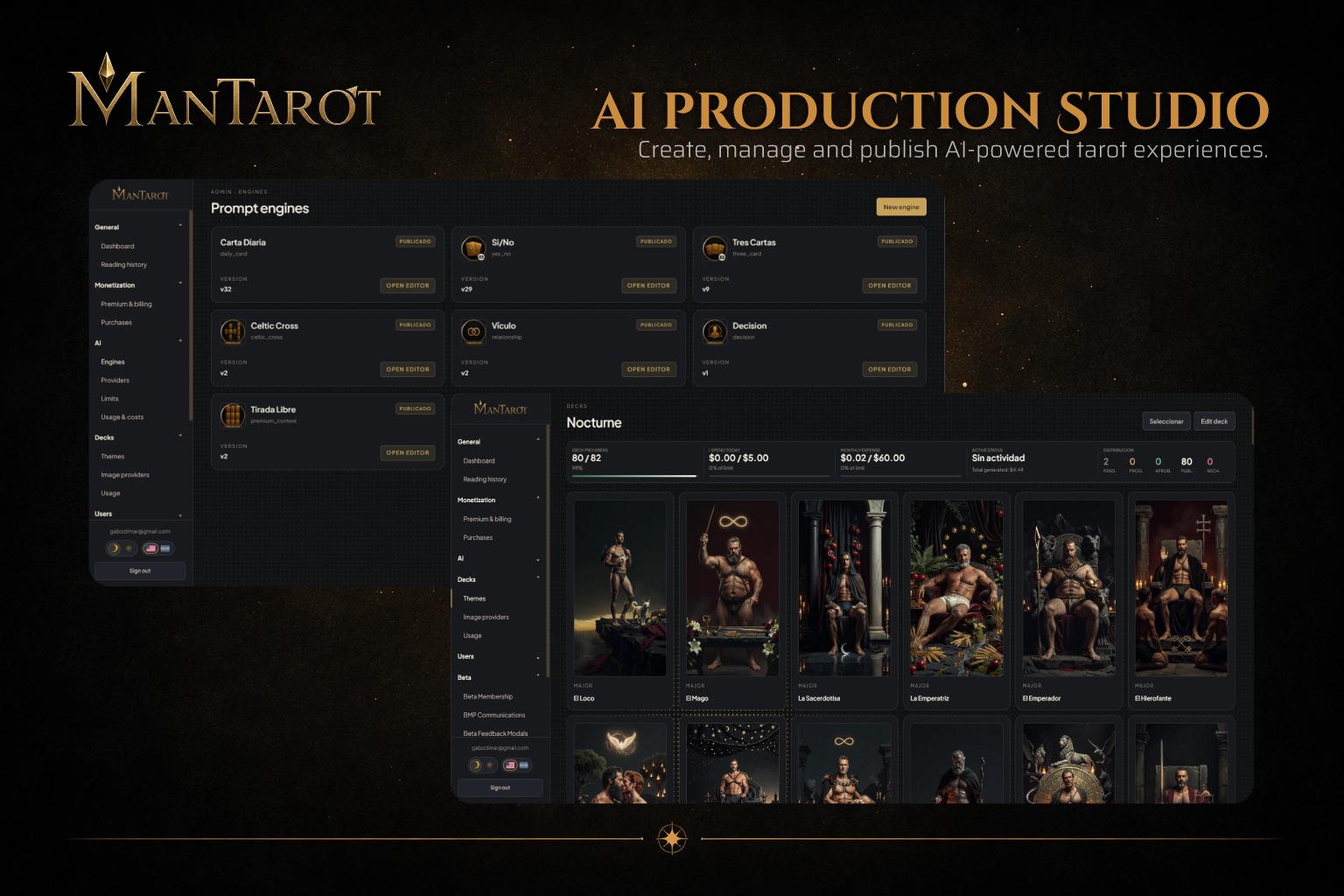
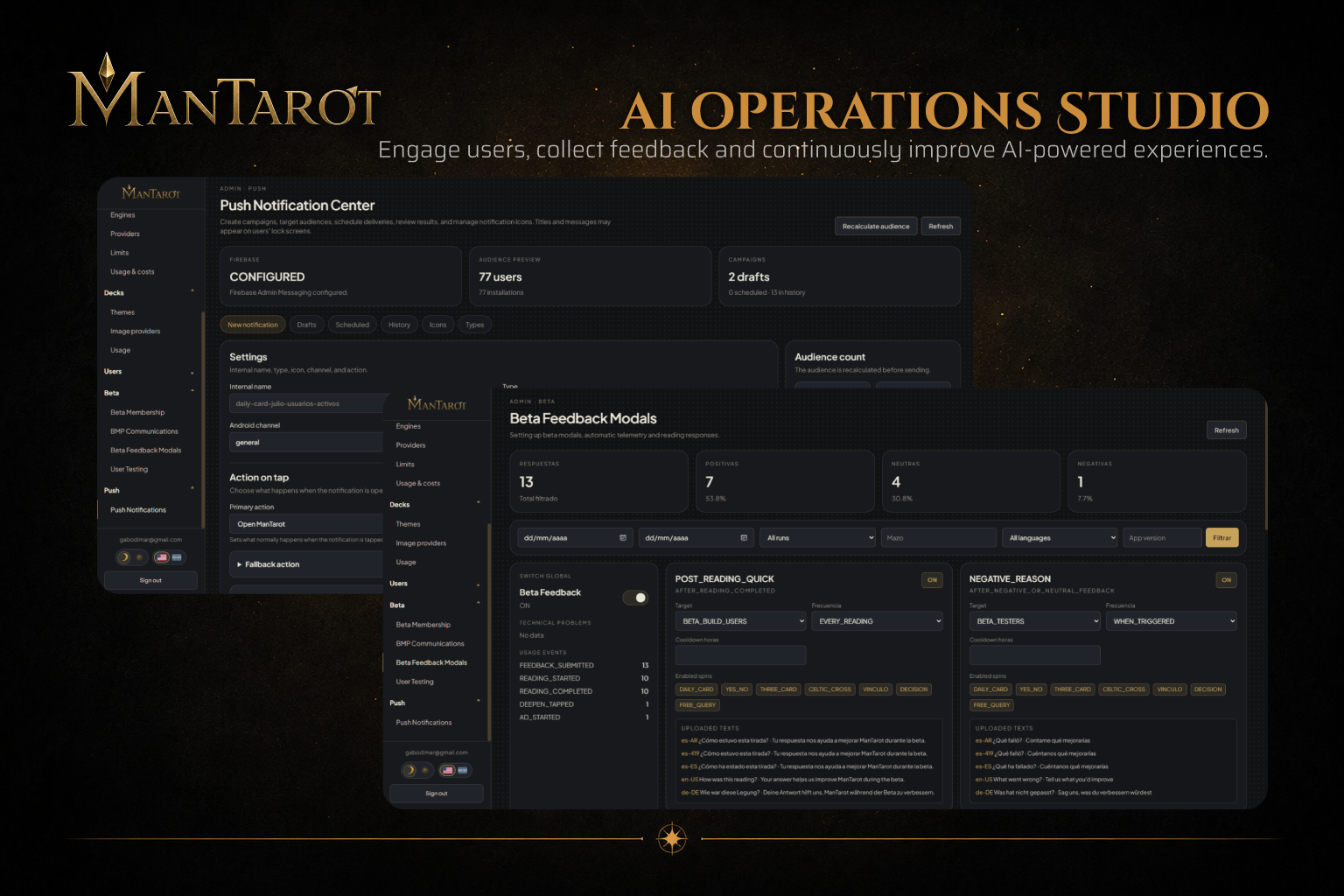
Create, version, manage and publish AI prompt engines, decks and visual assets from a unified production studio.
-
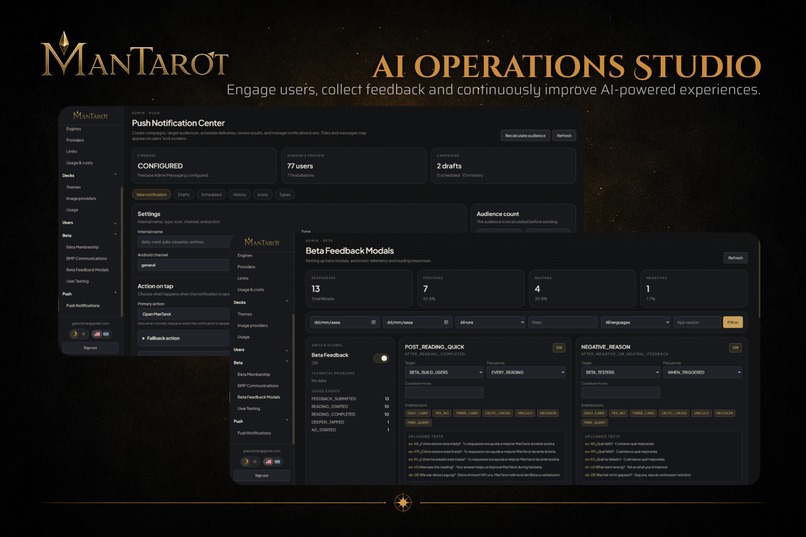
Operate live campaigns, collect structured beta feedback and continuously improve the AI experience.
-
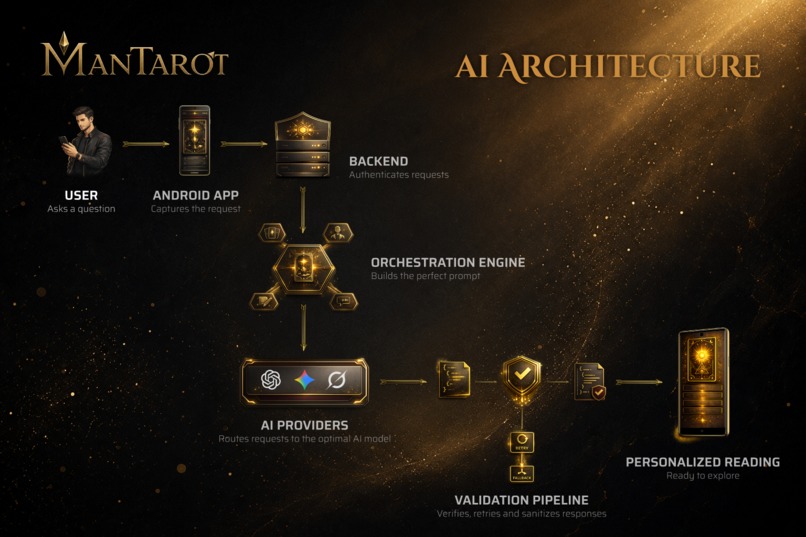
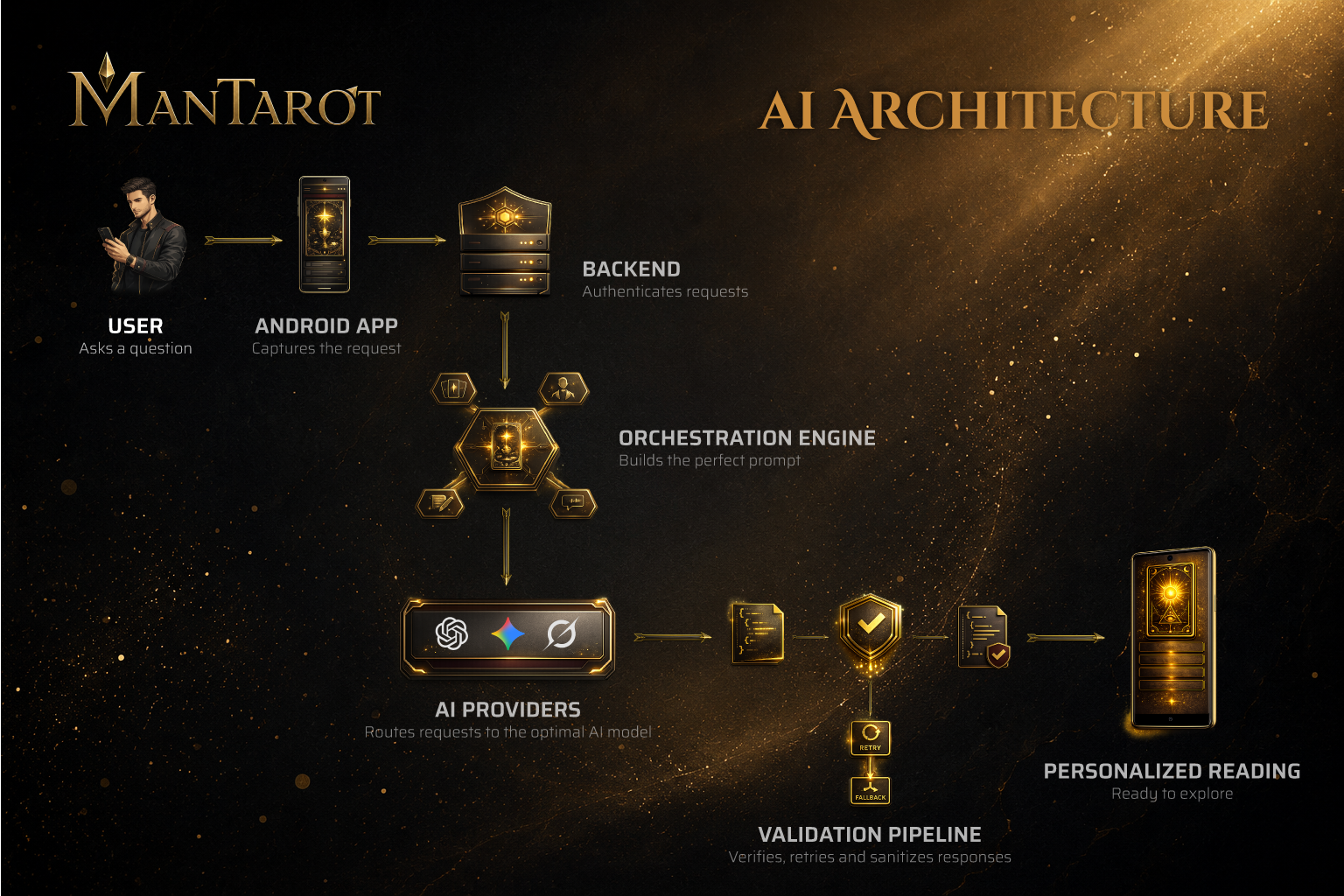
A multi-model orchestration pipeline that routes requests, validates responses and delivers personalized readings.
Inspiration
ManTarot started with a simple idea: I wanted to build the AI-powered tarot experience I couldn't find anywhere. I'm a choir conductor, arranger and music educator from Argentina, not a software engineer. My background taught me to think in terms of interpretation, emotion, rhythm and complete experiences rather than isolated technical components. When I study a musical score, I imagine how it should sound long before the first rehearsal. Building ManTarot followed the same process: before I understood how to build an Android application, a backend or a production system, I imagined how every screen, conversation and interaction should feel. That vision became ManTarot.
OpenAI made it possible for a choir conductor to build it.
What it does
ManTarot is a premium AI-powered tarot platform designed specifically for gay men. Instead of treating tarot as generic fortune-telling, it creates immersive and personal conversations where symbolic cards, AI-generated readings, original visual worlds and product design work together as a single experience.
ManTarot is not a hackathon prototype. It is a real product currently distributed through a closed Google Play beta.
The platform currently includes multilingual readings, premium tarot decks, subscriptions, one-time purchases, rewarded ads, reading history, push notifications, remote content management and a complete administration system. Every product decision is driven by one question: How should this make the user feel?
How I built it
Although I don't come from a software engineering background, I directed every aspect of the product. My role was defining the vision, designing the experience, validating every implementation and making sure every technical decision protected the product rather than simply solving a problem.
During the early stages, I experimented with multiple AI coding assistants, including Claude and OpenAI. As ManTarot became larger and more complex, Codex with GPT-5.6 became the development environment I relied on every day. I upgraded from ChatGPT Plus to Pro because Codex had become central to the way I worked.
Codex and GPT-5.6 helped me understand unfamiliar technologies, design the architecture, implement complex features, debug production issues, create regression tests, stabilize releases, audit Git and deployment state, document the system and continuously improve the application while I remained focused on product direction.
It didn't build ManTarot for me. It made it possible for me to understand, direct, test and build the product myself.
Today ManTarot includes:
- Android application built with Kotlin and Jetpack Compose
- Spring Boot backend
- Next.js web administration platform
- PostgreSQL and Prisma
- Google Play Billing
- Firebase and push notifications
- Multilingual infrastructure
- Multimodal AI architecture
- Remote deck and content management
- Production workflow for creating and managing complete premium tarot decks
- Automated tests and release validation
- Real beta users
AI architecture
ManTarot uses different AI systems for different responsibilities:
- Gemini 2.5 Flash-Lite generates the tarot readings and was chosen for efficiency and cost.
- Grok by xAI generates the artwork and tarot card imagery.
- OpenAI Codex with GPT-5.6 made it possible to build, integrate, test, stabilize and maintain the complete product around them.
Gemini generates the readings. Grok generates the artwork. OpenAI made ManTarot possible.
GPT-5.6 is not the runtime model that generates the tarot readings. It became my primary development and reasoning environment for building the system that delivers the experience.
Challenges we ran into
The hardest challenge wasn't simply writing software. It was protecting the experience as the system became more complex.
I became obsessed with preventing regressions, maintaining visual and linguistic consistency, preserving historical user data, controlling AI costs during beta, keeping remote content synchronized, validating purchases and making sure the AI voice never sounded generic. The goal wasn't simply generating responses. The goal was making users feel they were having a genuine conversation.
One recent example appeared while I was recording the final Build Week demo. The application was set to English, but a YES/NO reading displayed the Spanish label “SÍ.”
Codex helped trace the problem across the Android and backend layers. The canonical verdict was correct, but the application trusted a free-form localized label generated by the runtime AI. We corrected the contract, made the verdict strictly binary and deterministic, preserved the existing animation and validated the result across English, German and Spanish before publishing Beta22.
That experience reflects how ManTarot has been built: not by hiding problems, but by diagnosing them, testing them and protecting the product from regressions.
Accomplishments that we're proud of
The achievement I'm most proud of is not technical. It's hearing beta users tell me that the app feels personal, that it speaks directly to them and that they genuinely connect with the experience.
I'm also proud that someone without a traditional software background was able to direct and build a complete production ecosystem while preserving a single product vision from the first prototype until today.
ManTarot now includes an Android application, backend services, an Admin platform, billing, notifications, multilingual support, AI orchestration, testing, deployment and ongoing maintenance. That would not have been possible for me before tools like Codex and GPT-5.6.
What I learned
This project completely changed the way I think about software. I didn't learn programming first and then build a product. I built a product, and the product continuously taught me what I needed to learn.
Working with Codex showed me that AI doesn't replace creativity, judgment or responsibility. It amplifies the ability of one person to transform a clear vision into working software.
It also taught me that building with AI still requires product direction, verification, testing, persistence and the willingness to understand what the system is doing.
What's next for ManTarot
ManTarot is still evolving. Future plans include voice interaction, additional premium decks, artistic collaborations, new reading systems, richer personalization, broader internationalization and an iOS version.
I plan to continue using Codex and GPT-5.6 as ManTarot grows, not only for new development, but also for maintenance, testing, debugging and release stability.
I don't see ManTarot as a finished application. I see it as a living product that will continue growing while protecting the experience that inspired it from day one.
Built With
- android
- apache
- cloudflare-workers
- codex
- docker
- firebase
- gemini
- google-play-billing
- gpt-5.6
- grok
- jetpackcompose
- kotlin
- next.js
- postgresql
- rest-api
- springboot
- typescript

Log in or sign up for Devpost to join the conversation.