-
-
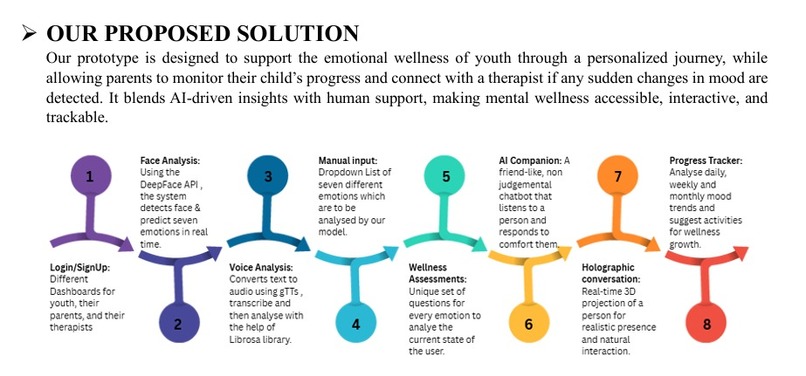
Proposed Solution
-
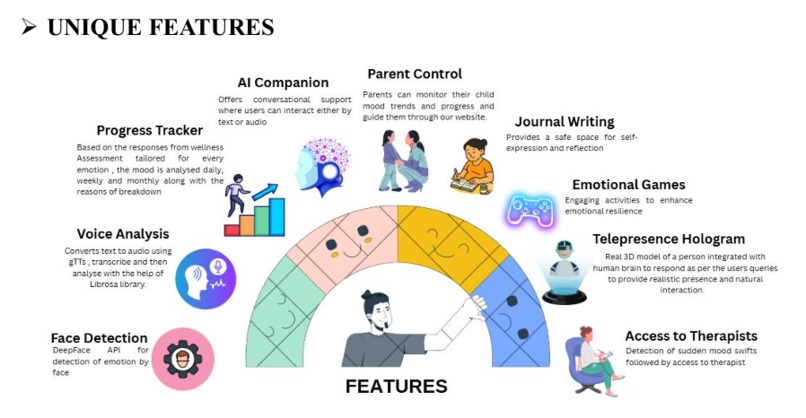
Features of Our Solution
-
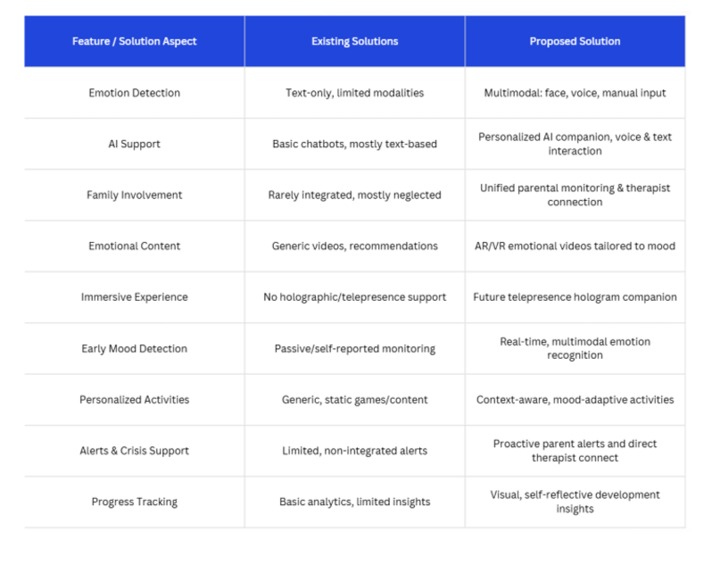
How Our Solution is Different from Existing Solutions
-
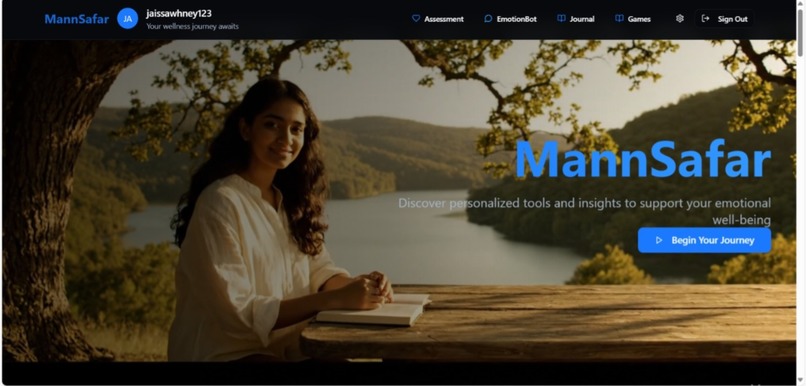
Youth Dashboard
-
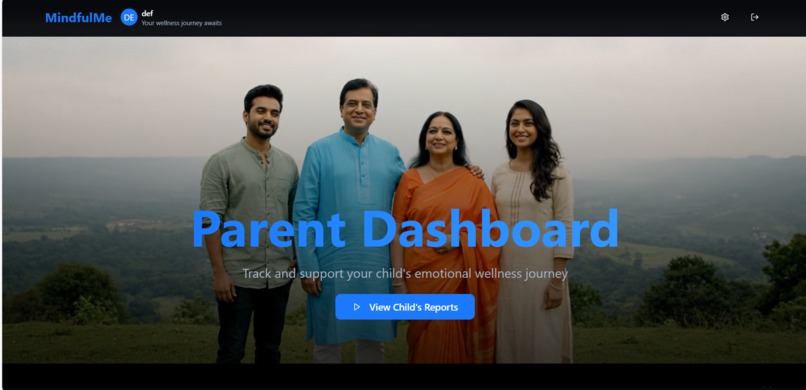
Parent Dashboard
-
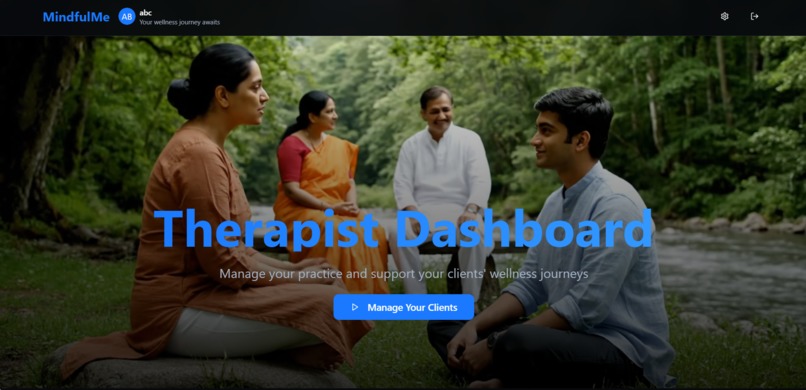
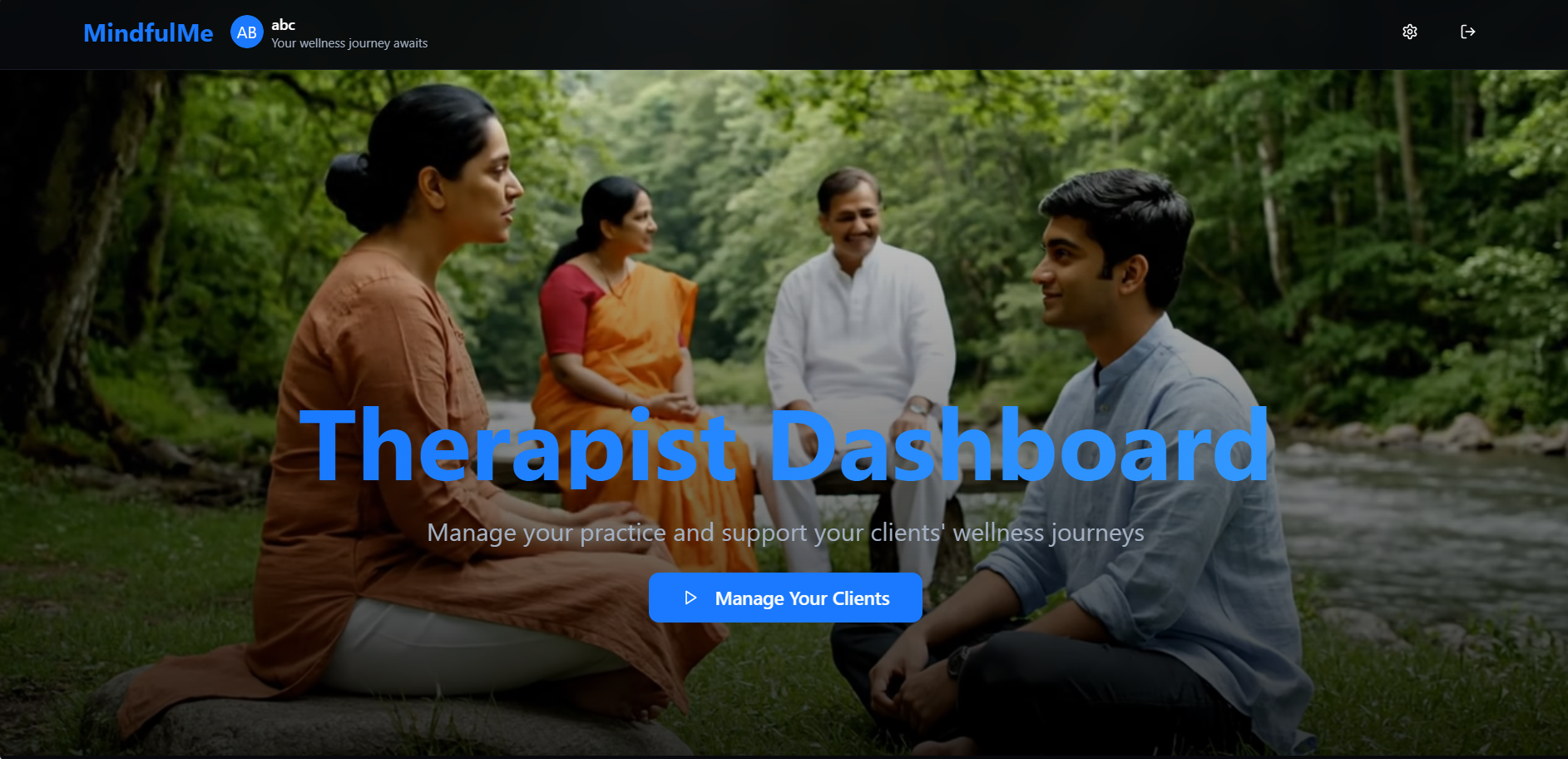
Therapist Dashboard
-
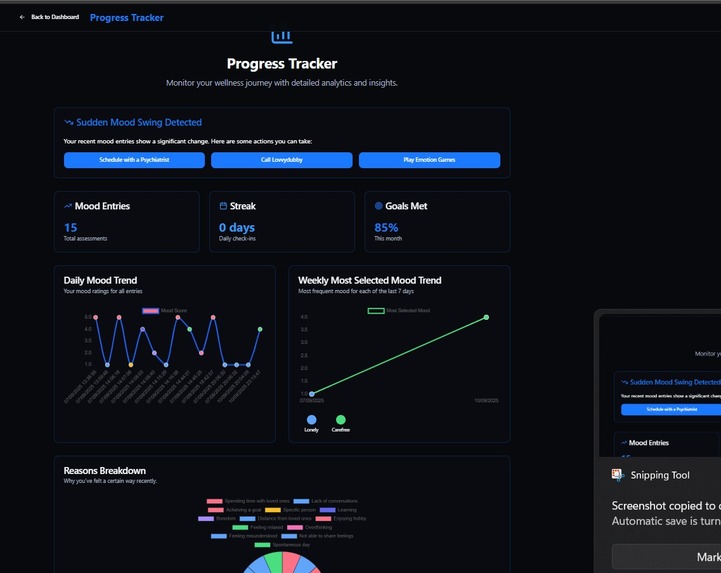
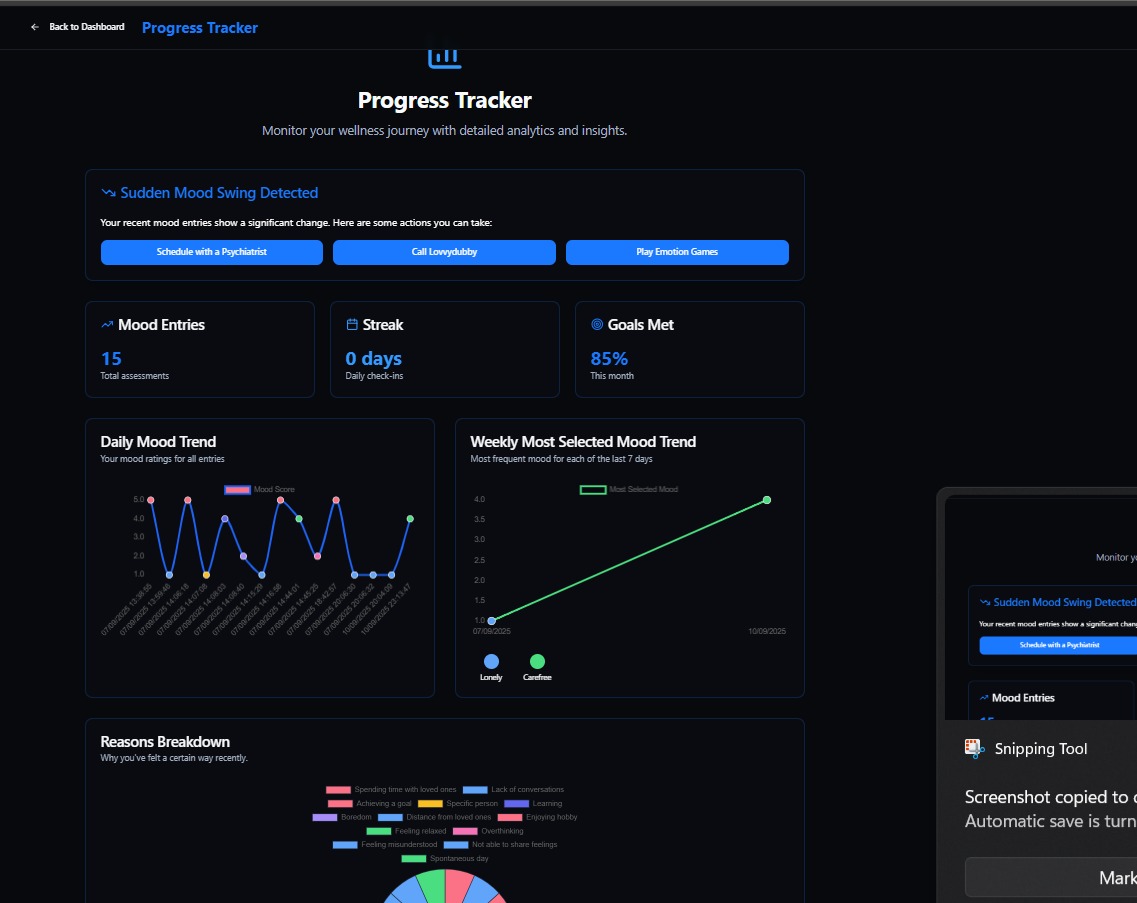
Progress Tracker of Child
Inspiration
Mental health remains a significant societal taboo in India creating a formidable barrier for young adults and students seeking support. Amidst intense academic and social pressures, these individuals often lack a confidential, accessible, and non- judgemental outlet to address their mental health concerns. The existing landscape of professional mental healthcare is often out of reach due to high costs, limited availability, and the pervasive social stigma associated with seeking help so we thought of designing an AI- powered, confidential, and empathetic mental wellness solution that supports and guides youth in overcoming stigma and accessing help.
What it does
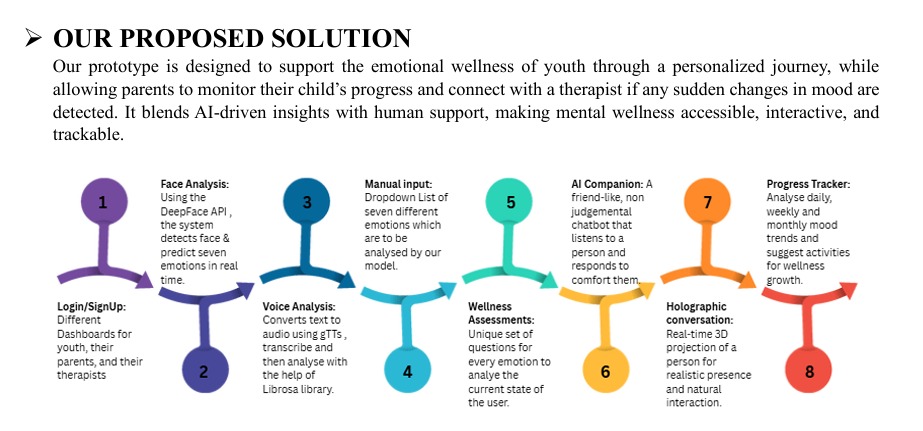
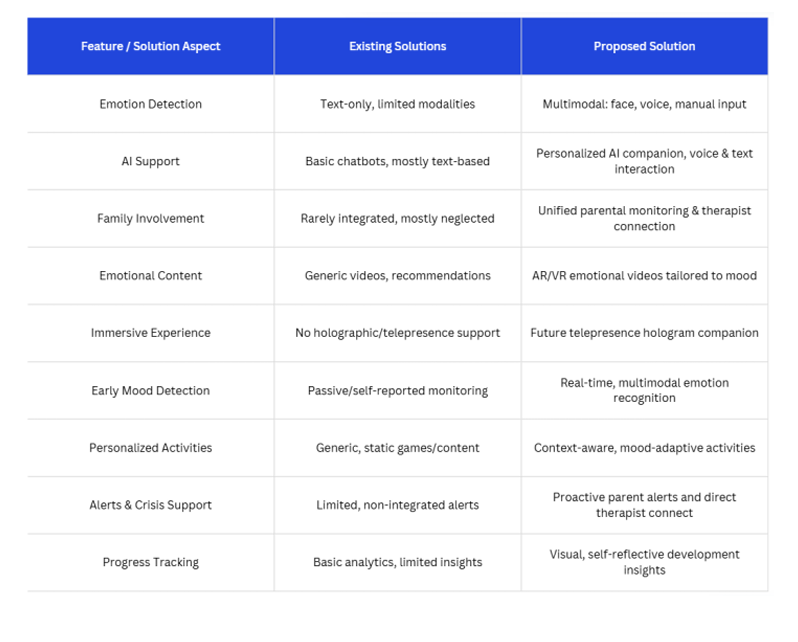
Our prototype is designed to support the emotional wellness of youth through a personalized journey, while allowing parents to monitor their child’s progress and connect with a therapist if any sudden changes in mood are detected. It blends AI-driven insights with human support, making mental wellness accessible, interactive, and trackable.
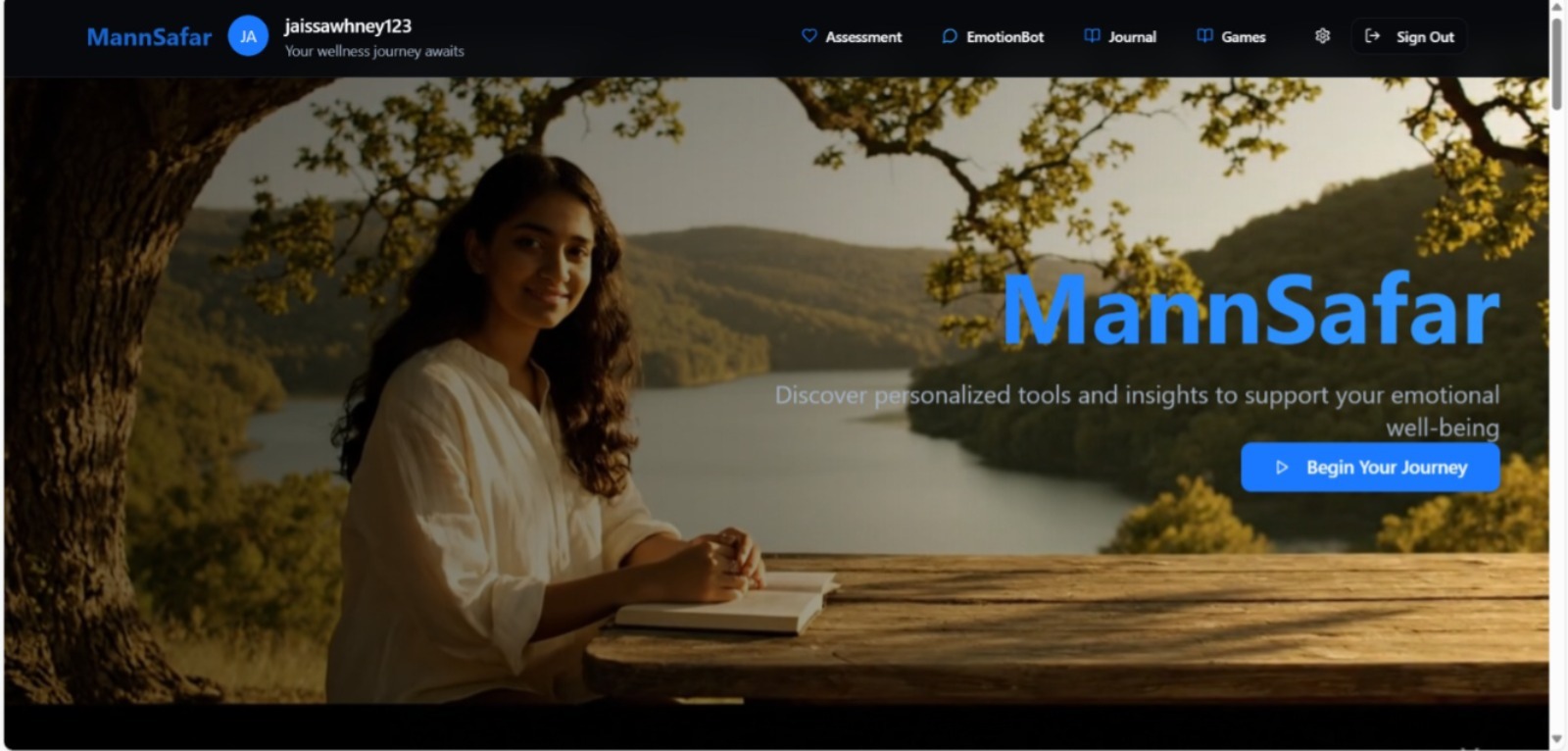
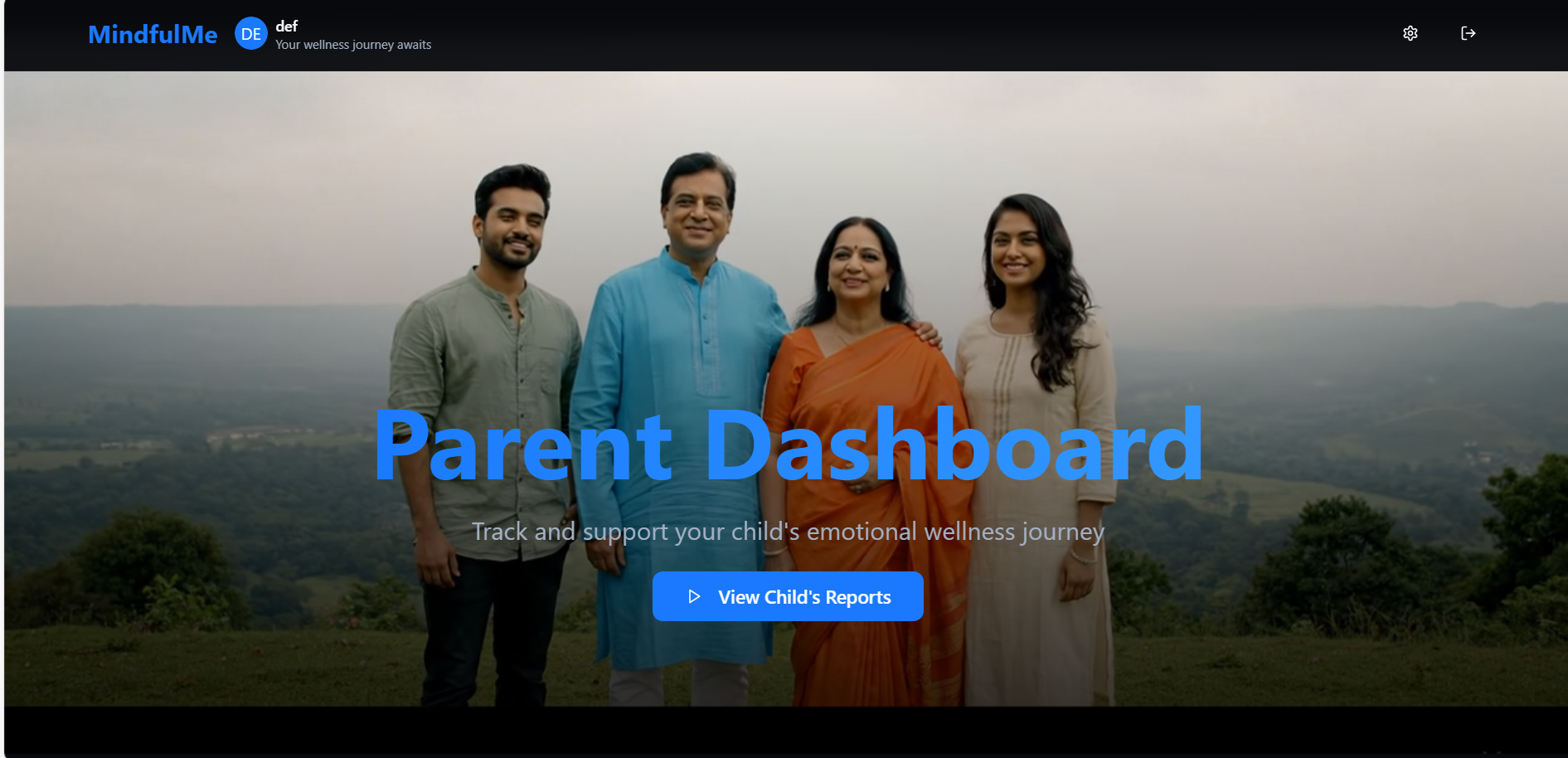
- Login/SignUp– Different Dashboards for youth, their parents, and their therapists.
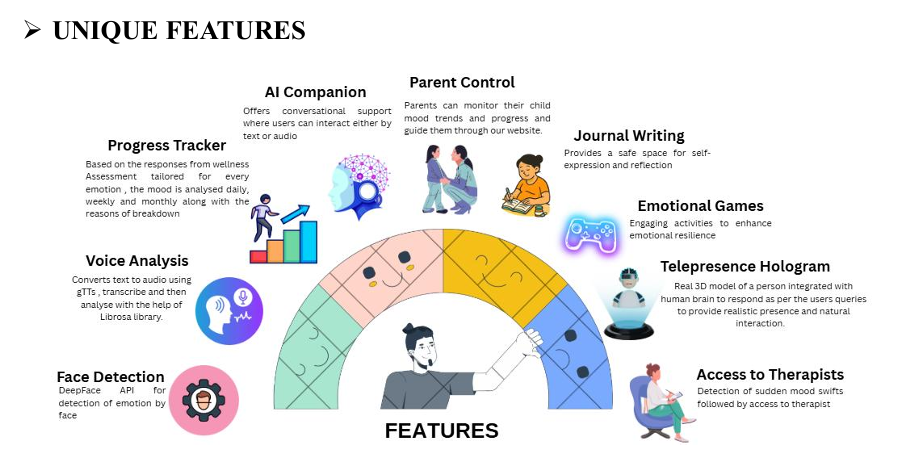
- Face Analysis – Using the DeepFace API , the system detects face & predict seven emotions in real time. -Voice Analysis – Converts text to audio using gTTs , transcribe and then analyse with the help of Librosa library.
- AI Companion – A friend-like, non judgemental chatbot that listens to a person and responds to comfort them. -Manual input– Dropdown List of seven different emotions which are to be analysed by our model.
- Journal Writing – A safe space for guided reflection and self-expression.
- Games – Engaging activities to enhance emotional resilience. -Wellness Assessments– Unique set of questions for every emotion to analye the current state of the user.
- Progress Tracker – Analyse daily, weekly and monthly mood trends and suggest activities for wellness growth.
The journey begins with emotion detection (face analysis, voice recognition, or manual input) followed by a wellness assessment. Based on the results, users can:
- Watch AR/VR-based videos linked to each emotion, or
- Review their progress tracker to reflect on their development.
How we built it
We developed MannSafar using:
- TypeScript
- Supabase
- ReactJS
- Google GenAI
- SQL
- Unity
- Python
- OpenAI
- C#
- Gemini
Challenges we ran into
- Integrating multi-modal emotion detection (voice + face + manual input) while maintaining accuracy.
- Ensuring user privacy and secure storage of sensitive data.
- Creating an interface that feels supportive and not clinical.
- Managing limited time and resources to build a working prototype.
Accomplishments that we're proud of
-Functional Prototype-Integrating multi-modal emotion detection (voice + face + manual input) while maintaining accuracy. -Seamless Experience-Integrated three different dashboards for YOUYH, PARENTS and THERAPISTS where parents can access their child reports and consult with therapists and therapists can also track their scheduled meetings. -Progress Tracker-Based on the responses from wellness Assessment tailored for every emotion , the mood is analysed daily, weekly and monthly along with the reasons of breakdown
What we learned
- How to integrate AI-driven emotion detection with a user-friendly front end.
- The importance of ethical data handling and privacy in mental-health tech.
- Insights into designing interfaces that encourage self-reflection and emotional growth.
What's next for MannSafar
- Telepresence Hologram: Real 3D model of a person integrated with human brain to respond as per the users queries to provide realistic presence and natural interaction.
- Enhancing Therapist Dashboard: Collaborating with mental-health professionals to validate and improve the platform.
- Enhancing Parent Dashboard: Parental dashboard with activity tracking and bonding games to analyze children’s mental state and strengthen parent–child relationships


Log in or sign up for Devpost to join the conversation.