-
-
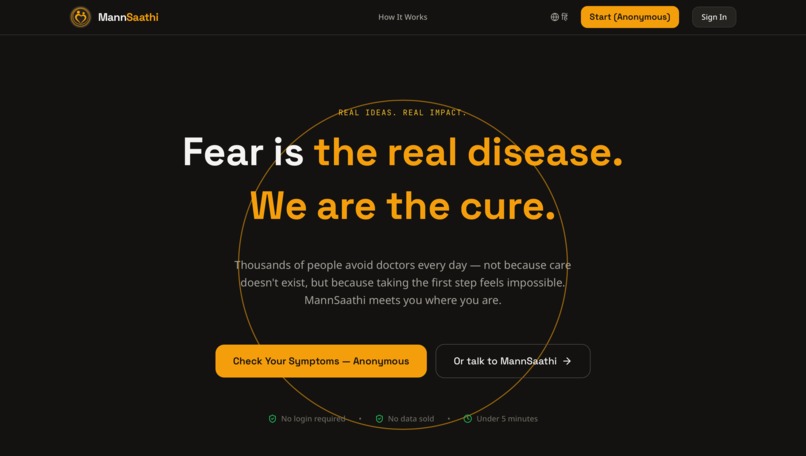
Landing Page
-
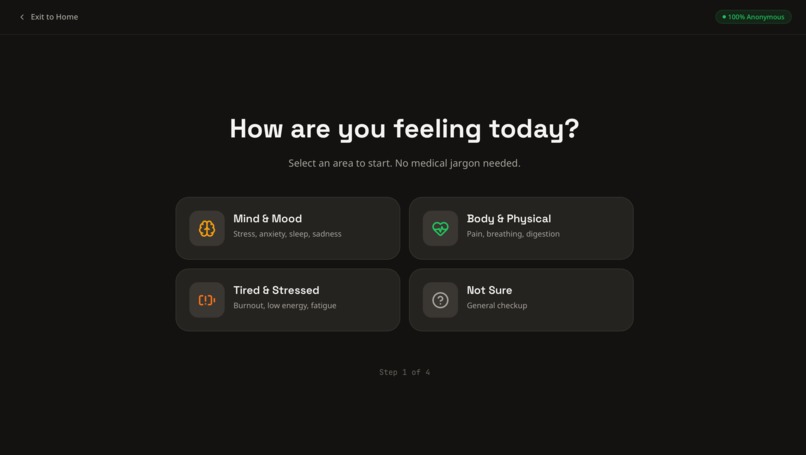
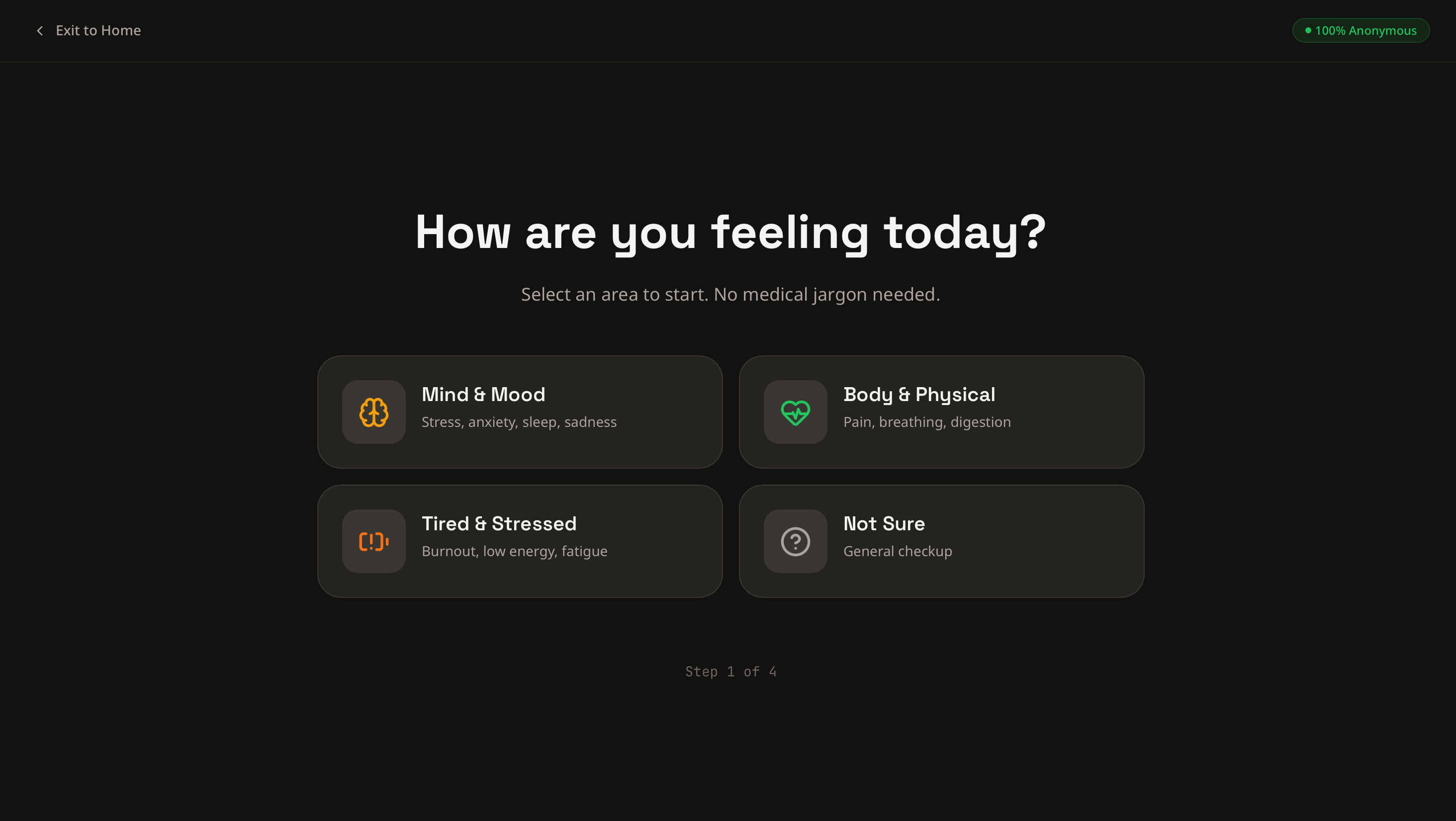
Symptoms Analyzer
-
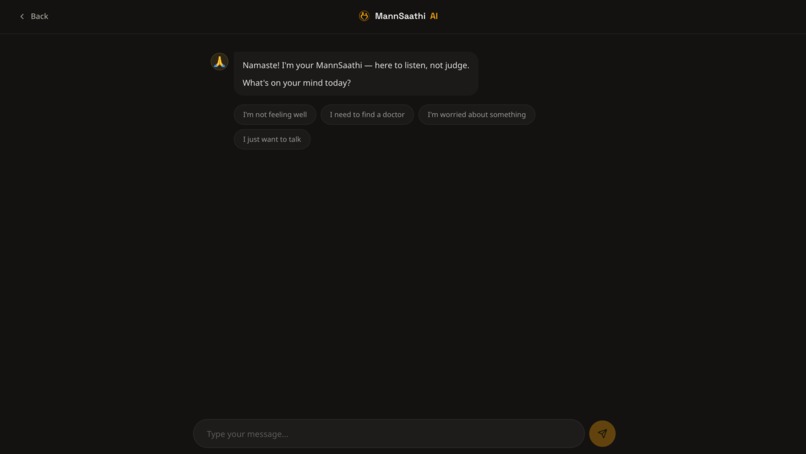
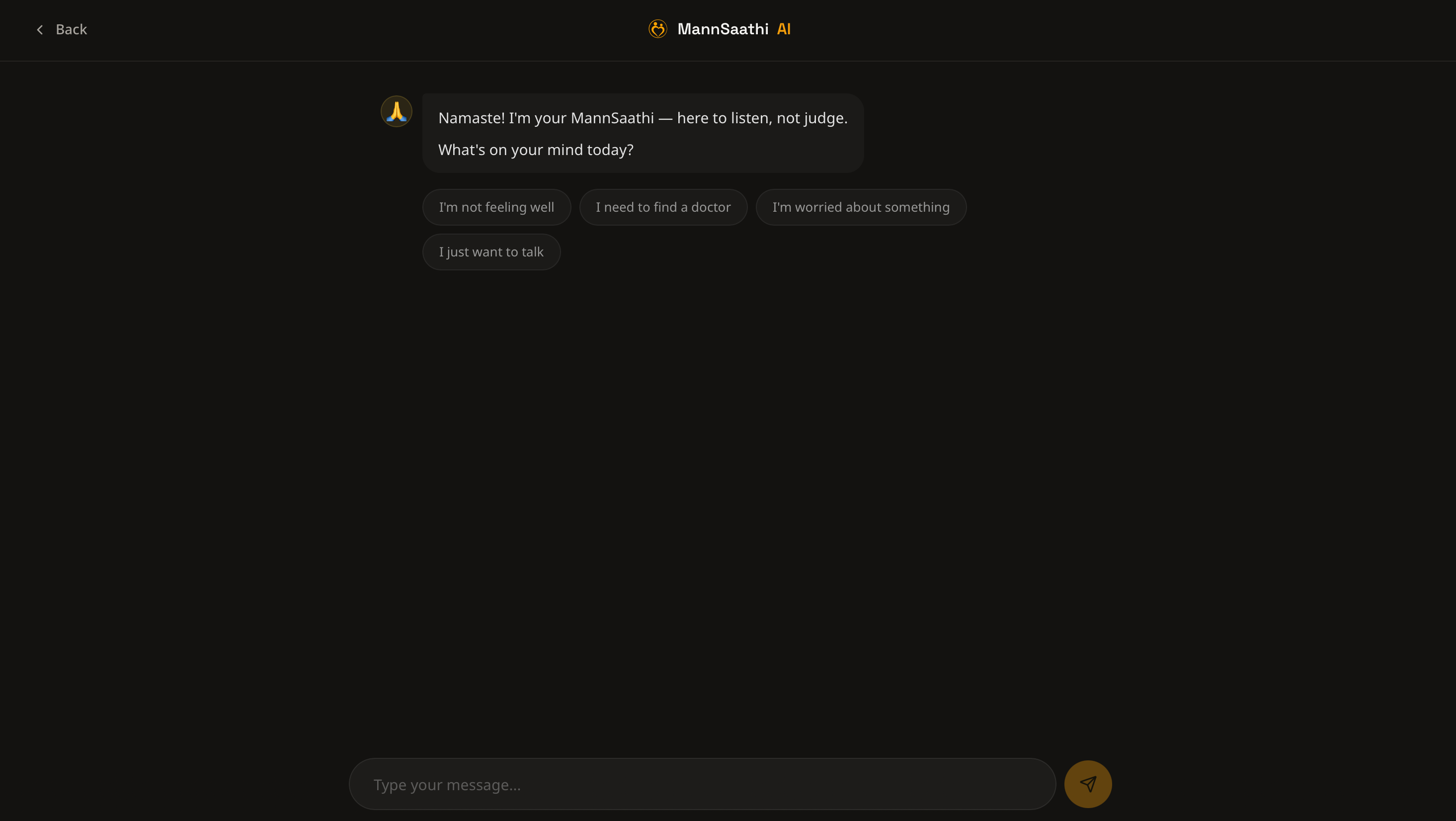
MannSaathi AI
Inspiration
We noticed a silent epidemic that rarely gets discussed: healthcare hesitation. Thousands of people avoid visiting doctors every day—not because medical care isn't available or affordable, but because taking that first step feels impossible.
Whether it's the fear of a bad diagnosis, social stigma, "toughing it out" due to masculinity norms, or simply the anxiety of uncertainty, people delay care until minor issues become severe. We realized that what people needed wasn't just another symptom checker—they needed a companion. They needed someone who would listen without judgment, speak their language (including cultural nuances like Hinglish), and gently guide them from uncertainty to confident action. That's how MannSaathi (meaning "Companion of the Mind/Heart") was born.
What it does
MannSaathi is an anonymous, multilingual AI healthcare companion designed specifically to break the psychological barriers to seeking medical help. It acts as a non-judgmental friend who listens to your symptoms in English, Hindi, or Hinglish.
Users can express how they feel naturally, without needing complex medical jargon. Our custom AI brain then:
- Understands and parses the symptoms.
- Assesses the urgency without using alarmist, panic-inducing language.
- Provides actionable next steps—ranging from simple home relief to recommending an immediate doctor's visit.
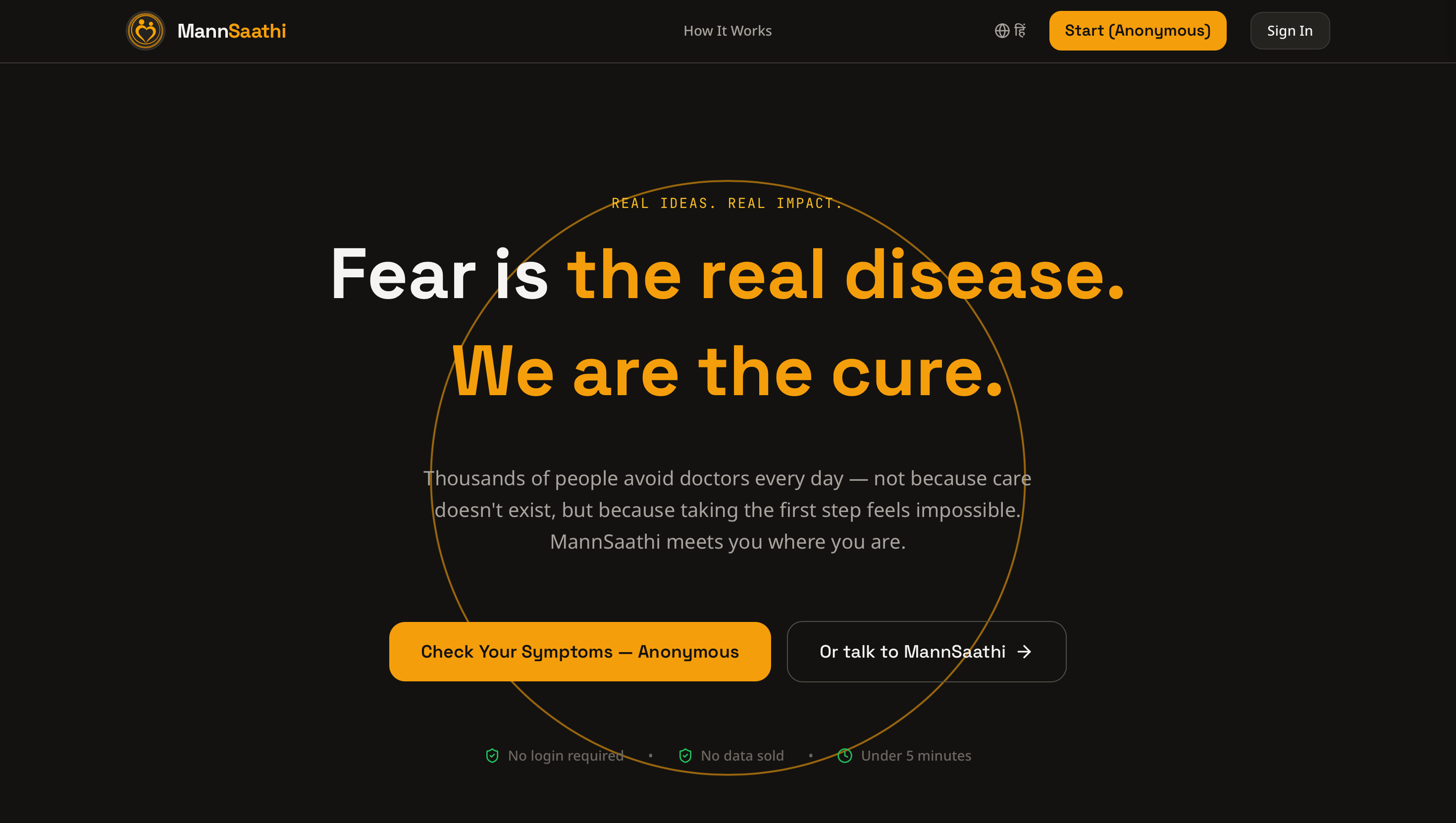
Crucially, it does all of this with a 100% privacy guarantee. There are no forced logins, no data tracking, and no sold data.
How we built it
We split the architecture into a highly responsive modern frontend and a powerful, specialized AI backend.
- Frontend: We built the user interface using Next.js and React. The UI was carefully designed to be calming, intuitive, and extremely fast to ensure we don't add to the user's anxiety.
- Backend & API: We developed a FastAPI Python server to handle requests swiftly and bridge the gap between the user and our AI model.
- The AI Brain: We took a massive multilingual foundation model (
xlm-roberta-large) and fine-tuned it using LoRA (Low-Rank Adaptation). We trained it on high-quality medical datasets, specificallygretelai/symptom_to_diagnosisandmedalpaca/medical_meadow_wikidoc. We conducted this extensive fine-tuning process on Kaggle to ensure the model could accurately categorize symptoms across different medical domains, especially when users mix English and Hindi (Hinglish). Finally, the model is hosted on Hugging Face.
Challenges we ran into
- Multilingual Medical Nuance: Training an AI to understand clinical symptoms is hard enough, but training it to understand informal, localized Hinglish (e.g., "Mera sar ghoom raha hai aur thakan lag rahi hai") required careful data handling and prompt engineering.
- Tone Calibration: Standard AI models often sound robotic or overly clinical, which can scare users. We had to work hard to ensure MannSaathi's responses struck the perfect balance between being empathetic, comforting, and medically responsible (without giving definitive diagnoses).
- Performance vs. Cost: Running a large model like
xlm-roberta-largecan be resource-intensive. Optimizing the pipeline to respond within our target time of under 5 seconds required significant backend tuning.
Accomplishments that we're proud of
- The Hinglish AI Model: Successfully fine-tuning a massive multilingual model that genuinely understands the way South Asians actually text and talk about their health.
- The Zero-Friction UX: We managed to build a flow where a user can get valuable, culturally-aware triage in under 3 minutes without ever giving up their email or name.
- Tone & Empathy: We successfully engineered an AI that doesn't feel like a WebMD search that tells you the worst-case scenario, but rather feels like a knowledgeable friend guiding you.
What we learned
- Empathy in Design: We learned that in healthcare tech, the user interface and the tone of the copy are just as important as the underlying algorithm. If the user feels judged or scared, they will bounce.
- AI Fine-Tuning: We gained deep, hands-on experience with LoRA and fine-tuning large language models on Kaggle, specifically handling the nuances of medical datasets.
- Data Privacy as a Feature: We learned that making an application 100% anonymous isn't just a compliance requirement—it's a massive selling point that builds immediate user trust.
What's next for MannSaathi
- Voice Integration: Allowing users to simply speak their symptoms instead of typing, further reducing the friction for elderly or non-tech-savvy users.
- Regional Language Expansion: Scaling the model beyond Hindi/Hinglish to include other major regional languages like Tamil, Bengali, and Marathi.
- Local Clinic Routing: Integrating a map API to anonymously show users the nearest free or low-cost clinics based on their assessed triage level
Built With
- fastapi
- hugging-face
- kaggle
- lora
- next.js
- python
- react
- render
- typescript
- uvicorn
- xlm-roberta-large

Log in or sign up for Devpost to join the conversation.