-
-
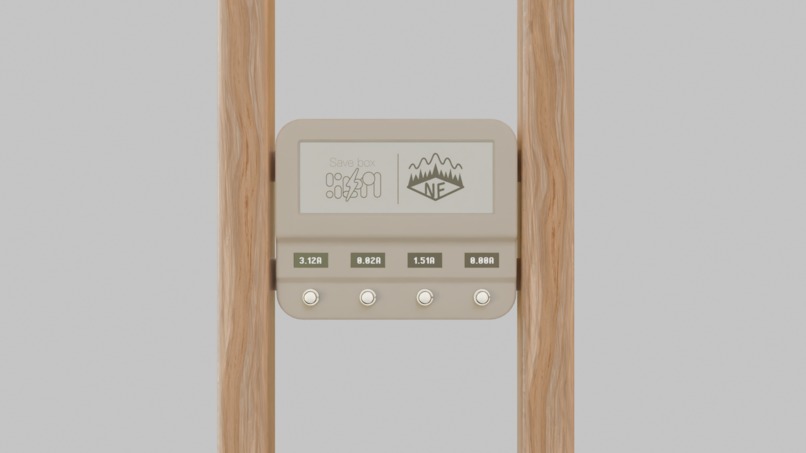
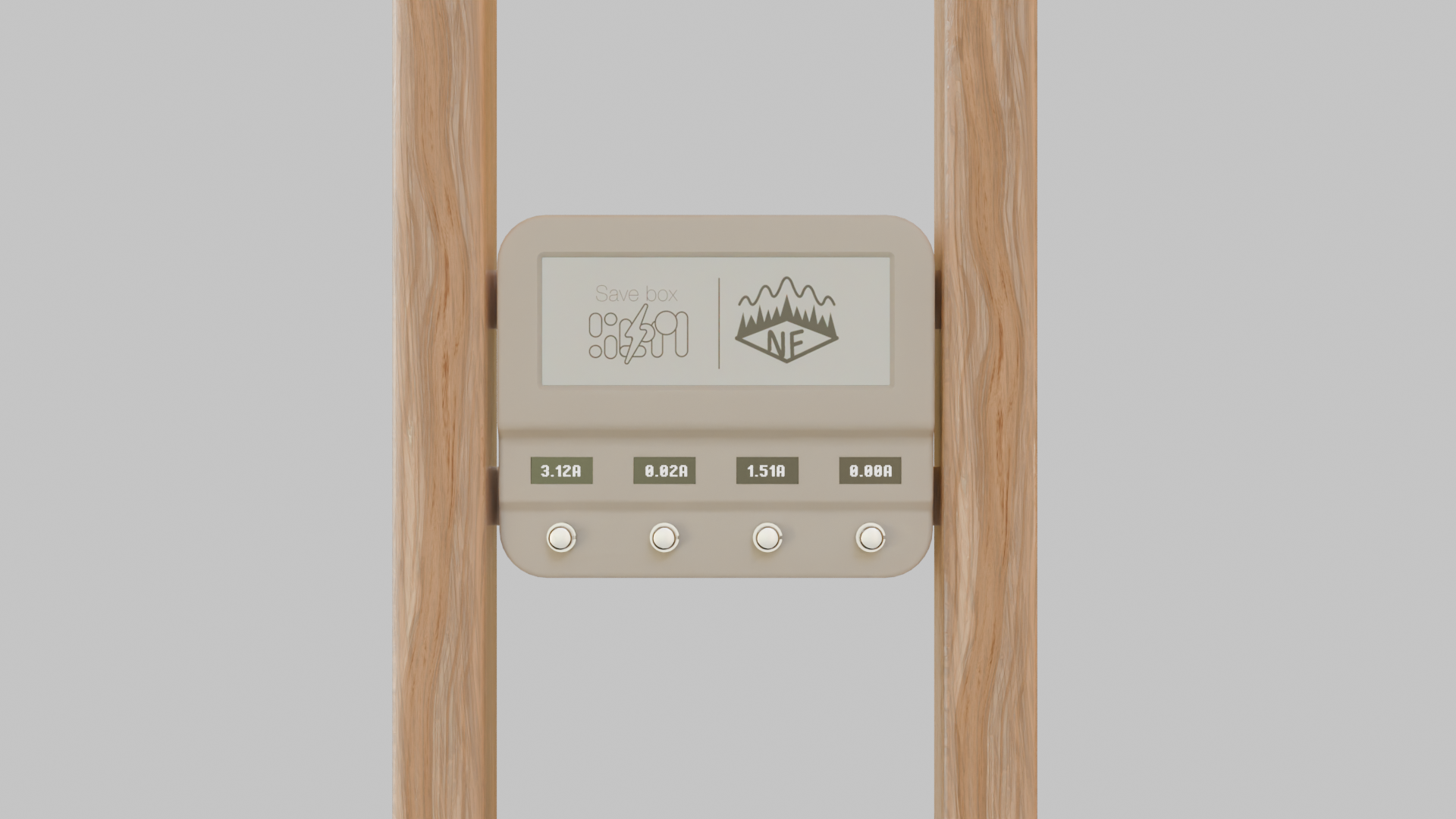
Blender render of Savebox hardware
-
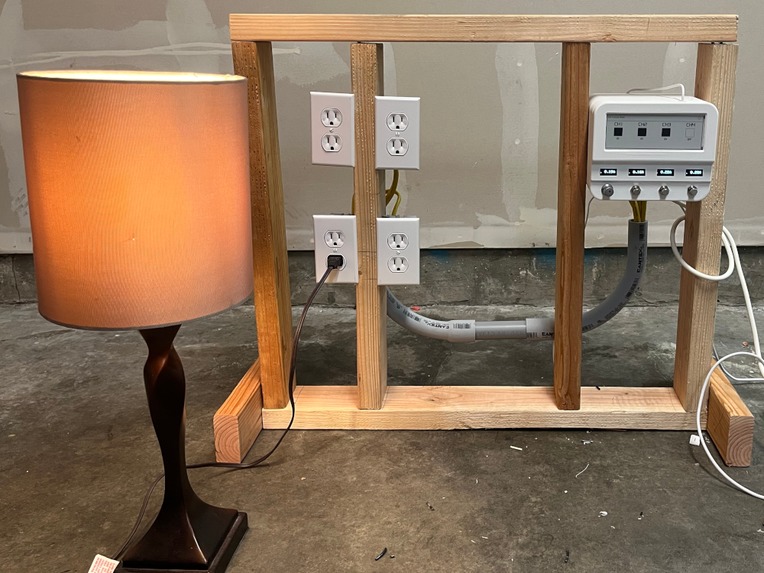
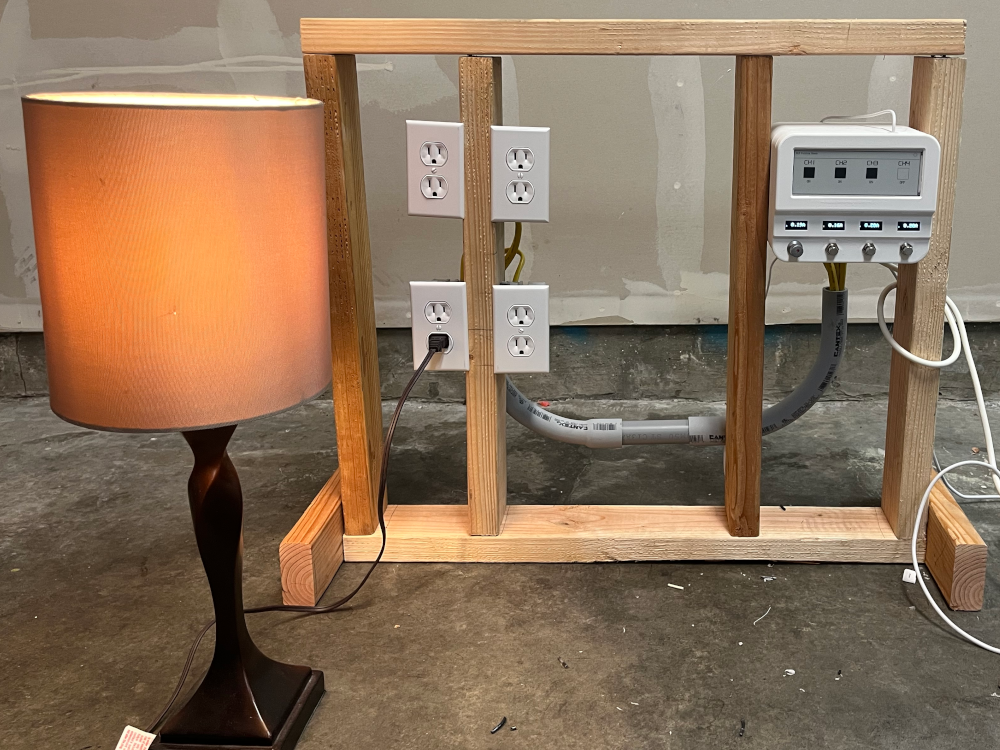
Full hardware demo of Savebox
-
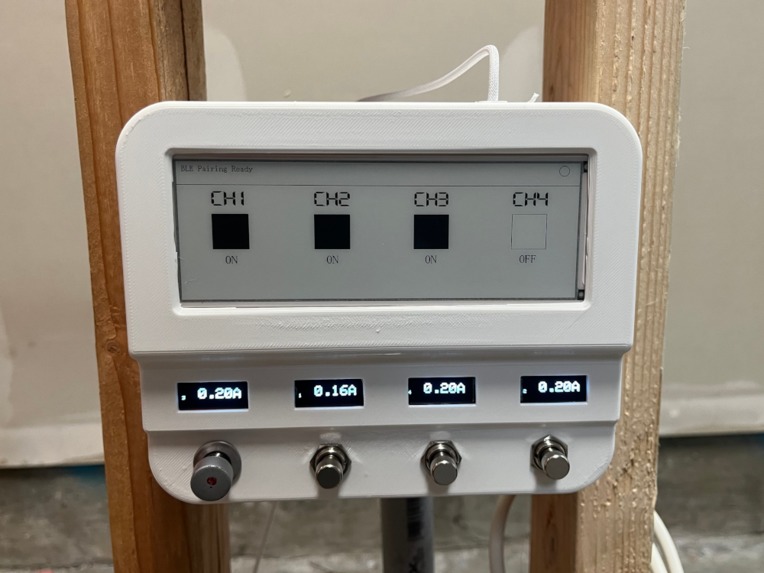
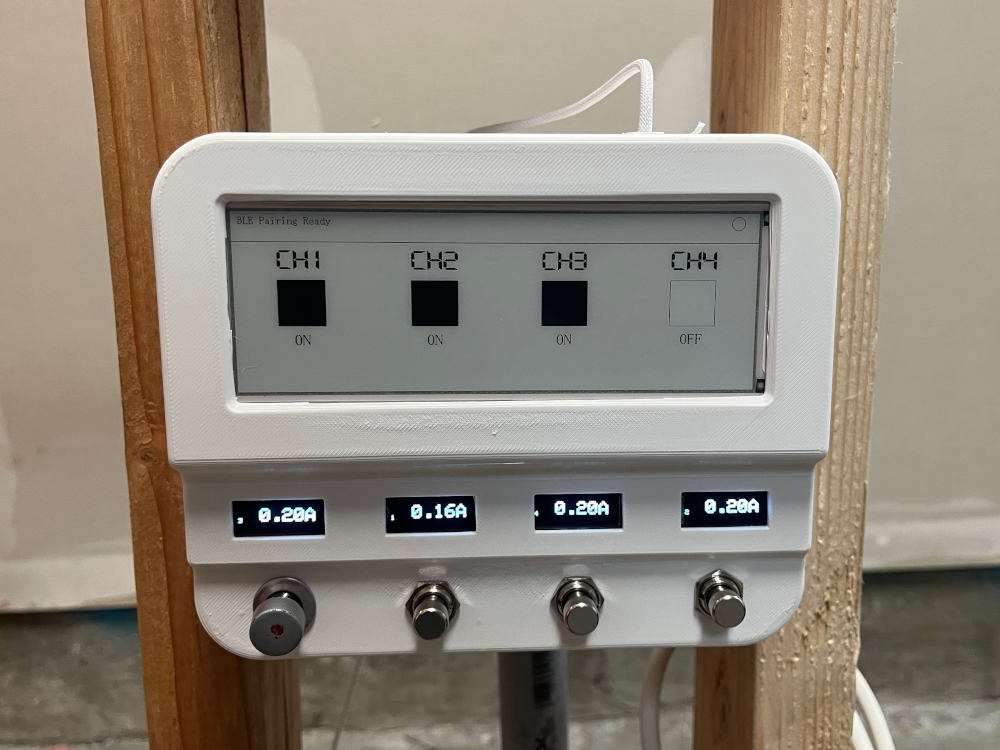
Closeup of Savebox hardware
-
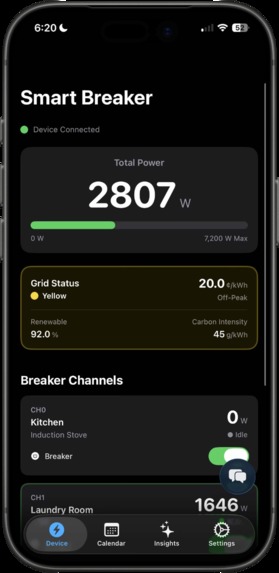
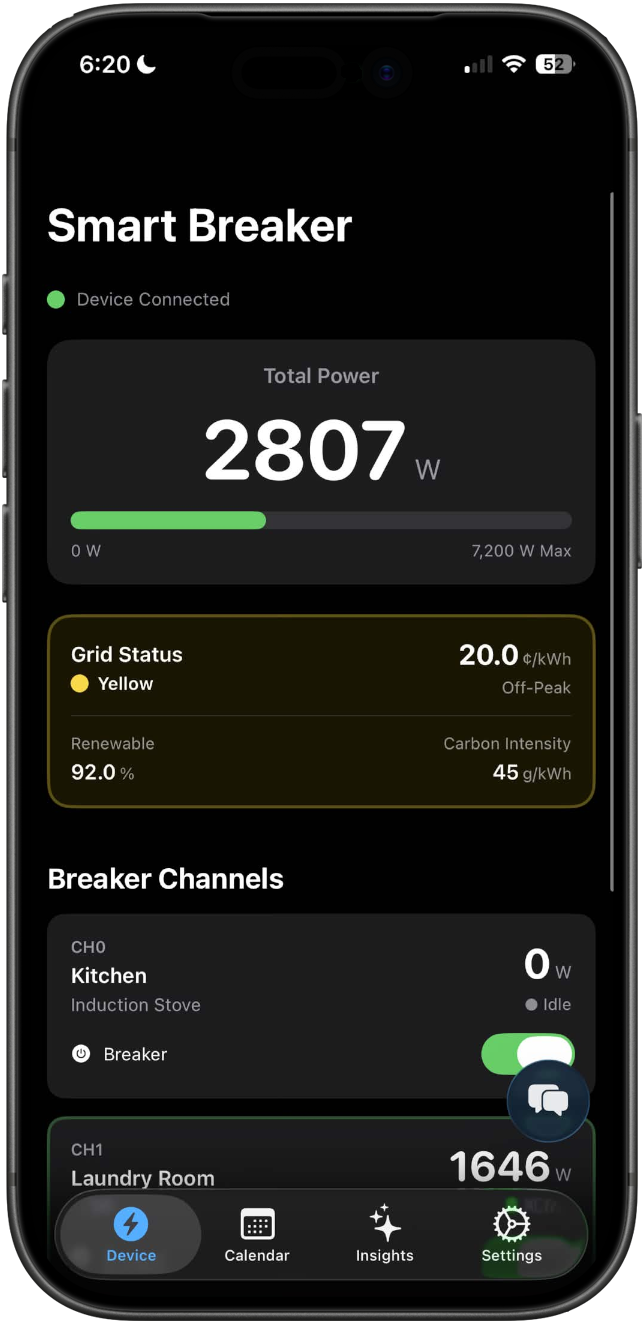
Main power control screen
-
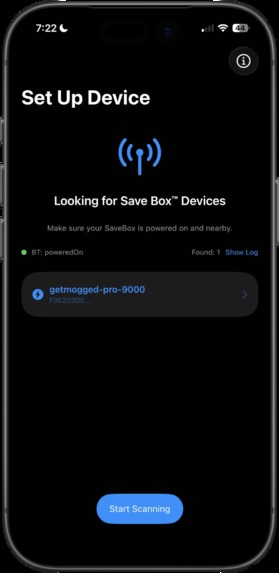
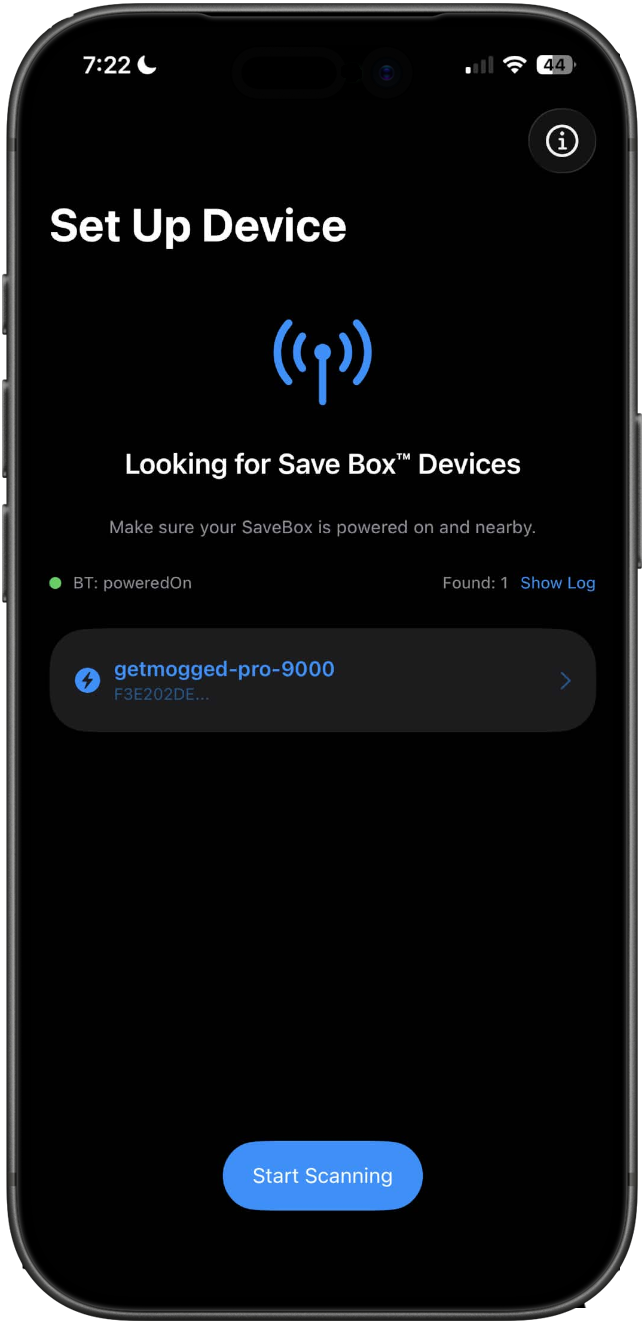
Syncing screen
-
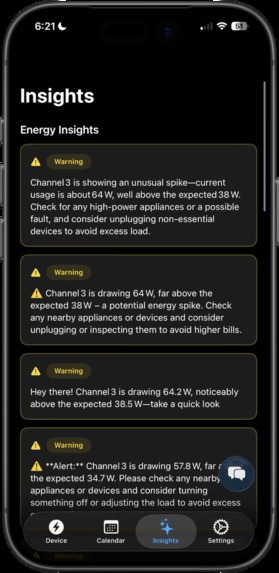
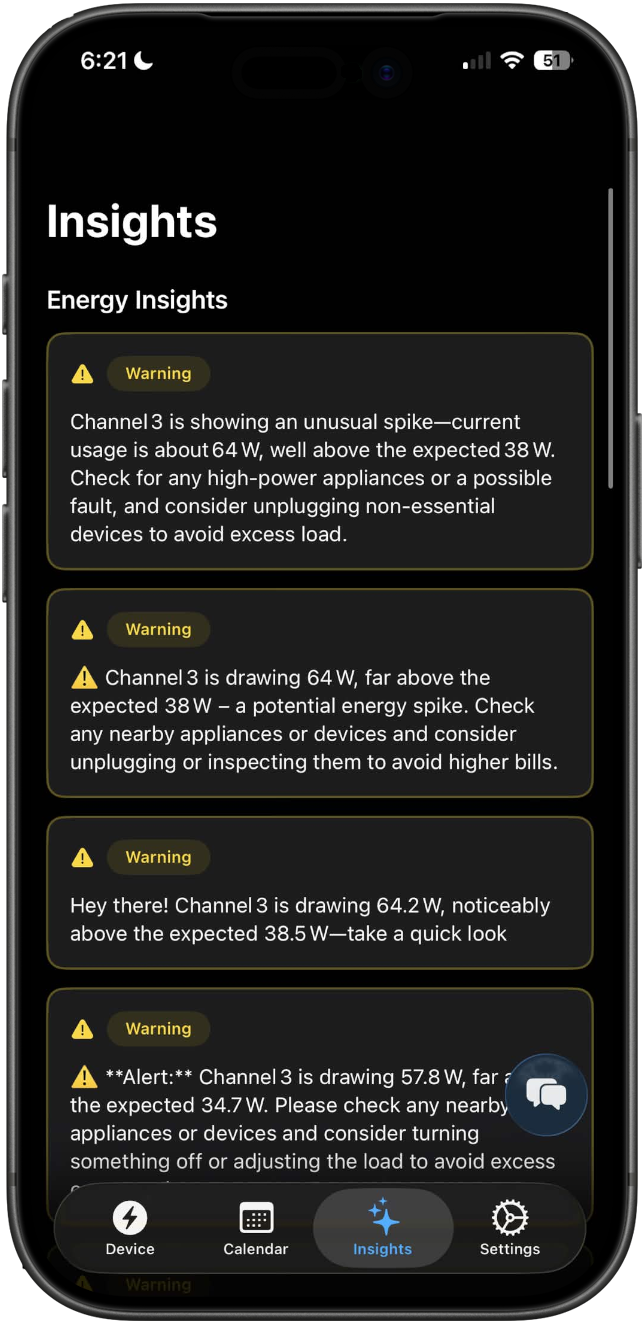
AI Insights
-
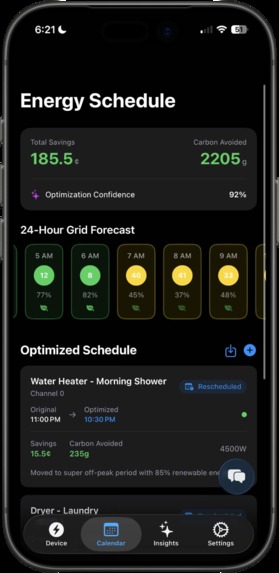
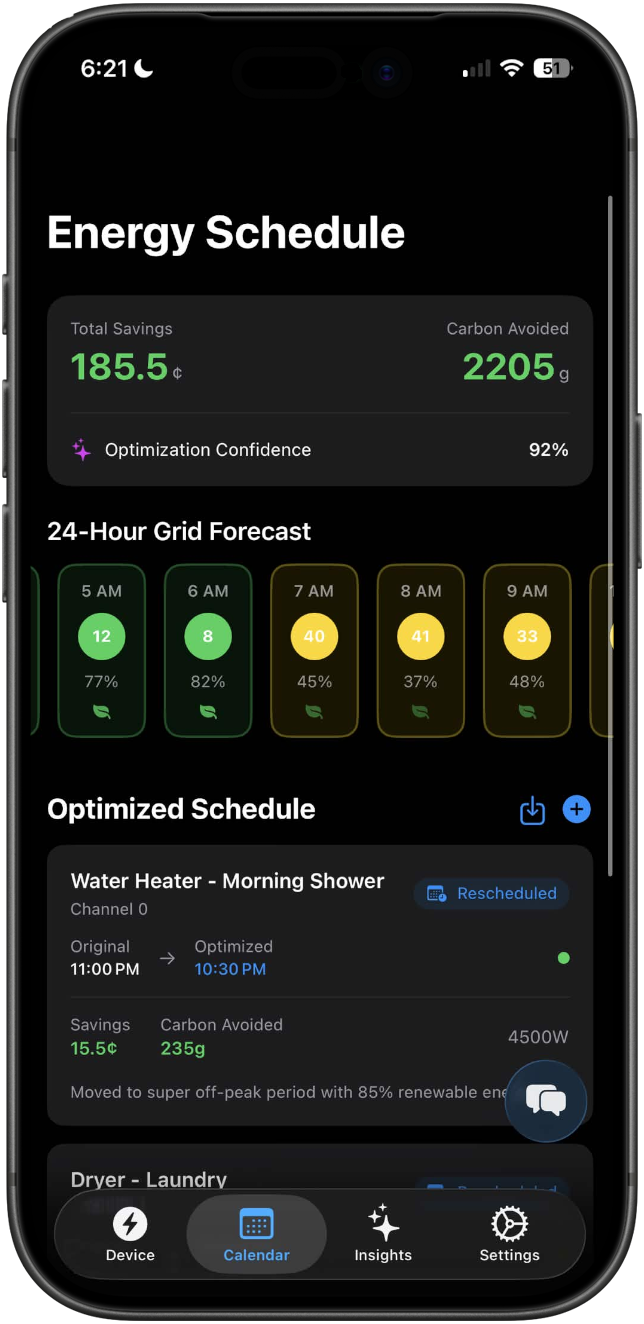
Calendar Screen
Inspiration
Our appliances, devices, and vehicles have all become more efficient as they react to climate change. However, the current design of our homes' circuit breaker box has remained the same for over 50 years. We wondered if we could design a better, more efficient solution using this century's advances in electronics, computing, and artificial intelligence.
What it does
Savebox is an energy saving platform designed for users to monitor, manage, and control their household electricity consumption. It begins with the custom designed Breaker Box that controls 4 standard US household circuits. The Breaker Box also includes a micro-computer that actively measures and displays the current energy drawn by each circuit. This connects to an iOS app that allows users to monitor and control their circuits over WiFi. This iOS app then syncs with a custom AI architecture to automatically optimize users' calendar for energy efficiency based on grid carbon intensity.
AI — Three-Brain Architecture:
- Brain 1 (ML Forecasting): A custom Temporal Fusion Transformer (5.2M parameters, 4 prediction heads) trained on household load data forecasts 24-hour per-circuit energy usage with uncertainty quantiles, identifies which appliances are running (non-intrusive load monitoring), detects anomalous consumption patterns, and classifies day types (workday, weekend, WFH, away).
- Brain 2 (LLM Explanations): A Groq-hosted LLM receives live context: sensor state, grid pricing, ML forecasts, and optimization results, and explains every scheduling decision in conversational English and answer user questions via chat.
- Brain 3 (Voice Narration): ElevenLabs text-to-speech streams audio insights to the iOS app
How we built it
Frontend
- iOS app built with SwiftUI and the Combine framework
- CoreBluetooth for ESP32 pairing and WiFi
- AVAudioEngine for streaming TTS playback
Backend
- FastAPI with async/await, running 4 concurrent background loops (sensor ingestion, ML inference, schedule optimization, grid data refresh)
- Async event bus connecting ML inference, optimization, LLM narration, and TTS into a reactive pipeline
- SQLite for persistent logging, ring buffer for real-time sensor data
- 115 passing pytest tests across 28 test files covering every subsystem
Hardware
- ESP32-S3 microcontroller running FreeRTOS and programmed using PlatformIO
- 5.79" CrowPanel e-ink Display
- 3D-printed enclosure designed in Autodesk Inventor
- PCF8574 I2C GPIO expander for physical buttons
- 4x Non-Contact Current sensor clamps (SCT-013-000) with burden resistors
- 4x Relay-Controlled circuits (high voltage, high current rated)
- 4x SSD1306 OLED displays multiplexed via TCA9548A I2C switch
- Demo unit built with 2x4 lumber, Romex cables, and standard North American outlets via 1" conduit
AI
- Custom Temporal Fusion Transformer in PyTorch
- Google OR-Tools CP-SAT solver for MILP schedule optimization over a 48-hour planning window with real PG&E E-TOU-C rate schedules and WattTime carbon intensity data
- Groq API for streaming LLM chat and event-driven insight narration
- ElevenLabs SDK for streaming text-to-speech
Challenges we ran into
Given the wide scope of our project, we found it difficult to select the right components for each subsystem. For example, we initially chose a Raspberry PI 5 as our microcontroller. However, we found that mounting it would have made the enclosure significantly larger than we wanted. As such, we chose to switch to the ESP32 embedded in the e-ink display. We also had issues acquiring some of our components. When we went to purchase the our 4 push-buttons we found that there were only 3 in stock, so we had to buy a mis-matched one.
Accomplishments that we're proud of
We are proud that we built a polished product that combined all of our skill sets to create a seamless end user experience. The project implemented skills ranging from CAD design, to hardware design, to embedded programming, and more. Ultimately, we were able to blend all of these skills together into one cohesive product. We are proud to say that we want a Savebox in our homes.
What we learned
Savebox taught us how to integrate all of our unique skill sets together into a single project. For example, one member focused on embedded programming had to take into account the data needed for member training the transformer model. Working together, we learned to communicate and collaborate to create a much more well-rounded product than any of us could do on our own.
What's next for Savebox
We would like to extend the Savebox platform to match all North American residential breaker box sizes. This would let practically anyone use Savebox as a drop-in upgrade. If everyone could purchase a Savebox for their homes, the savings and climate impact would be significant.


Log in or sign up for Devpost to join the conversation.