
Inspiration Creating manga requires art skills, storytelling ability, and significant time, which limits many people from bringing their story ideas to life. We wanted to democratize manga creation by allowing anyone to generate structured manga stories and visuals from simple text prompts using AI.
What We Learned During this project, we gained hands-on experience in: Large Language Models (LLMs) like LLaMA for structured story script and dialogue generation. Multi-agent AI pipelines, orchestrating tasks such as safety checking, fact validation, script writing, JSON compilation, and output cleaning. Frontend-backend integration using React and FastAPI. Database management with Supabase for authentication and content storage. PDF rendering for professional manga layouts including panels, dialogues, and educational notes. Experimenting with diffusion models for AI-generated manga panels. We also learned how to validate AI-generated content against real-world sources (Wikipedia REST API, DuckDuckGo) to reduce hallucinations and ensure educational accuracy.
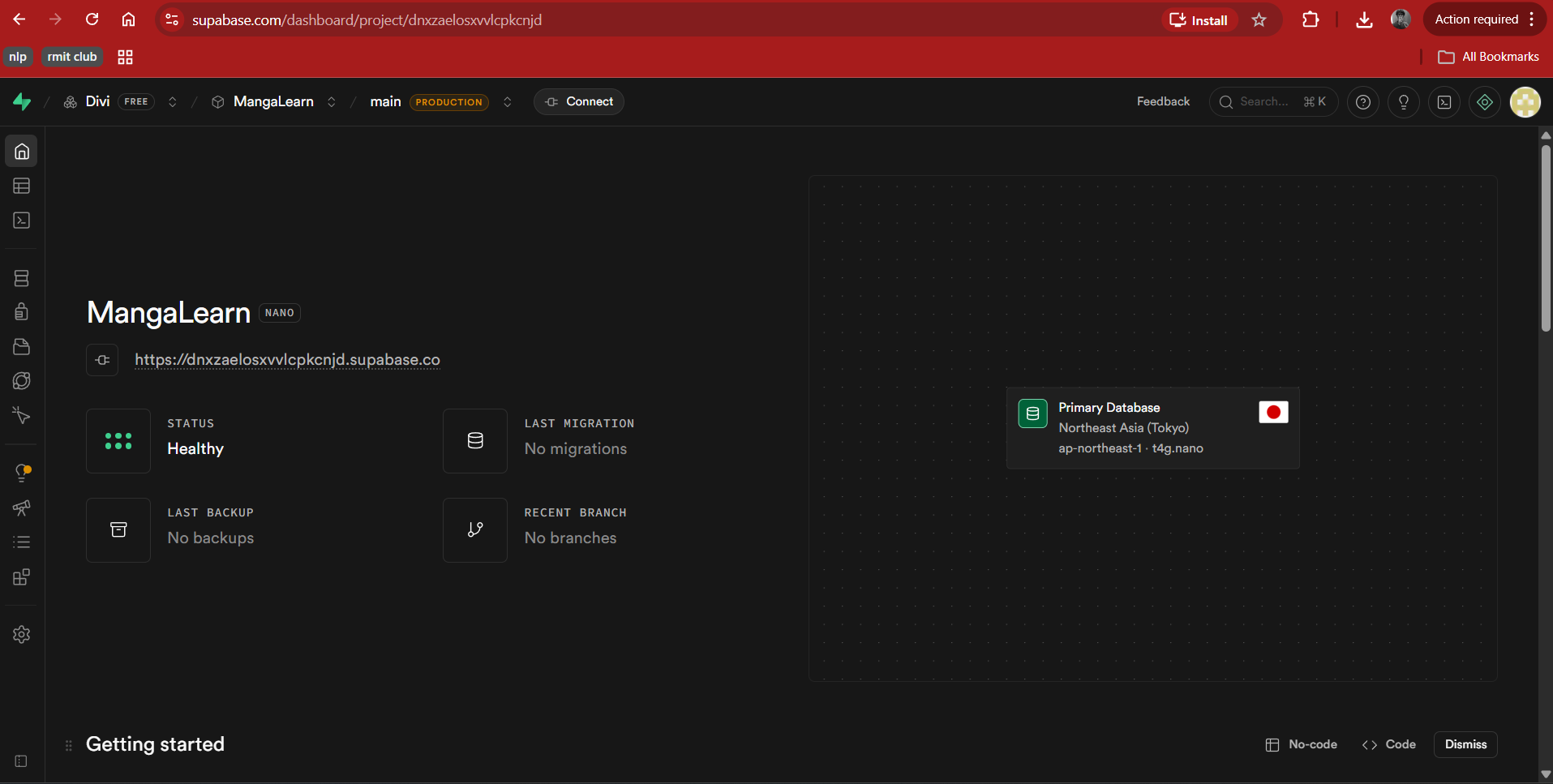
How We Built It Frontend: React-based website with login/signup, prompt input, and output display; communicates with backend via APIs. Backend: FastAPI handles: User authentication Prompt processing AI model execution Returning structured JSON output Database: Supabase manages user accounts, sessions, and generated content.
AI Pipeline: CrewAI multi-agent pipeline powered by LLaMA 3.3 70B for heavy tasks and LLaMA 3.1 8B for light tasks. Agents handle safety, fact validation, script generation, JSON formatting, and output cleaning. Produces structured JSON per manga page: scene captions, panel descriptions, dialogues, and educational facts. PDF Renderer: FPDF2 engine with 8 panel layouts, thick borders, dot-screen tones, styled dialog containers, and “DID YOU KNOW?” educational notes. Image Generation (in progress): Stable Diffusion generates manga-style panels to embed directly into PDFs.
Challenges Generating consistent manga-style images with diffusion models. Maintaining story and character consistency across pages. Parsing structured JSON outputs from LLaMA models with occasional malformed responses. Integrating frontend, backend, AI pipeline, and PDF renderer smoothly.
Built With
- ai-integration
- and
- and-storage-postgresql-?-database-for-user-and-content-data-ai-/-ml-models-&-tools-llama-3.3-70b-?-large-language-model-for-heavy-tasks-(story-generation
- and-structured-json-output-apis-wikipedia-rest-api-?-verified-educational-facts-duckduckgo-search-api-?-supplementary-fact-validation-pdf-/-document-rendering-fpdf2-(python-library)-?-professional-manga-style-pdf-generation-with-panel-layouts
- api
- calls
- dialogue-boxes
- educational
- fact-checking)-llama-3.1-8b-?-lightweight-llm-for-minor-tasks-(json-compilation
- fact-validation
- from
- handling
- json
- languages-&-frameworks-python-?-backend-logic
- libraries
- llama
- notes
- other
- output-cleaning)-stable-diffusion-(in-progress)-?-manga-style-image-generation-crewai-multi-agent-pipeline-?-orchestrates-llama-agents-for-safety
- outputs
- parsing
- pdf-generation-javascript-/-react-?-frontend-web-application-backend-/-server-fastapi-?-api-server-connecting-frontend-and-ai-pipeline-uvicorn-?-asgi-server-to-run-fastapi-databases-&-cloud-services-supabase-?-user-authentication
- python
- requests
- script-writing
- session-management
- structured
- tools

Log in or sign up for Devpost to join the conversation.