Inspiration
Businesses frequently make purchasing decisions through fragmented processes involving spreadsheets, supplier quotations, manual comparisons, and approval chains. This makes procurement time-consuming, difficult to audit, and vulnerable to inconsistent decisions.
We wanted to rethink procurement using AI—not simply to automate purchasing, but to make purchasing decisions smarter, more transparent, and accountable.
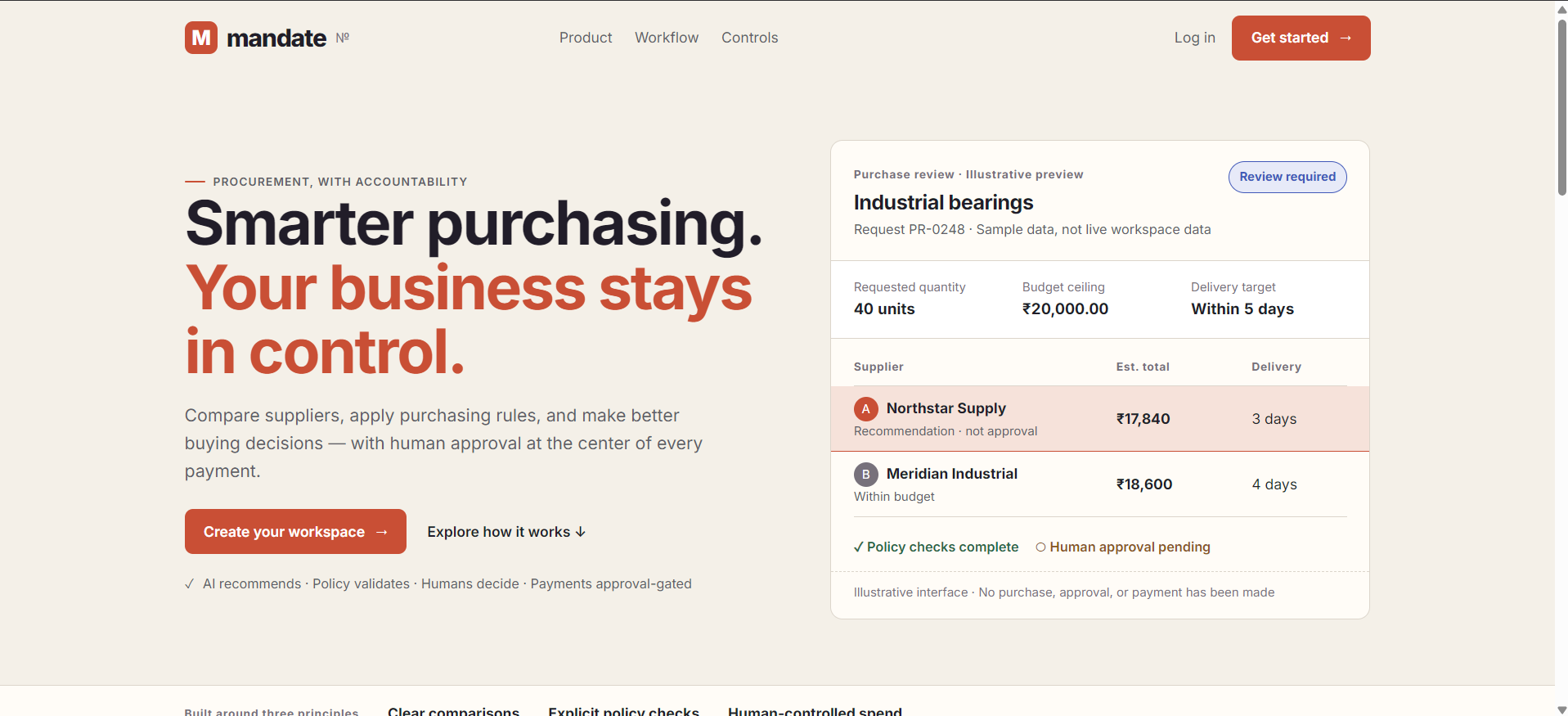
That led us to build Mandate, an AI-powered procurement platform built around one principle:
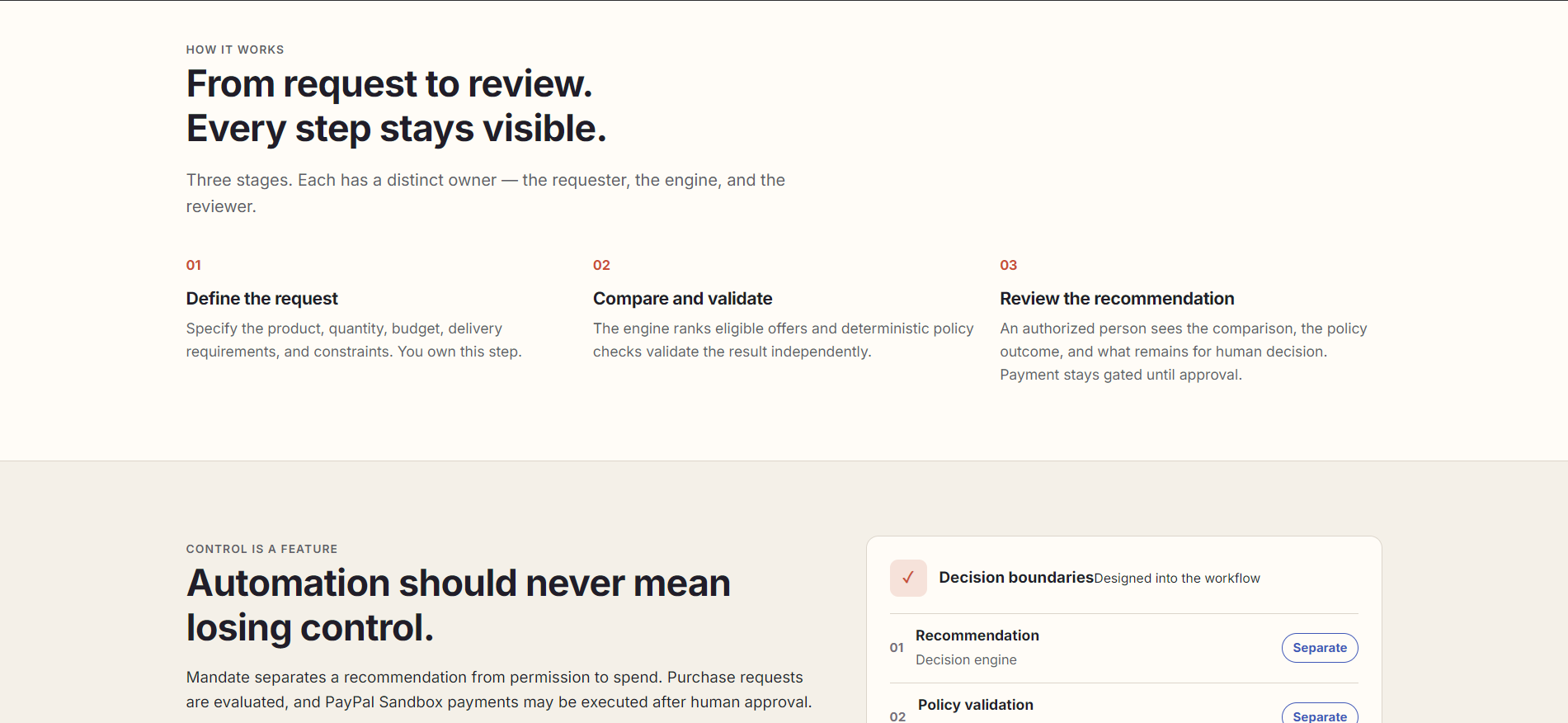
AI recommends. Policy validates. Humans decide.
What it does
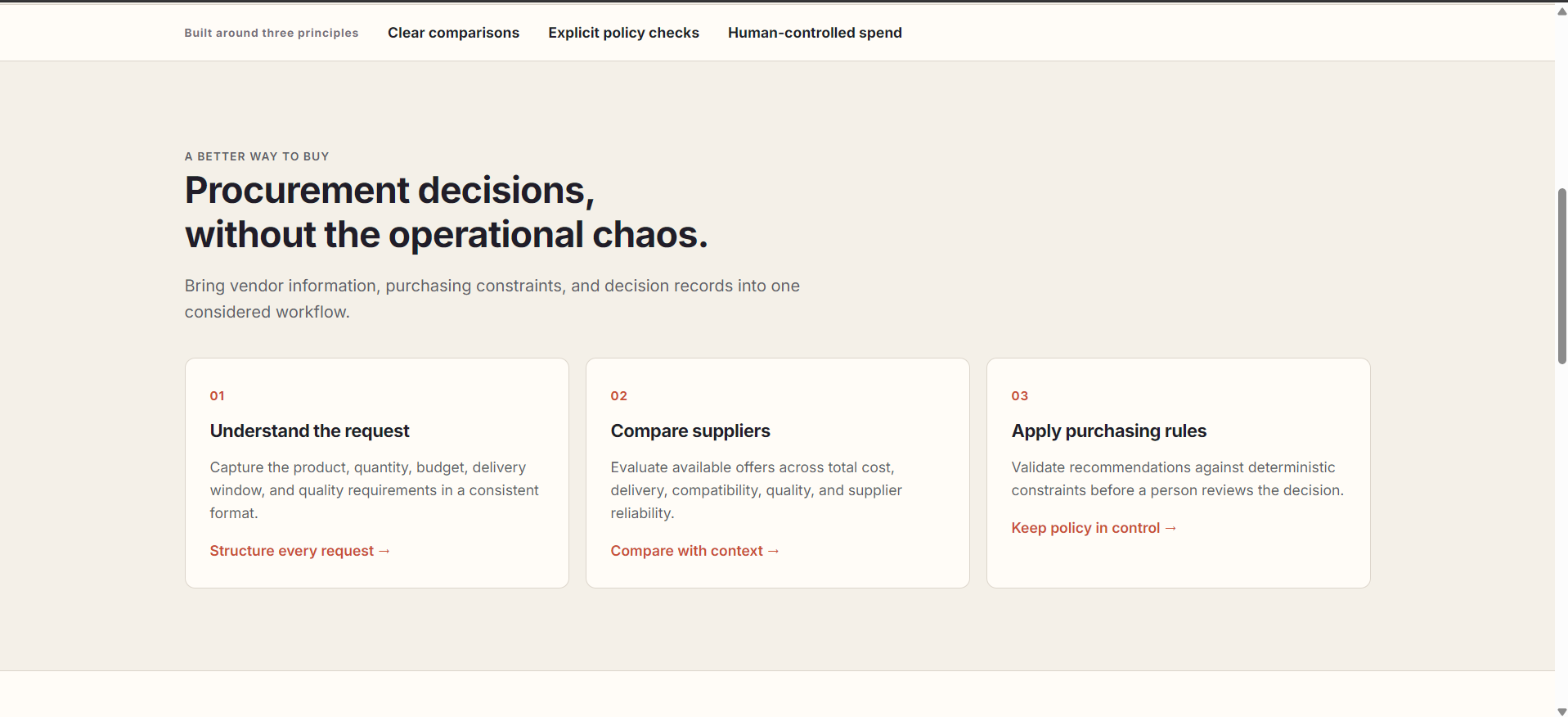
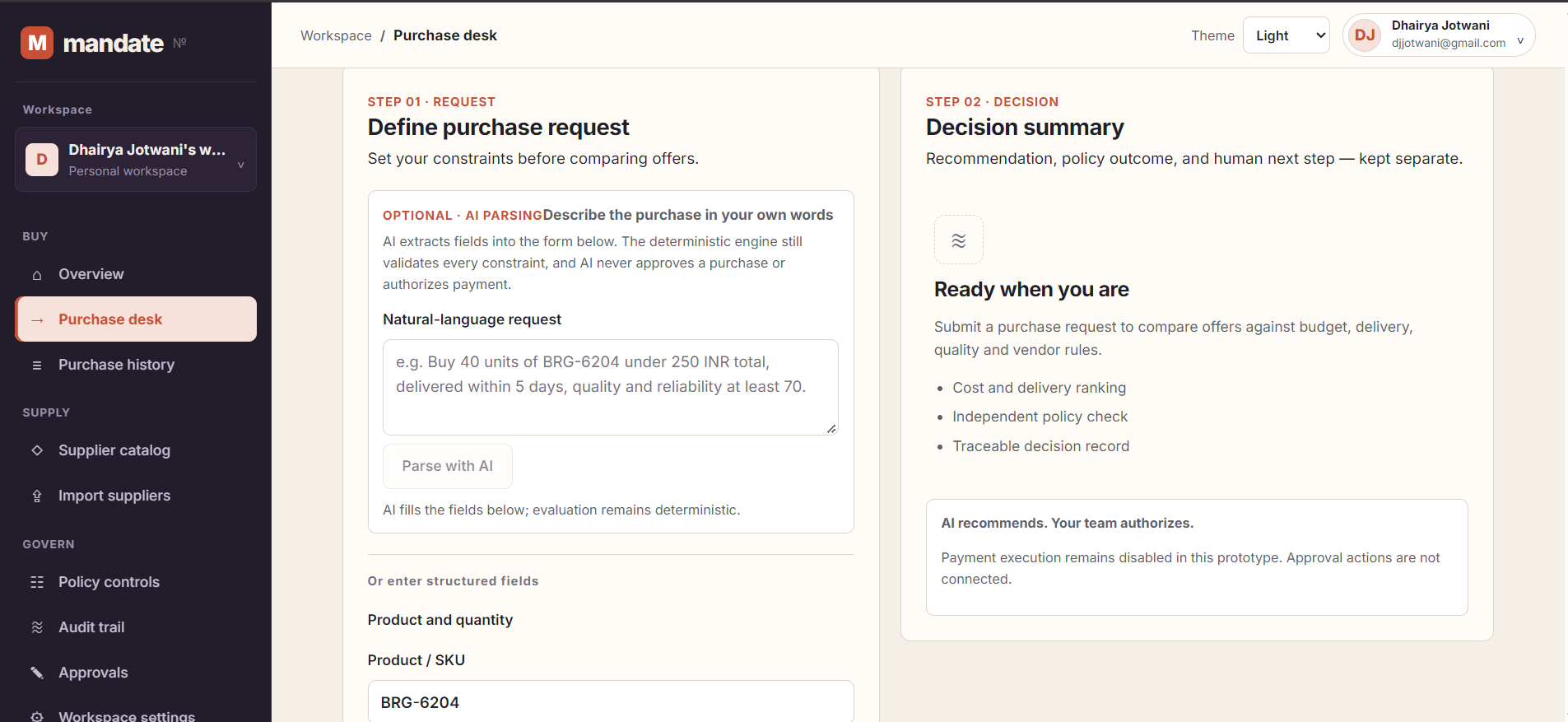
Mandate transforms natural-language purchase requests into structured procurement workflows.
A user can describe what they need, specify a budget, quantity, delivery deadline, and quality requirements. The AI interprets the request and extracts structured requirements.
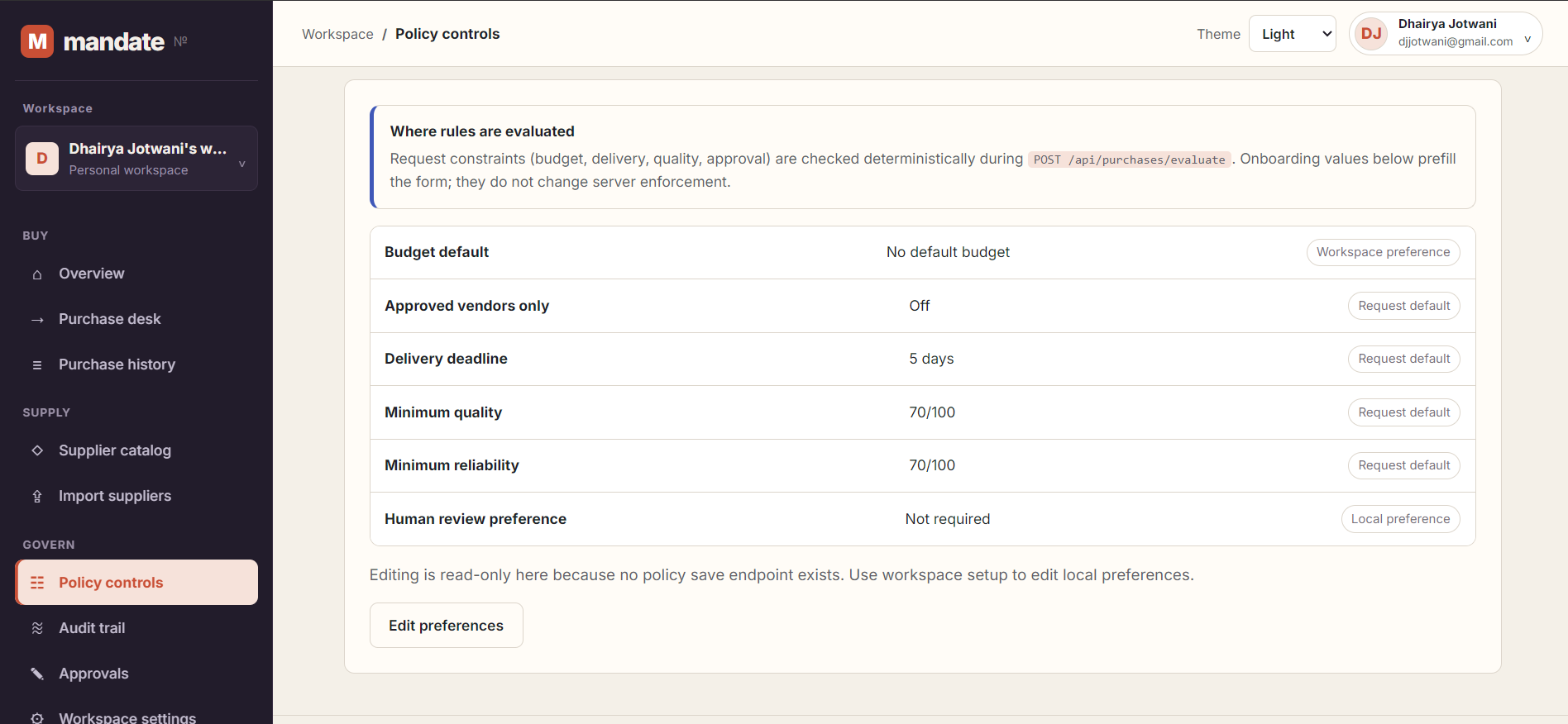
The platform then evaluates available supplier offers using a deterministic decision engine, comparing pricing, availability, delivery timelines, quality, and reliability. Organisational procurement policies and approval thresholds are validated before a purchase can proceed.
Key features include:
- Natural-language AI-powered purchase requests.
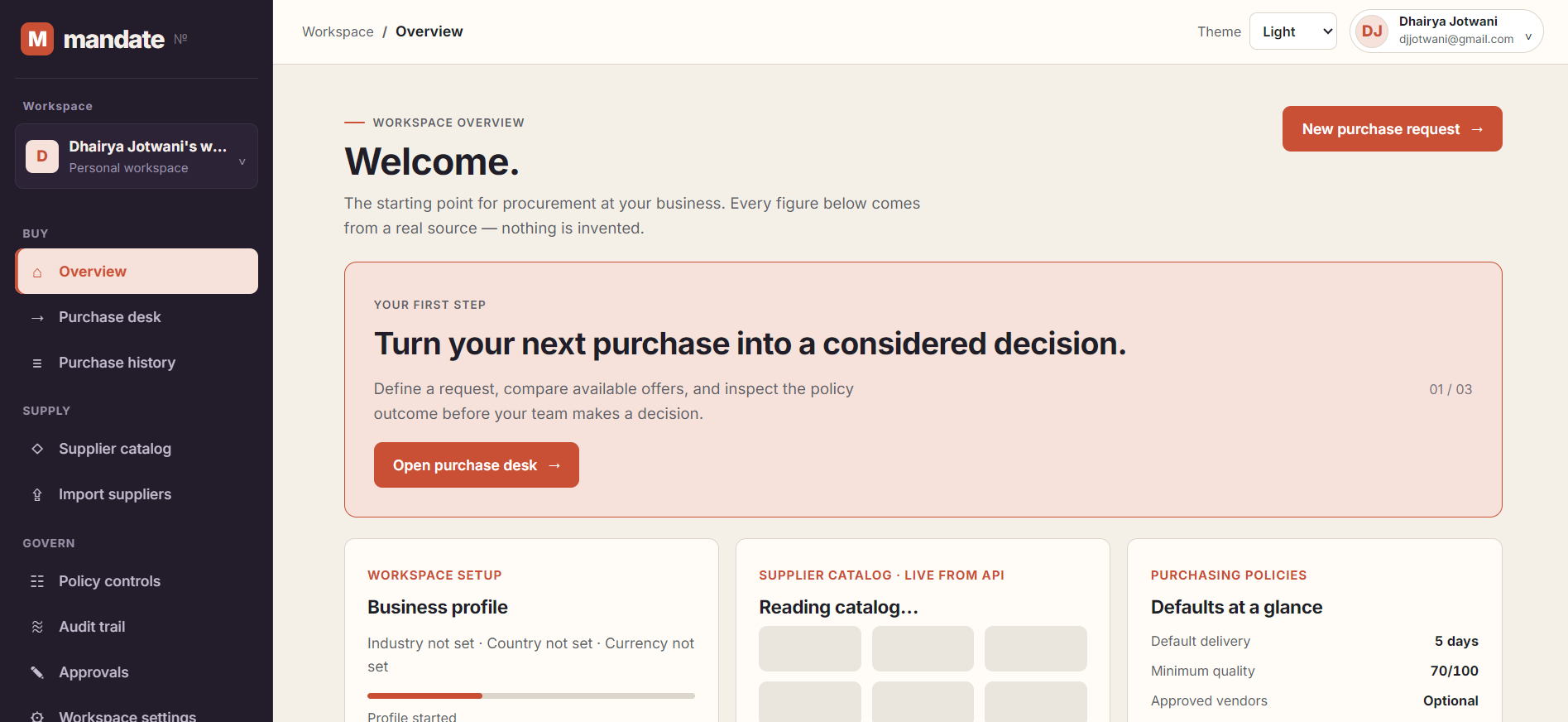
- Supplier catalog management, bulk imports, and offer comparison.
- Deterministic supplier ranking and eligibility evaluation.
- Configurable procurement policies and approval controls.
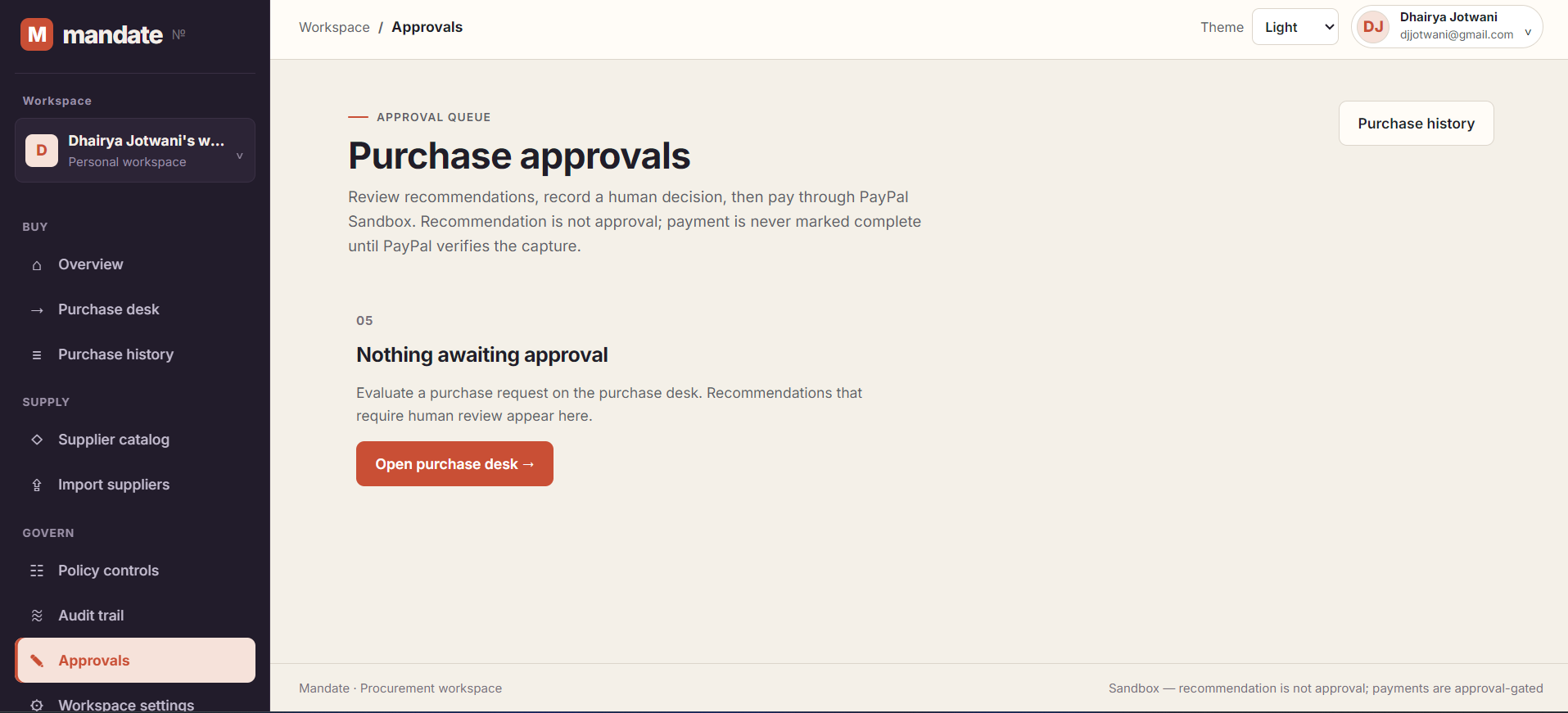
- Human-in-the-loop purchase approvals.
- PayPal Sandbox integration for payment workflows.
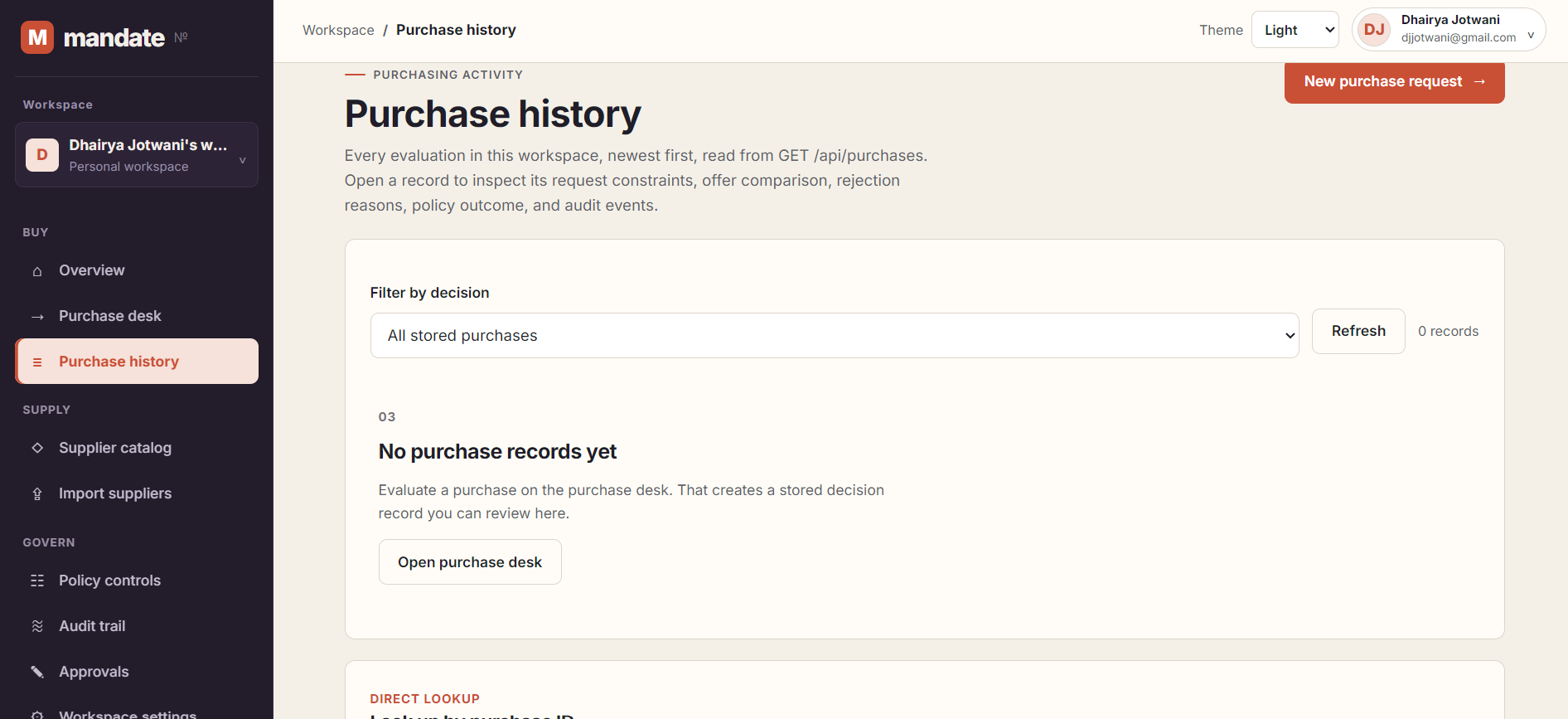
- Purchase history, audit trails, and workspace-based access.
- Google and email/password authentication.
How we built it
We developed Mandate using React and Vite for the frontend, Node.js and Express for the backend, and MongoDB Atlas for persistent storage.
The AI integration uses Google's Gemini API through an OpenAI-compatible interface to interpret purchasing requirements and explain procurement decisions.
An important architectural decision was separating AI assistance from the actual decision-making process. AI can extract requirements and explain results, but it cannot independently approve purchases, override policies, or authorize payments. Supplier evaluation and policy validation remain deterministic, while human approval is required before payment.
We integrated the PayPal Orders API in Sandbox mode to demonstrate the purchasing and payment workflow.
Challenges we faced
One of our biggest challenges was integrating several independent systems into one reliable workflow. Authentication, workspace isolation, supplier data, AI interpretation, policy validation, approvals, and PayPal payments all needed to work together.
We also worked through deployment challenges involving Google OAuth callbacks, cross-origin cookies, frontend-backend communication, and external API reliability.
Another important challenge was ensuring that AI remained advisory rather than becoming an unchecked decision-maker. We addressed this by keeping business rules and purchase authorization outside the AI layer.
What we learned
Building Mandate taught us that useful AI systems need more than good model responses. They need deterministic guardrails, secure data handling, traceability, human oversight, and reliable integrations.
We learned how to design an end-to-end application combining AI, backend services, databases, authentication, business policies, and payment infrastructure.
Our goal is to make procurement not just faster, but more intelligent, transparent, and trustworthy.
Built by Reva Kale and Dhairya Jotwani.
Built With
- express.js
- fintech
- googlegemini
- googleoauth
- javascript
- mongodb
- node.js
- paypalapi
- procurement
- react
- render
- restapi
- saas
- vercel
- vite
- workflow
