-
-
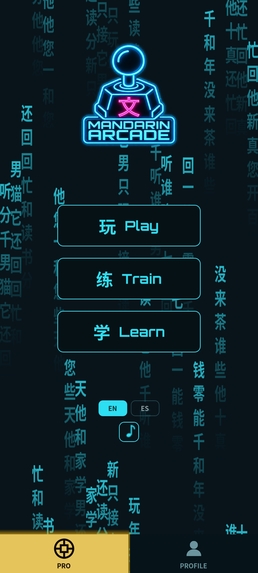
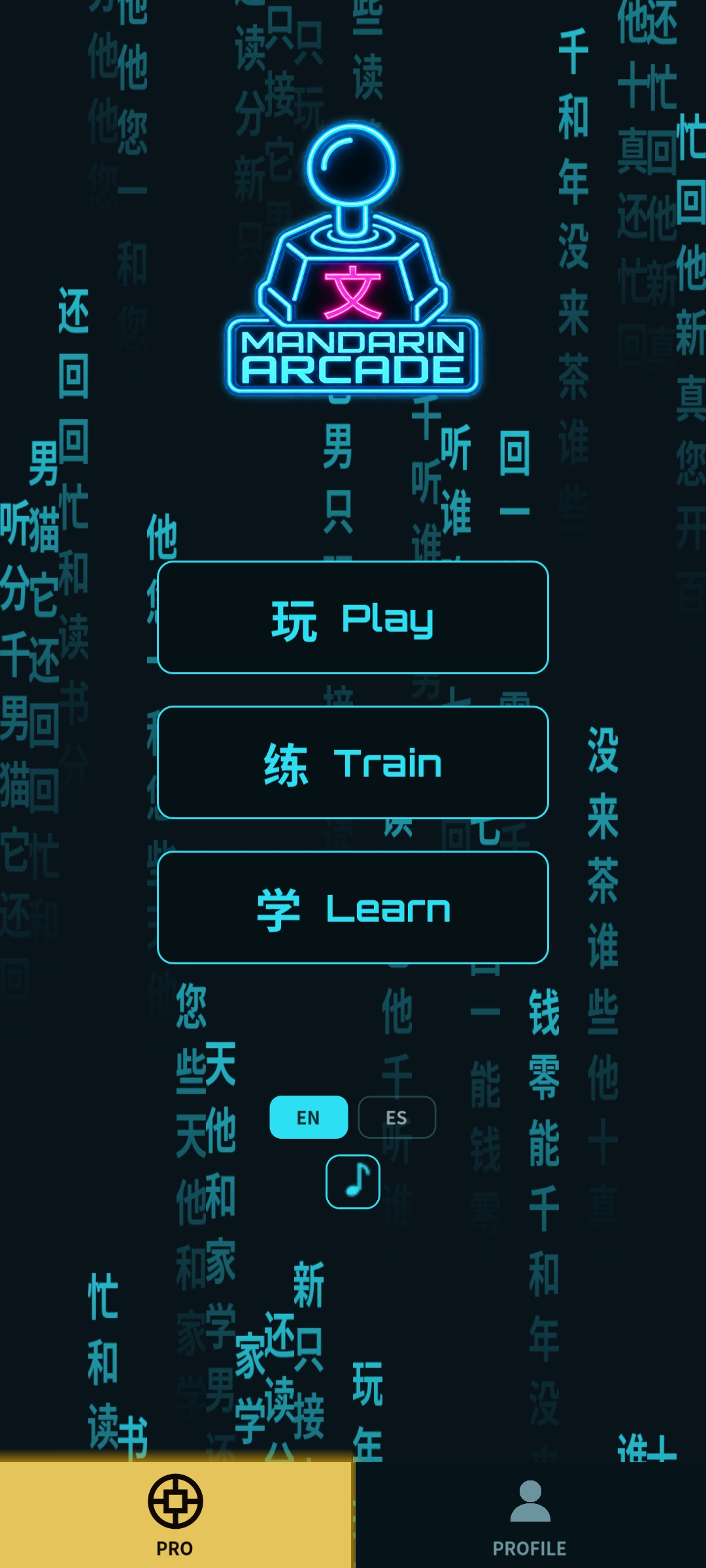
Mandarin Arcade Main Menu with Convert to Pro CTA
-
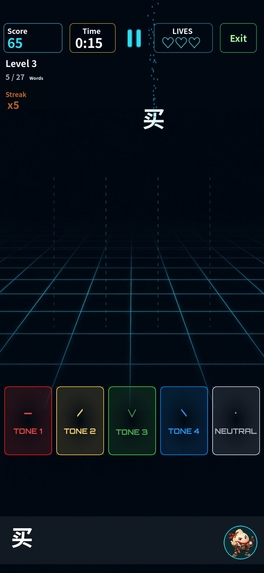
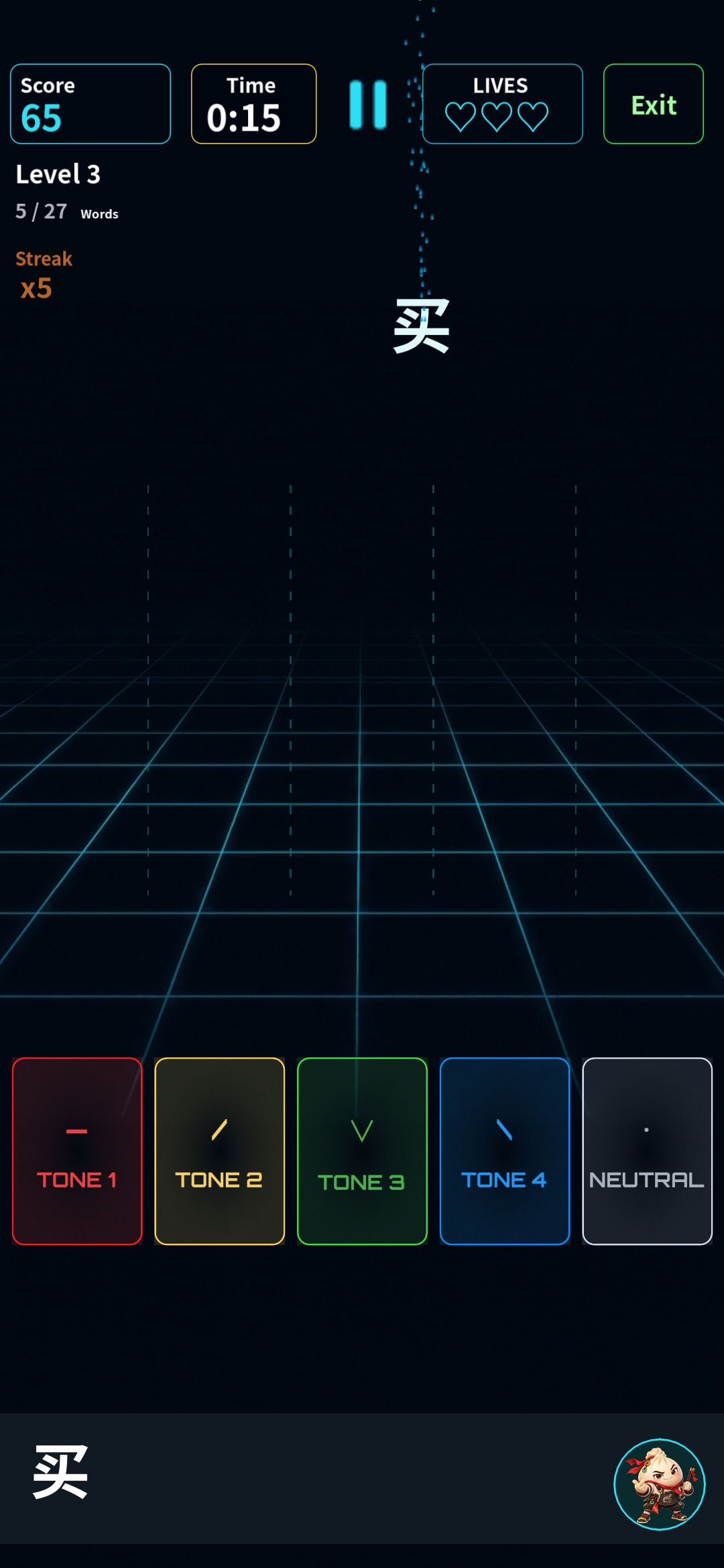
Mandarin Arcade Tone Challenge | Main Game Scene
-
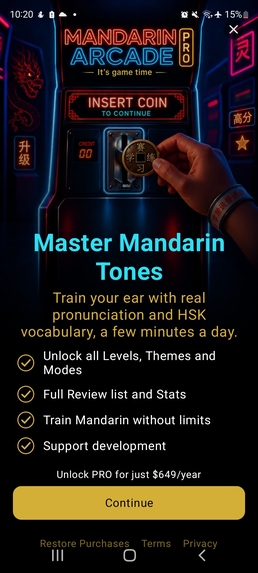
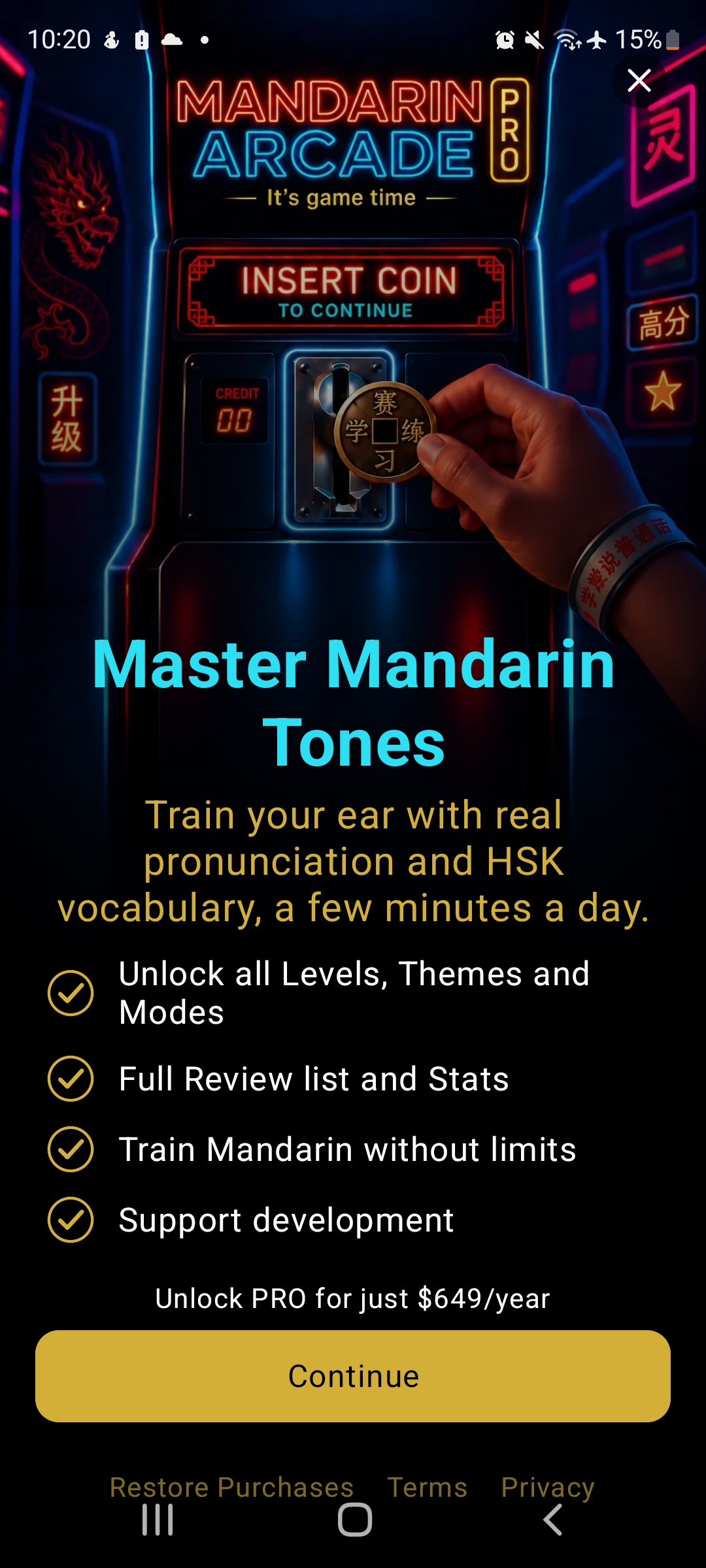
Mandarin Arcade RevenueCat Paywall for PRO Access unlocking all levels
-
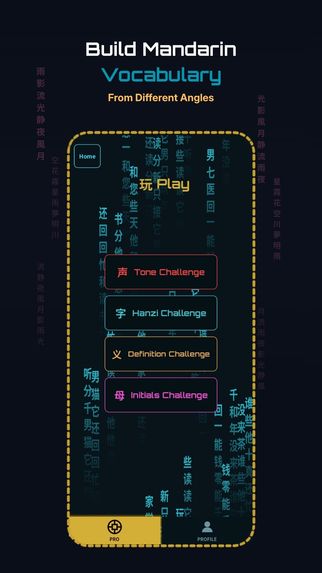
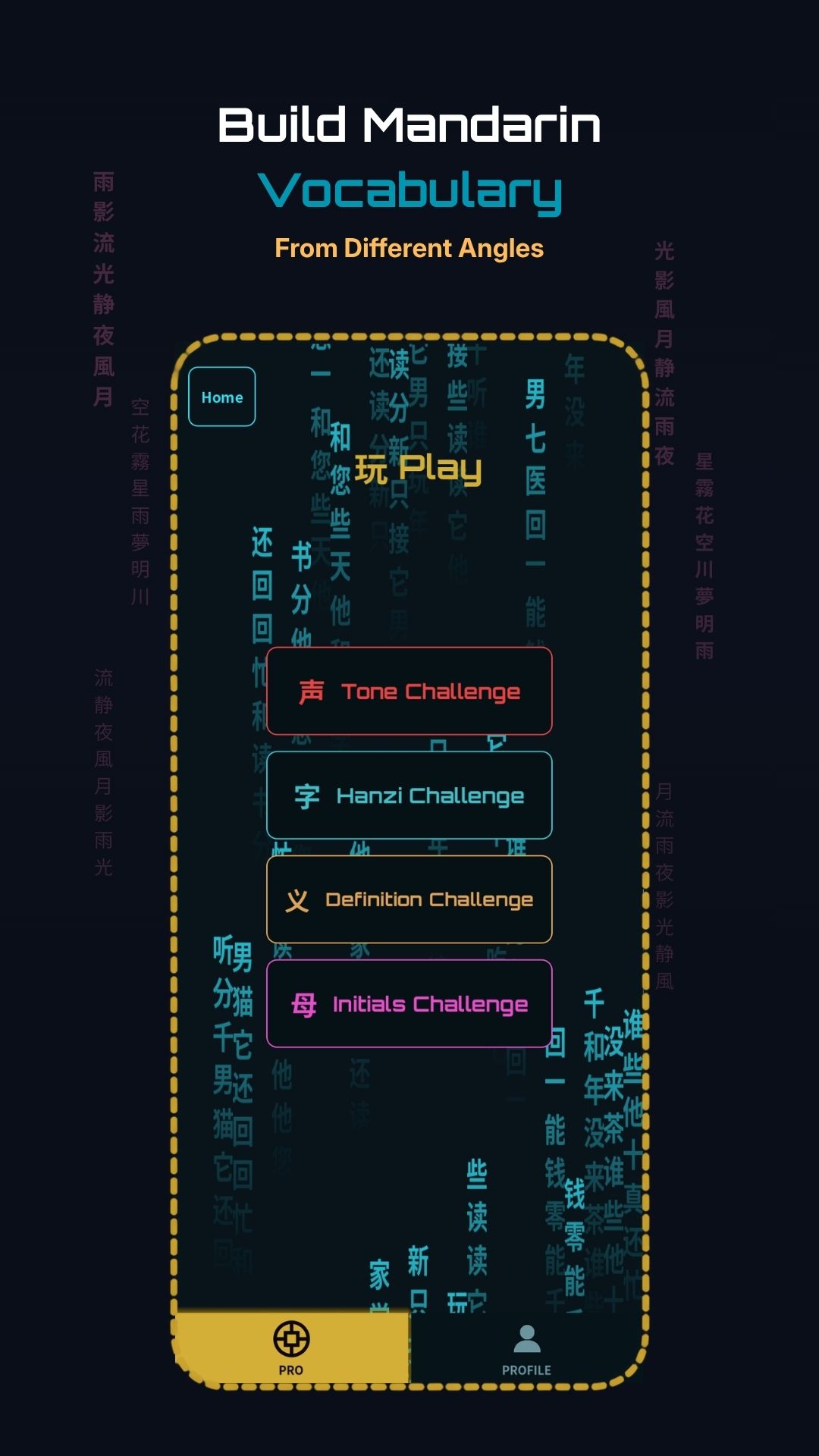
Mandarin Arcade Game Mode Selection
-
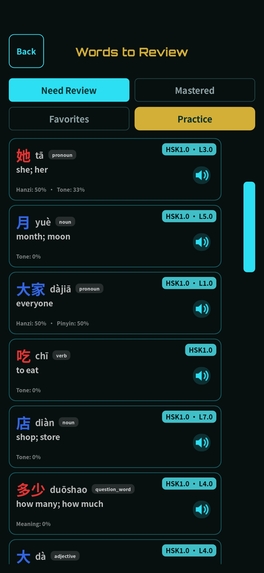
Mandarin Arcade Adaptive Review
-

Mandarin Arcade App Icon 1024
-

Mandarin Arcade Avatars Set available for solo and multiplayer game modes
-
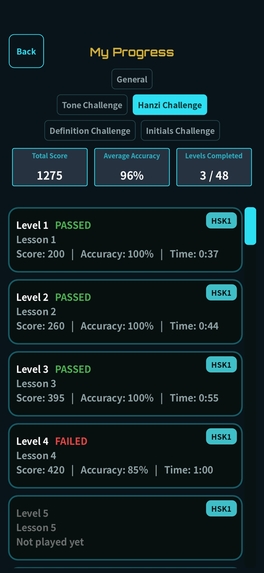
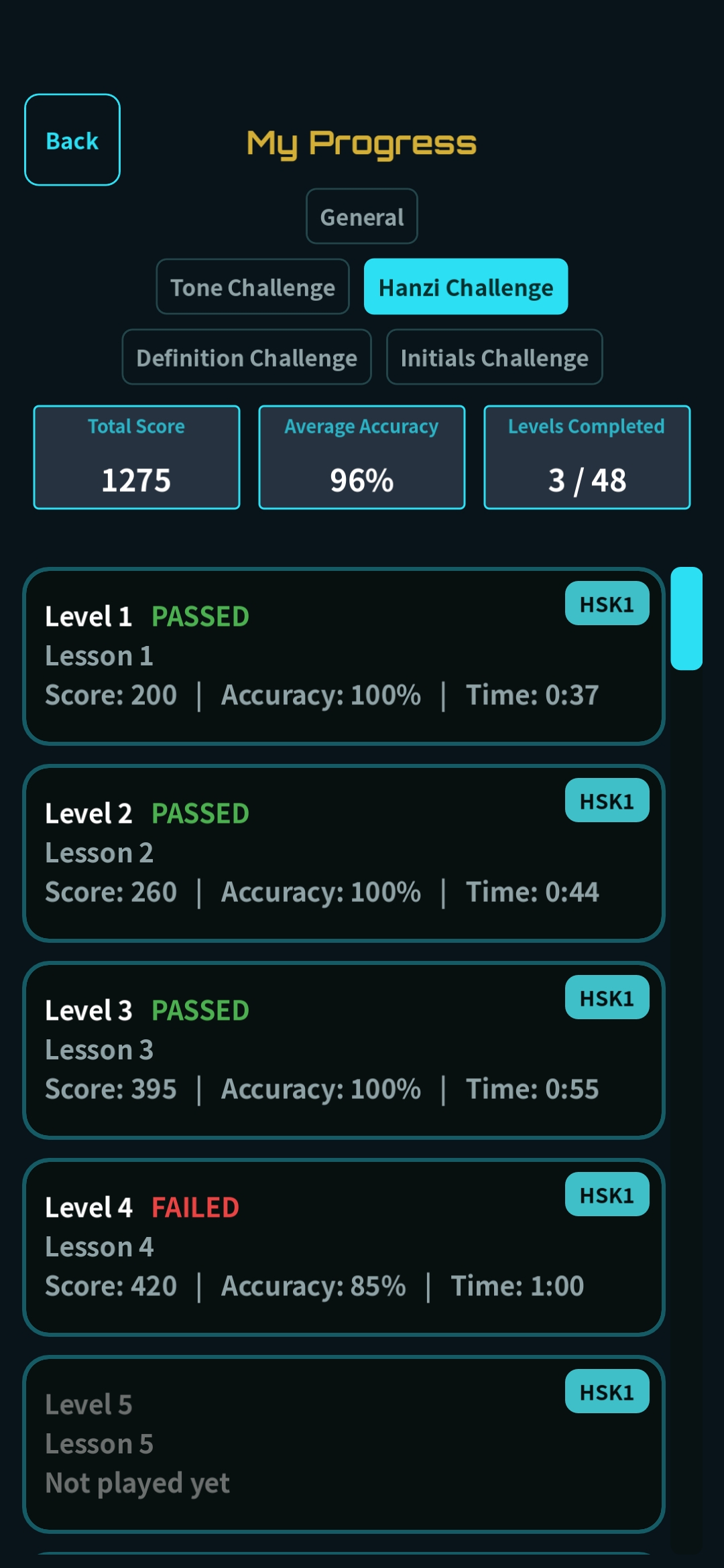
Mandarin Arcade Progress Stats
-
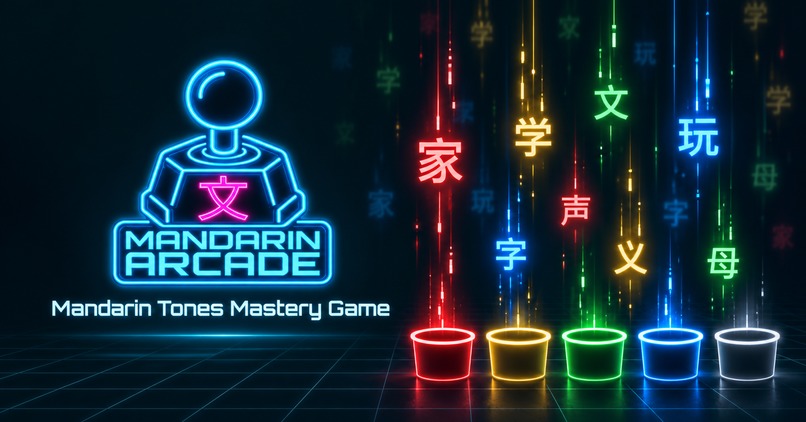
Mandarin Arcade in a Nutshell
-
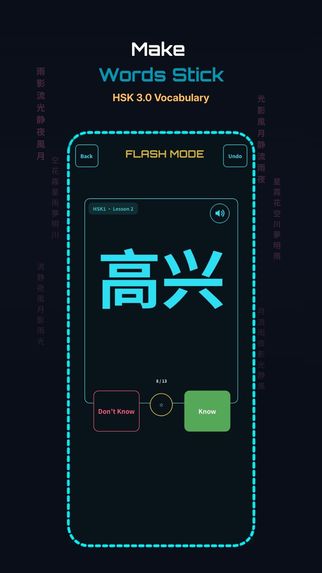
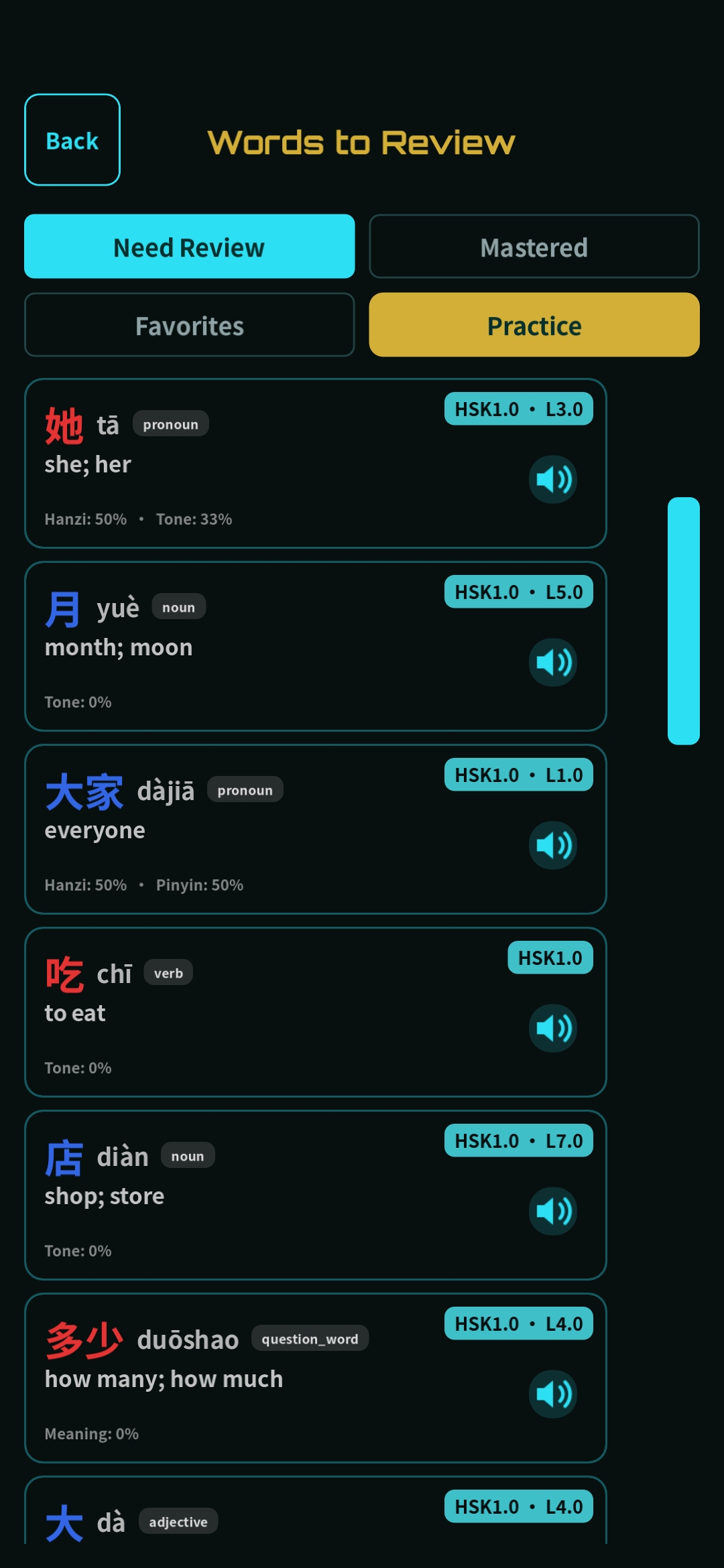
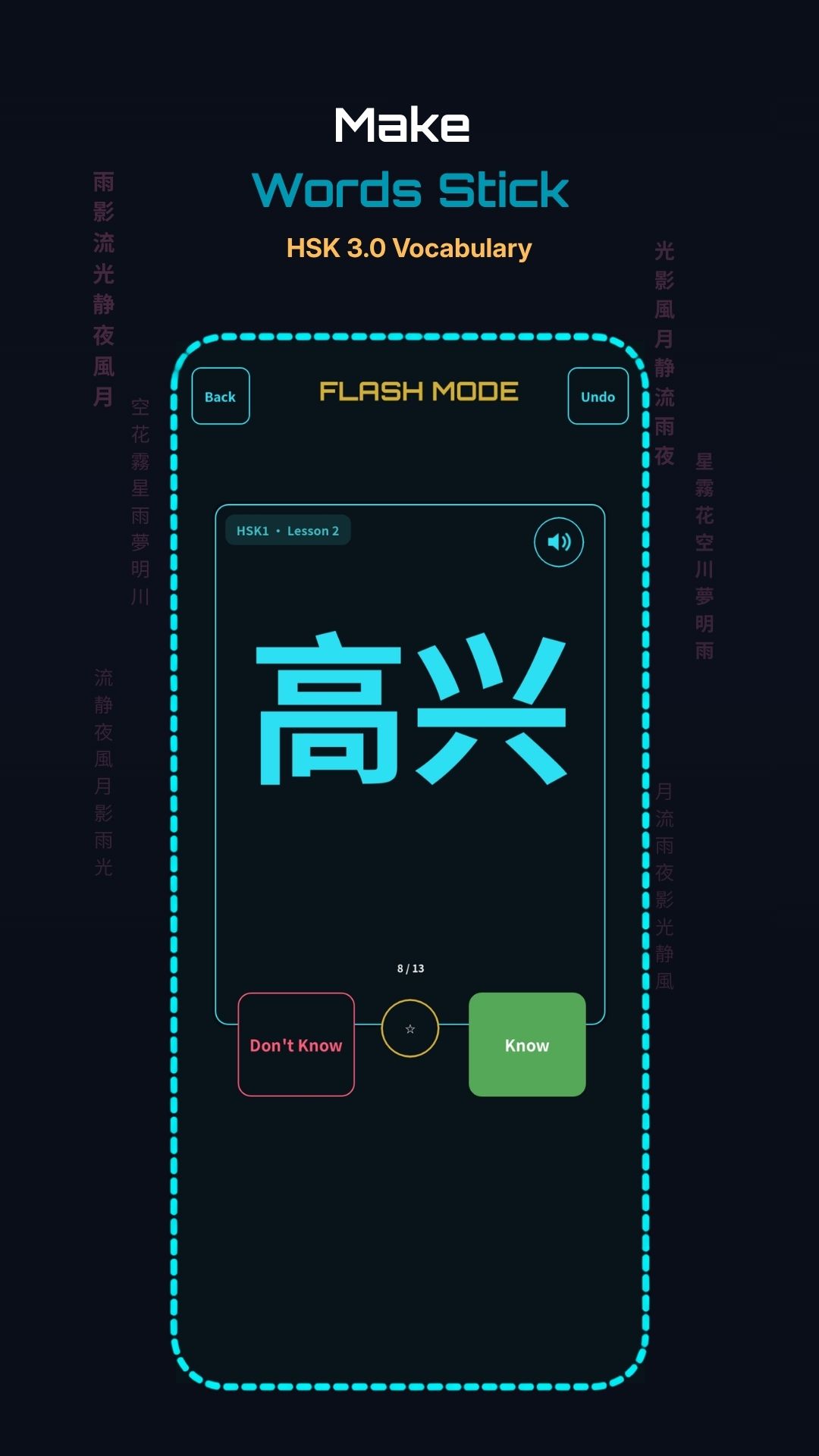
Mandarin Arcade Flash Cards


Why I built Mandarin Arcade
I built Mandarin Arcade because I needed it for myself.
Over a year ago, after more than a year studying Chinese through formal programs, I noticed that much of my learning naturally revolved around characters, reading, vocabulary, and meaning.
Those dimensions are important, but Mandarin is a tonal language. Tone is not simply an extra pronunciation detail. It helps distinguish meaning.
And yet, in my own learning experience, I found far fewer opportunities to deliberately practice, discriminate, and internalize tones than to study characters or vocabulary.
Chinese characters naturally take much of the spotlight. They are visually distinctive, complex, and fascinating. But tones are one of the defining characteristics of spoken Mandarin, and I found them much harder to practice systematically.
I could recognize a character, know what it meant, and sometimes even remember its pinyin (the romanization system used to represent Mandarin pronunciation), yet still forget its tone.
More importantly, when I heard a word, I often couldn't reliably distinguish which tone I was hearing. I didn't even have a good way to gauge how serious that weakness was or whether I was actually improving.
For me, I needed to know the actual tone of a word before I could confidently attempt to reproduce it, let alone develop the ear to recognize it naturally in speech.
I started asking other learners about their experience and realized I wasn't alone. Tone accuracy often seemed to receive less attention than characters, vocabulary, or grammar.
So I realized I wasn't just forgetting a small pronunciation detail. I was learning words with less precision than I thought.
That led to a broader idea.
Putting tones at the center didn't mean sacrificing the other dimensions of a Chinese word. The opposite was possible.
Tone training could become the doorway into practicing the whole word.
Starting with sound, the same vocabulary could also be used to train character recognition, meaning, pinyin, sound discrimination, and active production.
That became one of the central ideas behind Mandarin Arcade:
put sound and tones at the center, use sound as the anchor, and make precision and accuracy part of the game.
The first Mandarin Arcade
Before Mandarin Arcade was software, it was cardboard.
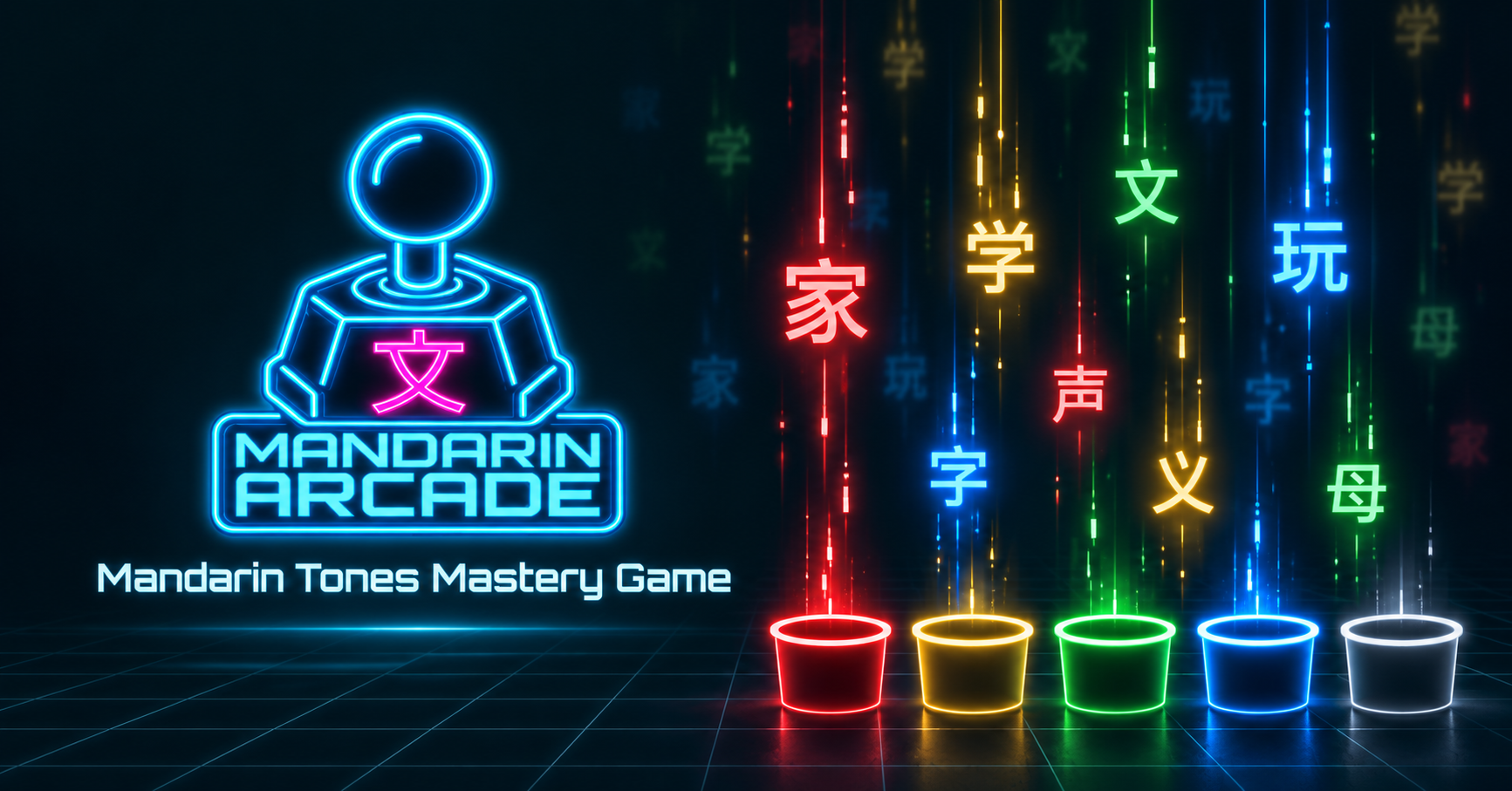
I built my first tone-training system with hand-drawn Chinese character cards and five colored folder bags I bought at Office Depot.
Each Mandarin tone became a color, almost like giving every word a house.
Words with Tone 1 went into the red bag, Tone 2 into the yellow bag, Tone 3 into the green bag, and so on.
I would shuffle a deck of roughly 600 HSK 1 and HSK 2 words and physically sort each card into the bag corresponding to its tone.
At the end of the deck, I could count the cards in each bag and check how many I had classified correctly or incorrectly.
It was basically a small homemade board game for a language geek like me.
But it changed the task.
Instead of looking at a vocabulary list and trying to memorize a tiny tone mark attached to each syllable, I was repeatedly making a decision:
Which tone does this word belong to?
That physical sorting game became the earliest version of Mandarin Arcade.
The digital product is an evolution of that same training loop.
Every Chinese word has multiple learning dimensions
One of the ideas that came out of that experiment was that "knowing a word" is not one thing.
For each vocabulary item, a learner may need to know several different dimensions:
- Sound: can I recognize the word when I hear it?
- Tone: can I identify its tonal pattern?
- Characters: can I recognize the written form?
- Meaning: can I quickly recall what the word means?
- Pinyin and initials: can I distinguish the sounds that form the word?
- Production: can I actively construct or type the answer rather than simply recognize it?
A learner can be strong in one dimension and weak in another.
That was exactly my own experience. I could know a character and its meaning while still being uncertain about its tone.
Mandarin Arcade was built around the idea that these dimensions should be approached and measured separately, and eventually understood together.
From cardboard to an arcade
Digitizing the original exercise opened up possibilities that the folders and cards could never provide.
The tone-sorting mechanic became Tone Challenge, where players hear native-speaker audio and identify the correct tone while competing against the clock, their lives, scores, and records. In the web-based Teacher Edition, players can also compete against other learners in multiplayer mode.
The same vocabulary can now be approached and measured through different game modes:
- Tone Challenge: identify the tone from spoken Mandarin
- Character Challenge: identify the correct Chinese character
- Definition Challenge: train rapid meaning recall
- Initials Challenge: discriminate between difficult Mandarin sounds
- Typing Challenge: actively construct answers by arranging Chinese characters
- Flashcards: review vocabulary outside the timed arcade environment
- Targeted Review: revisit weak words and specific learning dimensions
- Mini Lessons: reinforce tone and pinyin foundations
Audio remains part of the experience across the different learning dimensions. Even when the player is focusing on characters, definitions, typing, or review, the word can still be reinforced through its native-speaker recording.
Sound remains the anchor.
The content is built around New HSK 3.0 vocabulary, complemented by thematic collections of useful, high-frequency words such as Survival Mandarin, Business Chinese, and structural words.
The same word can therefore become several different training exercises and several different signals about what the learner actually knows.
A learner might recognize a character but struggle with its tone. They might understand a word when they hear it but fail to recall its meaning quickly.
The more a learner plays, the clearer their strengths and weak points become, allowing Mandarin Arcade to focus review on what needs more training.
Mandarin Arcade is designed to make those differences visible, measurable, and trainable.
More than a score
Going digital also meant the game could remember things my colored folders couldn't.
Mandarin Arcade tracks results such as accuracy, time, score, records, mistakes, weak words, and completed levels.
A learner should be able to ask:
Am I better than I was last week?
Which words am I consistently missing?
Did I beat any records today?
One moment clarified this for me while testing the game myself.
I kept replaying the same level because I wanted to beat my own time while maintaining 100% accuracy.
47 seconds.
Then 43.
Then 42.
At that point I wasn't studying vocabulary.
I was playing.
But every attempt was also another round of listening practice.
That is the behavior I want Mandarin Arcade to encourage: repetition that does not feel like repetition because there is always another score, record, level, or weak point to improve.
A substantial training library
Mandarin Arcade has now grown far beyond that original deck of cards.
The current product includes:
- 200+ playable levels
- 2,000+ native-speaker audio recordings
- New HSK 3.0 vocabulary
- Survival Mandarin
- Business Chinese
- Structural and functional vocabulary
- Multiple challenge modes
- Flashcards
- Targeted review
- Progress tracking and records
- Mini lessons
Mandarin Arcade is available for both English- and Spanish-speaking learners of Chinese.
The same vocabulary can be trained across multiple skills, turning one content library into many different ways to play and learn.
Built with a teacher
As Mandarin Arcade evolved from something I built for myself into a real product, I wanted the learning system to be grounded in more than my own experience.
My cofounder is a native Mandarin teacher with eight years of teaching experience and one of the best Chinese teachers I had studied with. Over the years, I had studied with more than a dozen different teachers, which made me appreciate just how strong her teaching approach was.
She helped validate the learning approach, review the language content, and make sure the game mechanics continued to serve the underlying learning goals. She also tested the concepts from a professional Chinese teacher's perspective, bringing in observations and feedback from real students.
That collaboration is especially important for pronunciation and audio. Mandarin Arcade uses native-speaker recordings so learners train against real Mandarin pronunciation.
The product is therefore shaped from both sides:
the learner who struggled with the problem and the teacher who understands how Mandarin is taught.
From solo training to classroom play
Although Mandarin Arcade started as something I built for myself, the same mechanics also work naturally in a classroom.
Alongside the iOS, macOS, and Android versions, we now have a web-based Teacher Edition with multiplayer support.
Teachers can project the game for a group and let students participate from their own devices.
That creates another way to experience the product:
train alone, play with a class, or compete with others.
The classroom version is designed to complement teachers rather than replace them.
Building the product
Mandarin Arcade was built primarily in Godot Game Engine, with GDScript powering the core game logic.
The mobile product is built for iOS and Android, while the web and classroom experience is deployed through Cloudflare Pages, with Node.js and Firebase supporting web functionality and access control.
The main technical challenge has been building a system where the same content, audio, player data, and learning dimensions can work across multiple game modes and platforms.
Mandarin Arcade PRO and RevenueCat
RevenueCat powers the subscription and entitlement layer behind Mandarin Arcade PRO.
The product uses a freemium model. Learners can play meaningful portions of Mandarin Arcade for free, while PRO unlocks the broader training library and premium content.
Challenges
One of the hardest parts of building Mandarin Arcade has been balancing learning and play.
A game can become entertaining but educationally shallow.
A learning product can become useful but feel like homework.
Finding the middle required constant iteration around level length, difficulty, feedback, audio, scoring, visual clues, navigation, and how much information should appear during a round.
Another challenge was building around real learners rather than assumptions.
Mandarin Arcade has been tested with learners, teachers, and people new to Chinese. Their feedback has directly changed the product.
What's next
Mandarin Arcade is still expanding.
The roadmap includes deeper personal records, global leaderboards, competitive modes, tournaments, additional HSK vocabulary, new content themes, improved multiplayer experiences, and more ways to understand player progress.
One of the most important future systems is a Mandarin diagnostic built from the same game mechanics.
The long-term vision is simple:
Build the place serious Mandarin learners go when they want to play and train their Chinese.


Log in or sign up for Devpost to join the conversation.