-
-
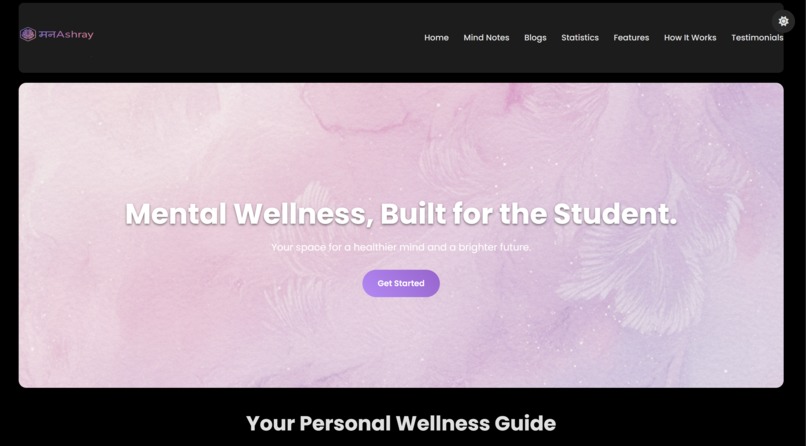
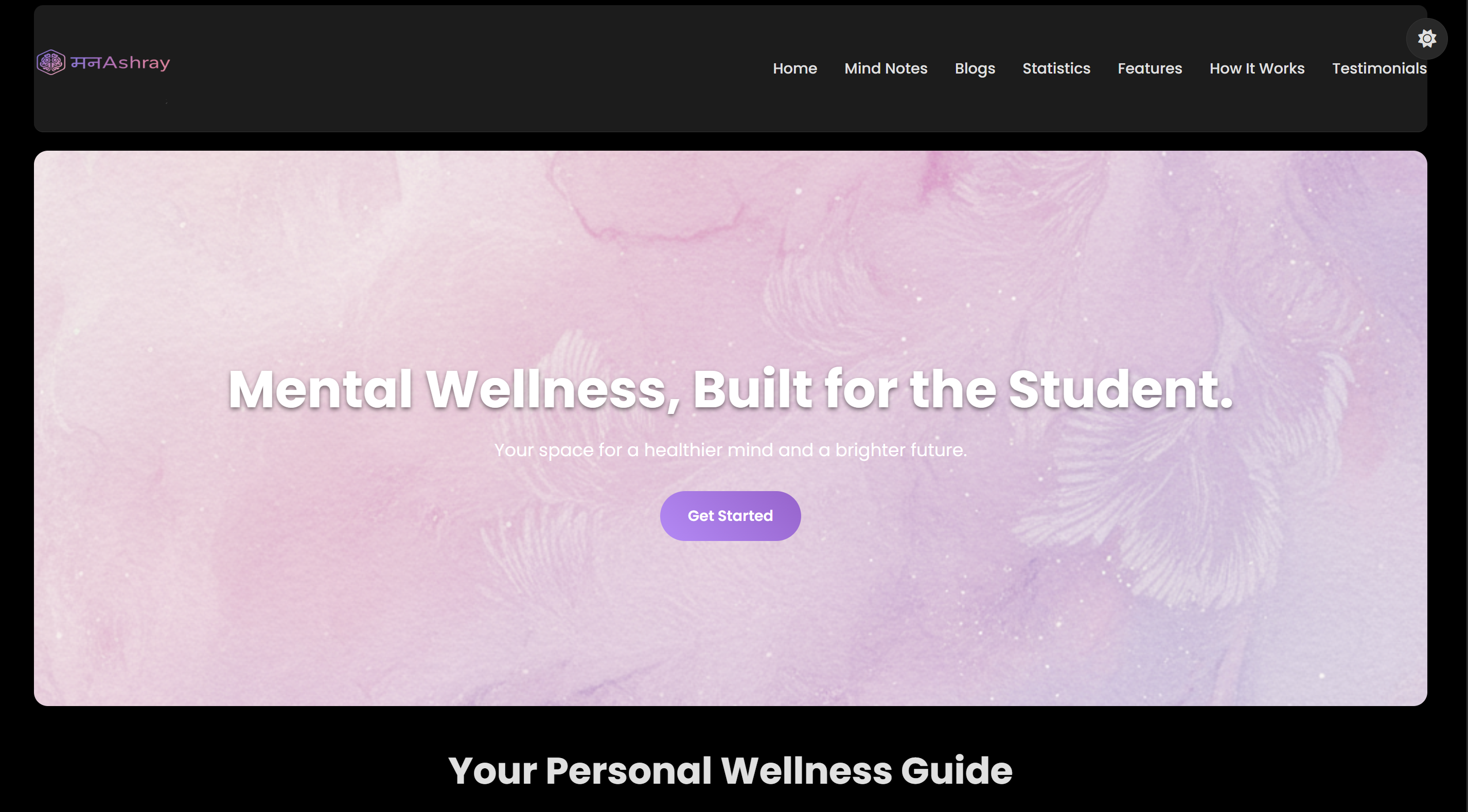
Landing page
-
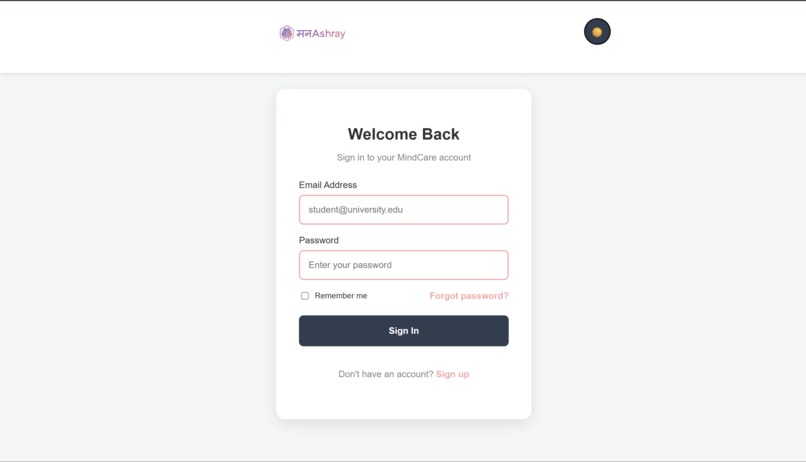
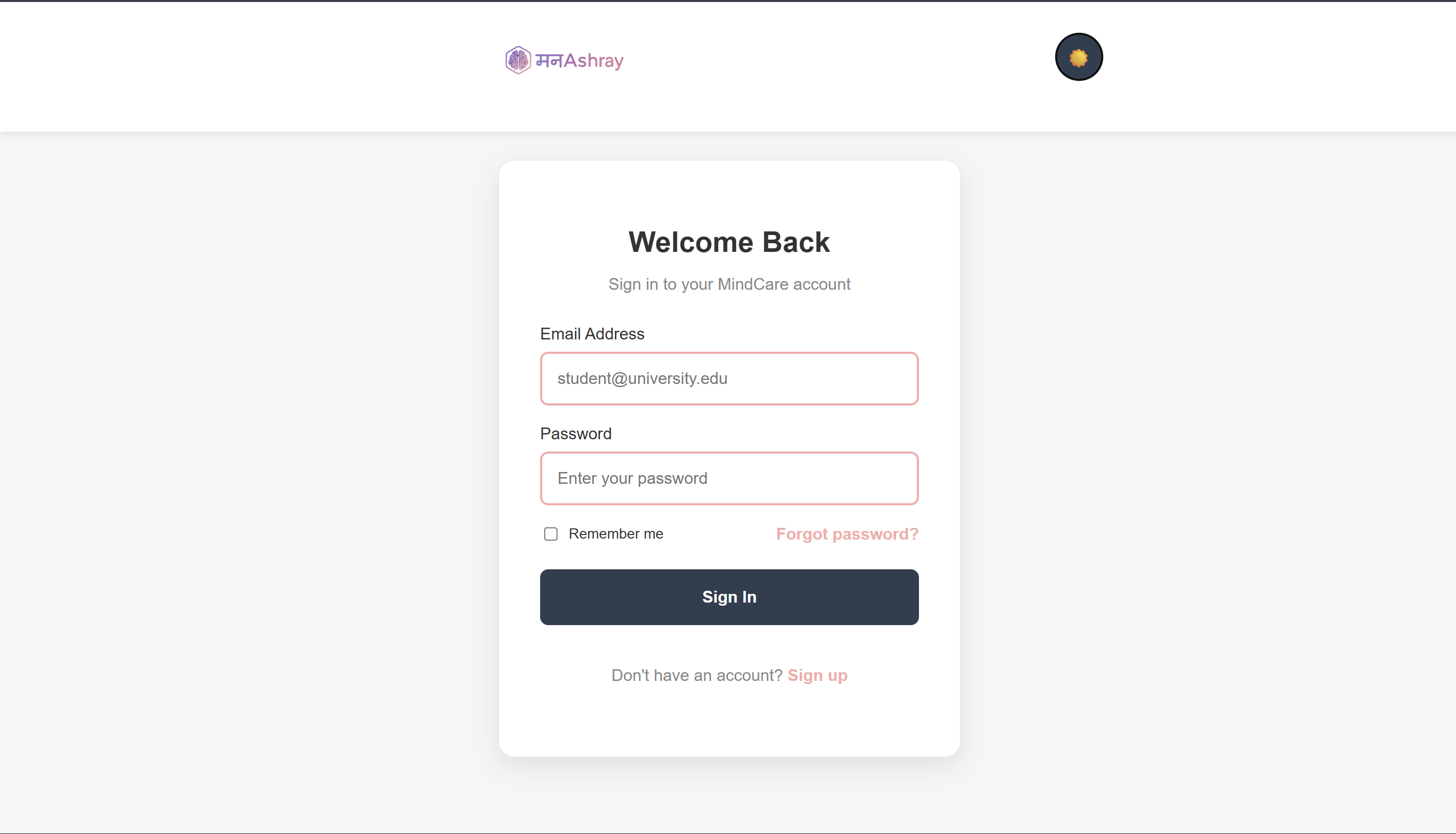
Login Page
-
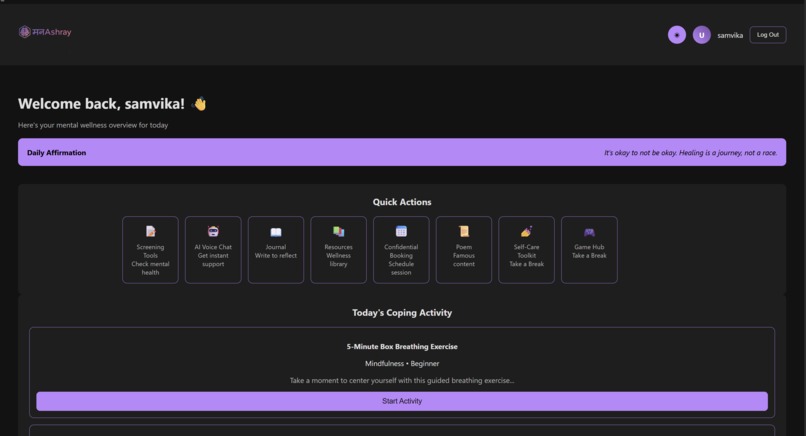
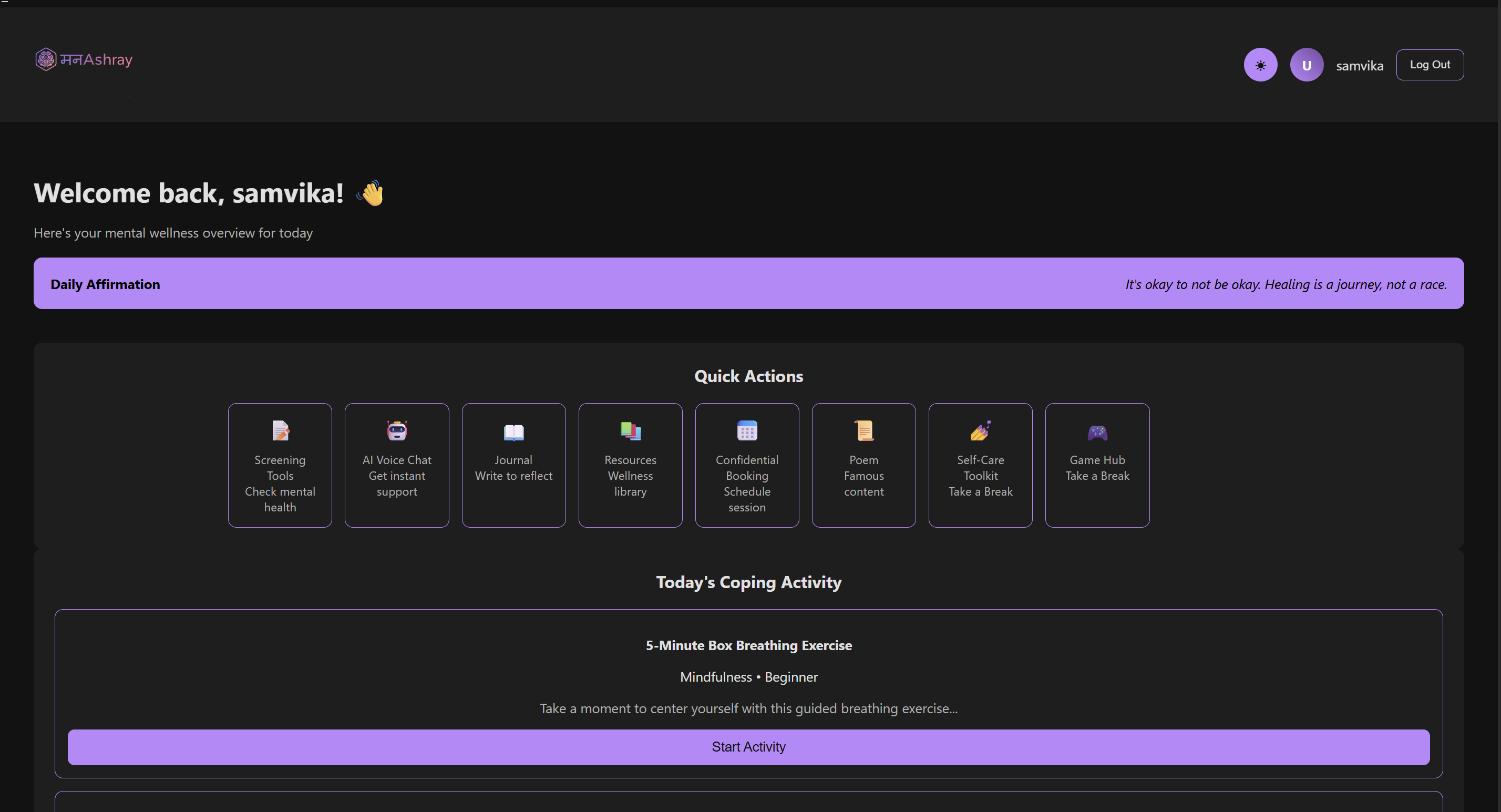
Dashboard
-
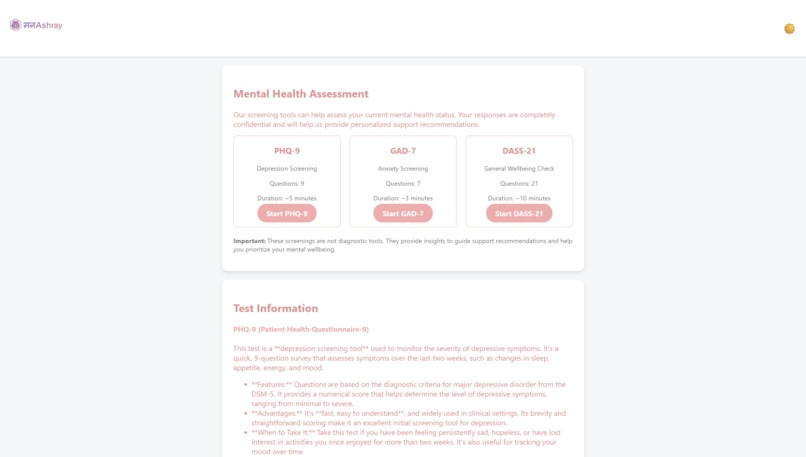
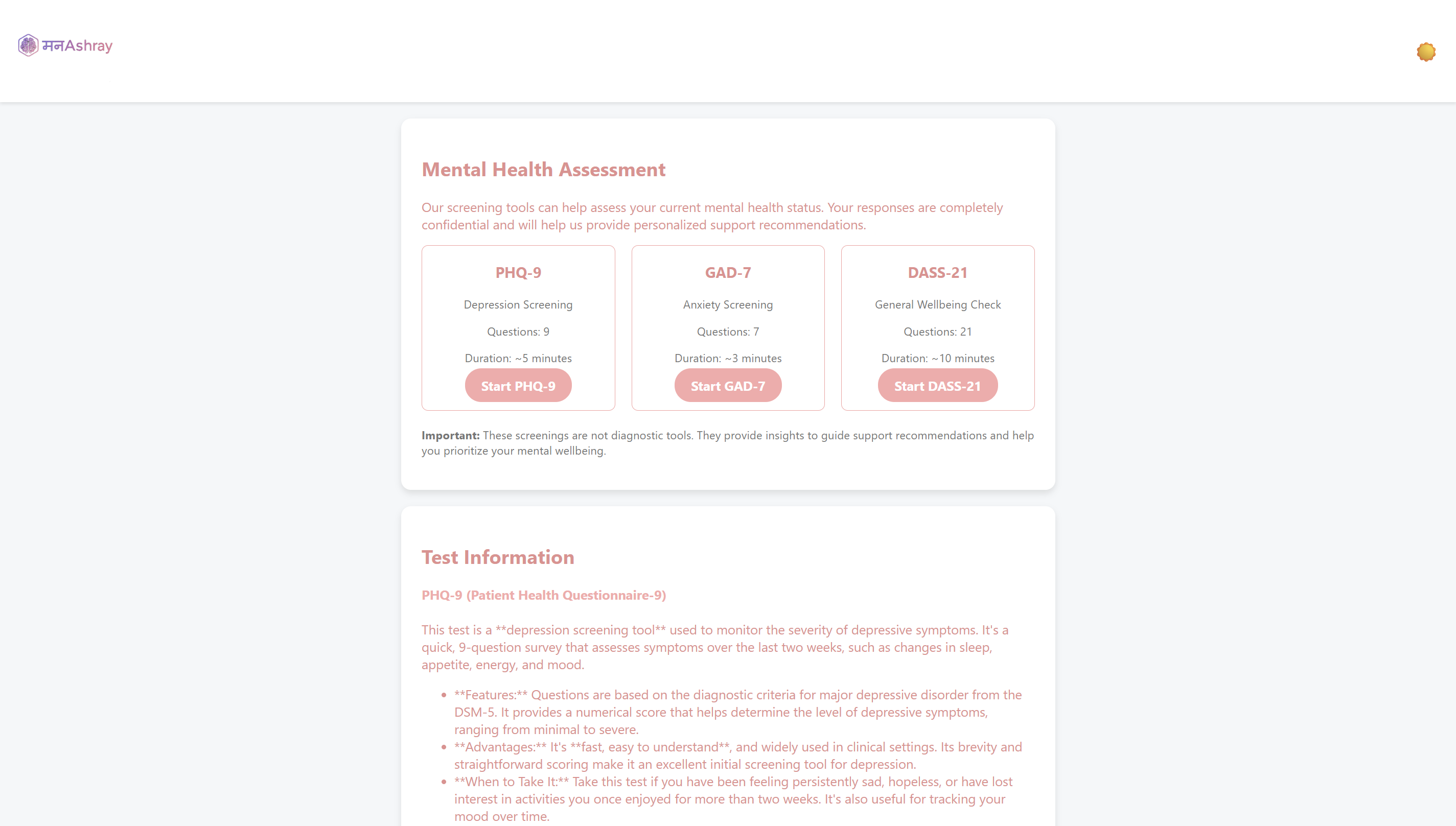
Screening tests
-
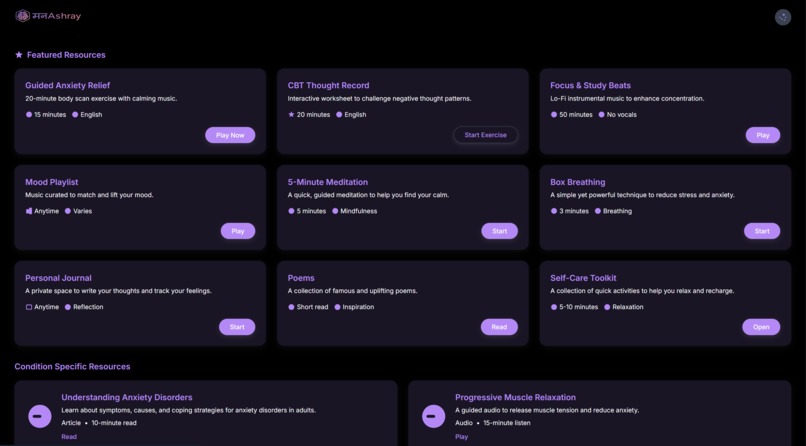
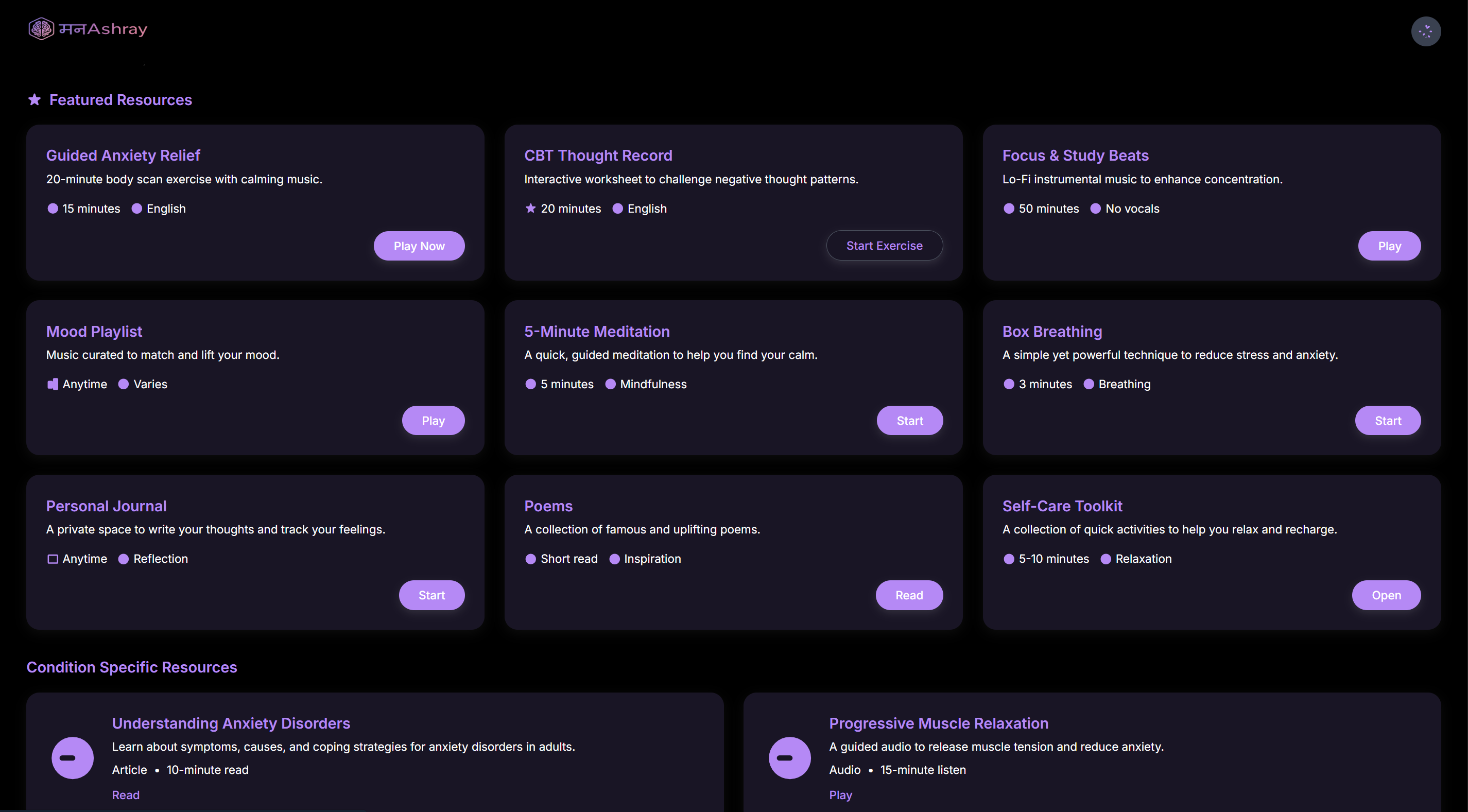
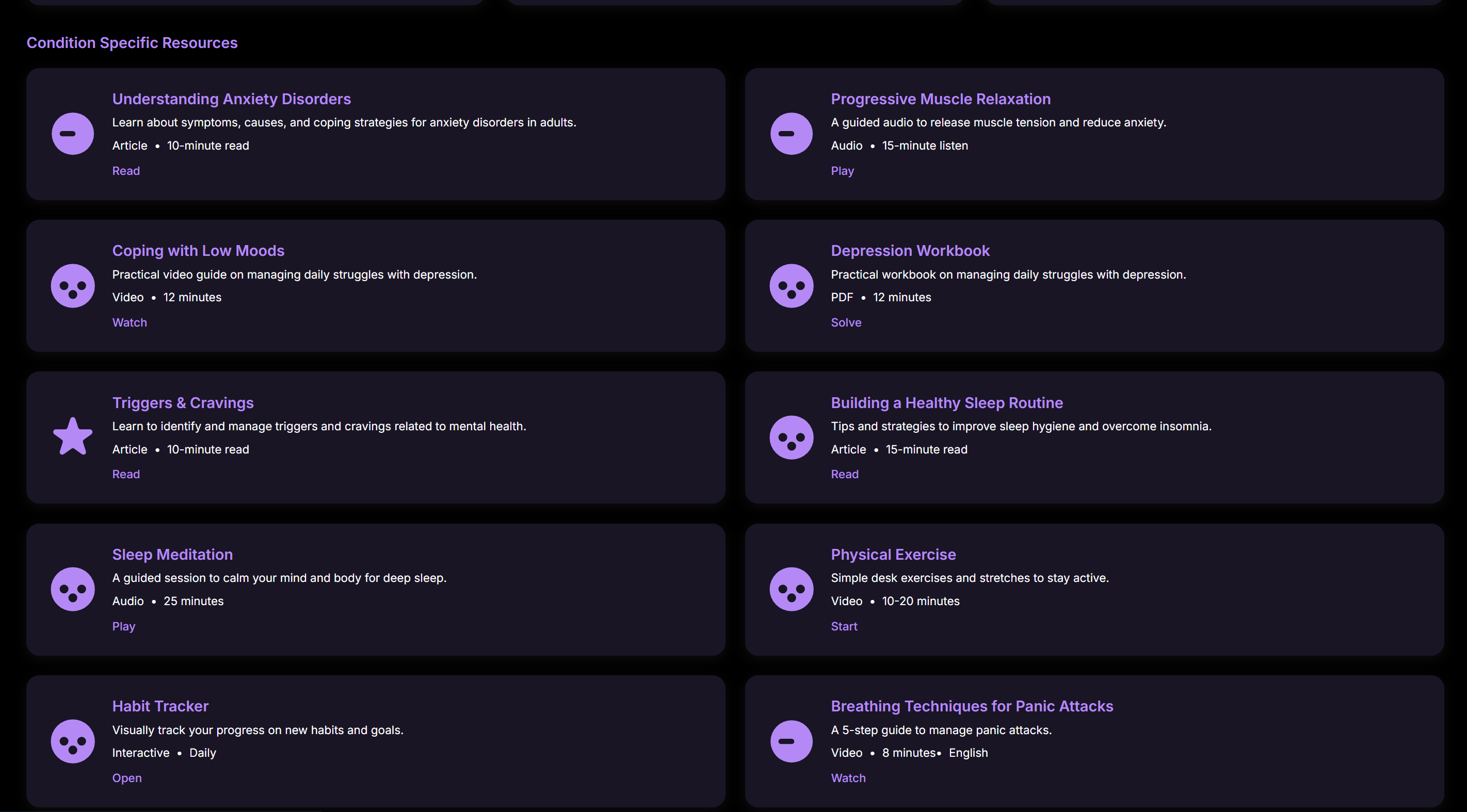
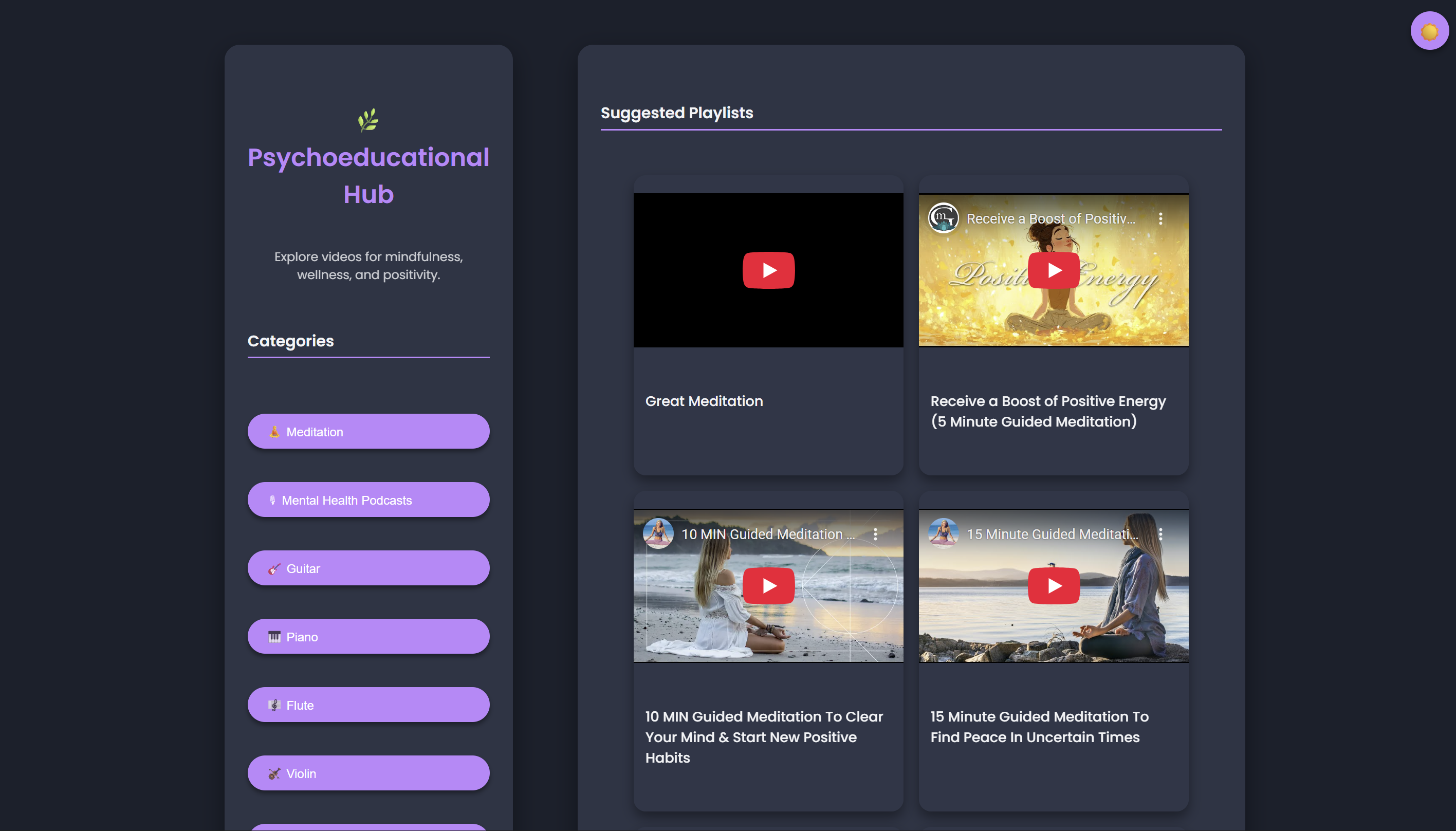
resource hub image 1
-
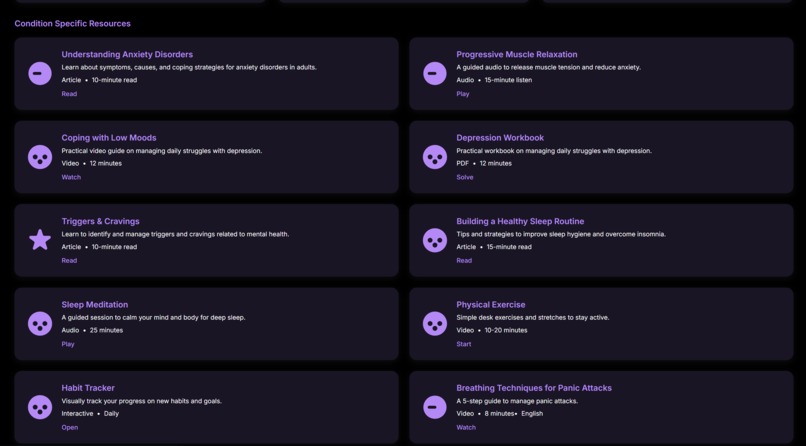
resource hub image 2
-
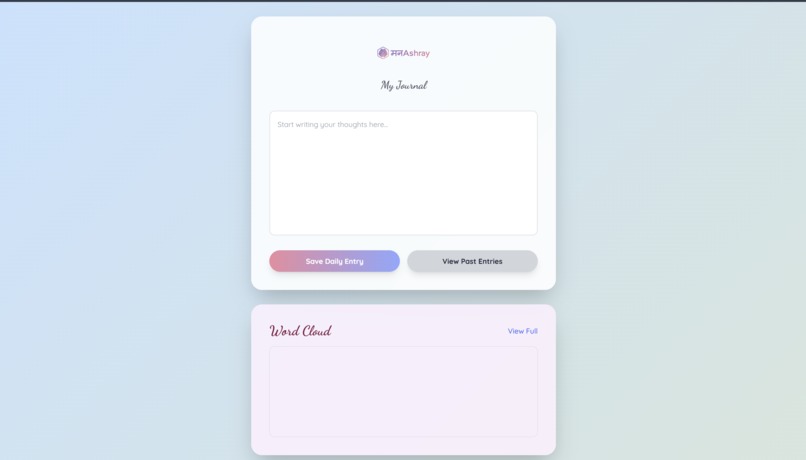
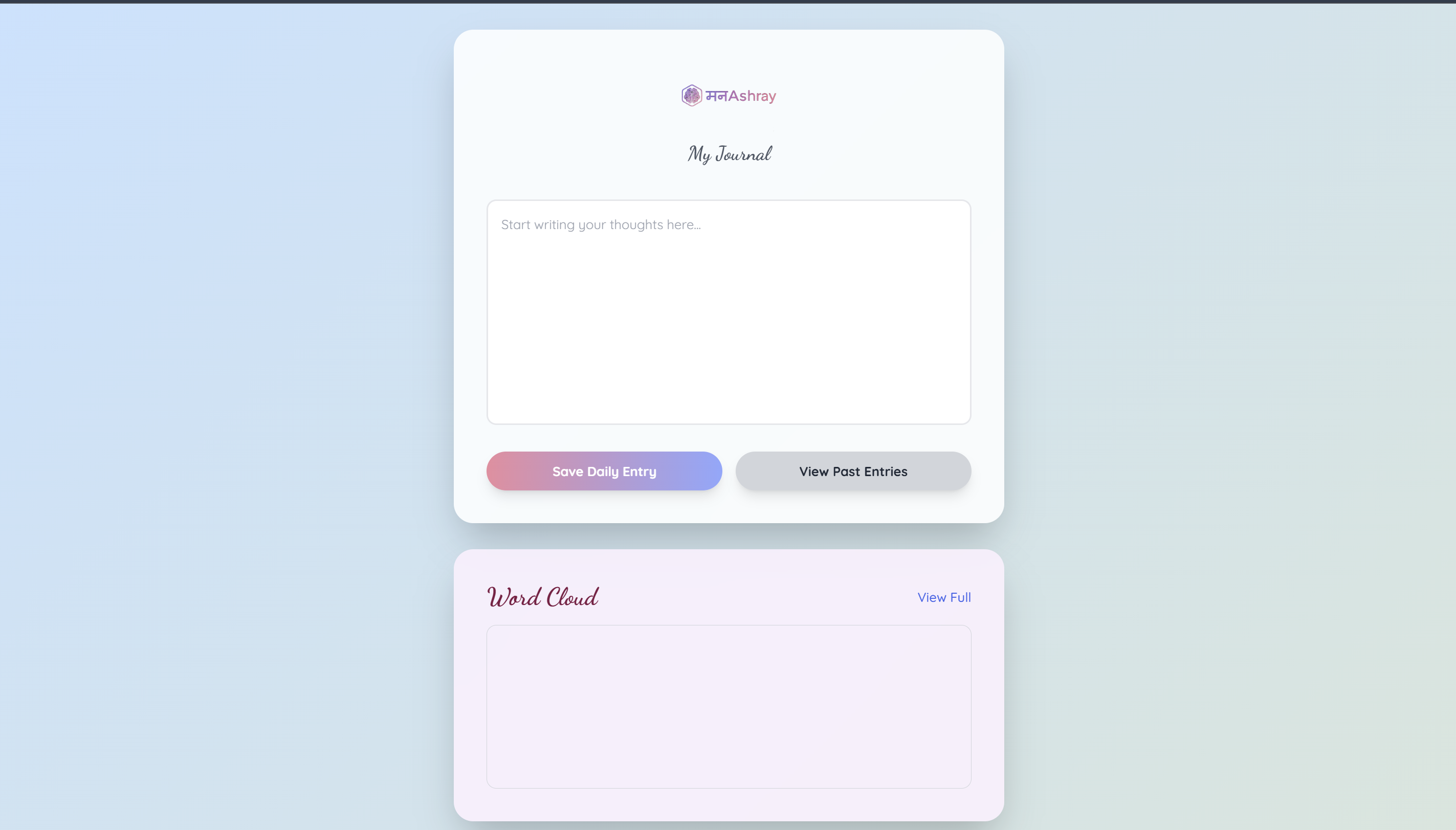
journal
-
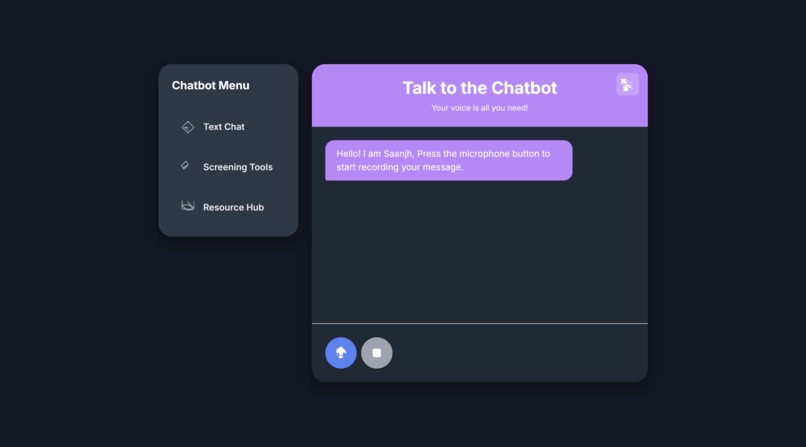
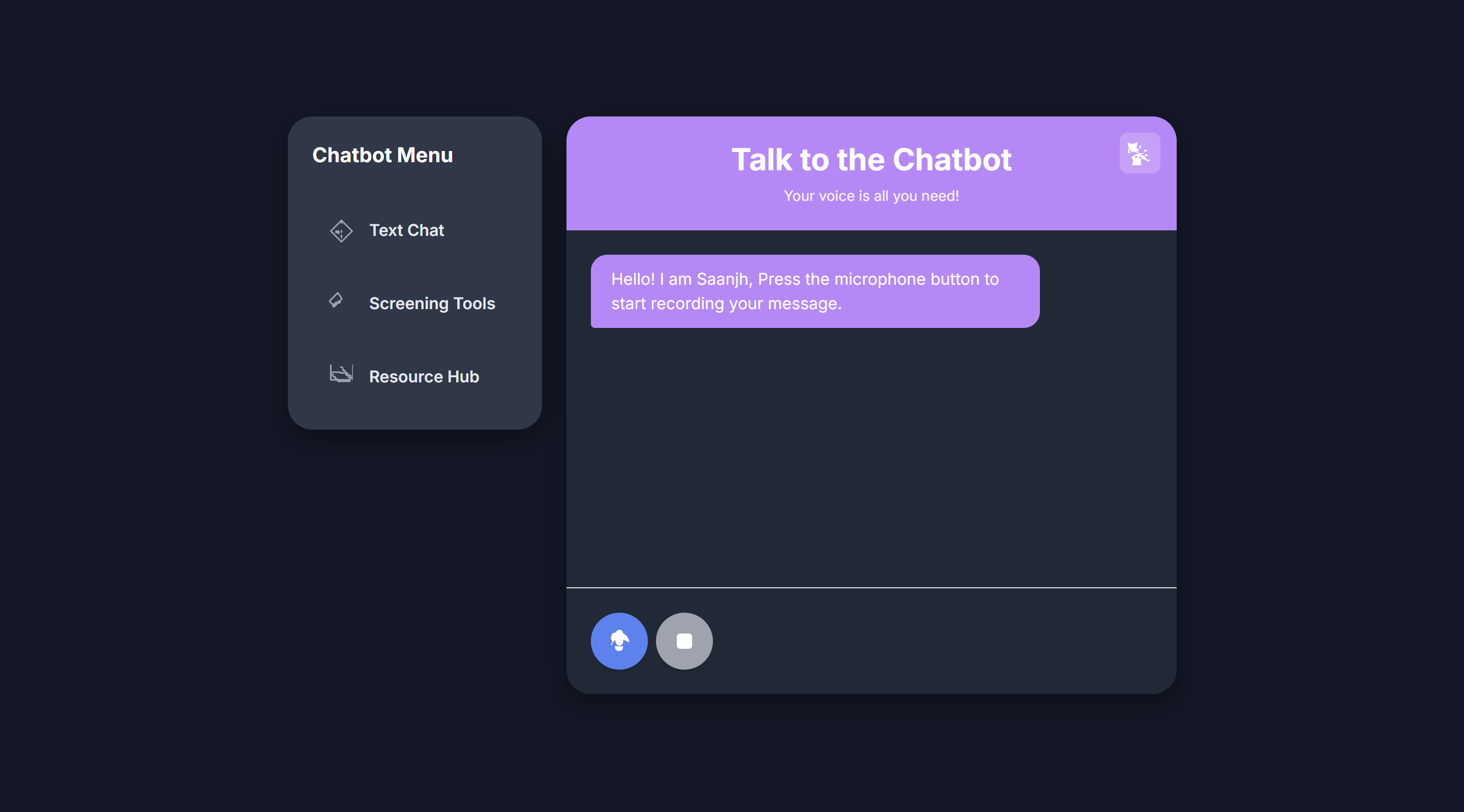
voice chatbot
-
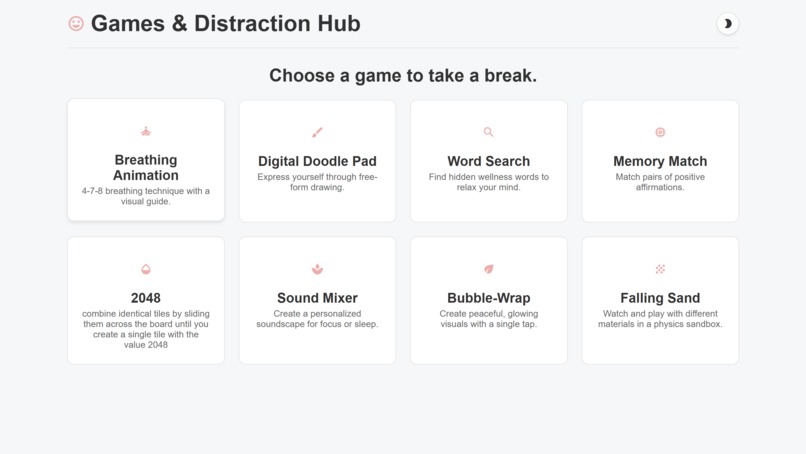
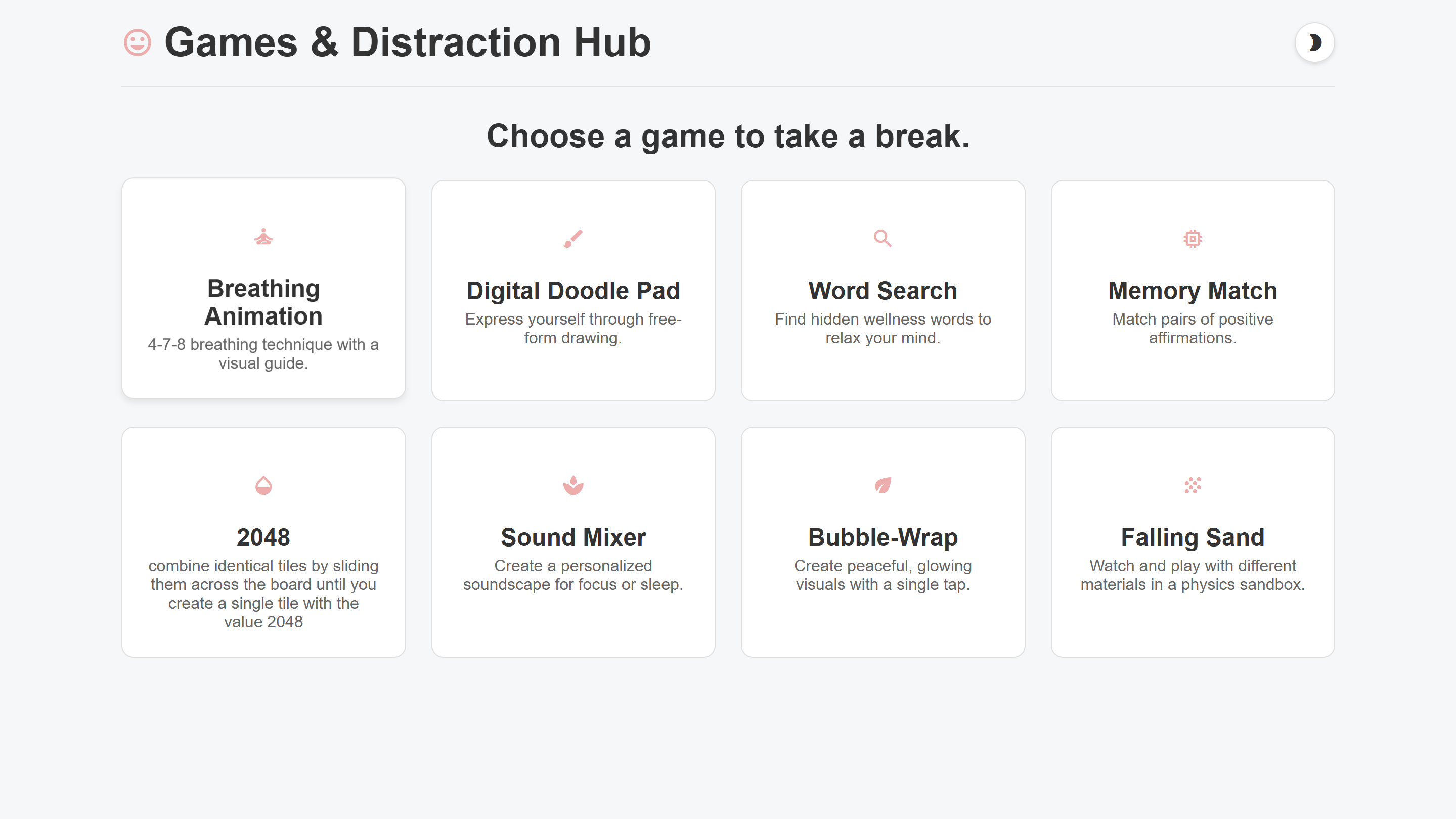
games hub
-
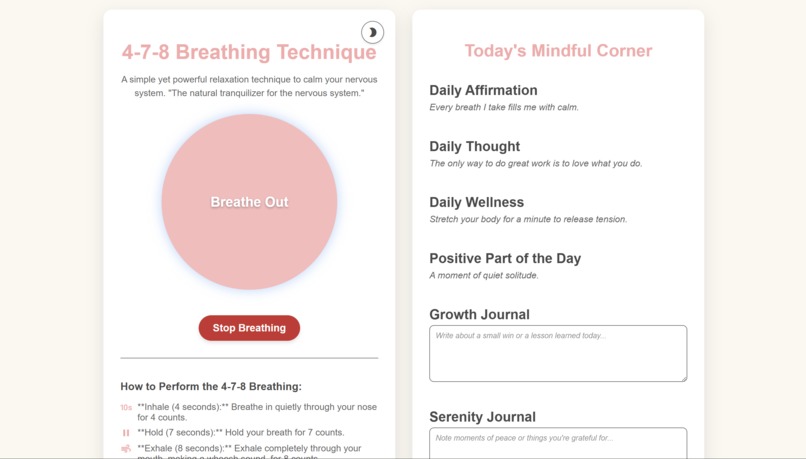
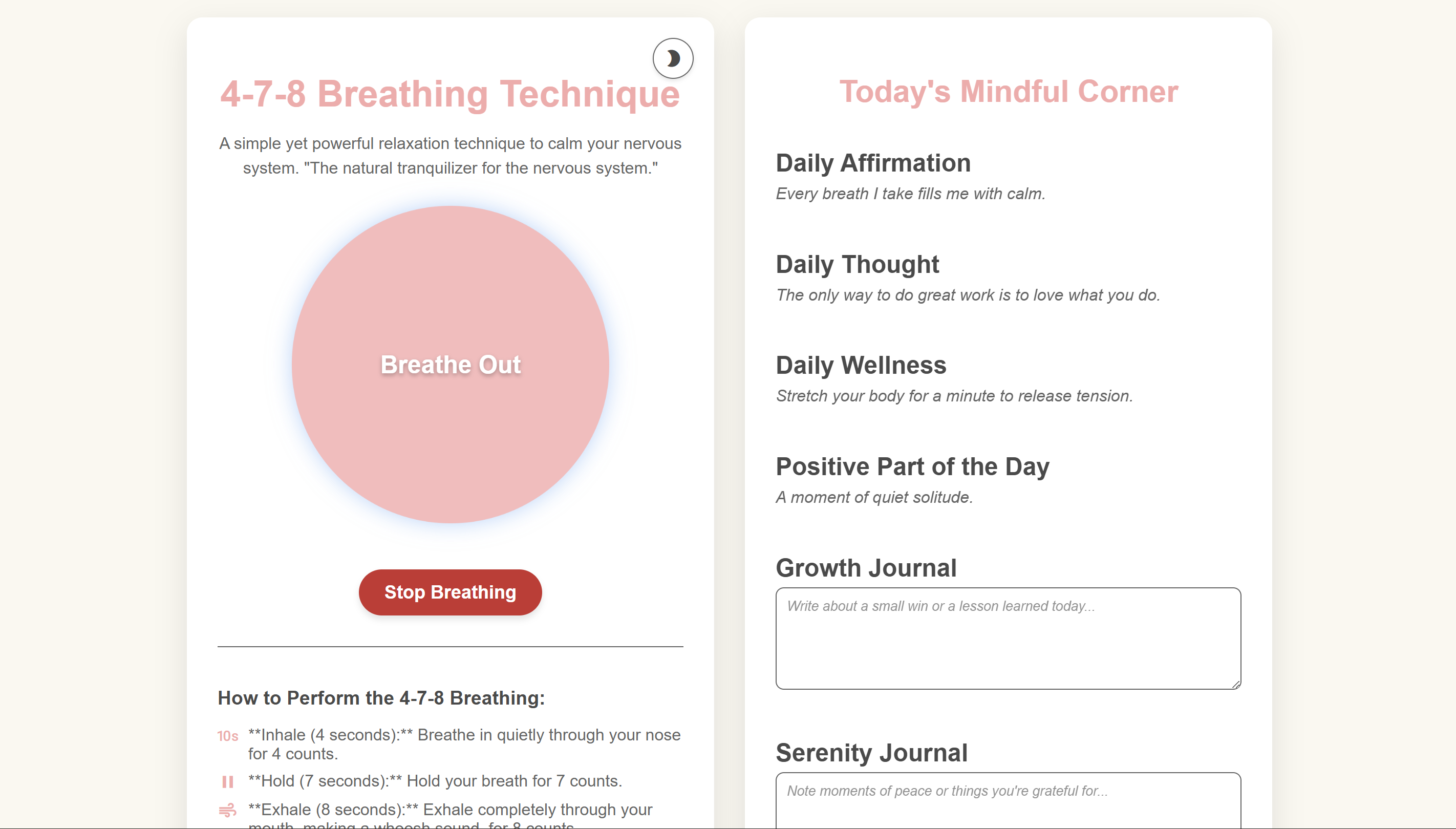
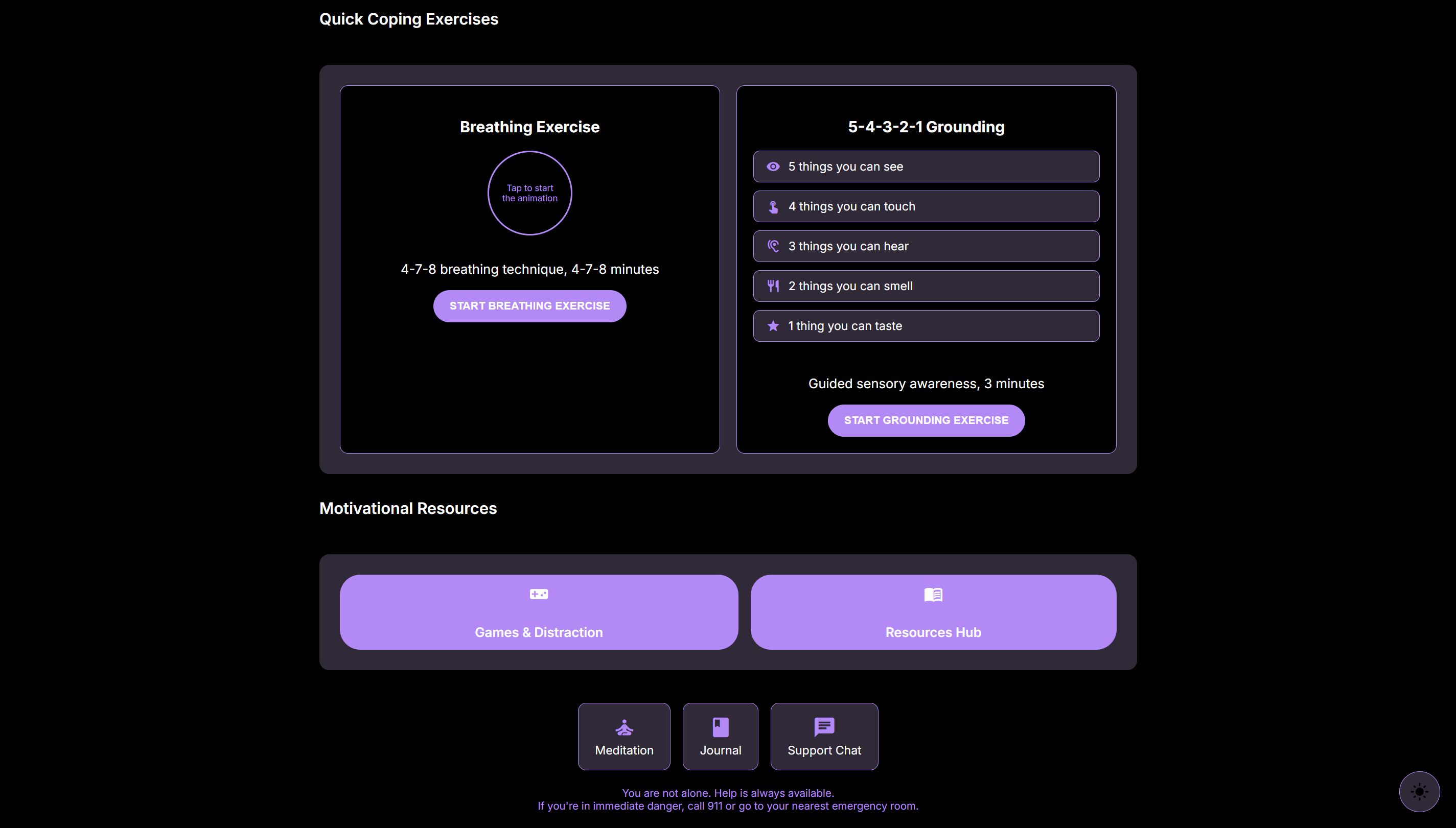
breathing exercises
-
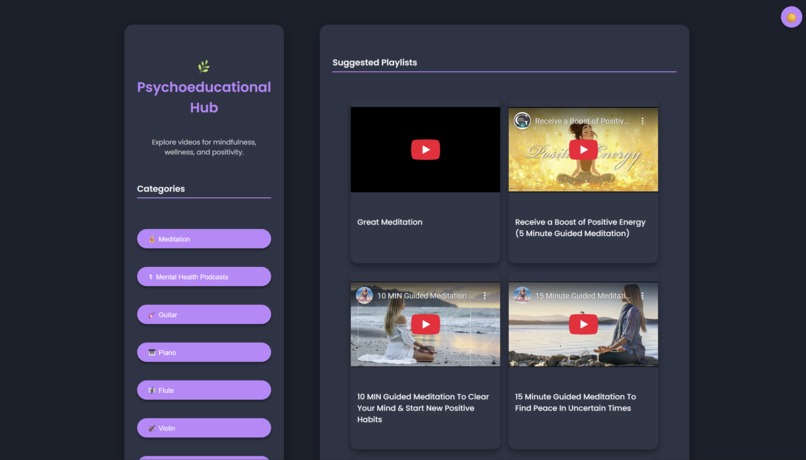
mood playlist
-
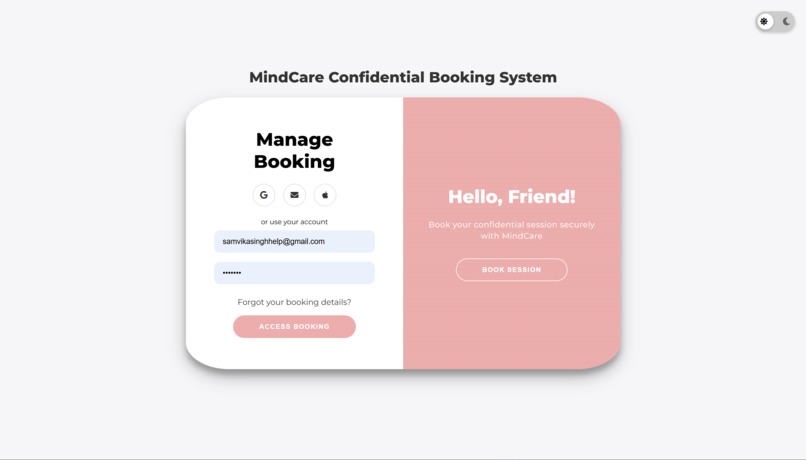
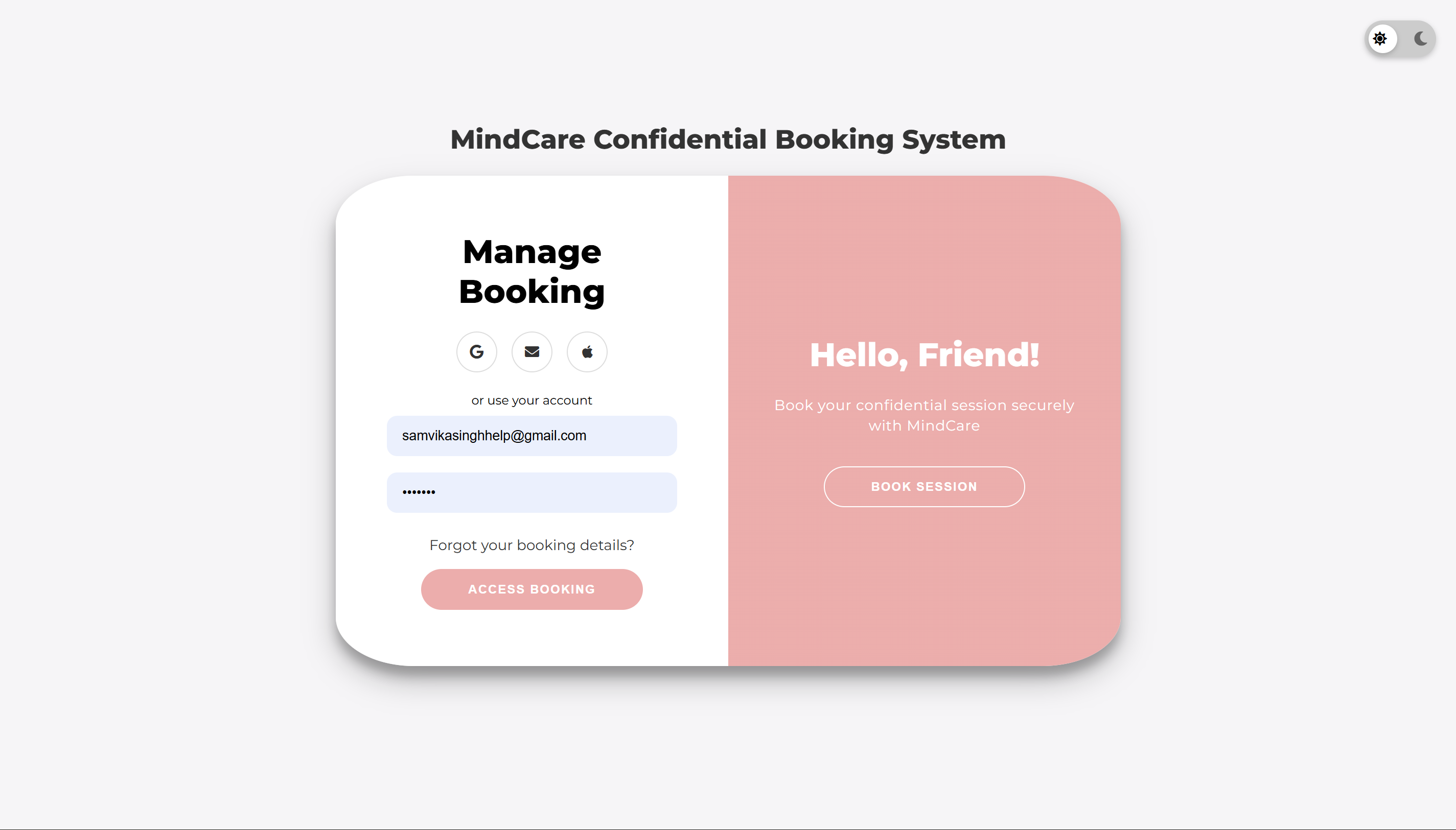
confidential booking
-
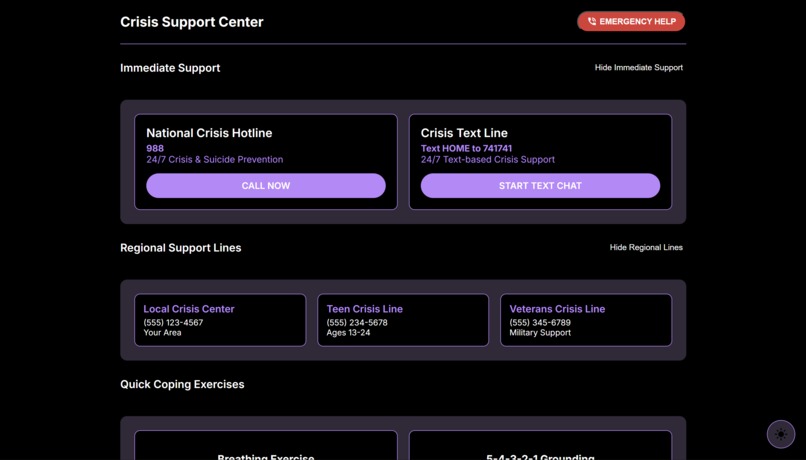
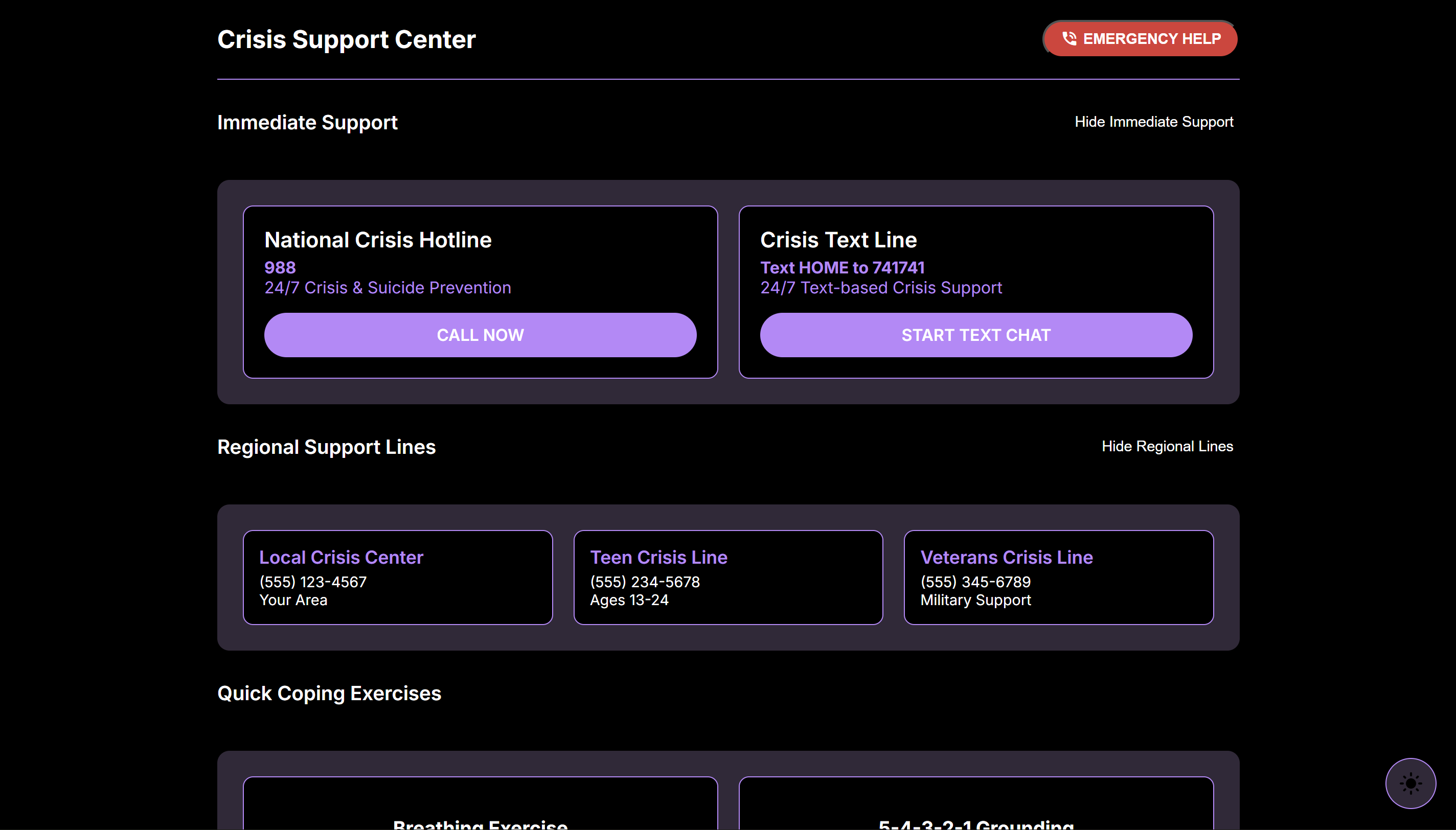
crisis support image 1
-
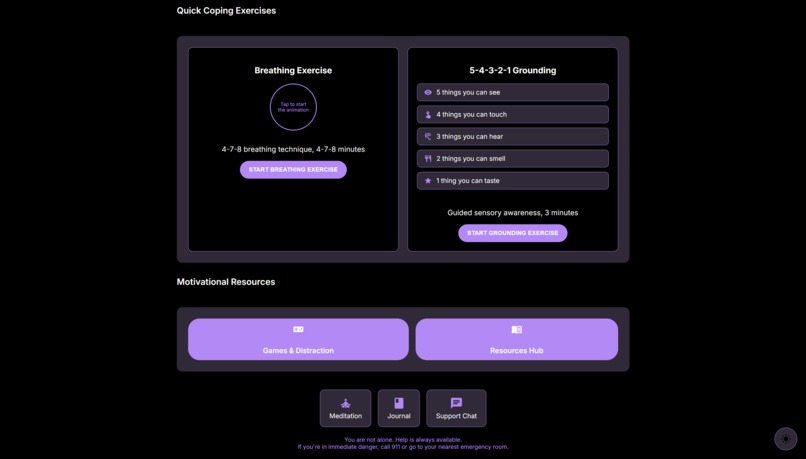
crisis support image 2
-
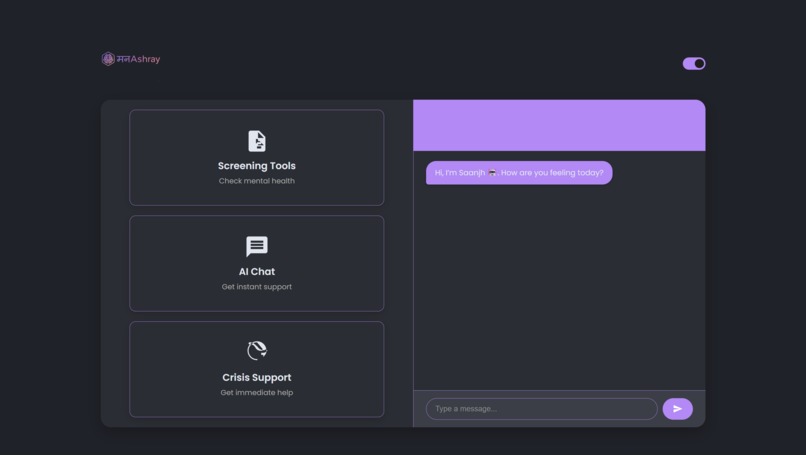
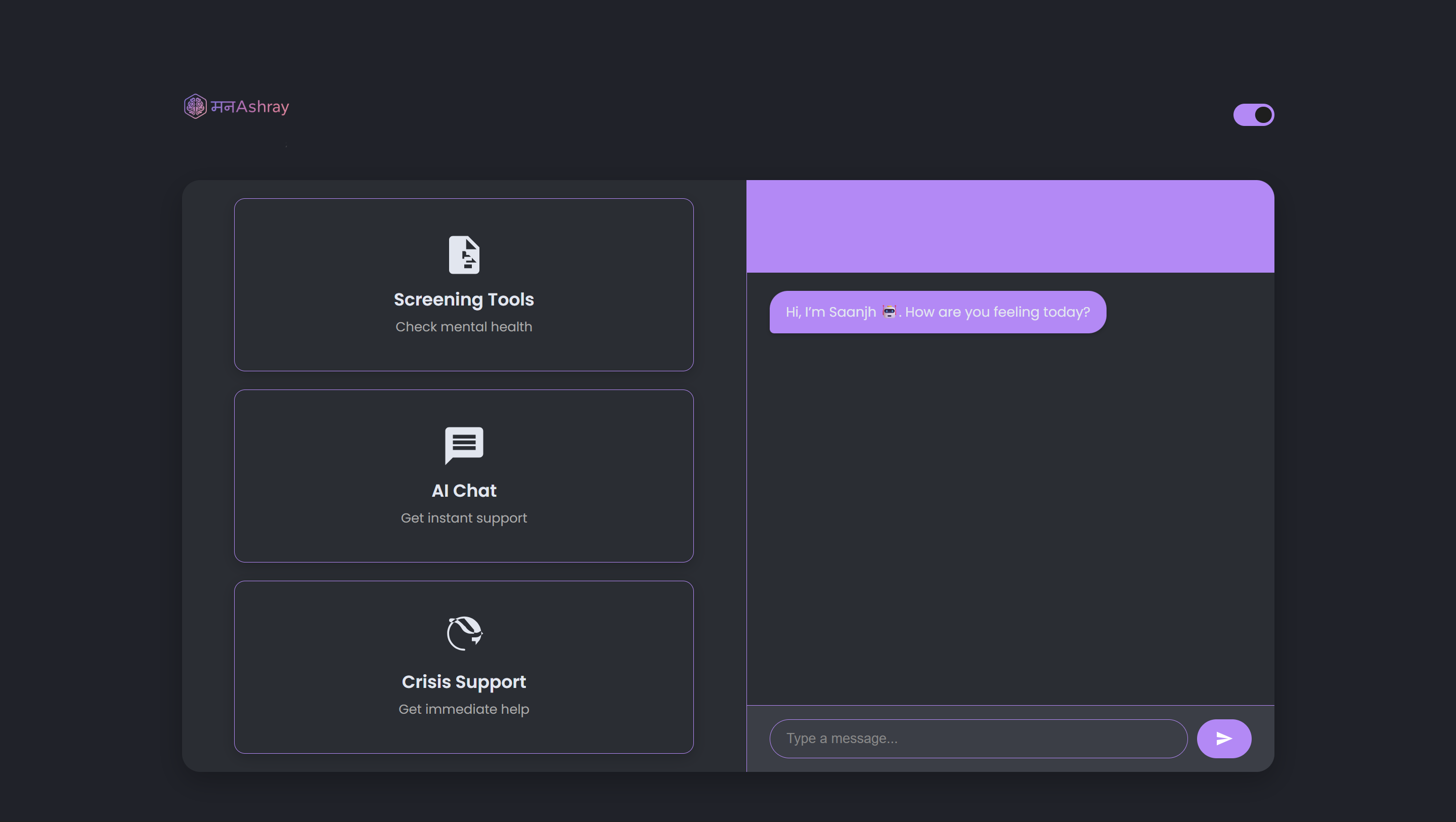
text chatbot
\documentclass[12pt,a4paper]{article} \usepackage[utf8]{inputenc} \usepackage{amsmath} \usepackage{graphicx} \usepackage{geometry} \usepackage{hyperref} \usepackage{xcolor} \geometry{margin=1in}
\title{\textbf{ManAshray: A Digital Mental Health System}} \author{Team CodeZero} \date{Smart India Hackathon 2025}
\begin{document}
\maketitle
\begin{center} \textit{“Even the strongest minds need a shelter sometimes.”} \end{center}
\section*{Inspiration} The journey of ManAshray began with a simple yet urgent question: “Why is mental health still a silent struggle among students?” In colleges and universities, we saw brilliant minds fading under the weight of anxiety, depression, and self-doubt. Many students yearned for help — but fear of stigma, lack of access, and absence of personalized support made them retreat into isolation. Our inspiration grew from witnessing this quiet crisis and realizing that technology could be a compassionate bridge between distress and healing. Thus, ManAshray — “a shelter for the mind” — was born.
\section*{What It Does}
\textbf{ManAshray} is a web-based and mobile-accessible mental wellness platform designed specifically for students in higher education.
It provides a secure, AI-powered ecosystem that combines emotional support, professional help, and community engagement.
\subsection*{Key Features} \begin{itemize} \item \textbf{AI Support Bot:} Empathetic conversational assistant offering 24x7 emotional support. \item \textbf{Psychoeducational Library:} Culturally aware and research-backed mental health resources. \item \textbf{Mindfulness Hub:} Yoga, breathing, and meditation exercises via Spotify and YouTube APIs. \item \textbf{Peer Support Forum:} Moderated student community for shared experiences and peer healing. \item \textbf{Counselor & Admin Dashboards:} Anonymized analytics for institutional well-being insights. \item \textbf{Crisis Support Section:} Quick access to helplines and verified emergency contacts. \end{itemize}
Together, these features form a compassionate digital ecosystem designed to listen, educate, and heal.
\section*{How We Built It} We followed an \textbf{Agile development cycle}, focusing on iterative improvements and continuous feedback from mental health professionals and student volunteers.
\subsection*{Technical Stack} \begin{itemize} \item \textbf{Frontend:} React.js (responsive design) \item \textbf{Backend:} Node.js with Express.js \item \textbf{Database:} MongoDB \item \textbf{AI Layer:} Google AI APIs for natural language understanding and emotion detection \item \textbf{Integrations:} Spotify API & YouTube API for music and guided therapy \item \textbf{Deployment:} Vercel and Cloud Infrastructure \end{itemize}
Mathematically, our goal was to minimize the gap between emotional distress and mental wellness, modeled as:
[ \text{Minimize } S = \sum_{i=1}^{n} (D_i - H_i) ]
where: \begin{itemize} \item $D_i$ = Distress index of the $i^{th}$ user \item $H_i$ = Happiness index post-intervention \end{itemize}
Each module and feature was designed to minimize this difference, thereby improving overall well-being.
\section*{Challenges We Ran Into} Developing a mental health system involves unique emotional and technical challenges: \begin{enumerate} \item \textbf{Emotional Intelligence in AI:} Training the chatbot to respond with empathy, not just accuracy, required extensive tuning and dataset refinement. \item \textbf{Data Privacy & Confidentiality:} Handling sensitive information demanded secure encryption, anonymization, and ethical data policies. \item \textbf{Emotional Scenario Design:} Crafting responses that suit varying moods—from anxiety to burnout—required psychological insight. \item \textbf{User Trust:} Convincing users to trust a digital support system was an emotional design challenge. \item \textbf{API Coordination:} Synchronizing Spotify, YouTube, and Google AI APIs with minimal latency. \end{enumerate}
\section*{Accomplishments That We're Proud Of} \begin{itemize} \item Successfully developed a working AI-based emotional support chatbot. \item Built a secure, anonymized counselor dashboard for institutional mental wellness tracking. \item Integrated Spotify and YouTube APIs for personalized therapy sessions. \item Designed a mindfulness and affirmation module to promote daily positive engagement. \item Most importantly, we opened meaningful conversations about student mental health. \end{itemize}
\section*{What We Learned} \begin{itemize} \item \textbf{Empathy is the highest form of intelligence.} \item Technology can amplify compassion when designed responsibly. \item Collaboration between developers and psychologists is crucial. \item Data should represent human stories, not just numbers. \end{itemize}
We discovered that building a mental health solution is not just an engineering problem — it’s an exercise in humanity.
\section*{What's Next for ManAshray} Our journey doesn’t end here. \textbf{ManAshray} will continue to grow into a nationwide digital wellness framework.
\subsection*{Future Goals} \begin{itemize} \item Expand AI emotion recognition models for deeper contextual understanding. \item Launch a full-fledged mobile application with real-time tracking. \item Collaborate with universities for large-scale institutional deployment. \item Use anonymized analytics for mental health policy research. \item Enable multi-language support to make the system inclusive and accessible. \end{itemize}
\section*{Conclusion}
\textbf{ManAshray} isn’t just a project — it’s a promise.
A promise that technology can heal when it listens with empathy.
A promise that every student deserves a safe digital space to be heard, helped, and healed.
\begin{center} \textit{“You are not alone. Not now. Not ever.”} \end{center}
\end{document}

Log in or sign up for Devpost to join the conversation.