-
-
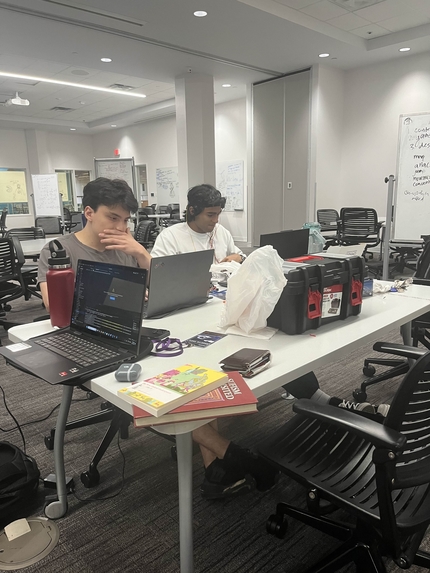
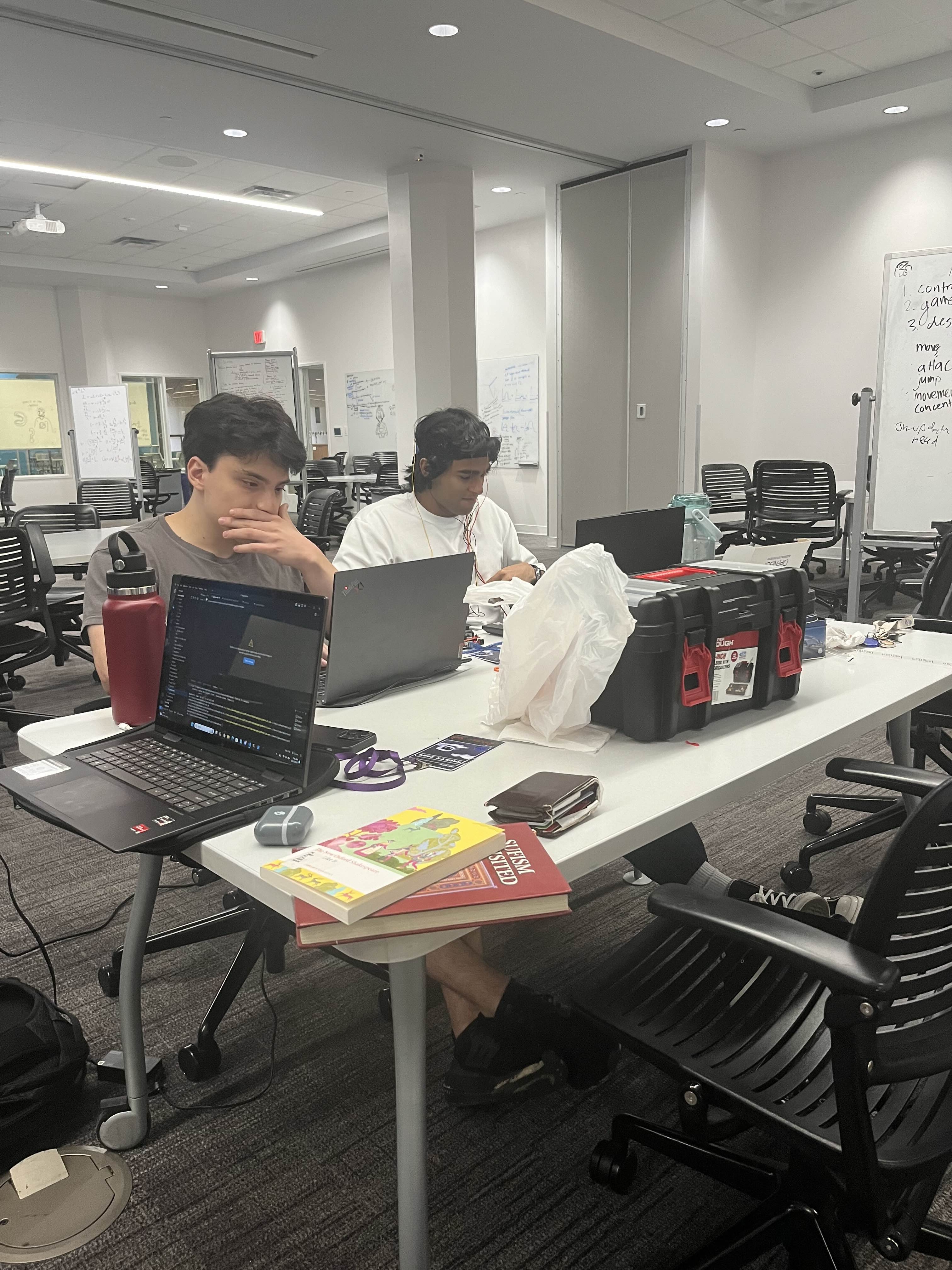
Yusuf & Tony hard at work
-
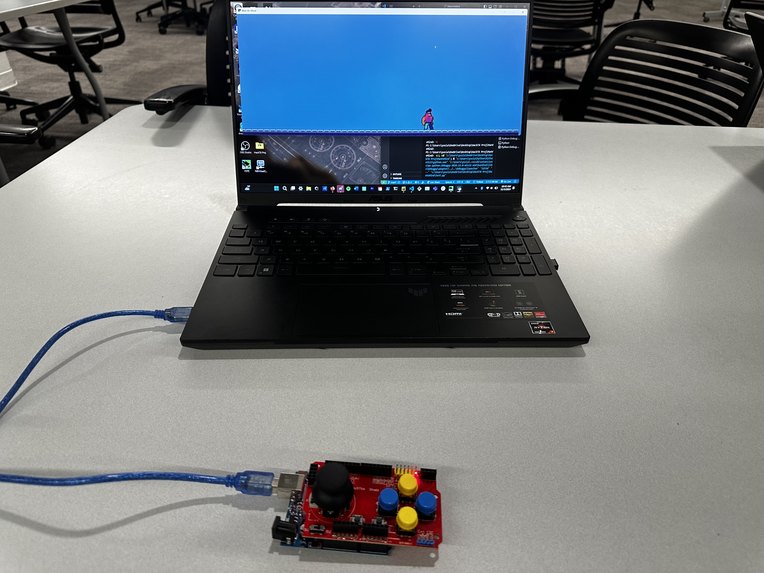
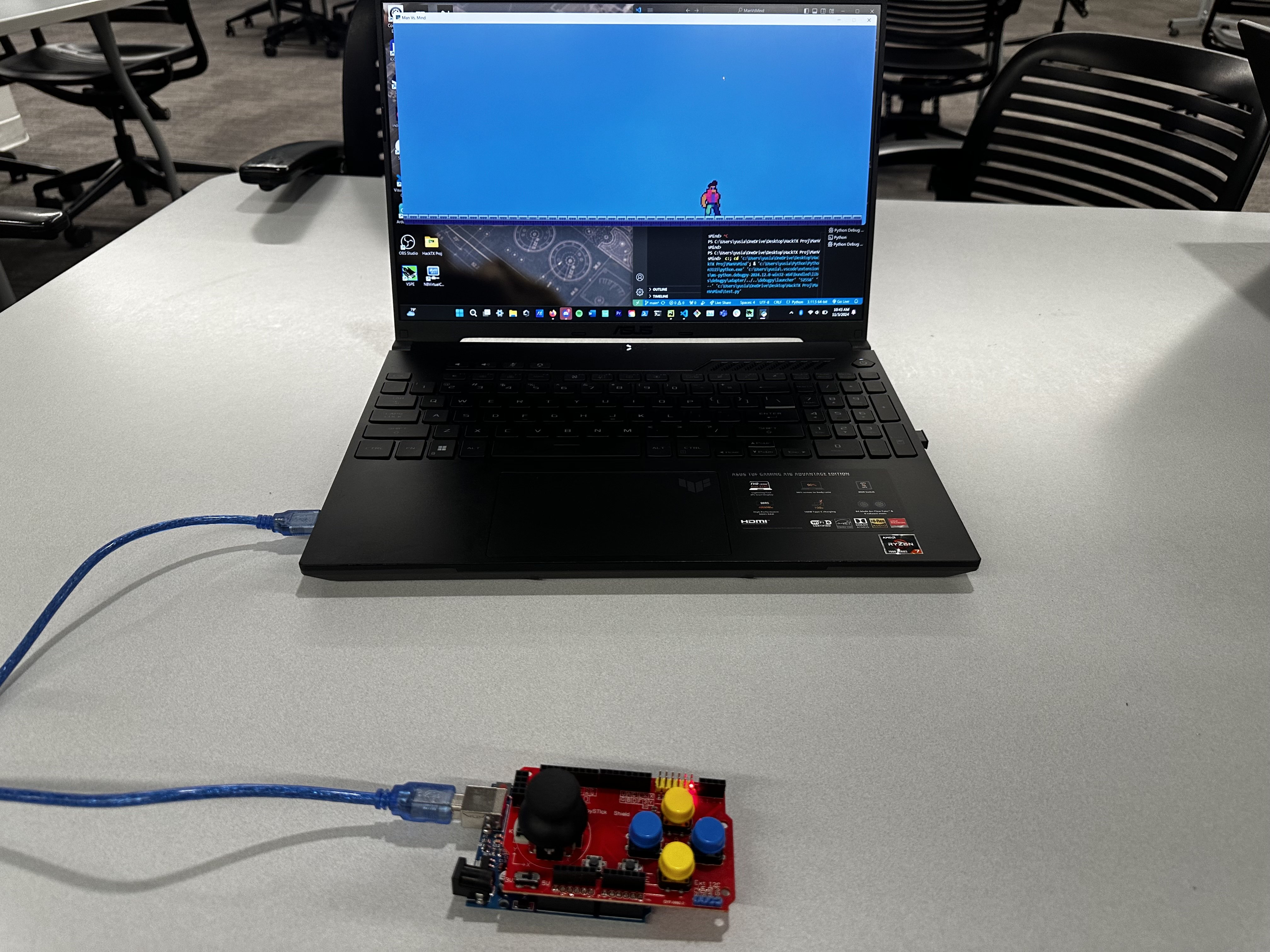
Our joystick in action!
-
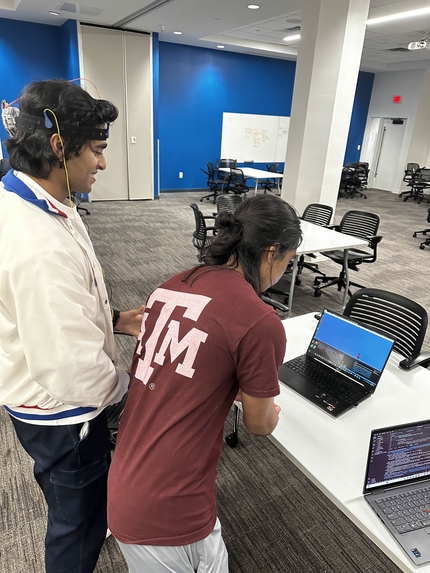
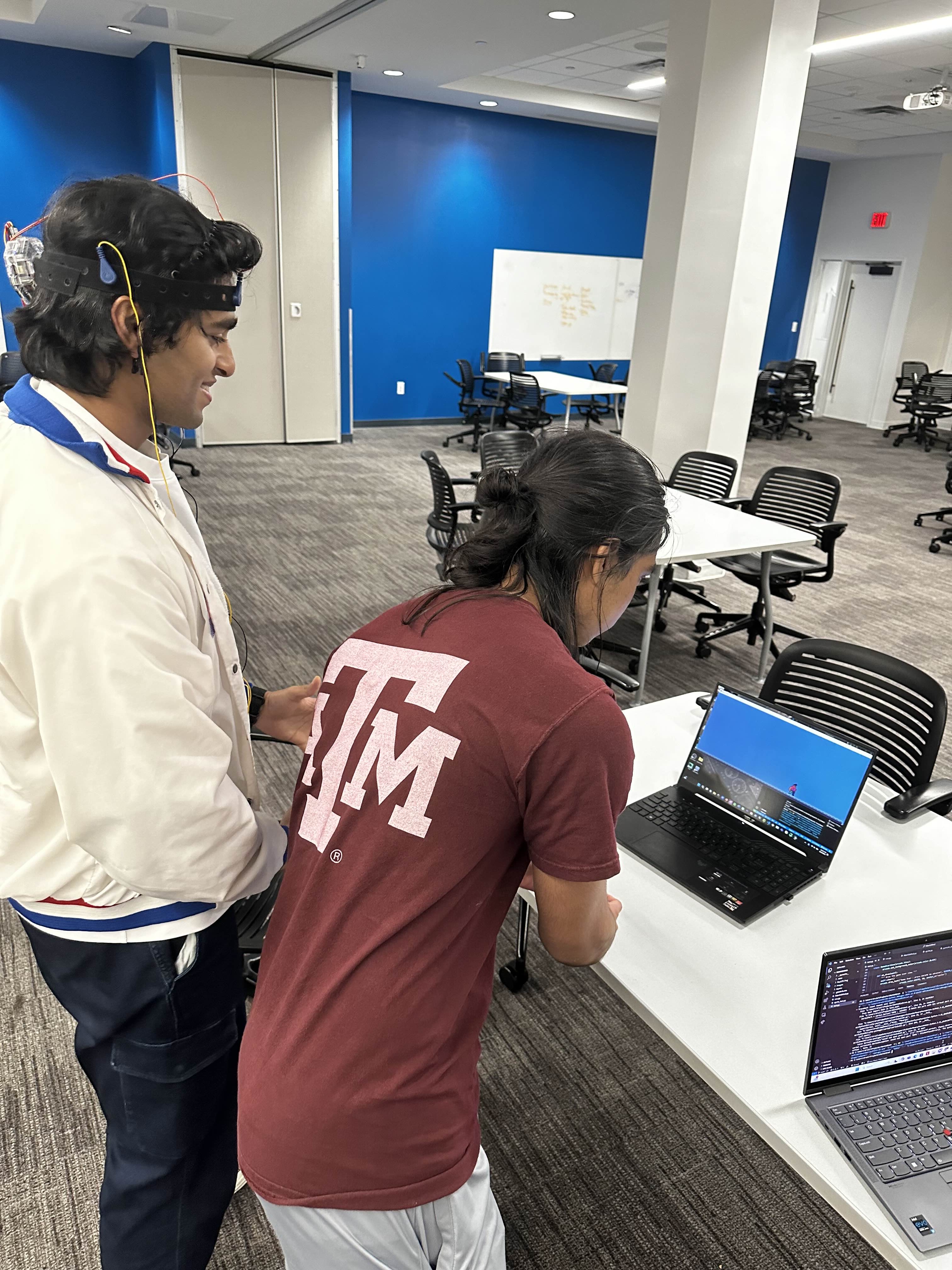
Intense match.
-
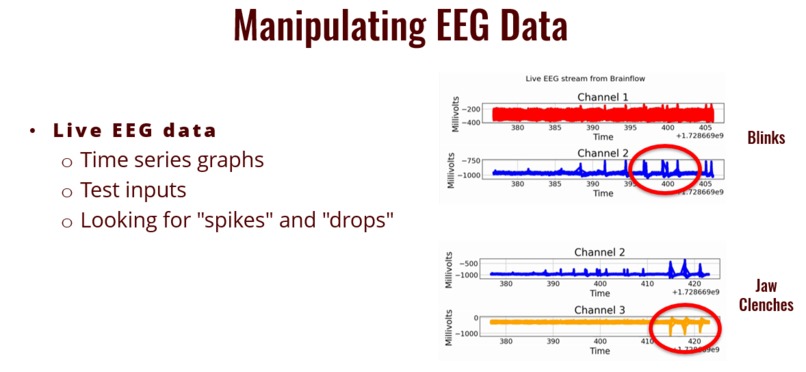
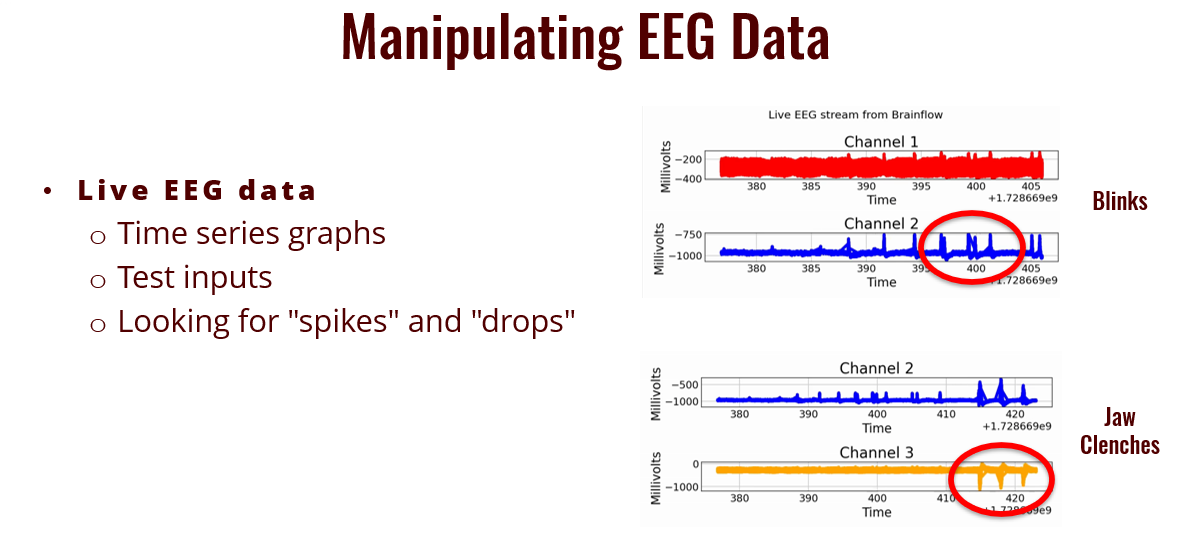
Helpful Visual about EEG Data
Inspiration
Our experience with Brain Computer Interfaces combined with our love for gaming pushed us to create this project. We wanted to consider the future of gaming from the lens of individuals who have mobility issues while also taking inspiration from the theme of this year's HackTX: arcade games.
What it does
Our project combines hardware and software in the form of an interactive 2-player fighting game where 1 player uses an Arduino joystick to control their character while their opponent uses the power of their brainwaves to control their fighter without the need for physical action.
How we built it
For our software, we used the python-arcade library to develop the game, using their documentation and tutorials as a template to construct a scene, characters and fighting. Moreover, we used an Arduino Uno to assemble our Joystick Controller and an OpenBCI board to collect EEG data from our brains!
Challenges we ran into
A major setback we had was getting the BCI and Arduino Uno to work in tandem to create seamless user experience. To combat this, we incorporated parallel processing so that our programs could run simultaneously. We faced massive hurdles in designing the game as none of us have had major graphic/gaming design experience.
Accomplishments that we're proud of
We are incredibly proud of how much we developed in just 24 hours (and one very sleepless night). We successfully merged brainwave technology with an interactive game format, overcoming technical challenges and creating a unique gaming experience. Specifically, we’re thrilled that we managed to create a functional 2-player game that offers a seamless user experience for both joystick and brainwave-controlled players. Seeing the system respond to real-time brain activity was an exhilarating moment for our team, and we’re proud to have achieved a solution that bridges gaming and accessibility.
What we learned
We gained a deep appreciation for the challenges of game development and the effort required to bring even a simple project to life, especially when innovating with new control methods. Developing a game that integrates both traditional and brainwave controls taught us about the complexities of combining hardware and software in real-time.
What's next for Man vs. Mind
Our next steps involve refining the control accuracy of the Brain Interface for smoother gameplay. We also plan to enhance the game's design and add classic arcade fighting features to make the experience more immersive. Beyond gaming, we envision expanding the project to enable individuals to control other digital interfaces—like a mouse, keyboard, or cursor—using only their brainwaves, broadening accessibility in new ways.

Log in or sign up for Devpost to join the conversation.