-
-

Happy Pregnant Woman
-
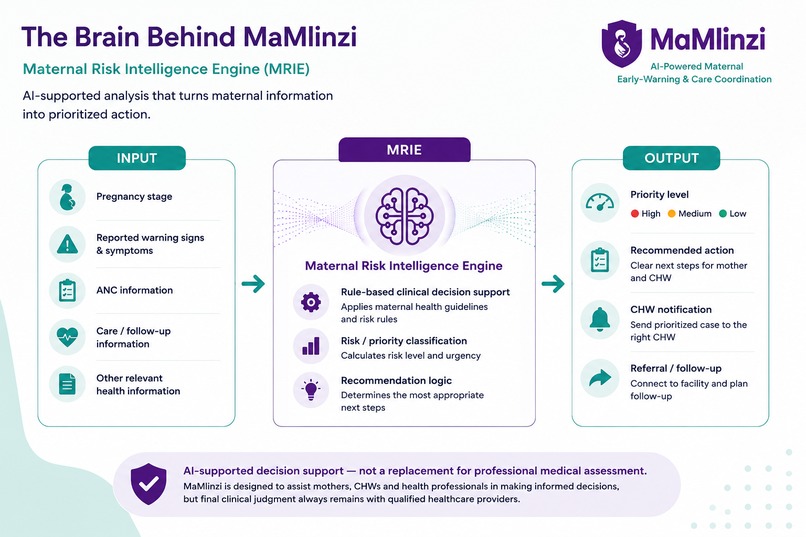
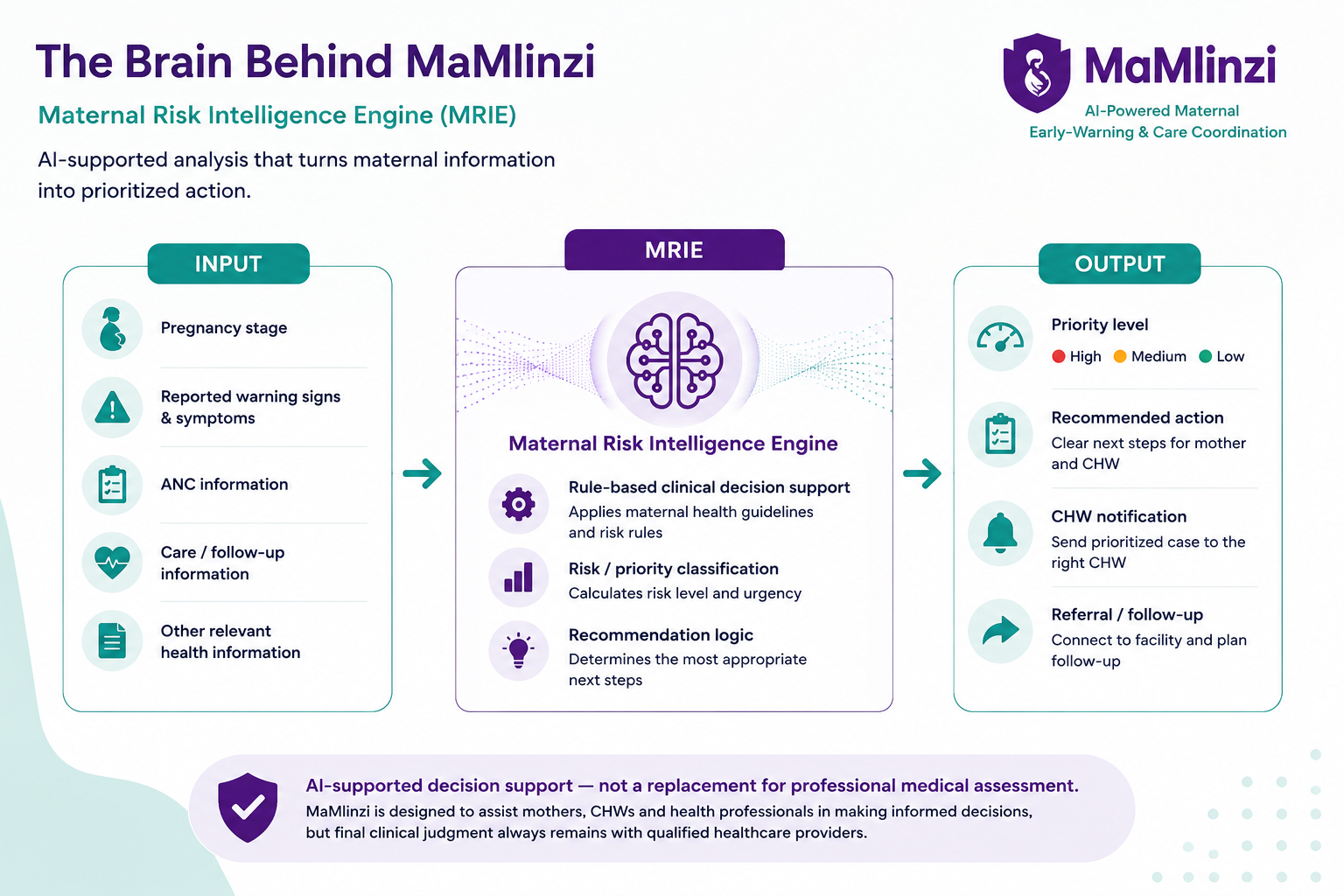
MaMlinzi-System Architecture
-
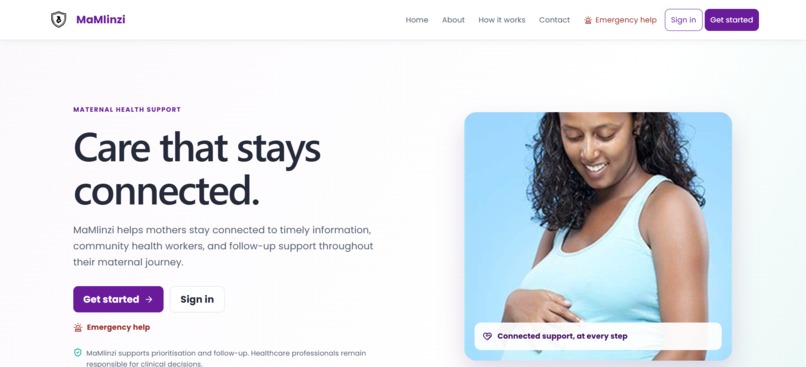
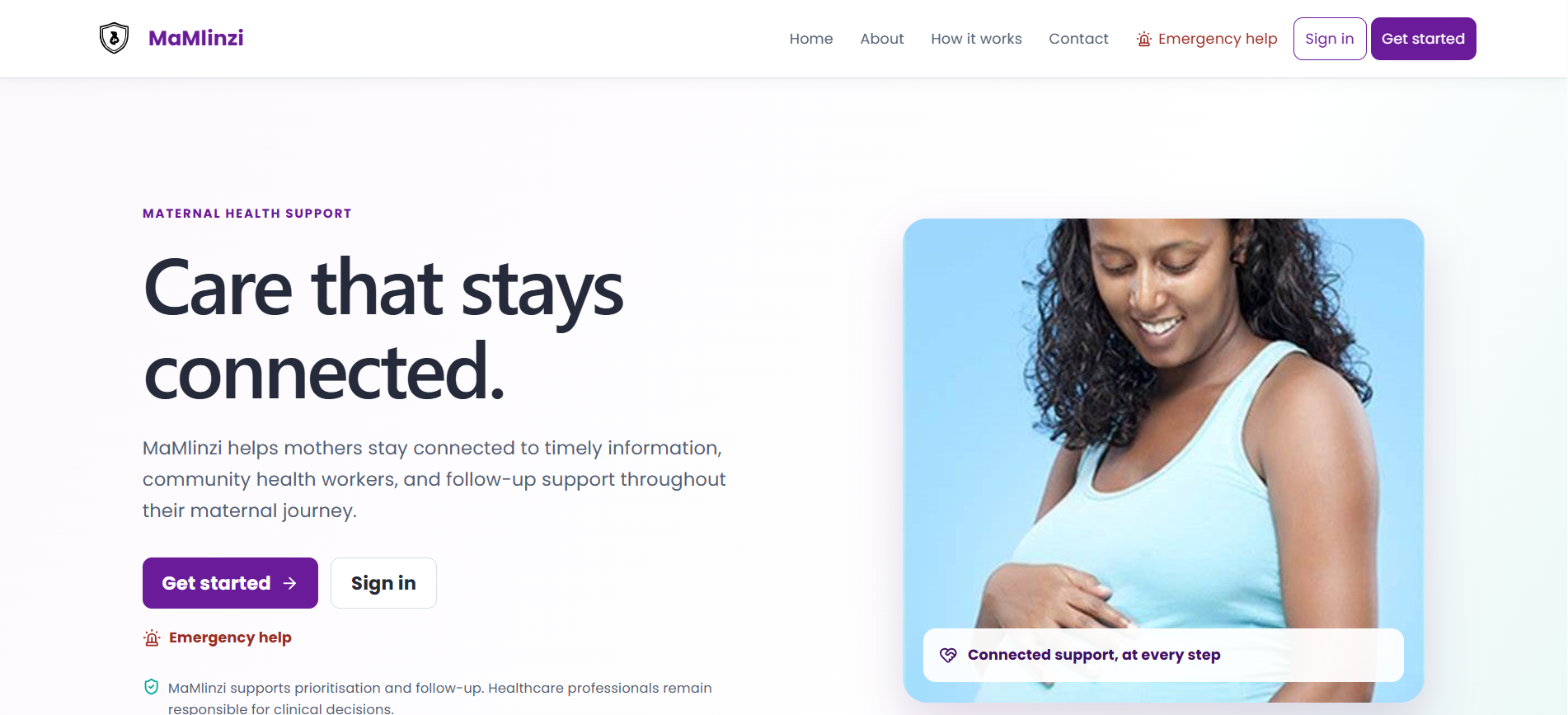
MaMlinzi - Landing Page
-
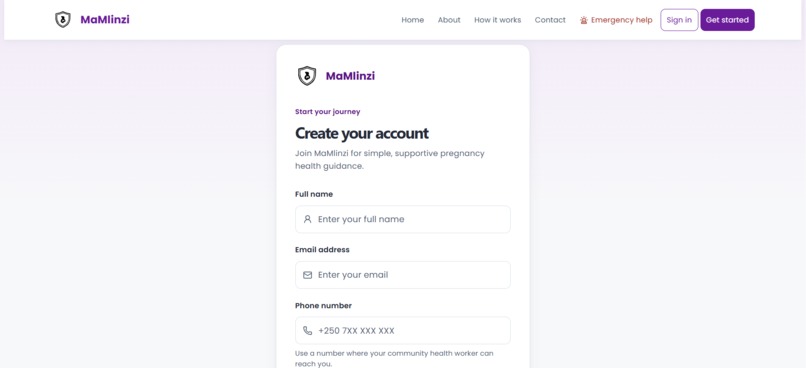
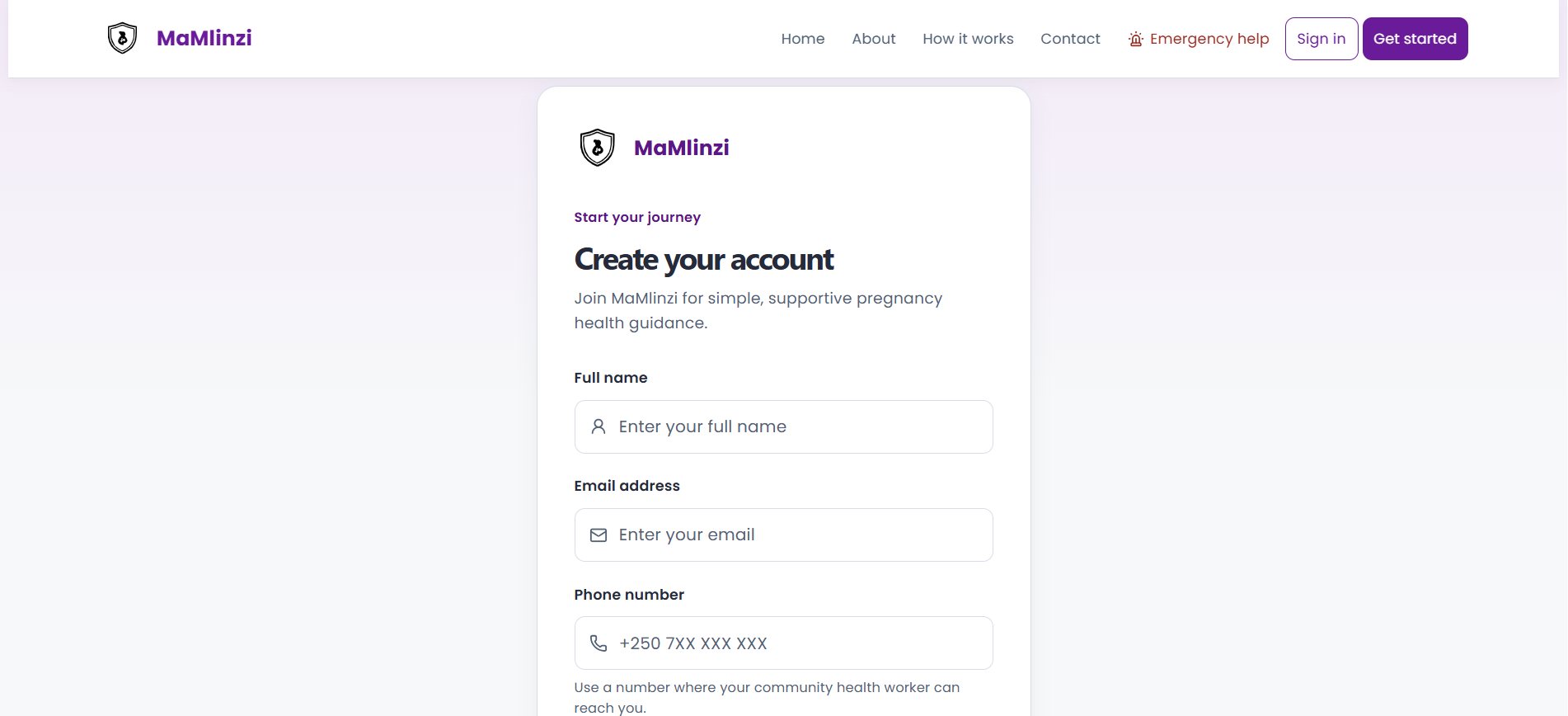
MaMlinzi - Mother's Sign Up
-
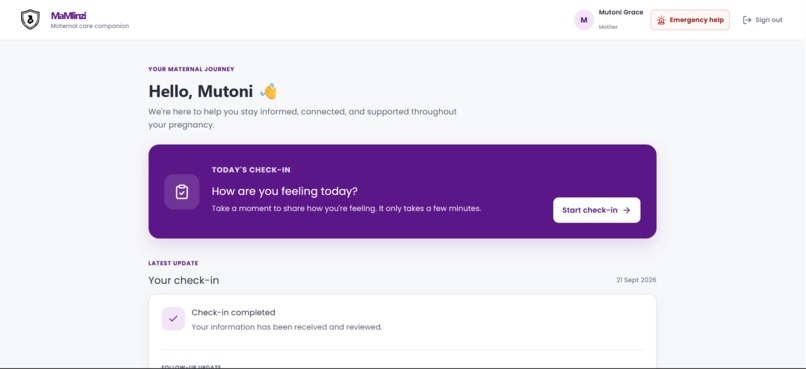
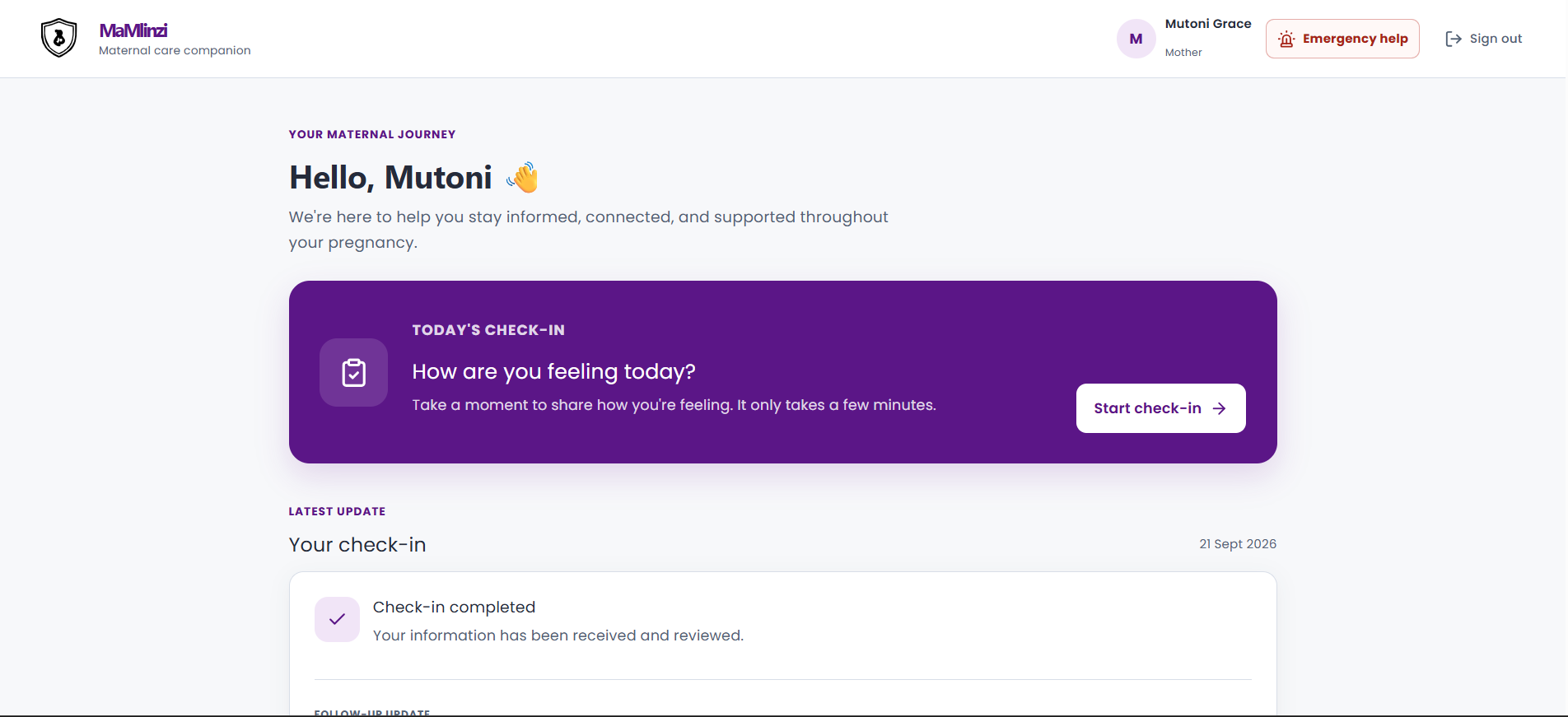
MaMlinzi - Mother Dashboard
-
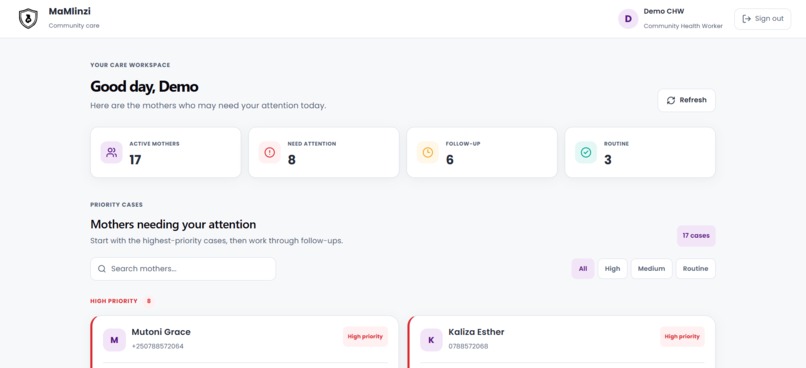
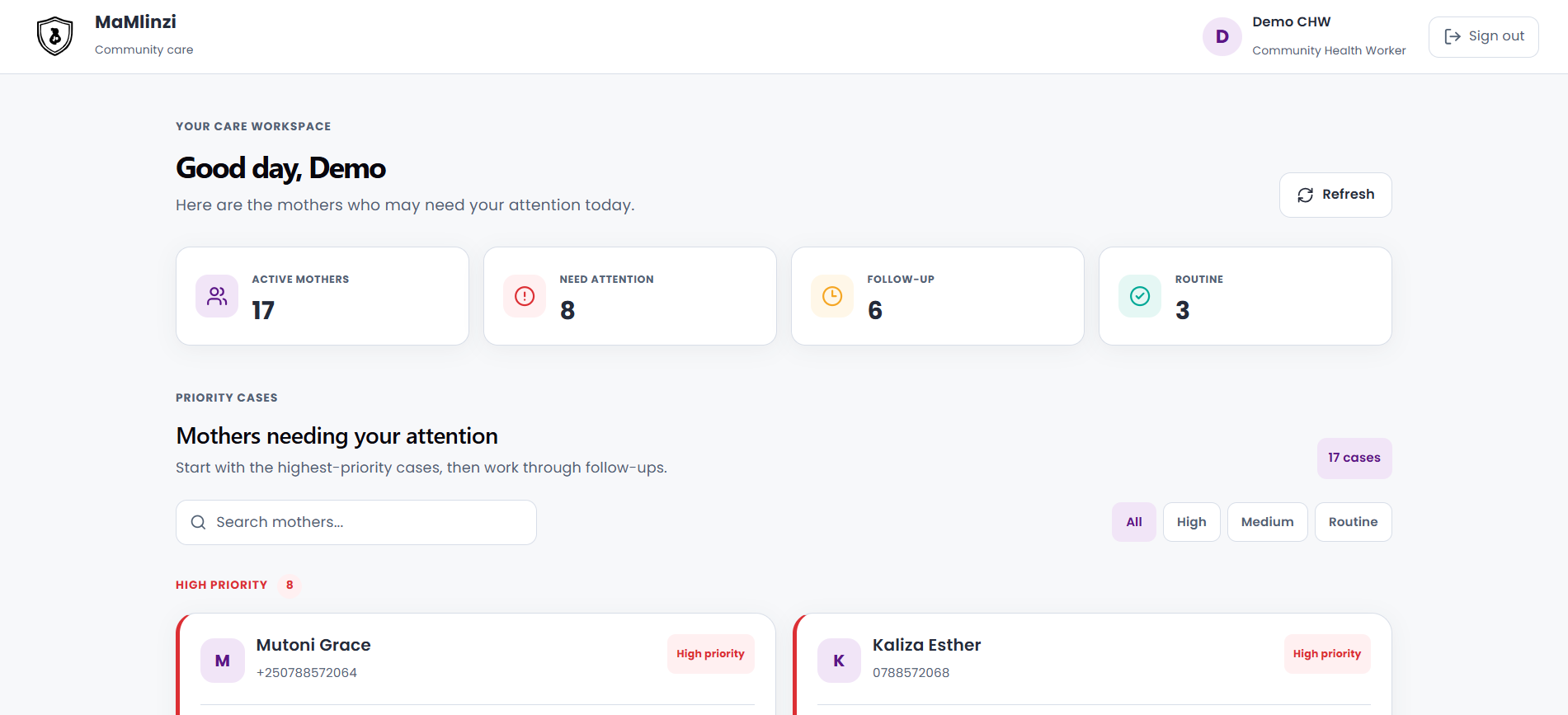
MaMlinzi - CHW Dashboard
-
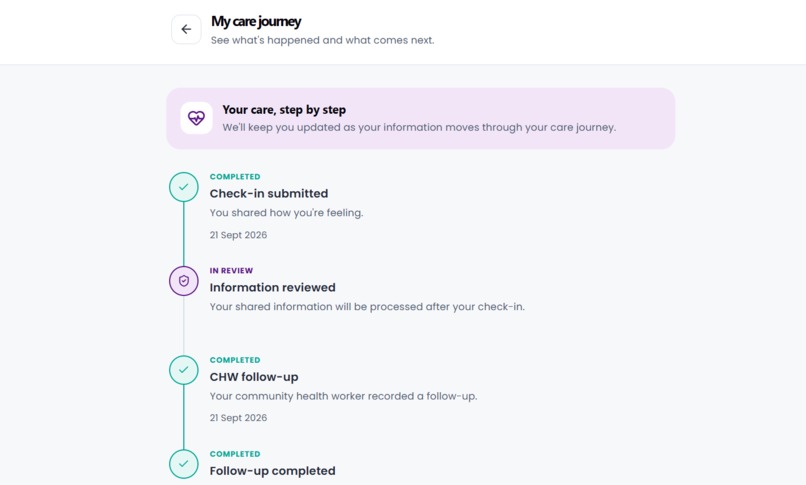
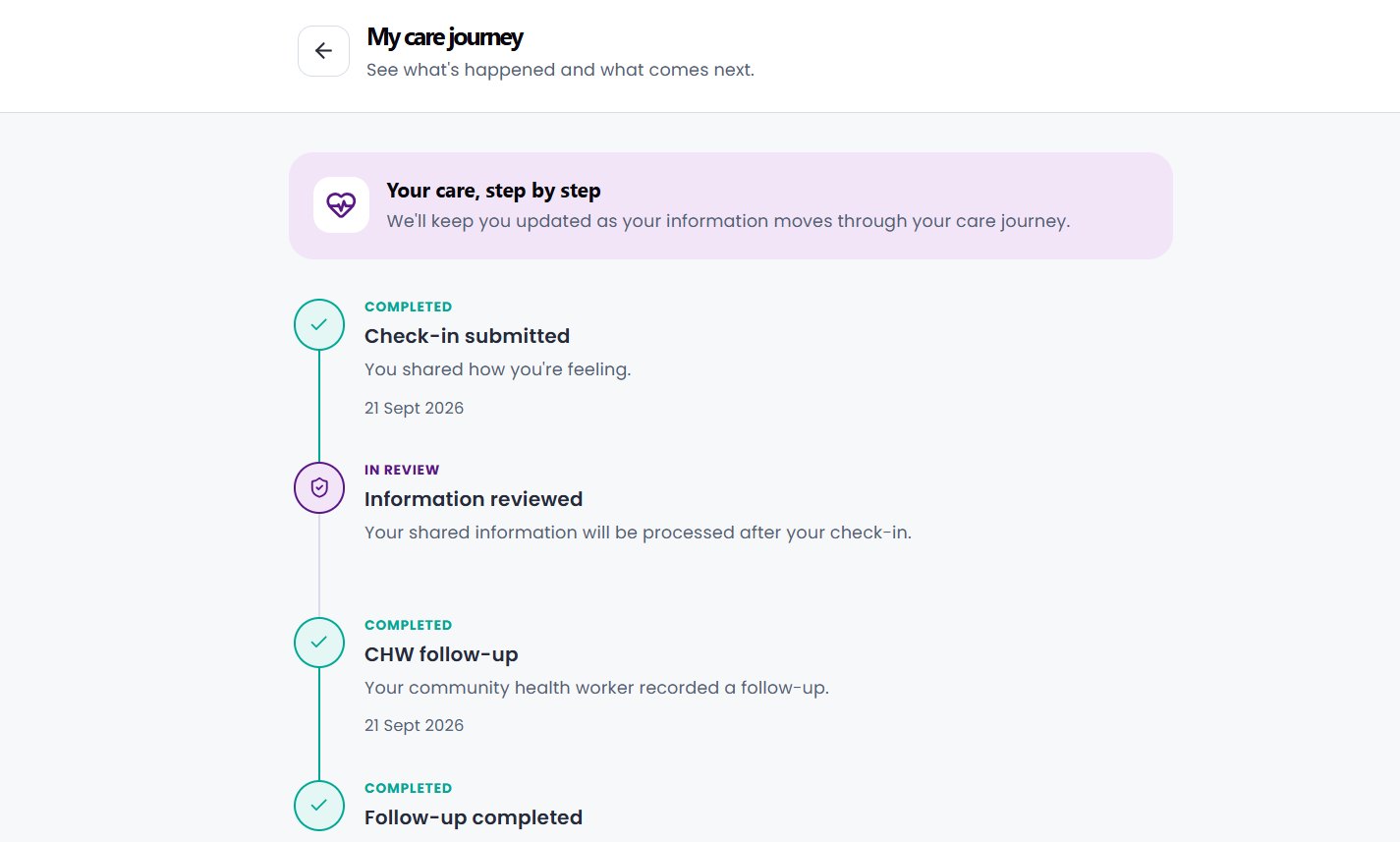
MaMlinzi - Mother's Care Journey
-
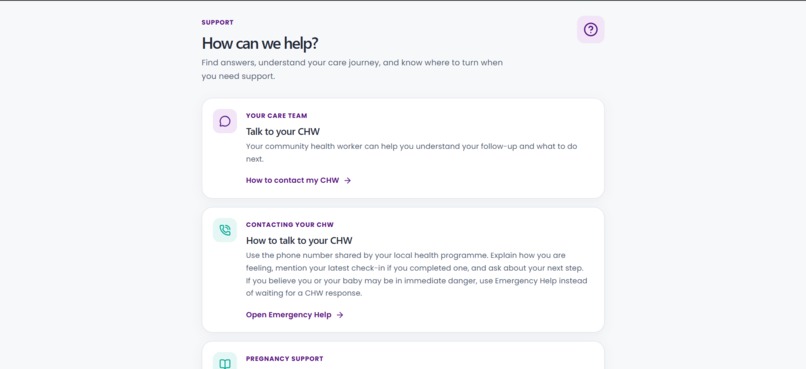
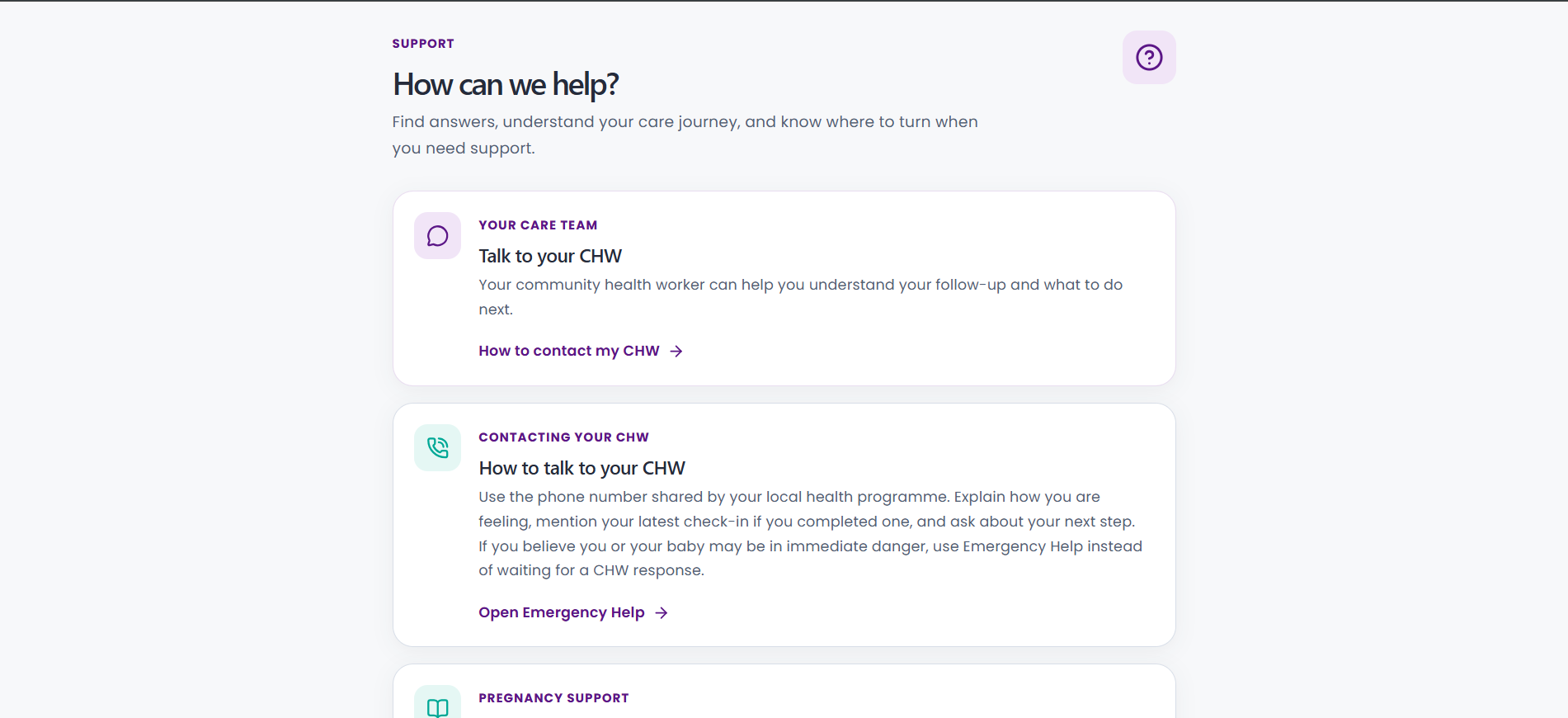
MaMlinzi - Mother's Help
-
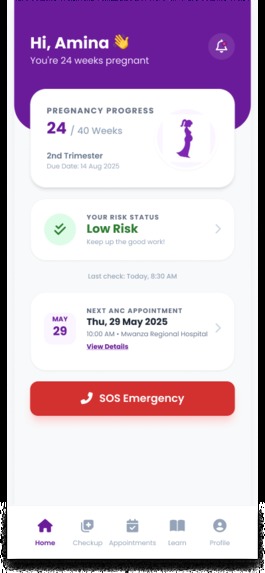
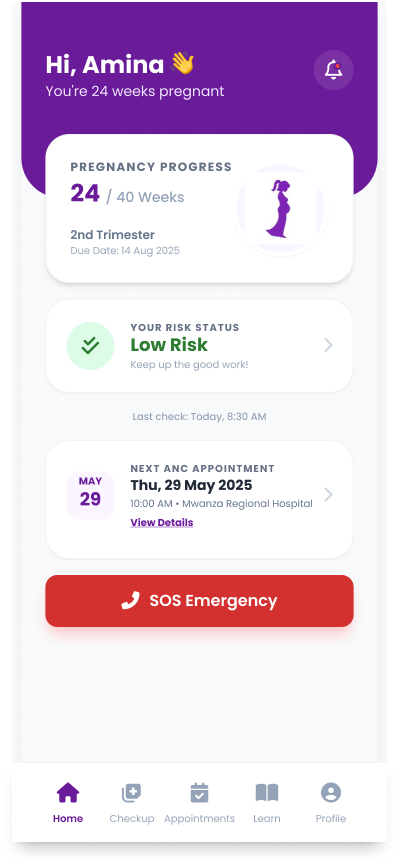
MaMlinzi - Mobile(Home / Dashboard)
-
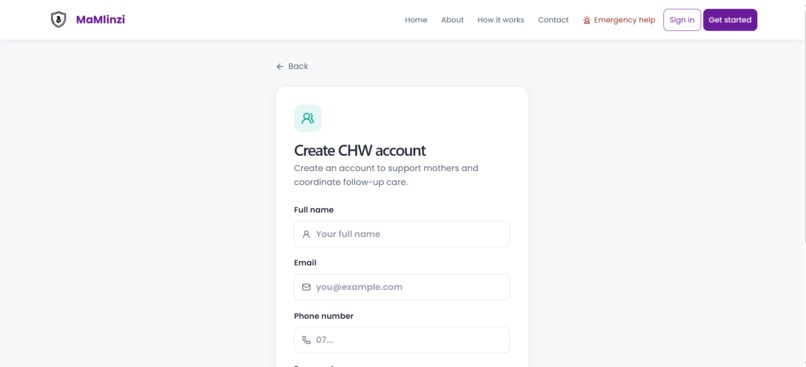
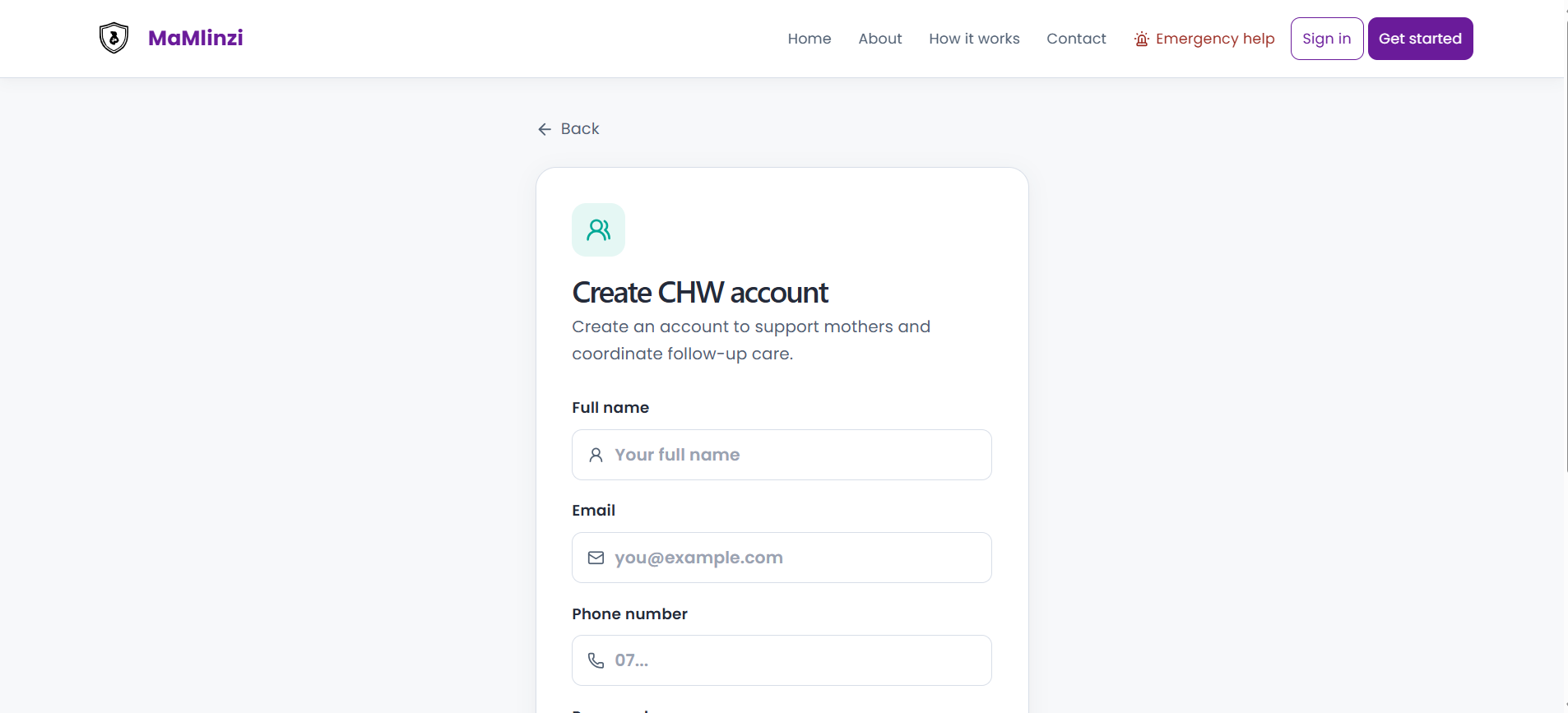
MaMlinzi - CHW Sign Up
-
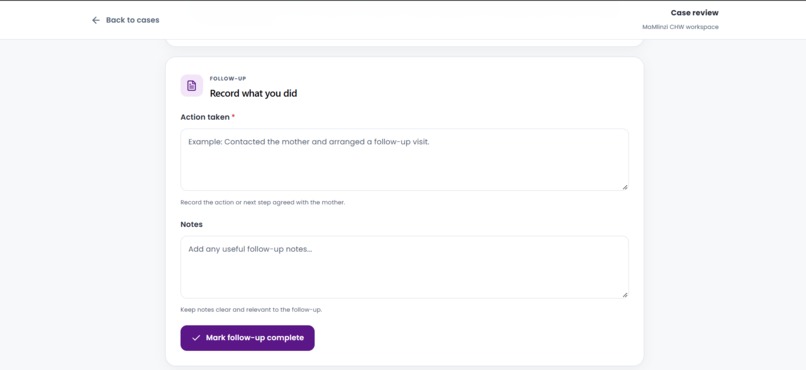
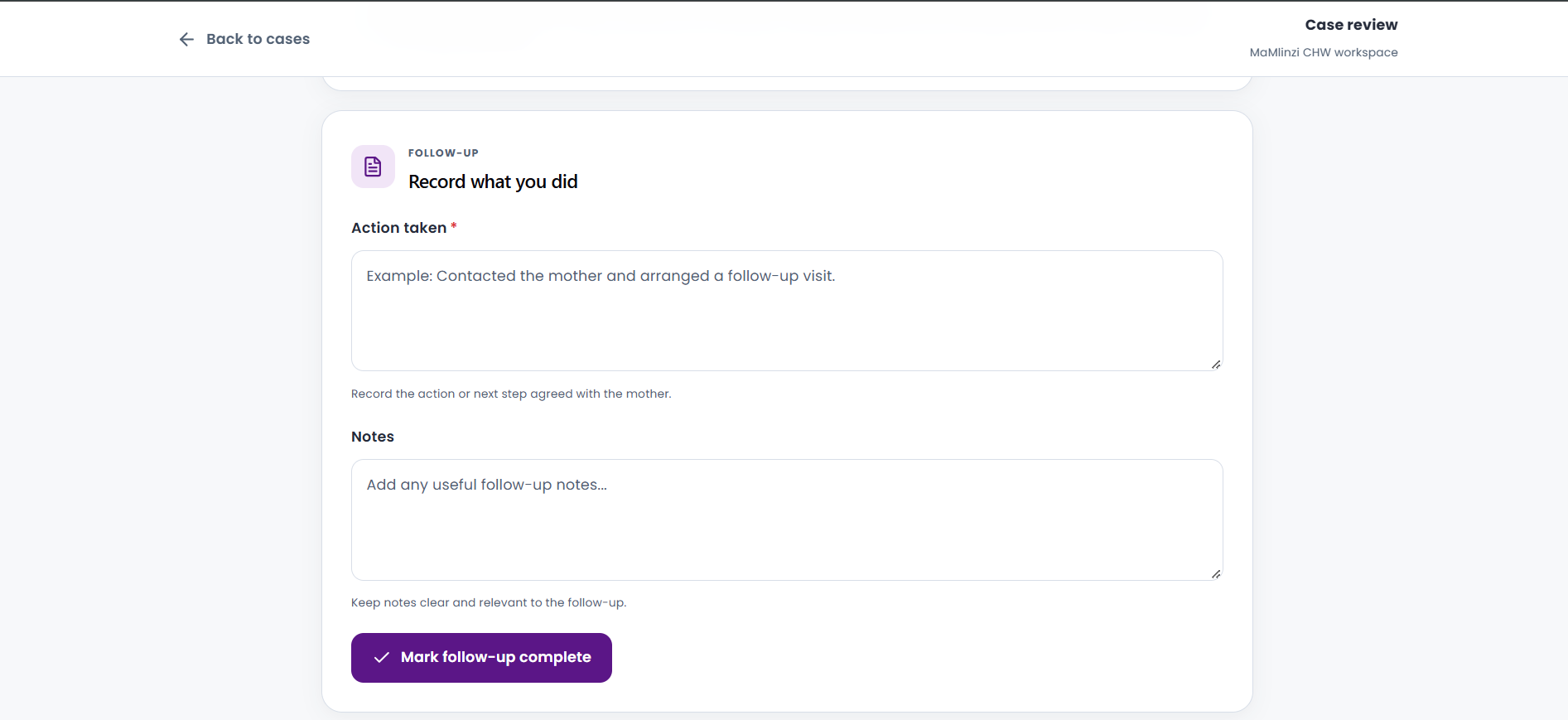
MaMlinzi - CHW Follow-up recording
-
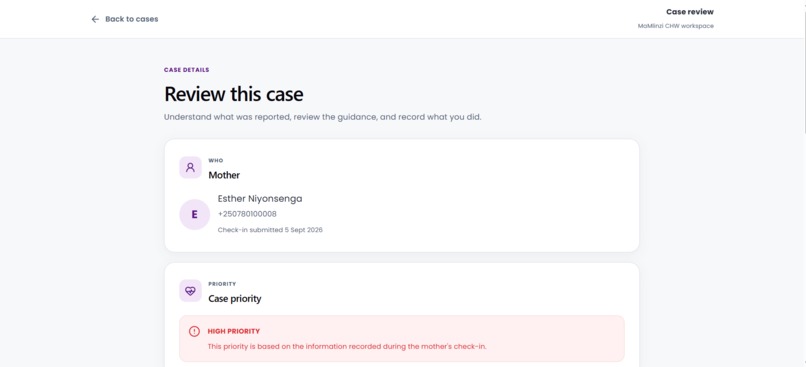
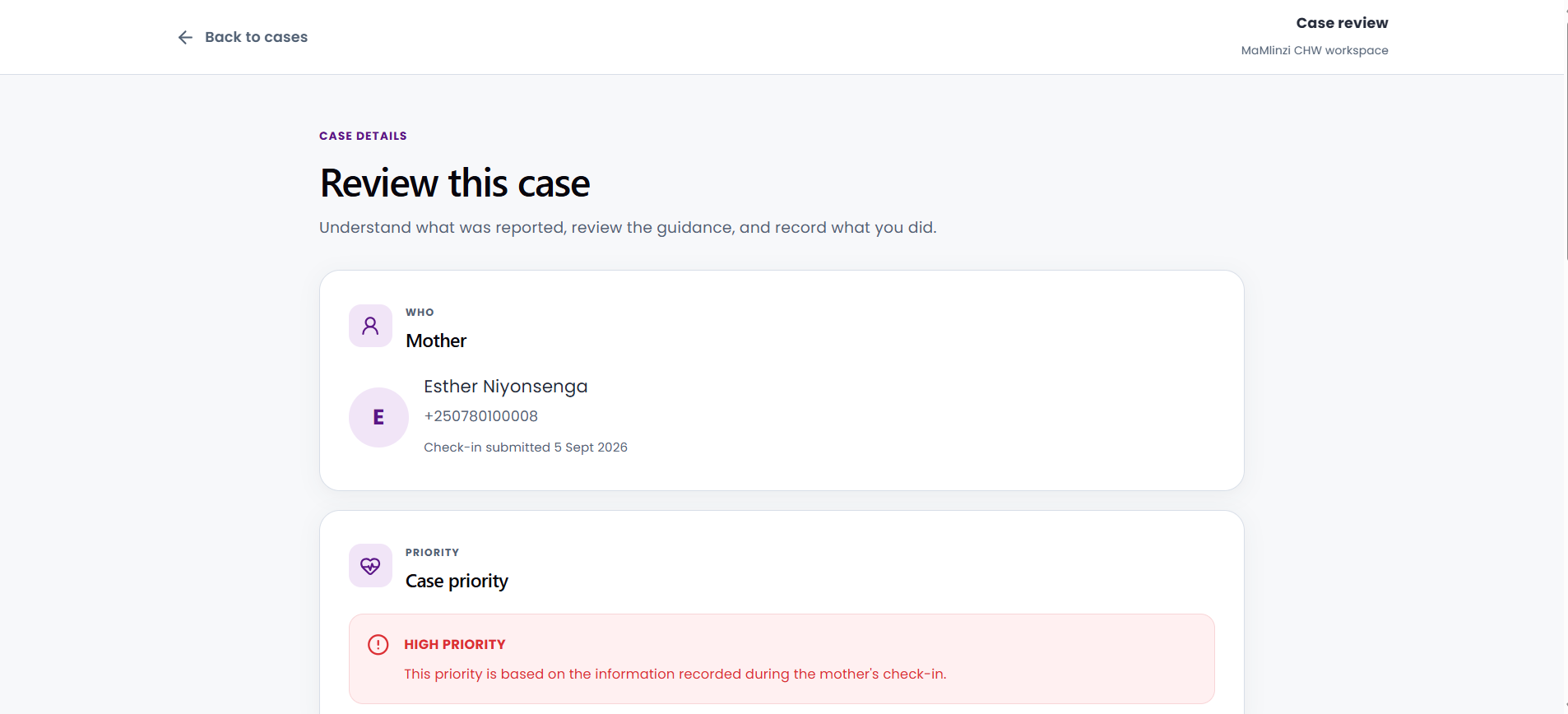
MaMlinzi - CHW Case Review
-
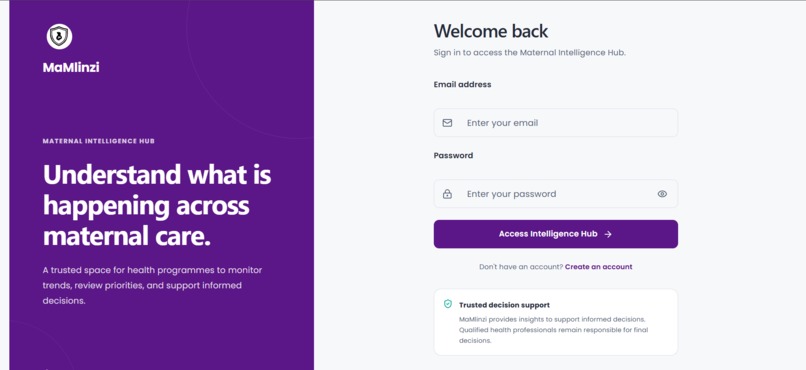
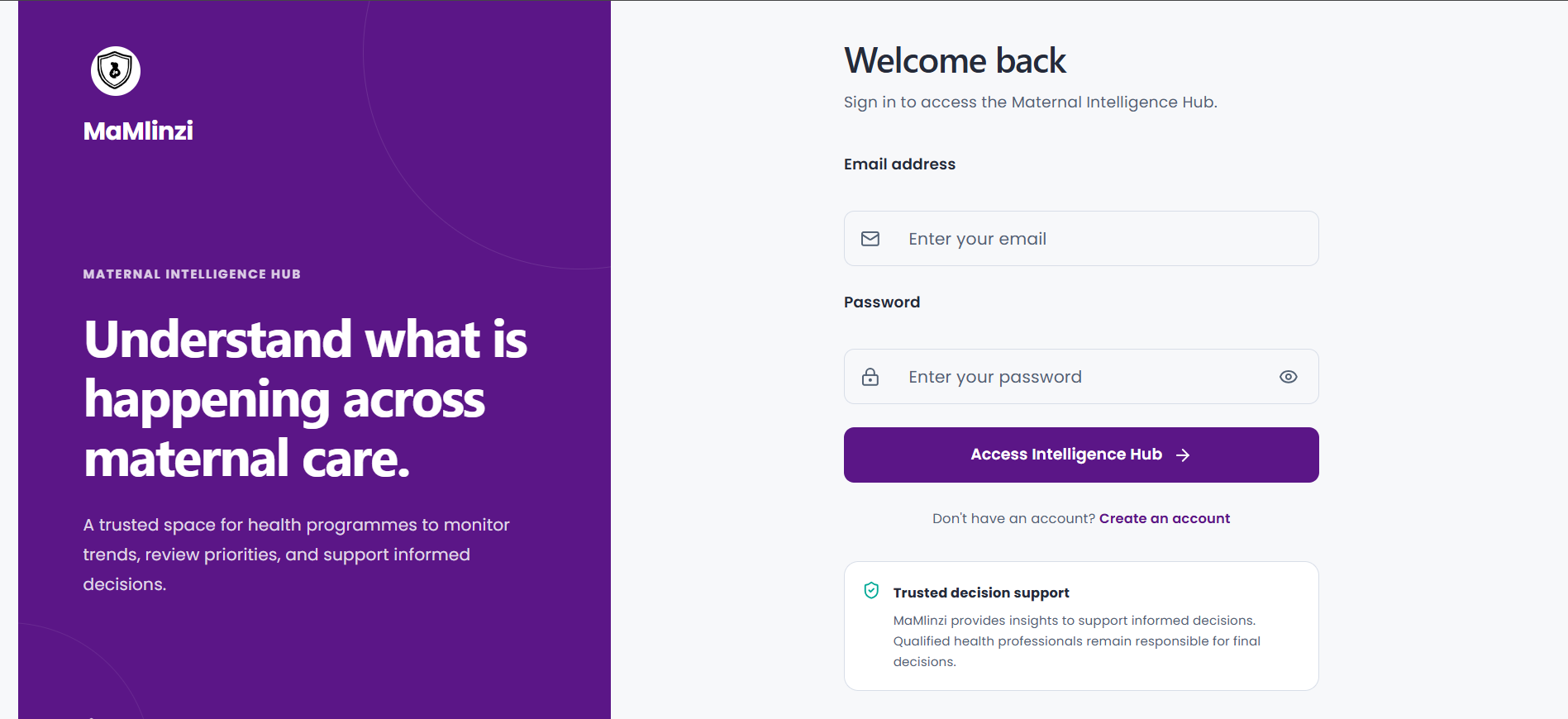
MaMlinzi - Intelligence Officer Login
-
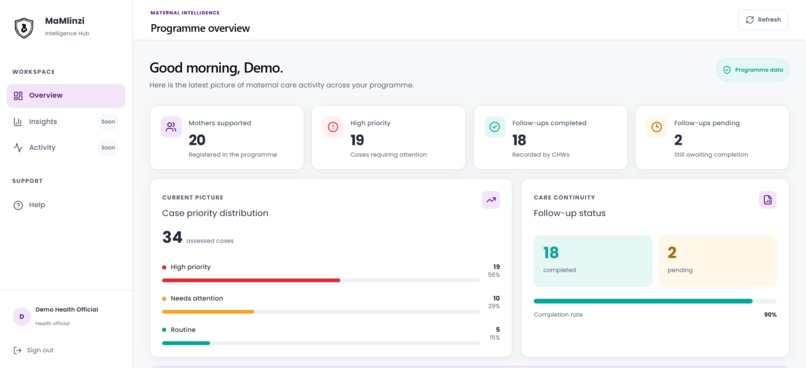
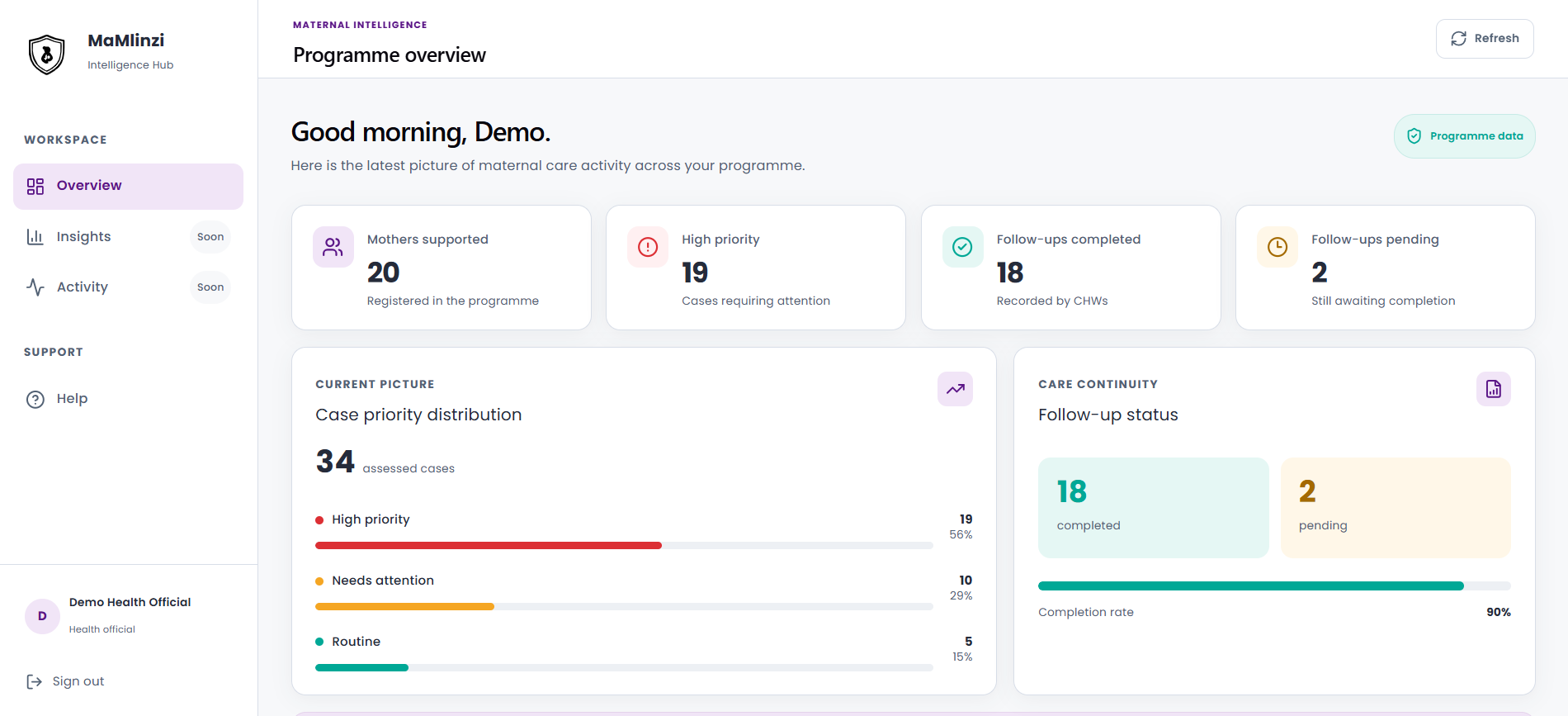
MaMlinzi - Intelligence Dashboard
-

MaMlinzi - Logo


Inspiration
MaMlinzi was inspired by a simple question: what happens when a pregnant mother experiences a warning sign, but does not know whether it is serious, what to do, or who to contact?
As I learned more about maternal health in Rwanda and across East Africa, I became interested in the gaps between recognizing a health concern and actually reaching appropriate support. A mother may have questions between appointments, live far from a health facility, have limited access to reliable health information, or hesitate to seek help because she is unsure whether a symptom is urgent.
That motivated me to explore how technology could act as a digital guardian around the mother, rather than trying to replace healthcare professionals.
MaMlinzi — meaning "guardian" — was born from that idea: a maternal health platform designed to help mothers recognize potential warning signs, access understandable health information, stay connected to community health workers, and reach emergency support when necessary.
What it does
MaMlinzi is an AI-supported maternal early-warning and care-coordination platform designed for mothers, Community Health Workers (CHWs), and health officials.
For mothers, the platform provides:
- A personalized maternal health dashboard
- Pregnancy education and health information
- Check-ins for monitoring reported symptoms
- Maternal risk awareness and warning-sign guidance
- Appointment and follow-up support
- Communication pathways to a CHW
- Emergency support that can be accessed quickly
- A way to access urgent help even before creating or logging into an account
For CHWs, MaMlinzi provides a dashboard for viewing and following up with mothers who need attention, including search and filtering tools designed around real-world names and workflows.
For health officials, the platform provides an intelligence-oriented view of maternal cases, activity, risk patterns, and insights that could eventually support better allocation of attention and resources.
The system is designed around three connected layers:
Mother → CHW → Maternal Intelligence Hub
The current MVP uses rule-based logic for maternal risk support, while the architecture leaves room for future predictive models and more advanced recommendations.
Most importantly, MaMlinzi is designed with an emergency-first principle: a woman experiencing a potentially urgent situation should not have to understand the entire application before finding help.
How we built it
MaMlinzi was built as a full-stack web MVP with a responsive interface designed for mobile phones, tablets, and desktop computers.
The frontend was developed using React and Vite, with responsive interfaces for the different user roles.
The backend was developed using Node.js and Express, with separate routes and controllers for authentication, mothers, CHWs, check-ins, follow-ups, and maternal intelligence functionality.
We used Supabase for authentication and database functionality, including user profiles and role-based access.
The application is deployed using Vercel for the frontend and Render for the backend.
The architecture separates the experiences of:
- Mothers
- Community Health Workers
- Health Officials
We also designed the system around unreliable connectivity and accessibility considerations relevant to the East African context, with the longer-term possibility of extending critical interactions through lower-bandwidth channels such as SMS/USSD.
The visual design uses a calm maternal-health-oriented identity rather than an overly technical interface, with clear navigation, accessible actions, emergency access, and responsive layouts.
Challenges we ran into
One of our biggest challenges was moving from an idea about maternal health into a functioning full-stack application.
We had to solve problems across several layers at once: frontend interfaces, backend APIs, authentication, database access, deployment, routing, environment variables, and communication between the deployed frontend and backend.
Deployment exposed several issues that were difficult to see during local development. We encountered missing imports, incorrect paths, API routing problems, authentication configuration issues, and differences between local and production environments.
Another challenge was designing an application where safety matters.
A maternal-health application cannot simply display information and assume that every situation is routine. We therefore had to think carefully about how emergency situations should be handled, how users should reach support quickly, and how the platform should communicate that it is a support tool rather than a replacement for qualified healthcare professionals.
We also had to balance ambition with what could realistically be built as an MVP.
Rather than claiming to have solved maternal health, we focused on building a tangible working foundation that demonstrates how technology could connect mothers, CHWs, and health intelligence.
Accomplishments that we're proud of
Our biggest accomplishment is turning MaMlinzi from a concept into a working deployed MVP.
The application has:
- A deployed frontend
- A deployed backend
- Working authentication
- Role-based experiences
- Mother registration and login
- Mother dashboard functionality
- CHW workflows
- Health official/intelligence workflows
- Maternal check-in functionality
- Follow-up functionality
- Emergency access
- Responsive interfaces
- Connected database functionality
- Production deployment
We are particularly proud of solving the difficult transition from development to production. The MVP is no longer only a Figma prototype or a local project — it is an accessible application that can be demonstrated and tested.
We are also proud that the project was built by a young developer who had to learn and connect multiple technologies while developing the product.
What we learned
Building MaMlinzi taught us that developing a meaningful technology solution is much more than writing code.
We learned how important it is to understand the people who will eventually use a system before deciding what features to build.
Technically, we learned about:
- Full-stack application architecture
- React and frontend development
- Node.js and Express APIs
- Supabase authentication and databases
- REST API communication
- Environment variables and production configuration
- Git and GitHub workflows
- Vercel and Render deployment
- Debugging production applications
- Responsive design
- Role-based application architecture
More importantly, we learned how much testing matters.
A feature that works on a developer's computer can still fail after deployment. We therefore learned to test complete user journeys rather than individual screens — from registration and authentication to API requests, dashboards, navigation, and error handling.
We also learned that healthcare technology requires humility. A prototype should not pretend to be a doctor. MaMlinzi is intended to support awareness, communication, and care coordination while directing users toward appropriate professional or emergency assistance.
What's next for MaMlinzi
The next stage is to move MaMlinzi from a working MVP toward a properly tested and validated solution.
Our priorities are:
Real-user testing Test the usability of the application with appropriate participants, including mothers, CHWs, and healthcare professionals, under proper supervision and ethical safeguards.
Clinical validation Work with qualified maternal-health professionals to review educational content, warning-sign logic, emergency workflows, and recommendations.
Improve emergency pathways Make urgent support even faster and explore appropriate integrations with local emergency services, health facilities, CHWs, and other verified support networks.
Low-connectivity access Explore SMS and USSD pathways so that critical maternal-health support does not depend entirely on a smartphone or reliable internet connection.
Maternal Risk Intelligence Engine Expand the current rule-based foundation toward carefully validated risk-prediction models, while keeping healthcare professionals in the loop.
Localize the experience Expand support for local languages and information relevant to mothers in Rwanda and eventually other East African communities.
Build the health intelligence layer Develop stronger aggregated insights for health officials while protecting patient privacy and avoiding unnecessary exposure of personal health information.
Measure impact Once appropriate testing is established, evaluate whether MaMlinzi actually improves awareness, follow-up, communication, and timely escalation of maternal-health concerns.
Our long-term vision is not to replace the healthcare system.
It is to build a digital layer of support around the mother, helping her know what to do, helping CHWs know who may need attention, and helping health systems see where support may be needed.


Log in or sign up for Devpost to join the conversation.