-
-
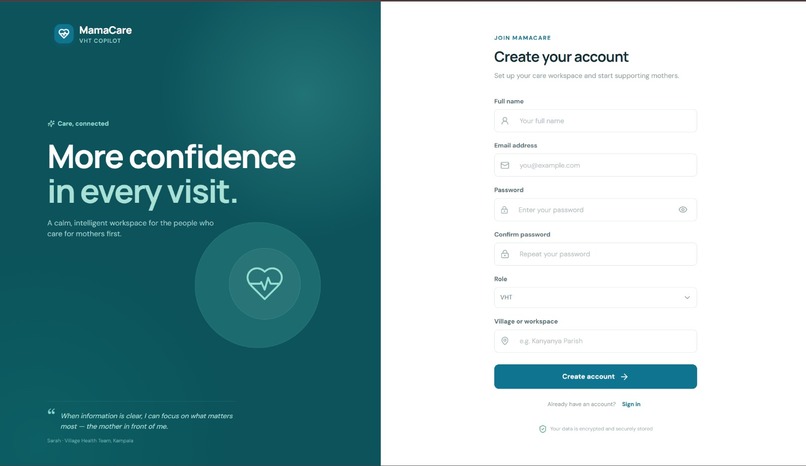
Create an account/Login page
-
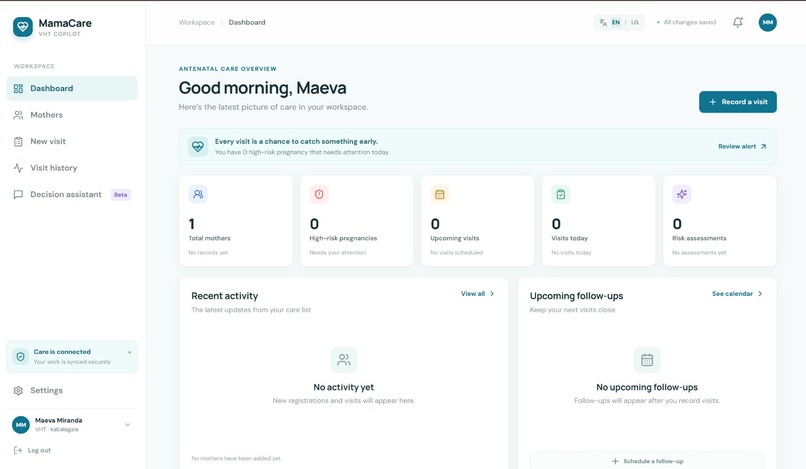
dashboard
-
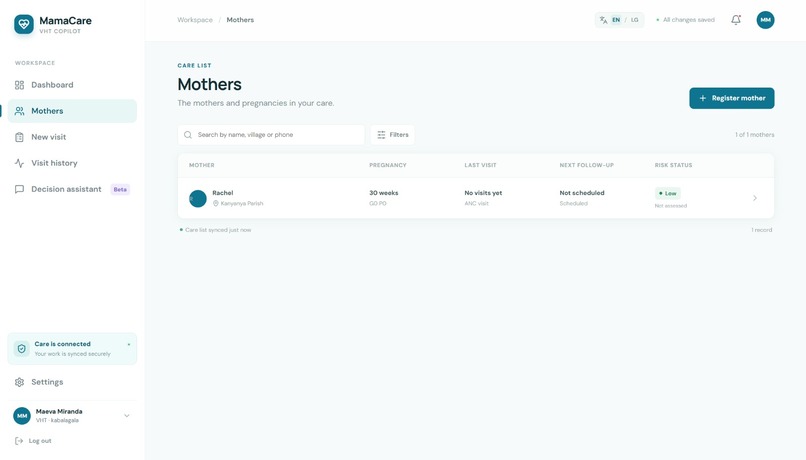
Recorded mothers
-
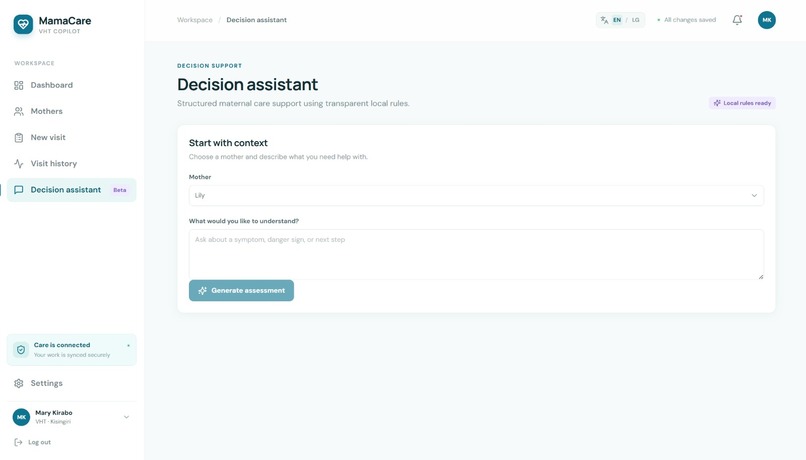
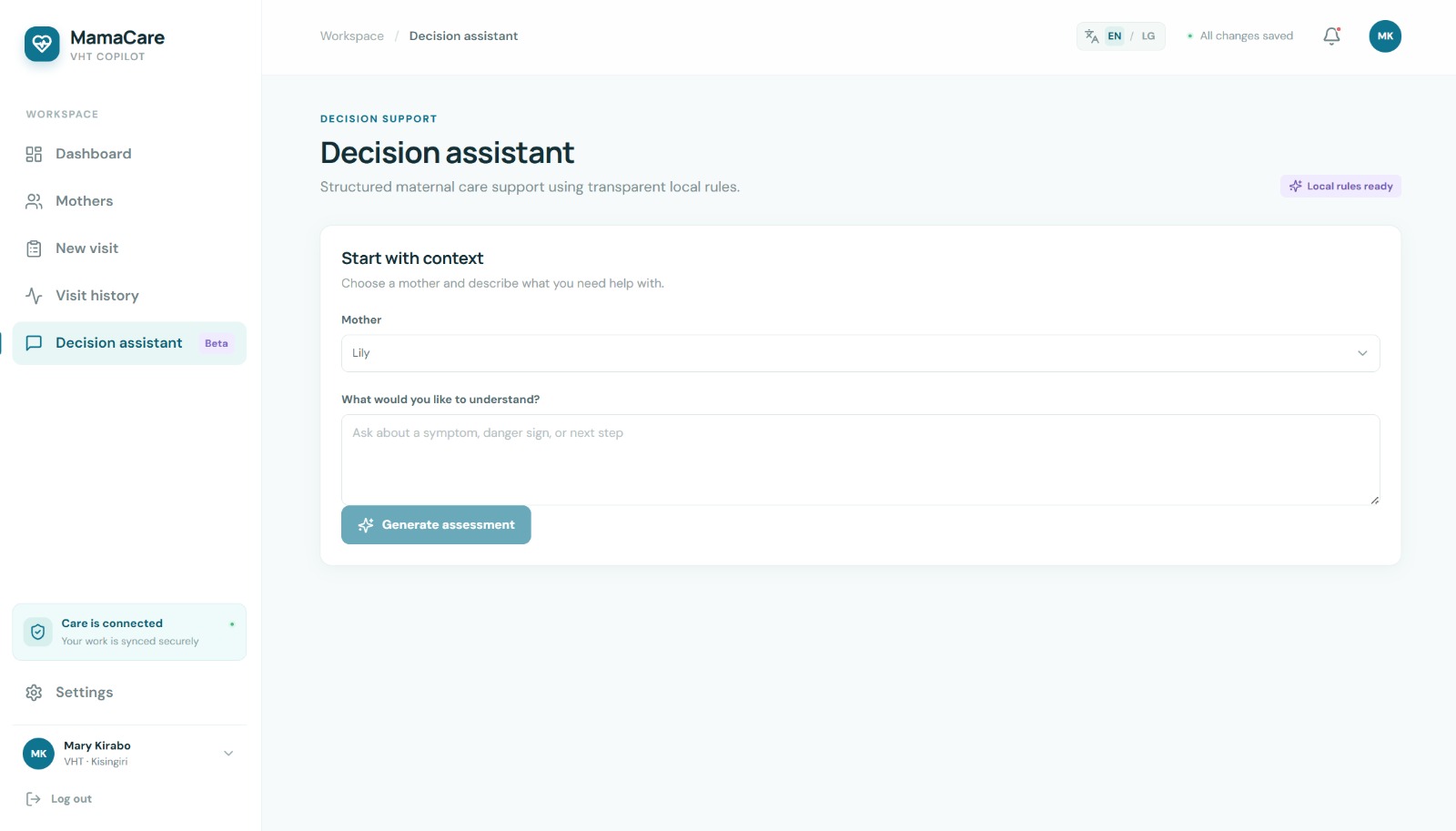
Decision assistant dashboard


Inspiration
In Uganda, pregnancy remains a serious risk for many women and babies. The country records about 189 maternal deaths per 100,000 live births, and a Ugandan woman faces approximately a 1 in 66 lifetime risk of dying from maternal causes.
Many of these deaths result from pregnancy complications that become fatal when warning signs are missed or care is delayed. This is especially common in rural and underserved communities, where pregnant women may not receive consistent follow-up. One missed visit can mean a missed danger sign, a delayed referral, and the preventable loss of a mother or baby.
Village Health Teams often rely on paper ANC cards, handwritten notes, and limited clinical support, making it difficult to maintain complete pregnancy records and escalate high-risk cases quickly. This inspired us to build MamaCare VHT Copilot, a web application built with Codex and GPT-5.6 that helps VHTs maintain pregnancy records, assess vital signs using local rules, identify danger signs, monitor antenatal visits, and support timely referrals
What it does
MamaCare helps Village Health Team workers follow up with pregnant women throughout their pregnancies. It captures maternal health information entered into the app, including symptoms, vital signs, danger signs, pregnancy details, and visit notes. A transparent local rule engine combines the recorded information to classify pregnancy risk, identify possible complications and danger signs, and recommend immediate actions, referrals, counselling, and follow-up. The VHT reviews the structured guidance, makes the final decision, and saves the visit for continued pregnancy monitoring and referral tracking. The interface includes bundled English and Luganda translation supporting earlier danger-sign detection, timely referrals, and safer antenatal care.
How we built it
MamaCare was built as a web application using React, Vite, and Tailwind CSS for the user interface. An Express.js backend manages the application API, authentication, maternal records, visits, structured assessments, and referrals. SQLite stores the healthcare data, while JWT authentication and password hashing provide secure user access. We used Codex and GPT-5.6 throughout development to analyze the codebase, design and refine the maternal-health workflow, implement features, debug issues, and strengthen the project documentation. At runtime, a transparent local rule engine evaluates vital signs, symptoms, pregnancy observations, and danger signs. English and Luganda interface content is bundled directly in the application.
Challenges we ran into
We faced challenges designing safe and transparent risk rules, handling incomplete clinical data, localizing the interface, securing patient records, and supporting low-connectivity environments.
Accomplishments that we're proud of
We are proud that we identified a real gap in pregnancy follow-up and antenatal-care support and successfully built a secure, mobile-first maternal-health platform with transparent local risk assessment, early danger-sign detection, structured referral guidance, English–Luganda support, and pregnancy monitoring without runtime API dependencies.
What we learned
We learned that responsible healthcare AI must support human decisions rather than replace them. Strong safety rules, accurate records, clinical review, and clear explanations are more important than simply generating intelligent responses.
What's next for MamaCare VHT Co-pilot
Next, We plan to pilot MamaCare with VHTs and maternal-health professionals in Uganda, then use their feedback to improve the platform. Future work includes responsible AI-powered assessments based on locally approved antenatal-care guidelines, expanded local-language support, offline access, SMS reminders, referral follow-up, and integration with health facilities and national health-information systems.
Built With
- codex
- express.js
- react
- sqlite
- tailwindcss


Log in or sign up for Devpost to join the conversation.