-
-
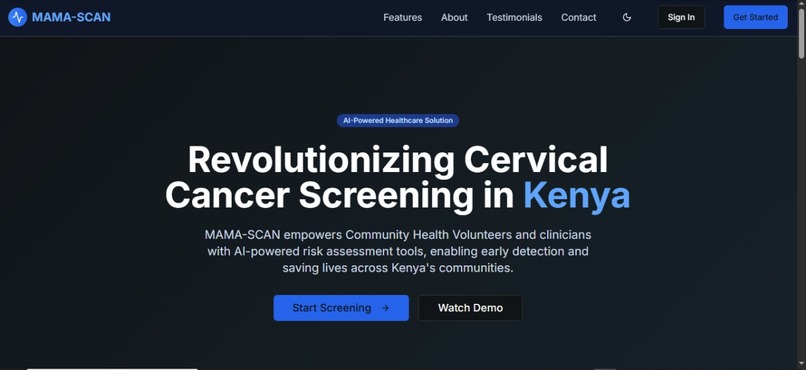
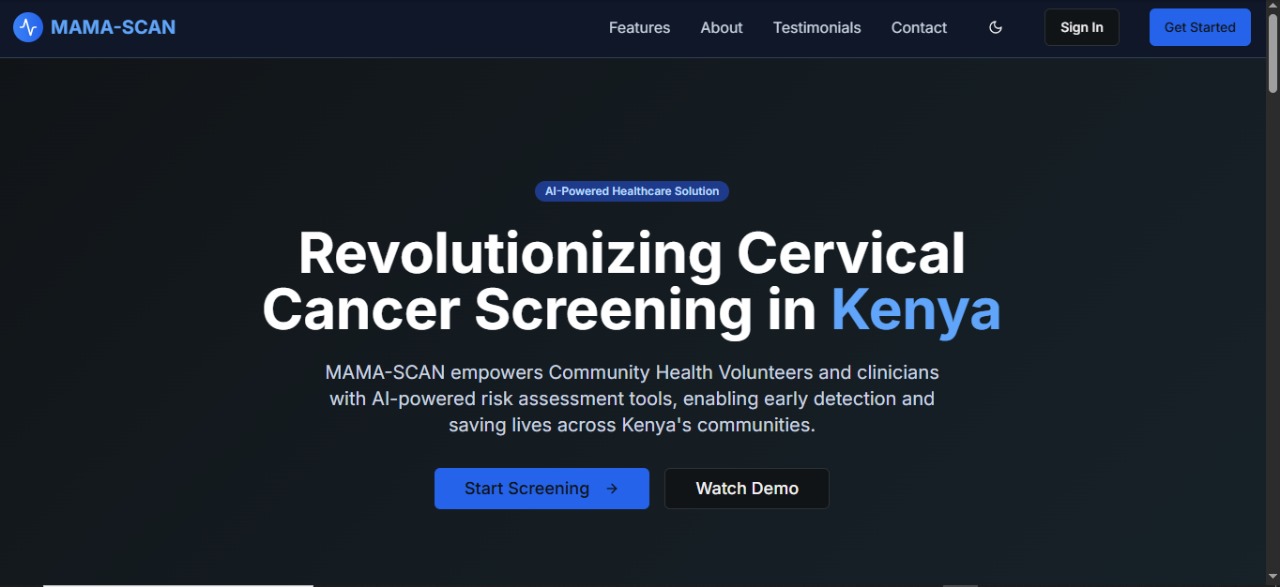
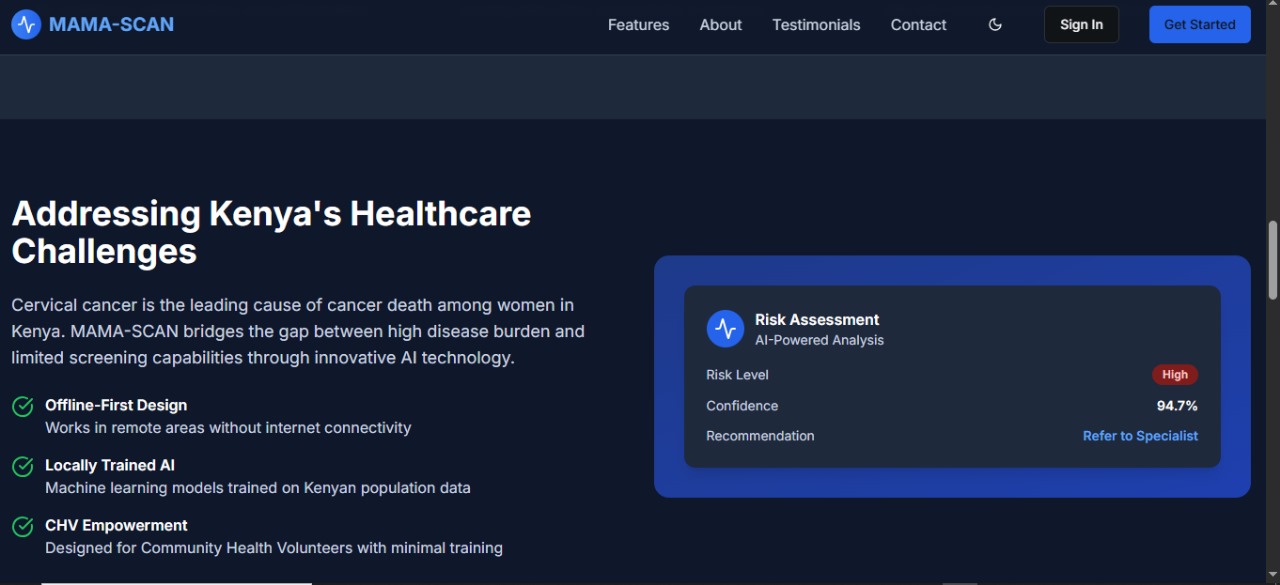
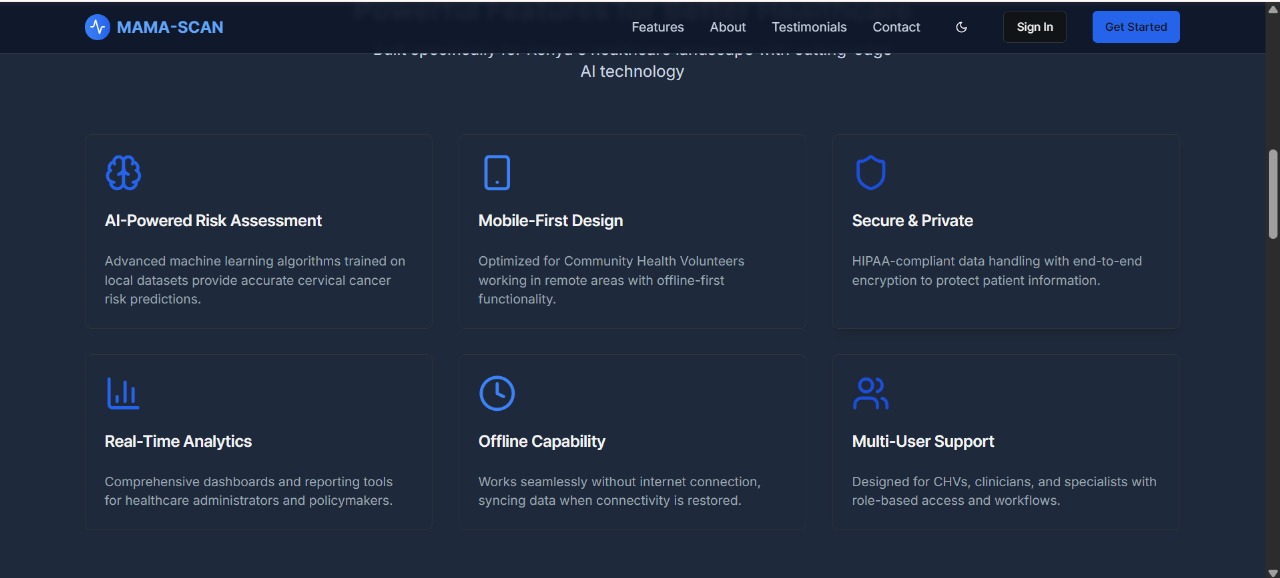
Mama Scan landing page - dark mode
-
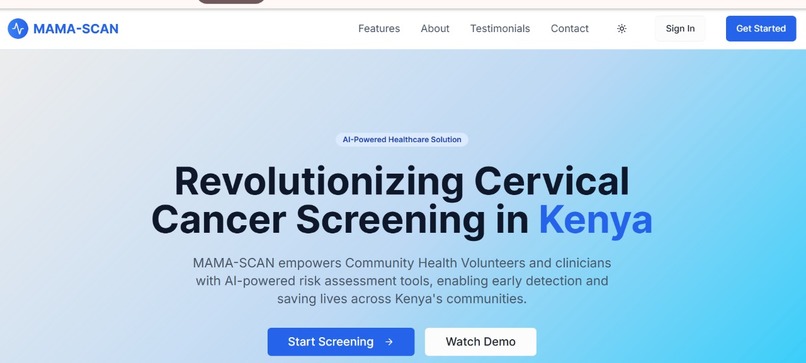
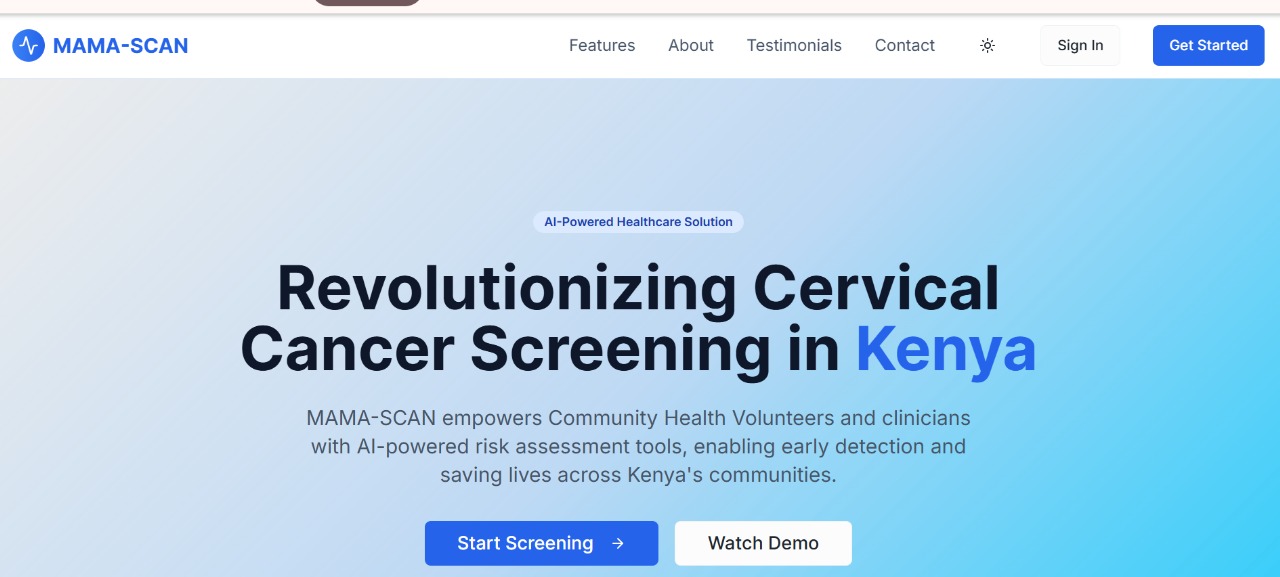
Mama Scan landing page - light mode
-
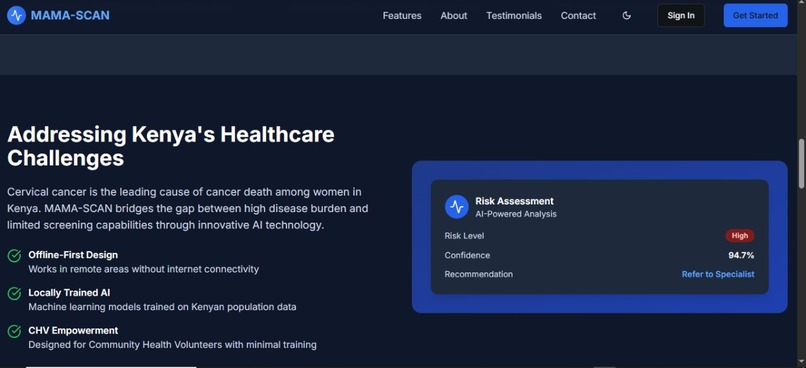
Mama Scan
-
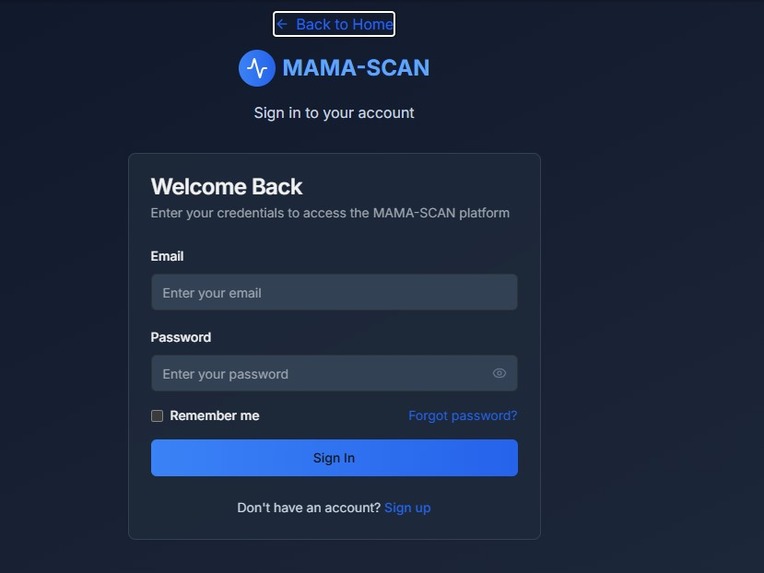
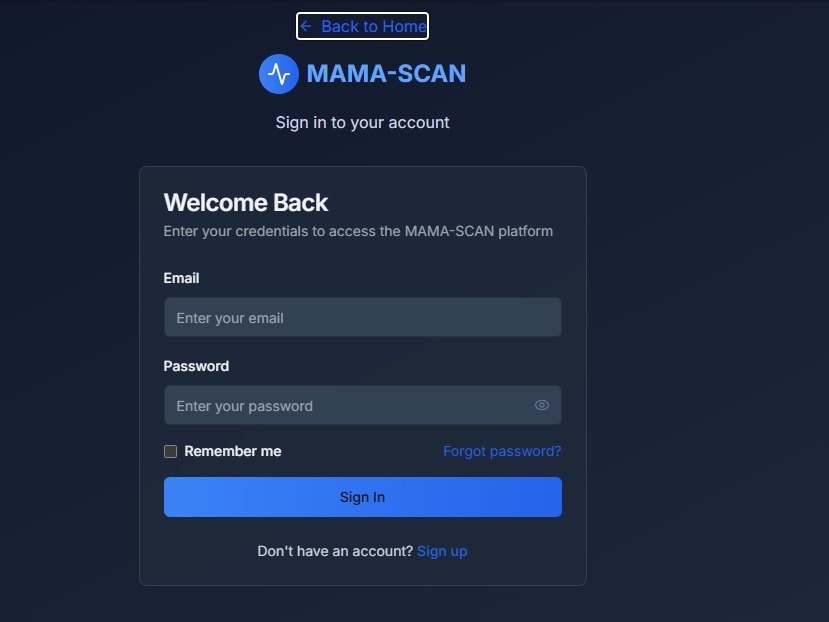
Sign in/Sign up page
-
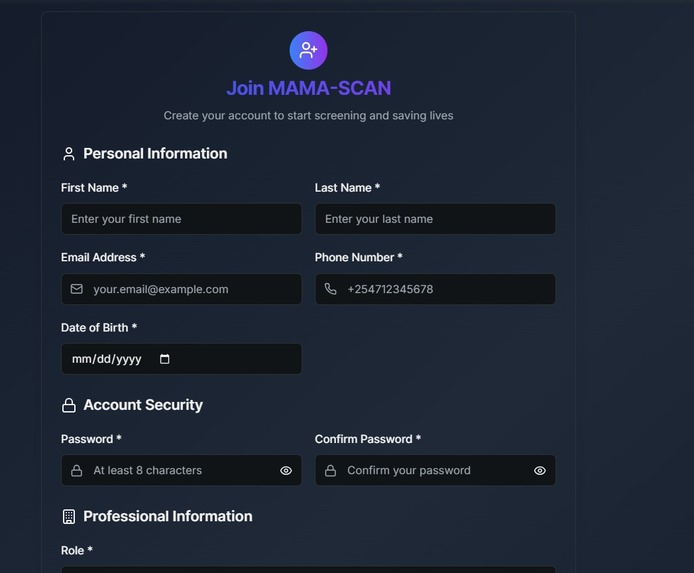
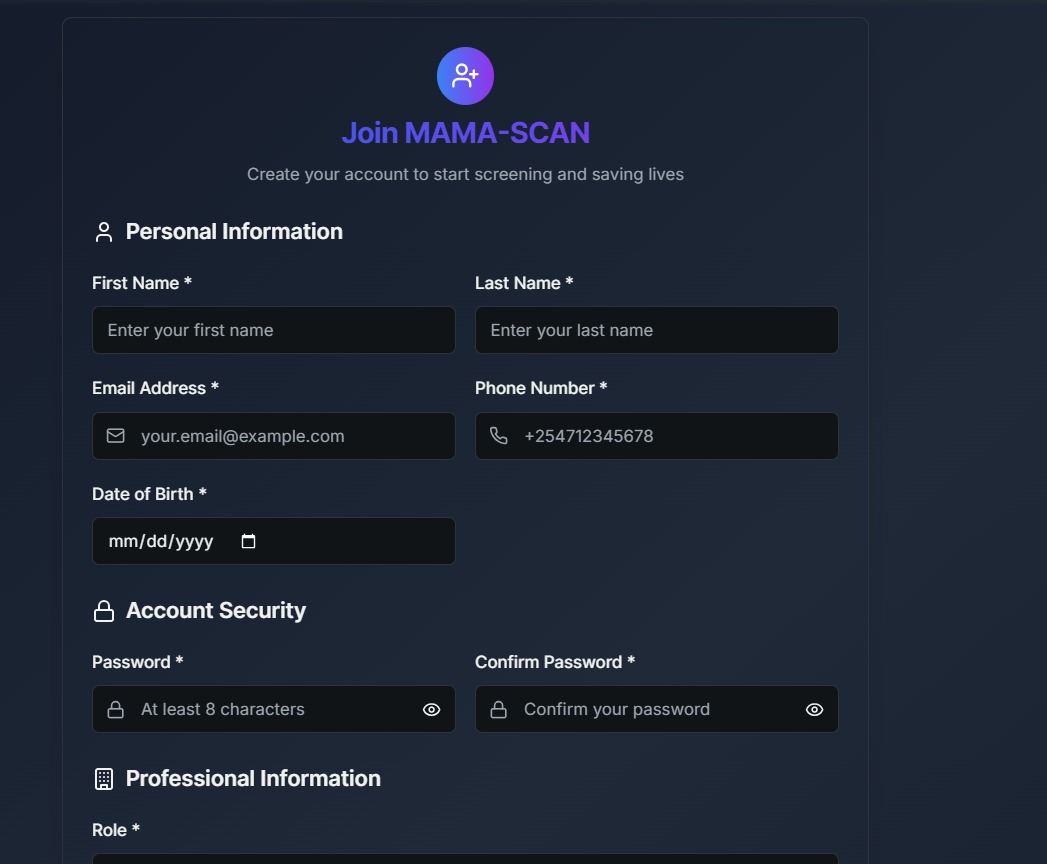
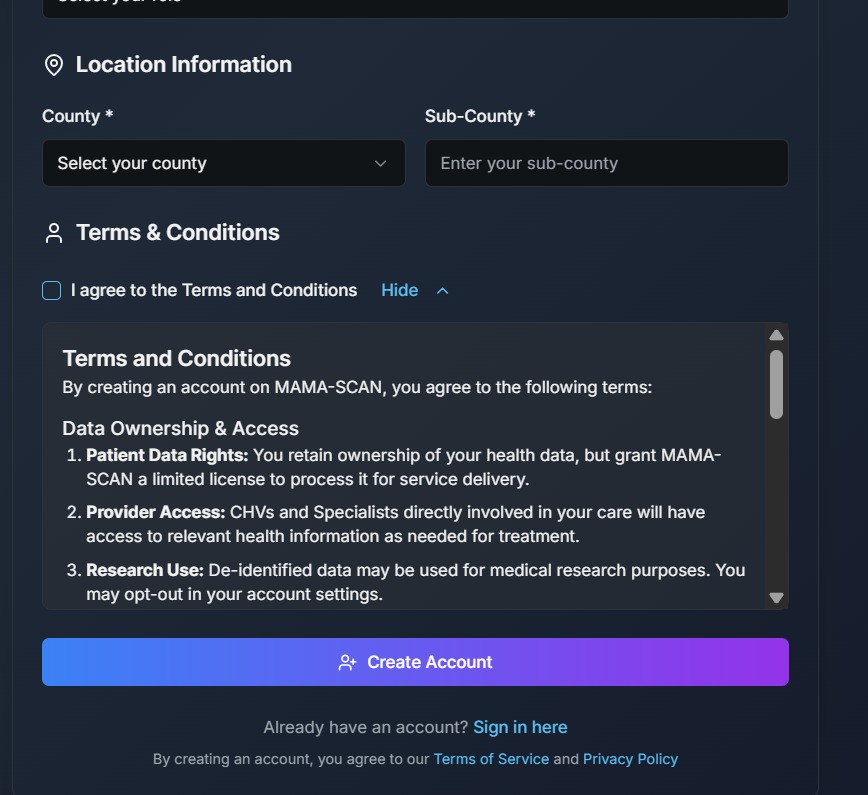
Sign up
-
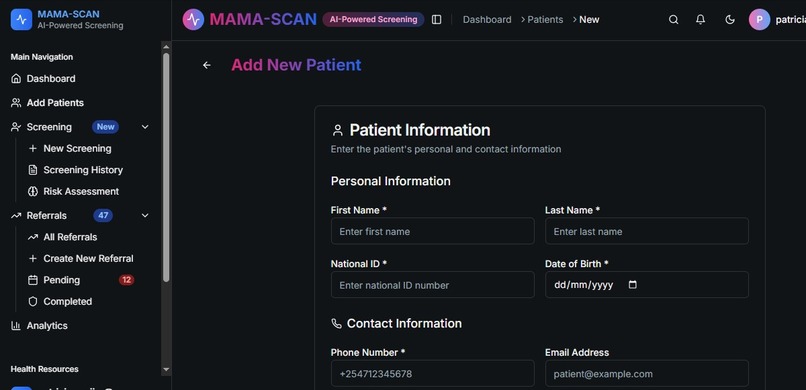
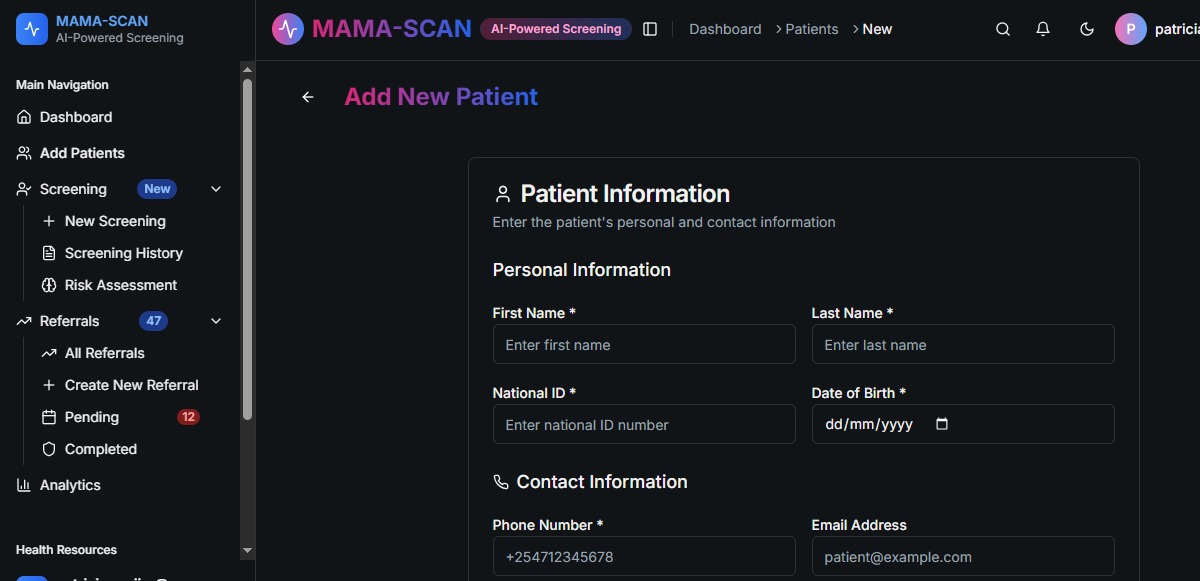
Add new patient
-
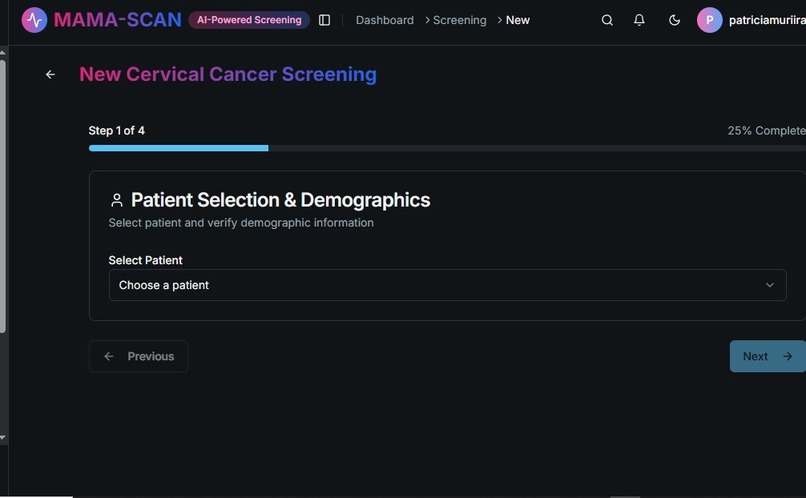
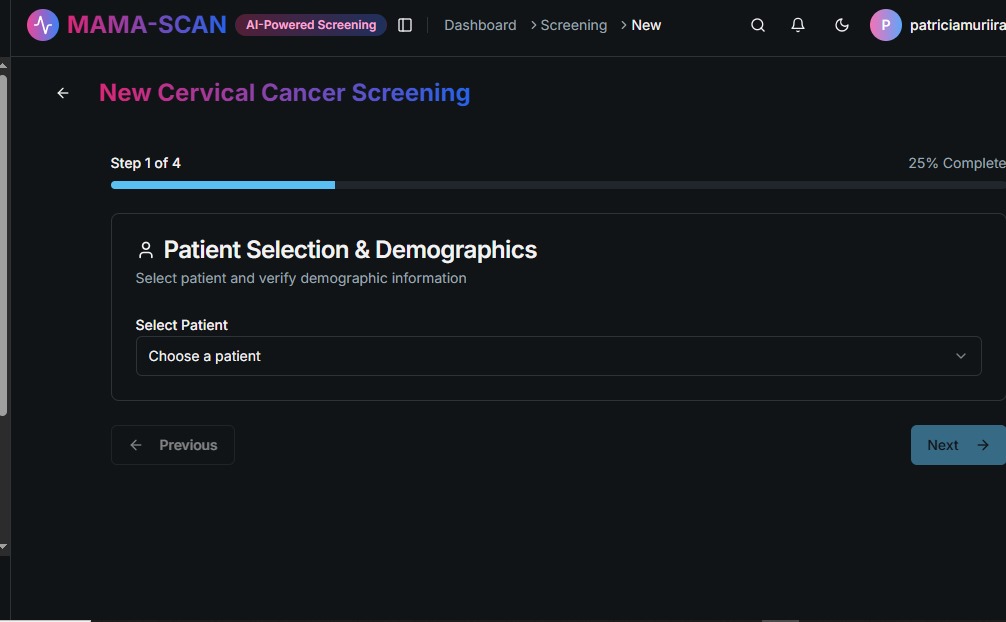
Cervical Cancer Screening step 1
-
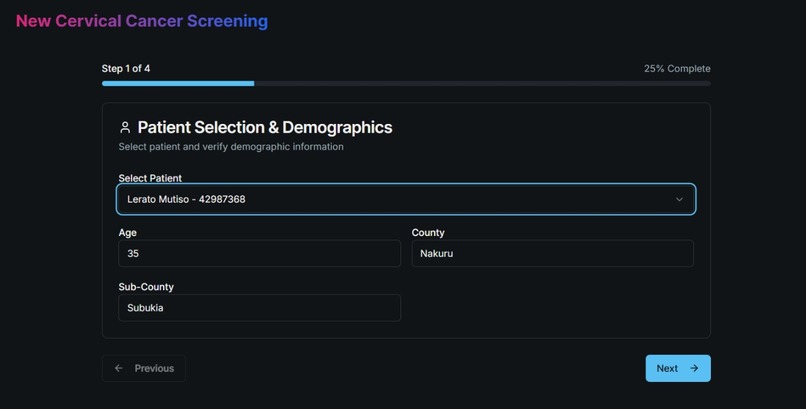
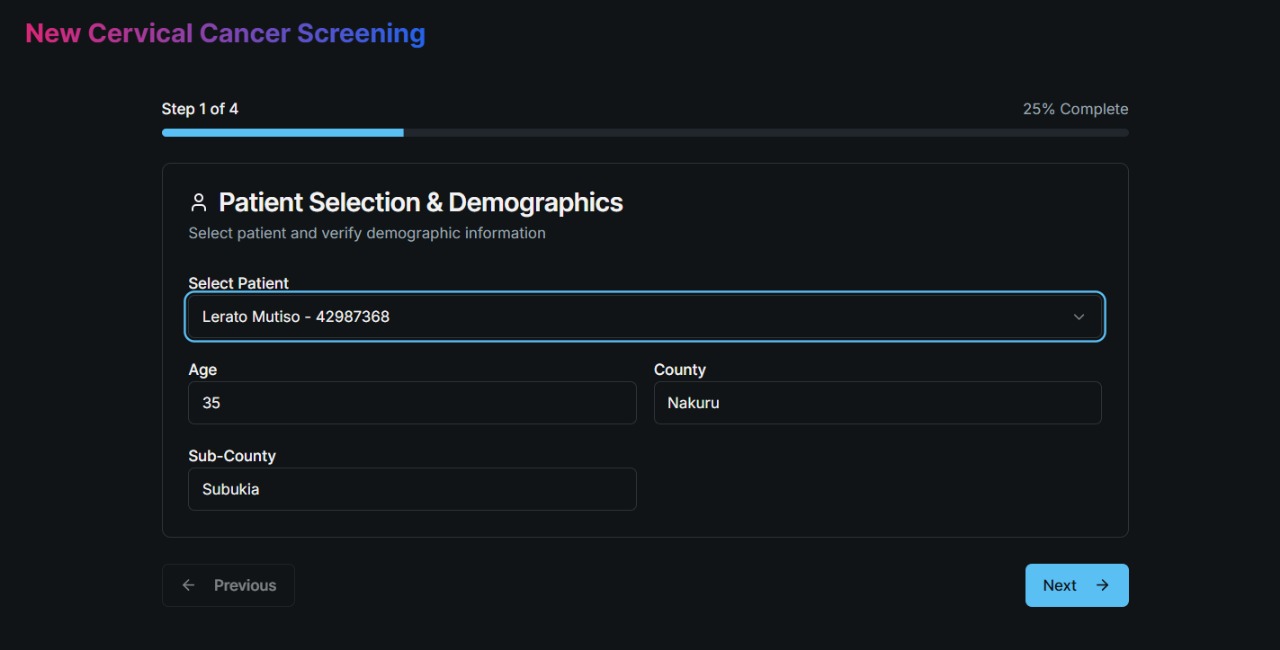
Cervical Cancer Screening step 1.5
-
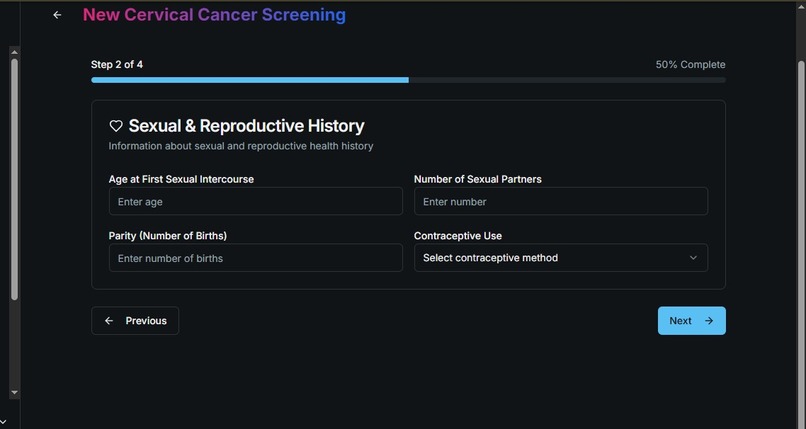
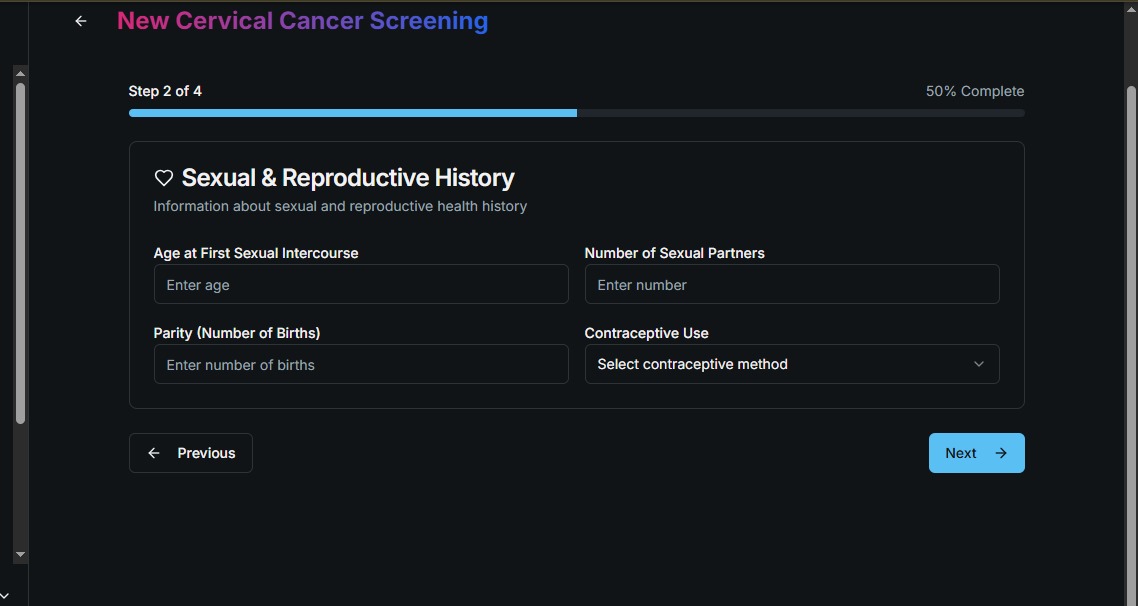
Cervical Cancer Screening step 2
-
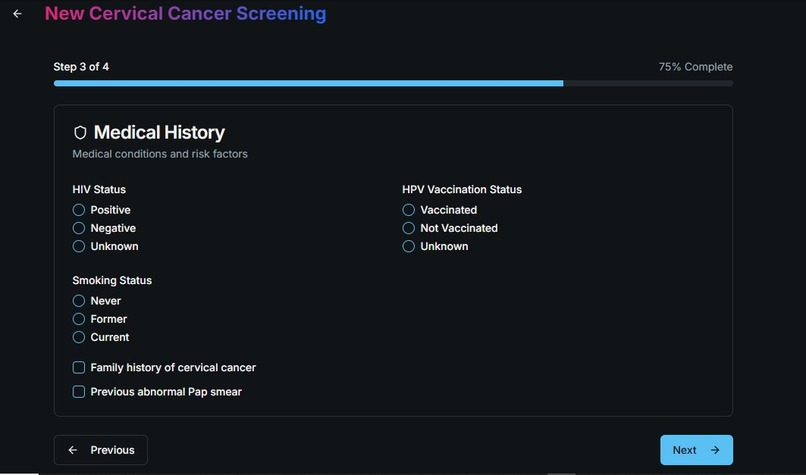
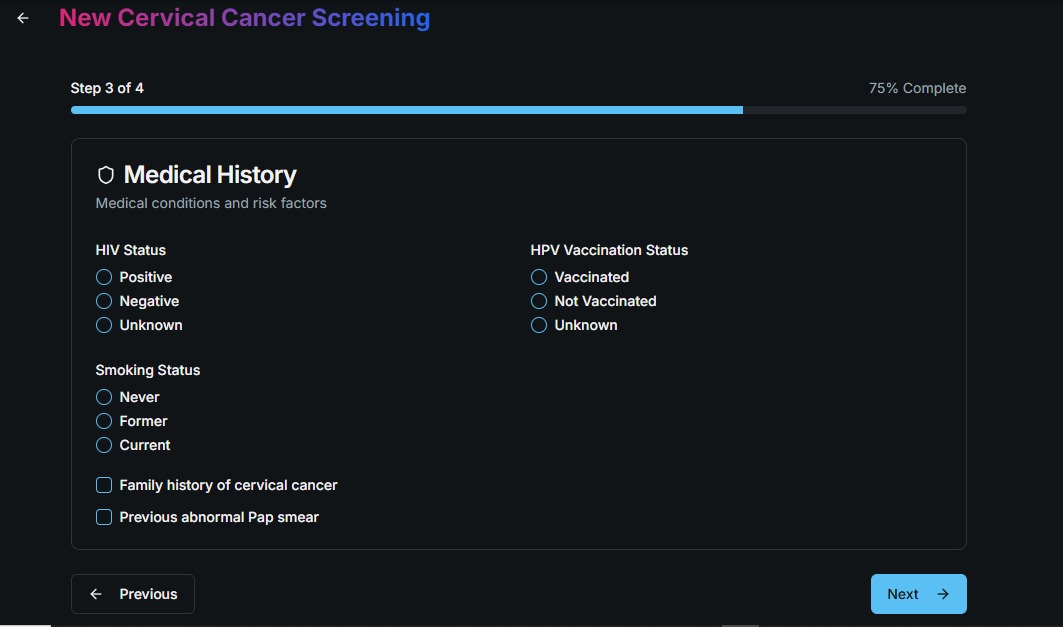
Cervical Cancer Screening step 3
-
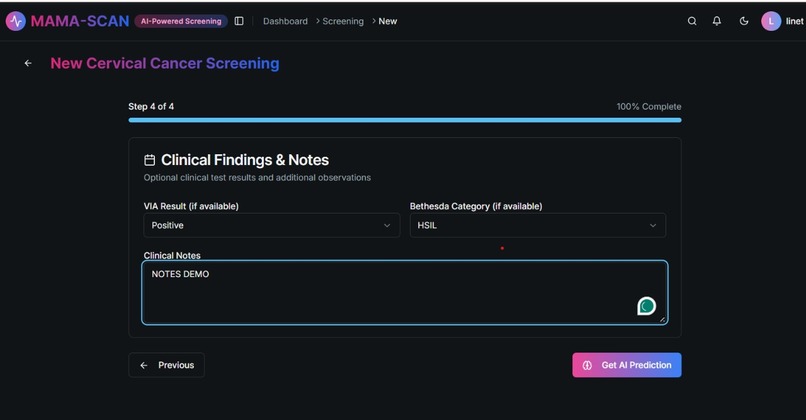
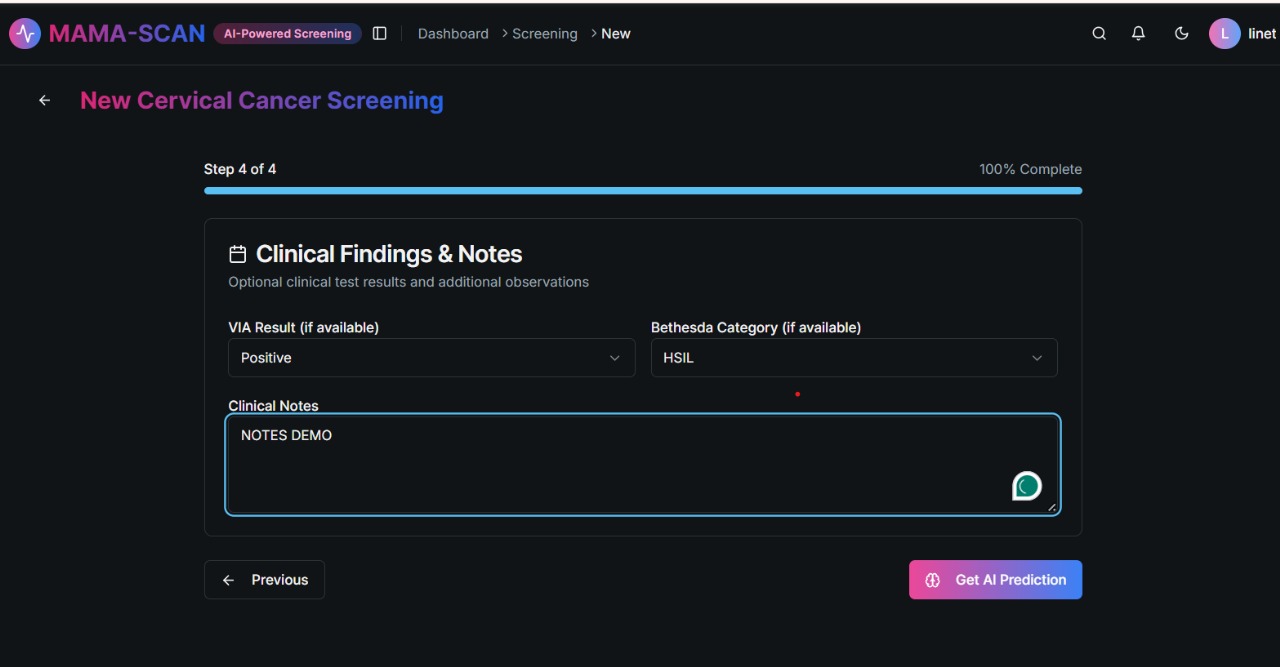
Cervical Cancer Screening step 4
-
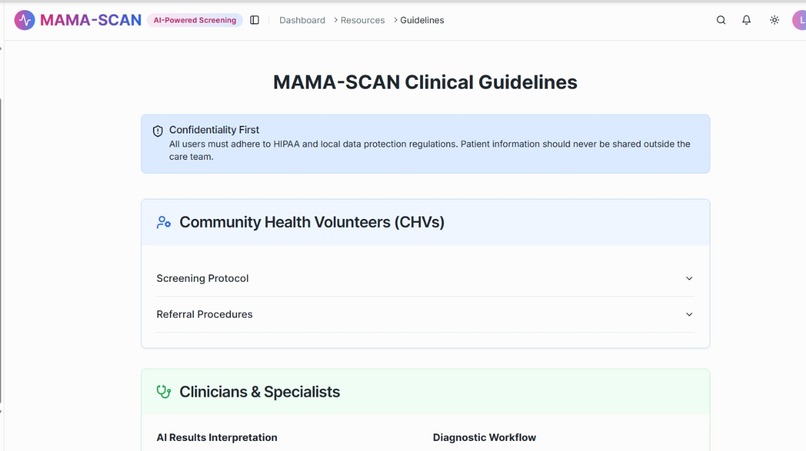
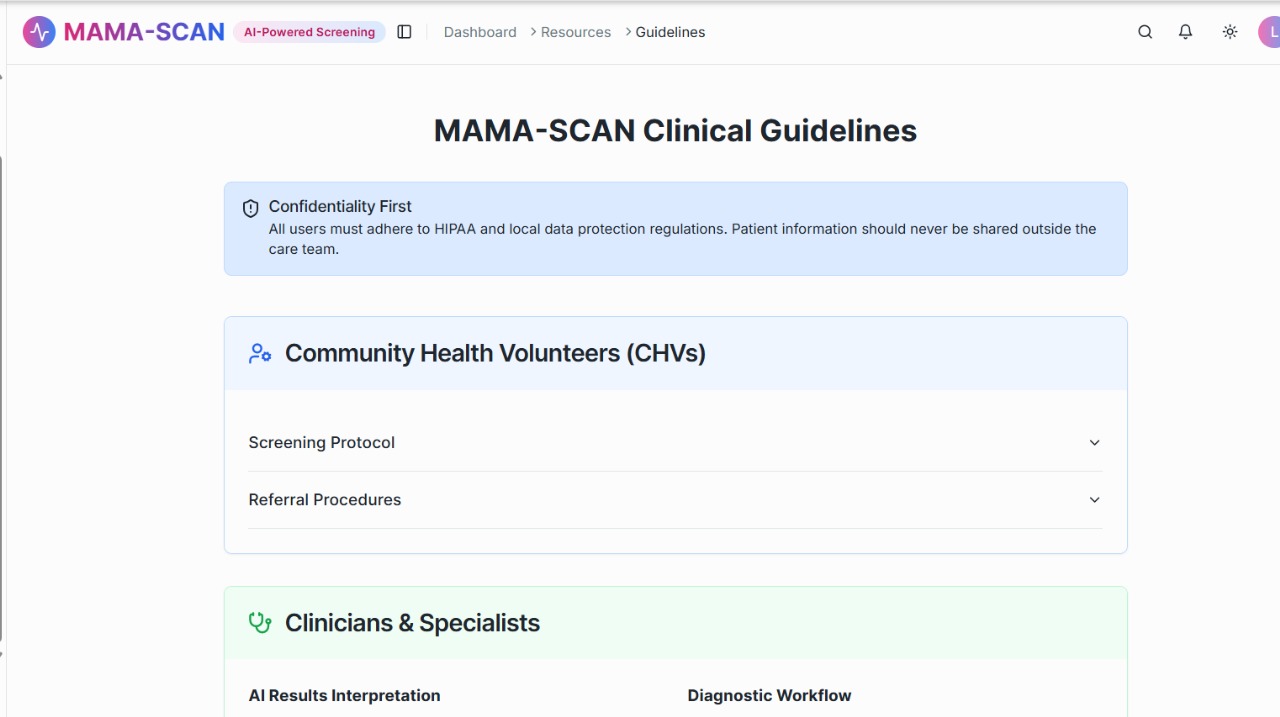
Mama Scan Clinical Guidelines
-
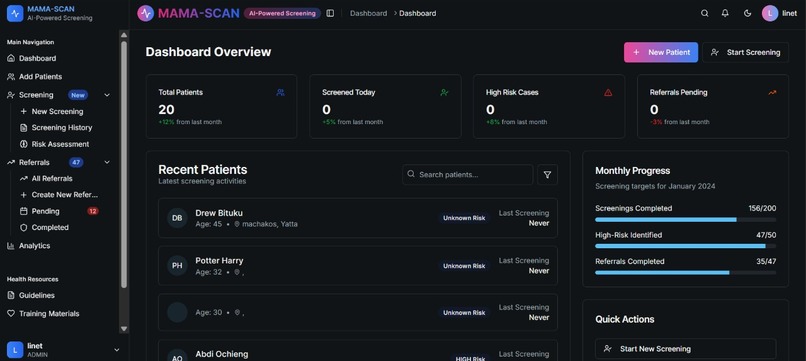
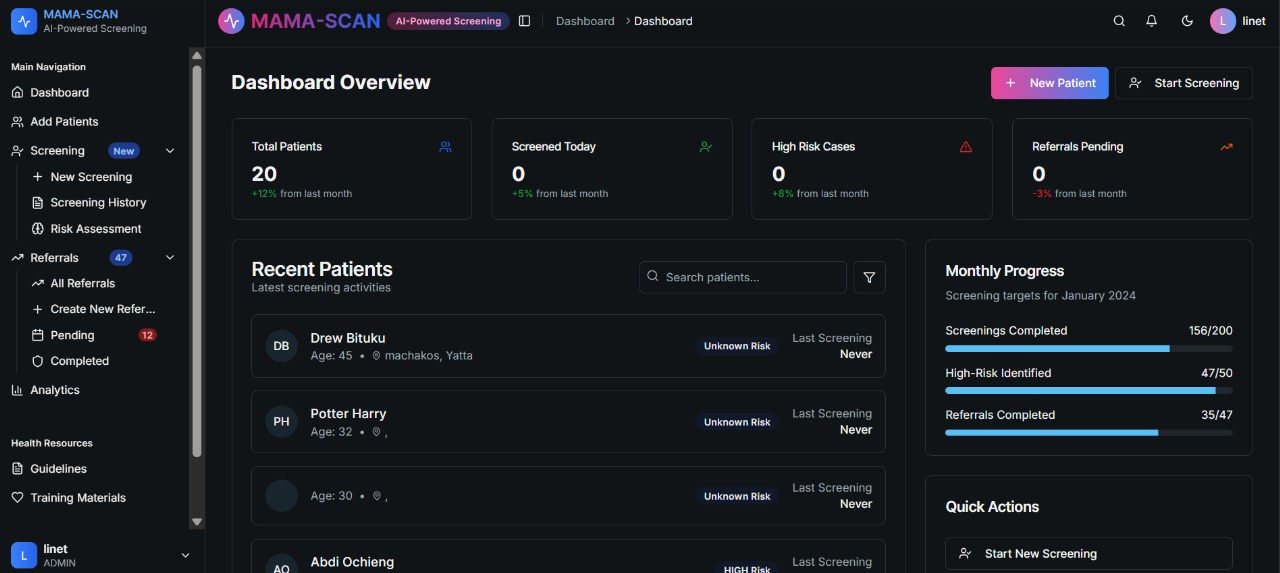
CHV Dashboard
-
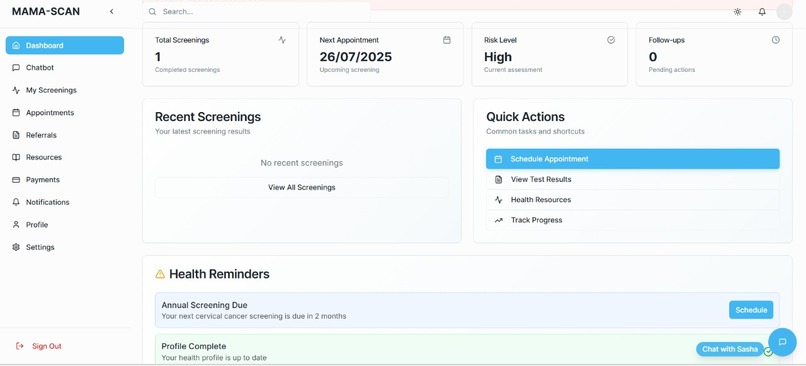
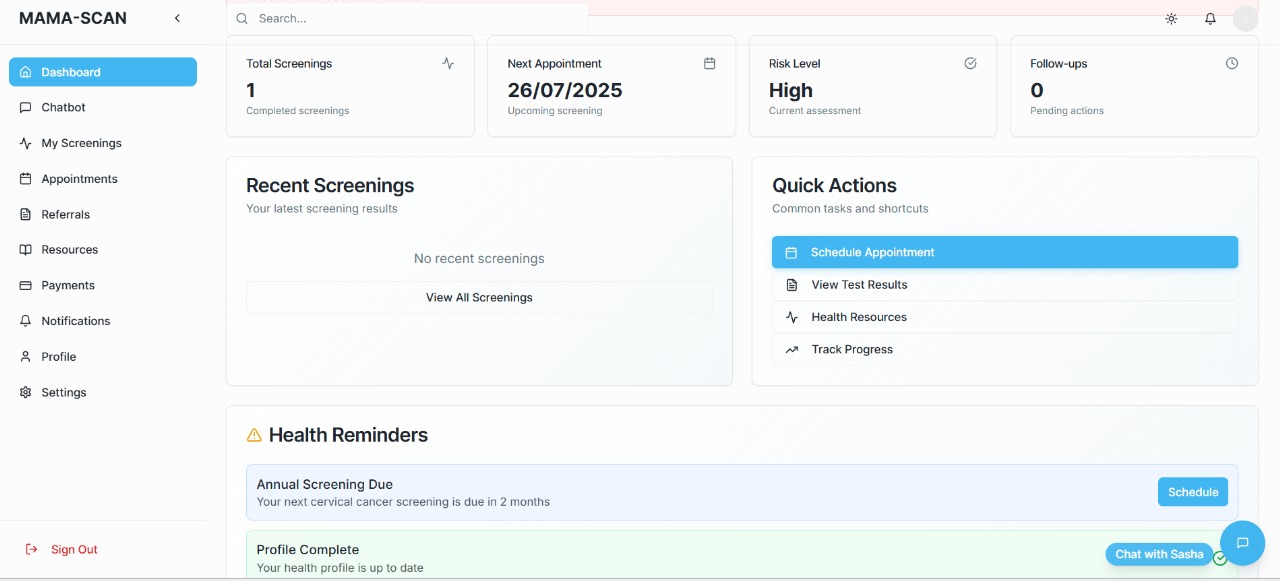
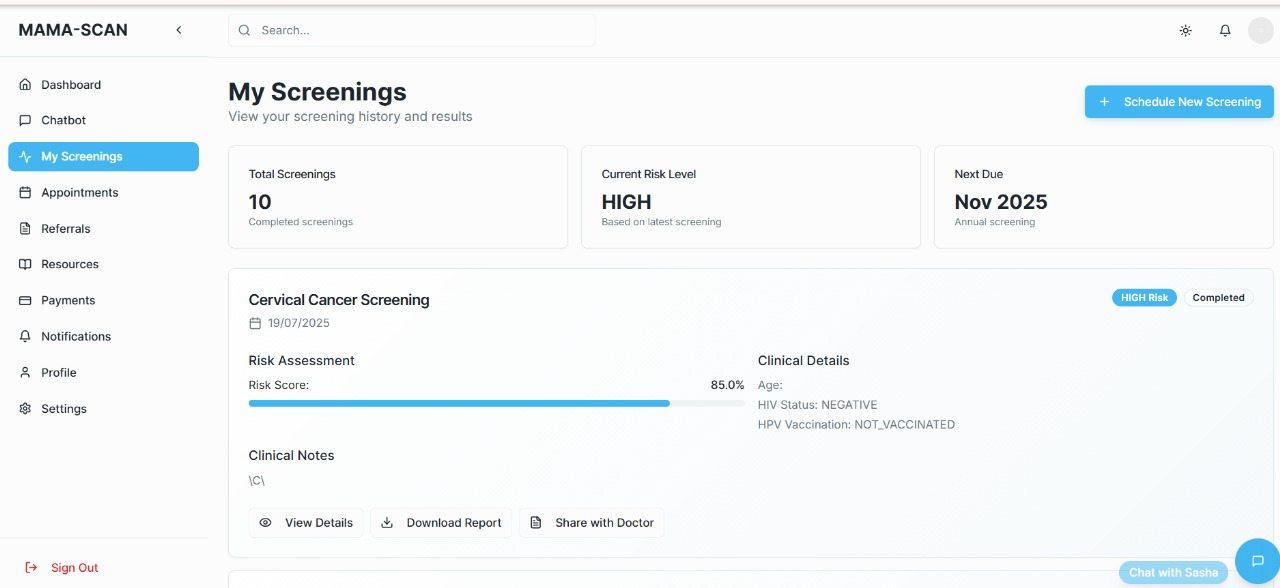
Patient Dashboard
-
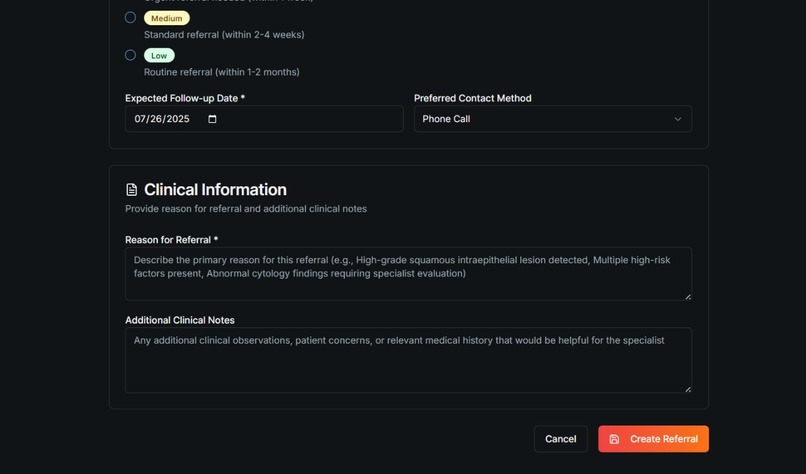
Referral page
-
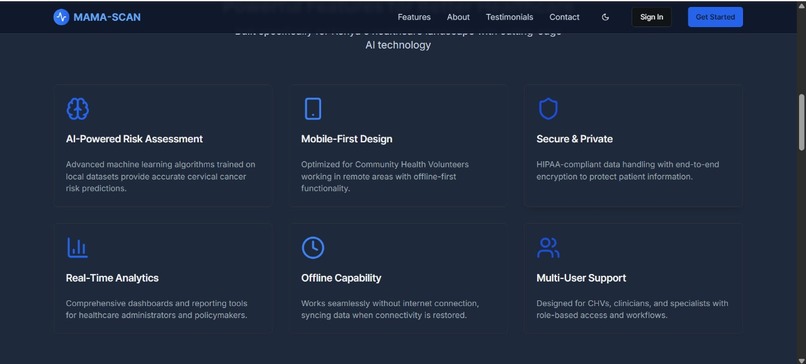
Mma Scan
-
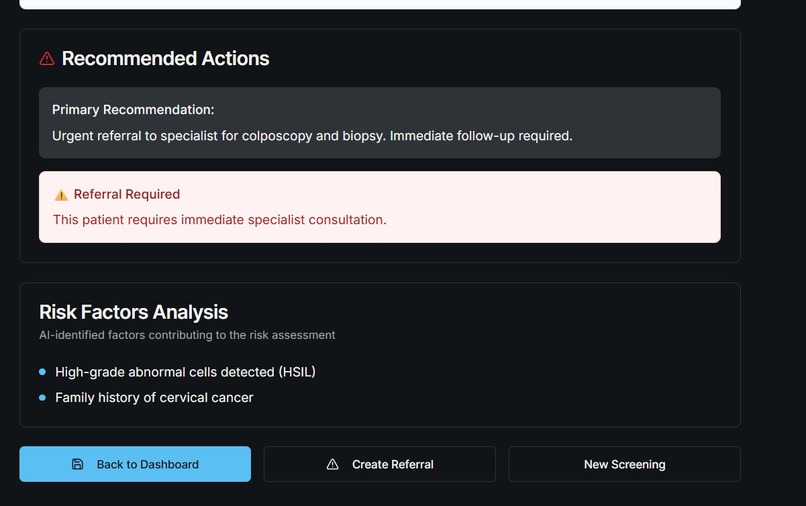
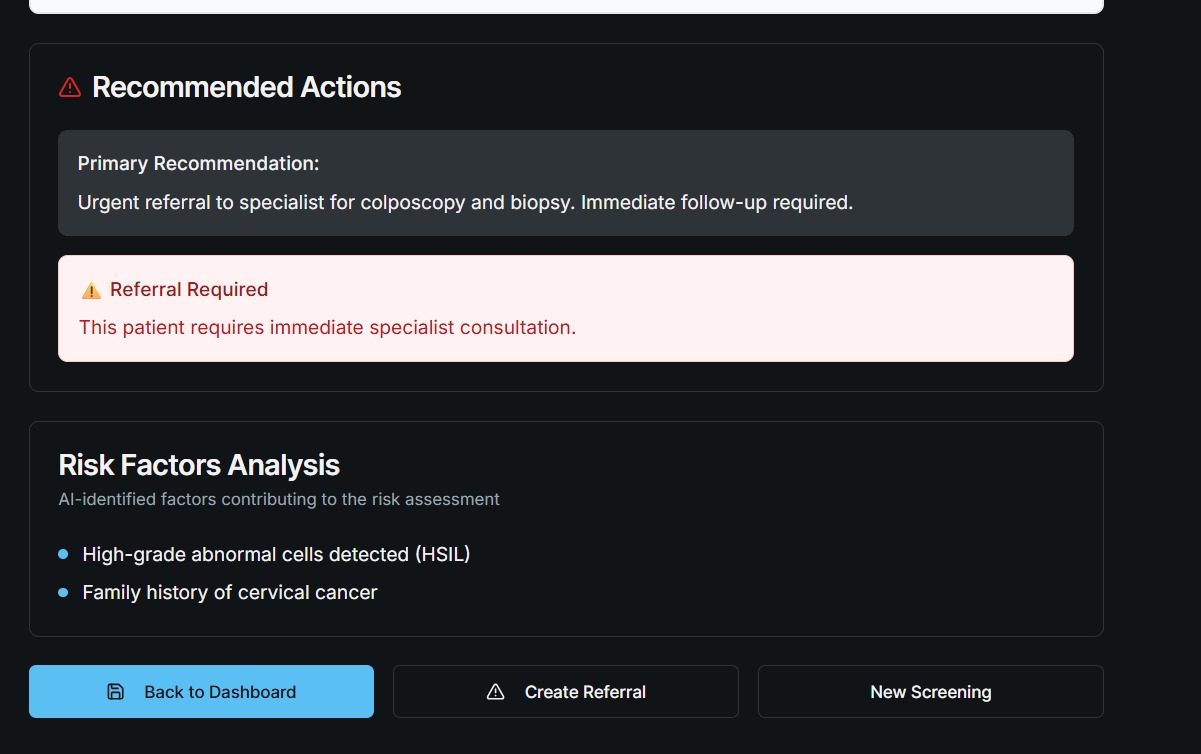
AI Recommendation
-
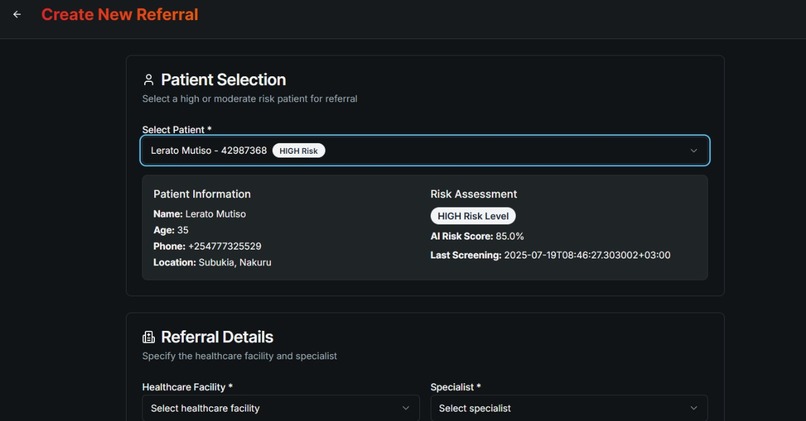
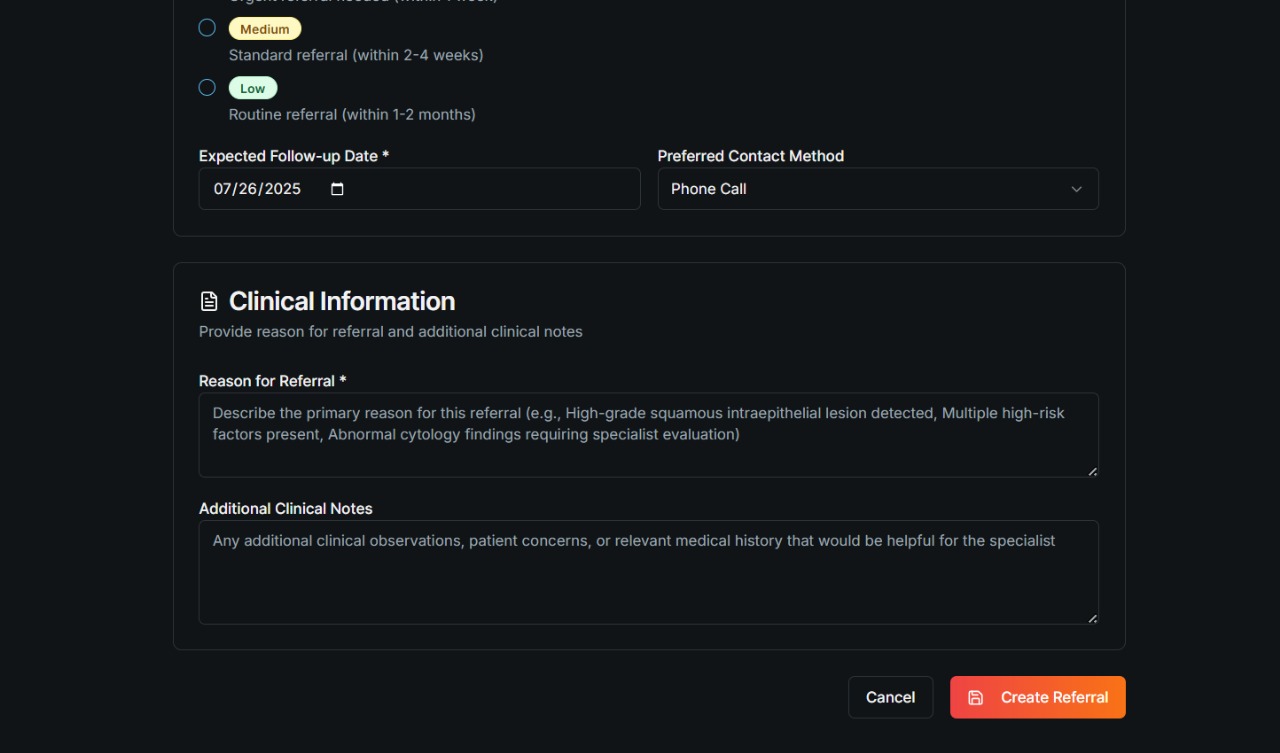
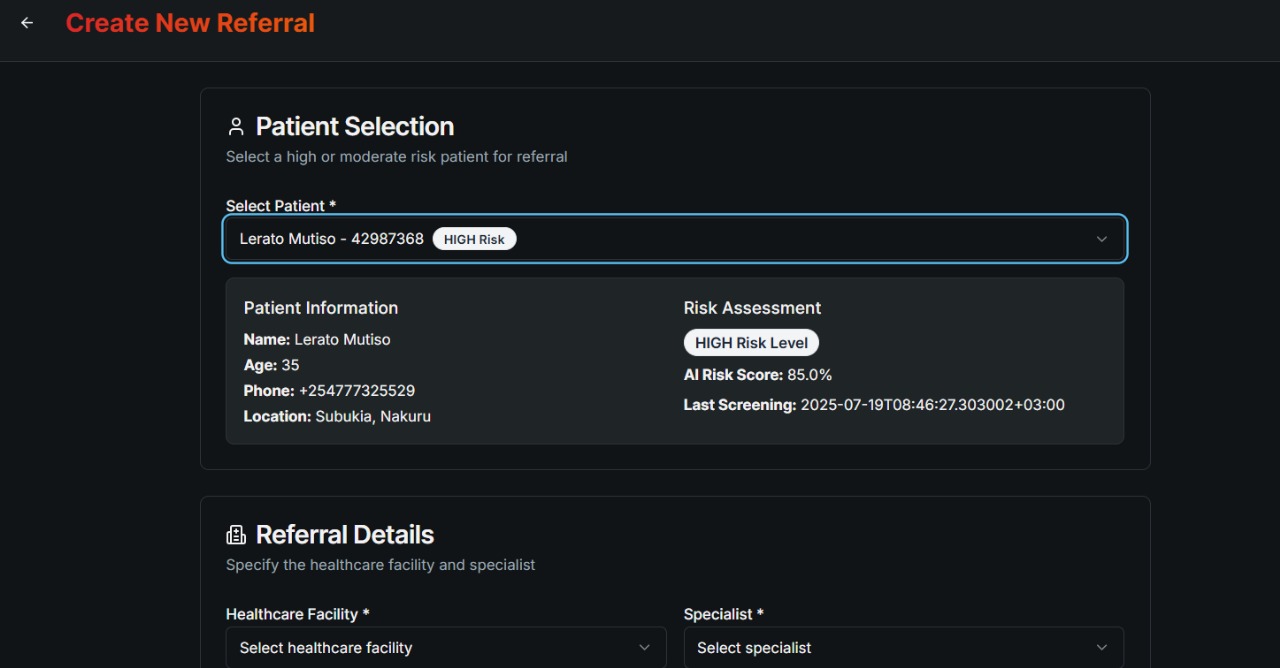
Create New Referral
-
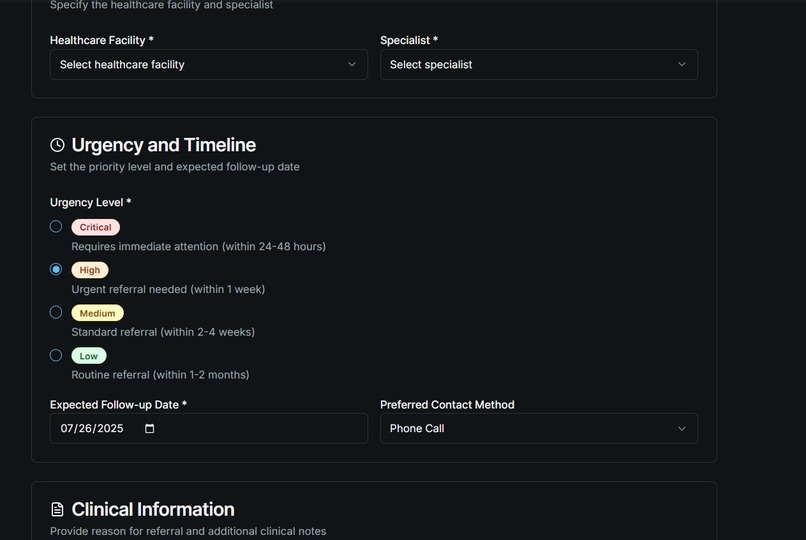
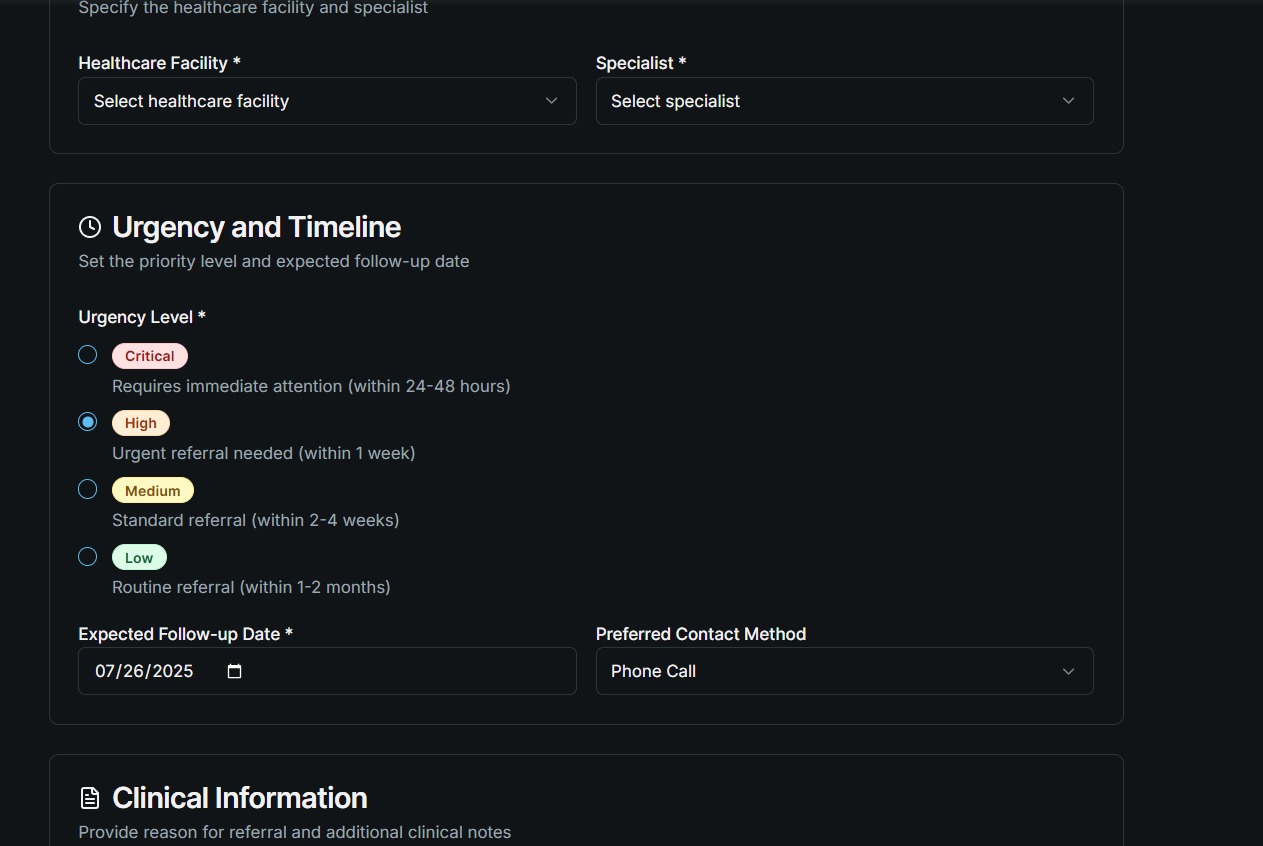
Urgency and Timeline
-
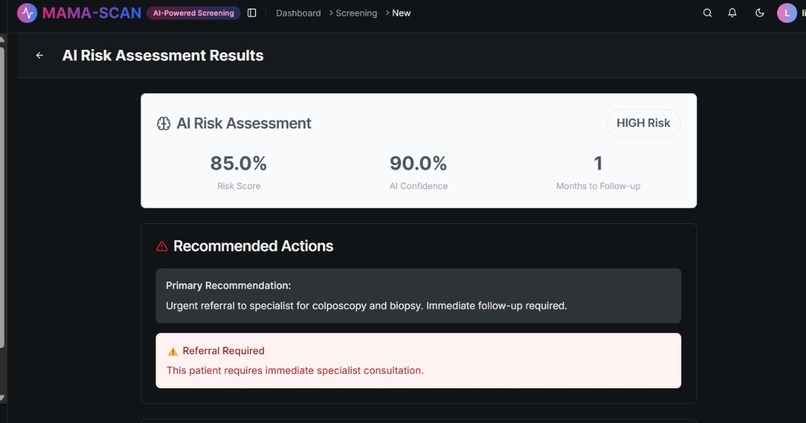
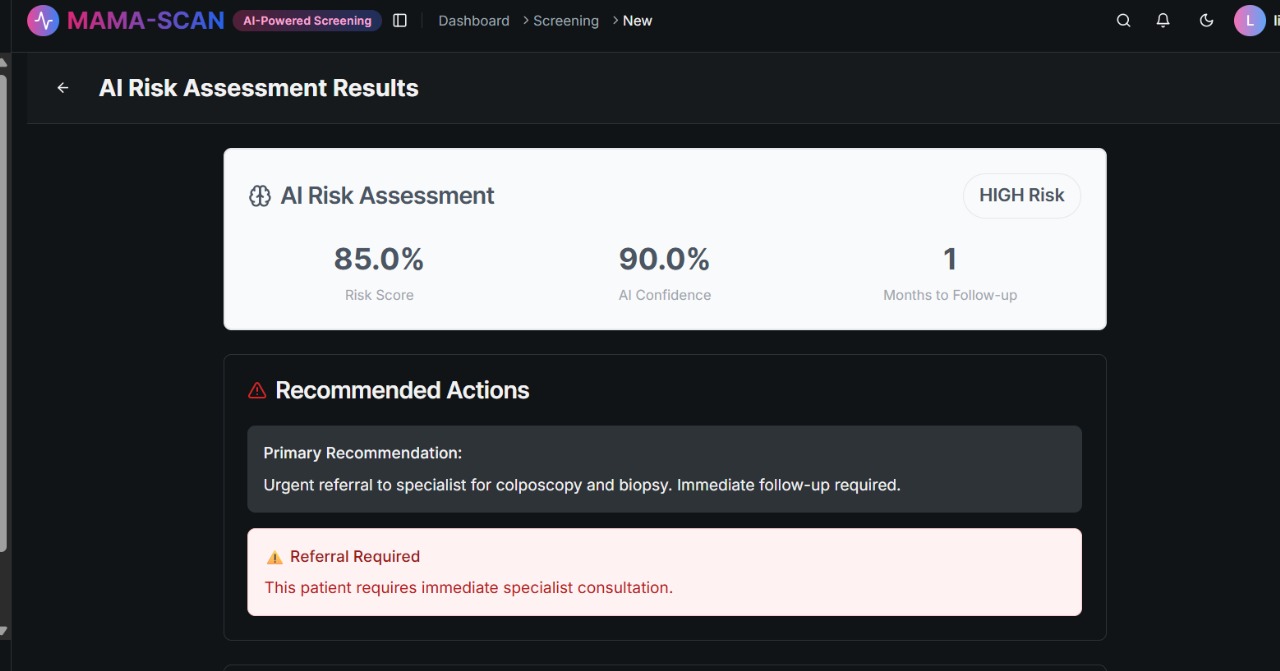
AI Risk Assessment
-
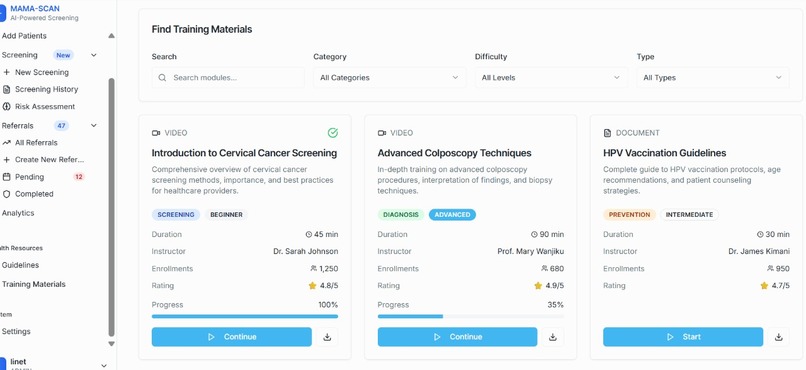
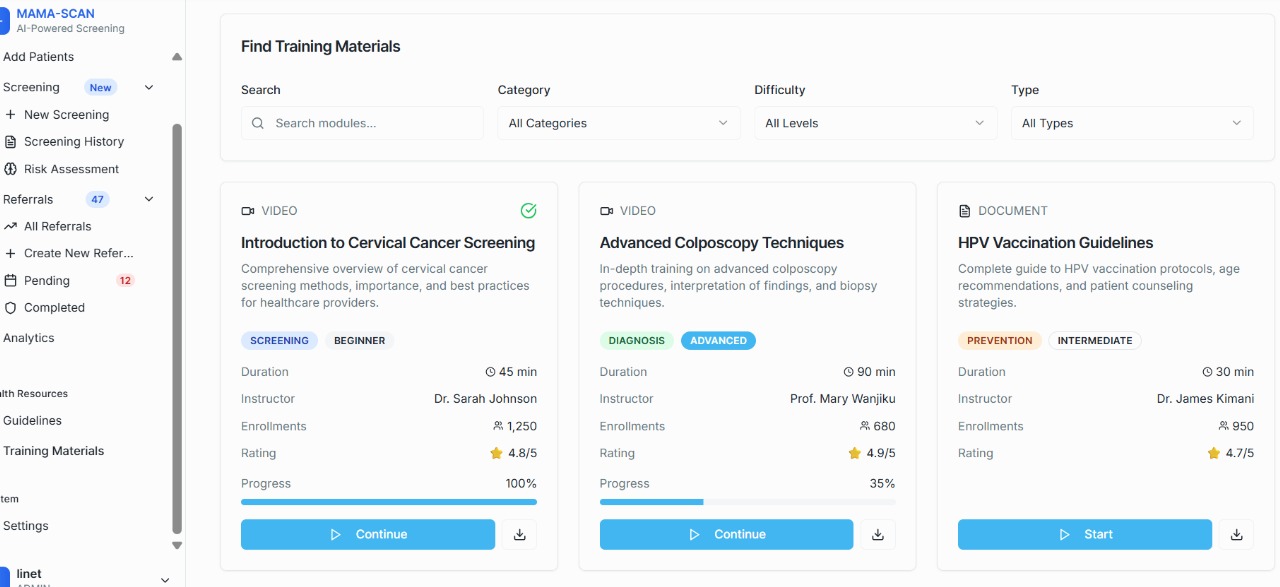
Training Material
-
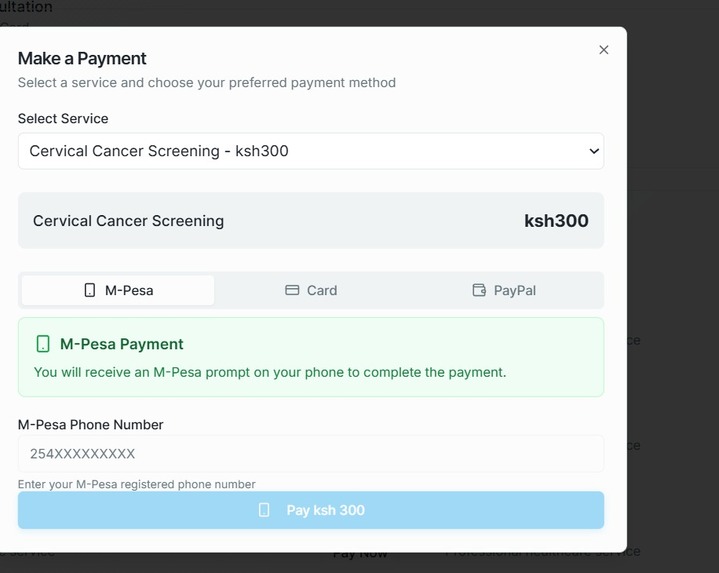
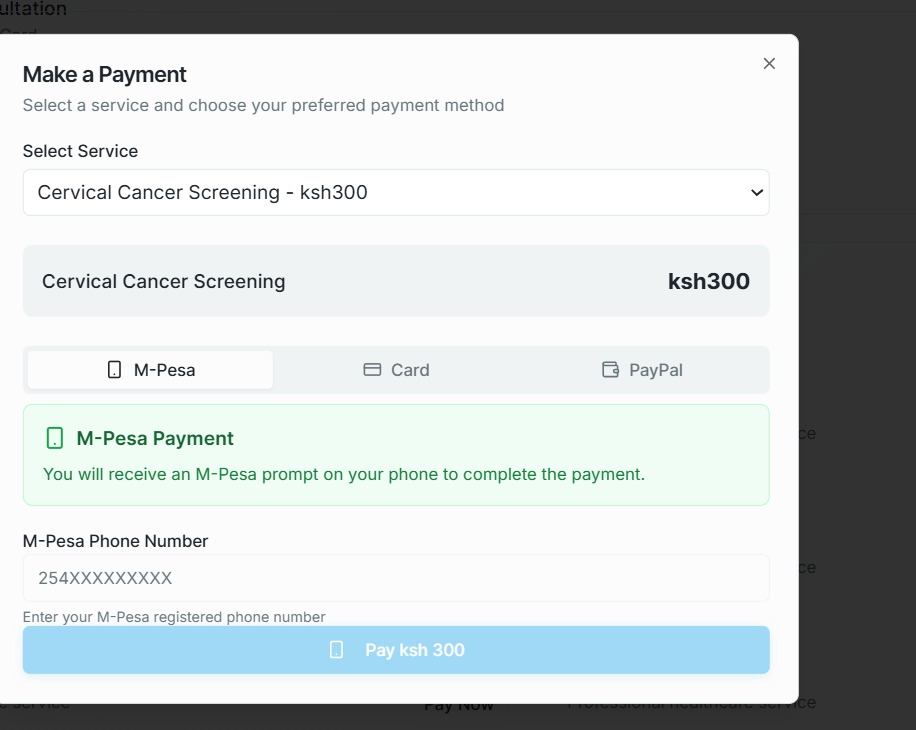
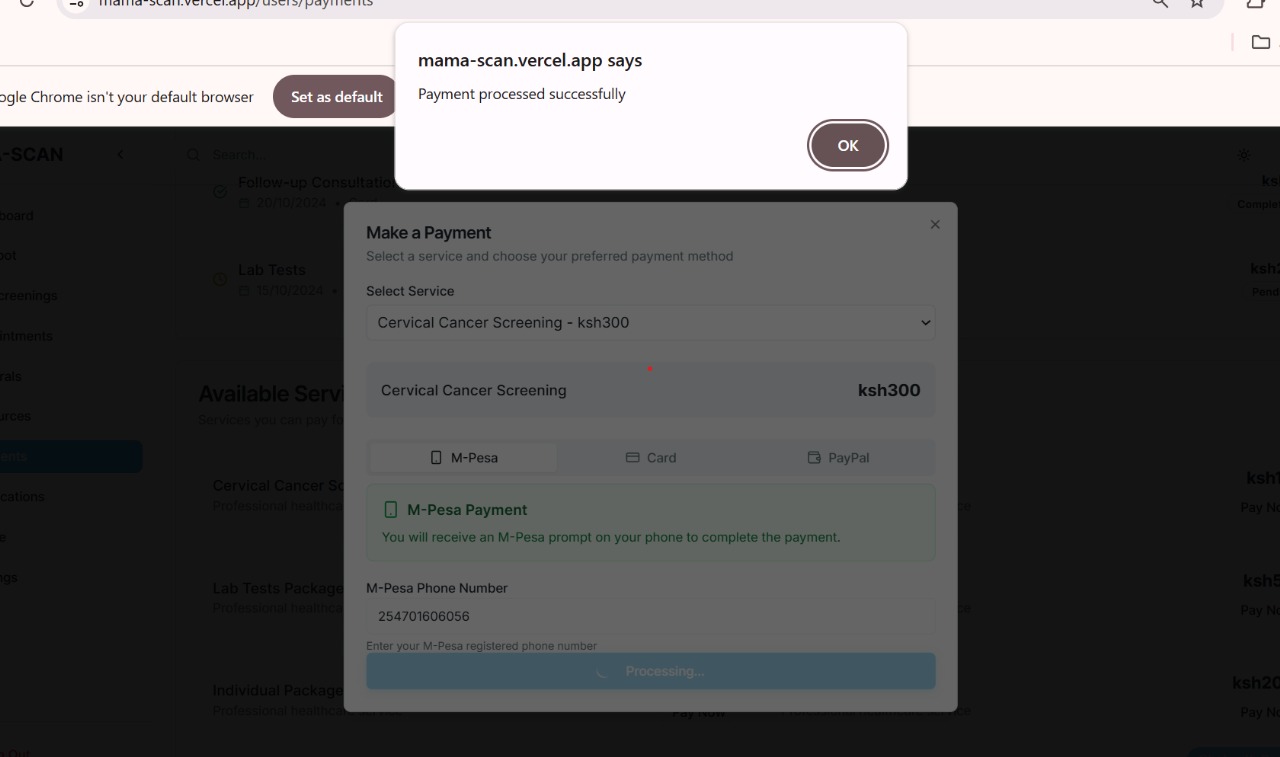
M-pesa Integration
-
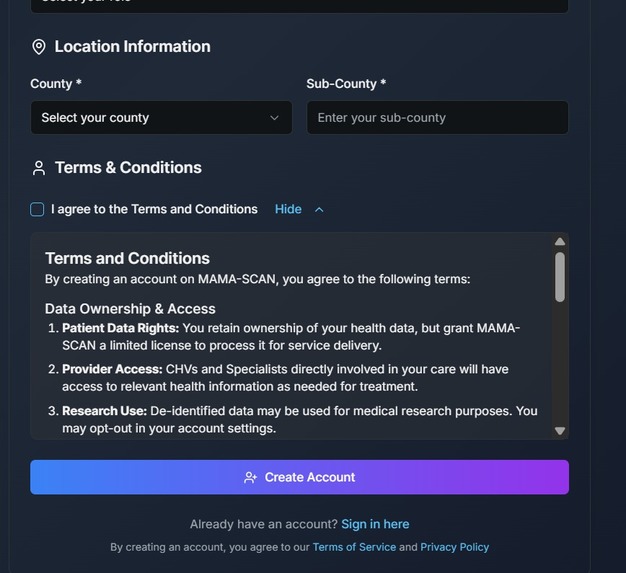
T&C
-
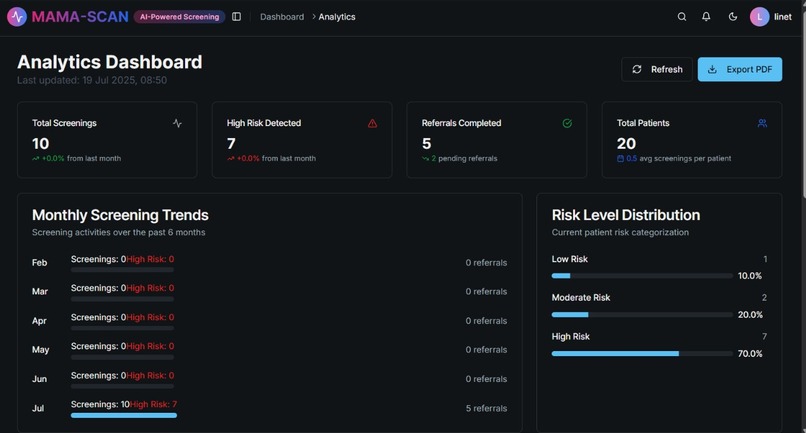
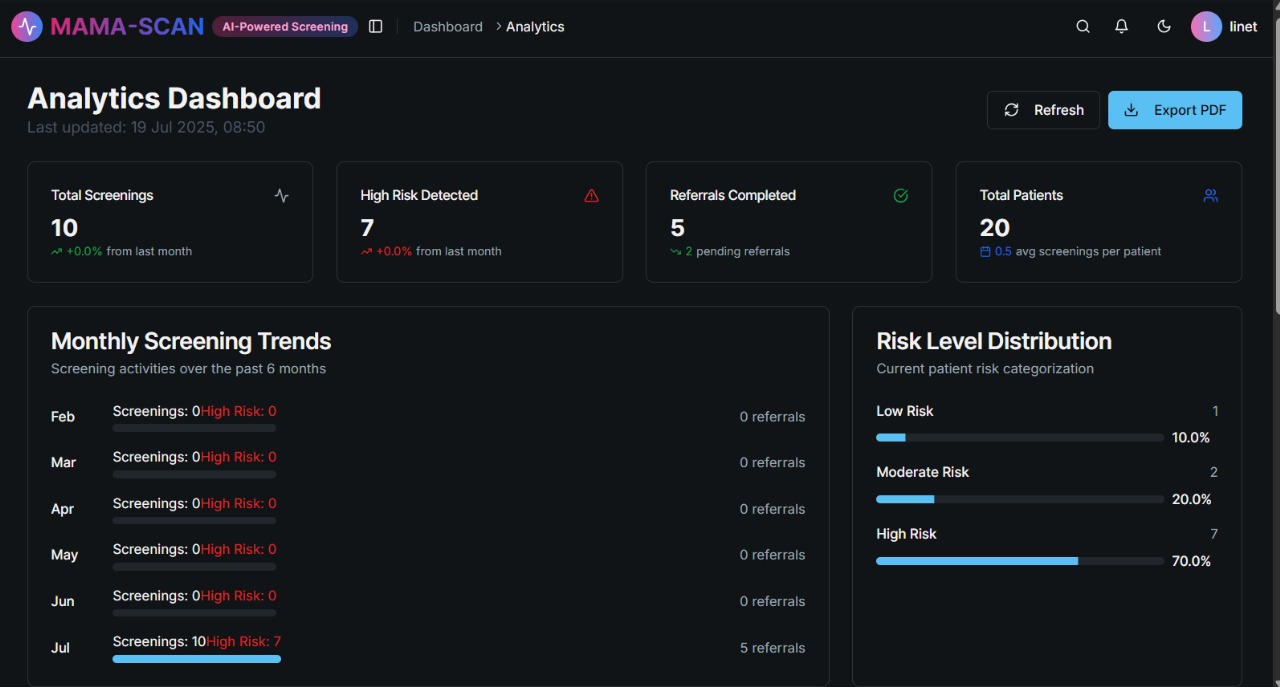
Analytics Dashboard
-
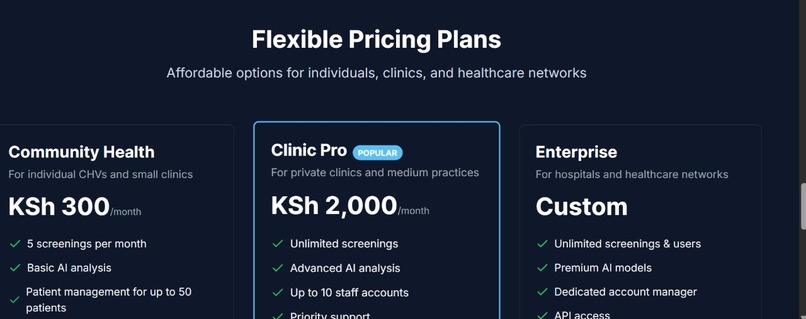
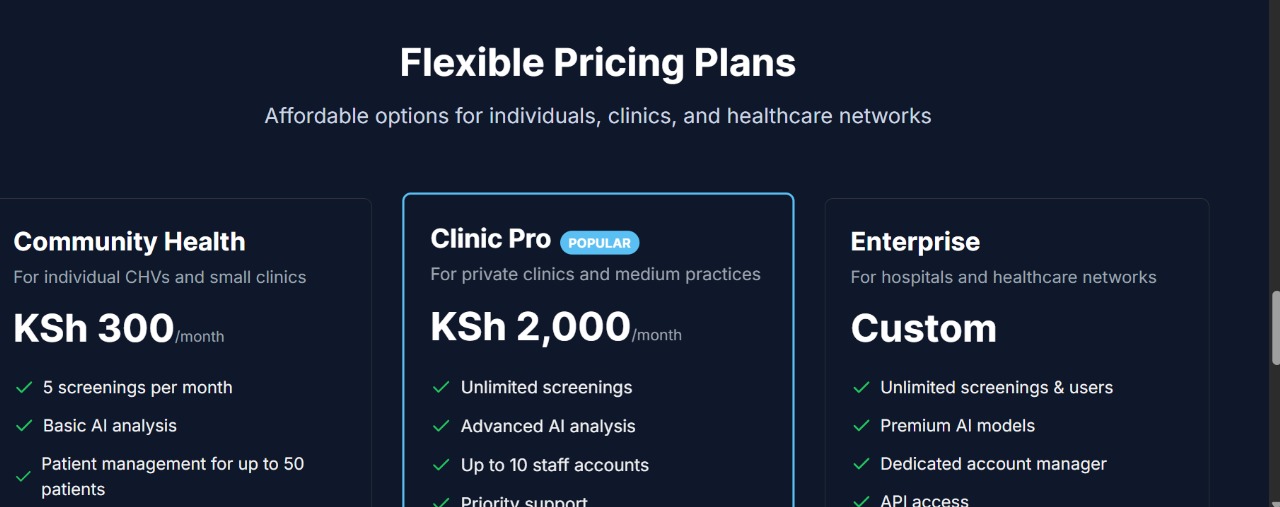
Payment Plans
-
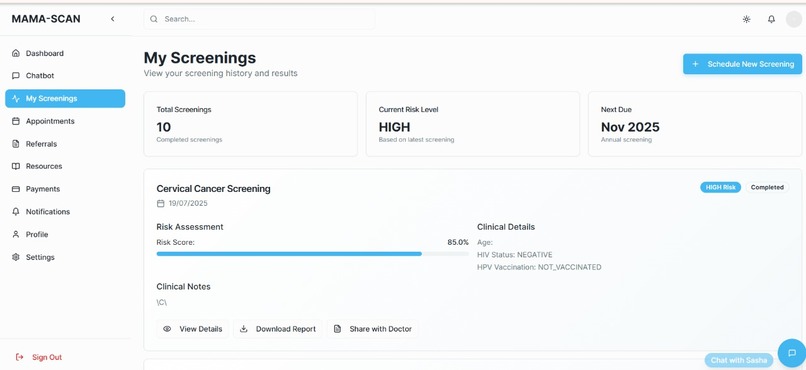
Preview
-
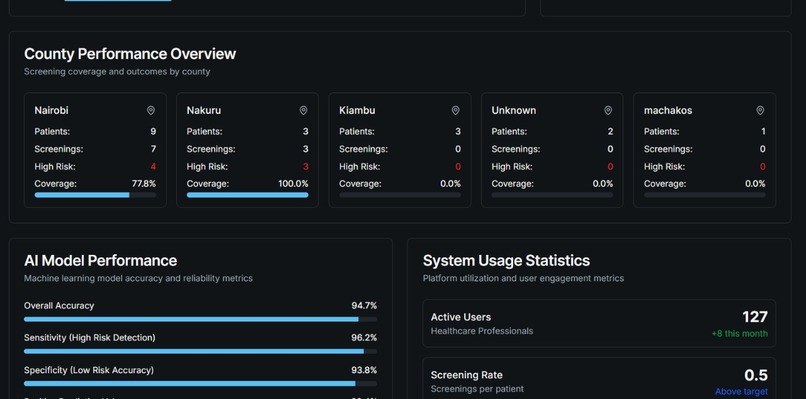
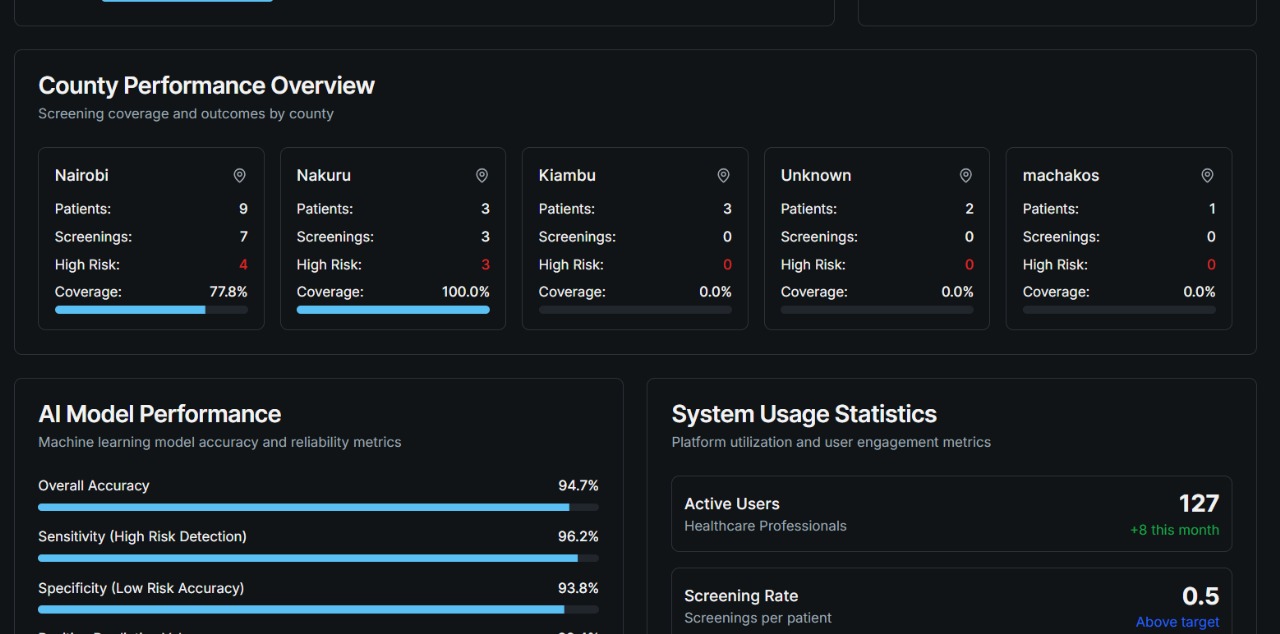
Performance Overview
-
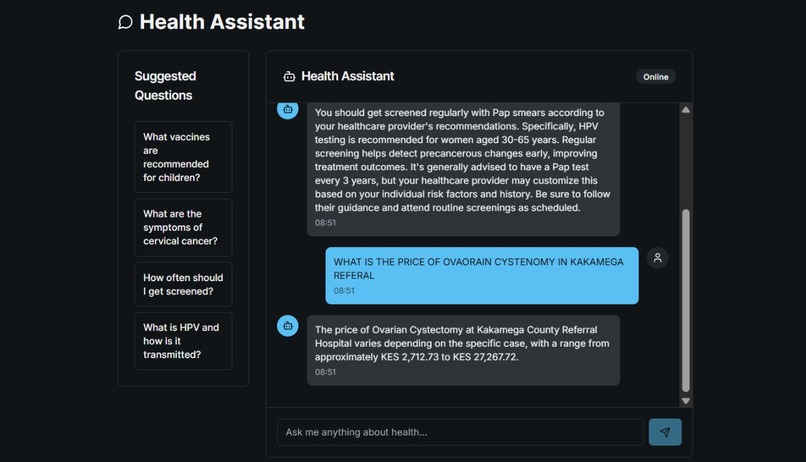
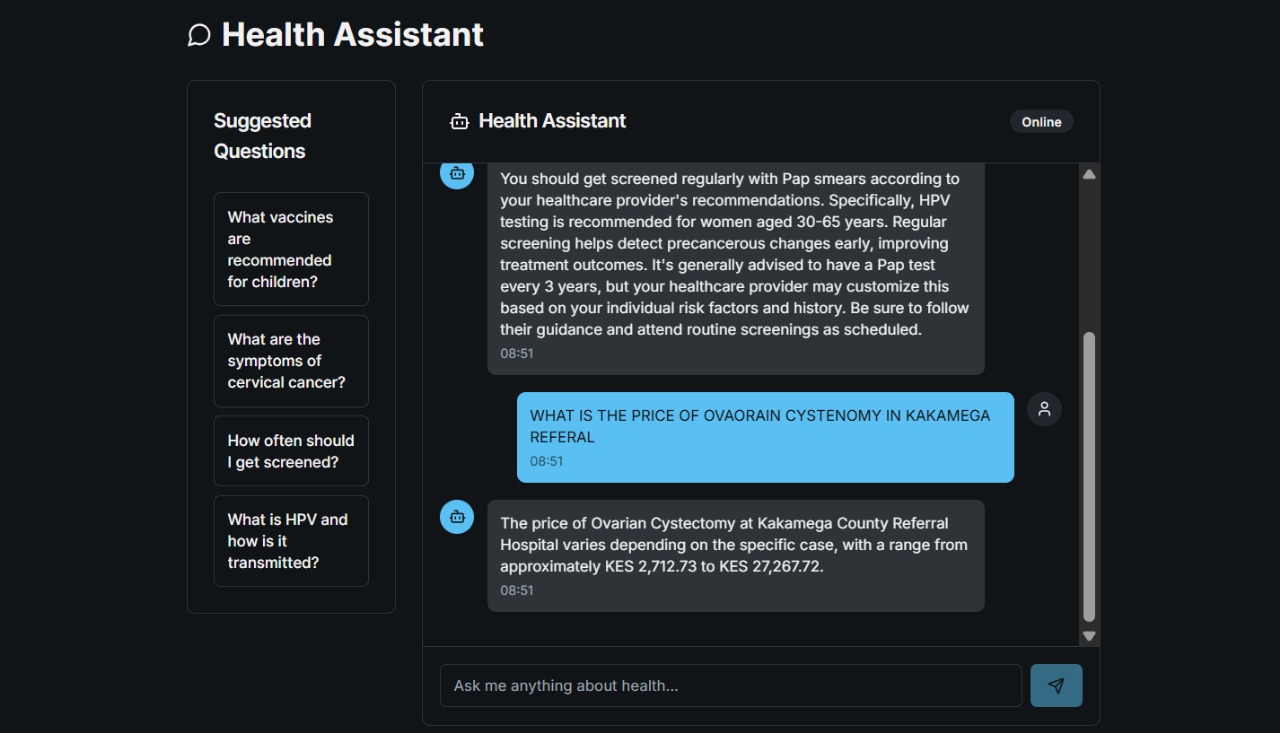
Health Assistant
-
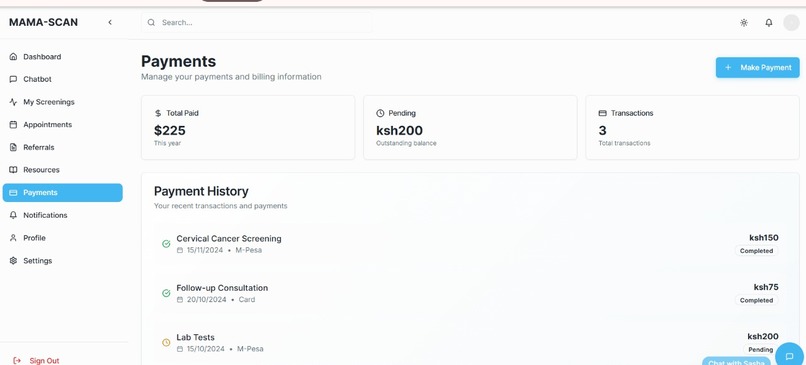
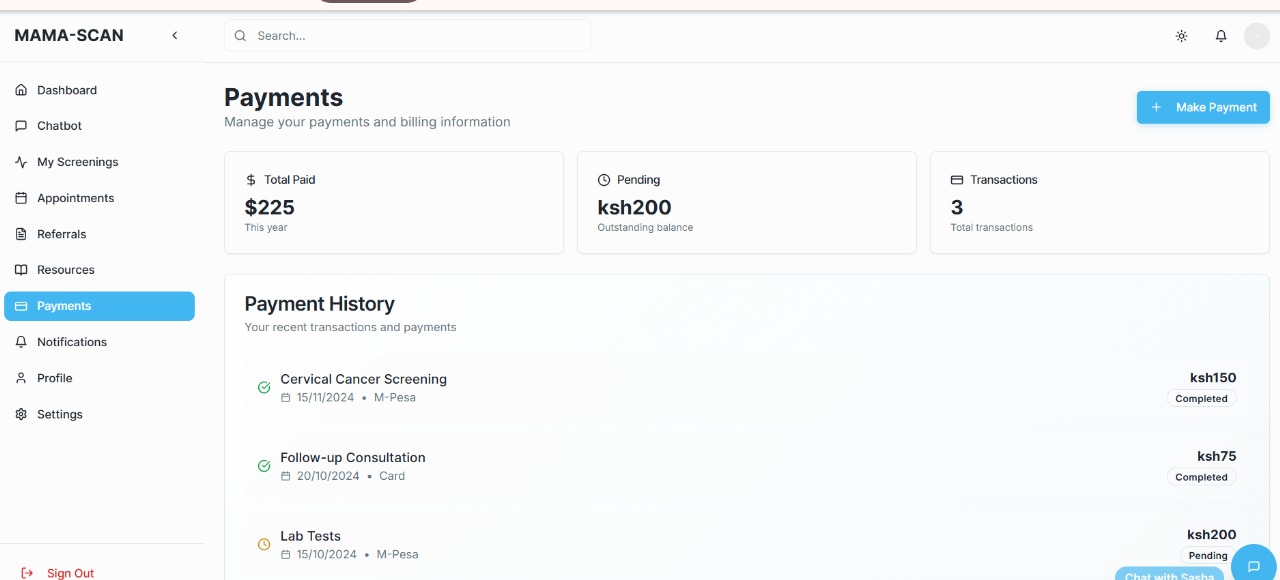
Payments Dashboard
-
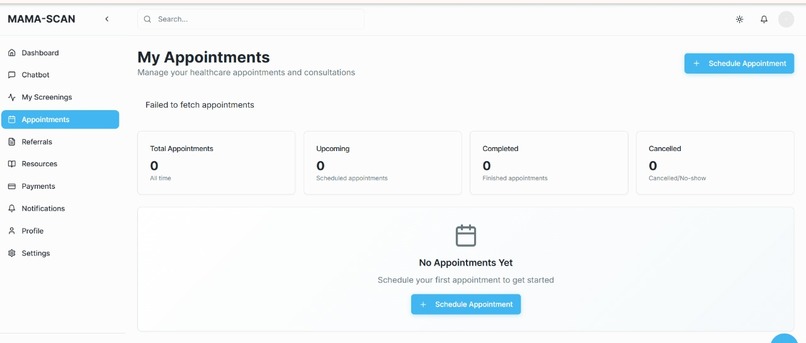
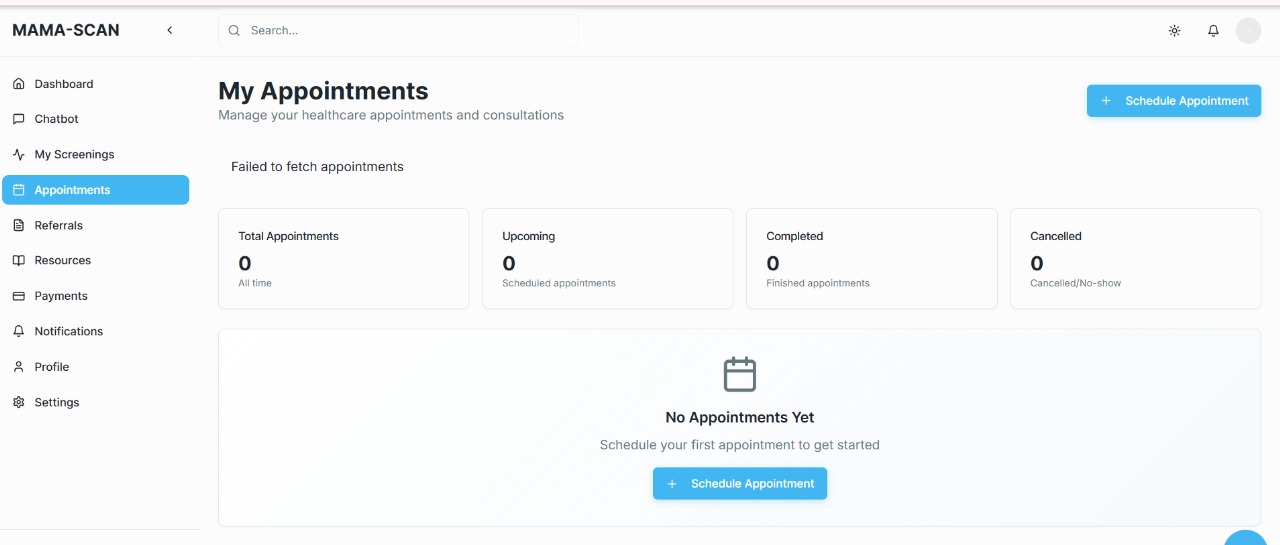
Appointment Booking
-
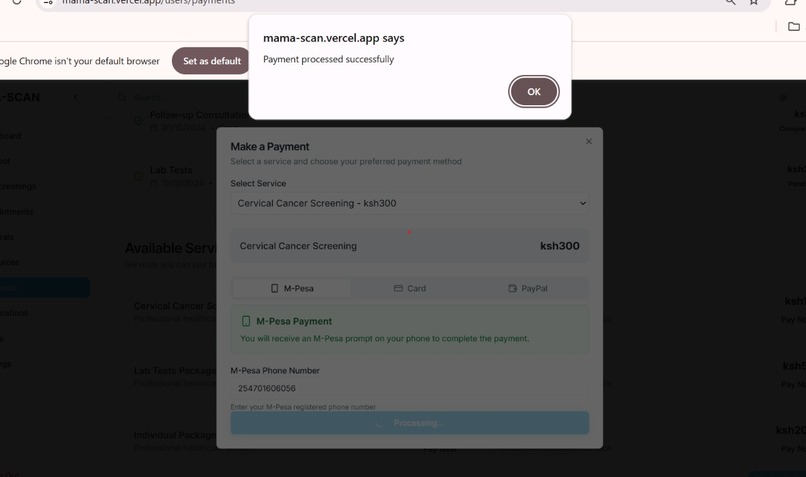
Daraja Integration
Inspiration
We were motivated by the urgent need to reduce preventable cervical cancer deaths in underserved regions. With AI rapidly transforming healthcare, we saw an opportunity to bridge the gap between communitylevel care and early cancer detection.
What it does
MAMA-SCAN helps community health volunteers collect basic patient data and, using an AI model, instantly assess the risk level for cervical cancer. It then recommends whether the patient should be referred for further testing or treatment.
How we built it
We trained a machine learning model using Python, applying libraries like pandas and numpy to clean and process data. We then integrated the model into a robust web app with a user-friendly interface tailored for use by non-technical health workers.
Technologies used:
- Python - Pandas - Numpy - Flask - HTML/CSS
Challenges we ran into
Data availability: It was difficult to find clean, localized clinicaldatasets for cervical cancer.
Balancing simplicity and accuracy: We had to ensure the app was both medically accurate and simple enough for use in the field.
Accomplishments that we're proud of
Achieved high model accuracy with minimal overfitting.
Built a clean, intuitive user interface accessible to non-technical users.
Smooth backend data handling and integration with model output.
What we learned
Teamwork:We learned how to work effectively in an interdisciplinary team (2 medical students, 1 software engineer, 1 computer science student, and 1 biomedical engineering student).
How to communicate technical ideas across different fields.
Importance of user-centered design, especially in public health tools.
What's next for Mama Scan
Integrate imaging and microscopic data (e.g., Pap smear images) to enhance diagnostic accuracy.
Pilot the tool in rural counties across Kenya.
Train CHVs and scale for national screening programs.
Built With
- daraja
- django-rest-framework
- docker
- fastapi
- github
- gpt:nano
- next.js
- nextauth.js
- numpy
- pandas
- postgresql
- python
- react-18
- shadcn/ui
- sql
- tailwind-css
- typescript
- vercel


Log in or sign up for Devpost to join the conversation.