-

Maluma Logo
-
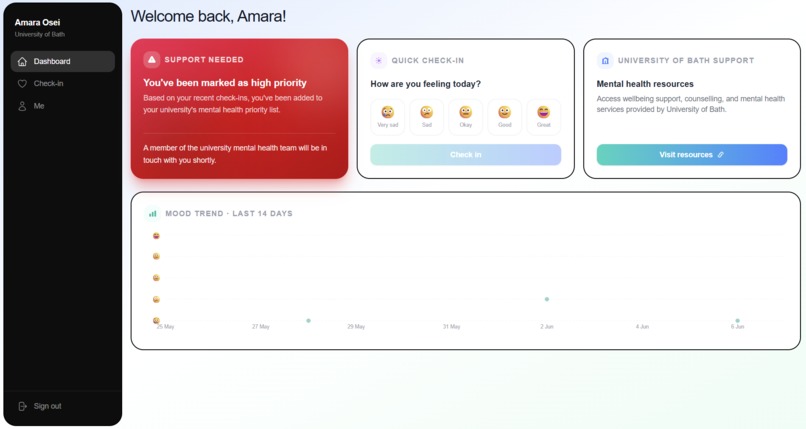
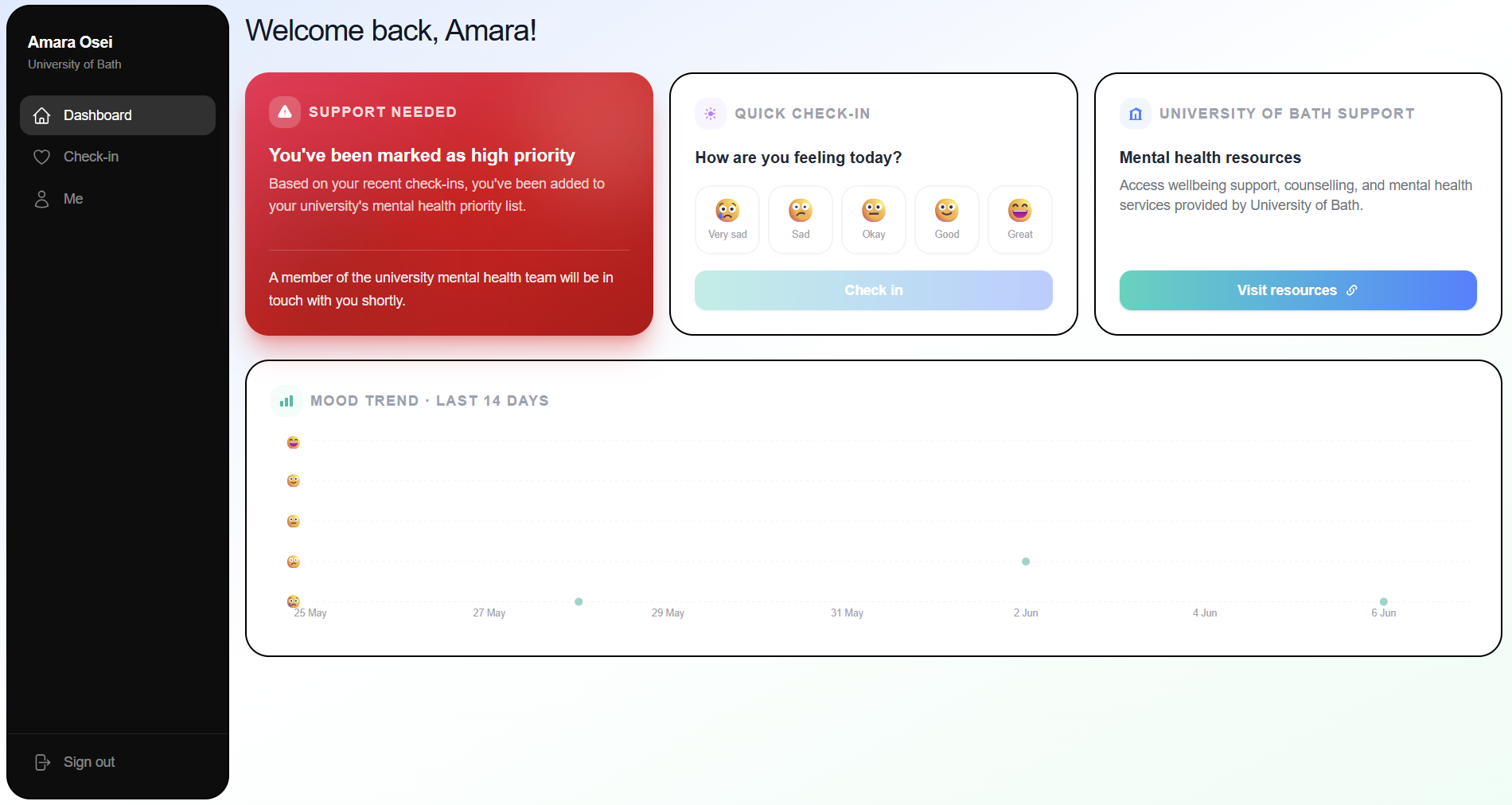
Screenshot of a University of Bath student, Amara's, dashboard
-
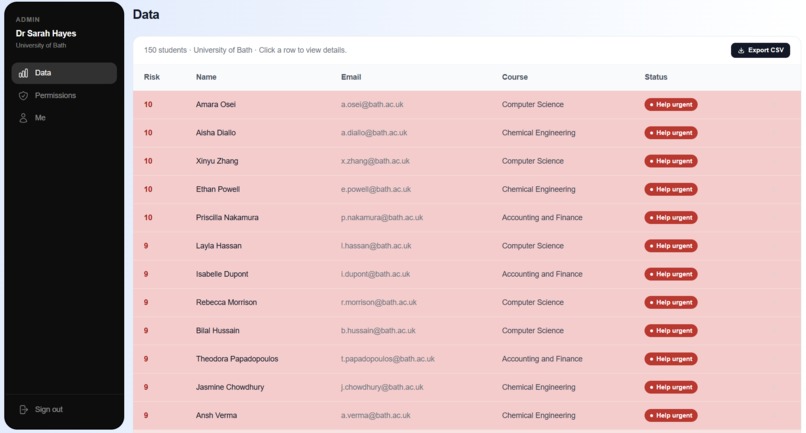
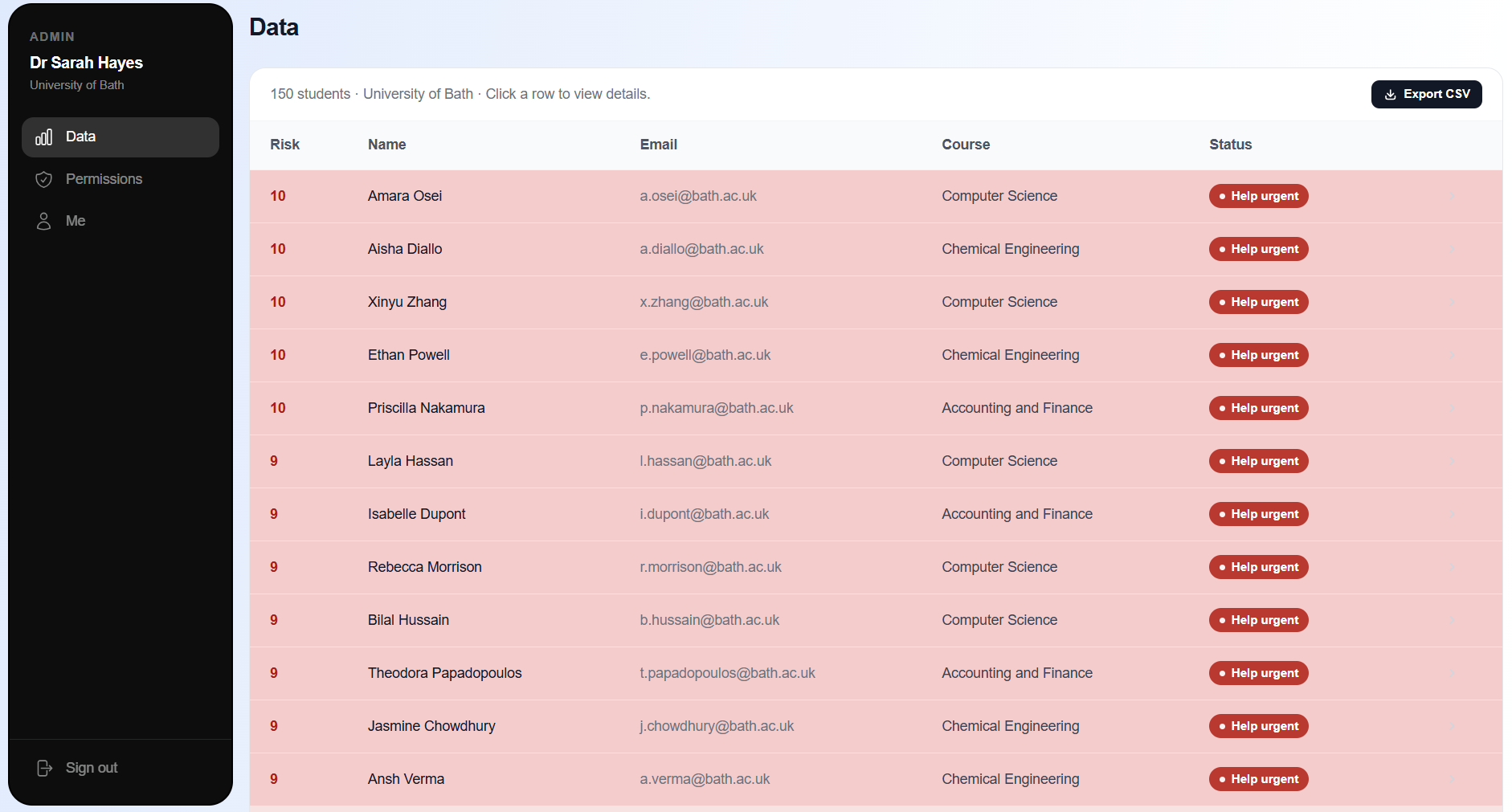
Screenshot of an Admin's view, showing students from high to low risk. This data can be exported as a CSV.
-
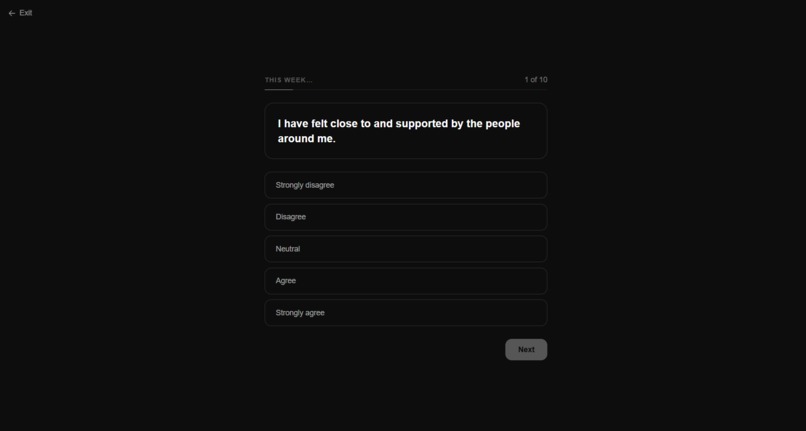
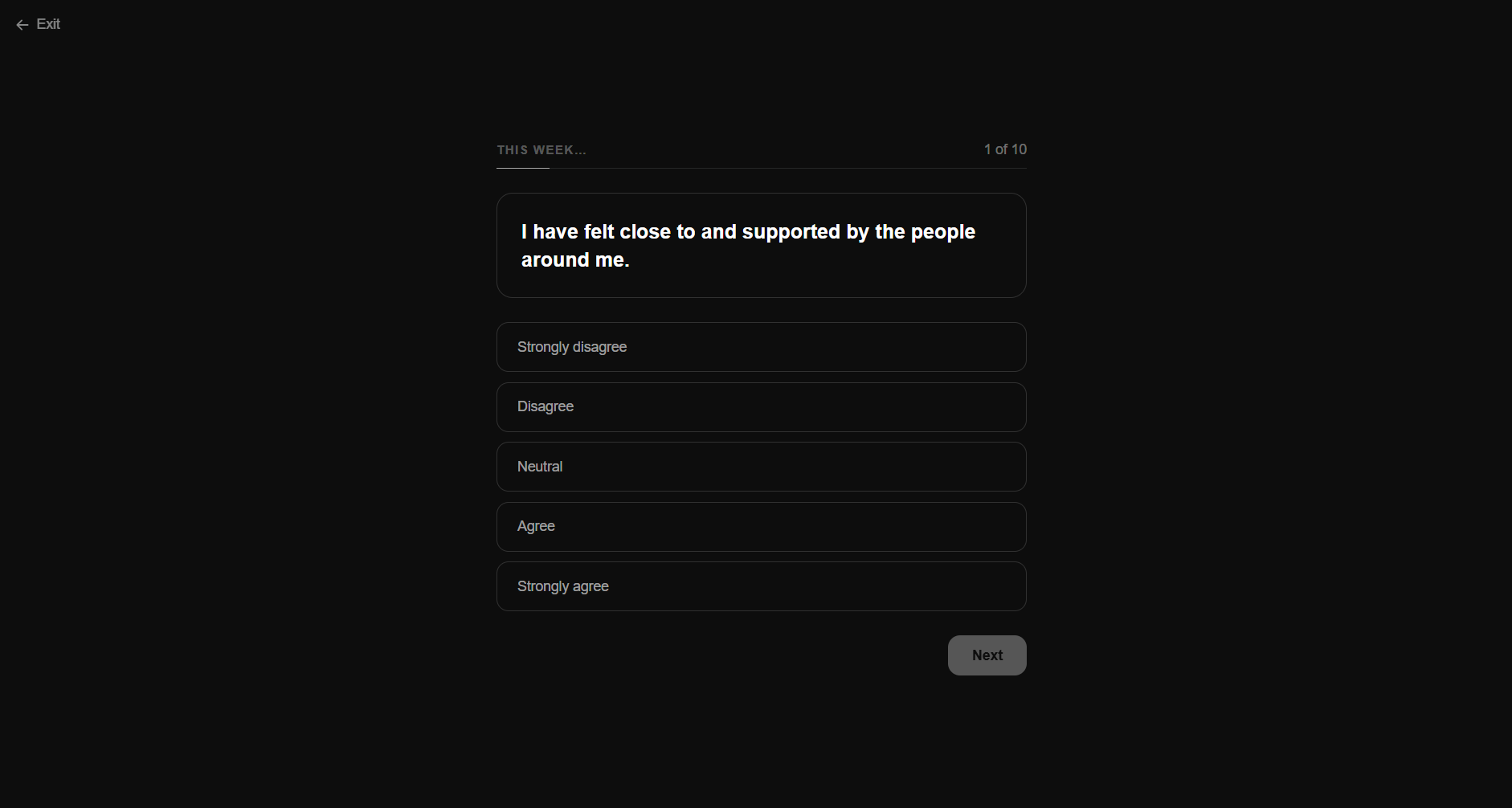
Screenshot of a weekly check-in that a student is encouraged to do, to stay in check with their welllbeing

Inspiration
Maluma is inspired by the common type of wellbeing survey carried out at companies and institutions, brought to the University level. My aim was to adopt this on a large scale, at educational institutions with thousands of students, and a centralised system for mental health services at the University to interact with this information.
What it does
The service has two main users: students and admins (authorised university staff). Both dashboards for each of these are designed to be as frictionless as possible, to encourage mental health reflection, and includes gamification on the student-end using streaks to push this further. All in all, this allows users to stay in touch with their mental wellbeing and notice patterns themselves. At the same time, Anthropic's Haiku model runs in the background, taking notes on every student's wellbeing check-in data, and assigns them a risk rating which is passed onto admins. This allows for underrepresented students as well as those who either haven't yet sought help or received it to be given priority by the university - and in extreme cases, be referred by the university to the NHS.
How I built it
Maluma was built on the NextJS framework using Vercel for hosting and Supabase for backend integration. This allowed for easy additions and modifications to the website as I was building it. I first started by building the student interface: student onboarding, daily, weekly check-ins, and LLM integration for risk scoring, and then moving onto the admin-end respectively.
Challenges we ran into
The main challenge I ran into was contemplating how to make using the web app as frictionless as I could. This was particularly because of the effect that minor changes make to the user experience: for example placement of back buttons, intuitiveness of the UI or even a progress bar that starts slightly later in the sign in page to give the user an impression of progress.
Accomplishments that we're proud of
I'm most proud of Maluma's ability to scale up to large numbers of students, currently handling 150 very smoothly, with the capability to handle much more (for example in a live environment). This means that Maluma is already ready to roll out to universities. I'm also proud of the ease of connecting universities. Virtually all UK universities are supported on the system, and the only step to add one is to contact one responsible person to represent the university, and create an admin user for them on Supabase - meaning the university roll-out process can be insanely fast.
What we learned
I learnt a lot about breaking down a problem during this Hackathon - doing the Hackathon as a solo team for the first time taught me that my time is very valuable, since I'm the only person to rely on for the project. This meant that I had to prioritise carefully over project aspects, for example avoiding arbitrary UI changes which I wanted to make often, so that I could make sure that I had my finished project first.
What's next for Maluma
The next steps for Maluma would be to finalise the software - doing scalability and stress testing at higher loads, as well as implementing real authentication (e.g. via university email OTPs, stricter password rules etc), and also adding a student management system for admins to log notes on students, as well as statuses (e.g. if a high-risk student is now in counselling care).
I hope you enjoy checking out the project!
Built With
- anthropic
- nextjs
- supabase
- vercel

Log in or sign up for Devpost to join the conversation.