-
-
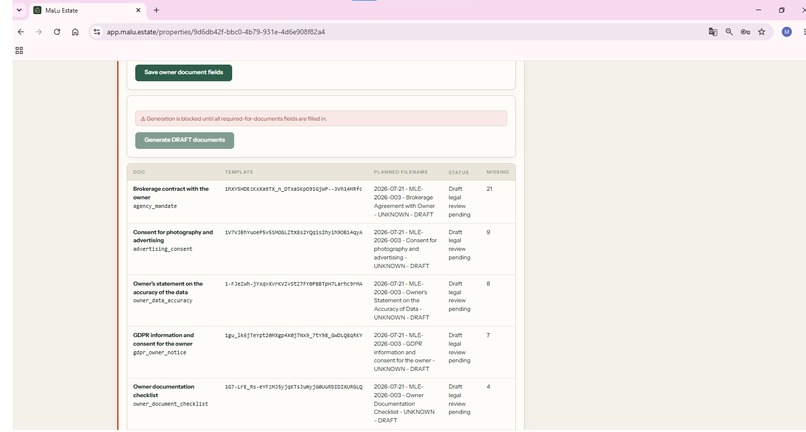
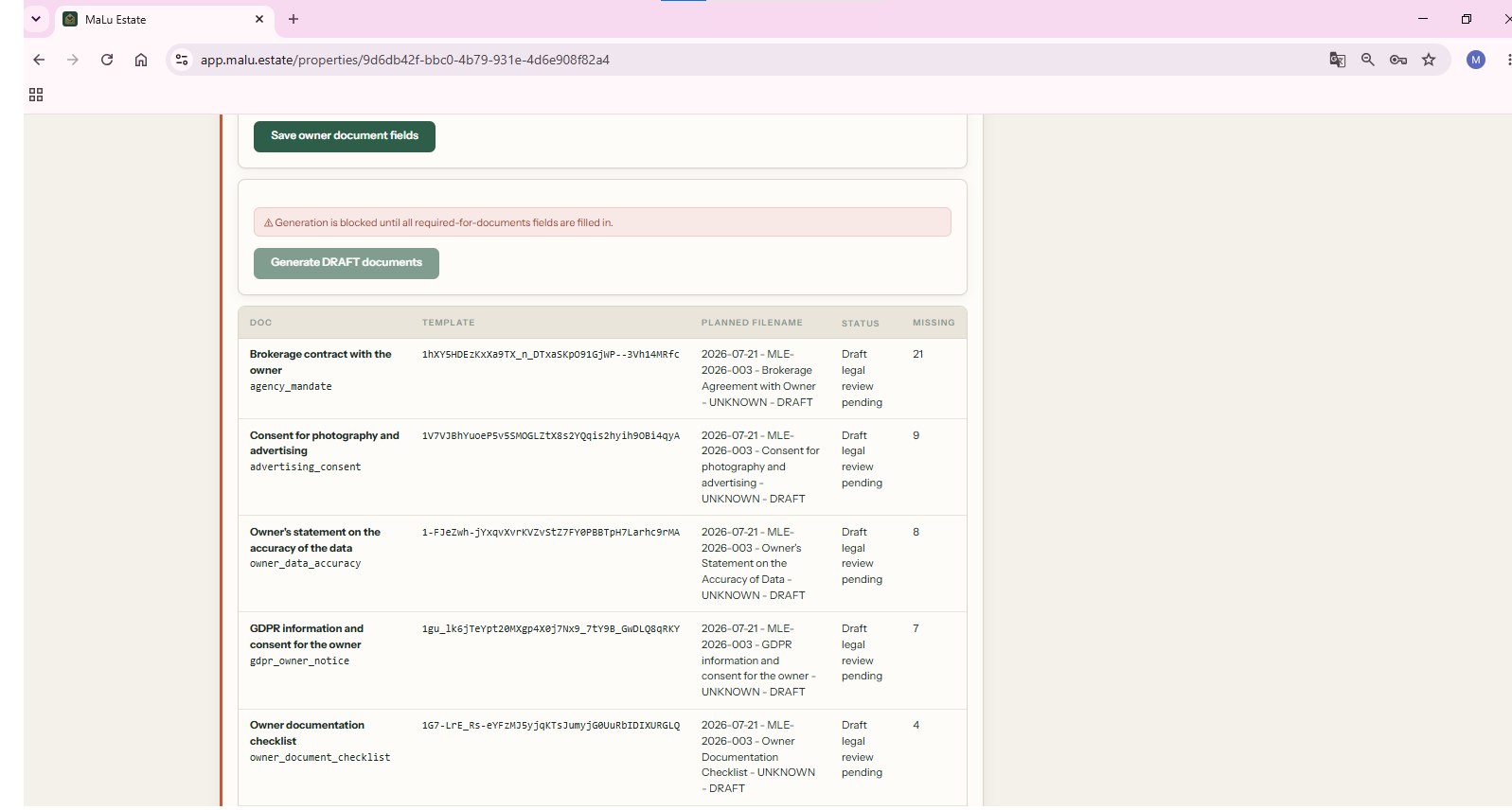
Real Estate Documents
-
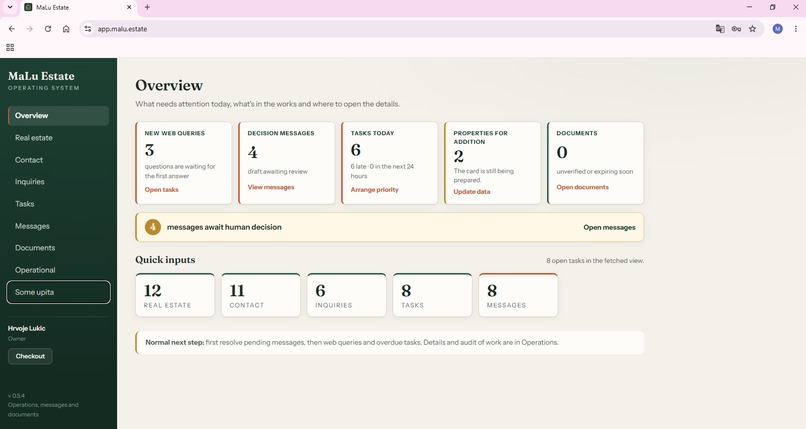
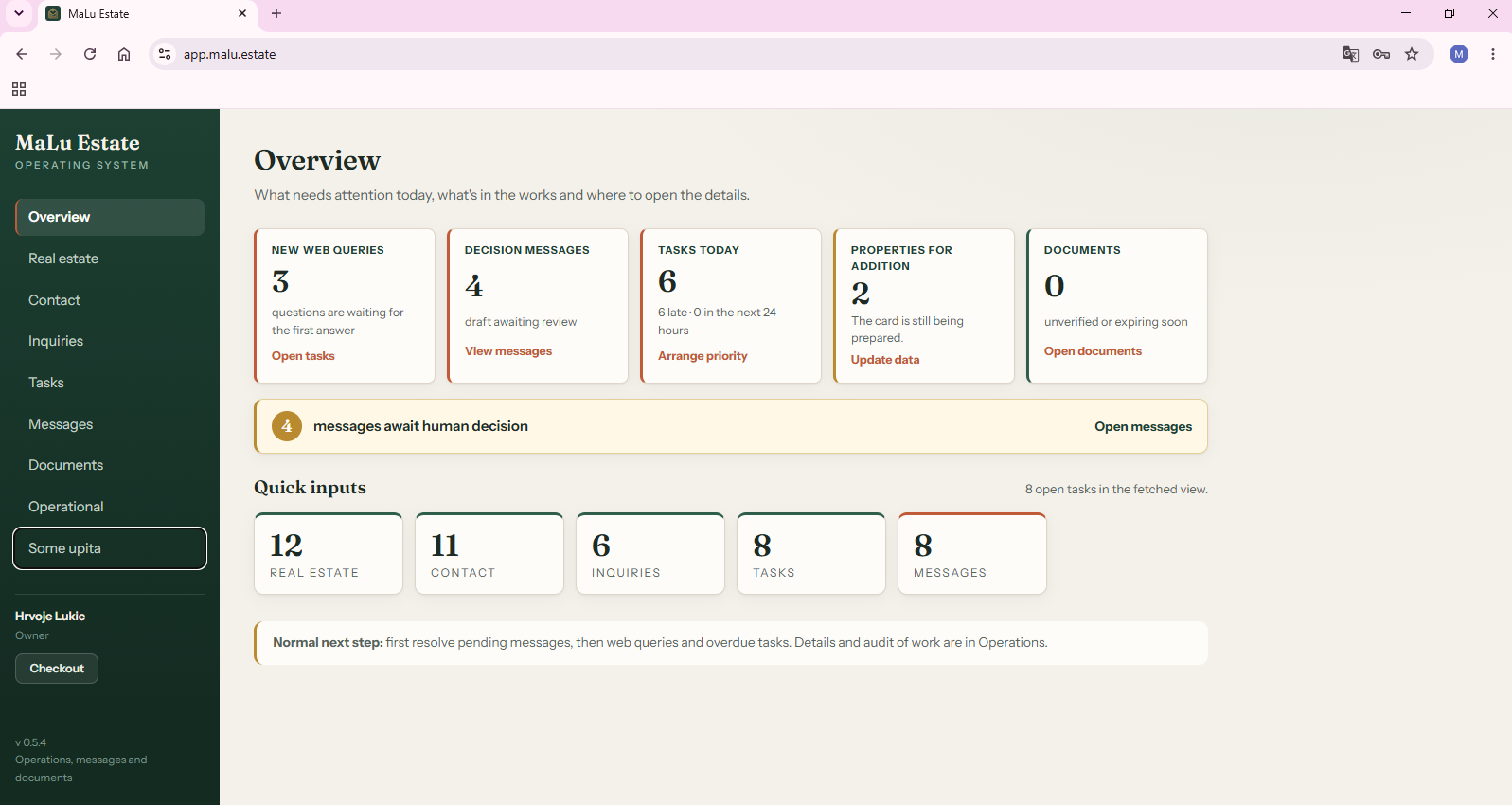
System Overview
-
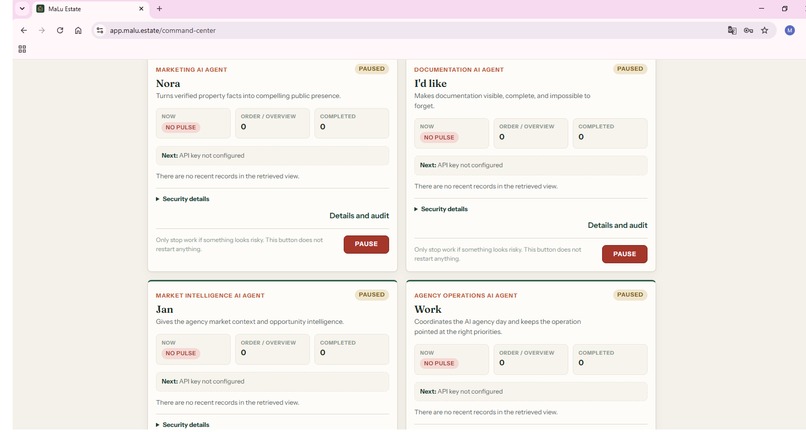
Agent Dashboard 1
-
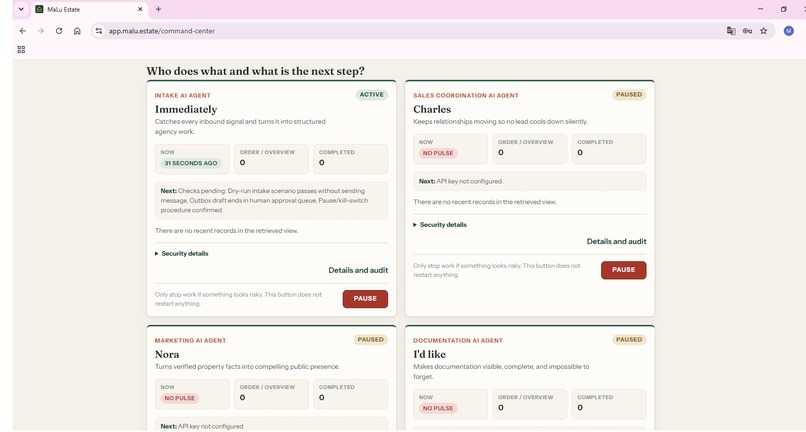
Agent Dashboard 1
-
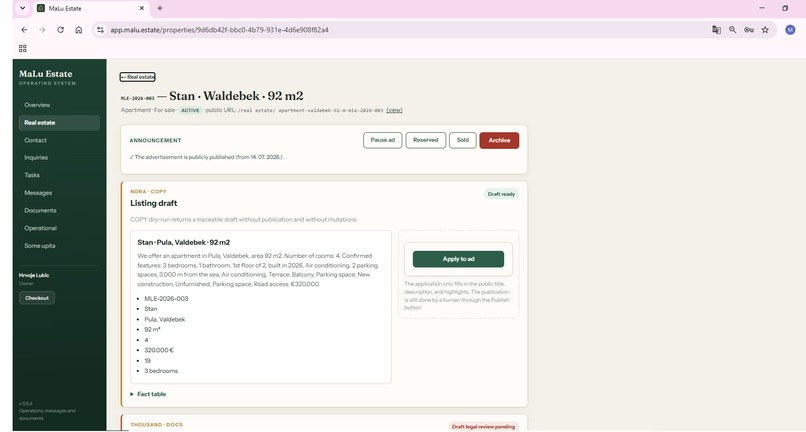
Real Estate Listings Draft
-
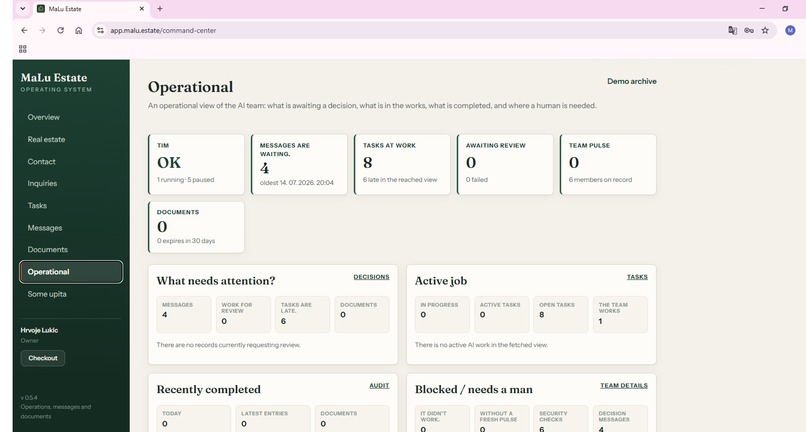
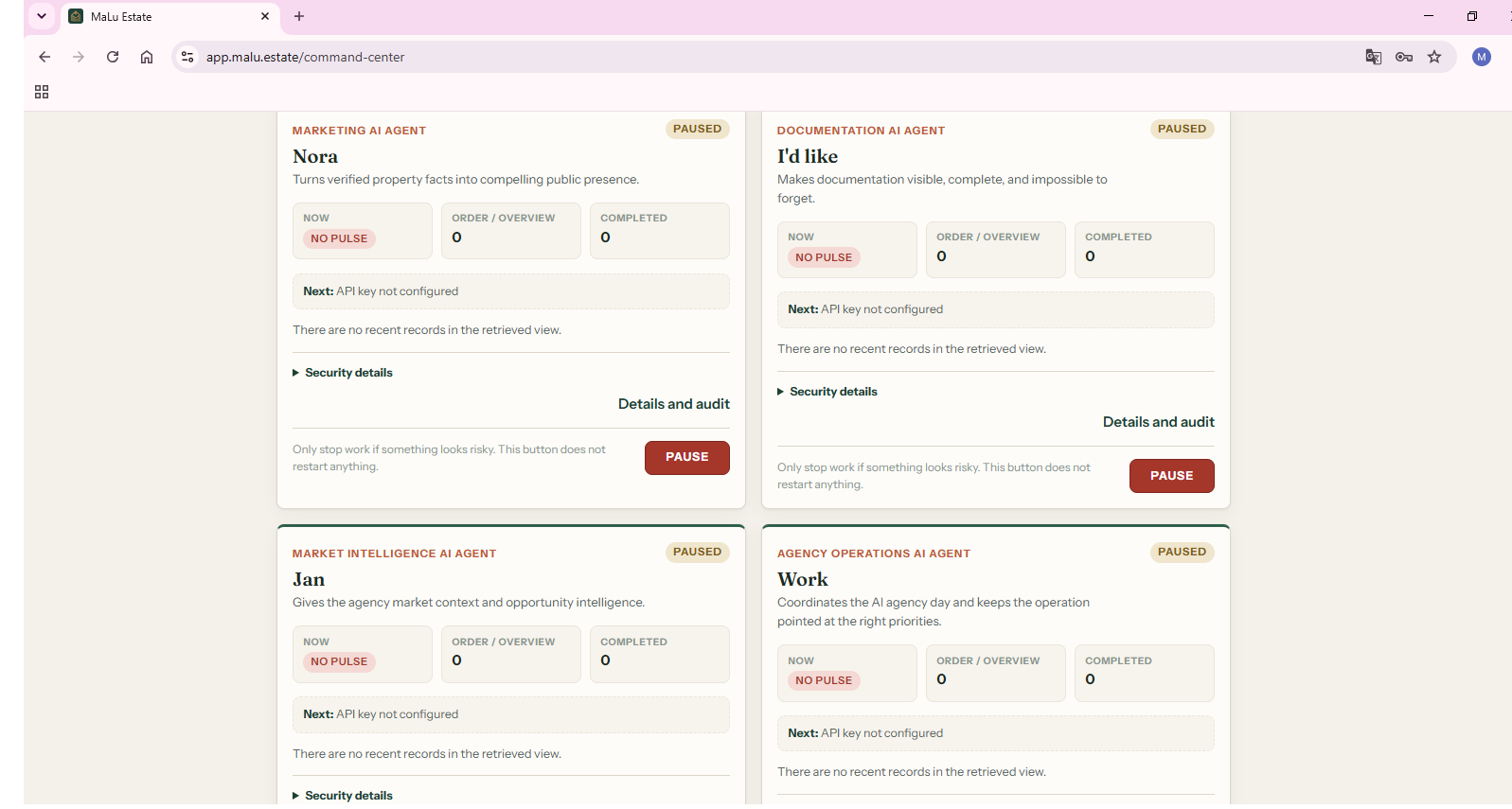
Control centar
-
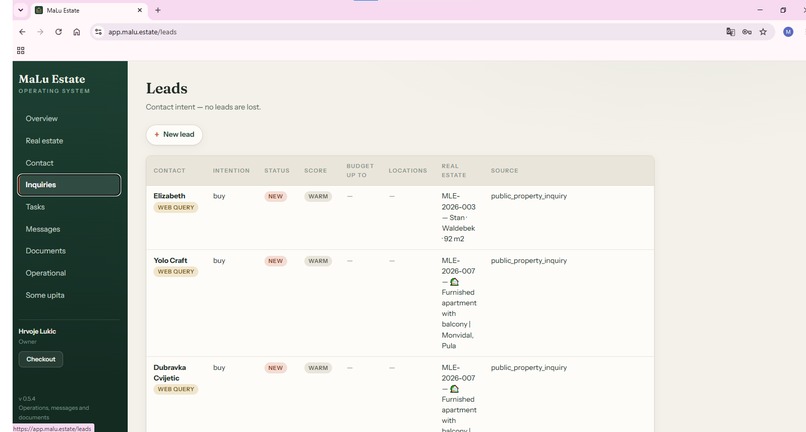
Leads
-
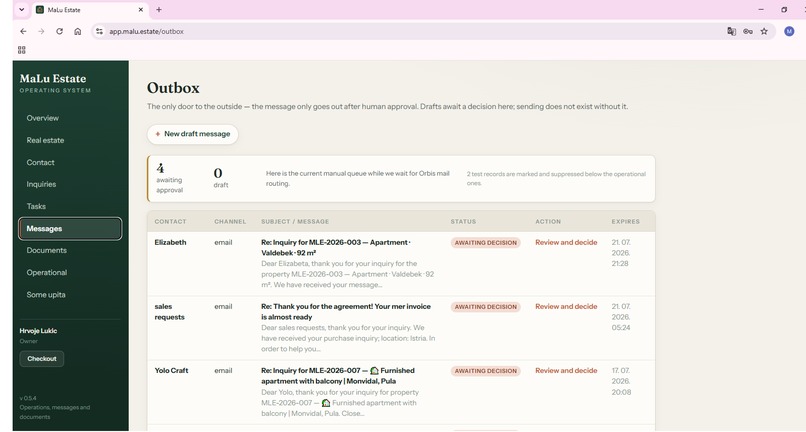
Outbox
-
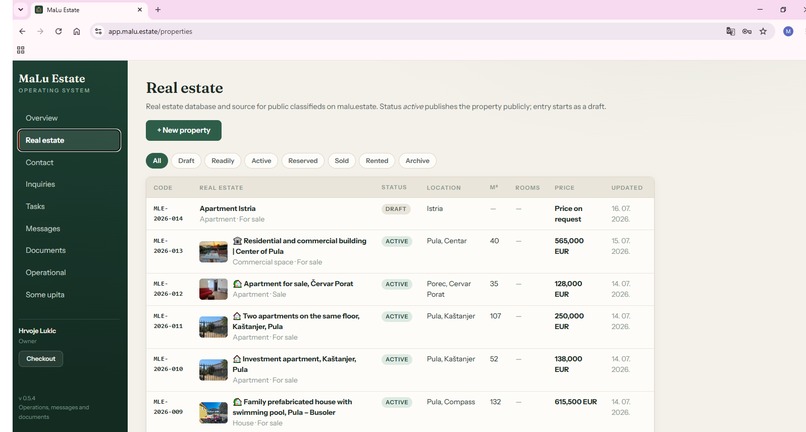
Real Estate Listings
Inspiration
MaLu Estate AI Agency OS is being built alongside a real Croatian real-estate agency whose launch process started about 10 days before this submission. The agency and the software are both already online and live, and the system is being developed together with the agency’s actual operational needs rather than as a standalone mock project.
The inspiration came from a very practical problem: real-estate agencies are full of repetitive operational work. Lead follow-up, listing copy, marketing preparation, owner updates, document coordination, and daily management checks consume a lot of time, but many of those tasks still need human judgment because trust, legal accuracy, negotiation, and client relationships matter.
The goal was to explore what an AI-native agency OS could look like when a founder understands the market and the customer workflow, but is not a software developer. Instead of building another chatbot or CRM feature, we wanted to show a working system where AI agents prepare the operational work and humans stay in control of trust-critical decisions.
What it does
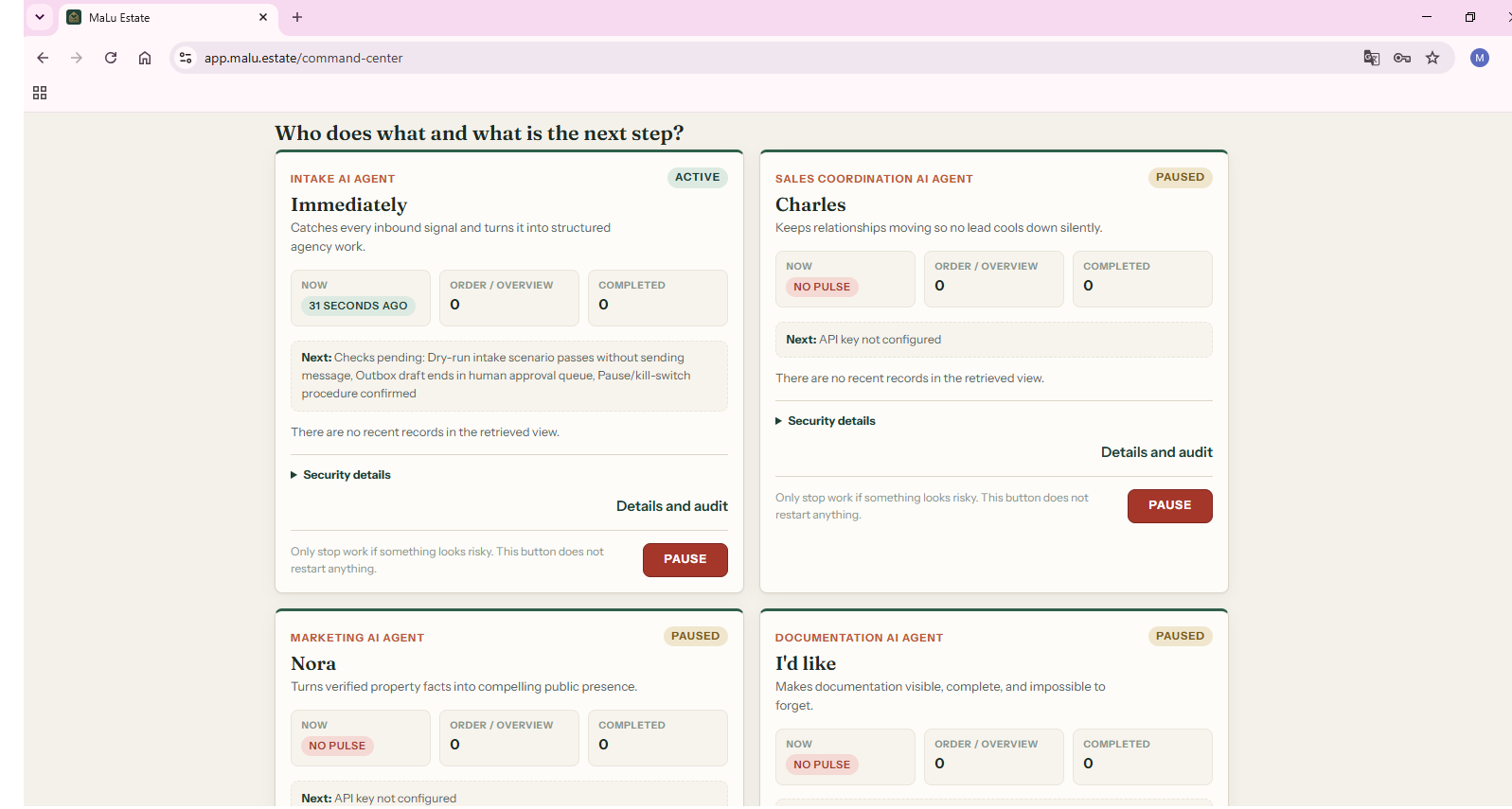
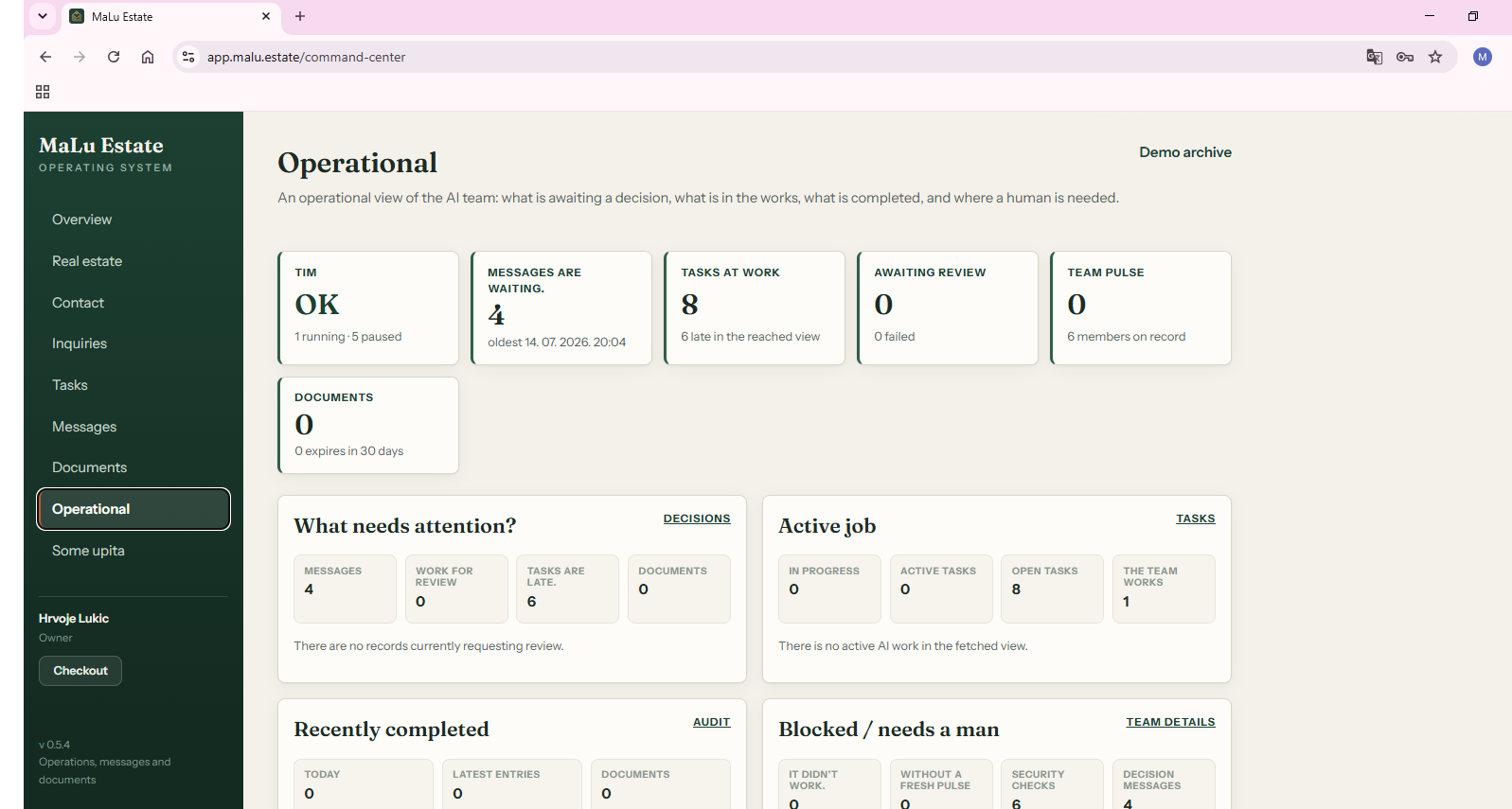
MaLu Estate AI Agency OS demonstrates an AI Agency Command Center for real-estate operations.
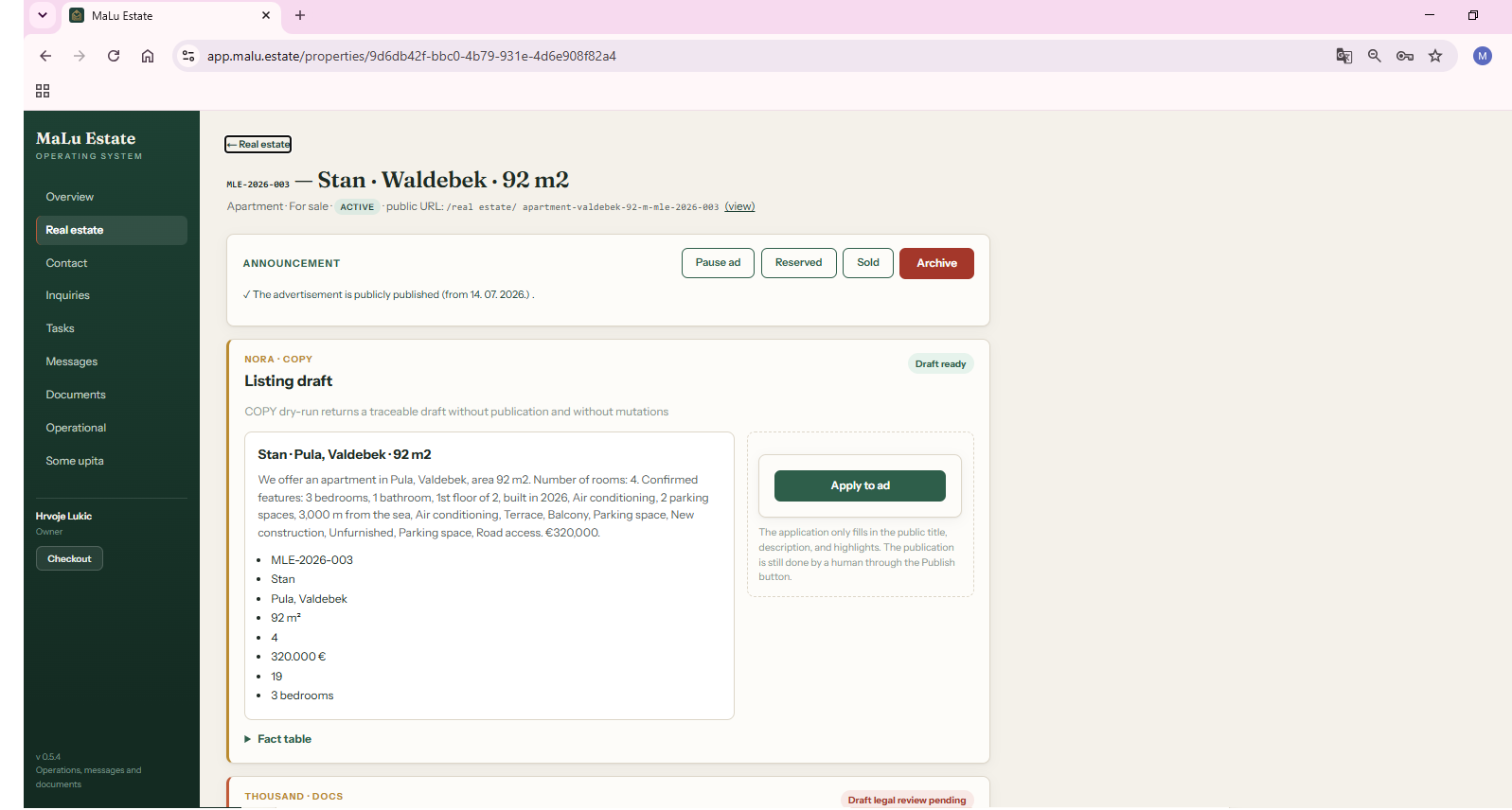
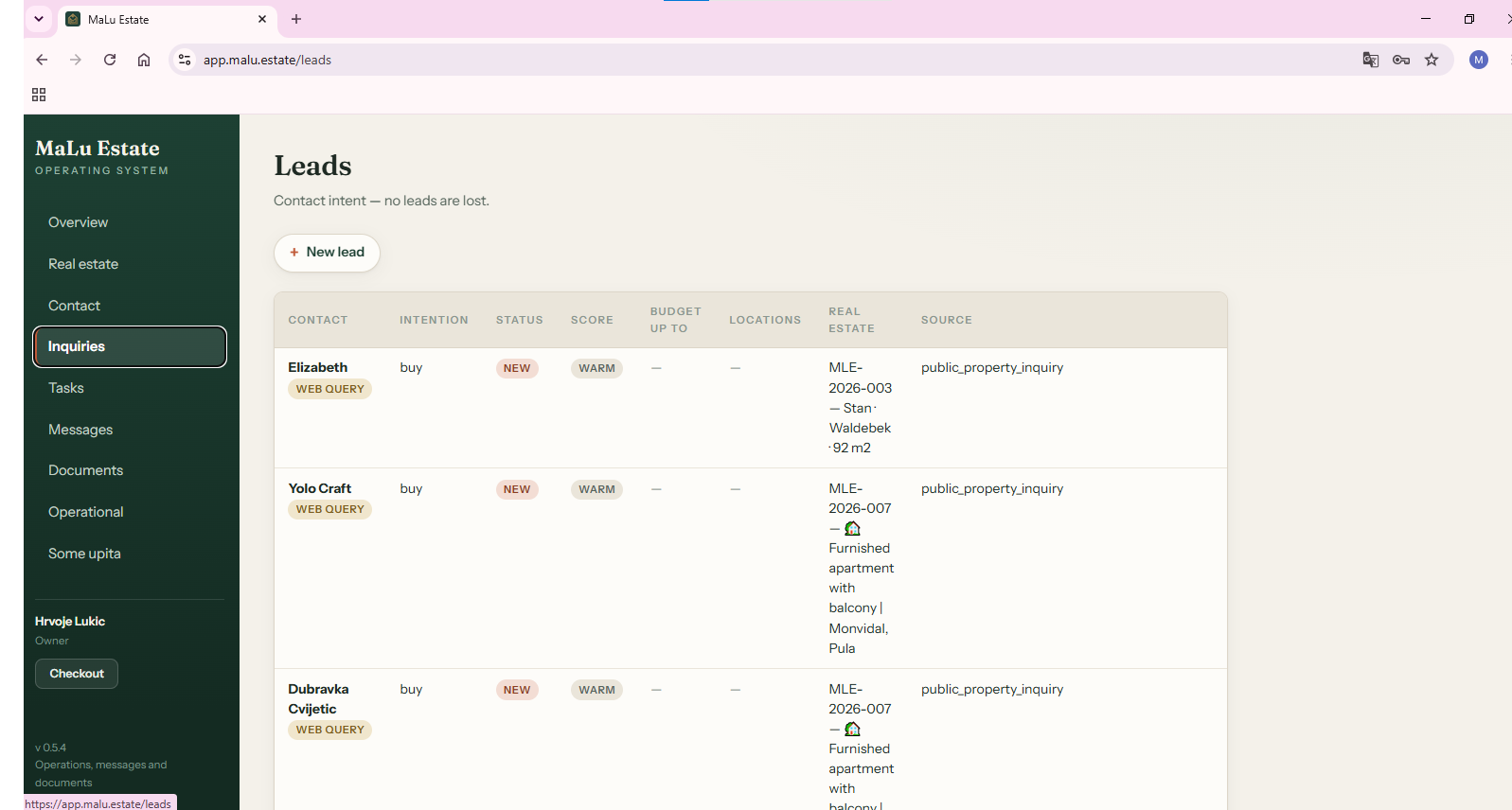
Karlo / FOLLOWUP reviews lead context and proposes safe next-best-action follow-ups for human review. Nora / COPY creates fact-checked listing copy from verified property data and turns unsupported claims into internal verification tasks. Lana / MANAGER produces an internal agency brief from explicit metrics such as leads, waiting inquiries, overdue tasks, pending approvals, and listing readiness.
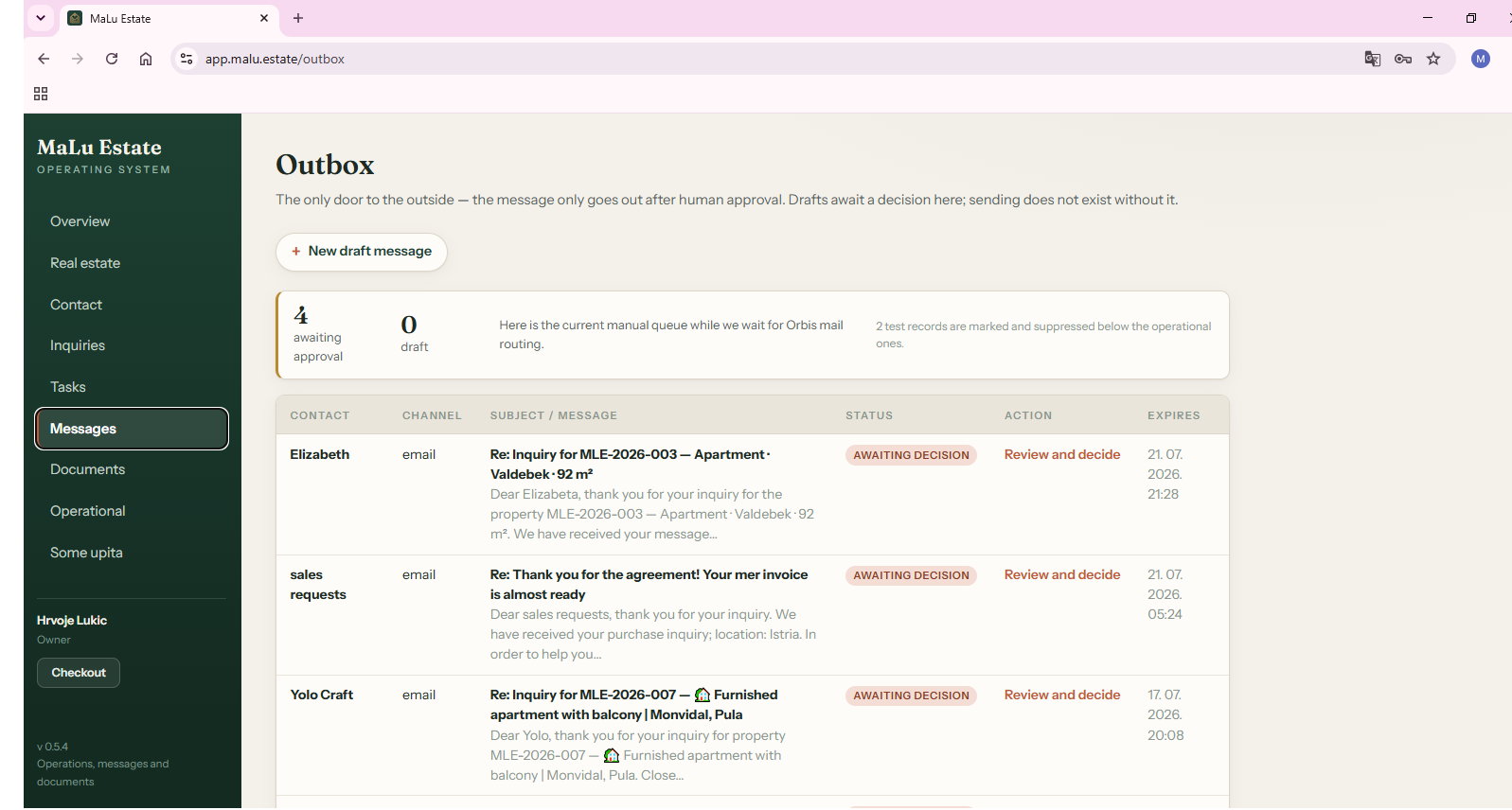
The Build Week demo is production-isolated, fixture-only, and review-first. It does not automatically send messages, publish listings, approve decisions, or mutate production data. The system is designed around the idea that AI should prepare cleaner decisions, drafts, and escalations, while humans remain responsible for moments that require trust.
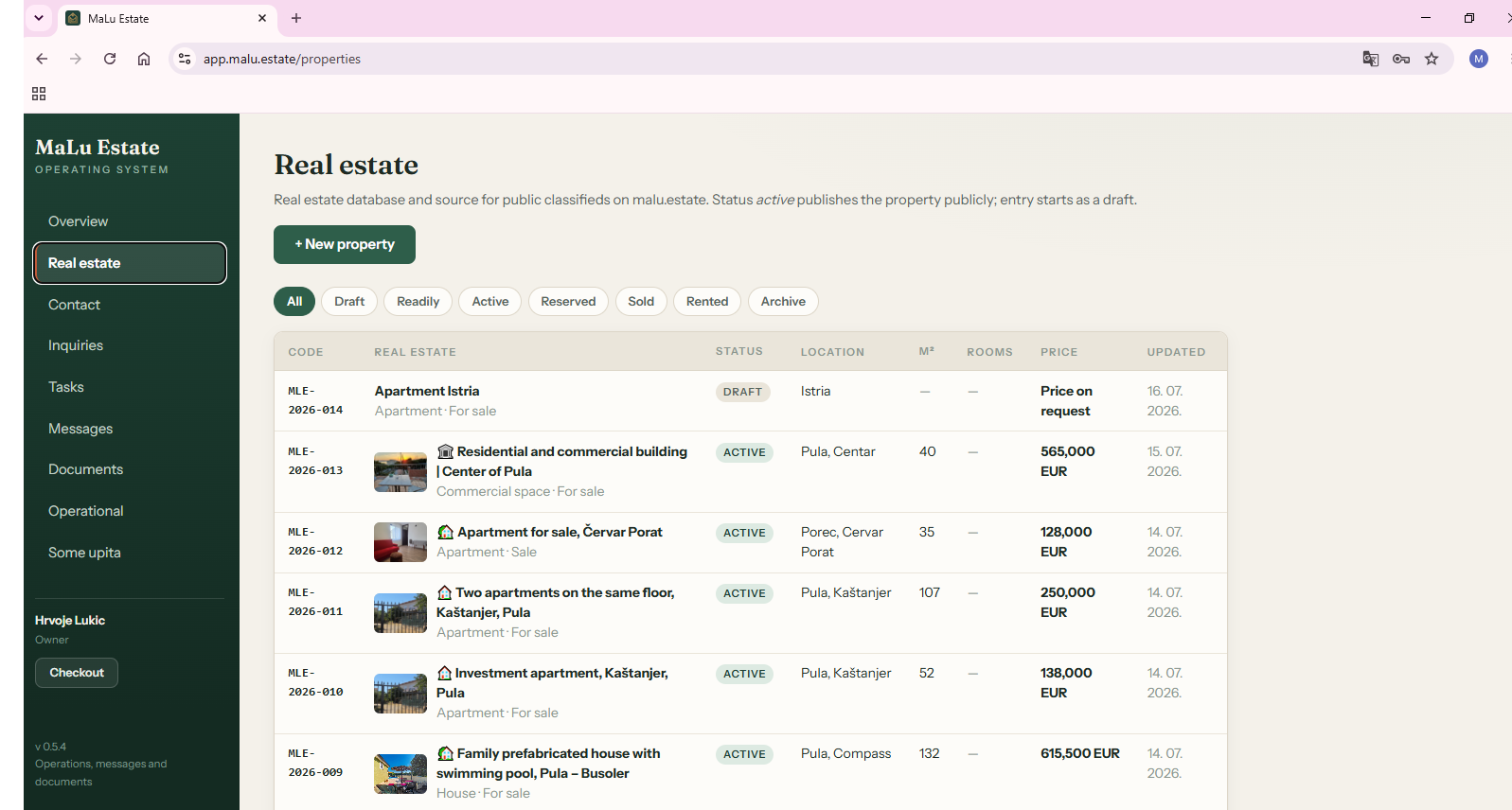
The broader MaLu Estate platform is intended to support the agency across leads, listings, marketing, documents, tasks, approvals, and management visibility as the real agency grows.
How we built it
The project builds on an existing MaLu Estate foundation with a Next.js admin app, TypeScript, Fastify Tool API, PostgreSQL/Supabase-style schema, audit logs, per-agent scopes, outbox approval, and a Hermes runtime concept.
For Build Week, we used Codex models through OpenClaw and our own custom agent system, which we also designed and built. Codex was not used only as a coding assistant. It became the execution layer that translated a founder-led business idea into a real, online software system.
The founder defined the real-world problem, market context, and product direction: a Croatian real-estate agency needs an AI-native operating system for leads, properties, follow-up, marketing, documents, and daily management. The founder is not a software developer and did not manually write or edit the code. His role was to understand the business problem, make product decisions, validate the workflow, and keep the system grounded in the needs of a real agency.
Codex-powered agents running through OpenClaw handled the technical execution: architecture, code, tests, integrations, repository work, deployment workflows, documentation, demo data, verification commands, Devpost copy, and submission packaging. The work involved platforms and infrastructure such as GitHub, Supabase/PostgreSQL, Vercel, Cloudflare, hosting infrastructure, and other services that the founder does not operate directly.
For the Build Week demo itself, we focused on deterministic planner functions and a demo route that shows how specialized AI agents can support real agency workflows while preserving human approval points. Codex/OpenClaw helped design the agent roles, review-first workflow, Tool API boundaries, auditability, outbox approval model, fixture-based demo data, and the FOLLOWUP, COPY, and MANAGER planner logic.
Localization note: MaLu Estate is built for the Croatian real-estate market and the production interface is primarily in Croatian. For this submission, some screenshots were translated to English using Chrome Translate to make the workflow easier to review. We apologize for any machine-translation mistakes visible in the screenshots; the underlying product is intentionally localized for Croatian users.
Challenges we ran into
The biggest challenge was choosing the right scope. Full autonomy would have looked more dramatic in a hackathon demo, but it would have been risky and unrealistic for real estate. Sending messages, publishing listings, making pricing claims, or approving business decisions without human review would not match how a serious agency should operate.
We narrowed the project to a governed Command Center that demonstrates useful agent behavior without pretending sensitive business decisions should be automated blindly. That meant focusing on planner logic, factuality checks, clear escalations, and review-first workflows instead of unsafe end-to-end automation.
Another challenge was building while the real agency itself was being launched. The software was not developed in isolation. It had to remain useful for an actual Croatian agency, respect local language and market context, and stay flexible enough to evolve with real operations after Build Week.
Accomplishments that we're proud of
We are proud that this is not just a hackathon mockup. MaLu Estate AI Agency OS is being developed alongside a real agency that is already online and live.
We created a clear AI agency workflow with three specialized agents, explicit safety boundaries, fixture-based demo data, factuality checks for listing copy, and no-send/no-publish behavior. The result is small enough for judges to review, but concrete enough to show how the larger MaLu Estate platform can evolve.
We are also proud of the development workflow itself. A non-developer founder was able to move from market insight and business vision to a working technical product by using Codex models through OpenClaw and a custom agent system. The founder did not need to manually write code, manage repositories, configure infrastructure, or operate every technical platform directly. Codex-powered agents handled the technical execution while the founder stayed focused on the problem, product direction, and real agency workflow.
What we learned
The most important lesson was that useful AI agency software is not about removing humans from the loop. It is about giving humans better prepared decisions, cleaner drafts, clearer escalations, and operational visibility.
We also learned that AI-assisted development can be more than faster coding. In this project, Codex/OpenClaw acted as a bridge between business intent and software execution. That allowed a non-developer founder to build and operate a real technical product while staying close to the market and customer problem.
The right role for AI in this kind of business is not fake autonomy. It is structured agency: agents can gather context, prepare drafts, detect missing information, escalate sensitive topics, and keep operations moving, but humans still own trust-critical decisions.
What's next for MaLu Estate AI Agency OS
Next steps are connecting the Command Center to real approval queues, expanding agent scopes, improving the Tool API as the single write path, adding production-grade observability, and piloting the workflow with real Croatian real-estate operations after the hackathon.
We want to evolve Karlo, Nora, Lana, and future agents into a broader agency operating system for lead management, listing preparation, marketing, owner updates, task coordination, document workflows, and management reporting.
As the real MaLu Estate agency grows, the software will grow with it. The long-term vision is an AI-native real-estate agency where agents handle repetitive operational work, the founder and team stay focused on relationships and decisions, and every important action remains auditable, reviewable, and grounded in verified data.
Built With
- ai-agent
- fastify
- gpt-5.6
- next.js
- node.js
- openai-codex
- postgresql
- react
- real-estate
- supabase
- typescript
- zod


Log in or sign up for Devpost to join the conversation.