-
-
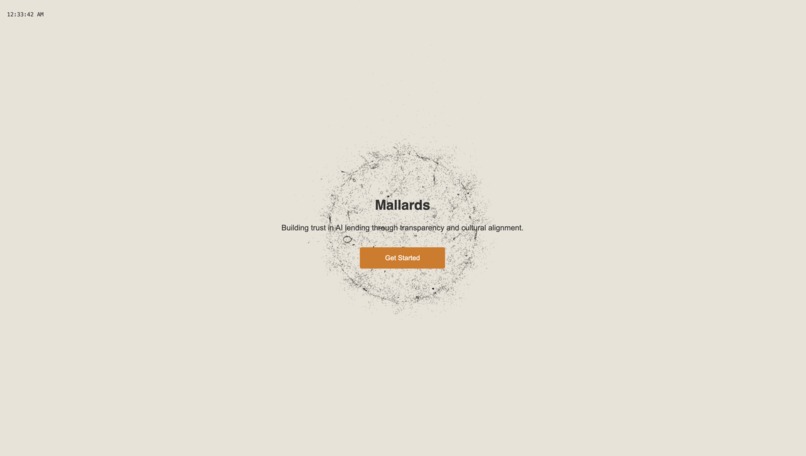
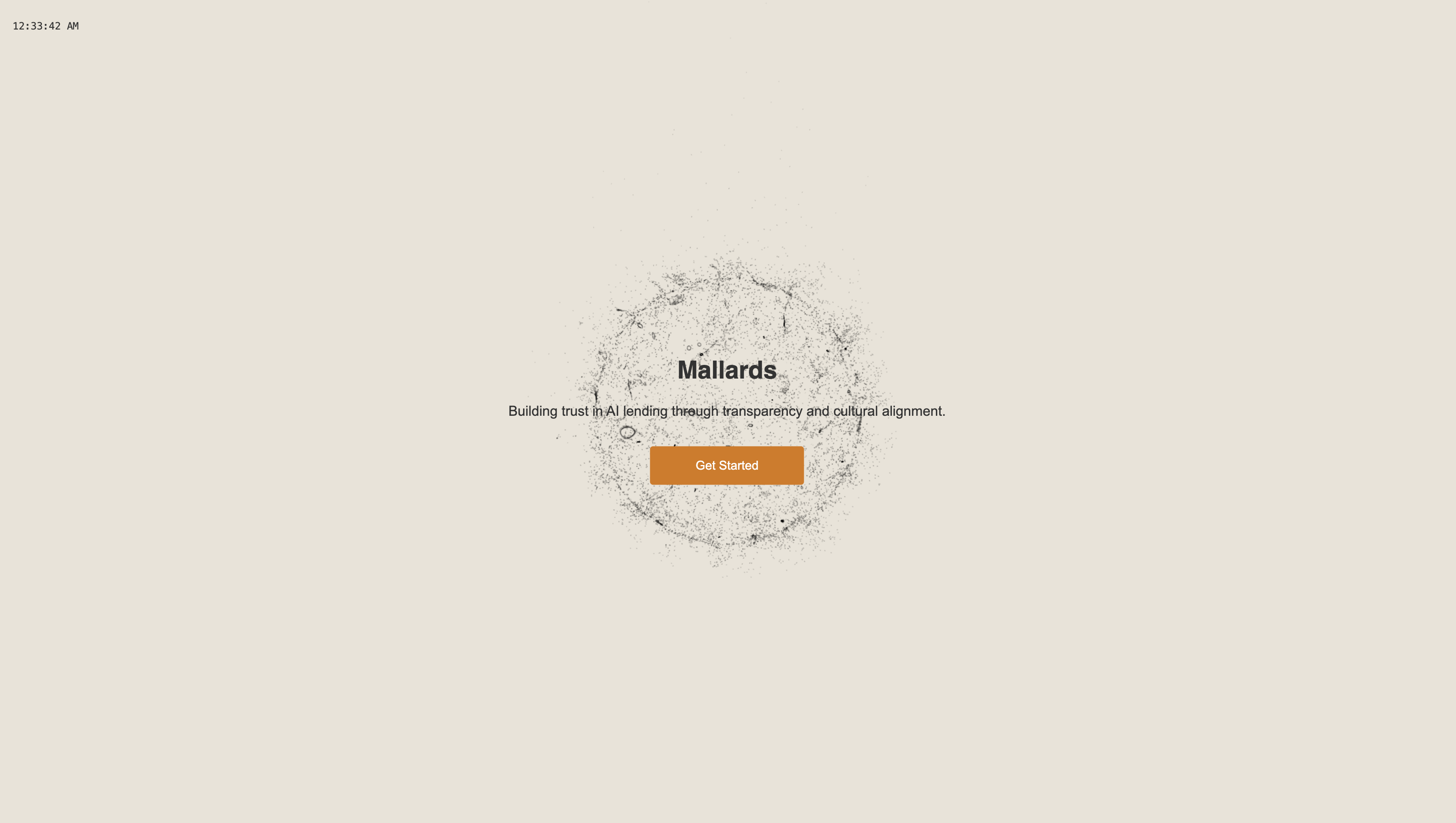
Landing Page
-

Data Upload
-
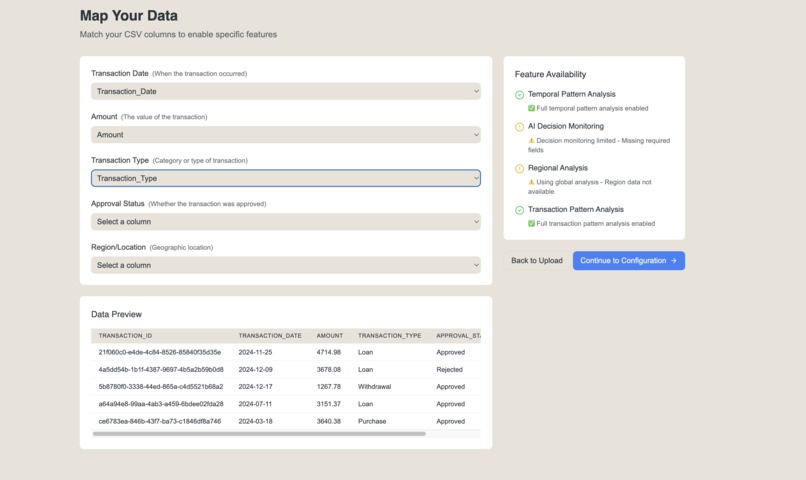
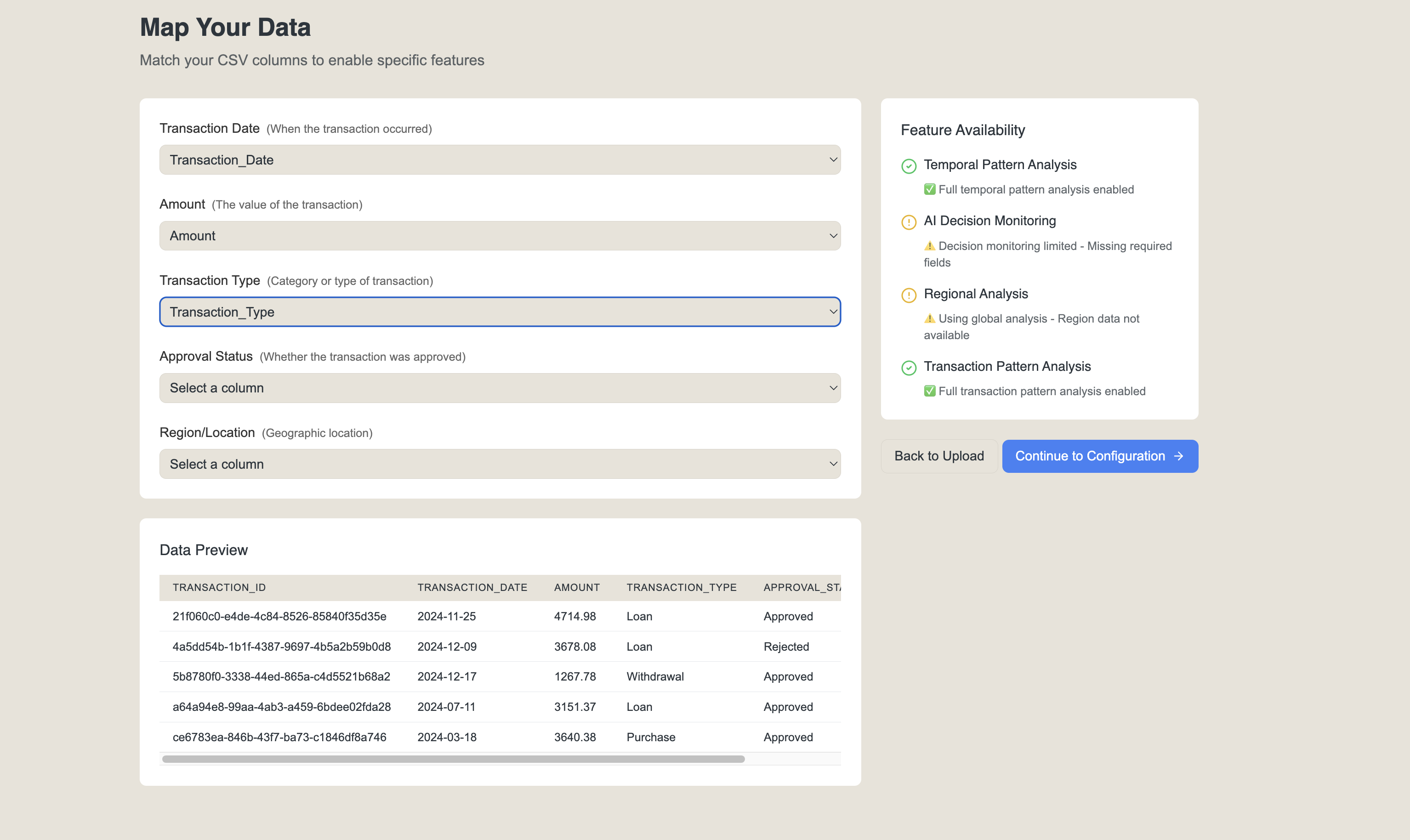
Data Mapping
-
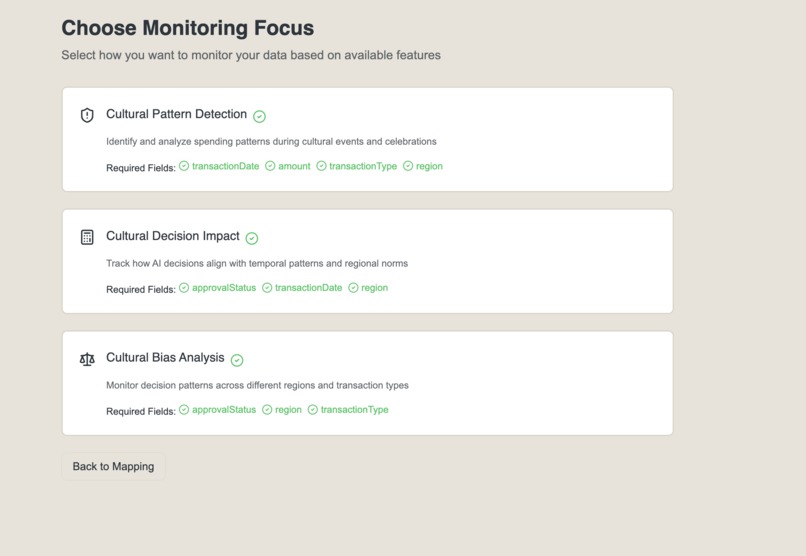
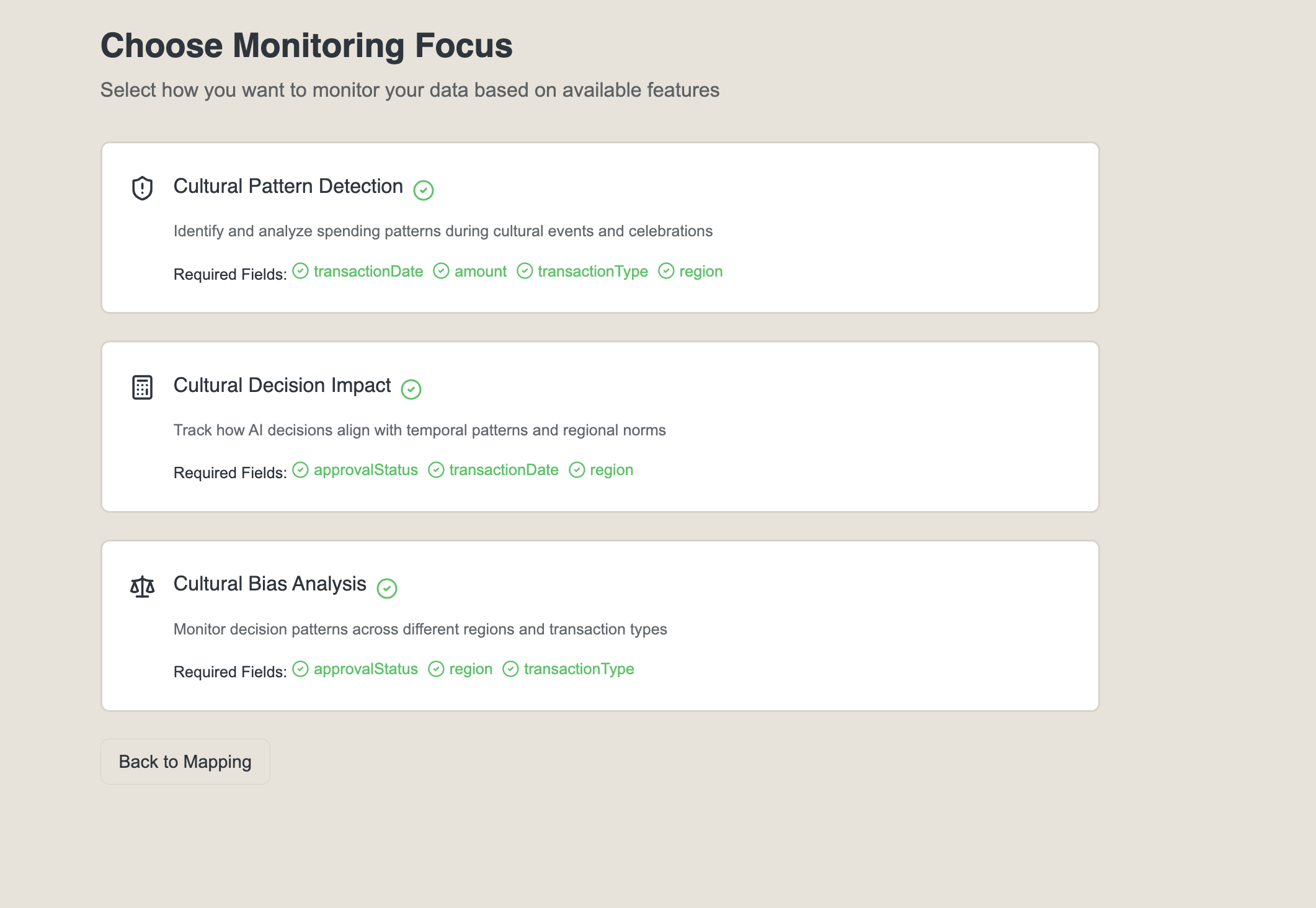
Monitoring Focus Selection
-
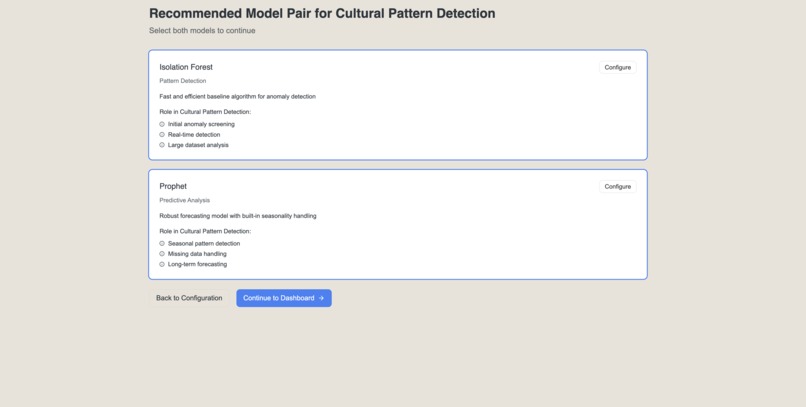
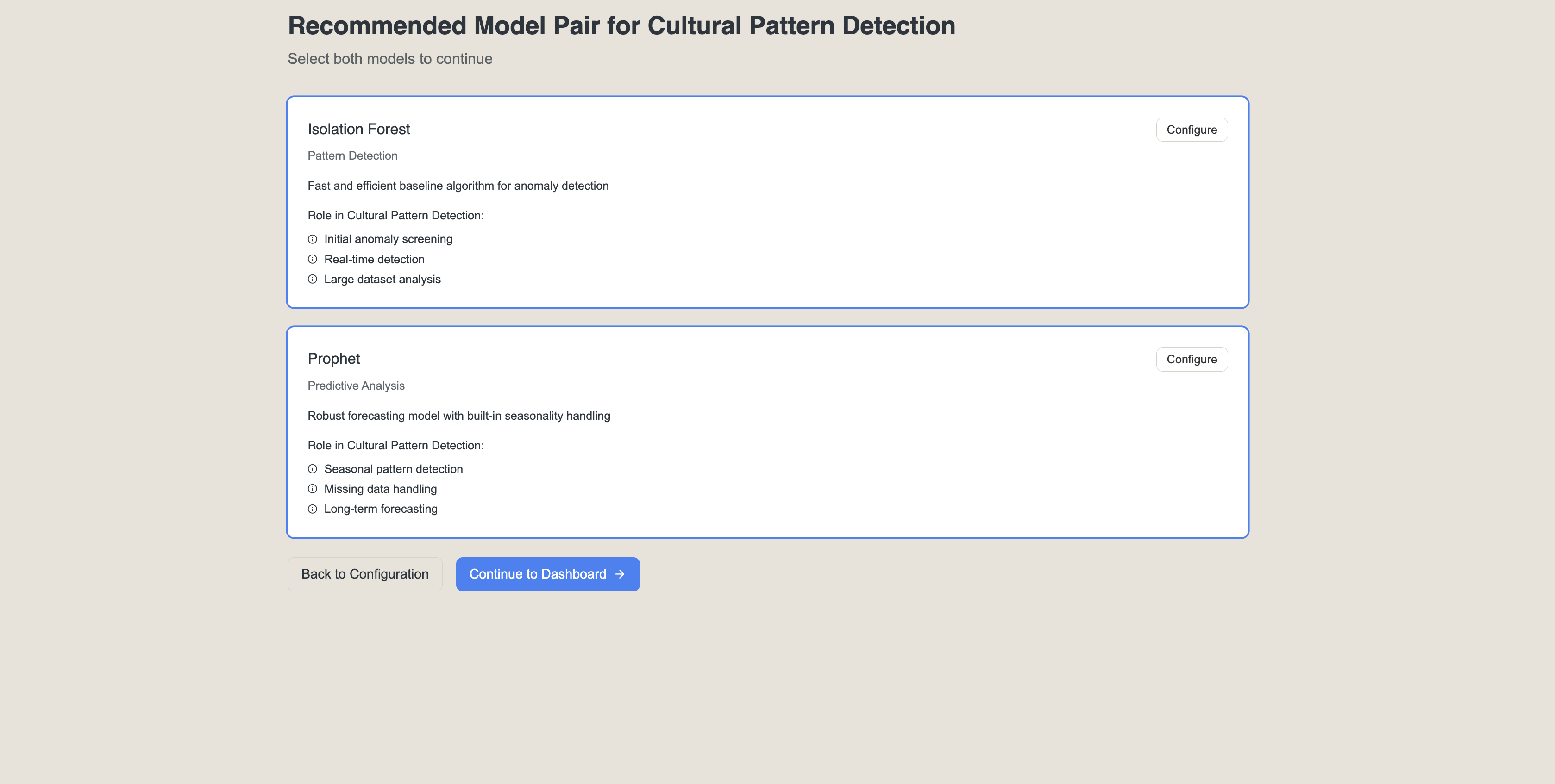
Model Selection
-
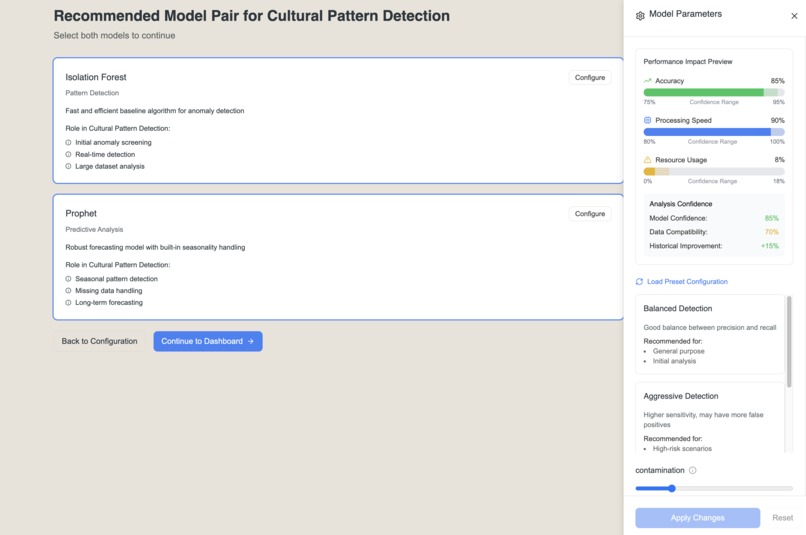
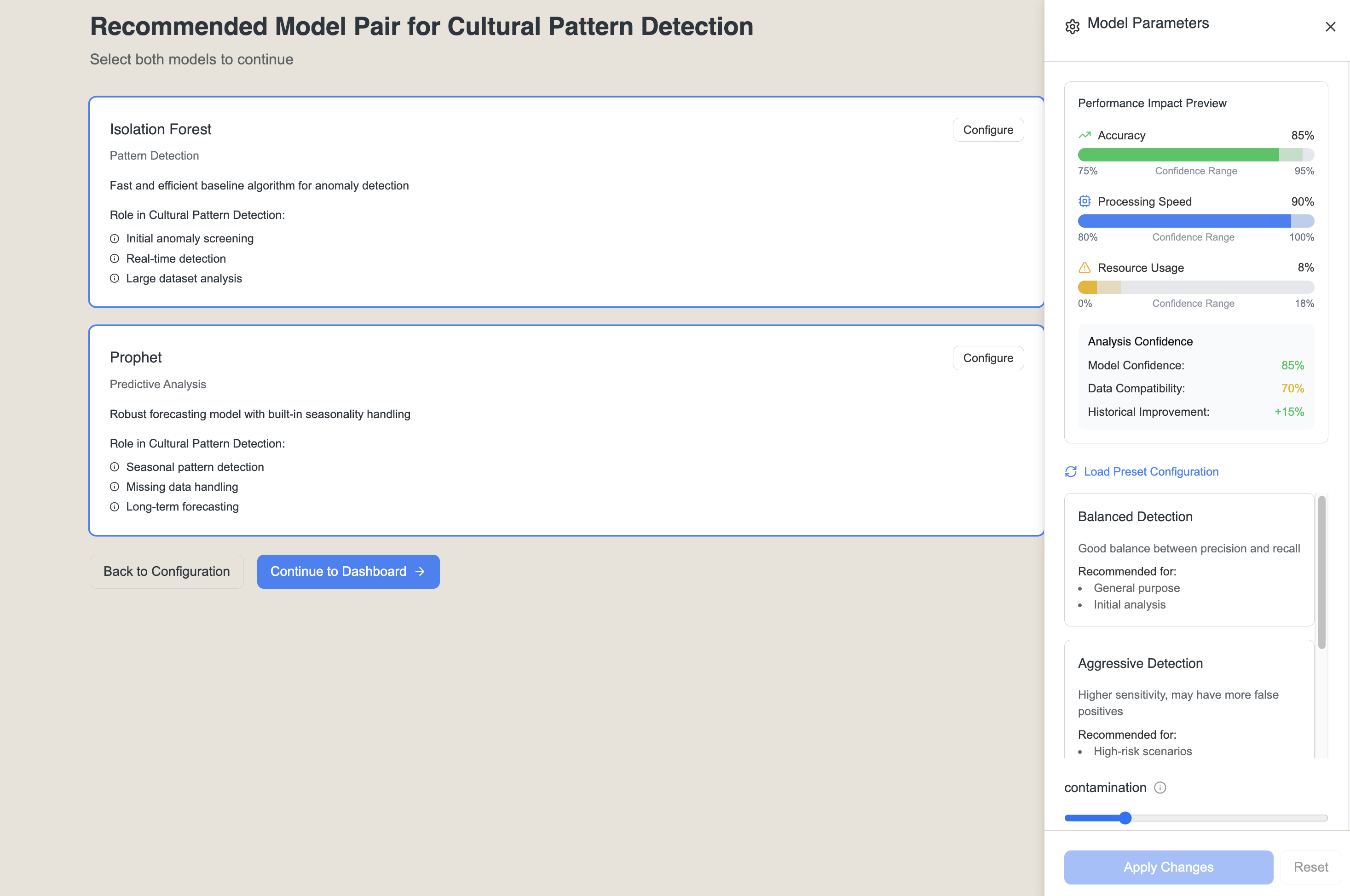
Model Configuration (this is just UI, doesn't actually work hence you can't apply it)
-
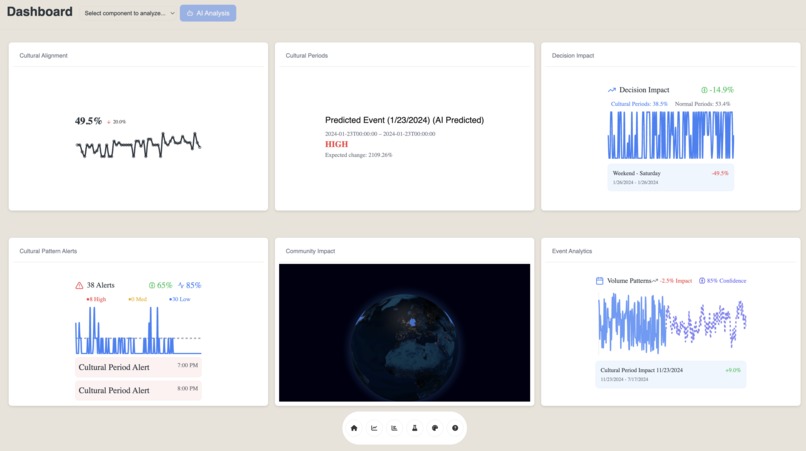
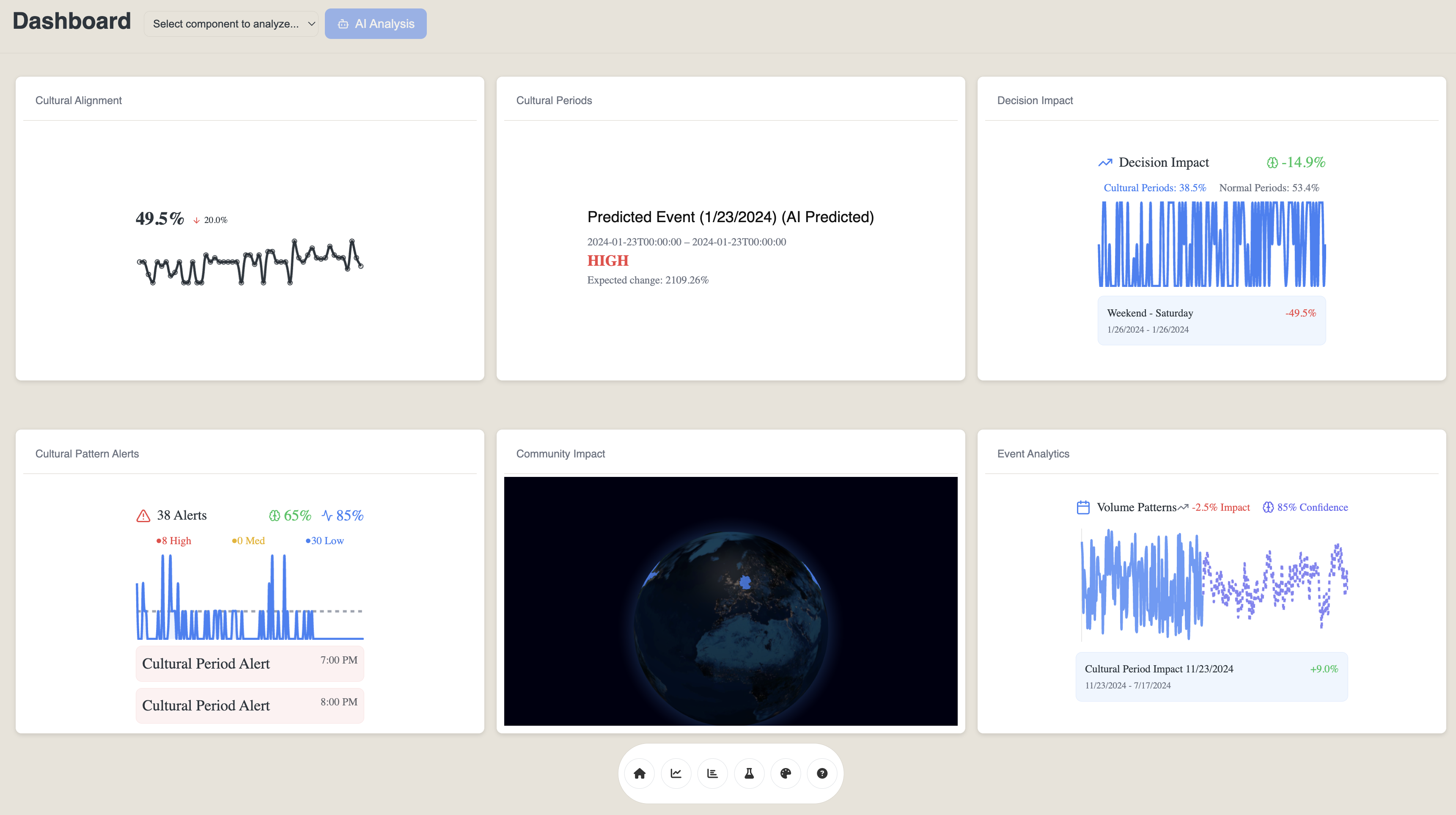
Dashboard Page
-
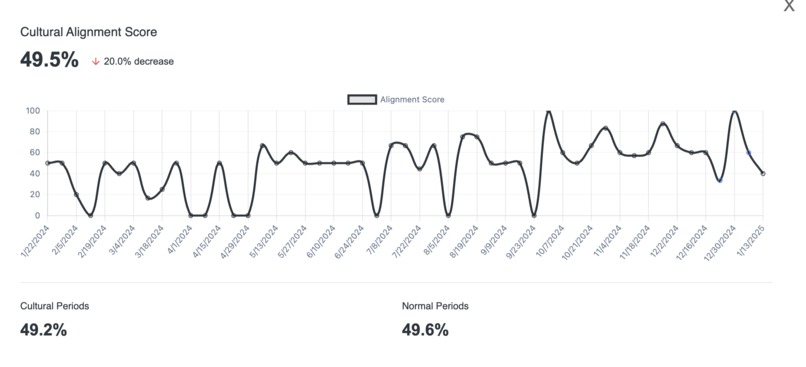
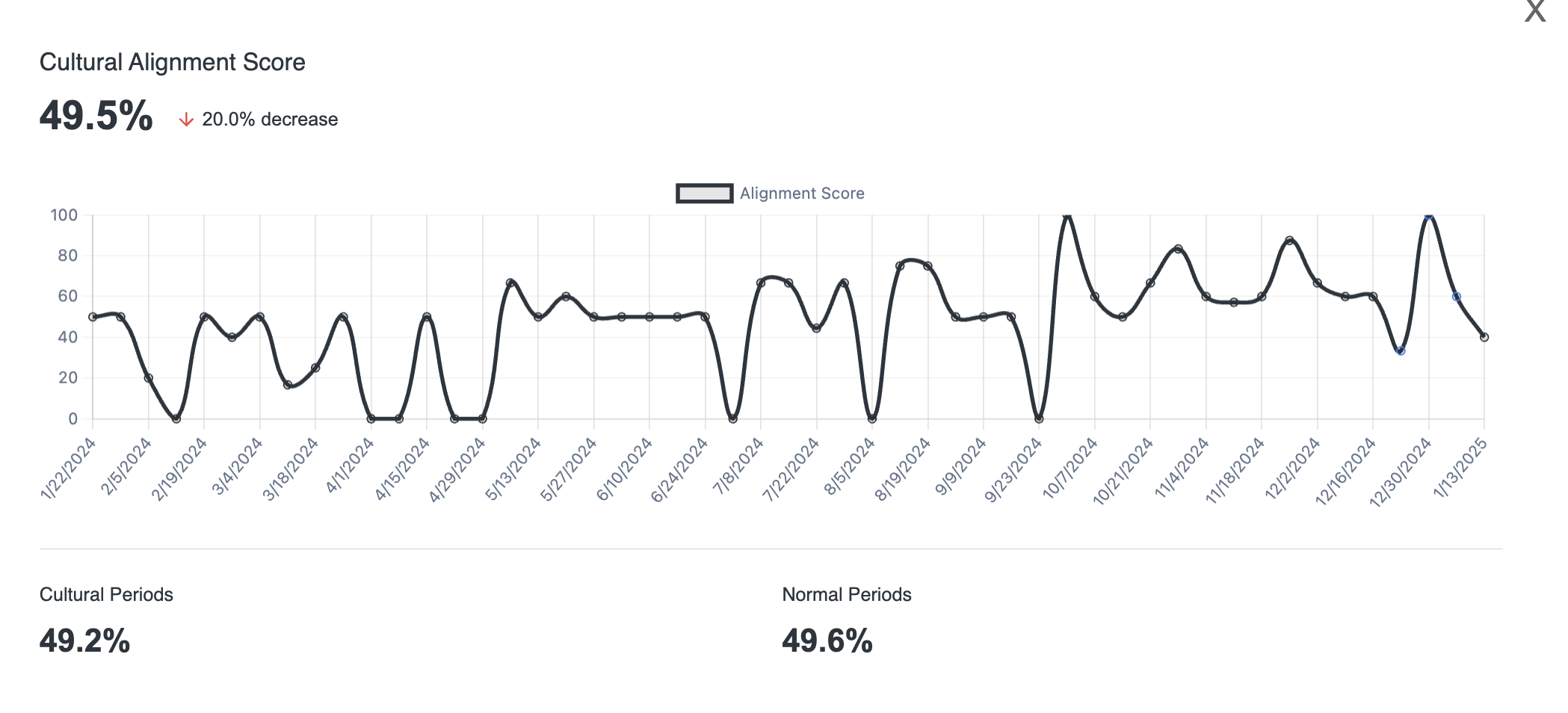
Cultural Alignment Score
-
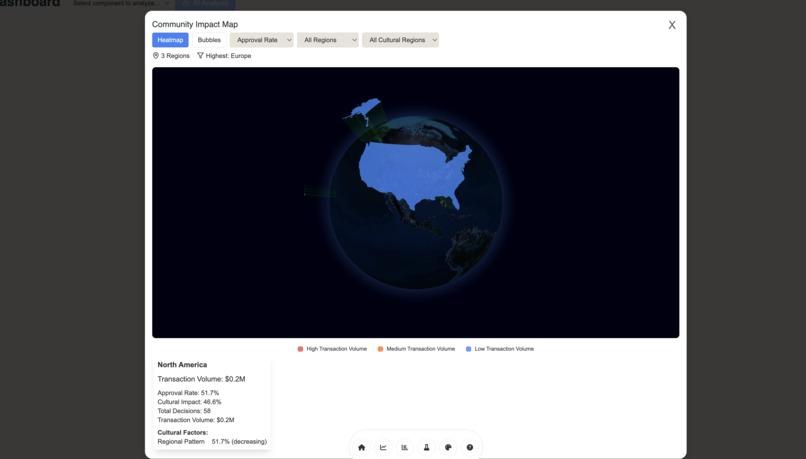
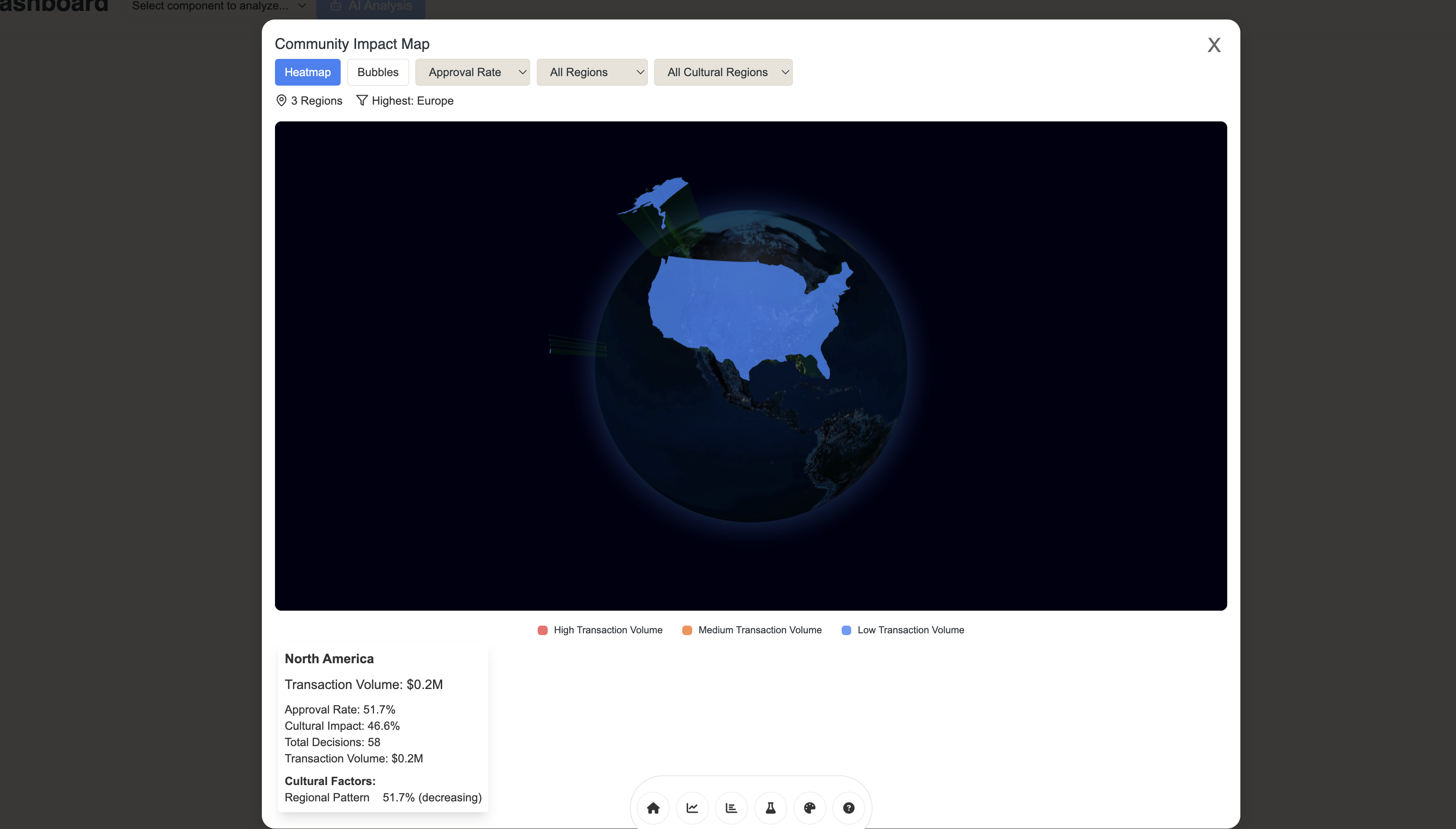
Community Impact Map
-
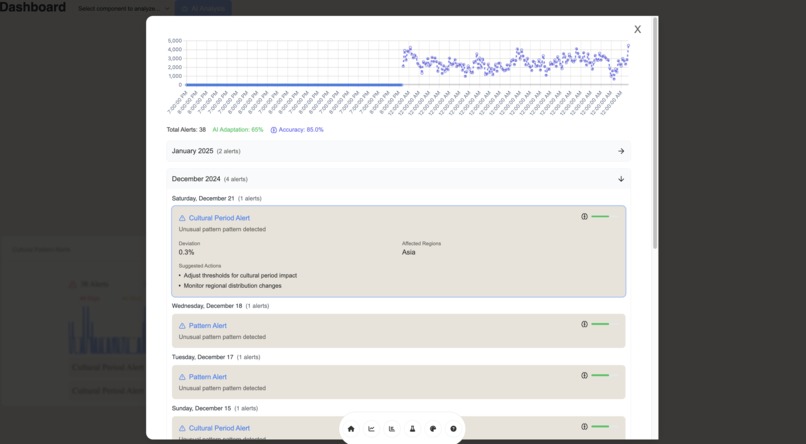
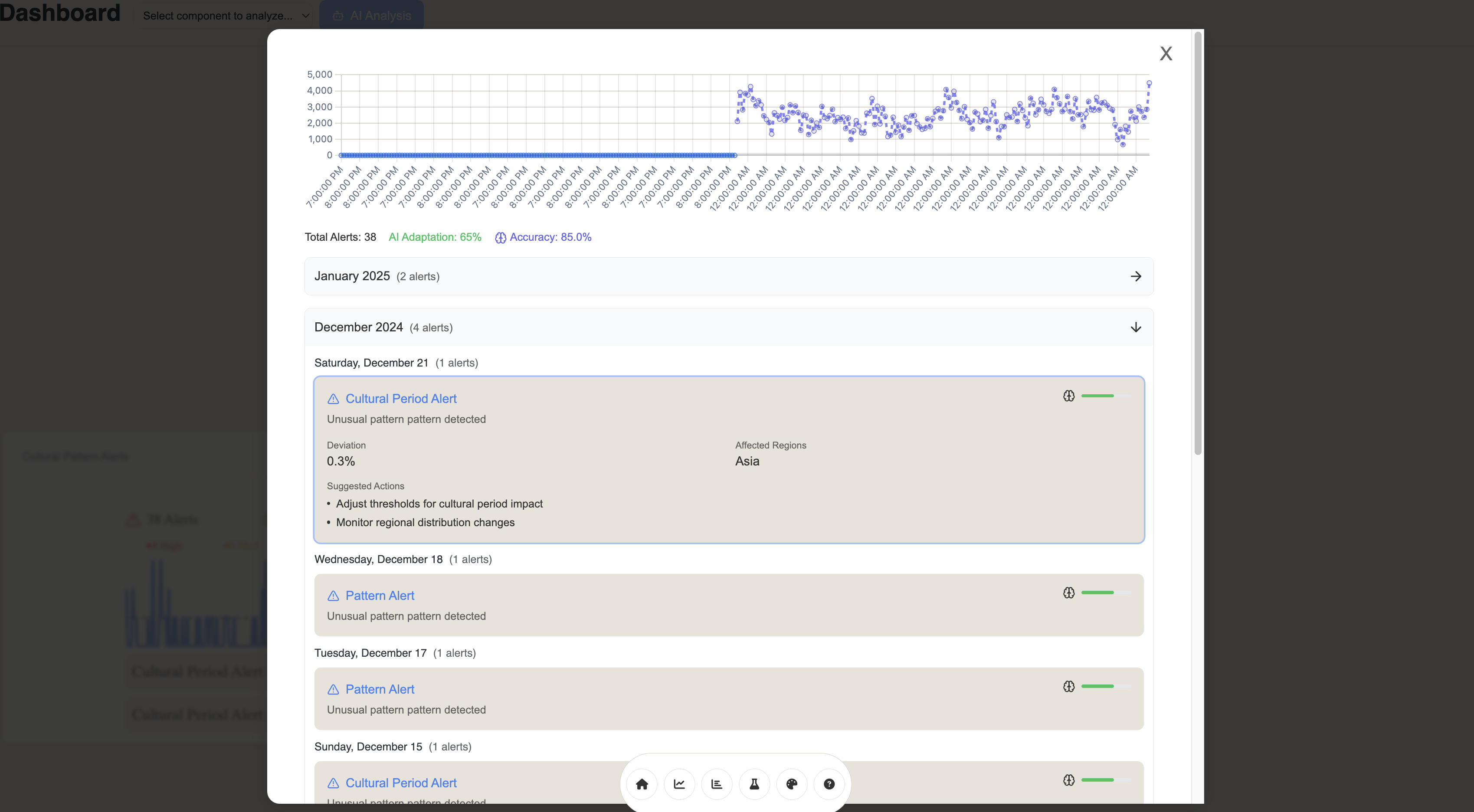
Cultural Pattern Alerts
-
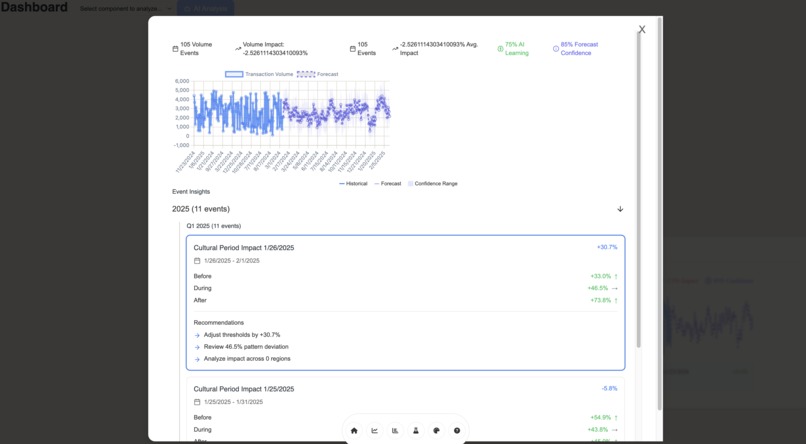
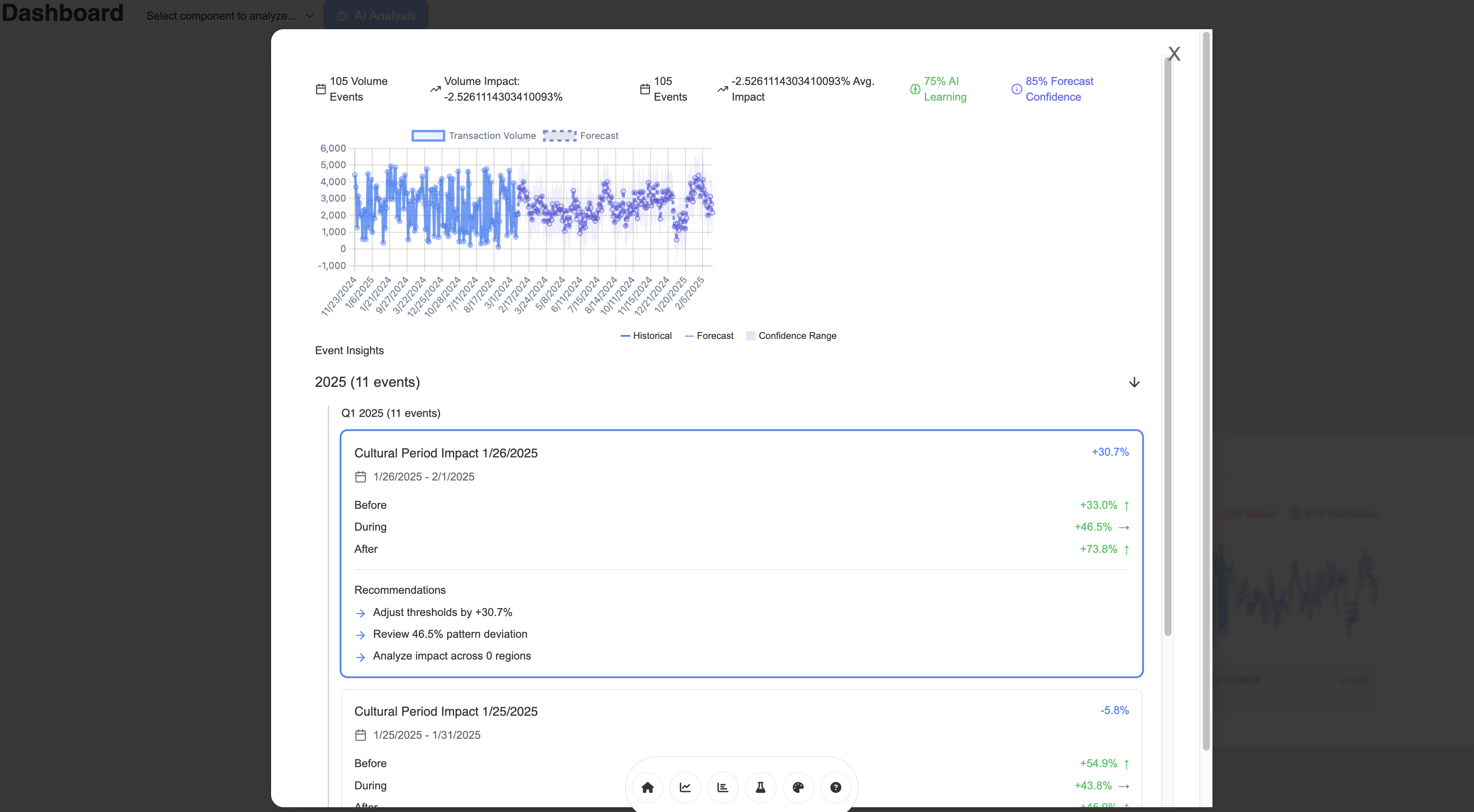
Cultural Event Analytics
-
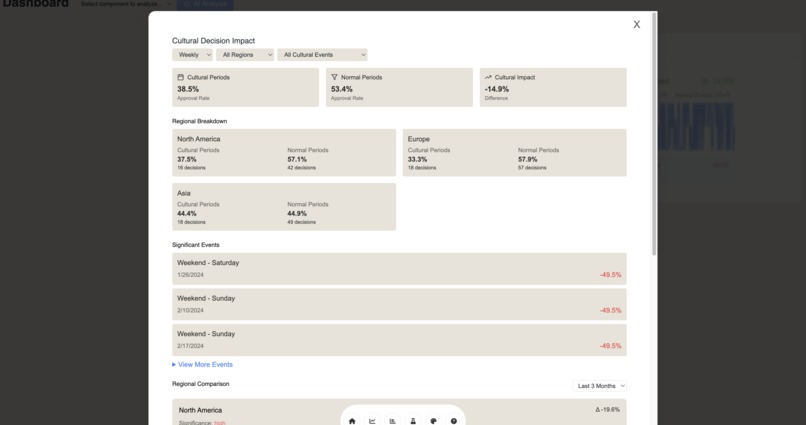
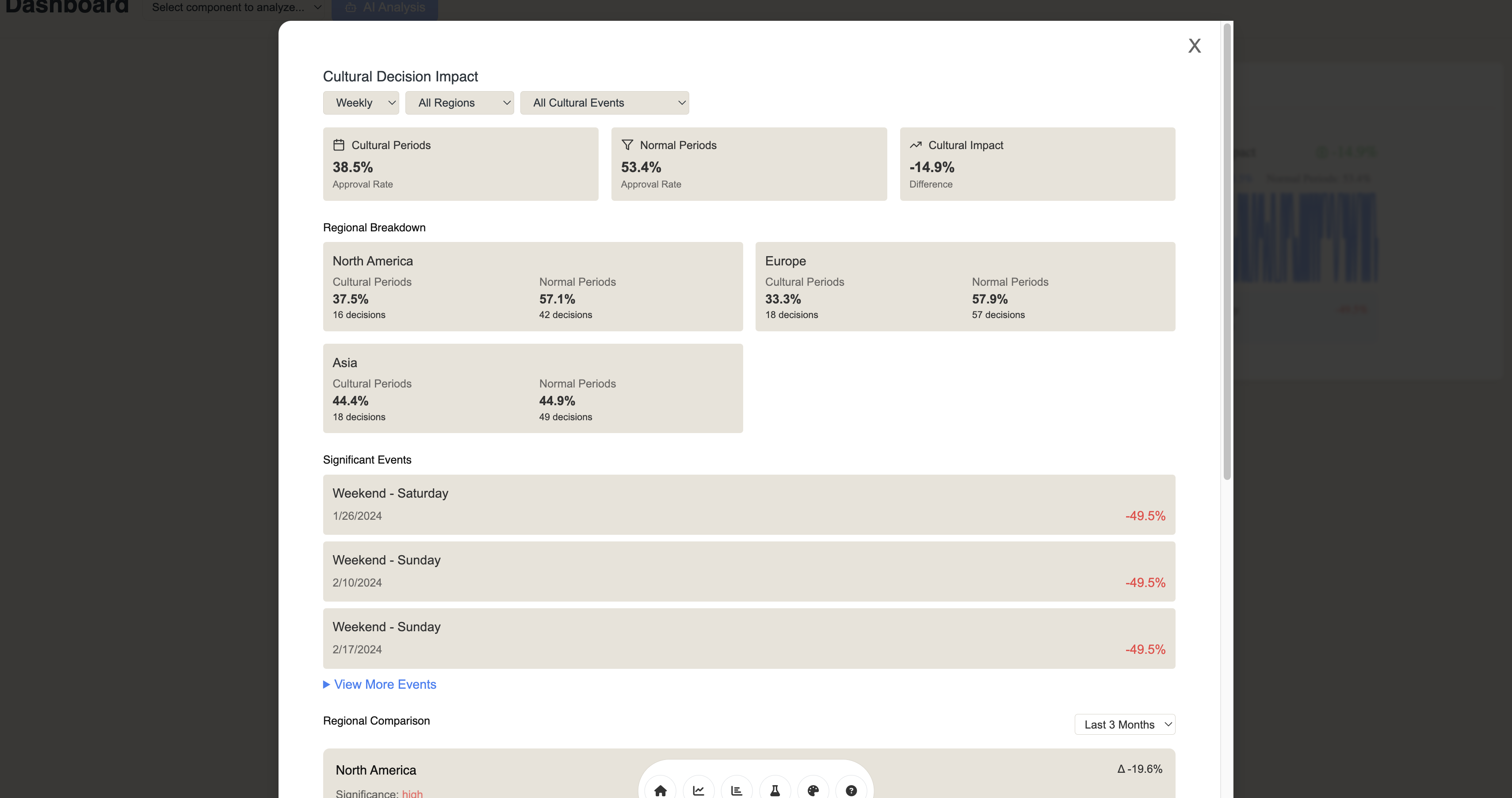
Cultural Decision Impact
-
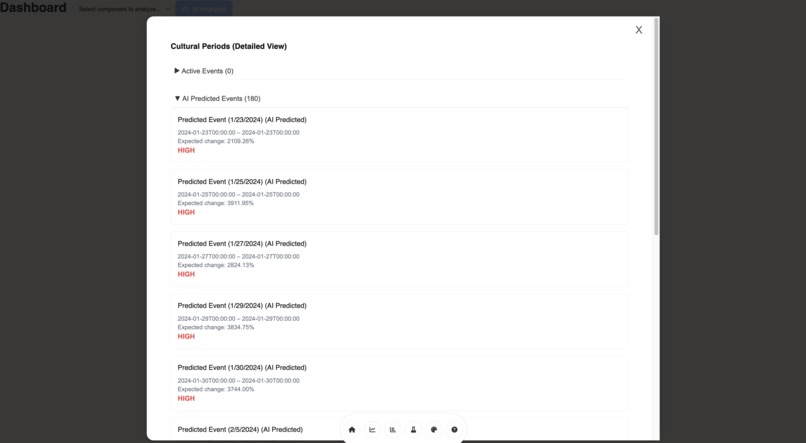
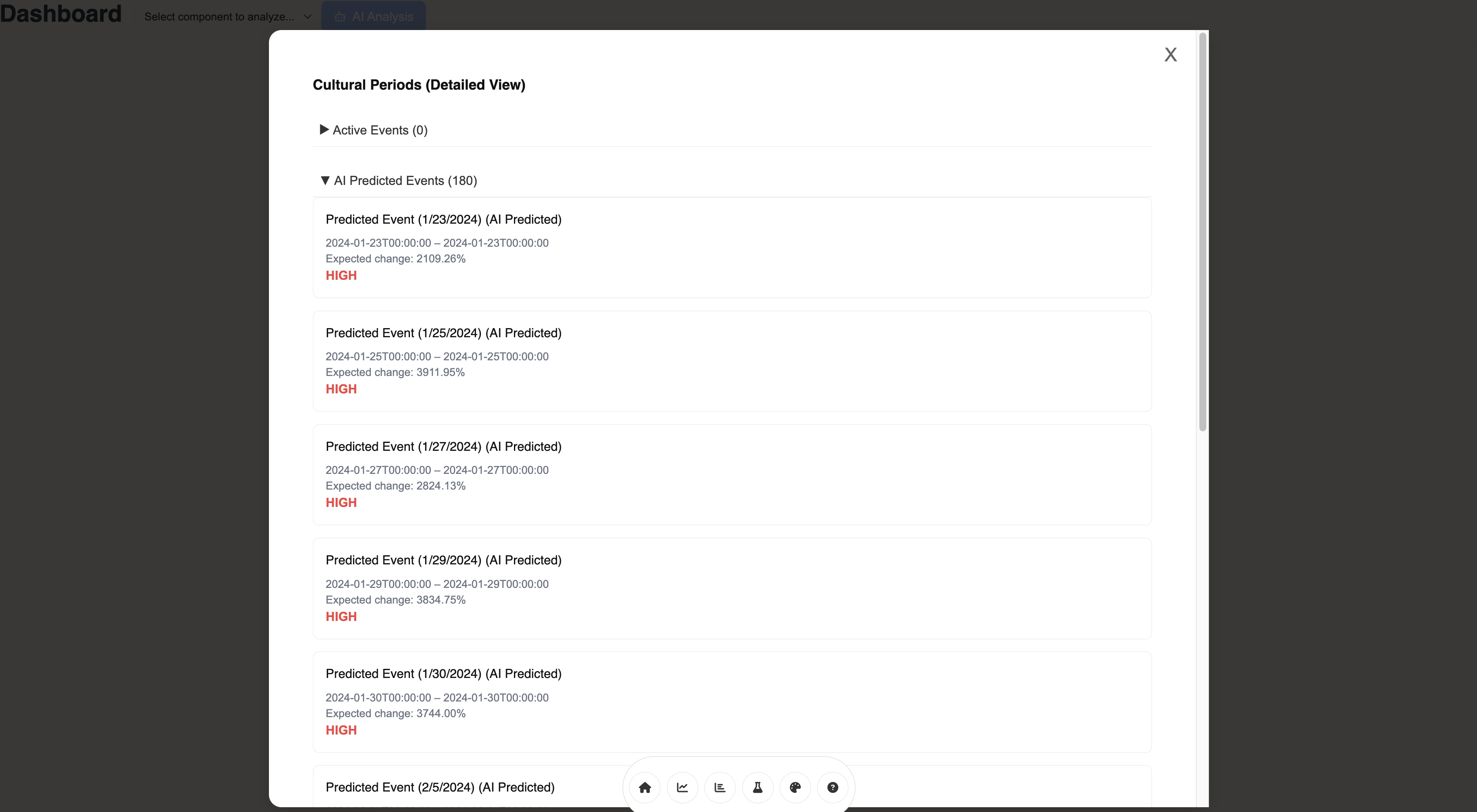
Active Cultural Periods
-
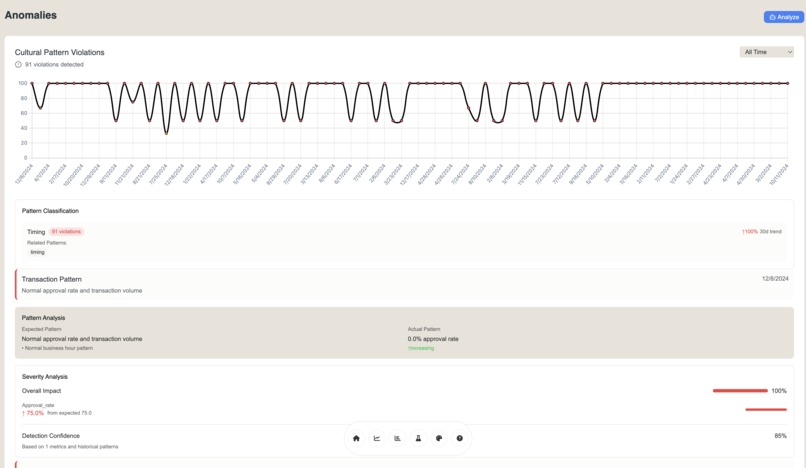
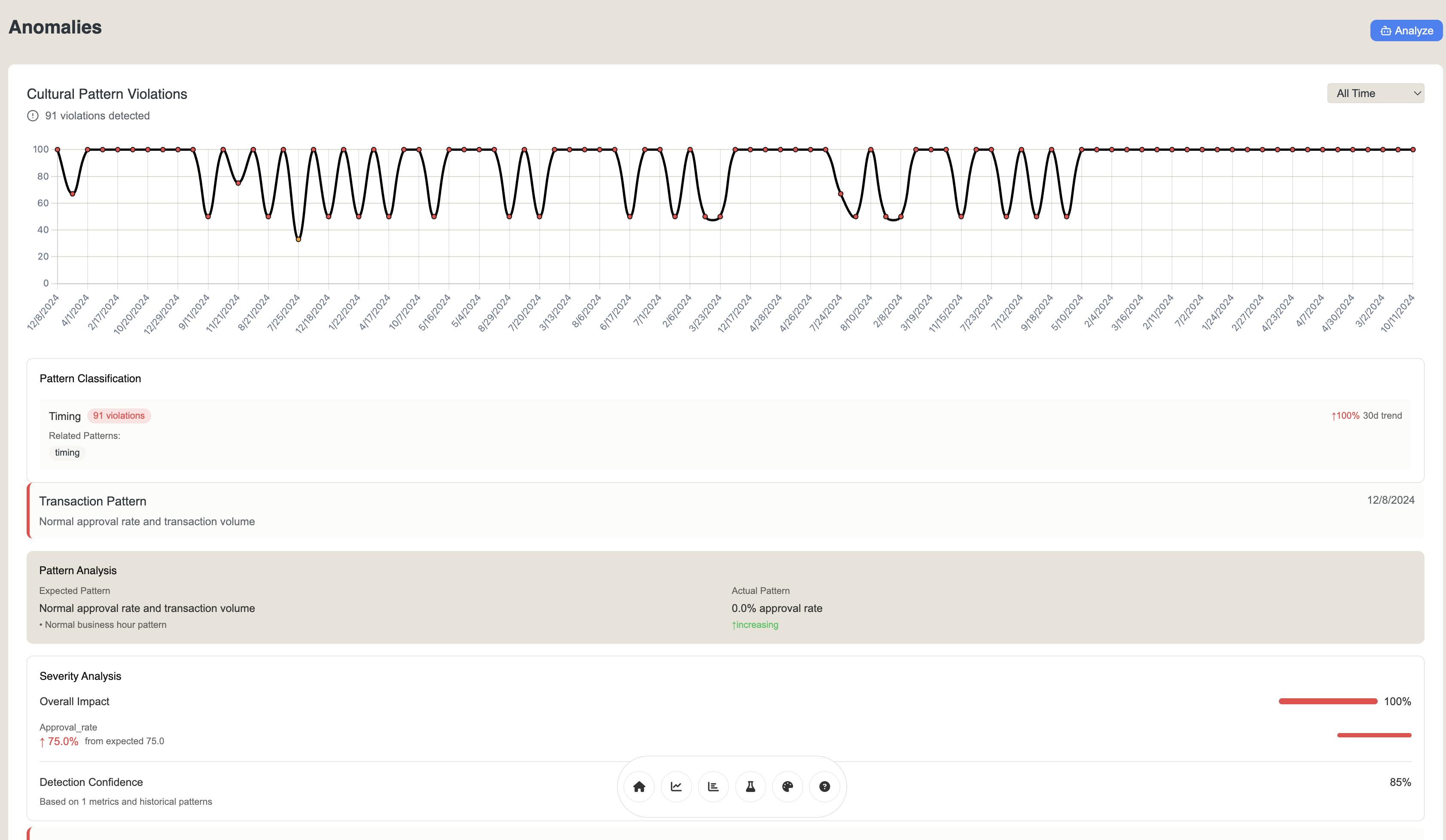
Cultural Pattern Violations
-
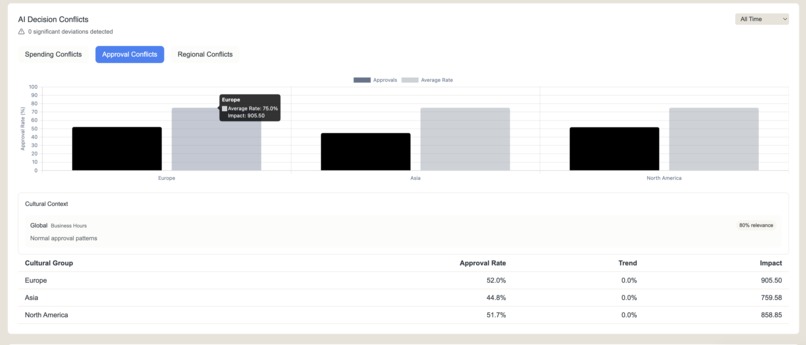
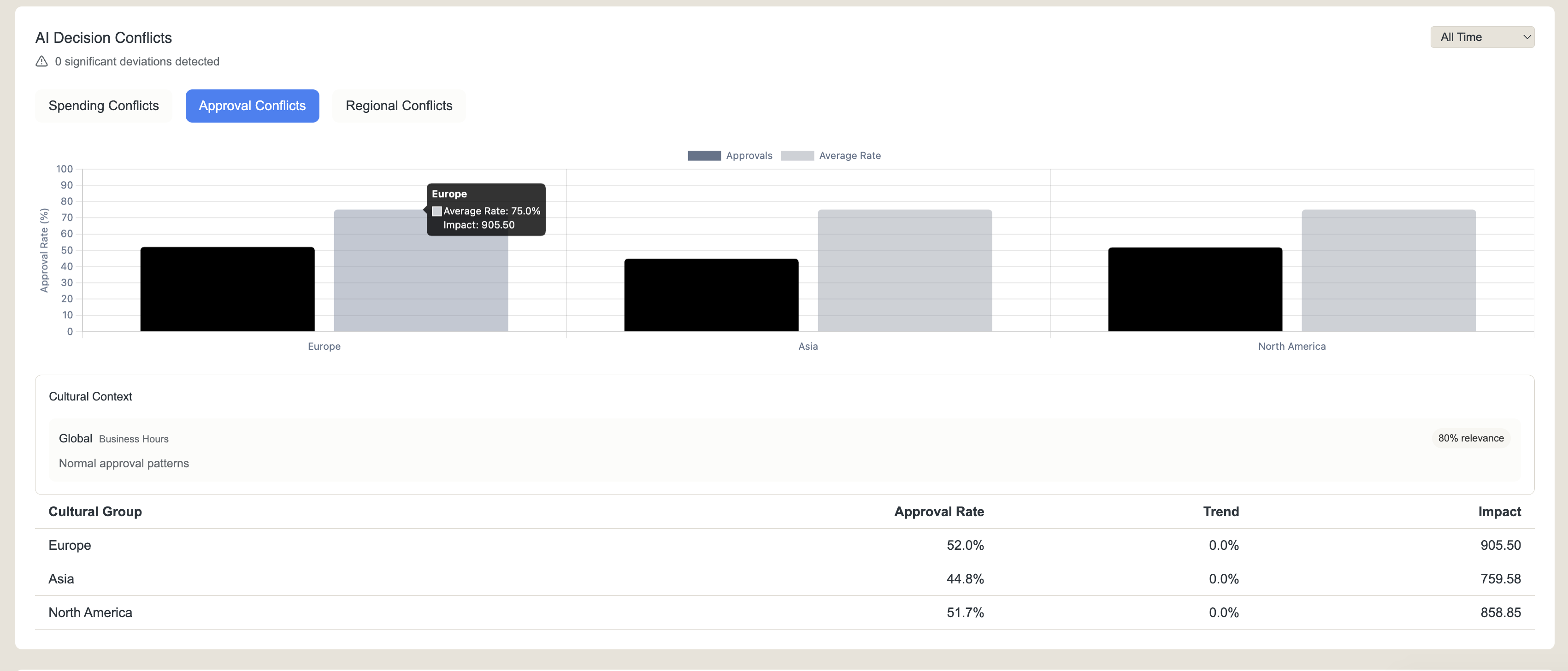
AI Decision Conflicts
-
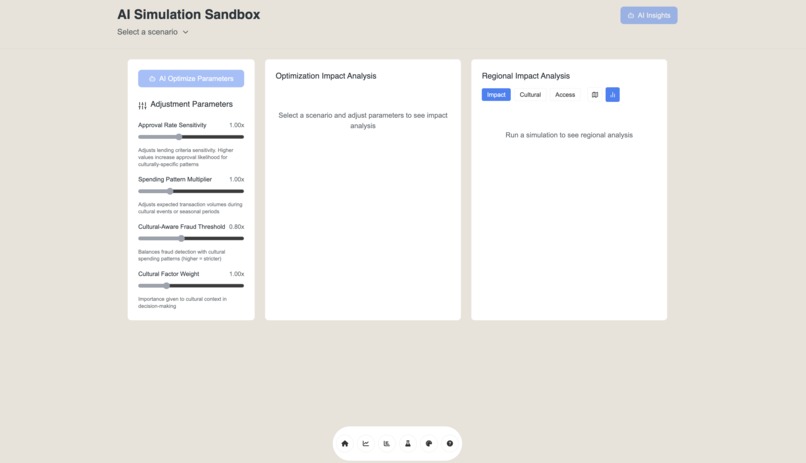
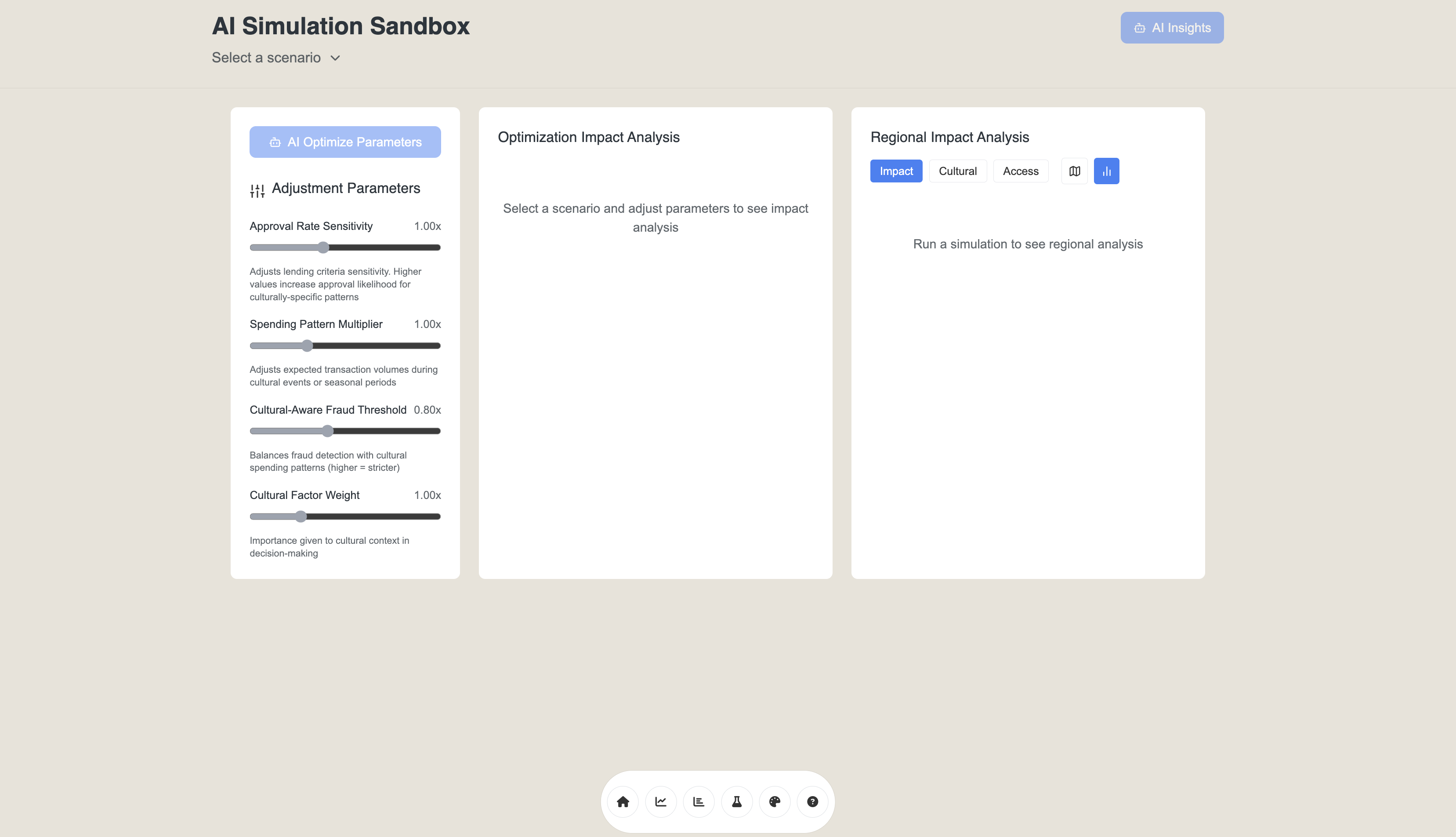
Simulation Sandbox Pre-Selection
-
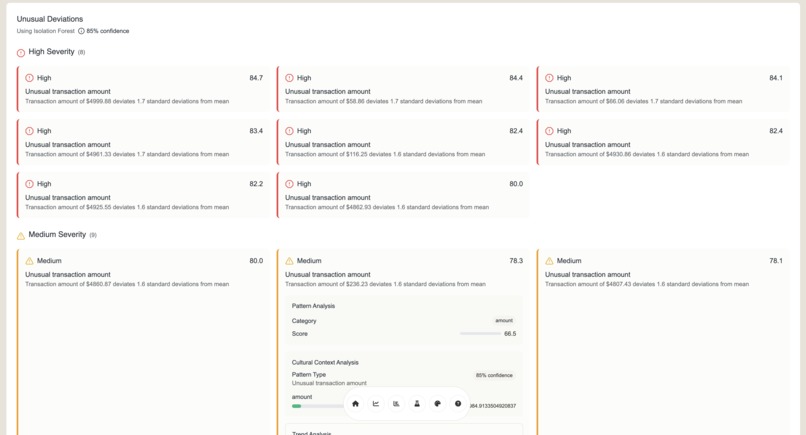
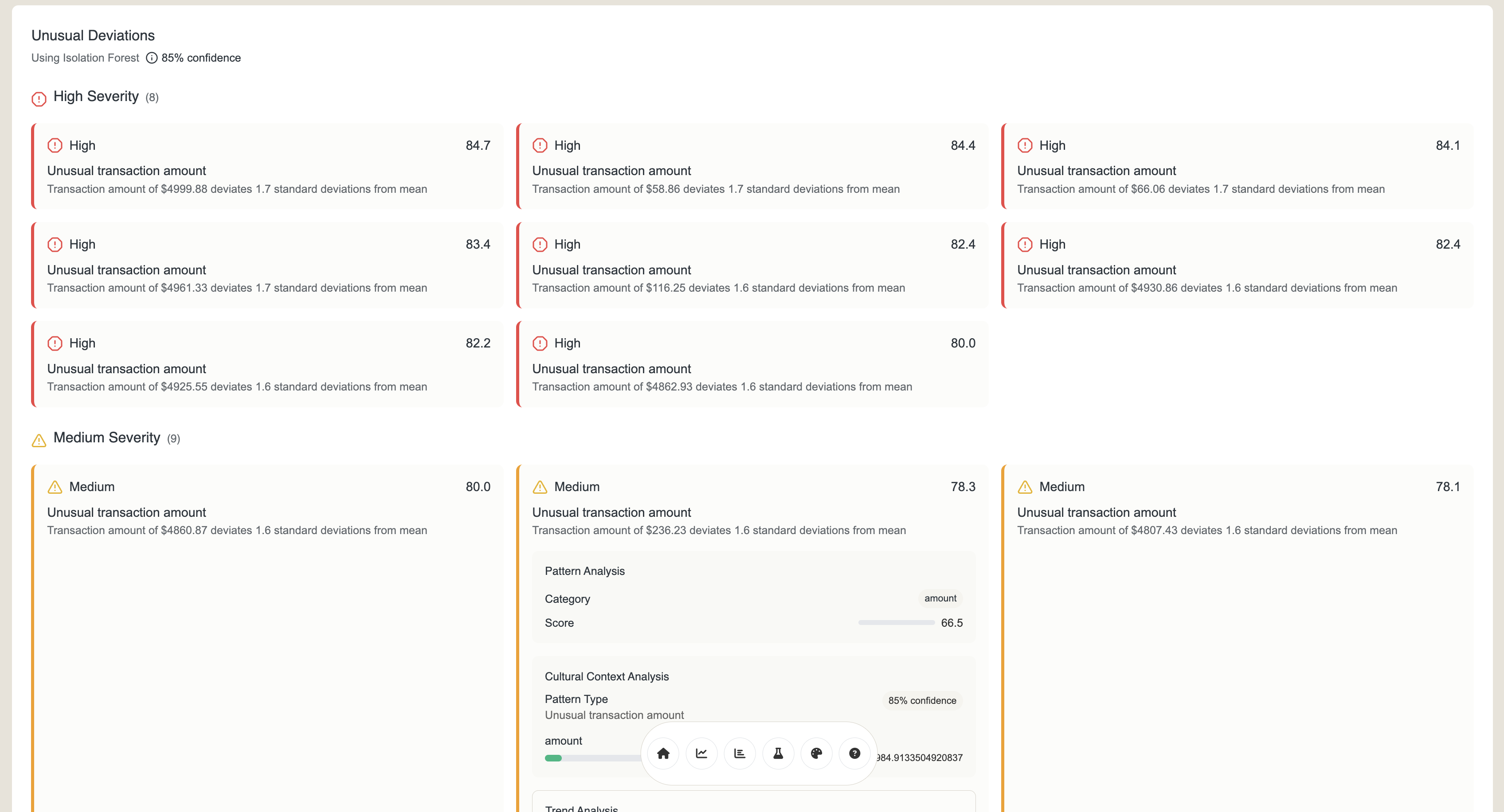
Unusual Deviations
-
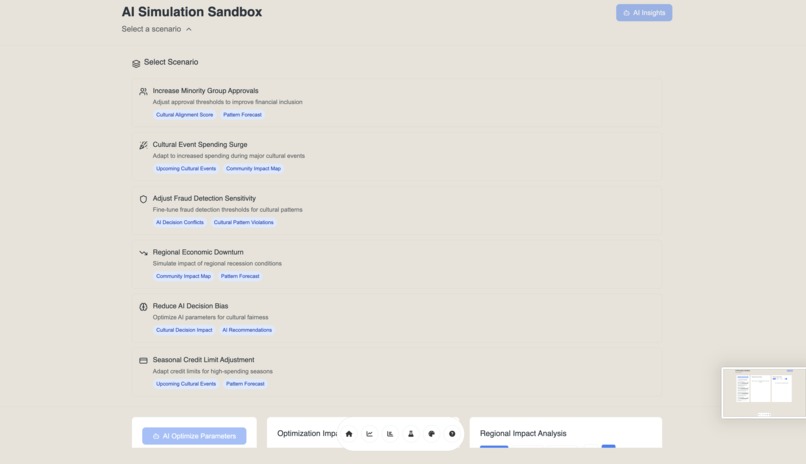
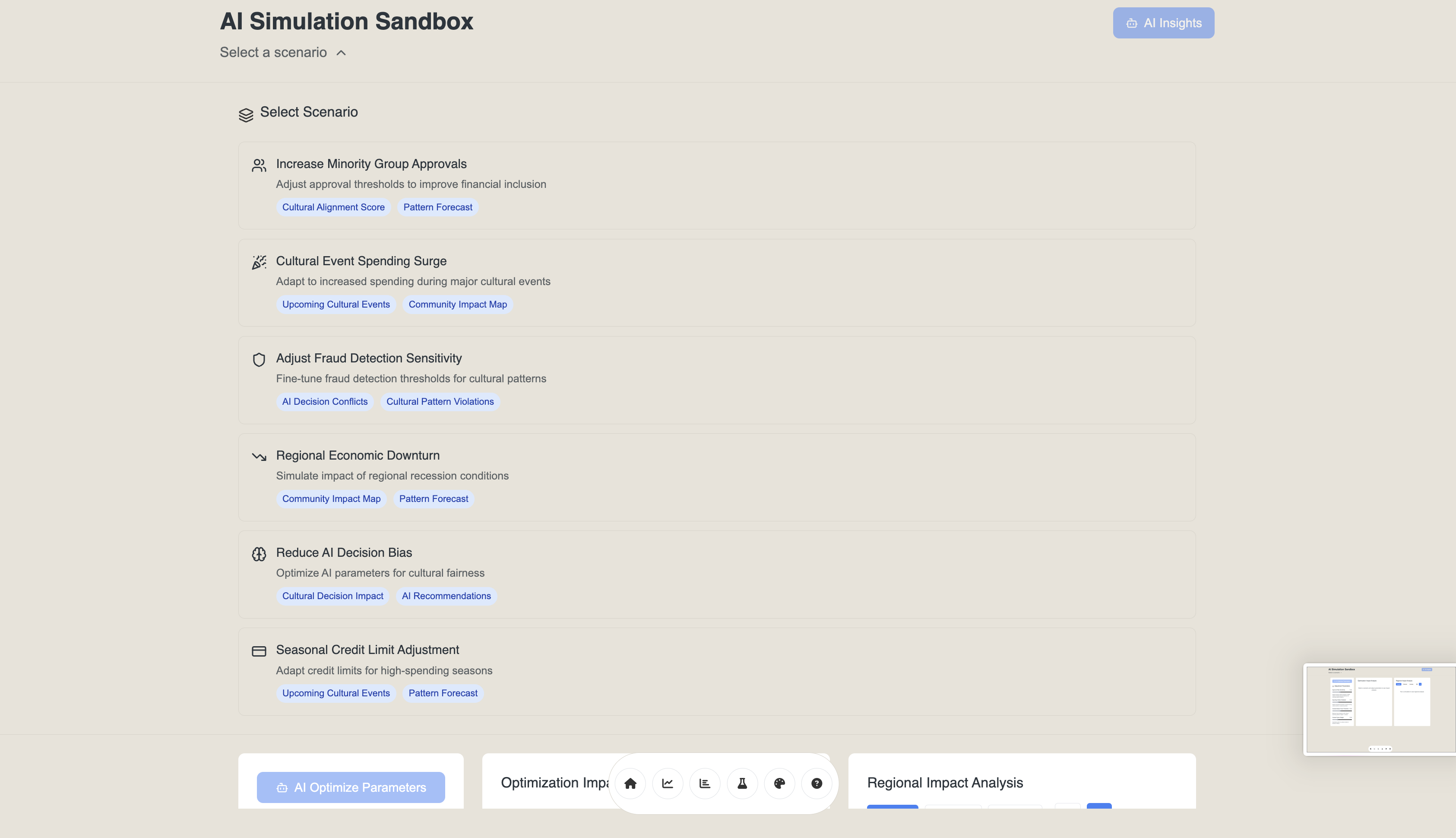
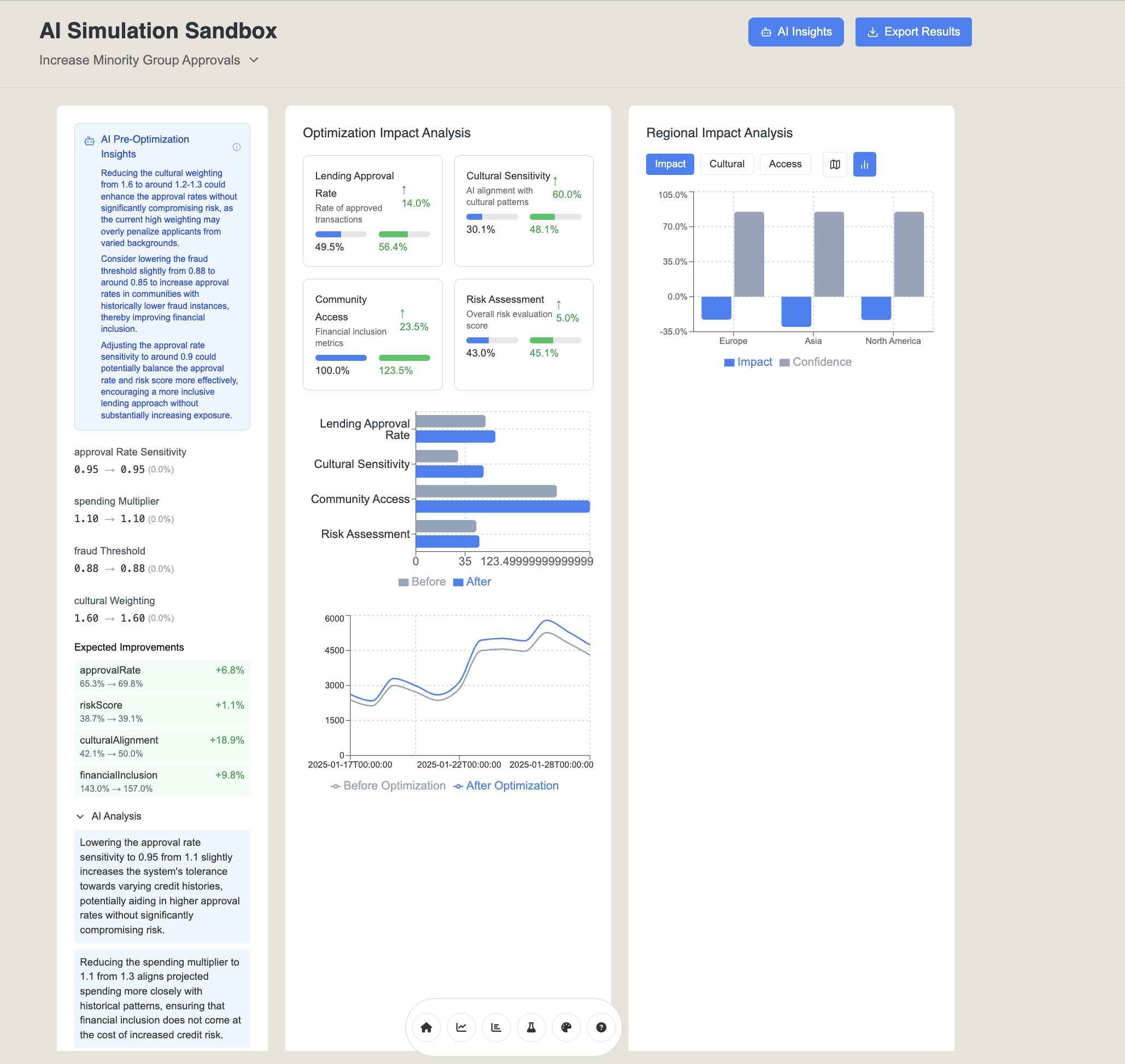
Scenario Selector
-
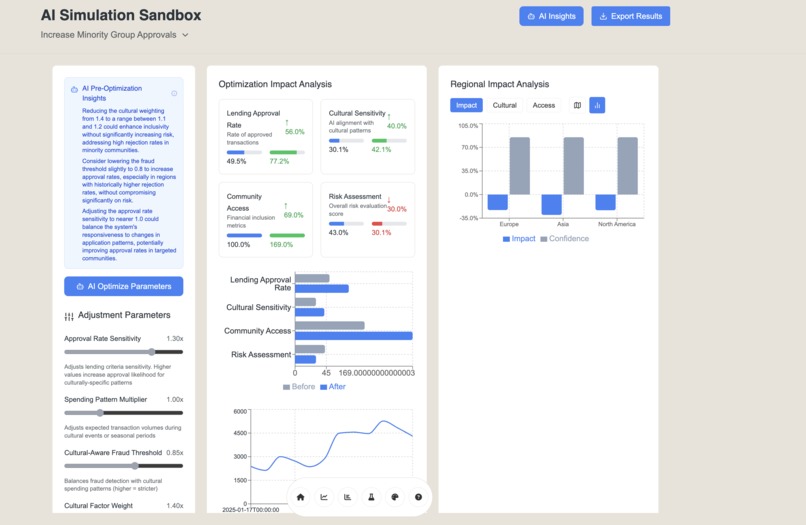
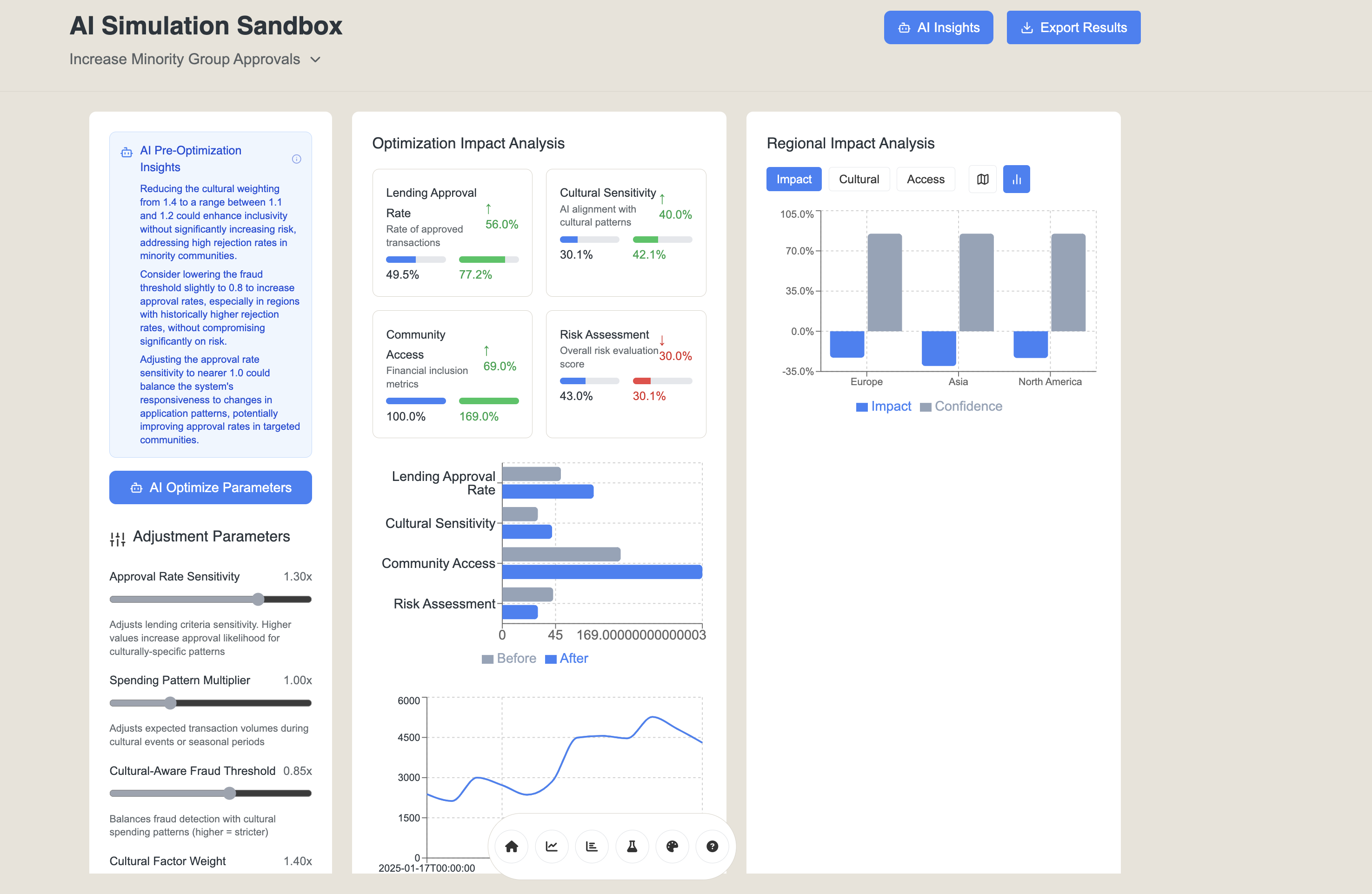
Scenario w/ Pre-Optimizer
-
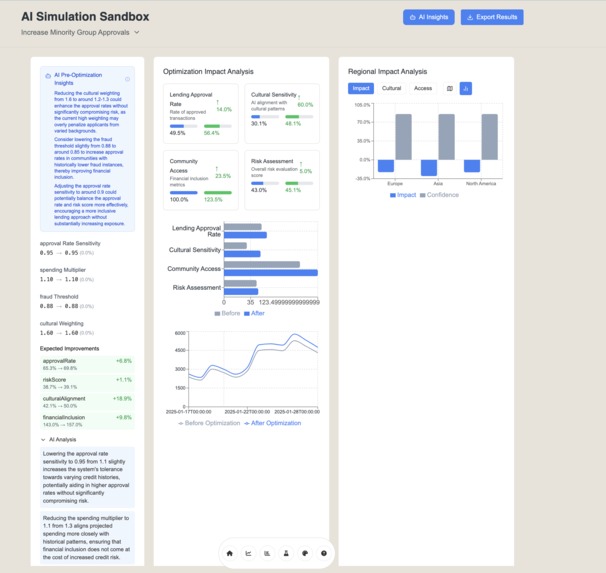
AI Post-Optimizer
-
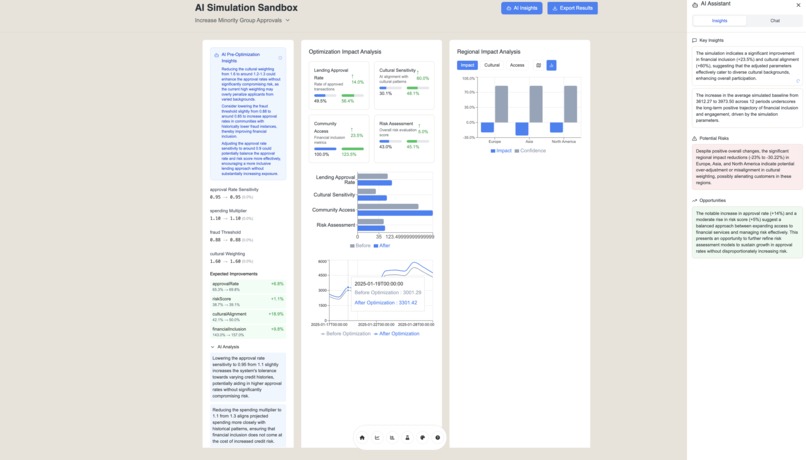
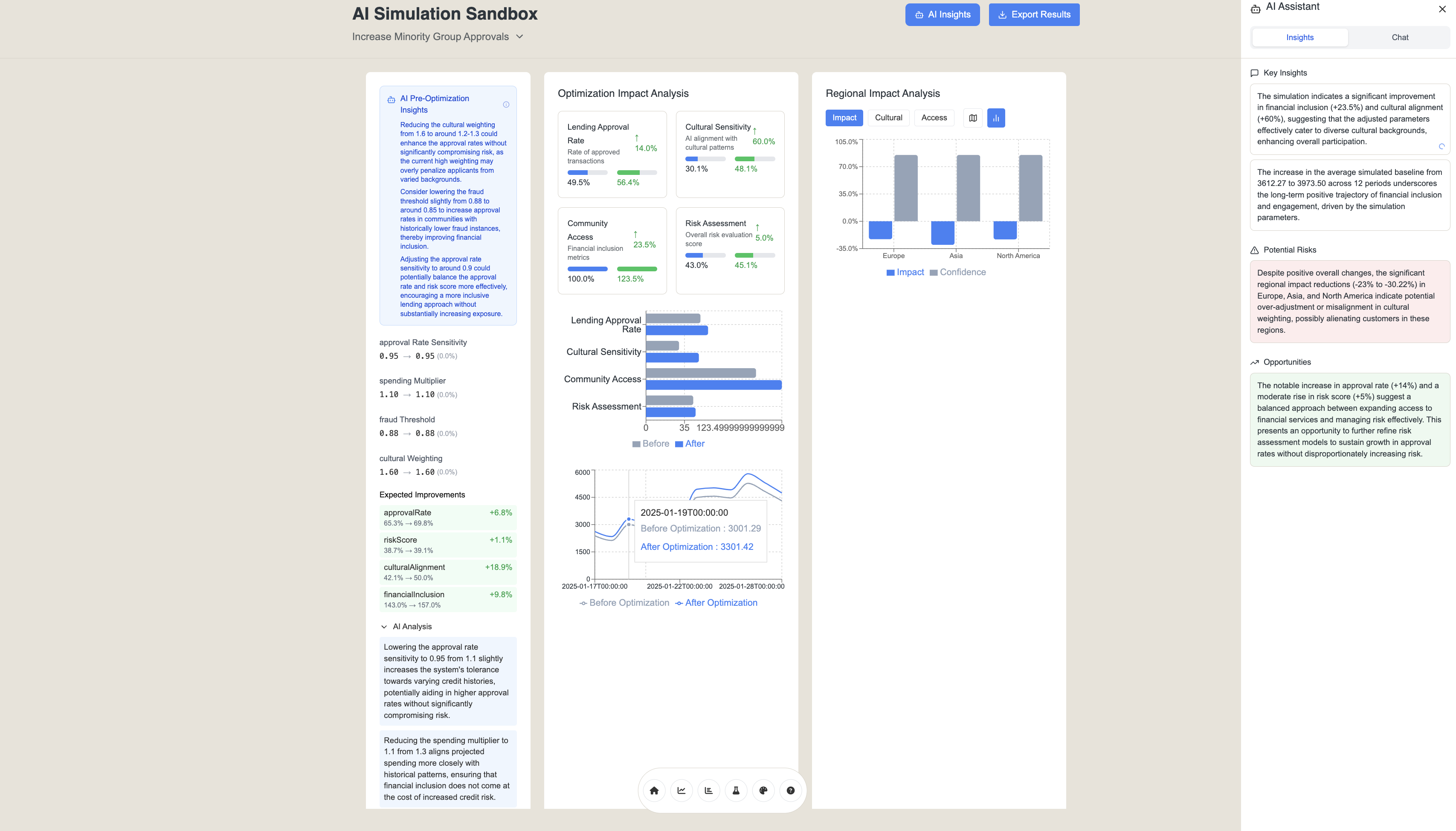
AI Insights Panel
-
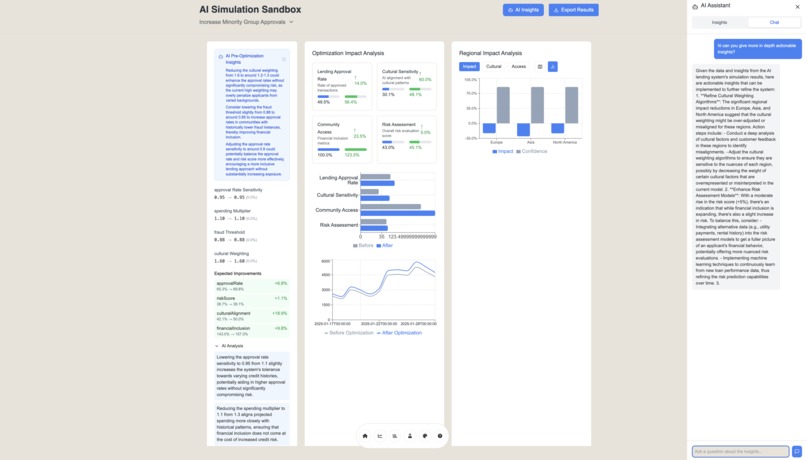
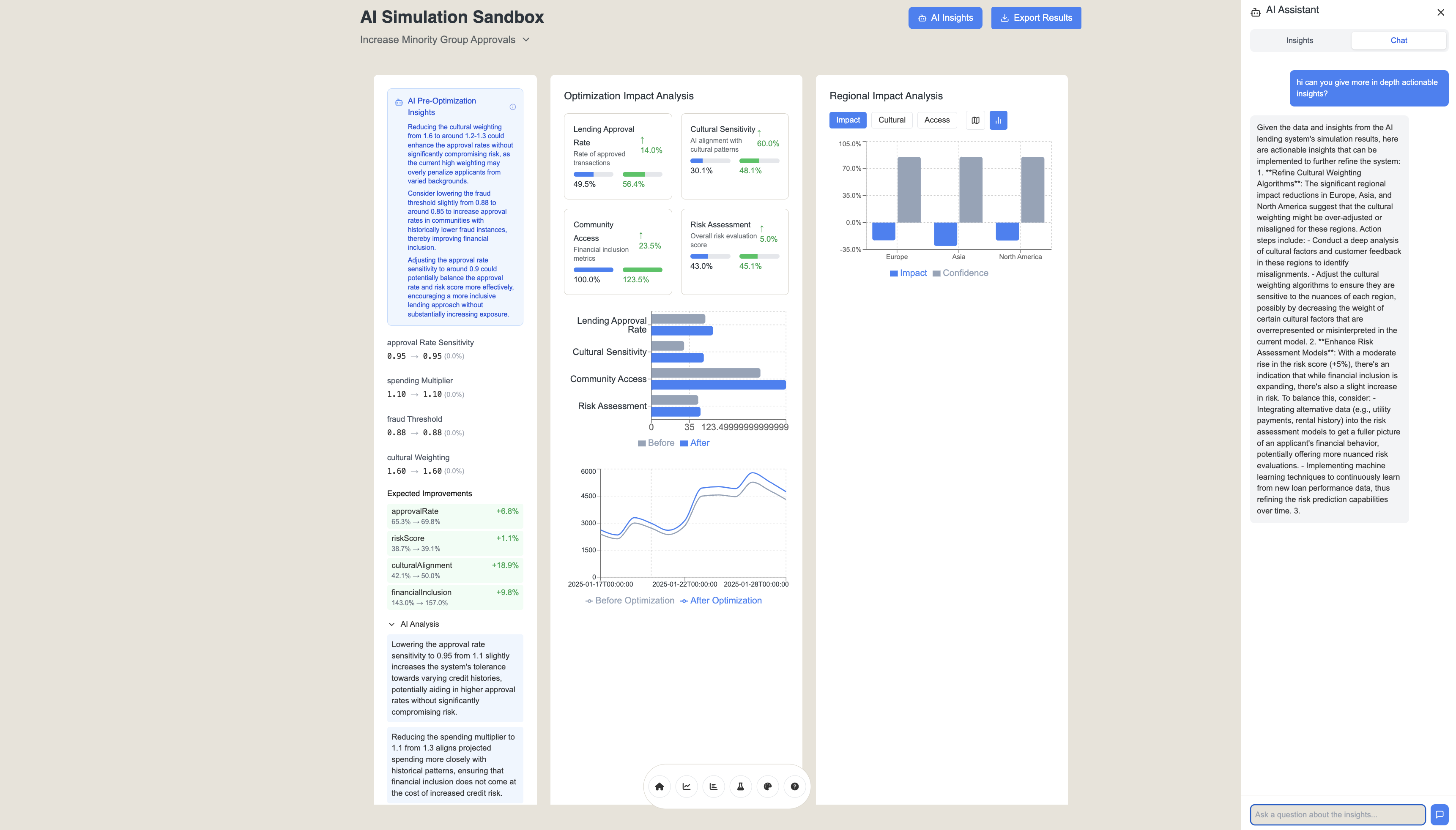
AI Chat
-
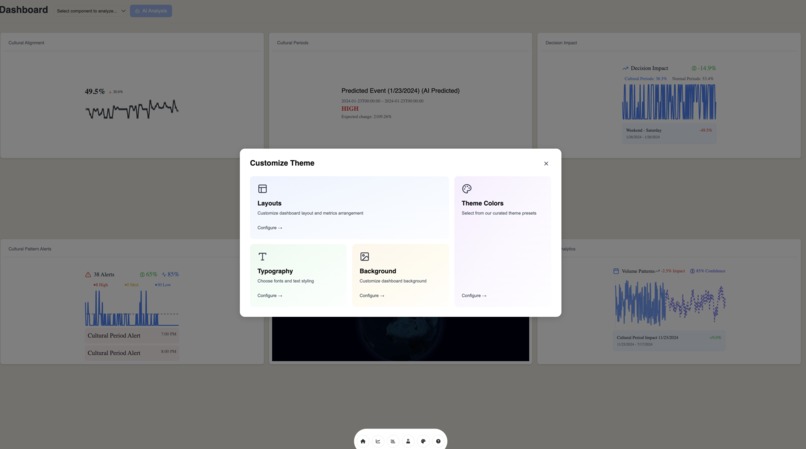
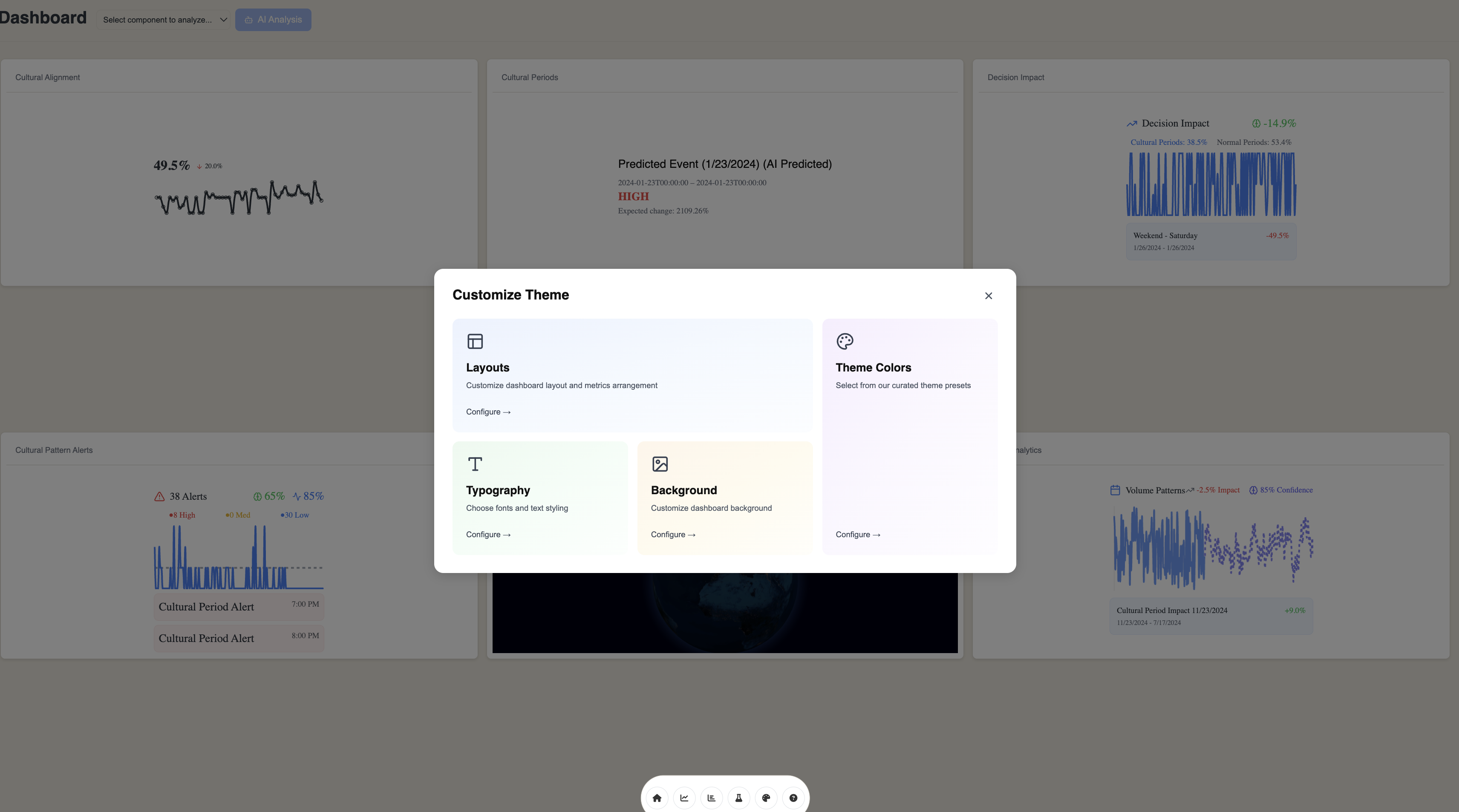
Theme Modal
-
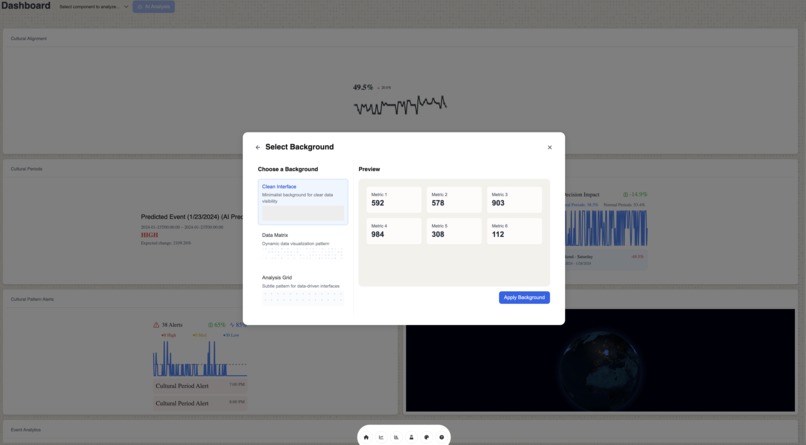
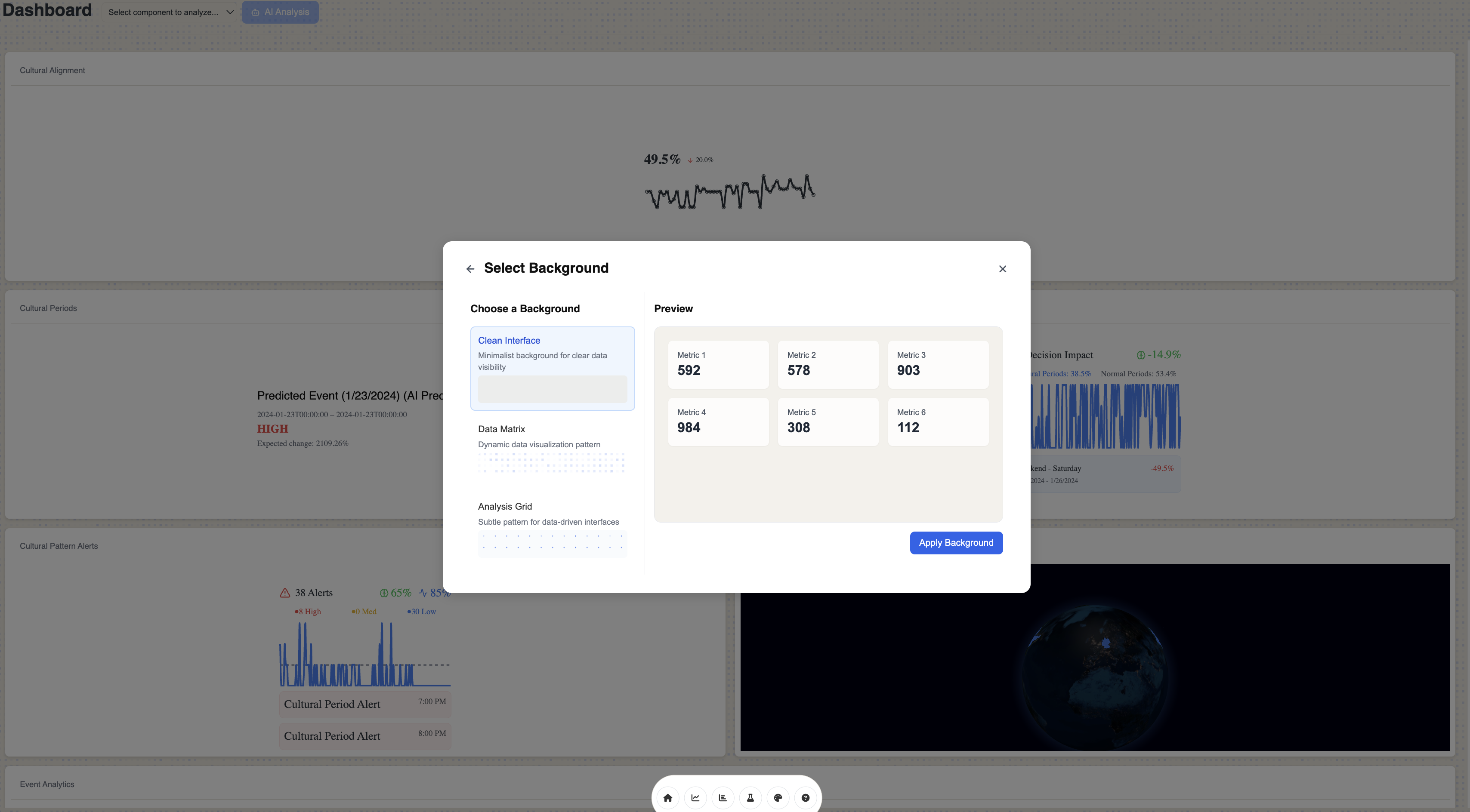
Layout Selector
-
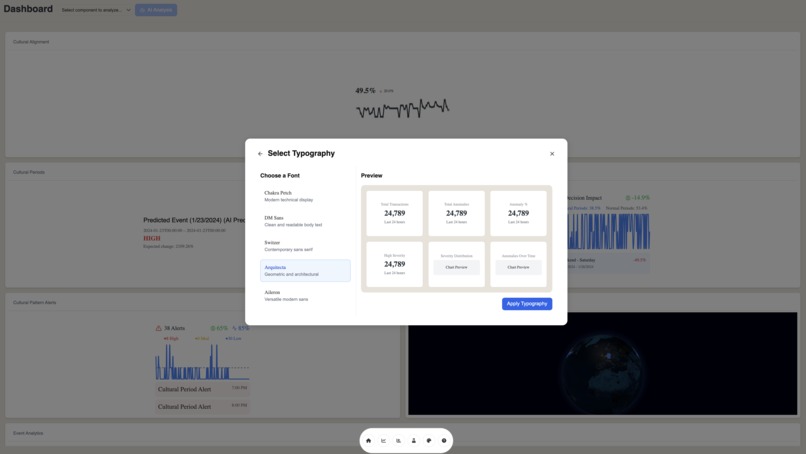
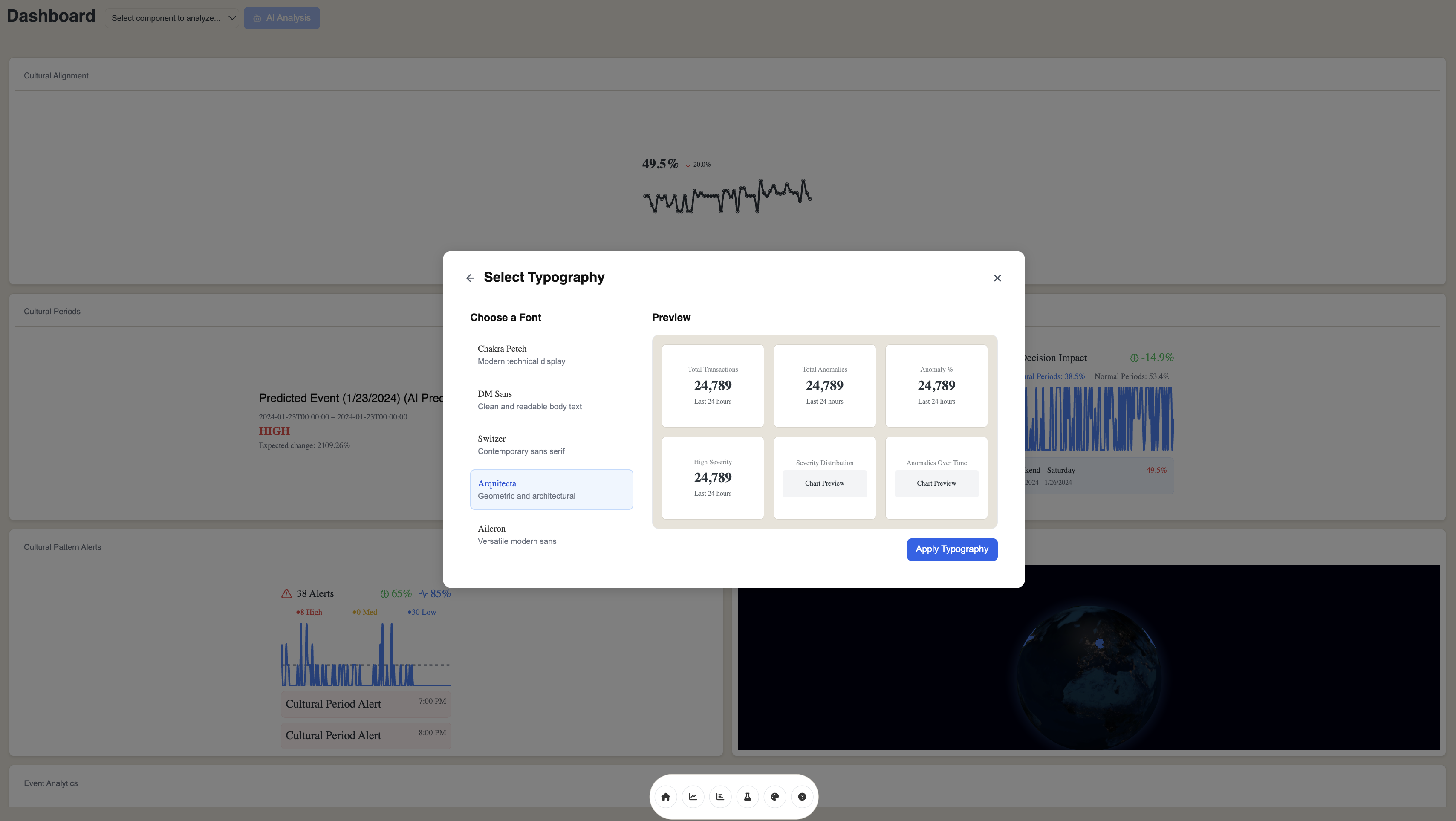
Typography Selector
-
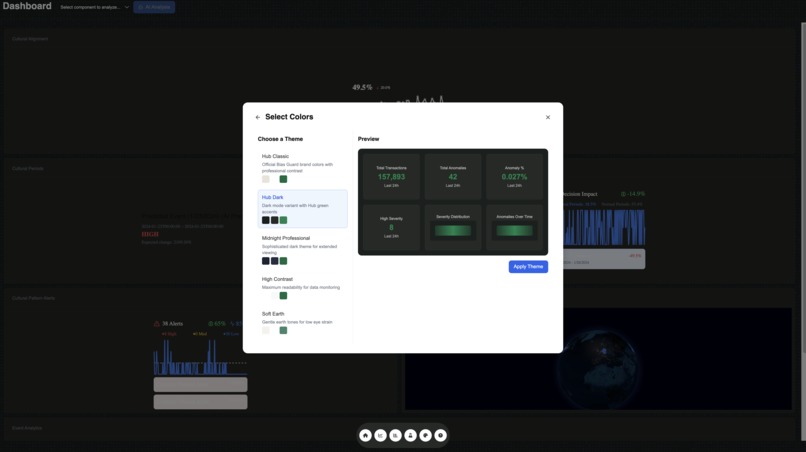
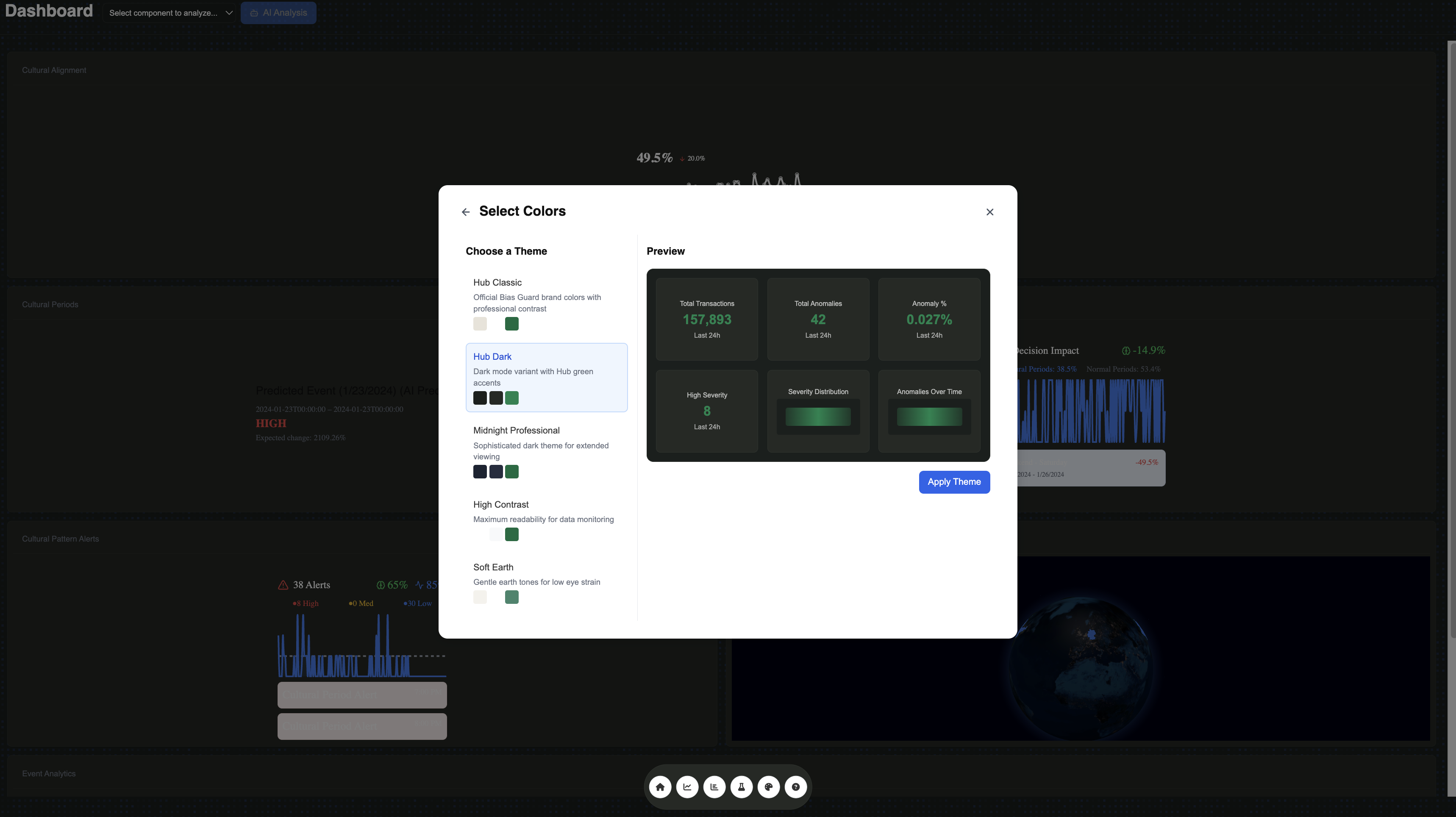
Theme Selector
-
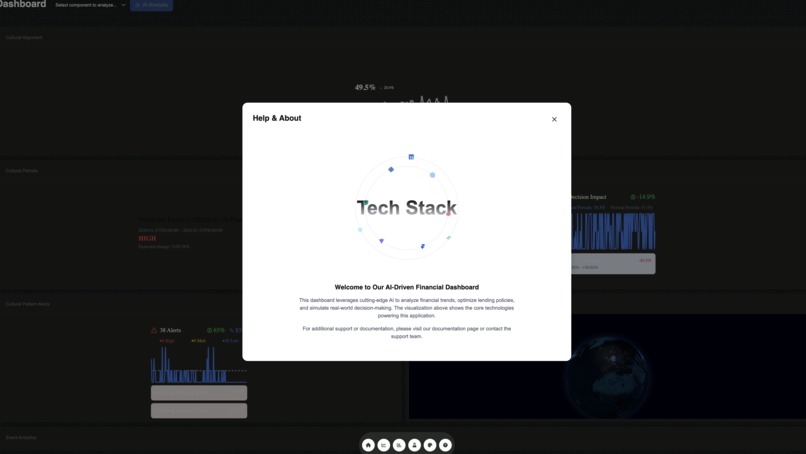
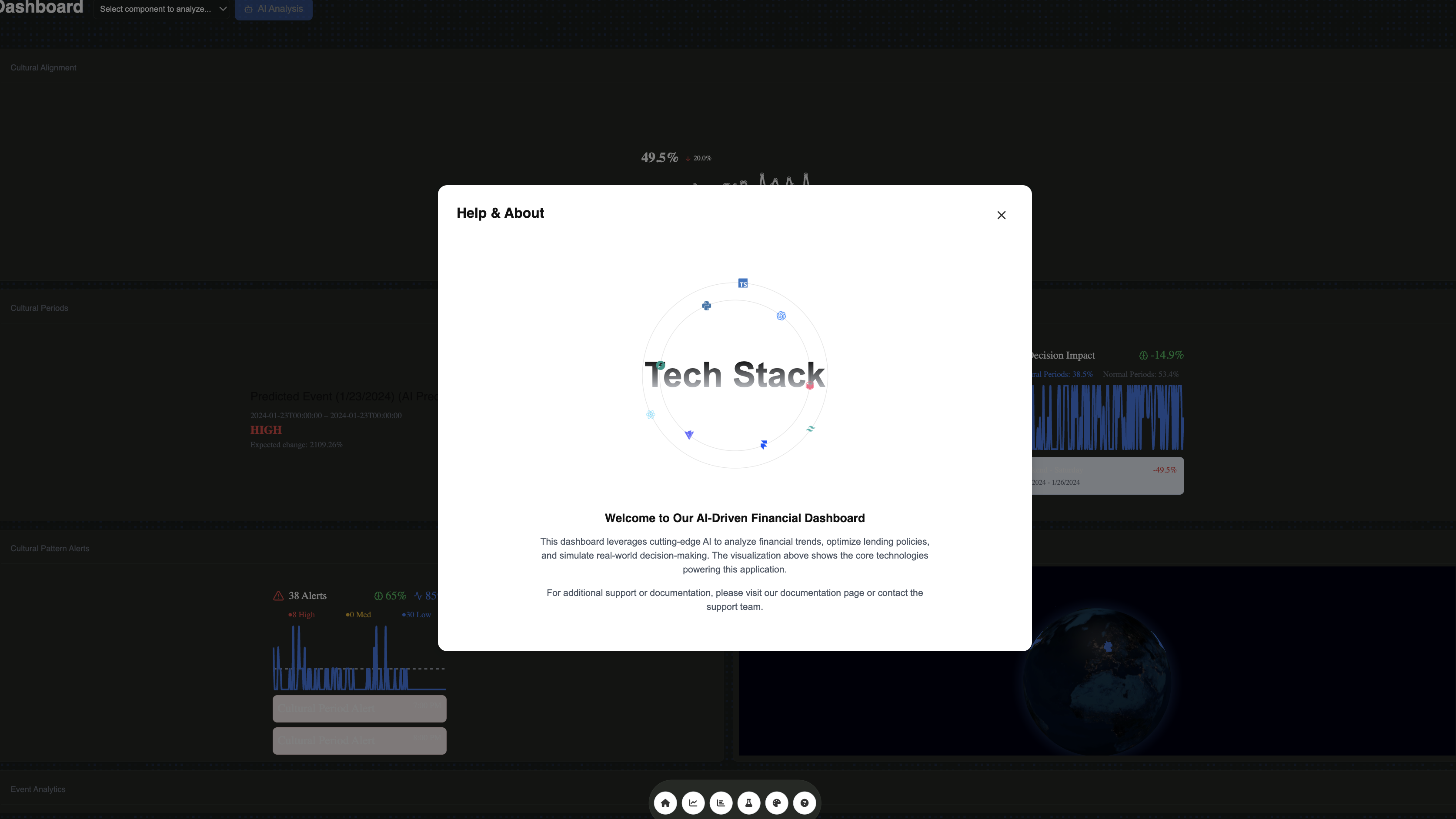
Orbiting Circle Component to show tech stack

Inspiration 💡
Financial decision-making should be transparent, fair, and adaptable—but AI-driven lending models fail to recognize cultural financial behaviors and lack real-time explainability.
Working in financial services while pursuing a Master's in Data Science, I’ve developed a strong interest in predictive analytics, anomaly detection, and how AI shapes financial decisions. Through my studies and professional experience, I saw how AI-driven financial models often fail to account for cultural financial behaviors, leading to unintended biases in lending and risk assessments.
While researching AI ethics in finance, I came across the FINOS AI Governance Framework, which highlighted concerns about bias, transparency, and financial AI accountability. That was the push I needed to build something that goes beyond detecting bias—it actively prevents it before it happens.
At its core, this project was a way to apply AI in a way that regulators, banks, and policymakers could actually use—turning financial fairness from an afterthought into a proactive strategy
What It Does 🚀
Mallards is an AI-powered financial simulation & decision-making tool that allows banks to analyze, predict, and prevent lending bias before it happens. Instead of just detecting issues after the fact, our system proactively suggests optimizations to ensure fairness, compliance, and risk mitigation in AI-driven lending policies.
Key Features 🔥
🛠 Simulation Sandbox → A first-of-its-kind interactive AI-powered lending simulator. Financial institutions can modify approval sensitivity, fraud detection thresholds, and cultural impact weightings while AI forecasts real-time fairness, risk, and approval shifts. Before & after comparisons make it easy to visualize the impact of policy changes before deployment.
🤖 AI Insights Panel → AI analyzes real-time transaction patterns, explaining why loans were approved, rejected, or flagged. Users can ask why a metric changed, get AI-generated fairness recommendations, or listen to AI-generated voice feedback for deeper insights.
📈 Predictive Modeling & Anomaly Detection → Uses forecasting models (Prophet, ARIMA) to detect cultural financial patterns and flag potential AI decision conflicts before they create risk.
🚨 Bias Prevention & Fairness Optimization → Instead of just detecting bias after it happens, the system preemptively suggests optimizations to prevent AI-driven lending discrimination. AI nudges users toward fairer, data-backed decisions before they finalize policy changes.
📊 Regulatory & Compliance Readiness → The tool automates fairness tracking, bias detection, and financial decision impact analysis, helping banks prove regulatory compliance with AI-driven lending practices. One-click exports allow institutions to generate compliance-ready reports.
Why This Matters!
Most AI-driven lending tools are reactive—ours is proactive.
AI doesn’t just generate insights—it suggests optimizations before policies are deployed.
Financial institutions can test and adjust policies in a safe, simulated environment—before they create real-world consequences.
How we built it
The project is a full-stack AI-powered fintech system that seamlessly integrates AI-driven financial analysis, real-time decision simulation, and predictive modeling to help financial institutions optimize lending policies.
Tech Stack 💻
- Frontend: React (TypeScript), TailwindCSS, ShadCN + Magic UI, and Framer Motion
- Backend: Python (FastAPI), OpenAI APIs (text+TTS), Prophet & ARIMA.
Challenges we ran into ⚙️
There were a bunch of mix ups when I was trying to apply the data context in the frontend, ensuring that it was getting the right forms of data from the backend and such. That was the most annoying aspect of it since it took a lot of manual debugging from me.
The biggest challenge was balancing depth with usability. A system with this much AI-driven analysis risks being less practical and overly complex. I wanted to flesh out as much as I could on this system since it would feel wrong to not include certain components that would build its identity, so I had to see where I could make sacrifices such as in accuracy from the models.
Accomplishments that we're proud of
Building a project with real-world fintech depth! Getting this to be almost a full-fledged financial intelligence platform is something I'm really glad I could push myself to do.
Successfully integrating AI-generated insights without making the system feel "too technical". Even non-technical users can understand AI-driven explanations and act on them.
What we learned
Building this project was not just a technical challenge, but also a deep dive into how financial AI systems impact real-world decision-making. As a technically-minded person, I gained invaluable insight into the business side of fintech, lending policies, and AI governance—things I wouldn’t typically encounter in a purely technical role.
Key Takeaways:
AI in Finance is More Than Just Predictions → I initially saw AI as a way to detect patterns and flag risks, but real-world financial systems need proactive AI that optimizes decisions before they’re made. The nudge feature made me rethink how AI should assist, not just analyze.
Regulatory Compliance & AI Fairness Matter More Than I Expected → I had to consider AI bias, regulatory concerns, and explainability—not just build a working model. Financial institutions don’t just care about the accuracy of AI models; they need justifiable, transparent, and fair decision-making.
Data-Driven Decision-Making Requires More than Just Insights → Initially, I focused on detecting issues (bias, fraud, lending risks), but I realized banks need actionable recommendations. This project helped me see how AI should not just flag problems but actively guide financial teams toward better policy decisions.
Tech-First vs. Business-First Thinking → In past projects, I focused primarily on building cool AI tools. But here, I had to think:
Would a bank actually use this?
How does this fit into real-world financial workflows?
Does this help meet compliance & fairness regulations?
These questions shifted my mindset from pure tech development to business-aligned AI solutions.
- AI Explainability is Key → A working AI model isn’t enough—financial institutions need to understand and justify every AI-driven decision. That’s why I built AI-generated explanations, fairness metrics, and real-time decision reasoning into the project.
What's next for Mallards
While the system is already powerful, the next steps would be:
Deploying it live for real-world testing → A working prototype that banks and regulators could experiment with.
Replacing GPT with a domain-specific LLM → A fine-tuned model optimized for financial fairness, lending bias, and regulatory compliance.
Optimizing data parallelization → AI insights & TTS generation speed could be faster for a real-time experience.
Adding a 3D AI Avatar with Lip-Syncing → To make the AI agent feel even more human-like.
Enhancing Forecasting Models → Expanding beyond Prophet & ARIMA into deep learning-based predictive analysis.
Ultimately, this project wasn’t just an experiment—it’s a vision for how AI-driven financial intelligence can prevent bias, increase transparency, and build a more inclusive fintech future. :D
Built With
- chart.js
- fastapi
- framermotion
- globegl
- javascript
- lucidereact
- matplotlib/seaborn
- openai
- pandas
- papaparse
- prophet+arima
- python
- react
- shadcn
- skikit-learn
- tailwindcss
- typescript
- vite


Log in or sign up for Devpost to join the conversation.