-
-

MallAgentPro
-
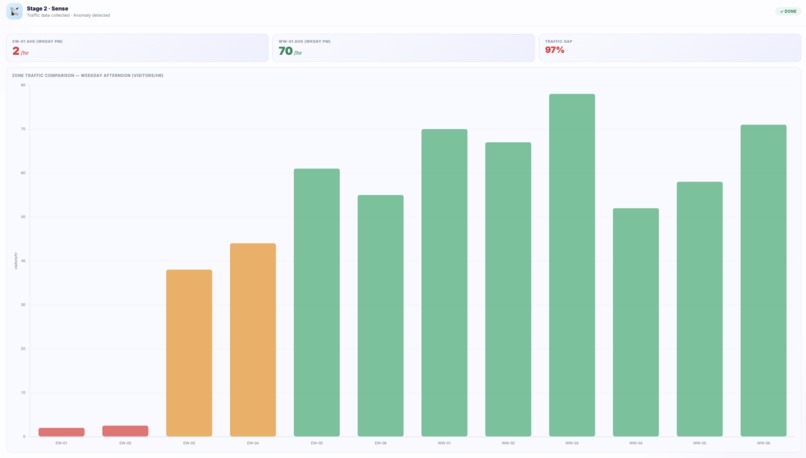
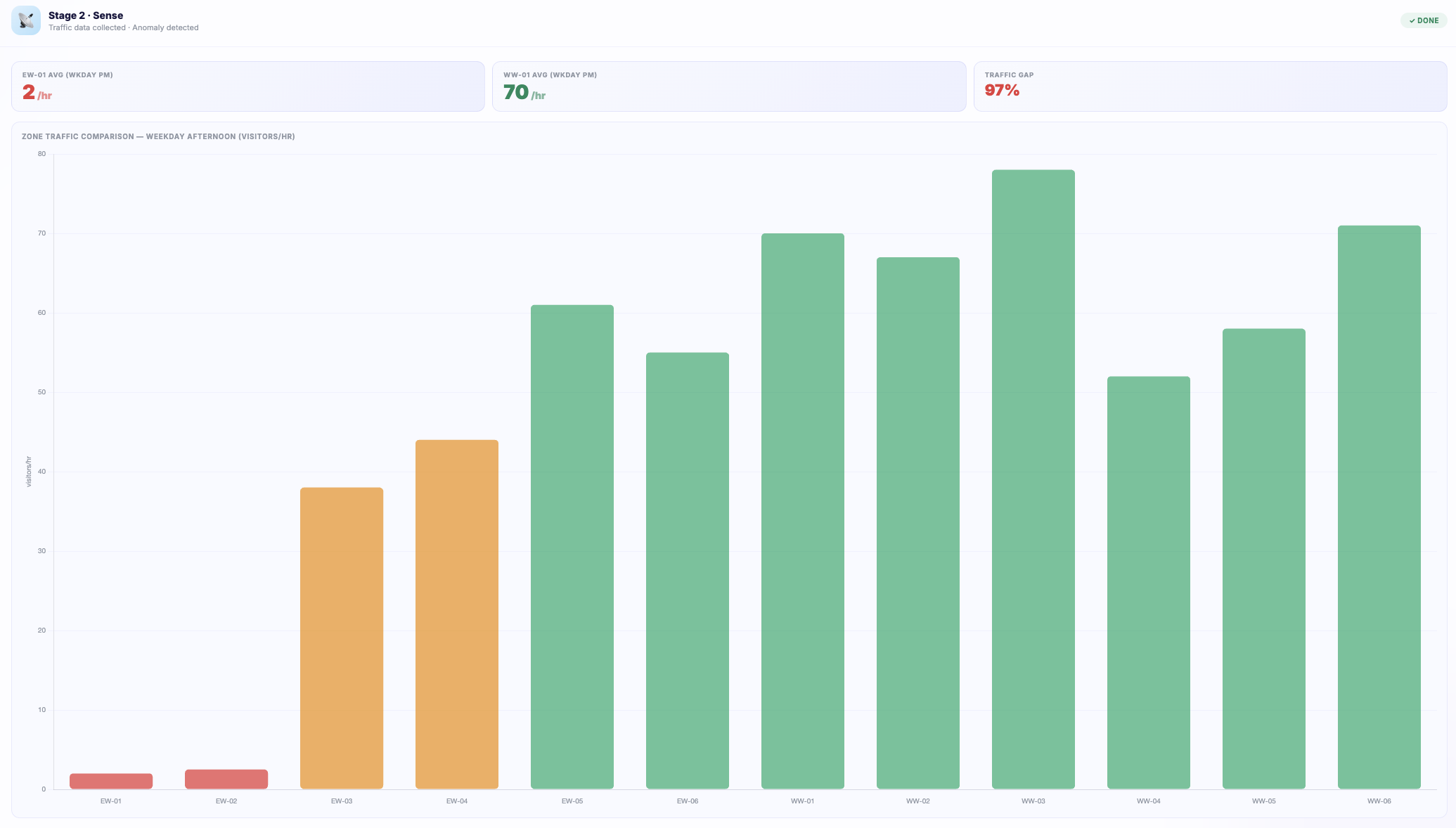
Graph Data
-
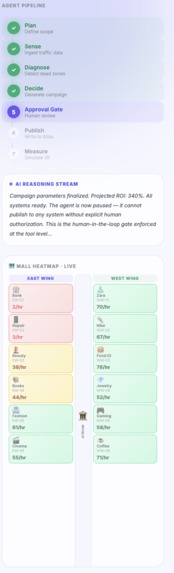
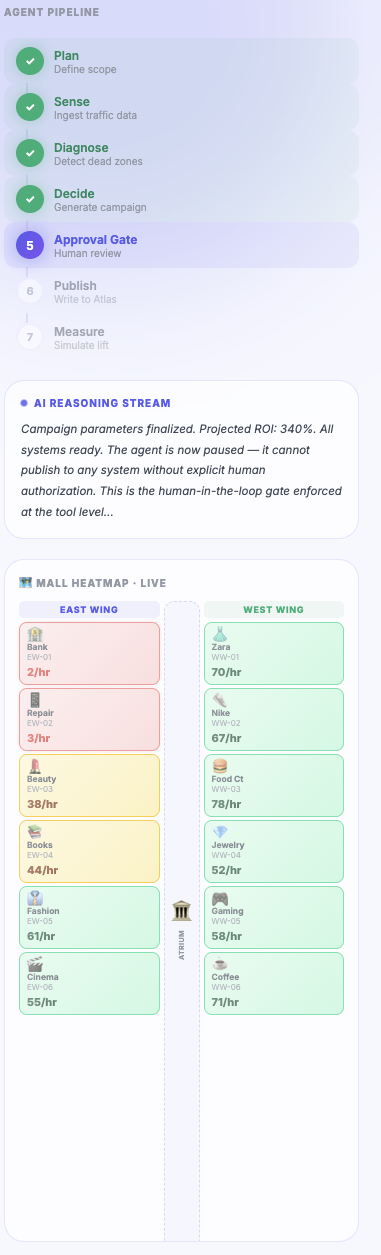
7 Stages And HeatMap
-
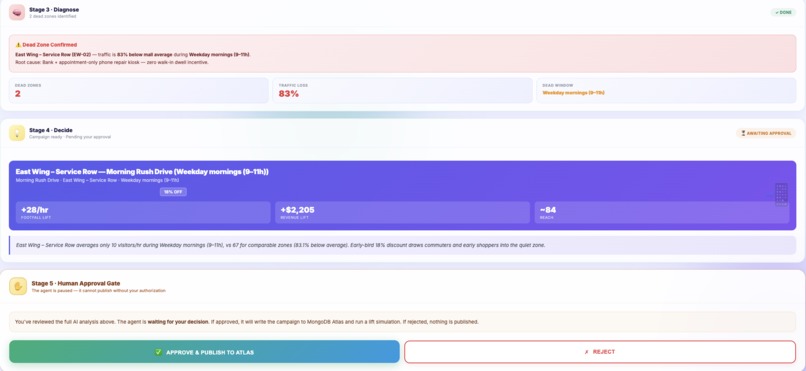
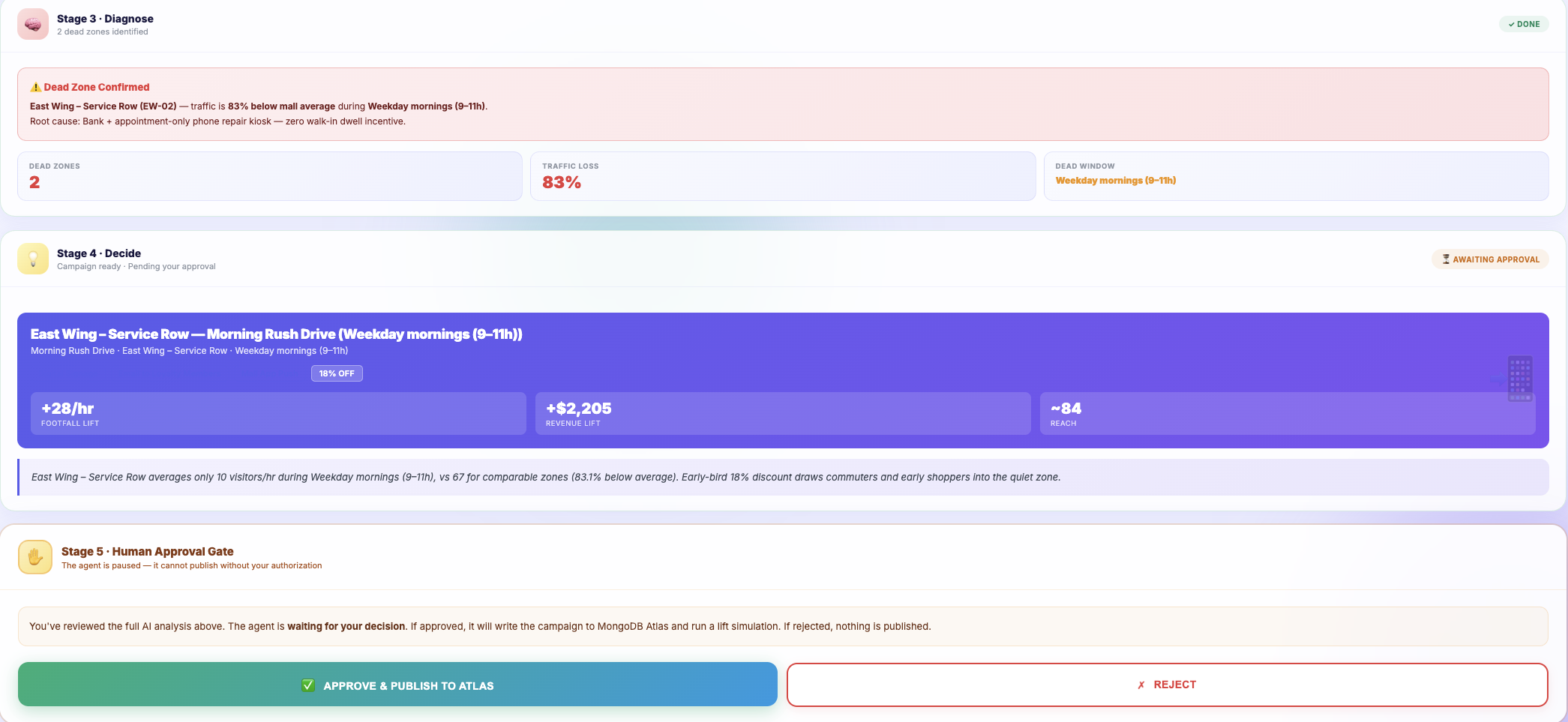
Number Data
-
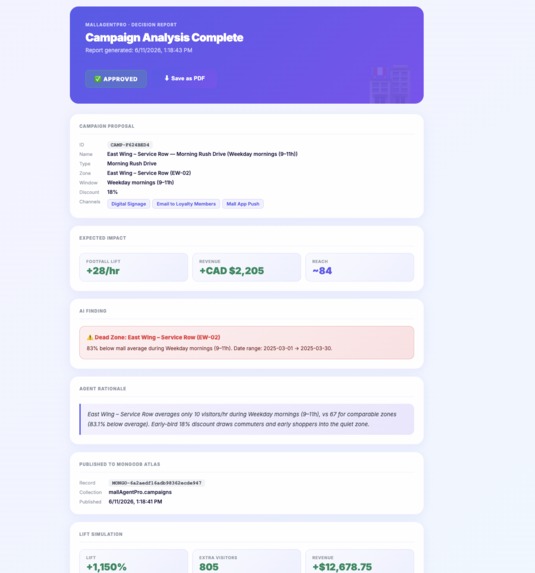
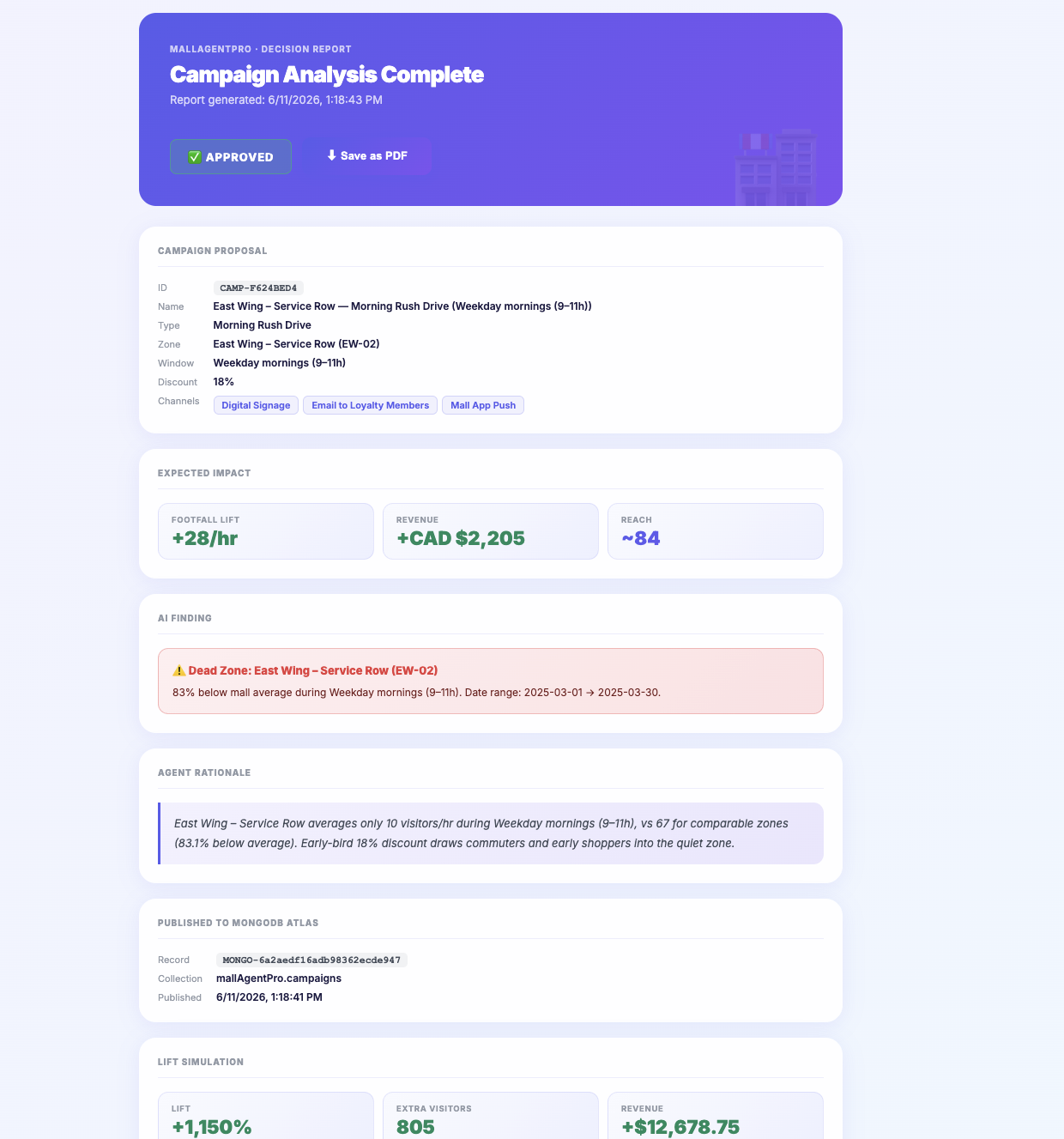
Final Report

Inspiration
Walking through a mall and noticing one wing completely empty while the other was packed. Property managers know dead zones exist, they just don't have a fast, automated way to act on them. We wanted to build that tool.
What it does
MallAgentPro is a Gemini AI agent that runs a 7-stage pipeline across mall foot-traffic data: it finds dead zones, diagnoses the cause, generates a targeted campaign, and waits for a human to approve before writing anything to production. After each decision, the operator can rerun the analysis for a different time window, morning, evening, weekend, late night — and get a completely new campaign. Every approved campaign is stored in MongoDB Atlas and visible in a live history tab.
How we built it
- AI orchestration: Gemini on Google Cloud Agent Builder, calling 6 Python tools across the pipeline
- Backend: Flask on Google Cloud Run, with a
/restartendpoint that lets the agent rerun without redeploying - Database: MongoDB Atlas via PyMongo, stores every campaign with full approval audit trail
- Frontend: Vanilla JS with Chart.js, a live mall heatmap, AI typewriter reasoning stream, and confetti on approval
Challenges we ran into
Getting the human-in-the-loop gate right was harder than expected. The agent
runs in a background thread and blocks on a threading.Event, restarting it
cleanly for a new time window without killing the Flask server required a
generation counter pattern. We also had to URL-encode the MongoDB password and
restructure Flask startup order before Cloud Run health checks would pass.
Accomplishments that we're proud of
The approval gate is enforced at the tool level, not just the UI. The
agent literally cannot call publish_campaign unless campaign["status"] ==
"APPROVED". No prompt engineering can bypass it. That felt like the right way
to build agentic AI.
What we learned
Agentic AI systems need hard constraints, not soft ones. Threading + Flask + a long-running AI loop is trickier than it looks. And MongoDB Atlas is genuinely fast to wire up, the PyMongo integration went from zero to working in under an hour.
What's next for MallAgentPro
Real sensor data (Cisco Meraki API), a floor plan editor where managers draw their own zone boundaries, multi-property support for managing several malls from one account, and live campaign execution through digital signage APIs instead of simulated lift.

Log in or sign up for Devpost to join the conversation.