-
-
74 Main Icon
-
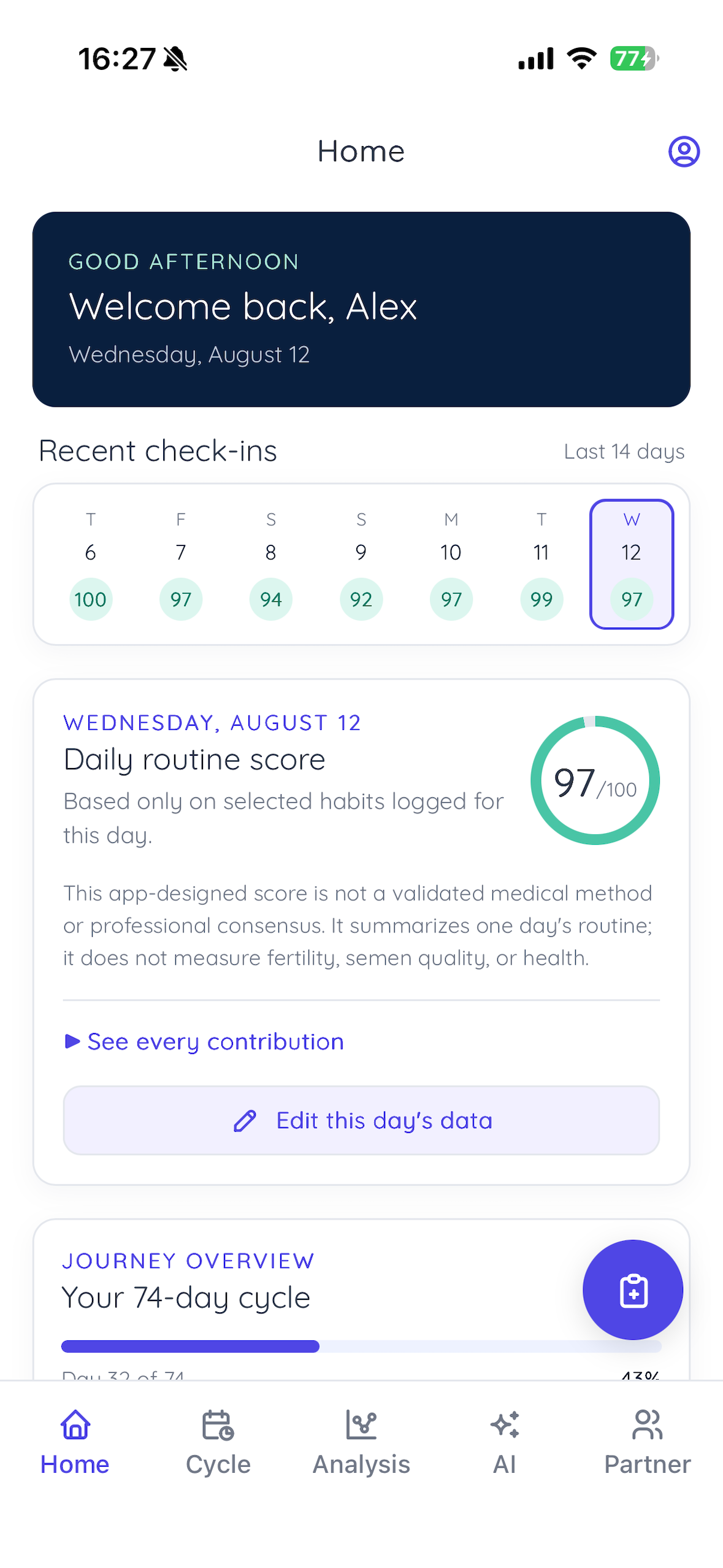
74 - Home tab
-
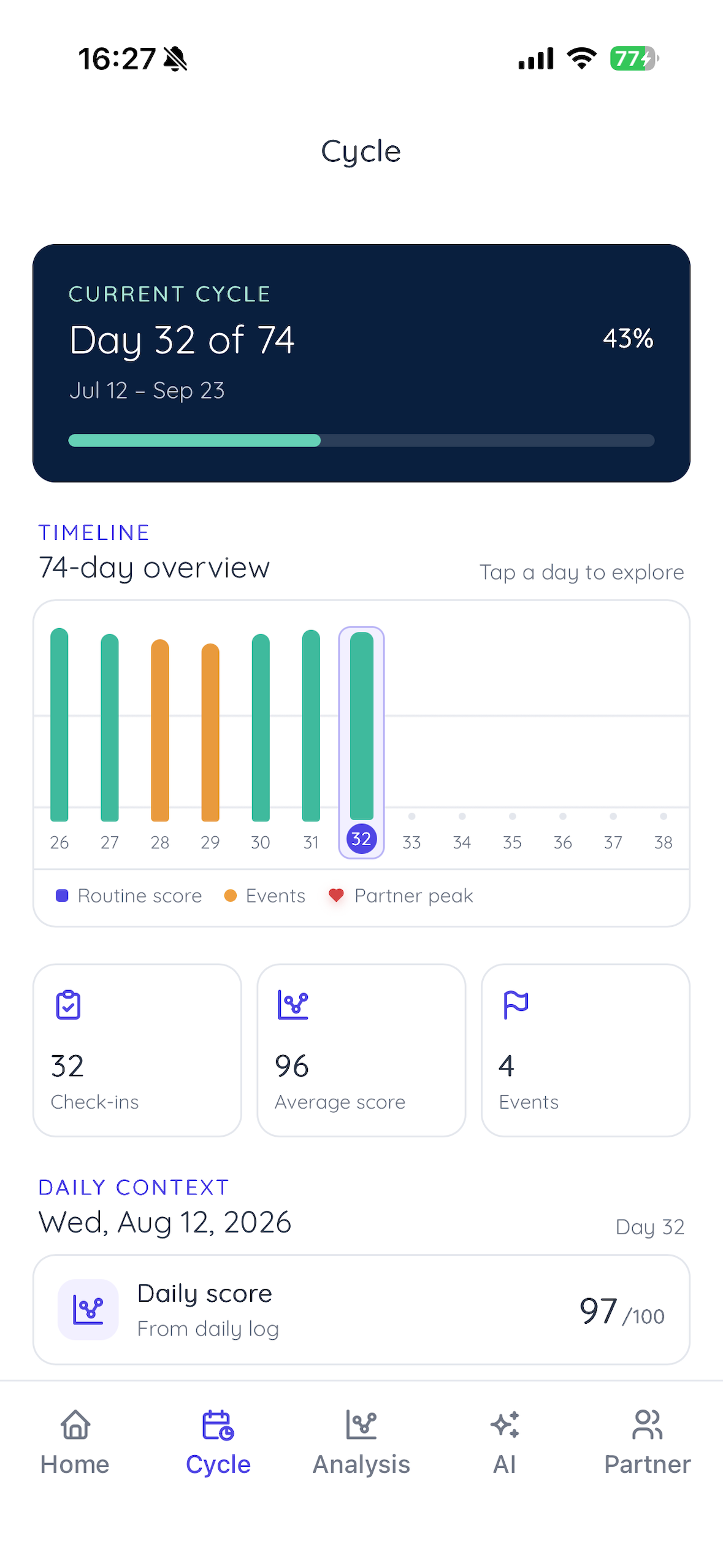
74 - Current cycle tab
-
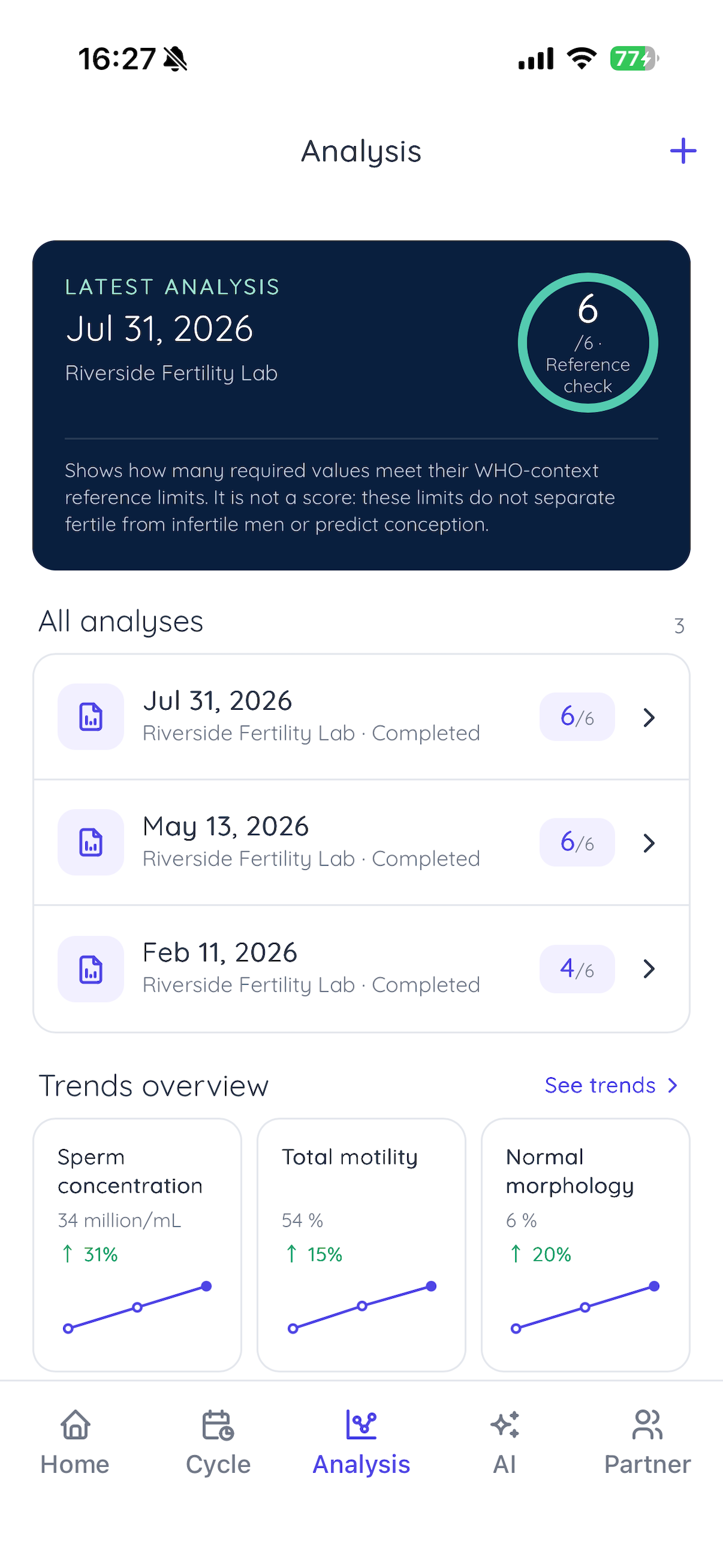
74 - Analysis tab
-
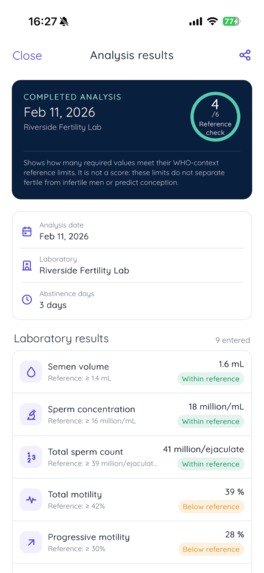
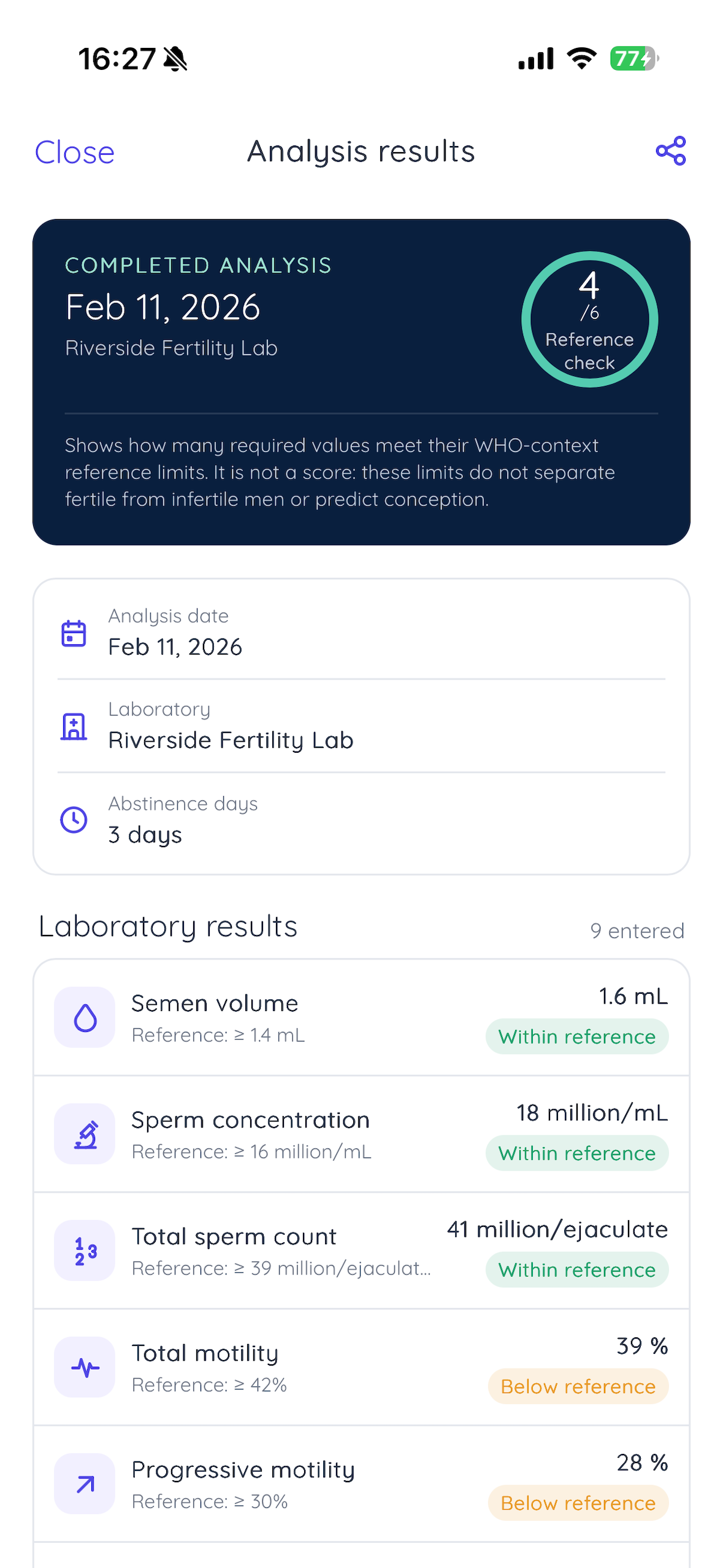
74 - Analysis details view
-
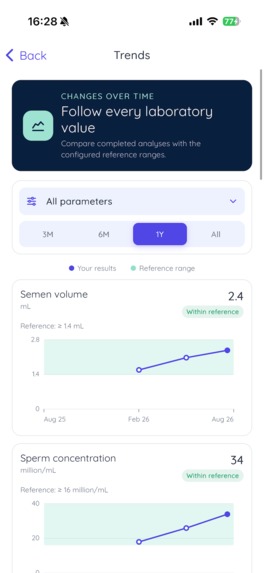
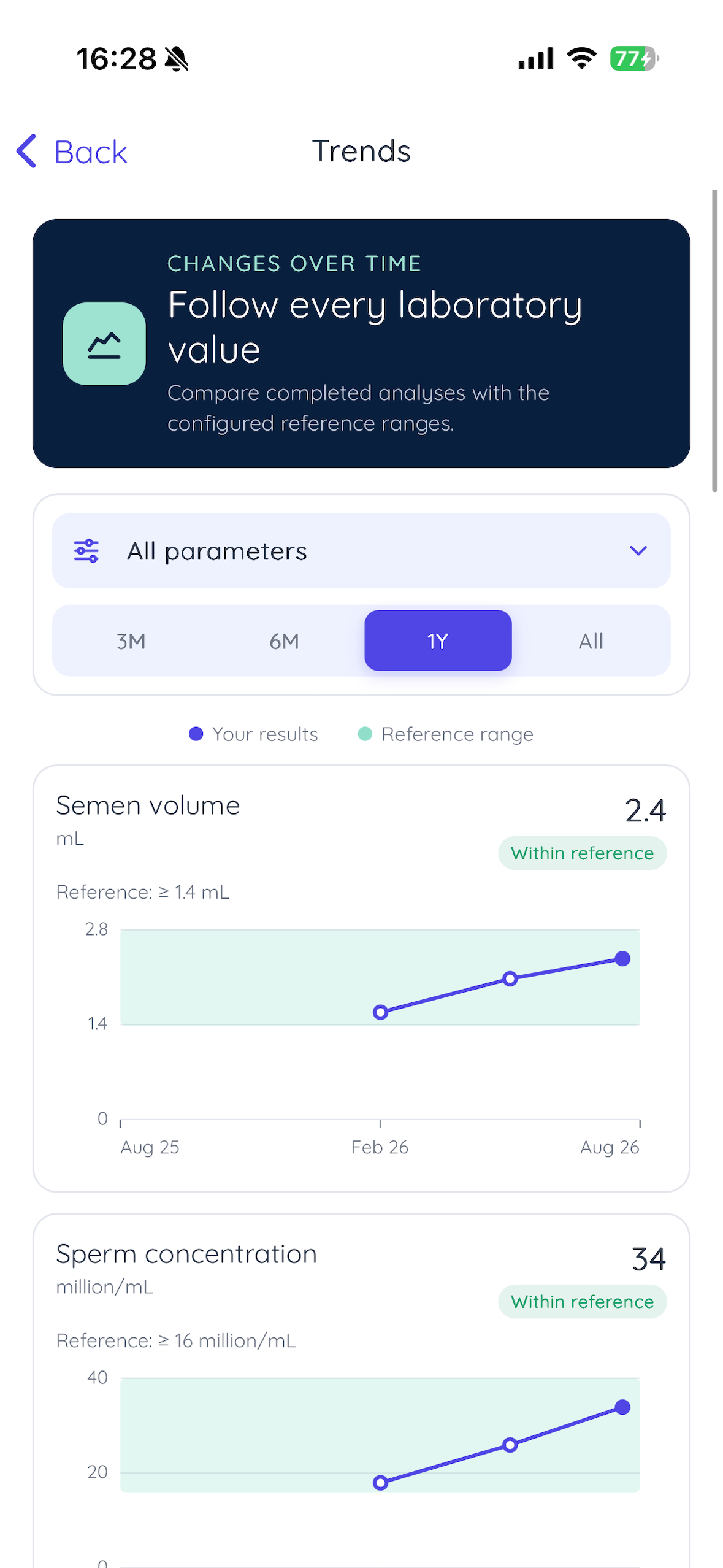
74 - Analysis trends view
-
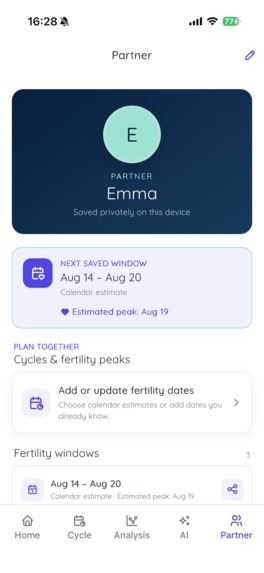
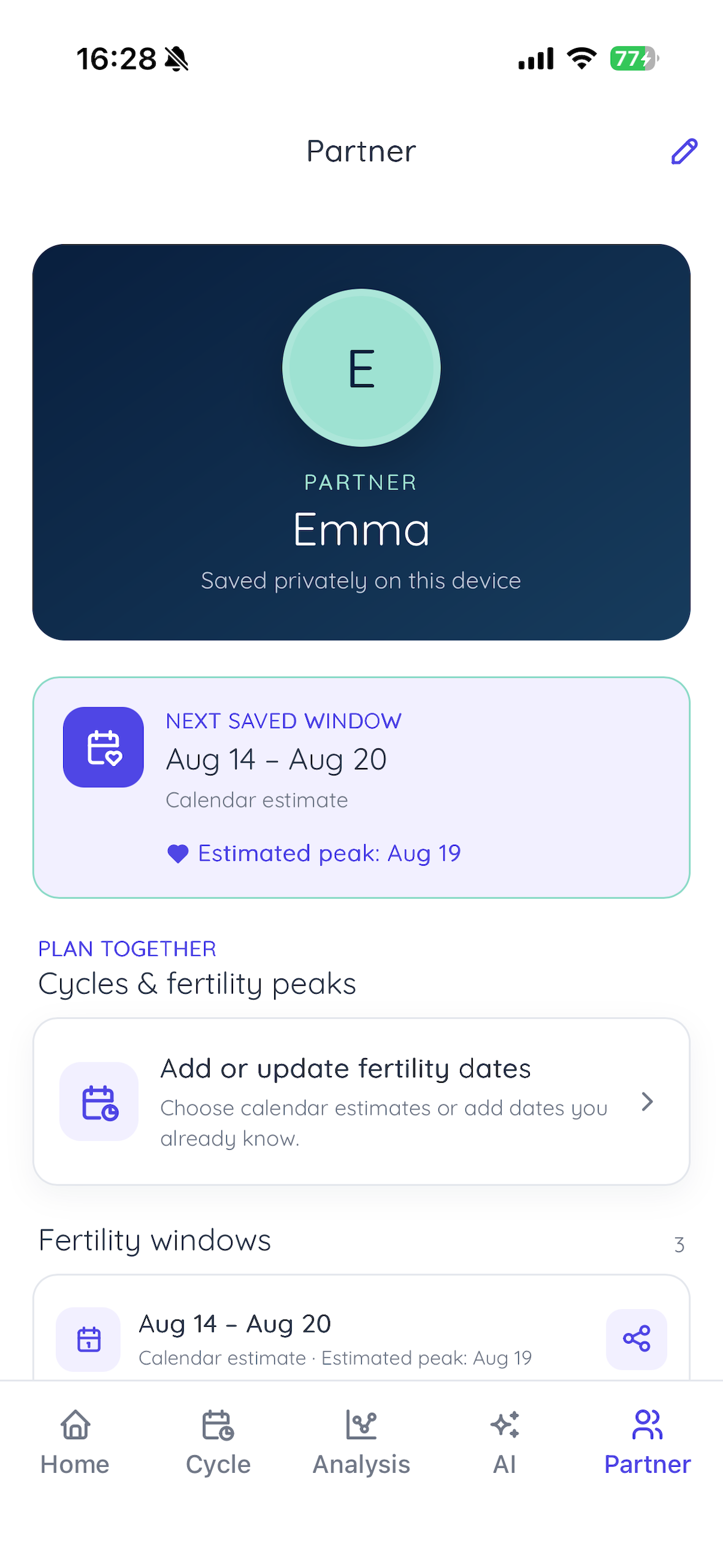
74 - Partner tab
-
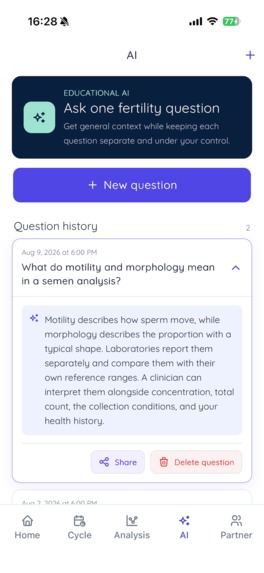
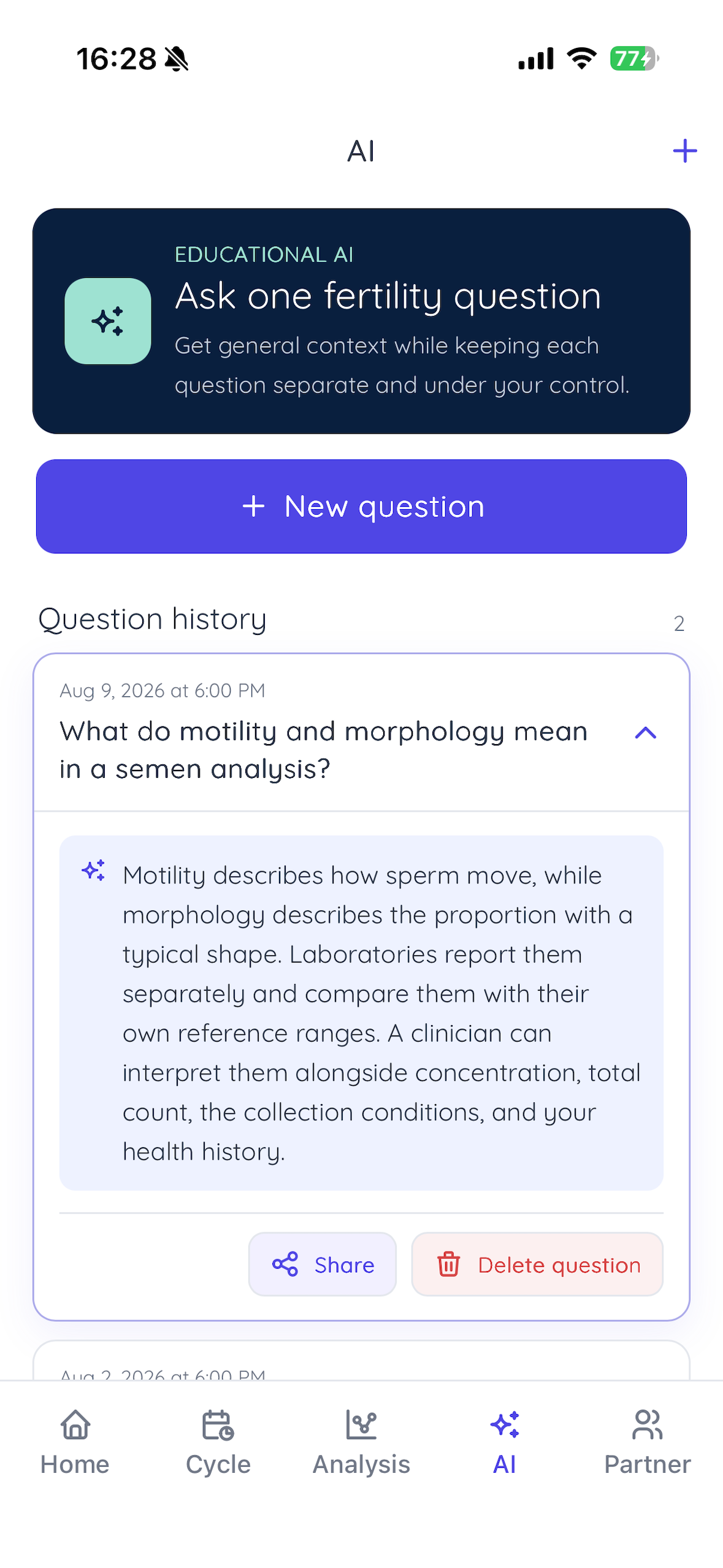
74 - Ask AI tab
Inspiration
We know that, for many reasons, conceiving is becoming more and more difficult for a lot of couples. What we know less is that the issue comes from men in 30 to 50% of infertility cases. A lot of awareness, prevention, and tests are focused on women. There are also a lot of conception apps for women (period tracking apps, for example). But very few for men. Being myself concerned about the decline in birth rates (and being a dad), I wanted to help in that field by doing what I already know: creating mobile apps.
What it does
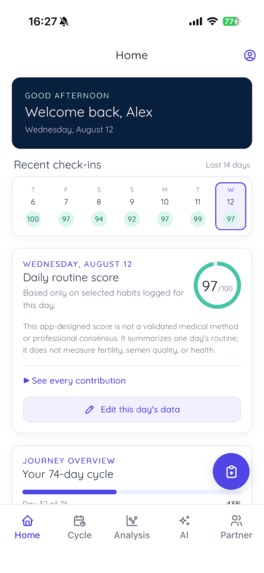
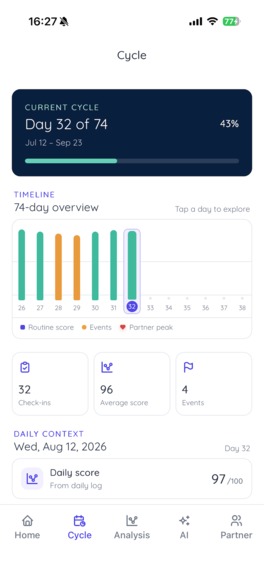
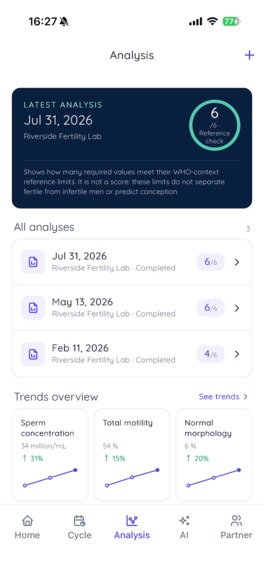
The main goal of 74 is to help men track the daily habits that have an impact on fertility, and how they manage to improve them over time. Each day, a small questionnaire has to be completed, giving a daily score that we can see over time. 74 allows users to have a full overview of the 74-day period: all the daily scores, the important events, etc. A man can also enter sperm analysis (spermogram) data in the app (saved only locally) to get an estimation of whether they’re in the norm or not. Once several analyses are added, the user can visually see the evolution of the metrics over time, via simple charts. A 74 user can also enter data about his partner: name, picture for personalization, and period data. The goal here is to have in one place (the app) both partners’ fertility data. The partner’s fertility peaks are displayed on the 74-day cycle, and push notifications can be sent on the peak day. Finally, 74 allows users to ask fertility-related questions to an AI.
How we built it
To build this app, I used the same tech stack I’ve been using for years: Capacitor, Ionic, and Vue.js. Subscriptions are powered by RevenueCat. Codex helped me go through the development phase, and Escale helped me with the deployment phase (especially the store listing translations).
Challenges we ran into
The main challenge I ran into was about data analysis/accuracy and privacy. For the data, I needed to be sure the daily score made sense, even without being based on a scientific scale. For the analyses, the app has to respect the commonly accepted norms for sperm quality. Privacy is really important for this kind of app. Not only does the user enter private information, but he can also connect the app to HealthKit. So all personal data stays on the device.
Accomplishments that we're proud of
Unlike the vast majority of conception apps, 74 includes specific features for the partner. As a male user, you can enter your partner’s data, cycle, and fertility peaks, and correlate them with your own 74-day cycle. Push notifications can also be sent on a fertility peak. The goal here is to involve both partners in the same digital medium.
What we learned
Although I knew a bit about male fertility, I learned a lot more on this topic during the app’s development: what the different metrics used are, what they mean, etc. Technically speaking, it was the first time I was implementing HealthKit in an app. And that was quite straightforward!
What's next for Male Fertility Tracker - 74
If I see that the app starts to get some traction, there are some improvements I’d like to make. The first one would be to include the partner even more in the app. Maybe by allowing the partner to add data, feelings, etc., or with a companion app. Then, I’d like to somehow increase the commitment users could have in improving their daily habits (taking supplements, improving sleep quality, decreasing alcohol consumption, etc.). Maybe by adding ways to log intake more accurately, or some gamification around that.
Built With
- capacitor
- ionic
- vue

Log in or sign up for Devpost to join the conversation.