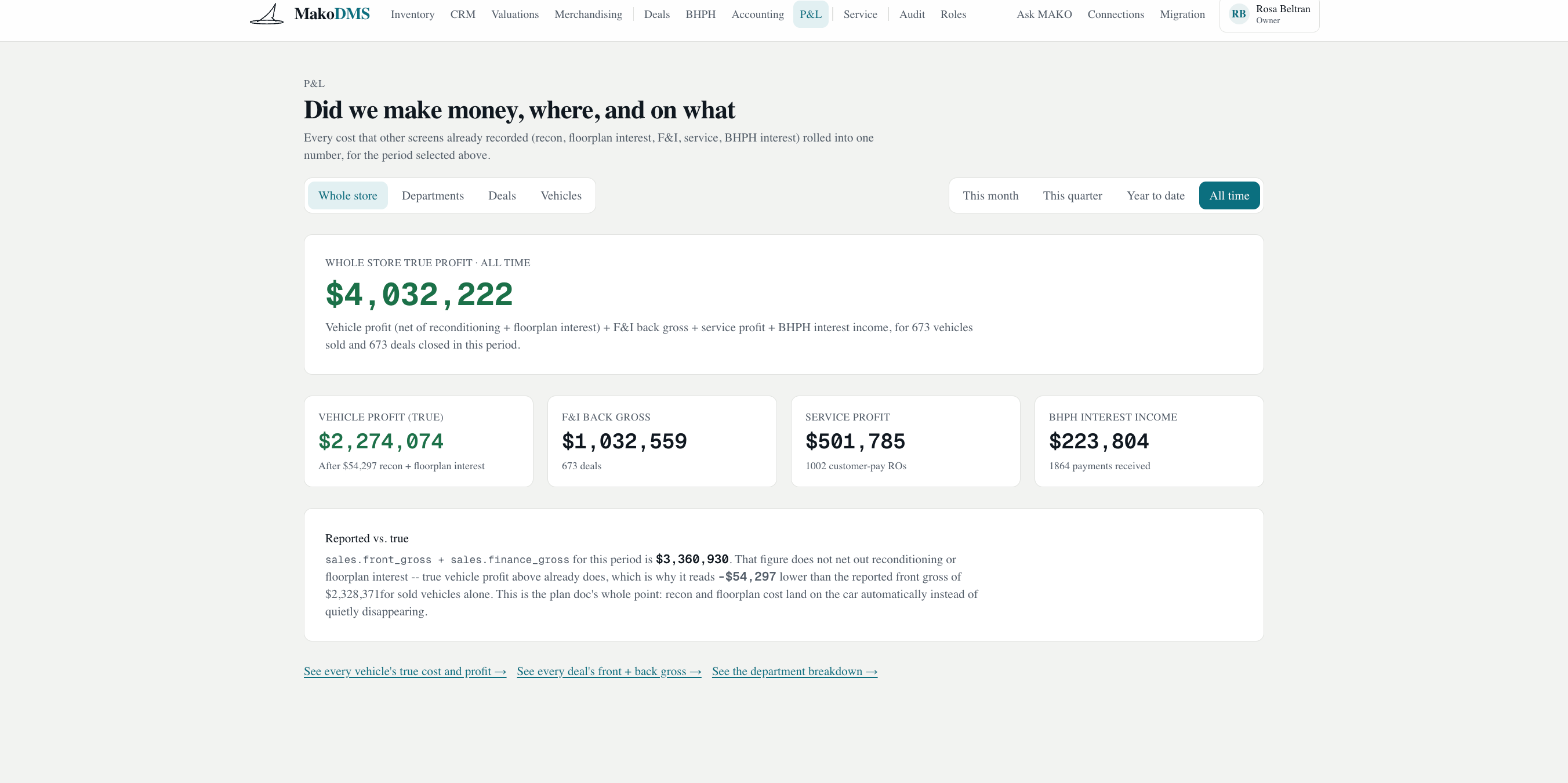
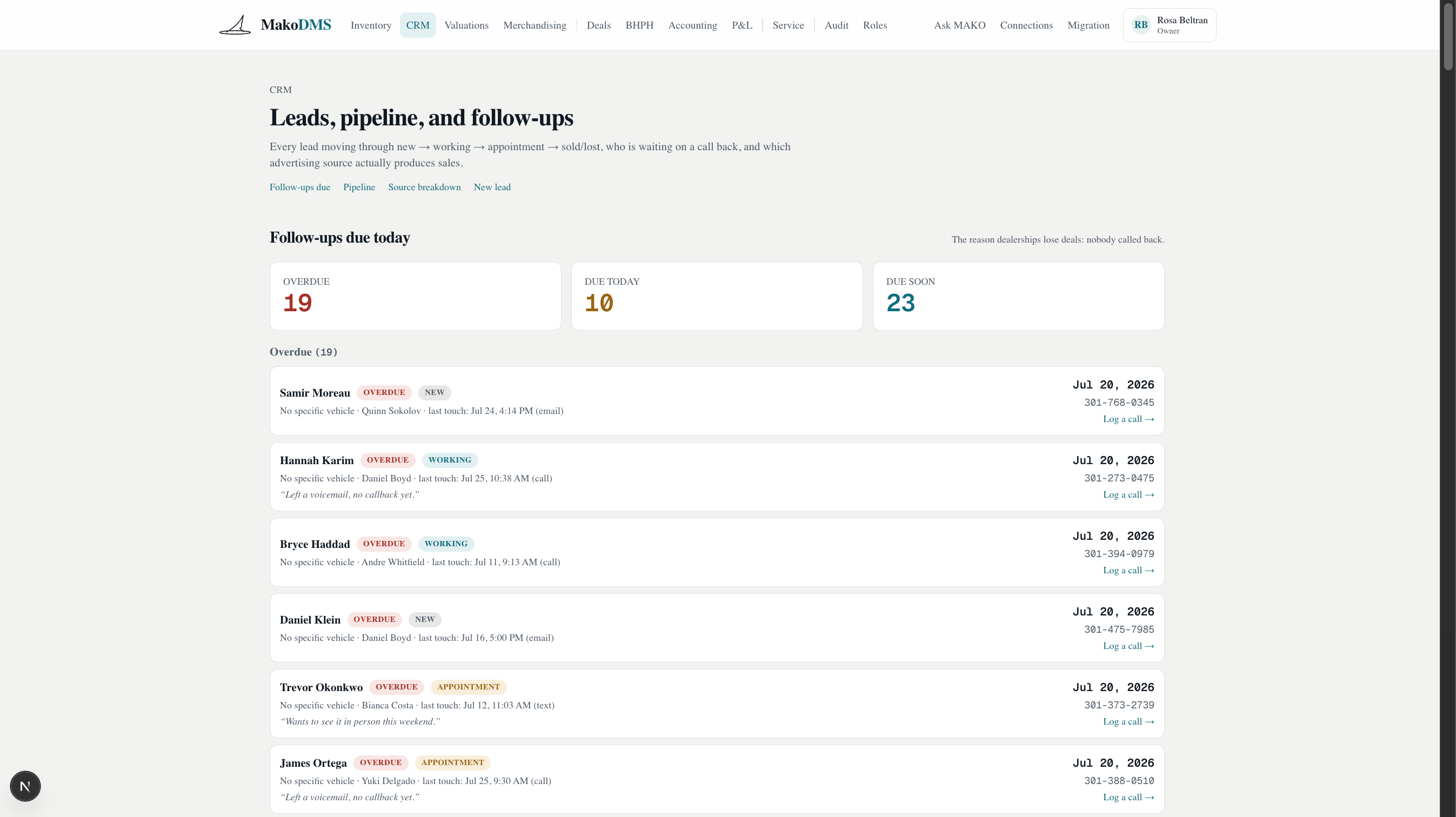
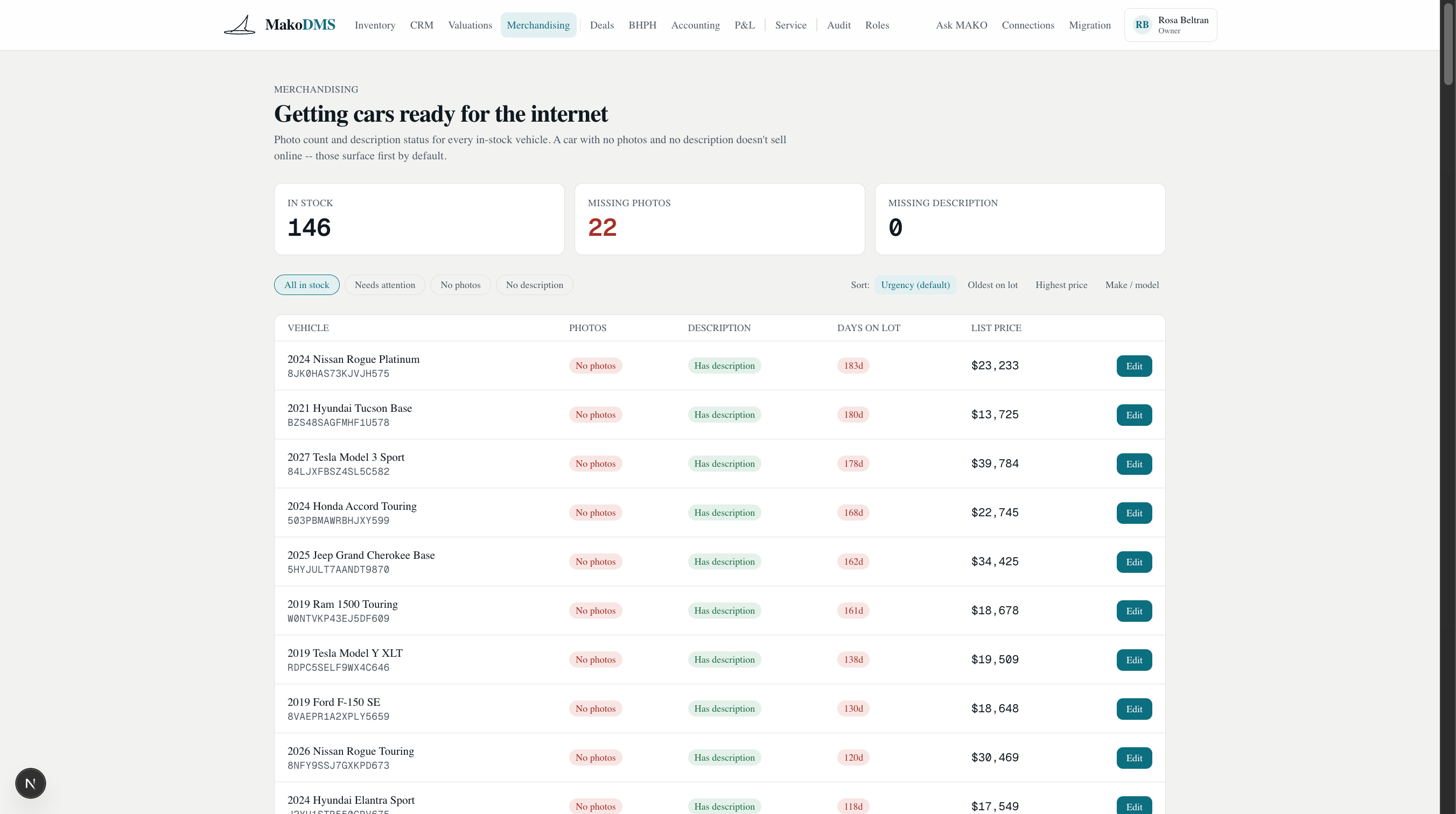
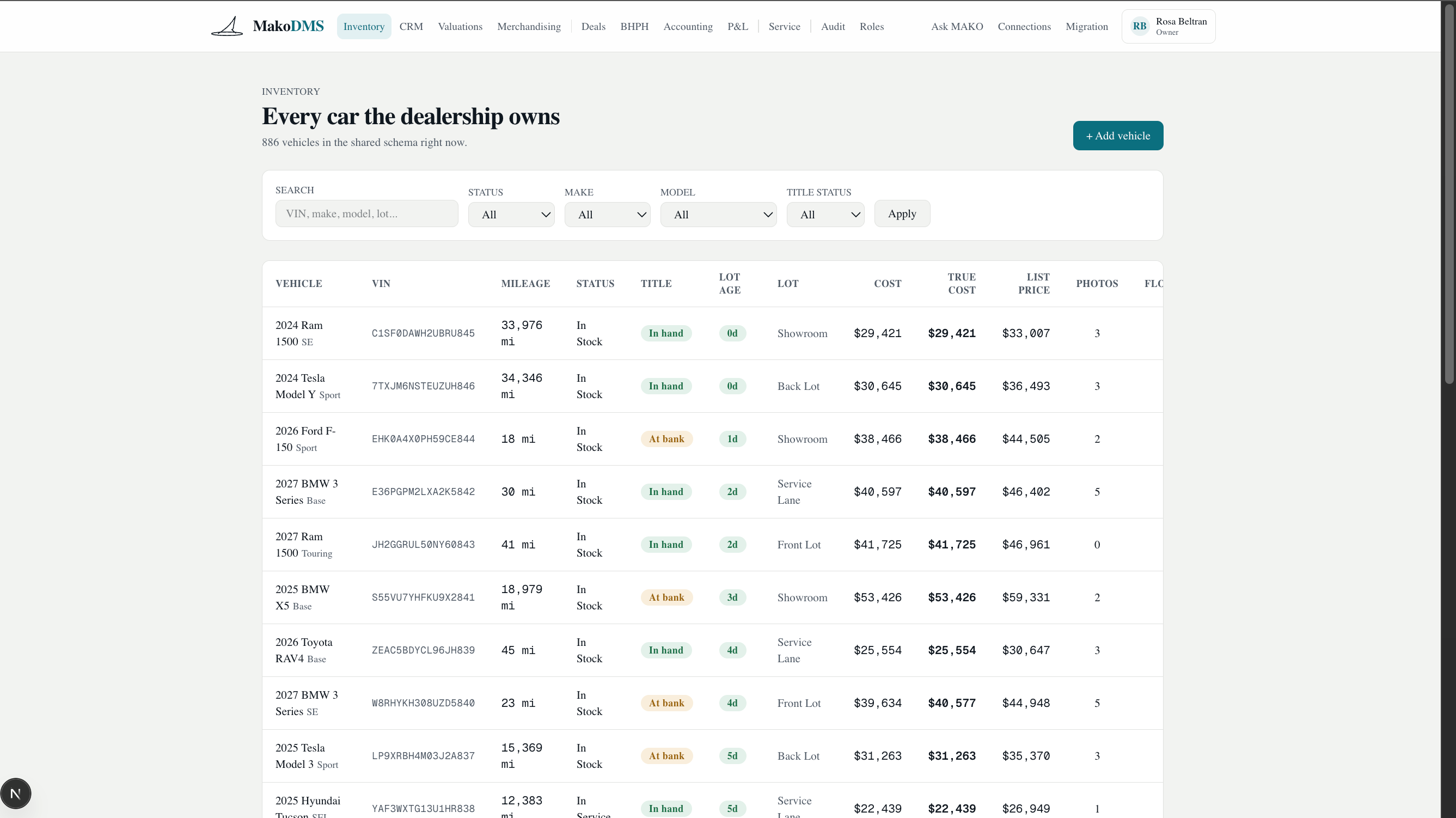
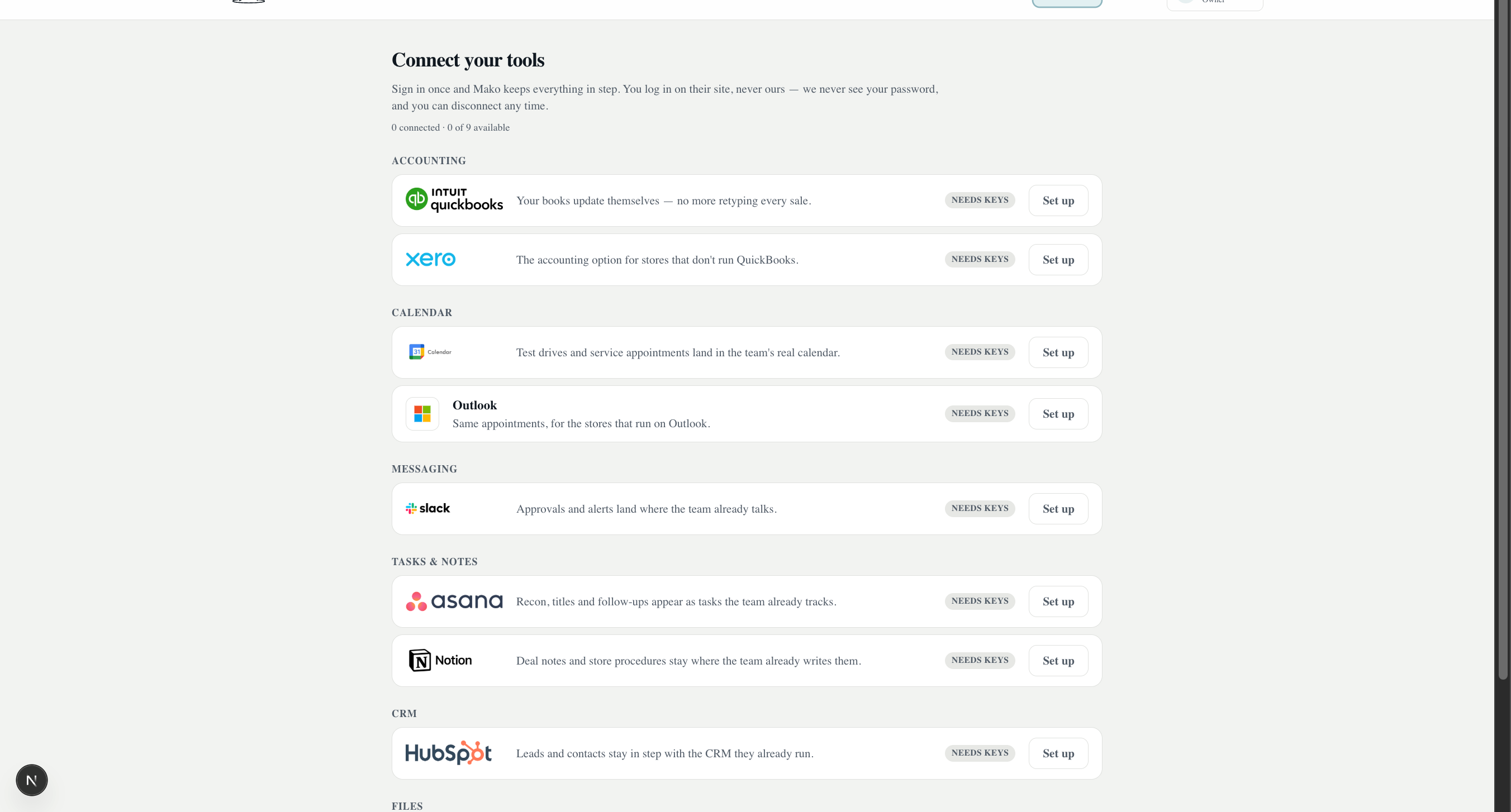
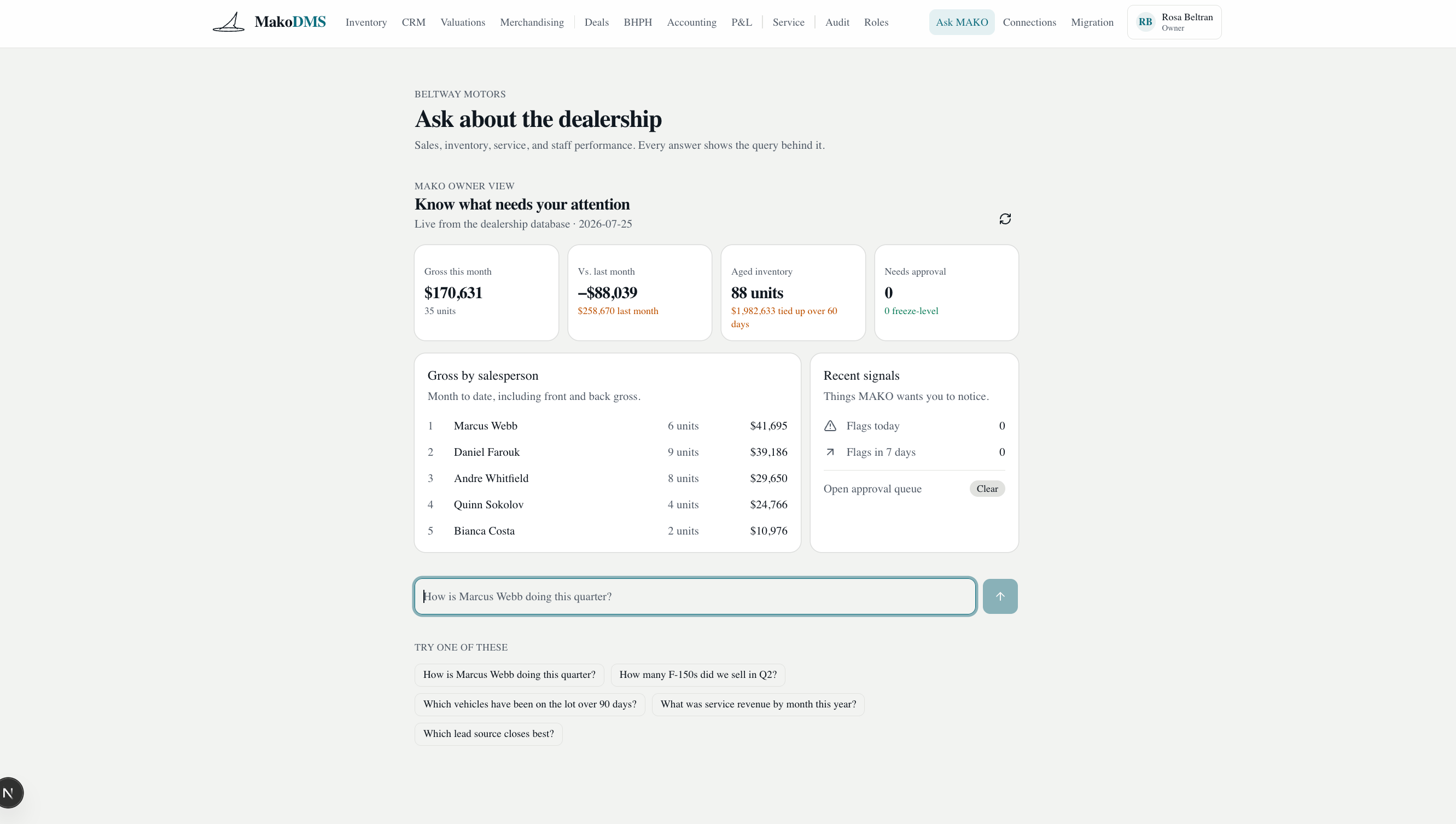
The idea started with a phone call, not software. Before writing any code, we called used car dealerships and asked owners what they hated about their dealership management systems. Their biggest concerns were unauthorized changes to deals, manually reentering accounting data, and losing information during migration. Two dealerships agreed to trial the product before it existed. Our first commit was made that same day. MakoDMS is an AI native dealership management system covering inventory, CRM, valuations, merchandising, deals, financing, loans, accounting, service, reporting, integrations, and plain English data queries. It is built around three core advantages: Every action is audited. The system records who changed what, when it happened, and the values before and after. Suspicious changes can automatically freeze a deal. Accounting posts automatically. Sales, repairs, and loan payments generate balanced QuickBooks journal entries without manual reentry. Migration is reversible. Dealer exports are validated, mapped, previewed, and can be completely undone with one click. We built the product directly from dealer feedback and a 144 page review of a competing DMS. Every feature came from either a customer complaint or something the existing platform could not do. The stack uses Next.js, TypeScript, Postgres, and an AI layer that converts plain English questions into guarded, read only SQL. Financial calculations use rounded cents rather than floating point comparisons. Loan payments correctly separate principal and interest. VIN imports validate the official check digit. Role permissions prevent users from granting access they do not already possess. The largest challenge was that most DMS providers offer no public API. Migration therefore had to work through CSV and XML exports, VIN validation, and intelligent column mapping. This difficulty also creates a competitive advantage because it is one reason dealerships rarely switch systems. We also redesigned our sales coaching feature after researching call recording laws. Consent is now collected first and timestamped in the audit log. In 5.5 hours, three developers produced 46 commits, 22,141 lines of code, and 357 passing tests. Integrations with QuickBooks, Slack, Asana, Google Calendar, and Outlook can all be tested offline without API keys. The biggest lesson was simple: customer validation before development saves time. We now have two trial dealerships and a product built around problems dealers are already asking someone to solve.
Built With
- bloodsweattears
- chatgpt
- claude
- css
- javascript
- typescript

Log in or sign up for Devpost to join the conversation.