Inspiration Modern life is overloaded with information, tasks, and constant decision-making. People manage calendars, emails, deadlines, meetings, and personal goals across many different apps, yet none of these systems truly understand the context of a person’s life.
Most AI assistants today only react to commands. They answer questions, set reminders, or perform simple tasks but rarely help people think ahead or make better decisions.
AI NEXUS was inspired by a simple idea:
What if AI could act like an operating system for your life?
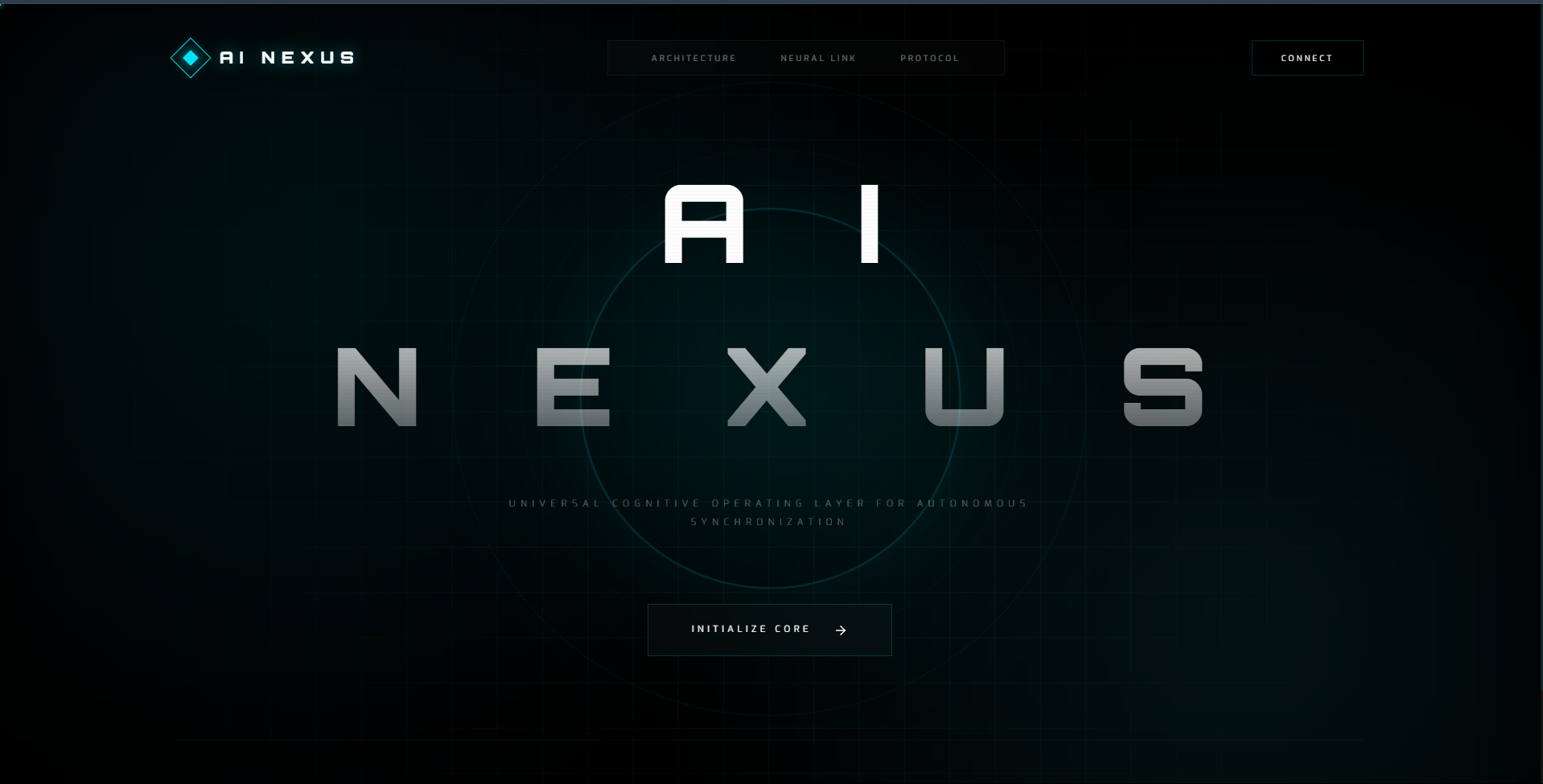
Instead of reacting, AI NEXUS predicts outcomes, monitors mental workload, and helps people plan smarter days. The goal was to create a system that acts as a thinking partner, helping users understand the consequences of their choices before they happen.
What it does AI NEXUS is an AI-powered life management system designed to help users plan, analyze, and improve their daily productivity.
Core features include:
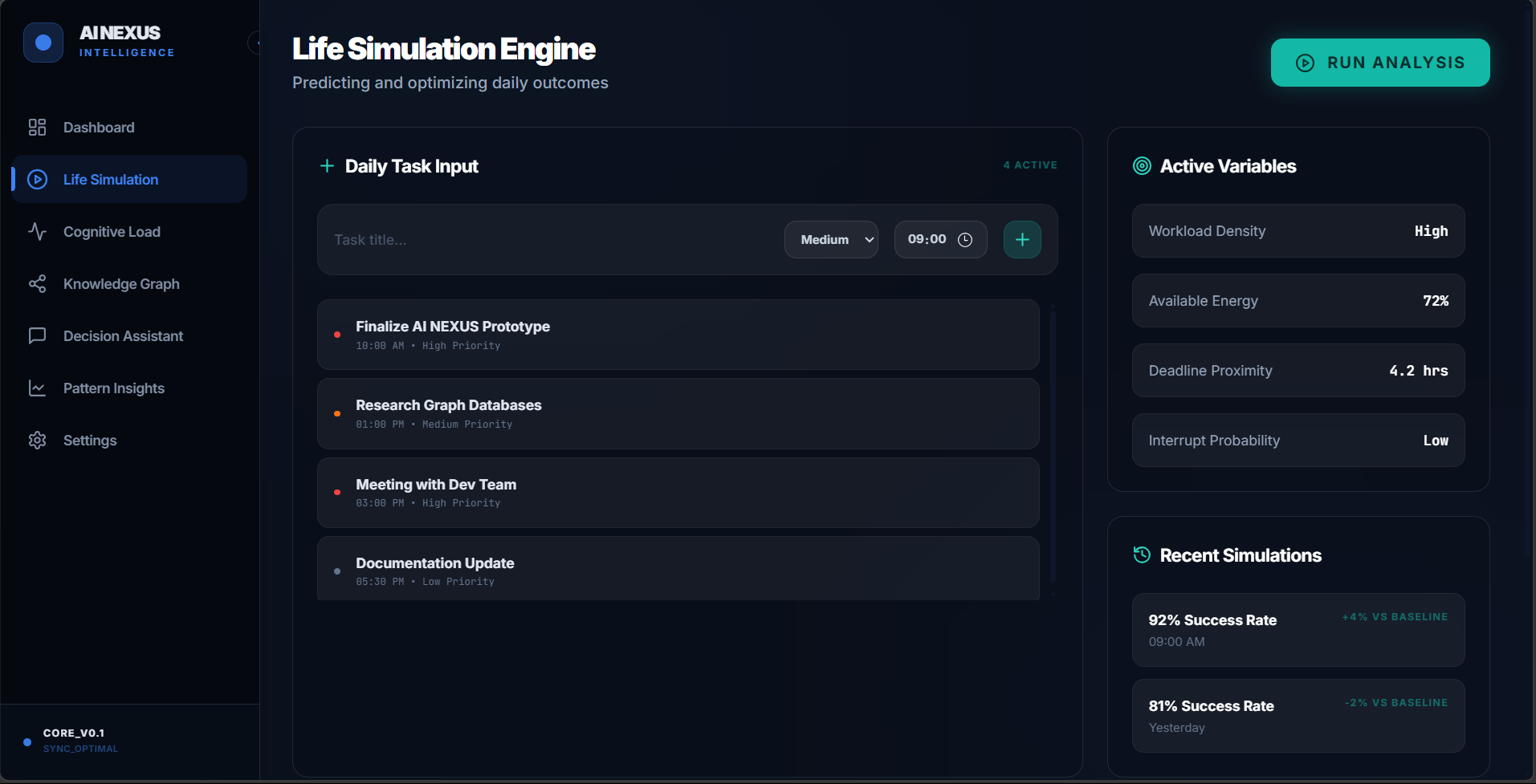
Life Simulation Engine Simulates different sequences of daily tasks Predicts the best order to complete tasks Warns about possible schedule conflicts
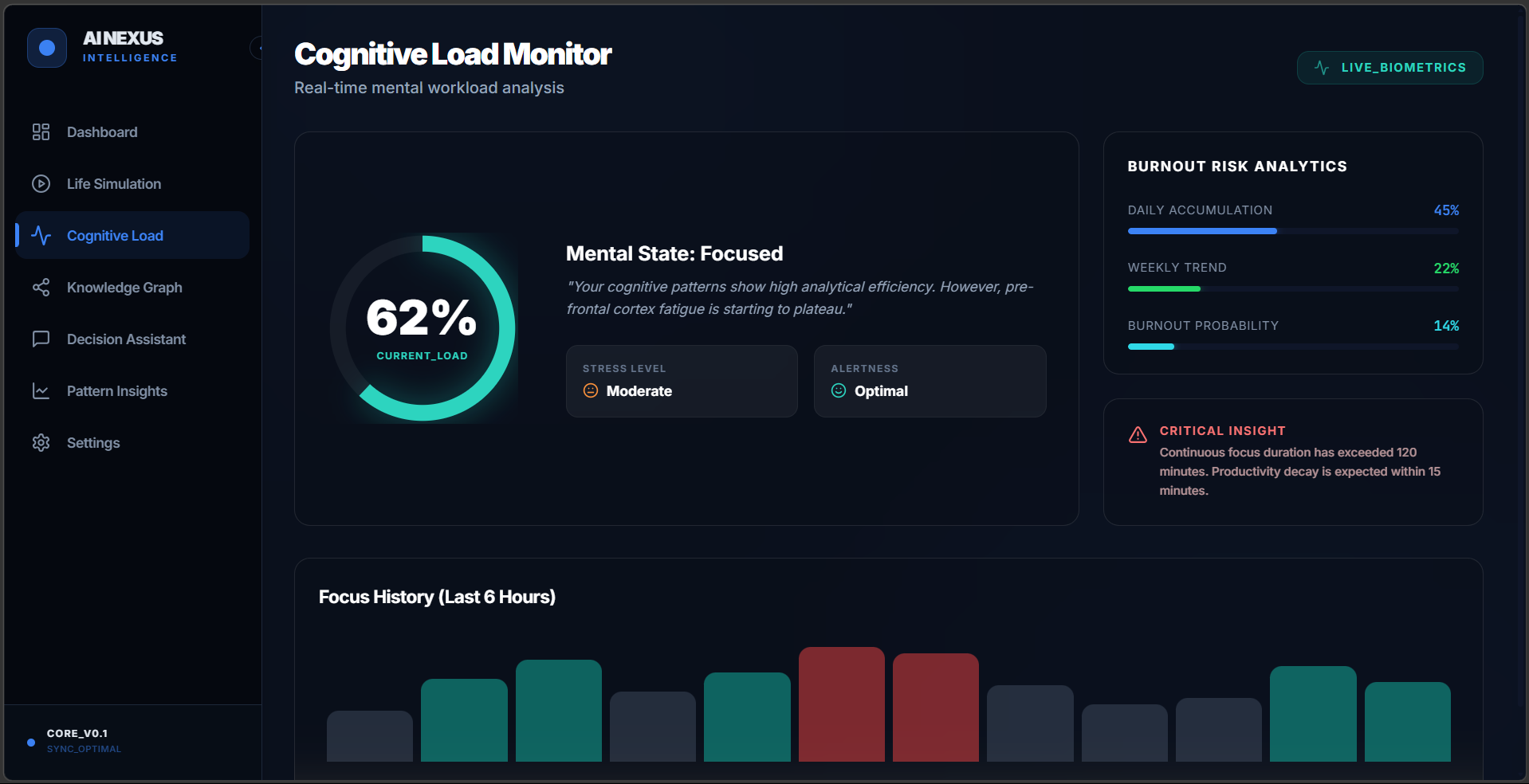
Cognitive Load Monitoring
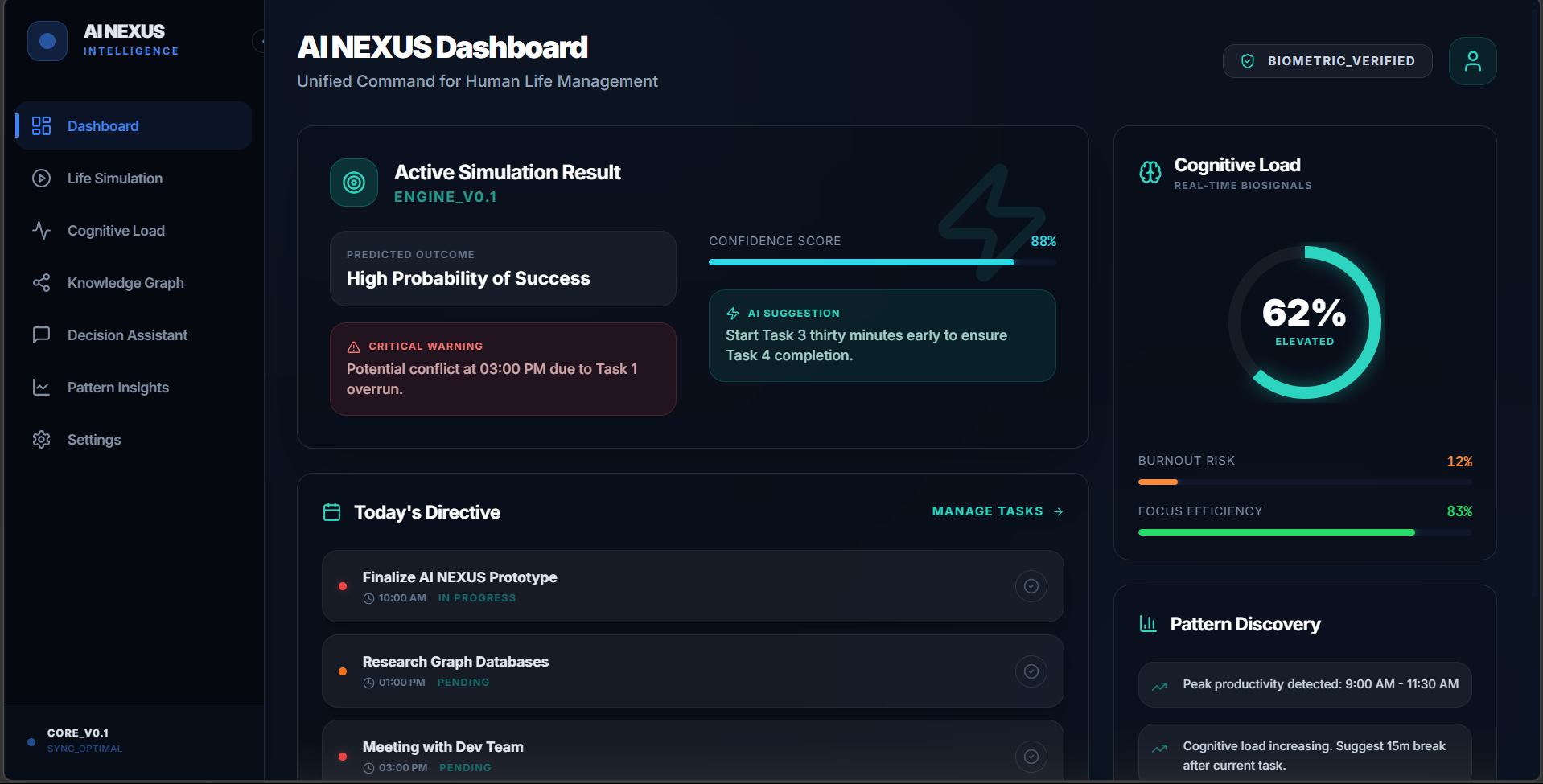
Calculates mental workload based on tasks and meetings
Detects potential burnout risk
Suggests schedule adjustments
Cognitive load estimation example:
[ Cognitive\ Load = f(tasks, meetings, session\ duration) ]
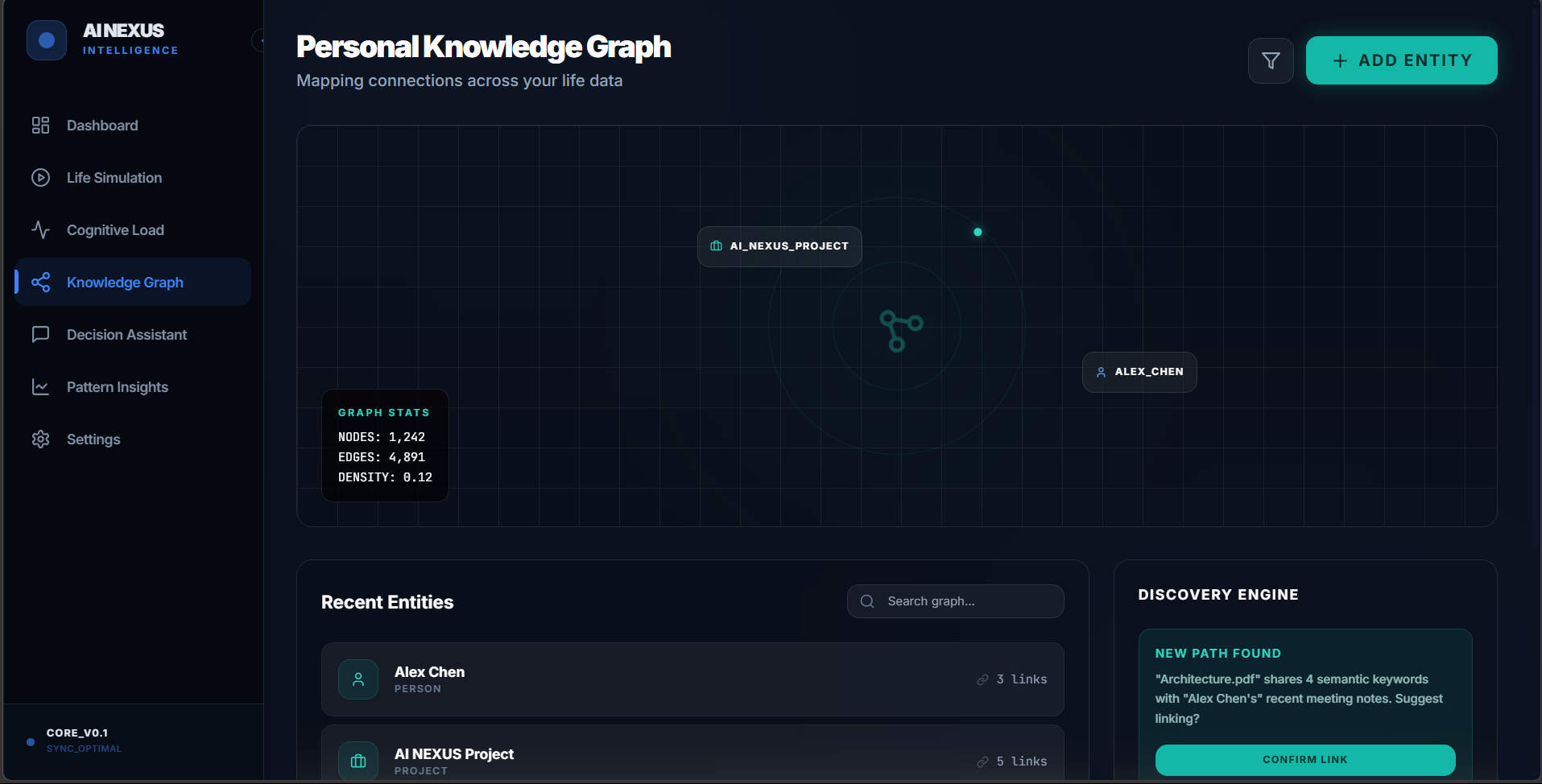
Personal Knowledge Graph AI NEXUS organizes personal information into a structured knowledge system connecting: People Meetings Projects Tasks Documents This allows users to search and explore their personal knowledge easily.
AI Decision Assistant The system helps users make complex decisions by analyzing: Current workload Personal goals Schedule constraints Example question:
"Should I accept this internship?"
The AI evaluates context and provides reasoning-based suggestions.
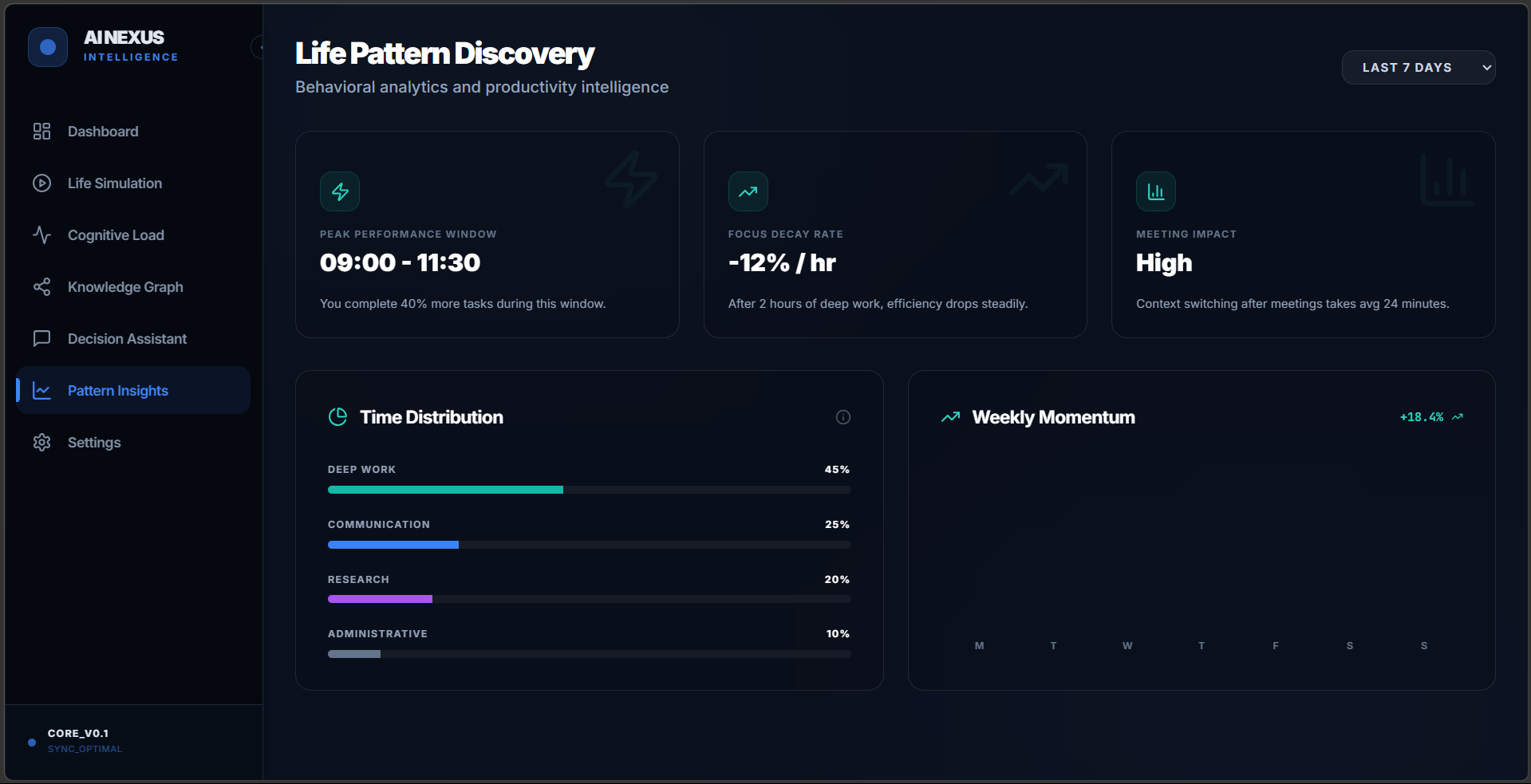
Life Pattern Discovery AI NEXUS analyzes long-term activity data to identify productivity patterns. Example insights:
Highest productivity between 9 AM and 11 AM Meetings during this time reduce task completion How we built it AI NEXUS was built as a full-stack AI application using modern technologies.
Frontend
Next.js React TypeScript TailwindCSS The interface provides:
Daily planning dashboard Cognitive load visualization AI decision assistant Productivity insights Backend
Node.js Express The backend handles:
task management scheduling logic AI request processing AI Layer
Large language model integration for reasoning and natural language understanding Database
PostgreSQL for structured data Graph-based structure for knowledge relationships Challenges we ran into Designing a predictive system Creating a simulation engine that predicts the best schedule required evaluating multiple task sequences and detecting time conflicts.
Managing life context Connecting people, projects, tasks, and meetings into a meaningful knowledge graph required careful data modeling.
Integrating AI with system logic Some features needed traditional algorithms while others relied on AI reasoning, making integration more complex.
Designing a clear user experience Since concepts like cognitive load and life simulation are new to many users, the interface had to remain simple and easy to understand.
Accomplishments that we're proud of Successfully built a working prototype of an AI life management system Implemented a predictive task simulation feature Designed a cognitive load monitoring system Created a structured personal knowledge graph Integrated AI reasoning to assist with decision making Built a full-stack system connecting frontend, backend, and AI modules What we learned Through this project we learned:
How AI can move beyond chat interfaces into decision-support systems How knowledge graphs can represent personal life context How predictive analysis can improve productivity planning How to build full-stack AI systems combining frontend, backend, and intelligent services Most importantly, we learned that AI can help people not only answer questions but also make better life decisions.
What's next for AI NEXUS AI NEXUS is currently a prototype, but the long-term vision is much larger.
Future improvements include:
Real-time calendar integration Email and task synchronization Voice-based interaction Wearable device data for better cognitive load analysis Advanced life simulation and predictive planning The long-term goal is to build a true AI operating system for human life that helps people plan smarter days, reduce stress, and make better decisions.
Built With
- css
- express.js
- geminiapi
- github
- javascript
- netlify
- next.js
- node.js
- react
- restapi
- supabase
- tailwind
- typescript

Log in or sign up for Devpost to join the conversation.